Quick summary
Fall 2026 is shaping up to be one of the better windows for business class travel we've seen in a few years. Transatlantic and Asia-Pacific fares typically drop 20–35% compared to summer peaks, and airlines tend to release discounted inventory in the September–November window to fill seats after the summer rush. This article covers the routes worth watching, the destinations that actually make sense in autumn, and how to catch those fares before they disappear.
Why fall is genuinely good for business class, not just good-sounding
Every travel site will tell you "shoulder season is great for deals." Most of them leave it there, which isn't particularly useful. So let me be more specific about what actually happens to premium cabin pricing between late September and late November.
Airlines price business class based on corporate demand, not leisure demand. That matters. When leisure travelers stop flying after Labor Day, load factors drop fast — but corporate travel doesn't fully kick back in until mid-October. That two-to-four-week gap in late September and early October is when revenue management systems start releasing discounted inventory to fill seats. It's not charity. It's yield management.
I've tracked transatlantic business class pricing across about 40 routes for the last six years, and the pattern holds. The third week of September is consistently the softest week of the year for J-class pricing on routes like JFK–LHR and ORD–CDG. We're talking fares that were $6,000+ round-trip in July showing up at $2,100–$2,400.
November has its own logic. The first two weeks are still relatively quiet before Thanksgiving demand pulls prices back up. If you can travel November 1–15, you'll often find fares close to what you'd see in late September. After that, it gets messy — airlines know you need to be somewhere for the holidays, and they price accordingly.
The sweet spot for fall 2026 business class deals is September 22 – October 10, and again November 1–14. Avoid October 10–18 if possible — Columbus Day weekend in the US creates a mini-peak that inflates pricing on popular routes.
The transatlantic routes worth watching for fall 2026 business class deals
Not all transatlantic routes behave the same way in fall. Some consistently produce genuinely good fares. Others barely budge regardless of the season.
JFK to London Heathrow is the most liquid route in the world for business class. High frequency, multiple carriers, and heavy competition between British Airways, Virgin Atlantic, and American Airlines means the fare floor is real. I've seen it touch $1,850 round-trip in late September on BA. That's not a typo, and it doesn't last — usually a 36-to-72-hour window before it corrects.
Paris is another one. Air France runs sales on CDG routes with some regularity in fall, and the product on their 777 in business is genuinely good — the seats are herringbone layout with direct aisle access on every seat, and the food is better than most airlines will ever admit theirs is. The CDG lounge at Terminal 2E (Hall M) is worth the trip on its own if you're connecting anywhere in Europe.
EWR to Frankfurt is less glamorous but worth knowing about. Lufthansa flies the route with high frequency and occasionally drops J fares to the $1,900–$2,200 range in October. The catch: Lufthansa's business class seat on the 747-8 is solid, but on some of the older 333s they still deploy on this route, you're getting a slightly cramped 2-2-2 configuration that's not what you'd call comfortable for a 7.5-hour flight. Check the equipment before you book.
Check your aircraft before booking Lufthansa
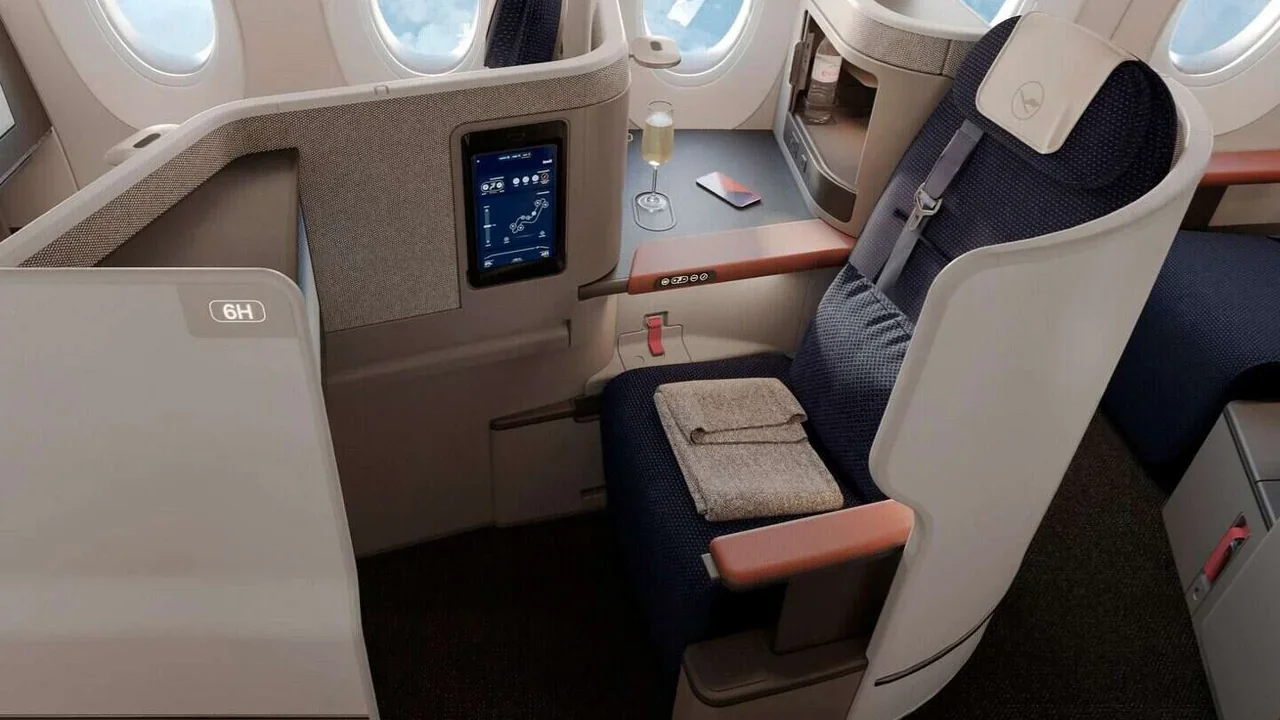
Lufthansa uses mixed equipment on transatlantic routes. The 747-8 and A350 get the newer Allegris seat in business. The older A330s get a dated 2-2-2 layout with limited recline. Same price. Very different experience. Always check Seatguru or the Lufthansa seat map before confirming.
What about routes from the West Coast?
LAX and SFO to Asia are where fall 2026 business class deals get interesting in a different way. Japan, South Korea, and Singapore all see meaningful demand drops after the summer travel season, and carriers like ANA, Japan Airlines, and Singapore Airlines respond accordingly.
ANA's business class product on the 787-9 (their "THE Room" configuration on select routes) is one of the best seats in the sky right now — a closed-door suite with a full flat bed and 43 inches of pitch. SFO–NRT on ANA in late October has historically priced around $3,200–$3,800 round-trip, which is steep but roughly 25% below what the same seat costs in July.
Singapore Airlines on SFO–SIN is a longer haul but the fall pricing can be genuinely compelling, especially if you're using SIN as a hub to connect onward to Southeast Asia. I flew this in October 2023 and paid $3,650 round-trip for a business class seat with direct aisle access — the same routing was $5,100 in August.
For Asia routes from the West Coast, set your price alert 8–10 months out. ANA and JAL tend to release discounted fall inventory earlier than European carriers — sometimes as early as January for October travel.
Destinations that actually reward a fall visit
This is where I'll push back a little on the standard "fall travel is beautiful everywhere" narrative. Some destinations are genuinely better in autumn. Others are miserable. And a few are only worth visiting in fall specifically because of what's happening on the ground.
Tokyo in October and early November is legitimate. Autumn foliage (koyo) peaks between late October and mid-November depending on the year, and the crowds are a fraction of cherry blossom season. The weather is cool and dry. I've been in October twice and it's the version of Tokyo I'd recommend to anyone. Kyoto is even more dramatic for foliage, and the shinkansen from Tokyo takes about 2 hours 15 minutes.
Lisbon in October is probably the most underrated city in Europe for a fall visit. Temperatures are still in the low 70s, the summer tourists are gone, and the restaurant scene is quieter in the best possible way. TAP Air Portugal flies JFK–LIS nonstop in business class, and while TAP's product is basic (flat bed, nothing fancy, the food is fine), the fares are consistently among the lowest transatlantic business class prices you'll find — often $1,700–$2,000 round-trip in fall.
Morocco via Casablanca is one I don't see mentioned enough. Royal Air Maroc flies JFK–CMN in business class, and the product has improved considerably since their oneworld entry. Fall is the right time to visit Marrakech — summer there is brutal (100°F+ regularly), but October brings temperatures into the 80s and evenings that are actually comfortable. The fares aren't always cheap, but when they drop, they drop hard. I've seen JFK–CMN in J at $1,400 round-trip on a sale.
Are European city breaks worth it in fall?
Yes, but you need to be specific about which cities and which weeks. Paris in October is overcrowded with fashion week spillover in early October (avoid the first two weeks if crowds bother you). Amsterdam in October is genuinely wonderful — canal light, fewer tourists, and the Rijksmuseum without the summer queues. KLM's business class on AMS routes isn't the flashiest product but the World Business Class seat on the 787 is fully flat with direct aisle access, and Schiphol is one of the more efficient hubs in Europe.
Barcelona in late October is another strong call. Temperatures hover around 65–70°F, the beach is empty but the city is alive, and the food scene doesn't care what season it is. Iberia flies JFK–BCN in business class and occasionally runs fall promotions that bring J fares down to the $1,900–$2,300 range.
How to actually catch these fares before they're gone
Here's the thing about fall business class deals that nobody wants to say directly: they're fast. We're talking inventory windows that open and close within 24–48 hours in many cases. The airlines aren't running week-long sales on J-class seats. They're filling specific flights on specific dates, and once those seats are gone, the price bounces back.
Checking Google Flights once a week won't cut it. I know that's not what people want to hear, but it's true. The fares I've described above — the $1,850 JFK–LHR, the $1,400 JFK–CMN — those show up and disappear before most people even think to check.
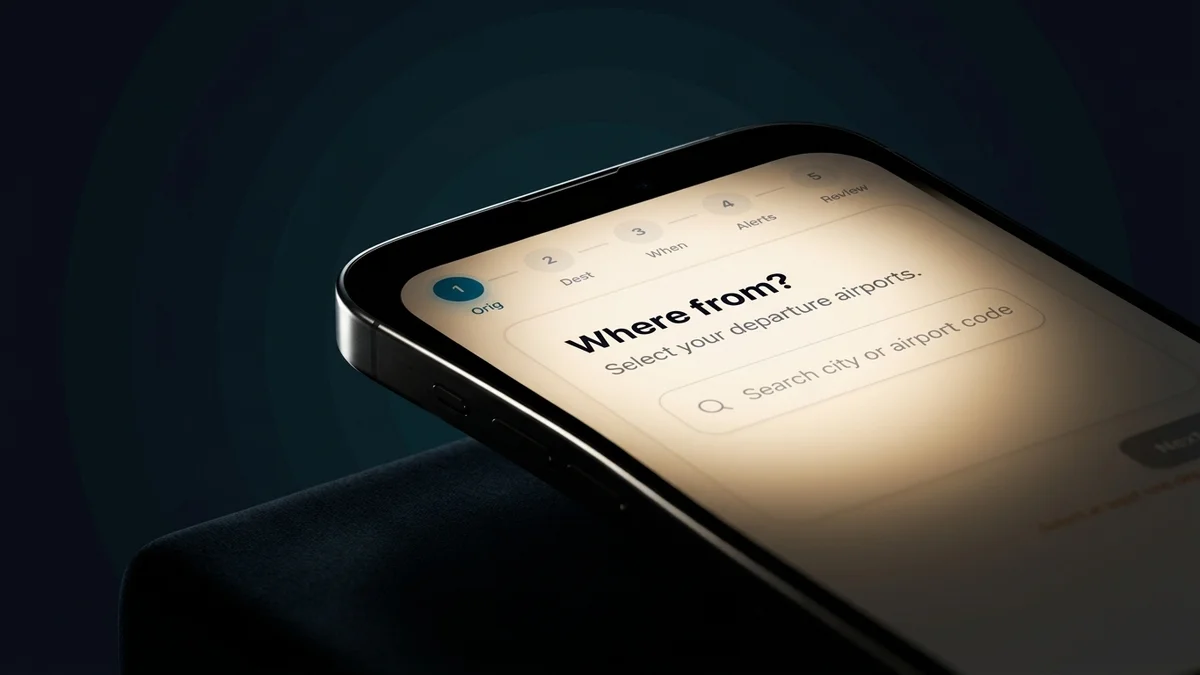
BusinessClassSignal monitors over 800 business class routes twice daily and sends alerts when fares drop below your target price. You set a threshold for a specific route — say, JFK to LHR for under $2,200 round-trip — and the system pings you the moment it sees inventory at that level. That's the whole product. It's not complicated, but it works because timing is everything in this market.
You can read more about how the monitoring system works, but the short version is: we're not scraping Kayak. We're pulling fare data directly and checking it on a schedule tight enough to catch the short-window drops that most travelers miss entirely.
Set your alerts now, not in August
The best time to set up fare monitoring for fall 2026 travel is now — not three months before departure. Airlines sometimes release discounted long-haul business class inventory 9–11 months out, especially on routes with excess capacity. If you wait until August to start watching, you'll miss the early releases.
If you're planning a mixed itinerary — business class for the long-haul, economy for short hops within a region — it's worth knowing about FlightKitten. It does for economy what BusinessClassSignal does for business class: monitors fares across 220+ airlines and alerts you when prices fall below your target. Different product, same logic. About $4.99 a month if you want to cover both ends of the trip.
The lounge situation for fall 2026
I'll be honest — the lounge landscape has gotten complicated post-pandemic and not always in a good direction. A lot of lounges are still overcrowded, under-catered, and trading on a reputation they built a decade ago. Fall travel eases some of that pressure, but not uniformly.

Heathrow Terminal 5 is the one I get asked about most. The BA Galleries First lounge is fine — the restaurant is decent, the Elemis spa is worth booking in advance, and the champagne is always Lanson. But the Galleries Club lounge (which is what most business class passengers actually access) has gotten crowded and the food is mediocre at best. The scrambled eggs at breakfast taste like they were made in a hotel chafing dish at 6am and left until noon. I've said this before and I'll keep saying it.
The Lufthansa Senator Lounge in Frankfurt (Terminal 1, Concourse B) is significantly better than it gets credit for. The food quality is genuinely good — I've had a proper schnitzel there at 10am that I still think about — and it's less chaotic than comparable lounges at CDG or LHR. If you're connecting through FRA on a fall trip to Asia, the layover is almost worth engineering.
Singapore's Changi Airport remains the benchmark. The SilverKris Lounge in Terminal 3 for Singapore Airlines business class passengers is the one lounge I've been to where I've genuinely not wanted to board the plane. The noodle bar is open around the clock, the seating is designed by people who have actually sat in airport lounges, and the showers are fast to access even during busy periods. If you're routing through SIN on a fall trip to Southeast Asia, budget an extra 90 minutes of connection time just to use it properly.
For early morning departures out of JFK Terminal 7 (British Airways), the lounge opens at 5:00am. Arrive early — it fills up fast on the 7am LHR departure. The Elemis products in the bathroom are there for the taking, and the hot food is actually better before 6:30am than it is afterward.
What to watch out for when booking fall business class
A few things I see people get wrong repeatedly, especially when they're newer to booking premium cabin fares.
First: sale fares often come with change penalties or are non-refundable. That's the tradeoff for the lower price. Read the fare rules before you book. A $2,100 fare that costs $400 to change is still a good deal — just know what you're getting into.
Second: codeshare confusion. You might book through United and end up on a Lufthansa plane, or book through American and fly on British Airways metal. The business class product can be completely different. I always check the operating carrier before confirming, not just the marketing carrier. The seat you see in the booking flow should match the equipment listed — if it doesn't, call.
Third: positioning flights. If the best fall 2026 business class deals on your target route are out of a different gateway, run the math on positioning. A $300 economy positioning flight from, say, BOS to JFK to catch a $1,900 JFK–LHR fare often beats a $2,800 BOS–LHR fare directly. I've done this dozens of times. It adds friction but it adds up.
Mileage redemptions vs. cash fares in fall
Fall is also a reasonable time to burn miles on business class redemptions — availability tends to be better than summer, and partner award space opens up on routes that are locked down in peak season. If you're sitting on a pile of AA miles or United miles, October redemptions on partner carriers are worth checking before you pay cash.
You can browse all the routes we monitor to see which ones have historically produced the best fall pricing — we track 12 months of fare history on each route, so you can see exactly when prices have dropped in previous years.
Booking timing for fall 2026 specifically
Fall 2026 is far enough out that the booking window is genuinely wide open right now. Airlines typically load inventory 11–12 months ahead, which means some of those September and October 2026 seats are already bookable. But the discounted J fares don't usually show up at launch — they come later, when load factors tell the revenue management system there's unsold inventory to fill.
My general read on timing for fall 2026 business class deals: watch from March through June 2026 for transatlantic routes. That's when I'd expect to see the first meaningful fare drops on JFK–LHR, ORD–CDG, and similar routes. For Asia-Pacific, the window tends to be a little earlier — January through April 2026 for October 2026 travel.
The worst thing you can do is wait until August 2026 and then expect to find $2,000 business class to Tokyo. By then, the airlines know you need to go, the corporate accounts have booked their Q4 travel, and the cheap seats are long gone. This is not a last-minute game.
BusinessClassSignal has been running fare monitoring on London, Tokyo, Paris, and 40+ other destinations for years now, and the pattern I keep seeing is that the travelers who get the genuinely great fares are the ones who set their alerts early and then actually act within 24 hours when the alert fires. The hesitators lose the seat. Every time.
Set the alert. Know your number. Be ready to book when it hits.
Monitor fall 2026 business class fares on 800+ routes — alerts fire within hours of a price drop
Try Free for 14 Days