Quick summary
Air France business class is genuinely one of the better long-haul products in the sky right now, especially on the A350. The flat-bed seat, the French-inflected dining, and the La Première-adjacent lounge at CDG all punch above what you'd expect from a carrier that doesn't always get the credit it deserves. That said, the 777 is showing its age, fares vary wildly, and there are real tradeoffs worth knowing before you book.
I've flown Air France business class eight times in the last four years — JFK to CDG twice, CDG to Nairobi, CDG to Singapore, and a handful of intra-European segments that barely count. So when I say the A350 long-haul product has quietly become one of the more underrated seats in business class, I'm saying it from memory, not from a press kit.
The airline doesn't always get the attention that Emirates or Singapore Airlines soak up. And honestly? That might work in your favor. Fares drop more often than you'd expect on the transatlantic routes, and the product — especially post-2024 fleet refresh — is holding up well. But there's a split in the fleet that matters enormously to your experience, and if you don't know which aircraft you're on before you board, you might end up disappointed.
The A350 vs 777: why it matters which plane you get
This is the single most important thing to understand about Air France business class right now. The airline operates both the A350 and the Boeing 777 on long-haul routes, and they are not the same experience. Not even close.
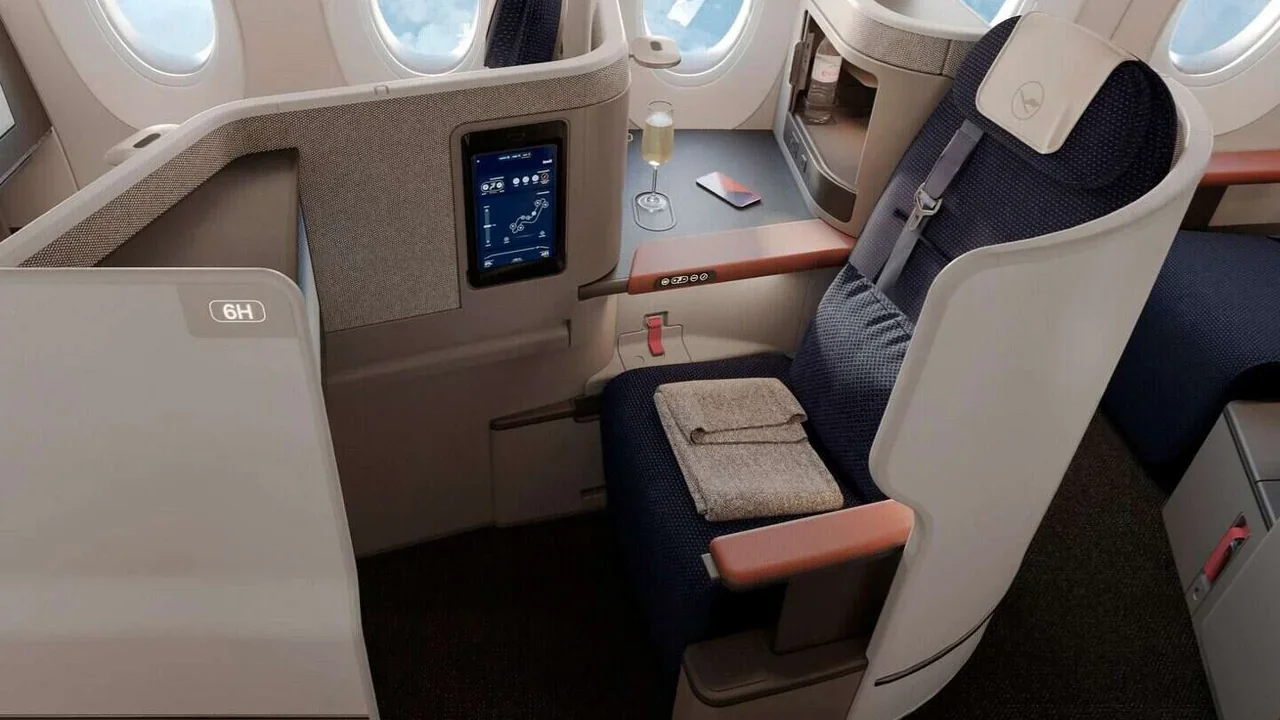
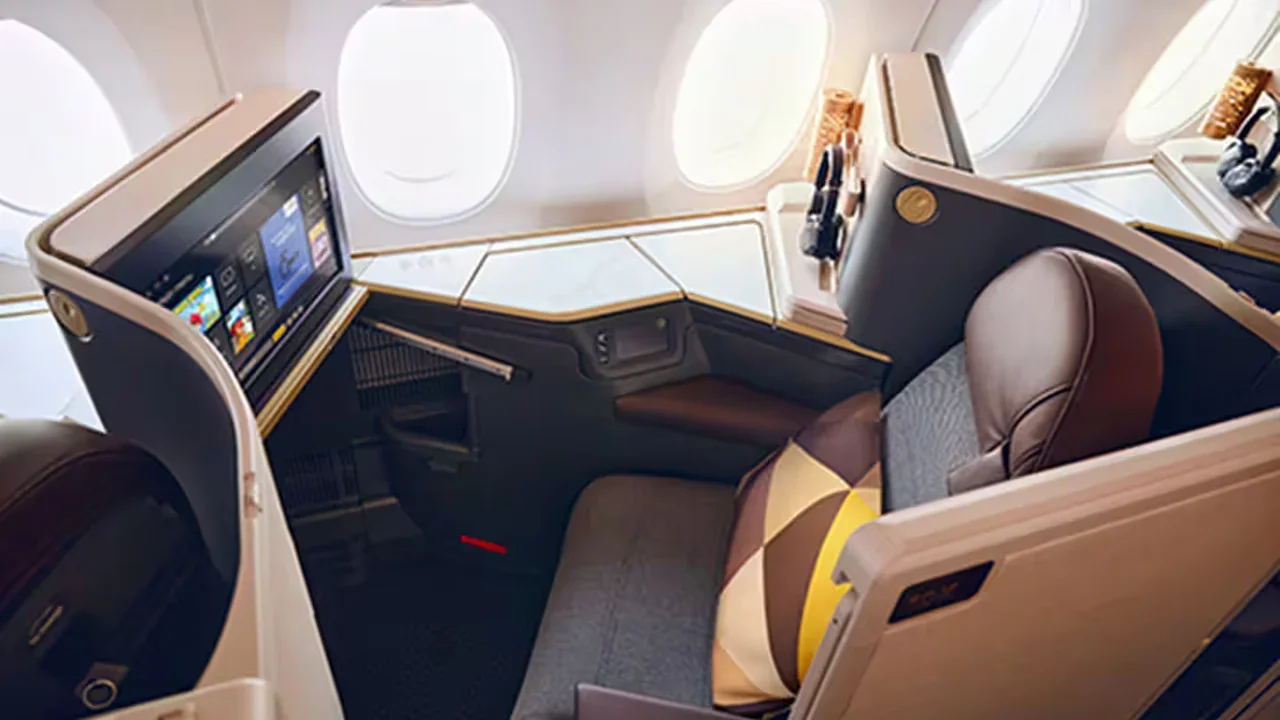
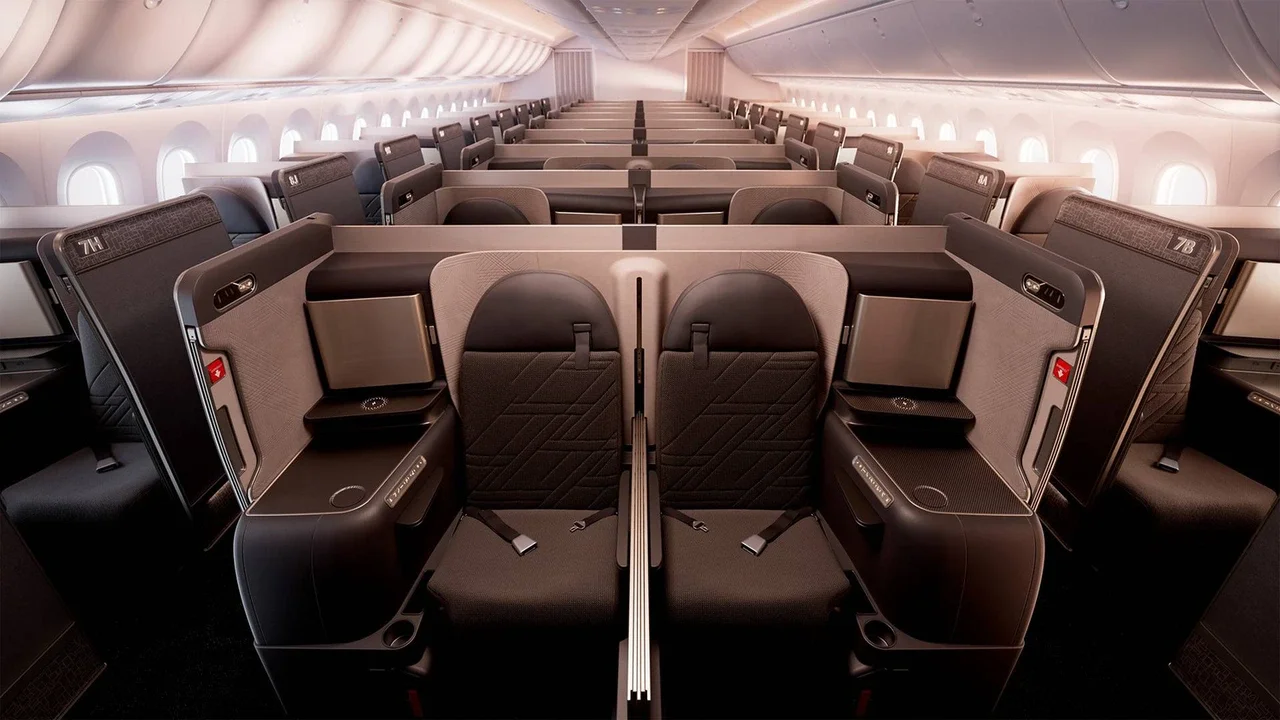
The A350 cabin runs a 1-2-1 configuration in business, which means every seat has direct aisle access. No climbing over your neighbor. No awkward middle-of-the-night negotiations. The seats themselves are the newer Cirrus product — angled slightly away from the window seats so you're not staring directly at the person across the aisle, with a proper full-flat bed that measures around 198cm when extended. The privacy shell is decent without being claustrophobic, and the storage is better than average. I've slept seven hours on the CDG-Singapore route and woken up not hating myself, which is the real benchmark.
The 777, by contrast, runs a 2-3-2 layout in business on some configurations, which means middle seats exist. Middle seats in business class. In 2026. If you're in one of those middle pairs and you're traveling solo, you're going to feel it. The seat itself is older, the IFE screen is smaller, and the overall feel is closer to "premium economy with a lie-flat" than a genuine front-cabin product.
Check your aircraft before booking
Air France operates both A350 and 777 on transatlantic routes. Always check the equipment code when booking — look for A35K (A350-900) vs 77W (777-300ER). The difference in comfort is significant enough to be worth routing around.
My honest recommendation: if the route you want only shows 777 metal and the A350 option means a connection or a different departure time, I'd seriously consider taking the connection. The A350 is that much better.
What Air France business class actually costs
How much should you expect to pay?
Retail fares on Air France business class from New York to Paris run anywhere from $2,800 to $7,000+ round-trip depending on the season and how far out you book. The $7,000 end is peak summer or holiday travel — that's full-fare J class, the kind corporates book on expense accounts without thinking twice. The more interesting number is the lower end.
Sale fares on this route have hit as low as $1,900 round-trip in the past 18 months. Those don't last long — we're talking hours, sometimes less — but they do happen. The Paris routes tend to drop around shoulder season (late January through March, and again in October). I've also seen solid fares appear on Tuesdays and Wednesdays when Air France is trying to fill seats that haven't moved.
Award pricing through Flying Blue — Air France's frequent flyer program — has gotten messier since they switched to dynamic pricing in 2022. You can still find good redemptions, but the 50,000-point sweet spots I used to rely on are gone. I've seen the same seat price at 42,000 points one week and 68,000 the next. Flying Blue Promo Rewards still occasionally surface with 25-30% discounts, and those are worth jumping on when they appear.
Set up a Flying Blue Promo Rewards alert for your target route. They run monthly promotions with 25–40% off award redemptions, and Paris routes come up regularly. The discount window is usually three weeks.
When do Air France business class fares actually drop?
The honest answer is that there's no single reliable pattern — which is why fare monitoring exists. But from what I've tracked over the past two years, the JFK-CDG route tends to see its lowest cash fares in late January and early February, and then again in the first two weeks of October. The CDG-Southeast Asia routes (Singapore, Bangkok, Hanoi) drop more sporadically, often tied to inventory rebalancing after Air France adjusts its schedule.
The LAX-CDG route is worth watching too. It's less competitive than JFK, which paradoxically sometimes means Air France discounts more aggressively to fill seats. I've seen $2,100 round-trip fares out of Los Angeles that would never appear on the New York route at that price.
If you're building a mixed itinerary — maybe flying business one way and positioning on a budget carrier — FlightKitten handles the economy side of that equation. It monitors fares across 220+ airlines and alerts you when prices hit your target. About $4.99 a month, and useful if you're cobbling together a trip where not every leg needs to be front of cabin.
The seat: what it's like to actually sleep on it
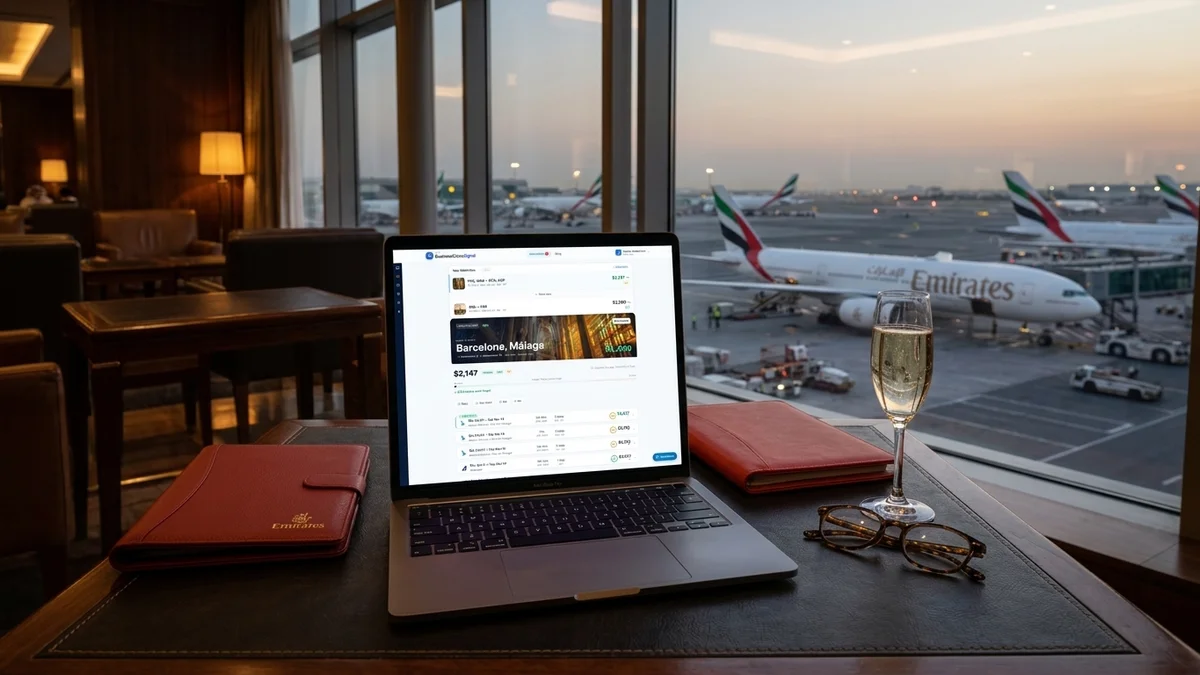
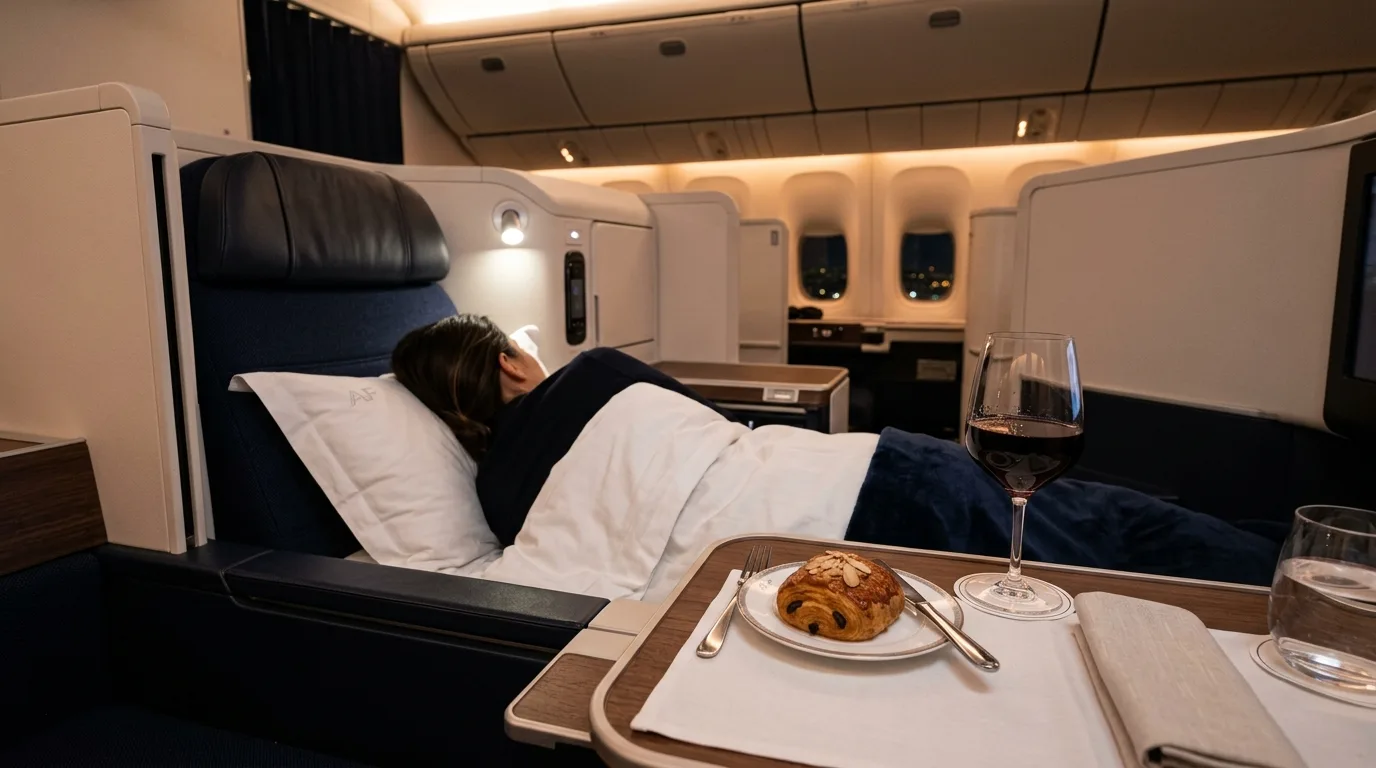
The Cirrus seat on the A350 has a few things going for it that don't always make it into the glossy reviews. The mattress pad they hand out is genuinely thick — not the sad two-millimeter foam sheet you get on some carriers. When you request it at the start of the flight (not after takeoff, when the crew gets slammed with meal orders), you get a proper layered setup that makes a real difference on a seven-plus hour overnight.
The seat width in lie-flat mode is around 69cm, which is comfortable for most people without being extravagant. I'm 6'1" and I fit fine, though my feet do end up in the footwell cubby when fully extended. The shoulder area is where the seat really earns points — it's wider than the lie-flat on the older 777 product and better padded than what you'll find on Lufthansa's 747 configuration.
Privacy varies depending on where you sit. The window seats in rows 1 and 2 on the A350 have a full shell behind them, which makes them the quietest option. The middle seats (the "honeymoon" pairs) are genuinely good for couples but feel exposed if you're solo. Rows toward the back of the cabin are fine but catch more galley noise.
Best seats on the Air France A350
Window seats in row 2 or 3 on the A350 business cabin are the sweet spot — full shell privacy, easy lavatory access, and far enough from the galley to sleep without interruption. Avoid 1A and 1K if you want privacy; they're right next to the divider curtain.
The IFE is running the new AF Connect system, which is a significant improvement over what was on the 777 fleet. Screen size is 17 inches, touch-responsive without being laggy, and the content library has gotten better — though I'll admit I mostly use the moving map and put on my own headphones. The USB-A and USB-C ports are in a sensible location this time, not buried behind the seat where you need a flashlight to find them.
The food: where Air France business class earns its reputation
French airline catering gets fetishized a bit, but Air France does legitimately put more thought into the meal service than most of its peers. The business class menu is developed in partnership with chefs from the Ducasse group on some routes, and even when it isn't, the quality of the main courses is noticeably above average.
On the JFK-CDG overnight I took in November 2024, the starter was a smoked salmon terrine with a crème fraîche and dill sauce — actually good, not just passable. The main I chose was a duck breast with lentils and a red wine reduction. It held up for airline food, which is a low bar, but the execution was better than I expected at 35,000 feet. The cheese course is the real standout: a proper selection, usually four or five options, served with walnut bread and fig jam. I've had worse cheese plates at restaurants on the ground.
Breakfast before landing in Paris is lighter — a fruit plate, croissant, and yogurt by default, with a hot option if you ask. The coffee is decent, not remarkable. The orange juice is fresh-squeezed on some routes, not on others. I haven't found a reliable pattern there.
If you're on a CDG departure heading west (the overnight back to North America), the dinner service starts about an hour after takeoff and the kitchen is more elaborate. I had a foie gras starter on the CDG-JFK flight last spring that I still think about. That's not me being dramatic — it was genuinely excellent.
They also do the "dine on demand" option now, where you can eat whenever you want rather than on the crew's schedule. In practice, this works better on longer routes (CDG-Singapore, CDG-Nairobi) than on the seven-hour transatlantic. On overnight transatlantic flights, most people eat within the first two hours anyway, so the flexibility matters less.
Order the cheese course every time. It's the most consistently excellent part of the Air France business class meal service and the one thing that genuinely differentiates the experience from competitors.
The CDG lounge: better than the reputation, not quite world-class
Charles de Gaulle has a complicated reputation, and some of it is deserved. Terminal 2E is fine once you're through security, but getting there is its own adventure. The Air France business class lounge in 2E — specifically the Hall L lounge, which serves the long-haul gates — is larger than most people expect and has improved noticeably since 2023.
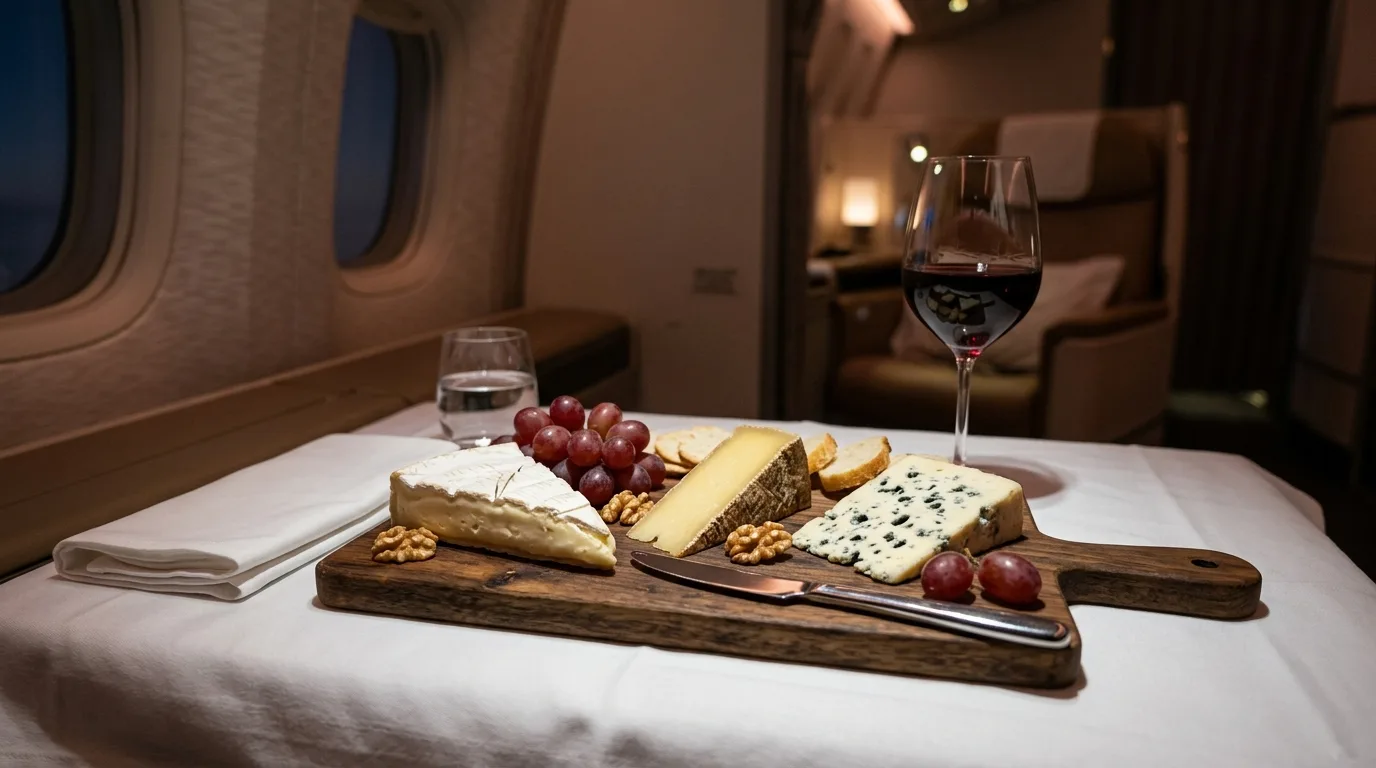
The food spread in the lounge is genuinely good. There's a hot buffet with rotating dishes, a dedicated cheese and charcuterie section that's stocked properly (not picked over like you'd find at some other carrier lounges at peak hours), and a bar with French wines that are actually worth drinking. I had a glass of Languedoc red on a 7am departure that I didn't feel bad about at all.
The showers are the weak point. There are never enough of them for the volume of passengers, and the booking system (you now reserve a slot via the lounge app) means if you arrive late or the flight was delayed, you might not get one before your gate opens. I've been burned by this twice. Arrive early if a shower matters to you.
Seating is adequate but not generous. The lounge fills up fast on mid-morning departures, and finding a quiet corner with a power outlet requires some hunting. The La Première lounge (for first class passengers) is a different world — but that's a different article.
Terminal 2E vs 2F at CDG
Air France business class passengers use different lounges depending on their departure hall. Hall L serves Schengen and most long-haul departures. Hall K is used for some transatlantic flights. They're not connected airside, so confirm which hall your gate is in before you settle in.
The WiFi in the lounge is solid. I've filed articles from there on tight deadlines and had no complaints. The lounge WiFi onboard is a different story — Air France's in-flight connectivity has improved but it's still inconsistent, and I wouldn't plan anything bandwidth-heavy mid-flight.
How Air France stacks up against the competition
The natural comparison is Lufthansa and British Airways — the other two big European flag carriers in this price bracket. Here's my honest read.
Against Lufthansa on the transatlantic: Air France's A350 product is better than Lufthansa's 747 business class, full stop. The seat is more modern, the meal quality is comparable or slightly better, and CDG (for all its chaos) is an easier connection hub than Frankfurt for North American passengers who aren't routing through Germany for a reason. Lufthansa's new Allegris product on the 787 is a different conversation — that's genuinely excellent — but it's not yet widely deployed on the routes most people care about.
Against British Airways: the comparison is almost unfair. BA's Club World seat on the 777 is cramped, the catering has never recovered from the cuts made during the pandemic years, and the T5 lounge at Heathrow — while large — serves food I'd describe as "aggressively mediocre." Air France beats BA on every dimension that matters for passenger comfort, in my experience. The only reason to choose BA over Air France is if you're routing through London for a specific reason or you've got Avios burning a hole in your loyalty account.
Against the Gulf carriers: that's not really a fair fight. Emirates, Qatar, and Etihad all have more lavish products if you're routing through the Gulf. But if you want to fly nonstop to Paris, Air France is the product you're getting.
What's changing in 2026
Air France has been rolling out updates to the business class product across its long-haul fleet, with the A350 expansion continuing through 2026. By the end of the year, the airline expects to have retired a significant portion of its older 777-200 fleet, which means the probability of landing on the inferior product goes down if you're booking late 2026 travel.
The dining program is also getting an update. Air France announced a new chef partnership for the business class menu on North American routes, taking effect from spring 2026. I haven't flown the updated menu yet, but the previous partnership produced consistently good results, so I'm cautiously optimistic.
The CDG lounge in Hall L is also mid-renovation as of early 2026. Sections are being refreshed in phases, which means the experience right now is a bit uneven — some areas look sharp, others are dated and clearly waiting their turn. By late 2026 it should be fully updated, but if you're flying through CDG in the first half of the year, manage expectations accordingly.
Flying Blue's loyalty program is worth keeping an eye on too. They've been experimenting with status-matching offers, and the XP (experience points) system has made elite status more achievable for people who fly Air France occasionally rather than exclusively. If you're not already enrolled, the Air France loyalty page has current status thresholds worth knowing before you book.
Should you book it?
Yes, with caveats. On the A350, Air France business class is a genuinely strong product — good seat, excellent food, a lounge that's above average even in its current transitional state. If you're flying Paris nonstop from North America and you want a quality lie-flat experience without paying Singapore Airlines prices, this is the sensible pick.
The caveats are real, though. Verify your aircraft before booking. Avoid the 777 middle seats if you can. And don't expect the CDG connection experience to be painless — it rarely is, especially if you're transiting on a tight window.
Fares on this route fluctuate enough that timing your purchase matters. We track the JFK-CDG, LAX-CDG, and a handful of other Air France long-haul routes at BusinessClassSignal — scanning twice daily and alerting you when prices drop below whatever threshold you set. The tool is straightforward: you tell it your route, your target price, and it does the watching. Useful if you're flexible on dates but not flexible on cabin class.
You can browse all the routes we monitor or read how the monitoring system works if you want to understand what you're signing up for before you do.
Monitor Air France business class fares on your route — 14-day free trial, no card required
Try Free