Quick summary
Airline alliances group carriers together so their frequent flyer programs, lounge access, and upgrade policies work across member airlines. For business class travelers, understanding which alliance you're in can mean the difference between sipping champagne in a flagship lounge and sitting in a crowded terminal café. This guide covers what oneworld, Star Alliance, and SkyTeam actually mean for your experience — not just on paper, but in practice.
Why alliances exist in the first place
No single airline can fly everywhere. That's the simple truth behind why alliances were invented. If you want to get from Cincinnati to Cape Town, you're almost certainly going to touch at least two carriers. The question is whether those carriers play nice with each other — or whether you're starting from scratch every time you switch planes.
Star Alliance launched in 1997 with five members. oneworld followed in 1999. SkyTeam came together in 2000. Between them, they now cover the vast majority of international routes, and the whole point — at least originally — was to let airlines code-share, coordinate schedules, and sell connecting itineraries without the passenger having to deal with a mess of separate bookings.
For economy travelers, alliances are mostly a background detail. For business class travelers, they're a much bigger deal.
When you fly in business class on a partner airline, what happens to your status? Can you access their lounge? Can you earn miles on your home program? Can you use those miles to upgrade? The answers depend almost entirely on which alliance you're in and which specific member airlines are involved. And the answers are not always what the glossy alliance brochure suggests.
Alliance rules vs. airline rules
The alliance sets the floor — minimum standards that members agree to. But individual airlines often override those standards in either direction. Some are more generous than the alliance requires. Others quietly restrict benefits that the alliance technically allows. Always verify directly with the operating carrier before you book.
Star Alliance: the biggest network, with uneven lounge quality
Star Alliance is the largest of the three, with 25 member airlines covering over 1,300 destinations. United Airlines, Lufthansa, Singapore Airlines, ANA, Air Canada, Turkish Airlines — they're all in here. On paper, that's an extraordinary network. In practice, it's a collection of airlines that vary enormously in product quality, and the alliance membership doesn't do much to smooth that out.
For lounge access, Star Alliance Gold status (which you earn through any member airline) theoretically gets you into any Star Alliance lounge when you're flying on a Star Alliance carrier. I say "theoretically" because the lounge quality swings wildly. The Lufthansa Senator Lounge in Frankfurt is genuinely excellent — good food, quiet seating, a proper bar. The United Club in, say, Houston Bush is a different animal entirely: crowded, mediocre buffet, no real sense that you've stepped into anything premium. Both technically qualify as "Star Alliance lounges."
If you hold United MileagePlus status and you're flying ANA in business class, you can access ANA's lounges in Japan — and those are worth going out of your way for. The ANA Suite Lounge at Tokyo Haneda has a ramen bar that I've genuinely looked forward to on connecting flights. That's the upside of a broad alliance: occasionally, a partner gives you something your home airline never would.
How does earning and burning miles work across Star Alliance?
Generally, you can earn miles on your home program when flying any Star Alliance carrier, as long as you put your frequent flyer number on the booking. The earn rates vary by partner and by fare class. A deeply discounted business class fare on Turkish Airlines might earn at 50% of miles flown on your United account. A full-fare J ticket on Singapore Airlines will typically earn at 150% or more. The fare class code on your ticket determines the earn rate, and it's not always obvious what that code is until you're looking at a paper ticket or a booking confirmation.
Redemptions are trickier. Most Star Alliance programs let you book partner awards, but the availability is rarely as good as flying your own metal. United makes some ANA first-class space available through MileagePlus, which is one of the most well-known sweet spots in the business class award world. But ANA controls that inventory, and it can disappear fast. Finding available award space is half the game.
If you're chasing Star Alliance status for lounge access, go for Lufthansa or Singapore Airlines status if you can. Their own lounges — and the partner access that comes with their top tiers — tend to be significantly better than what you'd get through United or Air Canada.
oneworld: the premium-heavy alliance
oneworld has 13 members, the smallest of the three major alliances, but they include some of the most consistently premium carriers in the world: Qatar Airways, Cathay Pacific, British Airways, Japan Airlines, Finnair, and American Airlines. If you're building a strategy around business class specifically, oneworld deserves serious attention.
The alliance's top tier — oneworld Emerald — is one of the better status levels in commercial aviation. You get first class lounge access when flying business class on any member airline. That means if you're flying JAL business class in a oneworld Emerald capacity, you can use JAL's first class lounge in Tokyo, which is a genuinely different experience from the business class lounge. Better food, quieter, less crowded. That asymmetry — business class ticket, first class lounge — is rare and worth knowing about.
Qatar Airways is probably the strongest individual carrier in the alliance right now for long-haul business class. Their QSuites product on the 777 and A350 is the best business class seat I've sat in on a long-haul flight, full stop. The door-to-door privacy, the bed length, the service — it's the real thing. Cathay Pacific's business class is also excellent, particularly on the A350 routes out of Hong Kong.
British Airways is the complicated one. They're a oneworld anchor, and the Avios program (now merged with Iberia Plus and Aer Lingus AerClub into IAG's loyalty ecosystem) is genuinely useful for short-haul redemptions. But the BA business class product on long-haul has been a source of genuine frustration for years. The Club World seat on older 777s has a herringbone layout that puts you facing partially sideways, and the lounge food at Heathrow T5 is, in my honest experience, mediocre at best. The coffee from the self-service machines is barely drinkable. This is not a world-class product. It's a mixed bag flying under a well-known name.
oneworld Emerald via American Airlines
American's AAdvantage program requires 100,000 Elite Qualifying Miles for Executive Platinum status, which maps to oneworld Emerald. If you fly a lot of domestic US routes in business, this can be a realistic path to first class lounge access at Cathay and Qatar properties worldwide — which is a significant upgrade on what American's own Admirals Club offers.
Is oneworld worth it for business class redemptions?
For awards specifically, oneworld has some of the most interesting redemption options available. American AAdvantage lets you book Cathay Pacific and JAL business class using miles, often with better availability than those airlines' own programs. Cathay Pacific business class from the US West Coast to Hong Kong can be found for around 70,000 AAdvantage miles one-way in business — that's solid value against cash prices that regularly run $3,500 or more per direction.
JAL business class is another standout redemption target through AAdvantage. The JAL Sky Suite on their 787 routes is a proper flat bed with direct aisle access, and the service is exactly what you'd expect from a Japanese carrier: precise, thoughtful, unhurried. Booking it with American miles rather than JAL miles usually gives you better availability. That's the kind of alliance arbitrage that actually matters.
Iberia Avios is worth a separate mention. They often price business class redemptions lower than British Airways Avios for the same flights, because Iberia prices by distance while BA prices by zone. On a long transatlantic route, that difference can be substantial. They're part of the same IAG group, so the miles are technically interchangeable, but the redemption rates are not.
SkyTeam: the underdog with some serious strengths
SkyTeam gets talked about less than the other two, which I think is partly unfair. Yes, Delta and Air France are the anchor carriers, and yes, some of the other members (Aeroflot, Garuda Indonesia, Saudia) have complicated reputations. But the core network is solid, and for certain travelers it's the best option available.
SkyTeam's 19 members include Delta Air Lines, Air France, KLM, Korean Air, China Eastern, Alitalia's successor ITA Airways, and Vietnam Airlines among others. The geographic coverage leans heavily toward Europe and Asia-Pacific, with Delta providing the North American backbone.
Delta is, by most measures, the best-run major US carrier right now from a business class perspective. Delta One on their long-haul routes — particularly the A330-900neo and the 767-400 configured with the Delta One Suites product — is genuinely competitive with what you'd find on international carriers. The suites have sliding doors, which puts them in the same conversation as Qatar QSuites and Virgin Atlantic's Upper Class. The food quality is better than United and American. The lounges (Delta Sky Club, and the Delta One Lounge in JFK) are a cut above most US carrier lounges.
Air France business class on long-haul is also worth taking seriously. The La Première first class product gets most of the attention, but the Air France business class seat on the 777 is a solid flat bed with direct aisle access, and the catering reflects the airline's culinary heritage in a way that doesn't feel forced. Charles de Gaulle is a chaotic airport, but the Air France lounges there are decent. The Salon Premiere is reserved for first class, but the business class lounge is well-stocked and usually less crowded than equivalent Heathrow options.
Korean Air is probably the most underrated carrier in SkyTeam for long-haul business class. Their Prestige Suite on the 787-9 is a proper enclosed suite, and Incheon Airport is one of the best transit airports in the world — clean, efficient, excellent food options, good lounge facilities. If you're routing through Asia and have flexibility, Seoul is worth considering as a hub.
SkyTeam Elite Plus lounge access
SkyTeam Elite Plus status (the top tier) gets you into business class lounges when flying any SkyTeam carrier, regardless of your ticket class. On longer itineraries with multiple connections, this can translate to meaningful comfort. The access rules are more straightforward than oneworld's tiered system, which some travelers find easier to navigate.
What airline alliances actually mean for upgrades
This is where most people get disappointed, and I'd rather be straight with you than let you find out the hard way.

Complimentary upgrades on partner airlines are rare. Most airlines will upgrade their own frequent flyers on their own metal. They will almost never upgrade you on a partner carrier using your status from another airline. The alliance doesn't require it, and the airlines don't want to give away a premium seat to someone whose loyalty is primarily to a competitor.
Mileage upgrades on partner airlines are also largely a myth for business class. Some programs technically allow it, but the award space required to confirm an upgrade on a partner flight is almost never released. I've seen travelers spend hours on hold trying to use miles for a partner upgrade and come away with nothing. The practical advice: if you want business class on a partner airline, book it outright — either with cash or with a partner award redemption, not an upgrade request.
Where alliances genuinely do help with upgrades is on your home carrier, through status recognition. If you've built status on Delta and you're flying Delta, your Medallion status gives you upgrade priority. If you're flying a SkyTeam partner, that status might get you a better seat assignment or priority boarding, but don't count on a seat in business class unless you've paid for one.
The one real upgrade pathway through alliances: some programs sell confirmed upgrade certificates that work on partner flights. Qantas (oneworld) has offered these. So has Lufthansa (Star Alliance). They're not always advertised prominently — worth asking your home program about when you're booking a partner itinerary.
Lounge access across alliances: the practical reality
I've been in a lot of lounges. The alliance branding on the door tells you relatively little about what's inside.
The way it's supposed to work: if you hold top-tier status in any alliance, you get access to the appropriate lounge tier at any member airline's airport. Star Alliance Gold gets you into Star Alliance Gold Track lounges. oneworld Emerald gets you into first class lounges (or the highest available lounge) at oneworld member airports. SkyTeam Elite Plus gets you into business class lounges across the alliance.
In practice, there are gaps. Some airlines have "dedicated" alliance lounges that are separate from their own premium lounges. These dedicated alliance lounges are often the lesser product. Heathrow's oneworld lounge — separate from the BA First Lounge and the Galleries First — is fine but unremarkable. If you're connecting through LHR on a oneworld carrier other than BA, that may be what you get access to rather than the flagship product. The distinction matters.
A few specific notes from my own time in these rooms:
The Lufthansa First Class Terminal in Frankfurt (FRA) is accessible to Lufthansa HON Circle members and first class passengers on Lufthansa metal. It's not an alliance lounge — it's Lufthansa's private product — and your Star Alliance Gold status alone won't get you in. But it's genuinely one of the best airport experiences in the world. Private rooms, a proper restaurant, a car to the plane. Worth mentioning because it illustrates how the best stuff is always behind the airline's own walls, not the alliance's.
Qatar's Al Mourjan Business Lounge in Doha (DOH) is accessible to oneworld Emerald members flying on Qatar. It's large, well-catered, has a proper à la carte restaurant, and is genuinely one of the better business class lounges I've used. The hot food quality is above average. The downside is that Doha is a long way from most people's routing, but if you're connecting there, you're not being punished for it.
Airline alliances explained: what this means for how you book
If you're booking business class with any frequency, alliance membership should be one of the first things you look at — not the last. Here's how to think about it practically:
Pick one alliance as your primary loyalty home. Don't split your miles across programs indiscriminately. The benefits of status compound when you concentrate them. Figure out which alliance covers the routes you actually fly most, then identify the program within that alliance where your miles are most valuable for redemptions.
Business class fare drops happen on partner routes too. If you're monitoring a JFK-Tokyo route and you're a Star Alliance loyalist, an ANA price drop matters to you even if you're not flying United metal. The alliance connection means your miles and your status still apply.
And the alliance can affect which card you should carry. Several premium credit cards are tied to specific alliance ecosystems. The Chase Sapphire Reserve transfers to United (Star Alliance) and to Hyatt, but not to Delta or American. The Amex Platinum transfers to Delta (SkyTeam) and to British Airways (oneworld). If you're building a points strategy around business class, your credit card choices and your alliance choices should be aligned.
One thing I track closely through how the monitoring system works at BusinessClassSignal: alliance partners often drop prices simultaneously. When Lufthansa drops business class fares from New York to Frankfurt, Swiss and Austrian (both Star Alliance members) frequently follow within 24-48 hours. That's the alliance dynamic working in your favor — competition within the group drives fares down, and if you're watching multiple carriers on the same route, you can catch those windows.
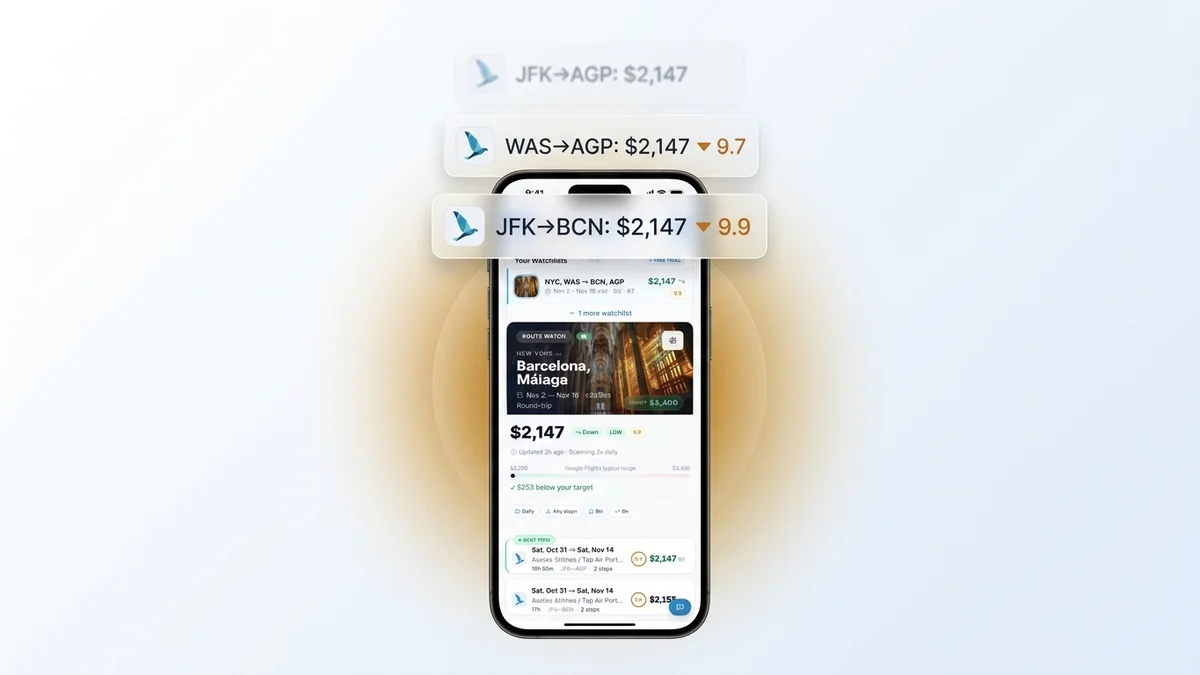
BusinessClassSignal monitors over 800 business class routes across all three alliance networks, scanning twice daily. If you have a target route and a target price, you can set an alert and let the system do the watching. A round-trip business class fare to Europe averages around $2,147 when fares drop below typical levels — but those windows are short, sometimes 12-18 hours.
The alliance structure also matters for browsing all routes strategically. If you're flexible on carrier but fixed on destination, knowing which alliance members serve that route gives you multiple monitoring targets. London from New York: BA (oneworld), Virgin Atlantic (now SkyTeam after their 2023 accession), and the various US carriers. Tokyo: ANA (Star Alliance), JAL (oneworld). Paris: Air France (SkyTeam). The alliance lens helps you see the full picture.
Alliance day passes
Some airlines sell lounge day passes to travelers without status. These are almost always underadvertised. If you're flying business class on a partner carrier and your status doesn't qualify you for the airline's flagship lounge, check whether the operating carrier sells day access. Prices range from $50-$150 but can be worth it on a long layover in a good lounge city.
The bottom line on airline alliances explained as a concept: they're a framework, not a guarantee. The framework is useful — it gives you a map of where your status and miles travel with you. But the map has gaps, the territory varies, and the airlines are always adjusting the terms. The travelers who do best with alliances are the ones who understand both the rules and the exceptions, who check the fine print before booking, and who aren't surprised when the partner experience doesn't match the home carrier experience.
Pick your alliance. Pick your program. Watch the routes that matter to you. And when the fare drops, move fast.
BusinessClassSignal monitors business class fares across all three alliance networks — 800+ routes, alerts when prices drop below your target. 14-day free trial, no credit card required.
Start monitoring free