Quick summary
Airlines don't set business class prices the way a retailer sets the price of a shirt. Prices change dozens of times a day based on algorithms that weigh load factors, booking curves, competitor fares, and remaining seat inventory. Understanding how airline revenue management actually works is the fastest way to understand why automated fare monitoring catches deals that human searching almost always misses.
The price you see is a snapshot, not a price
Here's something most travelers never fully internalize: the fare displayed when you search a flight is not really "the price." It's a price. Specifically, it's the price that a revenue management system calculated should be shown to a person with your search characteristics, at this moment, given current inventory levels, competitive pressure, and about forty other variables you'll never see.
I've been writing about premium air travel for twelve years. I've interviewed revenue management analysts, read through airline pricing strategy documents that leaked into the public domain, and watched fare alerts fire on routes I monitor — sometimes three times in a single day on the same flight. The gap between what airlines charge at peak demand and what they're willing to accept when things go sideways can be genuinely staggering. I've seen transatlantic business class drop from $6,400 to $1,900 in under 48 hours on the same itinerary.
That's not a glitch. It's the system working exactly as designed.
What airline revenue management actually is
Airline revenue management (sometimes called yield management) is the practice of selling the right seat, to the right customer, at the right time, for the right price. Airlines have been doing some version of this since the deregulation era of the late 1970s, but the modern algorithmic version is a different beast entirely.
What is airline revenue management, technically? It's a set of software systems — often built by third-party vendors like PROS Holdings, Amadeus Revenue Management, or Sabre AirVision — that continuously optimize how many seats are offered at each fare class, and at what price. These systems ingest historical booking data, current load factors, competitor pricing feeds, macroeconomic signals, and event calendars. They spit out fare class availability recommendations that get pushed to the global distribution system (GDS) multiple times a day.
The major carriers have teams of analysts — typically called revenue management analysts or RM analysts — whose entire job is to monitor these system outputs, override them when the algorithm is wrong, and tune the models over time. At a large network carrier, you might have 30 or 40 people doing this across a route network of hundreds of city pairs.
Fare classes: the invisible architecture behind every price
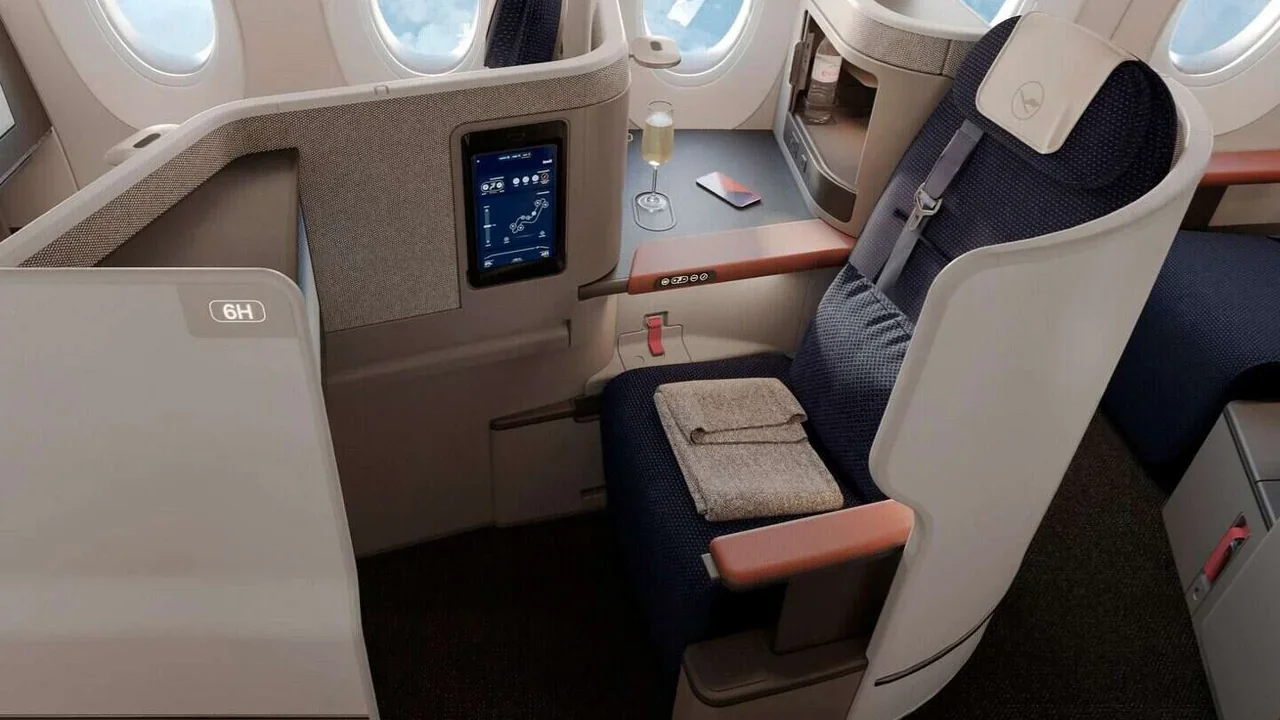
When you buy a business class ticket, you're not just buying a seat. You're buying a specific fare class within business class. Airlines use letter codes — J, C, D, I, Z are common business class fare buckets — to segment what looks like one cabin into multiple pricing tiers.
The seat is identical. The service is identical. The difference is purely how many seats the airline has decided to make available at each price point, and under what conditions you can cancel or change.
Here's where it gets interesting. Revenue management systems set these fare class availability levels dynamically. Early in the booking window — say, 11 months out — an airline might open up a handful of deeply discounted "I" or "Z" class seats to stimulate demand and get some revenue on the books. As the flight fills and the departure date gets closer, those cheap fare classes close. The algorithm shifts availability toward higher fare buckets. If the flight is selling well, you might find only full-fare "J" class available, which on a transatlantic route can run $8,000–$12,000 round trip.
But the system also works in reverse. If a flight is 60 days out and business class is only 40% full, the system starts getting nervous. It may reopen those discounted fare classes to stimulate bookings. Suddenly a $5,500 fare drops to $2,200 for 18 hours while the algorithm tests whether lower prices will move inventory.
The 'J' vs 'I' class distinction matters
When you see a business class price that seems too good, check whether you're being booked into a discounted fare class. Some of those cheaper buckets have no mileage accrual, no upgrades, and restrictive change fees. Always read the fare rules before you book.
How demand forecasting shapes what you're charged
The foundation of airline revenue management is the booking curve — a model of how a specific flight on a specific route typically fills over time. Airlines have years of historical data on this. They know that JFK-LHR on a Tuesday in October fills differently than JFK-LHR on a Friday in December. They know that corporate travel demand on transatlantic routes collapses in August and surges in September.
The system compares current bookings against the historical booking curve for that flight. If you're tracking 15% above the historical pace at 90 days out, the algorithm interprets that as strong demand and starts closing cheap fare classes early. If you're tracking 20% below the curve, it starts taking action to stimulate bookings — dropping prices, releasing more discounted inventory, sometimes both.
This is why the same flight can be dramatically cheaper in some windows than others, and why those windows are hard to predict without actually watching the fare.
When do business class prices typically drop?
There's no universal answer, which is what the "book 6 weeks in advance" advice gets wrong. The timing of price drops depends on the route, the season, and how that specific flight is performing against its booking curve. That said, a few patterns hold up reasonably well.
On long-haul routes with heavy corporate demand — think New York to London, Los Angeles to Tokyo, Chicago to Frankfurt — the sweet spot for discounted business class fares tends to appear either very early (10-11 months out, when airlines first open inventory and want to seed the booking curve) or in a specific window 3-6 weeks before departure, when unsold business class seats start looking expensive to leave empty.
The 3-6 week window is where I've personally caught the most interesting fares through monitoring. I watched a Chicago O'Hare to Frankfurt business class route swing from $4,800 to $1,750 round trip about 28 days before departure last spring. It was available for roughly 22 hours before the fare class closed again.
There's also a less-discussed pattern around schedule irregularities. When an airline resets its schedule — after an irregular operation, a weather event that disrupted loads, or a route frequency change — revenue management systems sometimes recalibrate in ways that temporarily open discounted inventory. These are short windows, and they're almost impossible to catch unless you're watching the route actively.
Tuesday and Wednesday departures on transatlantic routes consistently have softer demand than Thursday through Sunday. If your dates are flexible, even by two days, the price difference in business class can be several hundred dollars.
Competitor pricing and the real-time chess match
No airline prices in a vacuum. Revenue management systems at every major carrier are constantly ingesting competitor fare data through GDS feeds and public fare monitoring tools. When British Airways drops its JFK-LHR business class fare, you can bet that United and American's systems are aware of it within minutes, and their algorithms are running the math on whether to match, undercut, or hold.
This competitive dynamic creates some of the most interesting — and brief — fare opportunities. When one carrier breaks ranks on price (often because they're protecting load on a specific flight), others sometimes follow. You get a brief window where two or three airlines are simultaneously offering the same route at prices that none of them would have offered individually.
The flip side is that competitive pricing also normalizes fares upward. When demand is strong across all carriers on a route, there's no incentive for anyone to discount. Prices ladder up together. This is why peak holiday windows are almost always expensive regardless of how far in advance you book.
Why do airlines sometimes sell business class for almost nothing?
This question comes up a lot, and the honest answer is that airlines are sometimes willing to take a significant loss on a few seats to protect overall load factor on a flight.
An empty business class seat has zero revenue value. But it also has a real cost — the cabin crew ratio, the catering, the infrastructure. More importantly, a flight that departs looking half-empty in business class is bad for the airline's brand perception, affects crew morale, and can create problems with corporate accounts who notice that the premium cabin looks abandoned.
So there's a floor-price mentality that kicks in: at some point, $1,500 round-trip beats zero. Revenue management systems are designed to find that floor and clear inventory rather than let seats expire worthless.
The complication is that airlines don't want to train travelers to wait for last-minute drops. So they don't advertise these floors, they don't make them predictable, and they open and close them quickly. The whole game theory of revenue management depends on price opacity. If everyone knew exactly when prices would drop, demand would shift and the model would break.
Last-seat availability and why the algorithm gets weird near departure

As a flight approaches its departure date, the revenue management calculus changes in a specific way. Airlines shift from yield optimization (getting the most money per seat) toward load factor protection (making sure the plane isn't embarrassingly empty).
Inside 14 days, and especially inside 7 days, you start to see what analysts call "last-seat availability" dynamics. The system is making a final call: hold price and risk empty seats, or release inventory at discount and accept lower yield. Different airlines have different philosophies on this. Some carriers are more willing to dump inventory late; others hold firm on price almost to the gate.
Lufthansa, in my observation, tends to hold firm on business class pricing until relatively close in — they'd rather have an empty seat than cheapen the product in the market's perception. Air France, especially on routes where they're competing with low-cost carriers on the short-haul end, can get quite aggressive on last-minute business class drops. These aren't absolute rules — both carriers vary by route and season — but the tendencies are real.There's also a separate dynamic called "distressed inventory," which is when an airline needs to move seats fast because of a schedule change, an aircraft swap, or a sudden drop in corporate bookings. Revenue management analysts can manually trigger price drops in these situations, bypassing the algorithm's normal recommendations. These are genuinely the best deals in the system, and they're entirely unpredictable without continuous monitoring.
The problem with searching manually
If you're checking fares yourself every few days, you're almost certainly missing the distressed inventory windows. These openings can last 12-36 hours and often happen at times when nobody's actively searching — Wednesday evenings, early Sunday mornings. The only way to catch them reliably is to have something watching the route for you.
How airline revenue management creates the case for automated monitoring
Everything I've described above adds up to a single uncomfortable truth: the way most people search for business class fares is almost perfectly misaligned with how airline revenue management actually works.
The typical approach is to check a few times over a few weeks, maybe set a Google Flights price tracker, and book when the price feels acceptable. The problem is that Google Flights price tracking is relatively slow, updates infrequently, and doesn't distinguish between fare classes. It'll tell you "prices dropped" but won't tell you that the drop is in a fare bucket with no mileage accrual and a $300 change fee.
More critically, the deals that come from distressed inventory, competitor matching windows, or algorithm recalibration can open and close faster than a twice-a-week manual check will ever catch.
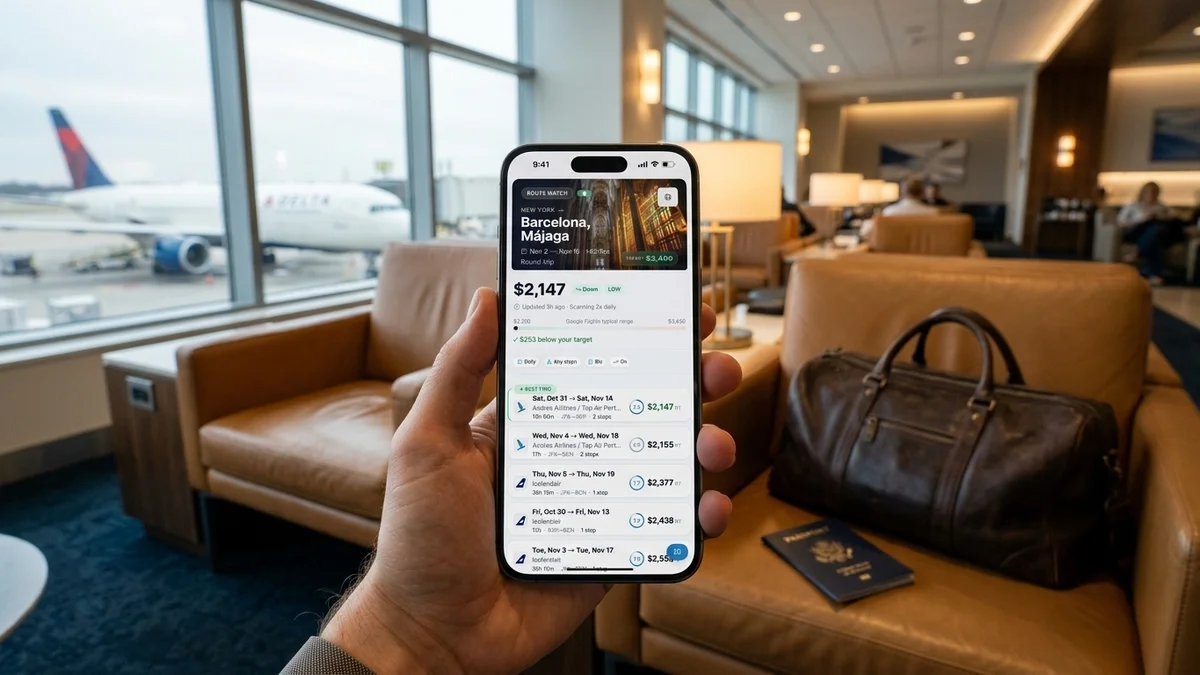
This is exactly why I built BusinessClassSignal. The monitoring system scans 800+ business class routes twice daily — sometimes more frequently on routes with high price volatility — and alerts subscribers when prices drop below their target threshold. It tracks fare class, not just price, so you know whether the drop is in a genuinely bookable bucket with reasonable conditions. And it's built specifically for the patterns I've described: the early booking windows, the pre-departure distressed inventory drops, the competitive response cascades.
BusinessClassSignal isn't magic. It can't predict when a fare will drop. What it does is make sure you don't miss it when it does.
Set your target price at roughly 40-50% below the "normal" fare you see when you first search a route. That sounds aggressive, but on most long-haul business class routes, fares at that level appear at least once or twice in a 6-month booking window. If you're not monitoring, you'll never see them.
The part airlines don't want you to think about
Revenue management is, at its core, a system designed to extract maximum willingness-to-pay from every segment of customers. The leisure traveler who has flexibility gets the cheap seat — if they're patient and lucky. The corporate traveler who needs to be in London on Tuesday gets charged $8,000 because the system knows they'll pay it.
The interesting wrinkle is that in business class, the revenue management model is actually somewhat more fragile than in economy. There are fewer seats, the price points are much higher, and the demand profile is narrower. A single large corporate account canceling a block of seats 30 days out can meaningfully change the economics of a flight. That's when you get those mid-range business class drops — not a fire sale, but a $4,800 fare sliding to $2,200 because the load factor math suddenly changed.
I've been watching this long enough to have some feel for it, but I won't pretend I can predict individual fare moves with any precision. Nobody can. What I can say is that the routes I monitor through BusinessClassSignal consistently surface price drops that I would have missed if I were searching manually, even as someone who thinks about this professionally.
The airlines have sophisticated systems working to charge you as much as you'll pay. It seems reasonable to have something working the other way.
Start monitoring business class fares — 14-day free trial
Try Free