Quick summary
If you're flying overnight in business class, the product you're on matters enormously — the difference between arriving rested and arriving wrecked often comes down to flat-bed angle, mattress padding, and how well the suite blocks out cabin noise. This article ranks the seven best airlines for sleeping in business class, based on personal experience across 200+ segments, with specific notes on bedding, privacy, and which routes to target.
Why sleeping in business class isn't automatic
People assume that buying a business class ticket solves the sleep problem. It doesn't, not entirely. I've slept brilliantly on Qatar and woken up feeling like I'd been folded into a carry-on bag on a legacy US carrier with a "flat bed" that was anything but. The angle matters. The padding matters. The noise coming from the galley three feet from your head matters.
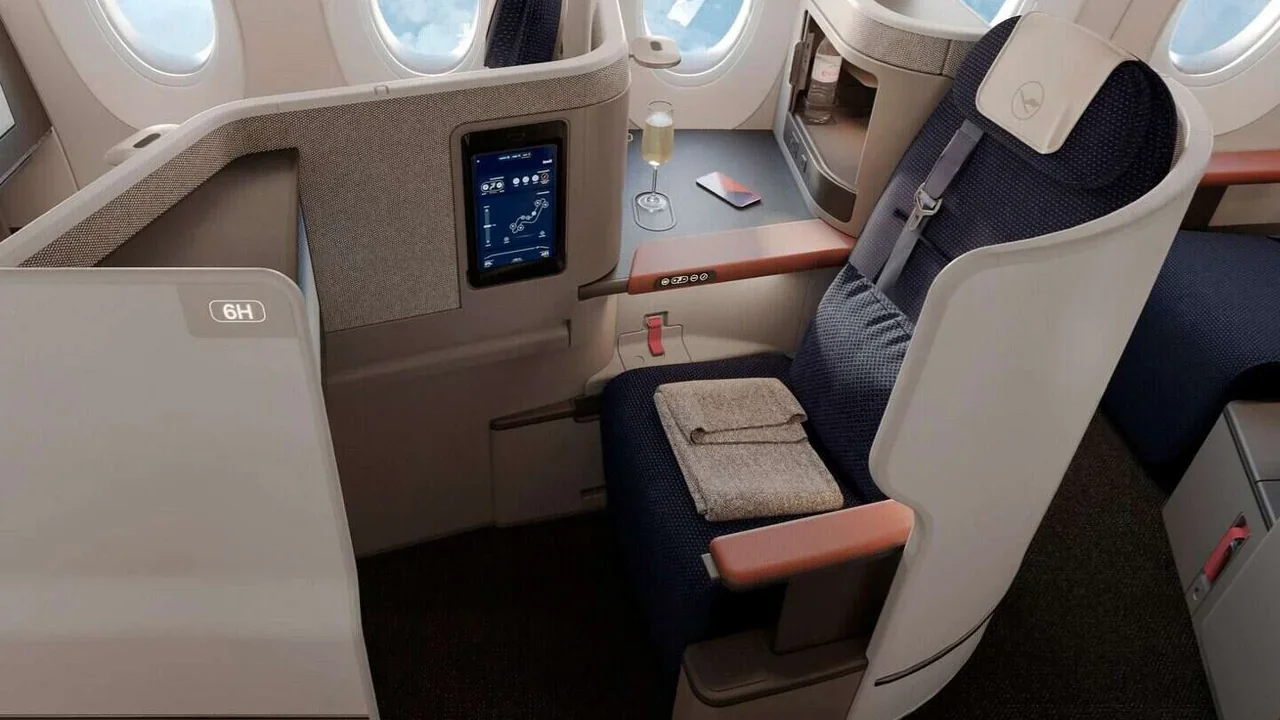
The best business class sleeping experience comes down to four things: whether the seat goes fully flat (not 170 degrees — flat), how much padding sits between you and the hard shell underneath, how enclosed the suite is, and whether the airline actually gives you bedding that's worth using. A thin blanket and a foam pillow wrapped in a poly-cotton case is not bedding. It's a suggestion.
There's also the question of aisle traffic. On a long overnight flight, even a small amount of light and movement from other passengers walking past can interrupt sleep repeatedly. The best products have thought about this. Most haven't.
What follows is my honest ranking of the seven airlines that currently do this best, based on what I've actually experienced. A couple of these will surprise you. At least one popular airline didn't make the list for reasons I'll explain.
1. Singapore Airlines (Suites and Business Class)
Singapore is the obvious number one, and it earns it. The Suites product on the A380 — which operates on Singapore–London, Singapore–New York via Frankfurt, and a handful of other routes — is genuinely in a different category. Sliding doors, a proper bed made up separately from the seat, and a mattress topper that's thick enough to actually do something. The bedding is from Lalique. That's not marketing; I've felt the difference.
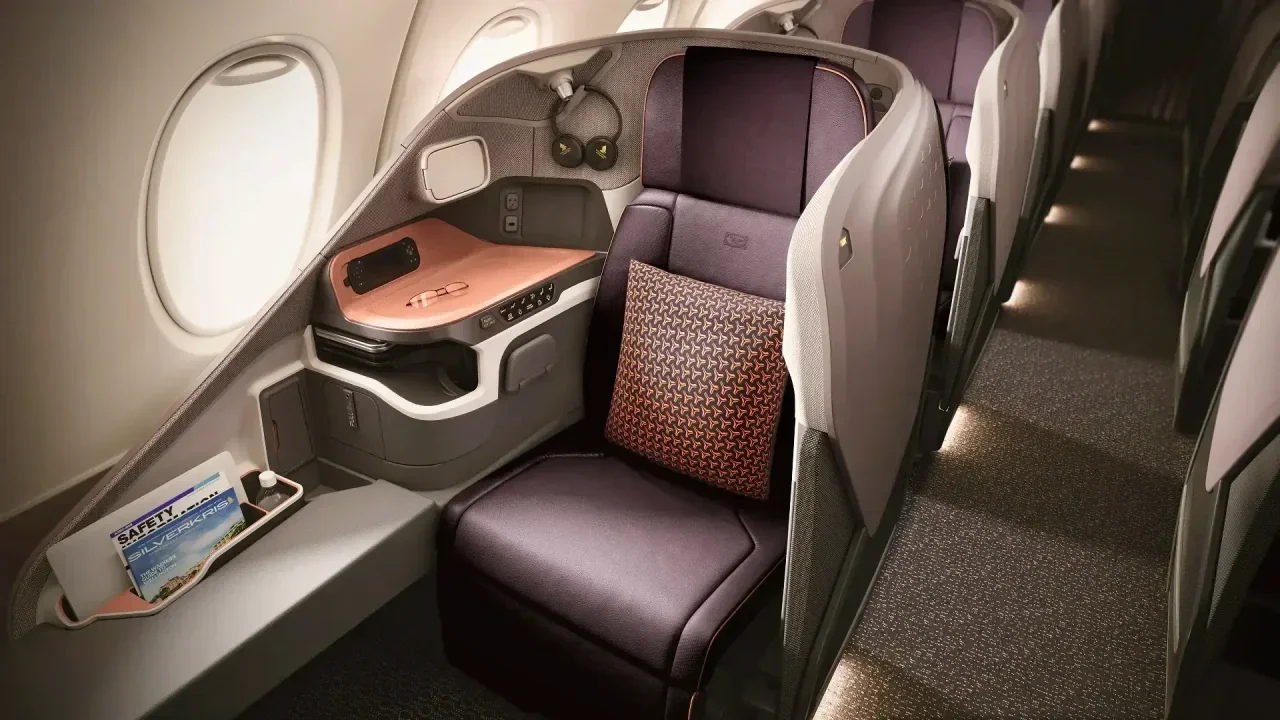
But here's the thing: even their standard business class on the 787 and A350 is excellent for sleeping. The seats are angled slightly away from the aisle, so when you're lying flat, you're not staring directly at whoever walks past. The recline is genuinely flat. And Singapore's cabin crew will actually make up your bed for you — turn down service, pillow properly positioned — if you ask before pushback.
The noise isolation is better than most because the seat shells are tall and well-designed. I slept six hours JFK–Frankfurt on the 777-300ER without waking once. That's the benchmark I use.
On Singapore flights over 10 hours, ask for the turndown service before the meal, not after. The crew gets busy post-dinner and you'll wait longer than you want to.
2. Qatar Airways (QSuite)
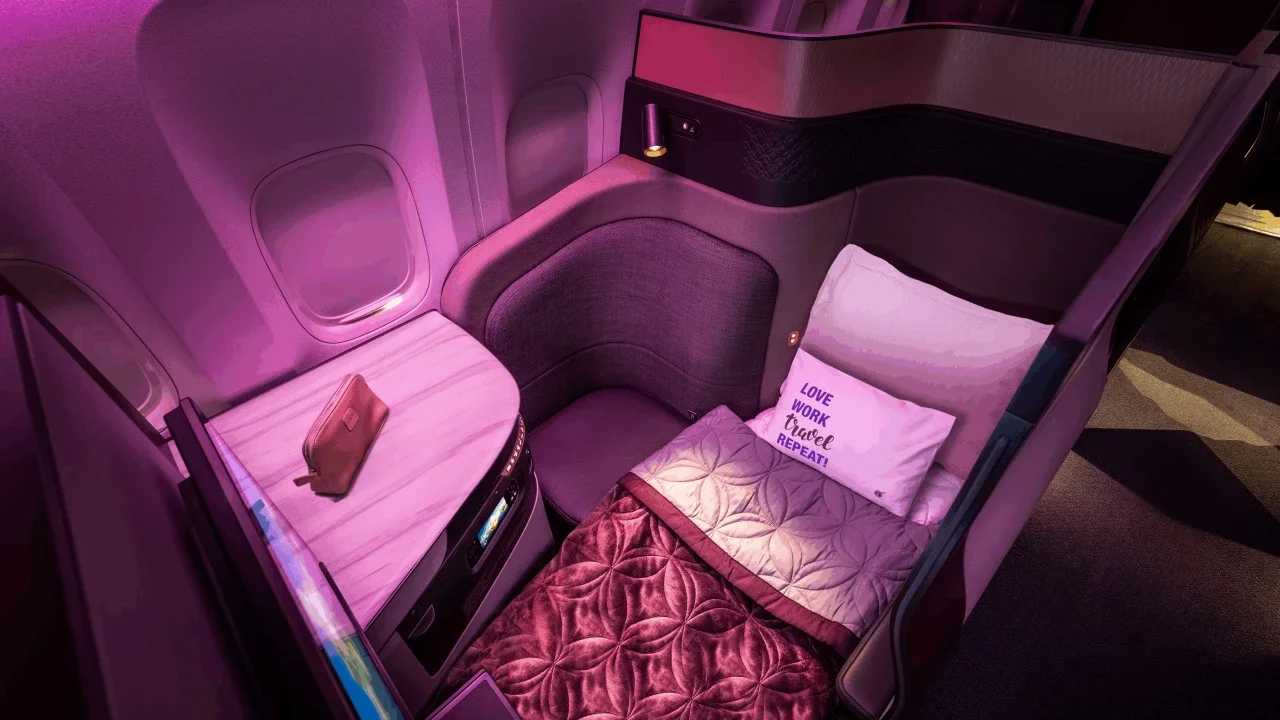
QSuite is the product that genuinely changed the conversation about business class sleeping. The double-door suite configuration means that when both panels are closed, you're in what feels like a small room. There's almost no ambient light from the cabin. The noise isolation isn't perfect — you can still hear the engines, obviously — but cabin noise from other passengers is dramatically reduced.
The mattress pad Qatar provides is one of the better ones in the sky. It's not as thick as what Singapore offers on Suites, but it meaningfully changes the feel of lying on the seat. Without it, you'd notice the firmness of the shell. With it, you're comfortable enough to actually sleep rather than just rest.
The one honest complaint: QSuite seats are designed for pairs, and the middle suites convert to a double bed. If you're traveling solo, you're in a window seat or an aisle-facing pair, and those are perfectly good. But the suite dimensions are slightly narrower than Singapore. I've slept on both many times and Singapore edges it on raw comfort, but Qatar's privacy is arguably better for light sleepers who are bothered by movement in the cabin.
Which seat to book on QSuite
On the 777 QSuite configuration, the window seats in rows 1 and 2 are the quietest. Avoid anything adjacent to the galley partition — you'll hear every cart movement and conversation.
3. Emirates (Ice and new Game Changer suite)
Emirates has two business class products flying right now, and the gap between them is significant. The older "Ice" product on some 777s has a flat bed that's fine but nothing special. The newer suite product — which has been rolling out across A380s and newer 777s — is a proper enclosed suite with a door, much better bedding, and a mattress pad that's noticeably thicker than the old product.
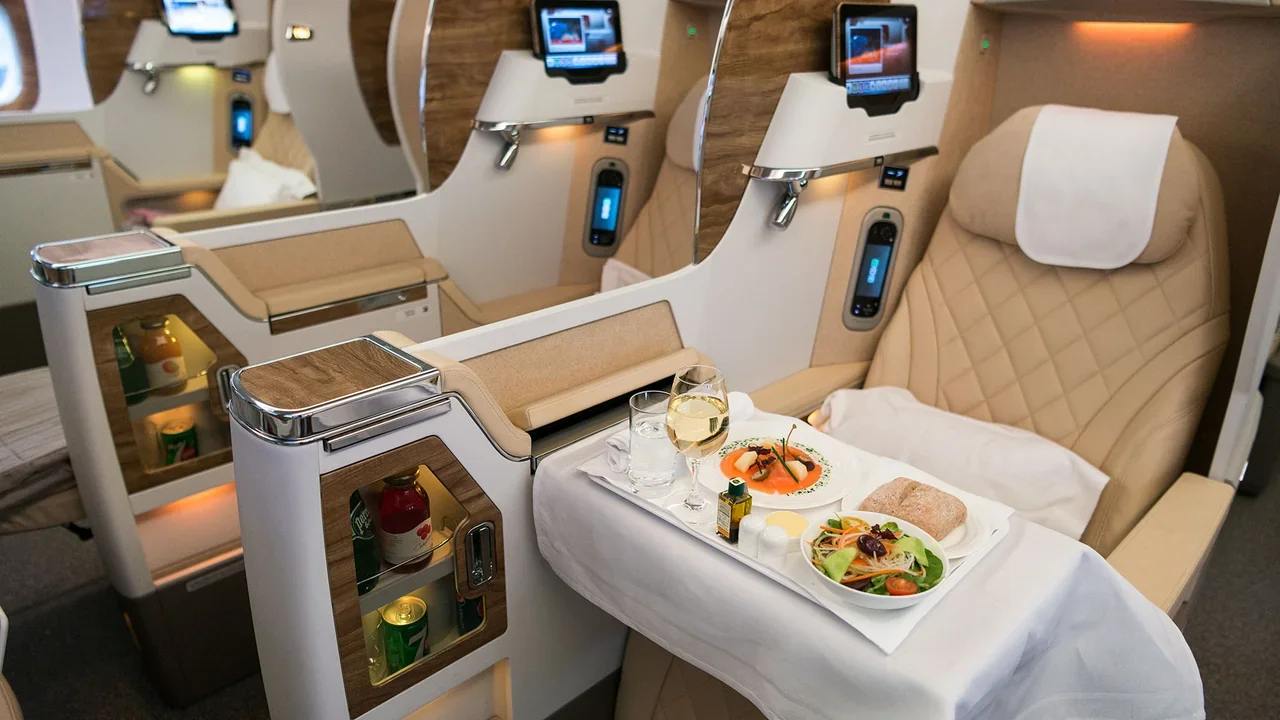
On the A380, Emirates business class has always had one structural advantage: the upper deck. It's quieter. The engines are below you and the cabin is smaller, which means less foot traffic. I've taken the Dubai–London overnight on the upper deck A380 more times than I can count, and it's consistently one of the better sleeps available on that route.
The new suite product adds a proper door (not a full enclosure like QSuite, but a substantial panel) and a mattress topper. The bedding — white duvet, decent pillow — is a step up from what they were offering three years ago. Not Singapore-level, but solidly in the top tier.
What holds Emirates back from the top two is noise in the galley area on some aircraft configurations, and the fact that the new suite hasn't fully replaced the old product yet. You might book Emirates business class and get the old product. Check the aircraft type when you book.
4. Cathay Pacific (Aria Suite)
Cathay's new Aria Suite, which started appearing on their A350-900s from 2023, is genuinely excellent for sleeping. The seat is wide — wider than most — and goes fully flat with a decent mattress pad. The suite has a door that provides real privacy, and the shell height is tall enough that you're not lying in a fishbowl with every passing crew member looking down at you.
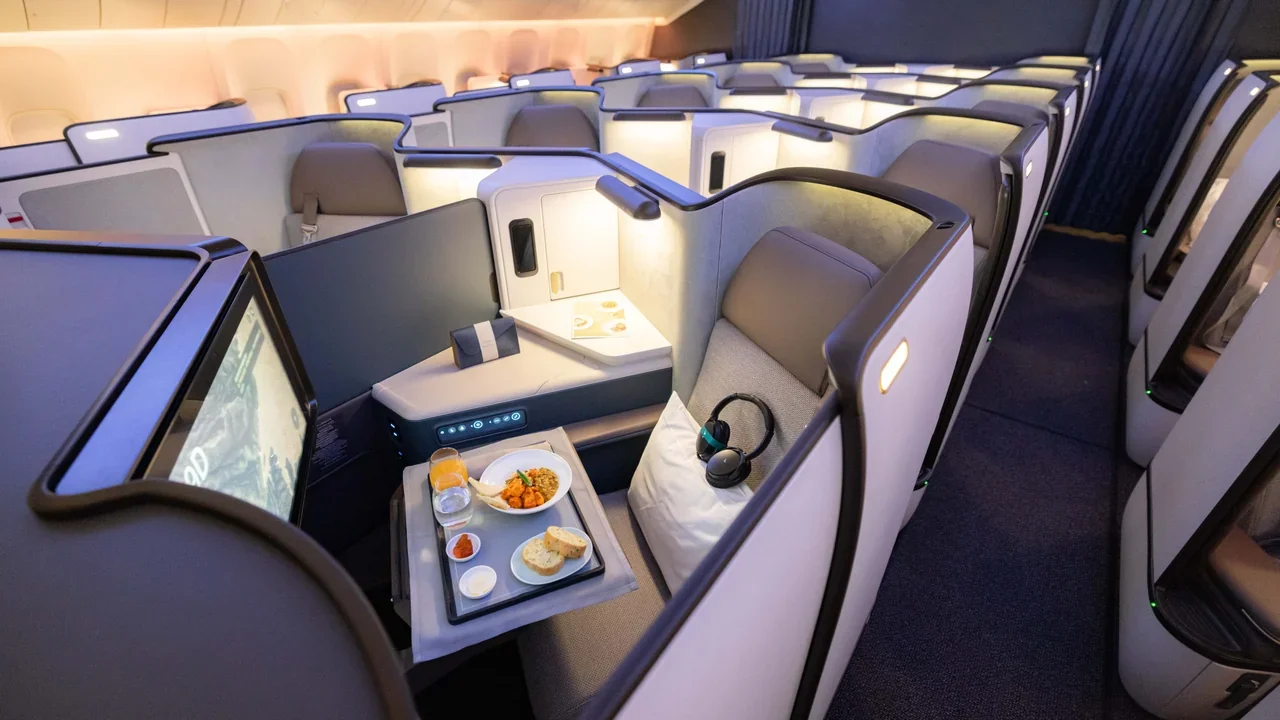
What Cathay does particularly well is the bedding. The pillow is proper size, the duvet is warm without being stifling, and the mattress topper they've added to the Aria Suite configuration makes a real difference on a 14-hour Hong Kong–London flight. I've done that route in both the old and new product, and the new one is substantially better for sleep.
The older Cathay product — still on some 777s — is a different story. The seats are fully flat but narrower, and the privacy is limited. If you're booking Cathay specifically to sleep, check whether you're on an A350 with the Aria Suite before you commit.
Cathay's HKG–LHR in Aria Suite on the A350 departs late evening and arrives early morning London time. The timing is ideal — you can eat, sleep for a genuine 7-8 hours, and arrive at a reasonable hour. It's one of the best-timed overnight routes for sleep.
5. Air France (La Première and Business)
Air France's business class doesn't always get the credit it deserves for sleep quality. The seat on their 777-300ER — the long-haul workhorse — is genuinely flat, reasonably wide, and comes with what I'd call the best standard bedding of any airline outside the top tier. The duvet is thick. The pillow has actual loft. There's a mattress pad. Air France clearly thought about this.
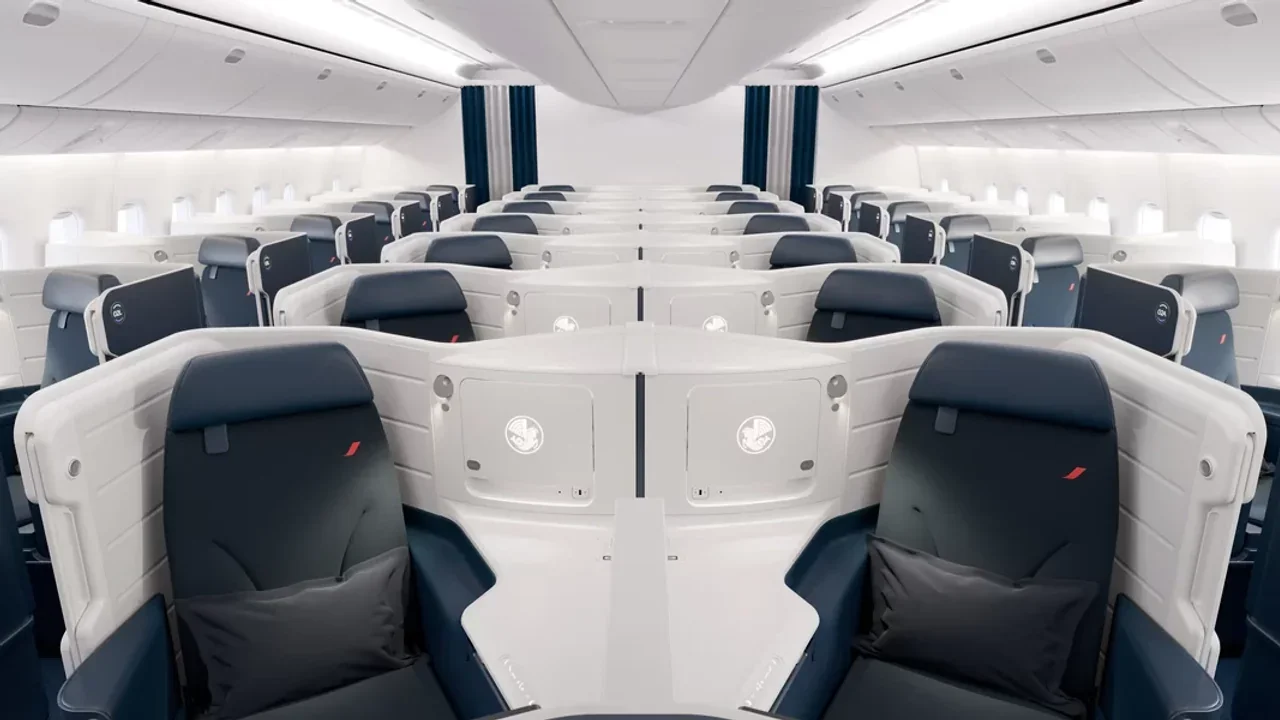
The privacy on the standard Air France business product is decent but not exceptional. It's a staggered configuration, so alternate seats are closer to the aisle. The window seats are better for sleeping, specifically because they're offset away from foot traffic.
La Première — their first class — is a different conversation entirely, with a suite that's fully enclosed and a bed setup that's genuinely hotel-level. But at prices that regularly clear $10,000 one-way, it's not for most people reading this.
For business class specifically, the CDG–JFK overnight is one of my go-to routes when I need to actually sleep. The cabin is usually not full, the crew are attentive without being intrusive, and the timing works well for a full night's sleep in the air.
6. ANA (The Room)
ANA's "The Room" suite, flying on their 777-9 and some 777-300ER configurations, is one of the most underrated sleeping products in the sky. It's a fully enclosed suite — proper door — with a genuinely wide flat bed. The mattress pad is thick. The privacy is excellent. And because ANA doesn't have the same brand recognition in Western markets as Singapore or Qatar, cabins are often quieter and less full.
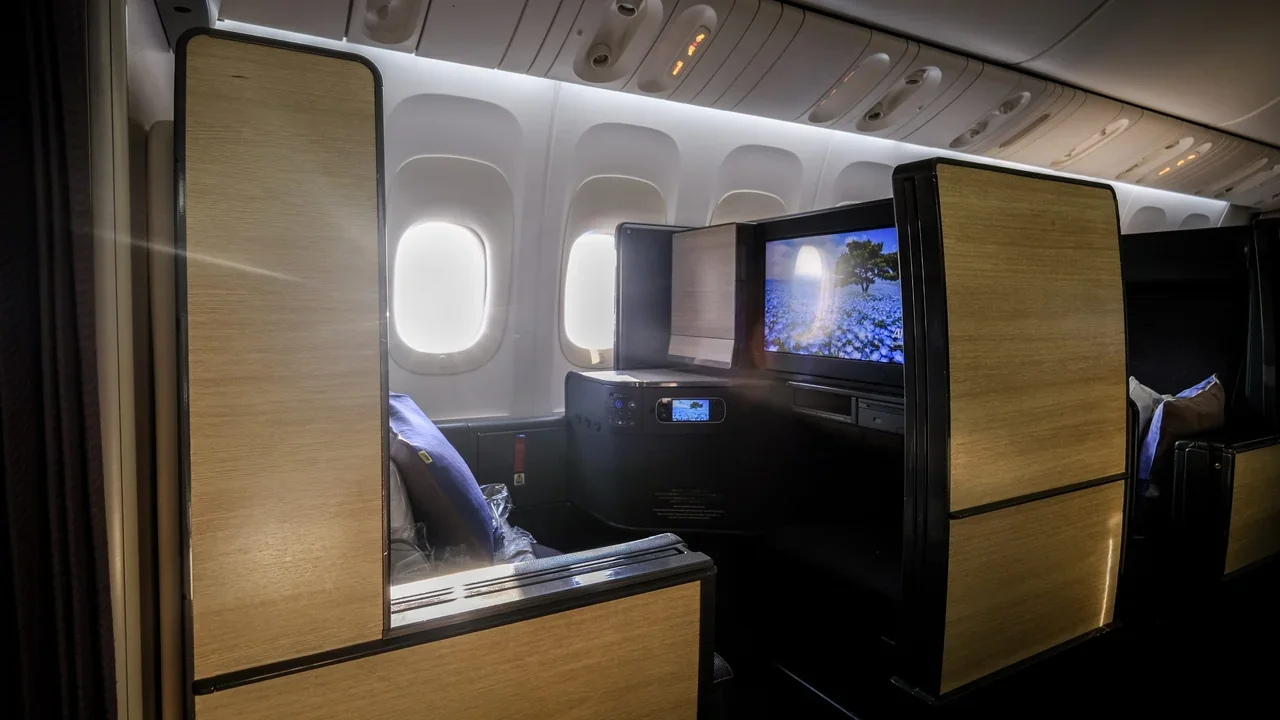
The bedding ANA provides is good, not exceptional. The pillow is a bit small for my taste and I've started traveling with a compressible pillow of my own on long ANA flights, which says something. But the suite itself, the privacy, and the flat sleeping surface are all top-tier.
The catch is routing. ANA's The Room flies primarily on Tokyo routes, which means you're either going to Tokyo (HND or NRT) or connecting through. If that works for your itinerary — and for anyone heading to Southeast Asia or Australia, it often does — the product is absolutely worth seeking out.
ANA seat selection tip
On The Room configuration, the seats on the left side of the aircraft (A seats) are window-facing and more private. The center seats are excellent for couples but slightly more exposed to the aisle when the divider is down.
7. Virgin Atlantic (Upper Class)
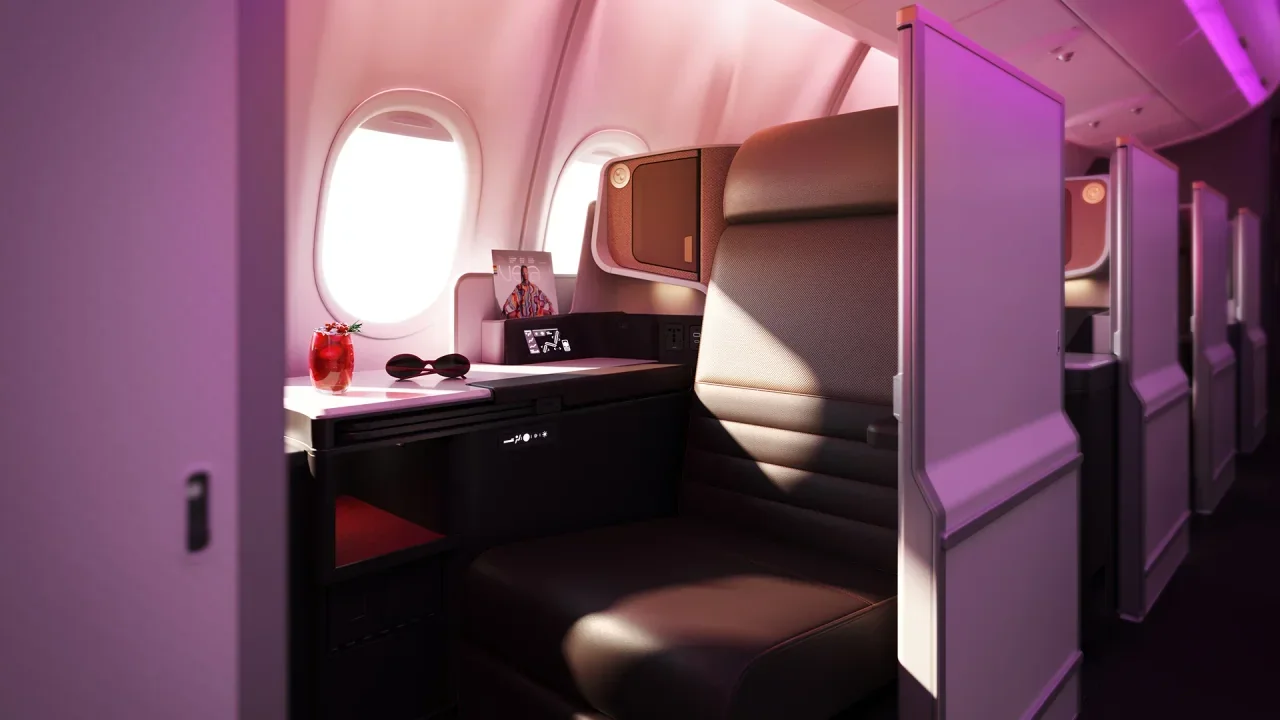
Virgin makes this list with some caveats. Their new Upper Class suite — on the A350-1000 — is genuinely good for sleeping. It's a proper door, flat bed, and the suite is wide enough to be comfortable. The mattress pad is decent, the bedding is better than you'd expect from a carrier in this tier.
What I appreciate about Virgin is the seat angle. The bed is genuinely flat, not angled toward the aisle like some configurations that technically qualify as "flat" but put you on a slight tilt all night. On the A350 Upper Class, you're horizontal. That sounds basic but it's not universally true across the industry.
The honest caveat: not all Virgin aircraft have the new suite. The 787 Upper Class is an older product and, while the seat is flat, the privacy is limited. The A350 is the one to book if sleep is the priority. Virgin operates it on LHR–JFK, LHR–BOS, and LHR–LAX, among others.
Airlines that nearly made it (and one that should be better)
Lufthansa's new business class — on the A350 — is getting close to list-worthy. The suite design is good, the privacy is real, and the bed is flat. I'd put it just outside the top seven right now, mainly because the mattress pad is thinner than I'd like and the bedding quality, while fine, isn't quite at the level of the airlines above. They're improving, though.
JAL's Sky Suite deserves a mention. It's a fully flat product with good privacy, and JAL's service is attentive in a way that matters on overnight flights. It didn't make the main list because The Room has better suite privacy, but on certain routes — JAL operates JFK–HND — it's a solid choice.
And then there's British Airways. I'll be direct: the Club Suite on the A350 is a real improvement over what they were offering before, and the privacy is better than the old product. But the mattress pad is thin, the bedding is mediocre, and the T5 lounge coffee — which you'll need to compensate — is also mediocre. BA has the bones of a good sleeping product and keeps stopping short of actually finishing it. It's frustrating, because the seat itself is decent. The Club Suite just doesn't make the top seven when the bedding and padding are this far behind the competition.
How to find the best business class sleeping fares
When do business class fares actually drop on overnight routes?
The pricing on premium overnight routes — transatlantic, transpacific, longhaul Asia — follows patterns that aren't obvious if you're checking once and giving up. Airlines release discounted business class inventory at irregular intervals, often tied to load factors on specific departure dates. Fares on JFK–DOH in Qatar QSuite can swing from $4,500 to under $2,800 round-trip in the same booking window depending on when you look. The same is true for Singapore routes, where I've seen LHR–SIN drop from $5,200 to under $3,400 with no obvious trigger.
The problem is that these drops are short-lived. A fare that's available on a Tuesday morning may be gone by Tuesday afternoon. Checking manually every few days isn't enough.
This is exactly what BusinessClassSignal is built for. It's a fare monitoring service that scans 800+ business class routes twice daily and sends you an alert when a price drops below your target threshold. You set the route, set the price you'd be willing to pay, and you get an email when it hits. That's it. I built it after years of manually tracking fares and getting burned by missing drops I would have caught if I'd had a system.
Which routes offer the best value for overnight sleep-focused trips?
If sleeping is the actual goal — not the destination, but the experience of sleeping well on a plane — the route matters as much as the airline. You want something in the 10–14 hour range, departing in the early evening local time, arriving in the morning at the destination. Too short and you can't get enough sleep even in a great suite. Too long and you'll wake up hours before arrival with nothing to do.
The best routes for this:
JFK or EWR to Singapore, via a connection in Doha or Dubai, puts you in a QSuite or Emirates suite for a 13–14 hour sector. Singapore Airlines direct on the A350 from JFK to Singapore is 18 hours — that's a lot, but the product handles it.
London to Hong Kong on Cathay's Aria Suite is almost perfectly timed — 11.5 hours, departing late evening. You eat, sleep for 8 hours if you can manage it, and arrive in the morning. Tokyo on ANA The Room from LAX or JFK is around 12 hours westbound and slightly longer eastbound. The Room is genuinely worth it on this route. How the monitoring system works is straightforward — you can browse all routes and set alerts on any of the ones above to catch a fare before it disappears.Westbound transpacific flights (US to Asia) are generally better for sleep than eastbound. You're flying into night, so your body cooperates more naturally. Eastbound, you're fighting a shorter night window.
Don't assume 'flat bed' means flat
Airlines have been creative with the phrase "fully flat." Some seats that claim this are angled 5–8 degrees toward the aisle. On a 12-hour flight, that adds up. Always check the SeatGuru or the airline's own seat map to verify the actual configuration before you book, particularly on older aircraft.
What actually makes the best business class sleeping experience
After 200+ segments, my honest view is this: the suite matters more than the bed. A good mattress pad on a seat with poor privacy is still a worse sleep than a mediocre pad in a fully enclosed suite. Light and movement are the things that actually wake you up repeatedly on long flights, more than firmness or width.
That said, below a certain threshold of padding, the hard shell wins. I've been on products where the seat is technically flat but the mattress pad is so thin you feel the seat mechanism underneath after an hour. That's not a sleep product, it's a recliner with ambitions.
The airlines at the top of this list — Singapore, Qatar, Emirates on the new product, Cathay on the Aria — have figured out that you need both. Good suite privacy and real padding. The others are still working on it.
If you're booking a flight specifically to sleep well, the product decision is as important as the route decision. A $500 difference in fare is worth it if it's the difference between QSuite and a legacy carrier's thin-pad flat seat.
Monitor business class fares on these routes — 14-day free trial, no card required
Try Free