Quick summary
Getting bumped from business class to economy is more common than airlines like to admit — and your compensation rights depend heavily on where you're flying and which rules apply. Under EU261, you're entitled to a cash refund of 30–75% of your ticket price. US rules are weaker, but there are still levers to pull. This article covers what you're owed, how to claim it, and how to reduce the odds of it happening in the first place.
The downgrade nobody talks about
You've checked in, you've got a boarding pass that says Row 2, and you're already mentally in that flat bed. Then a gate agent calls your name.
It happens. Aircraft swaps, last-minute equipment changes, overbooking in the front cabin — airlines have a dozen ways to end up with fewer business class seats than they sold. And when that happens, someone gets moved back. Often without much warning, and sometimes without much explanation.
I've seen it happen to other passengers maybe a dozen times across the flights I've taken. It happened to me once, on a transatlantic segment out of Newark. An equipment swap from a 767 (which has a decent enough flat-bed product) to a smaller aircraft with recliners at the front and not enough of them. The gate agent was apologetic. The compensation offer she had on hand was not impressive.
The thing is, most passengers don't know what they're actually entitled to. Airlines count on that. And the difference between knowing your rights and not knowing them can be the difference between a $40 meal voucher and a $900 cash payment.
Voluntary vs. involuntary: the distinction that matters
Before we get into the numbers, there's a critical split you need to understand: whether your downgrade is voluntary or involuntary.
If an airline asks for volunteers and you agree to move to economy in exchange for some form of compensation they offer, that's a voluntary downgrade. You've essentially accepted a deal. Whatever they offer you at the gate is what you get — and you've likely waived your right to the statutory compensation in the process.
Involuntary is the one worth fighting for. That's when the airline moves you without your agreement, because they have no other option. This is where EU261 and DOT regulations kick in properly.
Don't accept the first offer at the gate
If a gate agent asks you to move to economy and offers a voucher or miles, that offer almost always converts to a voluntary downgrade. Once you accept, you've forfeited your right to statutory cash compensation. Ask specifically whether this is voluntary or involuntary before agreeing to anything.
In practice, airlines sometimes blur this line. They'll frame an involuntary downgrade as "we need your help" or "we're offering you compensation" — which implies you're doing them a favor and accepting their terms. You're not obligated to play along. You can say no to the voucher and ask for your statutory rights instead.
What EU261 actually pays for business class downgrade compensation
EU261/2004 is the regulation that gives passengers on EU-connected flights their strongest protections. It covers:
- Flights departing from any EU airport (regardless of airline)
- Flights arriving at an EU airport on an EU-based carrier
- Flights arriving at an EU airport on a non-EU carrier, if the outbound was also covered
For business class downgrade compensation specifically, EU261 Article 10 sets out a reimbursement formula based on the route distance:
- Up to 1,500km (think intra-Europe): 30% of the ticket price for that segment
- 1,500–3,500km (medium-haul): 50% of the ticket price
- Over 3,500km (transatlantic, long-haul): 75% of the ticket price
A few things worth knowing about how this works in practice. The percentage applies to the segment you were downgraded on, not the full round-trip fare. So if you paid $3,000 for a round-trip JFK–LHR in business, and you paid roughly equal amounts for each leg, the reimbursement would be calculated on approximately $1,500, giving you up to $1,125 back.
But here's where it gets complicated: airlines often claim they can't isolate the per-segment fare because you bought a round-trip. This is a tactic to reduce the payout. The correct approach is to use the prorated fare for that leg. If they push back, that's when you escalate — first to the airline's customer relations team in writing, then to the relevant national enforcement body (in the UK post-Brexit, that's the CAA; in Germany it's Luftfahrt-Bundesamt; in France it's the DGAC).
Always request your downgrade compensation in writing, citing "EU261/2004 Article 10" specifically. Airlines process claims faster and more accurately when you demonstrate you know the regulation by name.
Does EU261 cover award tickets and upgrades?
Yes, with caveats. If you booked a business class award ticket using miles and you get downgraded, EU261 still applies — but the reimbursement is calculated based on the cash value of the award, which airlines often interpret narrowly. The strongest claims are on paid tickets.
If you were upgraded at check-in or at the gate and then downgraded back to your original cabin, you generally don't have a claim under Article 10, because you originally purchased economy. The regulation applies to the cabin you paid for, not the cabin you were temporarily enjoying.
US rules for business class downgrade compensation
American passengers get a rougher deal here. The US DOT doesn't have a dedicated downgrade compensation framework like EU261. What it does have is a requirement that if you're involuntarily bumped from a flight entirely, the airline owes you compensation. But being downgraded within the same flight — moving from business to economy — isn't treated the same way.
The DOT's position is essentially that airlines must refund the fare difference when a passenger is placed in a lower class of service. That sounds reasonable, but in practice it means you're entitled to the difference between what you paid and what you actually received. If you paid $2,200 for business and the equivalent economy seat costs $800, the airline owes you $1,400.
The problem is enforcement. Unlike EU261, which has fixed percentages and national enforcement bodies, the US system relies on you filing a complaint with the DOT and, if necessary, pursuing the airline through small claims court or a credit card dispute. Airlines know this and often offer miles or vouchers as a first response, hoping you'll take them.
Credit card chargeback as a last resort
If the airline refuses to refund the fare difference after a downgrade, a credit card chargeback for "services not received" is a legitimate option. You paid for business class. You received economy. That's a partial non-delivery of service. It doesn't always work, but it's a real lever — especially with premium travel cards that have strong cardholder protections.
One area where US passengers have more leverage: if your ticket was booked through a US-based airline on an international route that also touches the EU, EU261 may still apply. A United flight from Frankfurt to New York, for instance, would be covered on the Frankfurt departure leg.
What about airlines based outside the EU flying non-EU routes?
If you're flying Singapore Airlines JFK to SIN and you get downgraded, you're outside EU261's scope. You're dealing with that airline's own conditions of carriage, which in some cases are reasonably generous and in others are quite sparse.
Emirates, for instance, has a policy that covers fare difference refunds but not the EU-style percentage reimbursement. Qatar Airways similarly handles downgrades on a case-by-case basis, and in my experience their customer relations team is more responsive than most — though that's not saying a lot.
For non-EU, non-US flights, your best tools are the airline's own conditions of carriage (find them on the airline's legal/terms page, not the help center) and your credit card's travel protections.
How to actually claim what you're owed
This is where most people fall short. They accept the gate agent's offer, fly home, and then either forget about it or spend 45 minutes on hold before giving up. Here's a more effective approach.
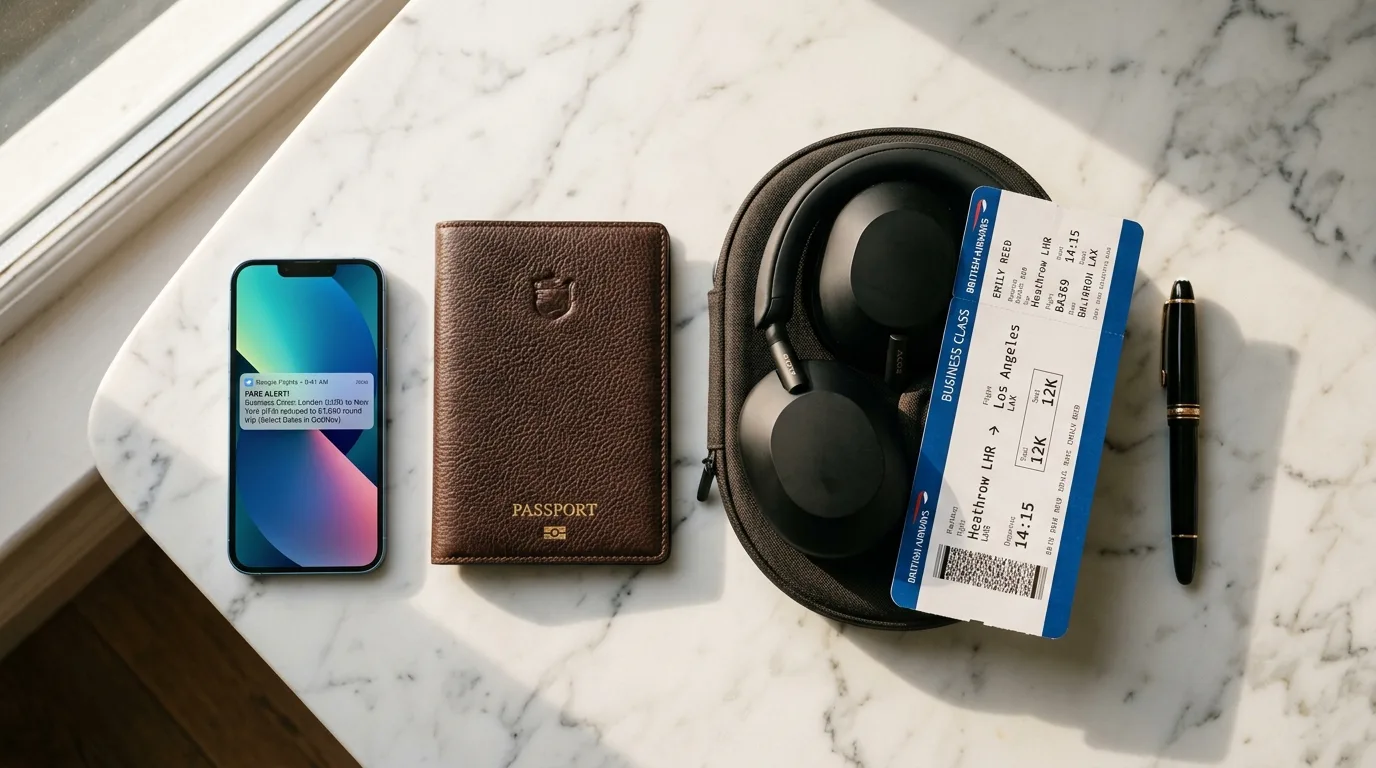
At the gate, before you board:- Ask the gate agent to confirm in writing (on your boarding pass or a note) that the downgrade is involuntary
- Get the agent's name and employee number if possible
- Note the time, flight number, and original seat assignment
- Take a photo of your original boarding pass showing your business class seat
Submit your claim directly to the airline's customer relations department — not the general help desk. For EU261 claims, reference Article 10 explicitly. State the route, the distance (you can look it up on a flight distance calculator), and the percentage you're claiming.
Airlines are required to respond within a reasonable timeframe. In the EU, "reasonable" is generally interpreted as 6–8 weeks. If they don't respond or reject your claim without adequate reasoning, escalate to the national enforcement body for the country of departure.
Keep everything
Screenshot your booking confirmation, original seat assignment, downgraded boarding pass, and any communication from the airline. Claims that get disputed almost always come down to documentation. If you don't have it, the airline wins by default.
There are also claim services like AirHelp and ClaimCompass that handle EU261 cases on a no-win-no-fee basis, typically taking 25–35% of the payout. Worth it if you don't want the hassle, though you'll net less.
The miles question: what happens to your upgrade or award?
If you were downgraded on an award booking, the miles question gets complicated fast.
For a paid ticket with an upgrade applied (say, you bought economy and used miles or a systemwide upgrade certificate to get into business), a downgrade typically means you get your upgrade currency back. The airline should reinstate your miles or certificate automatically. If they don't, you need to ask — and in writing, not just verbally at the gate.
For a pure award ticket, you should be reimbursed the miles difference between a business class award and the economy award you actually received. Airlines are inconsistent about this. Some do it automatically; others need to be chased. Either way, you're also entitled to a refund of any fuel surcharges or fees you paid for the business class portion.
If the award was booked through a credit card transfer partner and the airline is being difficult, your card issuer sometimes has a direct line to the airline's award department that cuts through the customer service queue.
How to reduce the odds of being downgraded
You can't make yourself immune to this, but you can make yourself a less likely target.
Airlines generally downgrade passengers in a specific order: last to check in, least frequent flyer status, cheapest ticket. So the countermeasures follow logically from that.
- Check in early. Online check-in the moment it opens, usually 24 hours before departure. If a gate agent is looking for who to move, they start with passengers who haven't checked in yet.
- Have status. Elite members are almost always protected from involuntary downgrades until the airline runs out of lower-status options. A mid-tier status card has saved more than a few front-cabin seats.
- Book directly with the airline. Third-party bookings are sometimes treated differently when an aircraft swap forces tough decisions. I can't prove this is systematic, but I've heard enough gate agent anecdotes to find it credible.
- Avoid the cheapest business class fares. This is uncomfortable advice, but it's real. The lowest inventory codes (I, Z, D on many carriers) occasionally correlate with lower priority in irregular operations. It's not a rule, but it's a pattern.
On routes where you've paid for a specific seat — especially a premium seat like a door suite or window seat — confirm your seat assignment 24–48 hours before departure. If the seat has disappeared from your booking, call the airline immediately. An aircraft swap may already be in process.
Equipment swaps are one of the most common triggers for downgrades, and they often happen 12–48 hours before departure. Monitoring your booking during that window is worth doing on any long-haul trip.
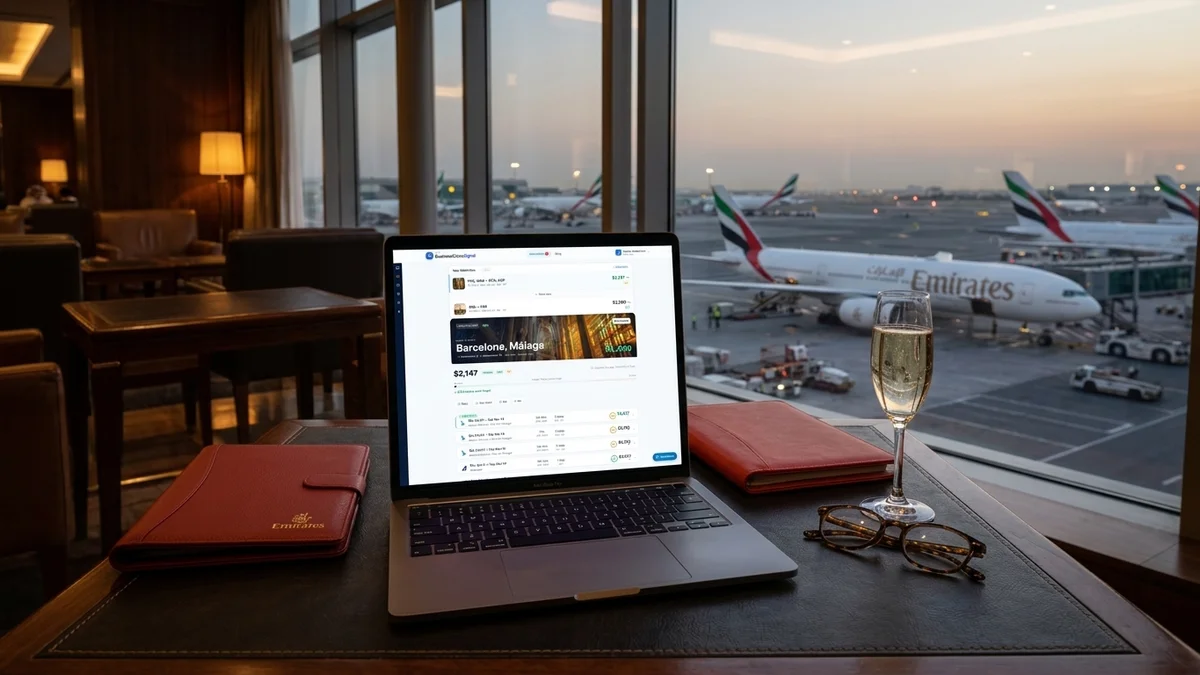
This is actually one of the use cases for how the monitoring system works at BusinessClassSignal — we track fare class availability on your route, which can sometimes signal when capacity in the front cabin is being restructured ahead of a flight. It's not a downgrade alert per se, but if business class inventory suddenly collapses on your flight, that's worth paying attention to.
Mixed-cabin bookings and family travel
One scenario that comes up more than you'd expect: you've booked yourself in business and your travel companion (or family) in economy. If you get downgraded, you end up sitting together — but not in the seats you wanted.
For families, this is sometimes actually the situation you planned for. If you're traveling with kids and you've put them in economy while you're in business, a downgrade might mean a refund on your fare difference and you all end up in economy together. Not ideal, but at least you're not separated.
If you're doing mixed-cabin bookings as a budget strategy — one person in business, one in economy on the same route — it's worth having a fallback plan. For the economy side of that equation, FlightKitten is what I'd use: it's a fare monitoring tool from the same team that built BusinessClassSignal, covering 220+ airlines with price drop alerts. Starts at $4.99/month and it's genuinely useful for tracking economy prices on the same routes we cover here.
When the airline offers miles instead of cash
Let's be honest about this. Airlines prefer to pay you in miles because miles cost them almost nothing compared to cash. A 15,000-mile "gesture of goodwill" might have a redemption value of $150–$200 depending on how you use them — but it might also sit in your account and expire.
Under EU261, you are entitled to cash. The regulation is explicit: reimbursement shall be made in cash, by electronic transfer, bank order, or bank cheque. Miles or vouchers are only acceptable if you agree to them in writing. An airline cannot substitute miles for your Article 10 entitlement without your consent.
In the US, there's no equivalent mandate. Airlines routinely offer miles as a first response and many passengers accept them. If you want cash, you have to ask for it specifically and be prepared to push back.
My general rule: if the cash value of the miles offer is clearly higher than what you'd get from the fare difference or EU261 calculation, take the miles. But do the math first. Don't just accept because it sounds generous.
What airlines won't tell you at the gate
A few things that rarely come up in the conversation with the gate agent:
Airlines can technically offer you a seat in a higher class on a later flight as an alternative to a downgrade on your original flight. If you have flexibility, that's worth asking about — especially if the next flight has available business class seats. You'd keep your cabin and only lose a few hours.
Also: if the downgrade causes you to miss a connection that would have been fine in business class (because you had lounge access, priority boarding, or a tighter connection that relied on an earlier arrival gate), you may have additional grounds for compensation under EU261's delay provisions — not just Article 10.
And if you're on a codeshare, the operating carrier's rules apply for EU261 purposes, not the marketing carrier's. So if you booked on Delta but you're flying on an Air France metal out of CDG, Air France is the one on the hook for the EU261 claim. File with them.
For routes I monitor regularly, including transatlantic business class fares where this kind of equipment swap is most common, you can start monitoring this route through BusinessClassSignal — we alert you when fares drop below your threshold, which at minimum tells you whether rebooking at a lower price is worth considering if you're worried about an upcoming flight.
Browse all routes we currently cover if you want to see whether your route is in the system.The short version on all of this: airlines downgrade passengers more often than they like to admit, they generally offer less than they owe, and most passengers don't push back. Knowing the rules — specifically EU261 Article 10 for European flights and the fare difference principle for US domestic — is the difference between walking away with nothing and getting a meaningful reimbursement. It's not a fun conversation to have at the gate, but it's worth having.
BusinessClassSignal monitors 800+ business class routes and alerts you when prices drop — try it free for 7 days
Try Free