Quick summary
Korean Air and Asiana both run solid long-haul business class products out of Seoul Incheon, but they're not equals right now. Korean Air's Prestige Suite is the better hard product on widebody routes, while Asiana's OZ First/Business cabin has aged but still punches above its weight on service. With the two airlines merging under the Korean Air umbrella, Asiana's product is on borrowed time — which changes how you should think about booking.
Why this comparison still matters (for now)
The Korean Air–Asiana merger got conditional approval from the European Commission in late 2023 and has been grinding through regulatory hoops ever since. Korean Air is technically the acquiring entity, which means Asiana's brand, fleet, and cabin products are all heading for eventual absorption. If you're booking a trip six months out, there's a real chance the Asiana flight you're researching won't exist in the same form — or at all — by the time your departure rolls around.
That said, right now, today, you can book either carrier on routes like Seoul to Los Angeles, New York JFK, London Heathrow, or Frankfurt. Both airlines have lounges at Incheon Terminal 1 and 2. Both earn and burn SkyPass and OZ miles respectively. And the Korean Air vs Asiana business class question still comes up constantly from readers planning premium-cabin trips through Northeast Asia.
So let's actually answer it properly, because most of what you'll find online is either outdated or thin on specifics.
The hard product: seats, suites, and what you actually sleep in
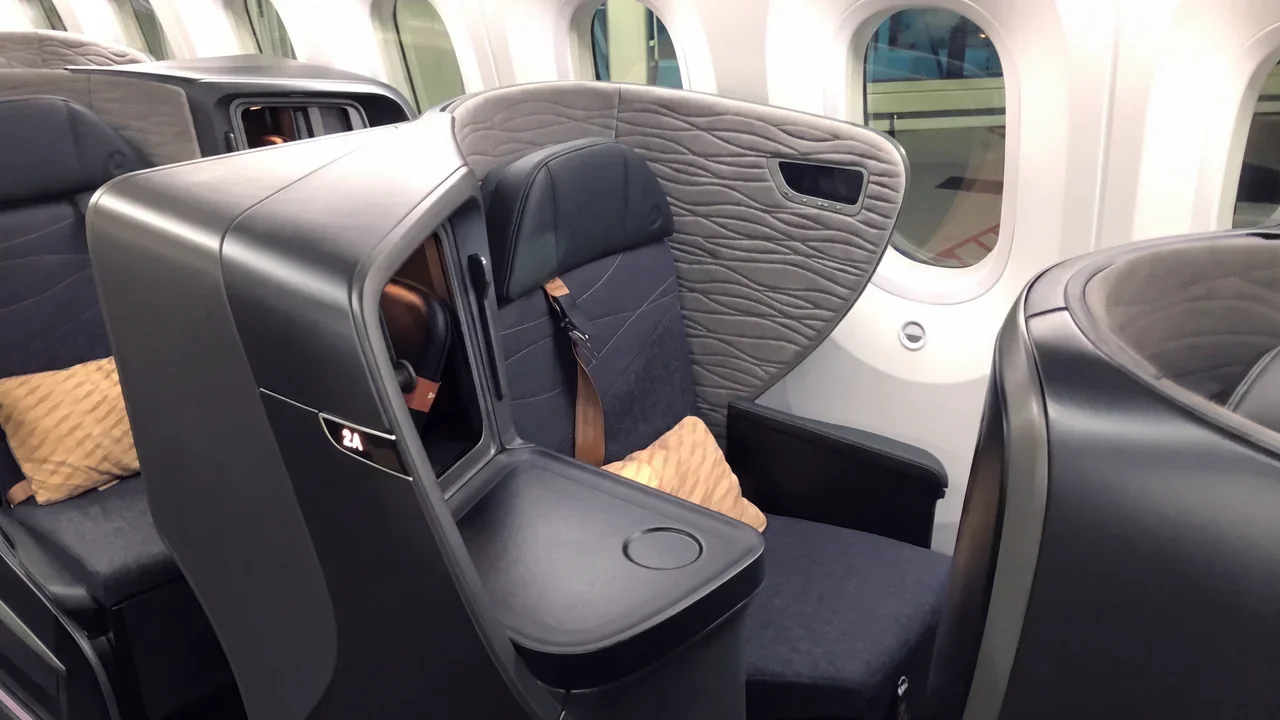
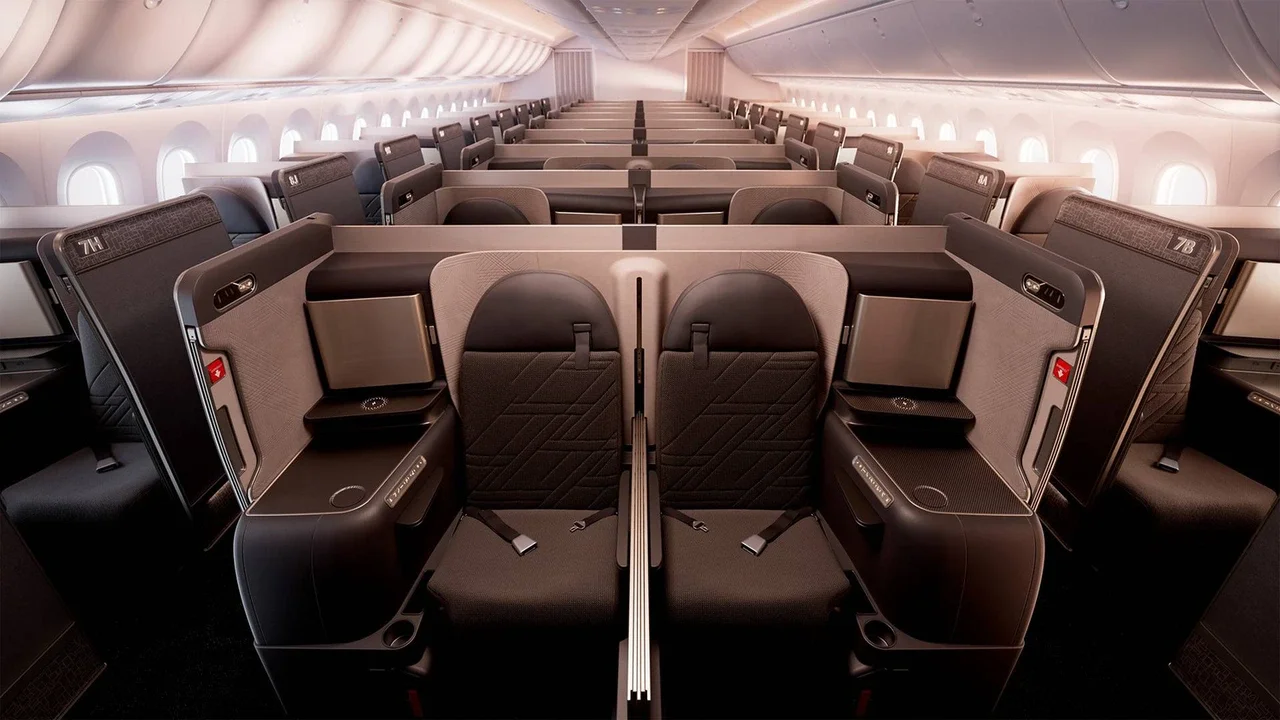
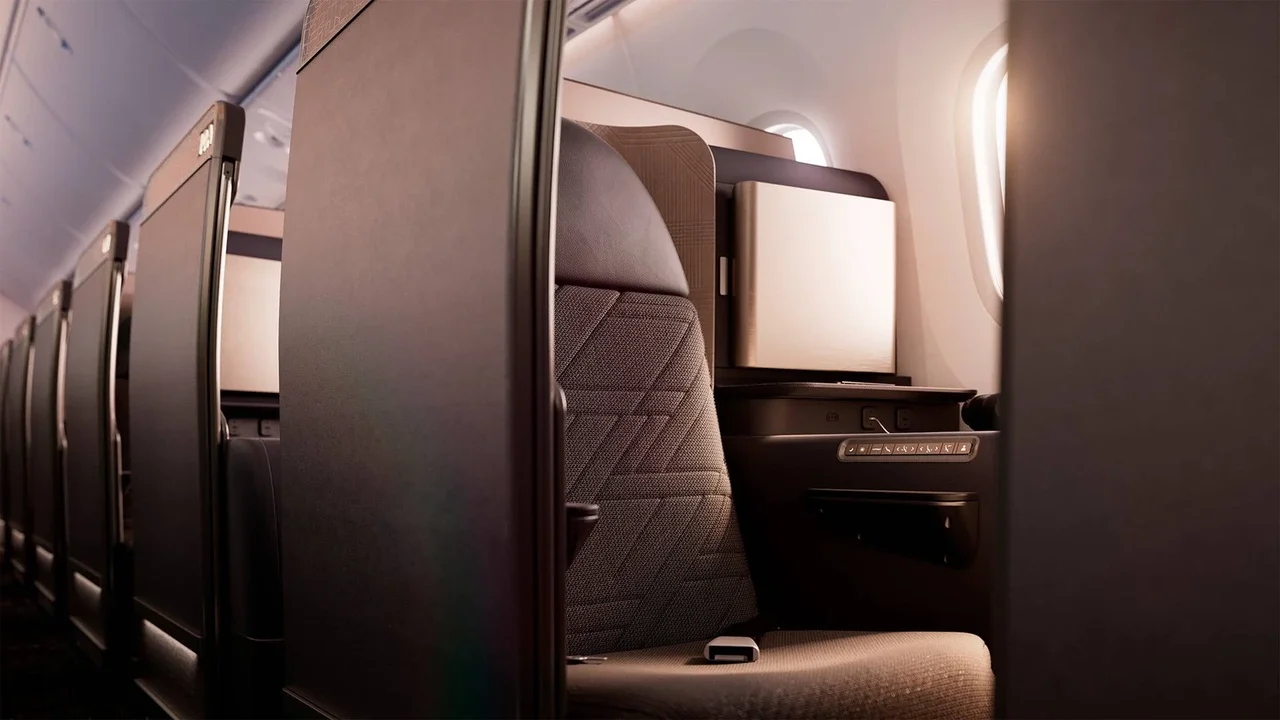
Korean Air has been rolling out its Prestige Suite product since 2022 on the 787-9 Dreamliner fleet, and it's genuinely good. We're talking a true door-on-every-seat configuration in a 1-2-1 layout, which means direct aisle access no matter where you sit. The suite doors don't fully close like Qatar's Qsuites or Singapore's A380 upper deck, but they give you enough of a privacy bubble that you're not staring at the person across the aisle for fourteen hours. Bed length runs around 78 inches in full-flat mode. I've slept well on the JFK–ICN run in one of these, which at 14+ hours is a meaningful endorsement.
The older Korean Air Prestige Class product — still flying on some 777-300ER routes — is a different story. Angled-flat seats in a 2-2-2 configuration. Functional, dated, fine for a six-hour hop, not something you want on a transpacific haul. Check which aircraft is operating your route before you book. Korean Air's fleet page has the details, and it's worth cross-referencing with the actual booking engine because subgauges happen.
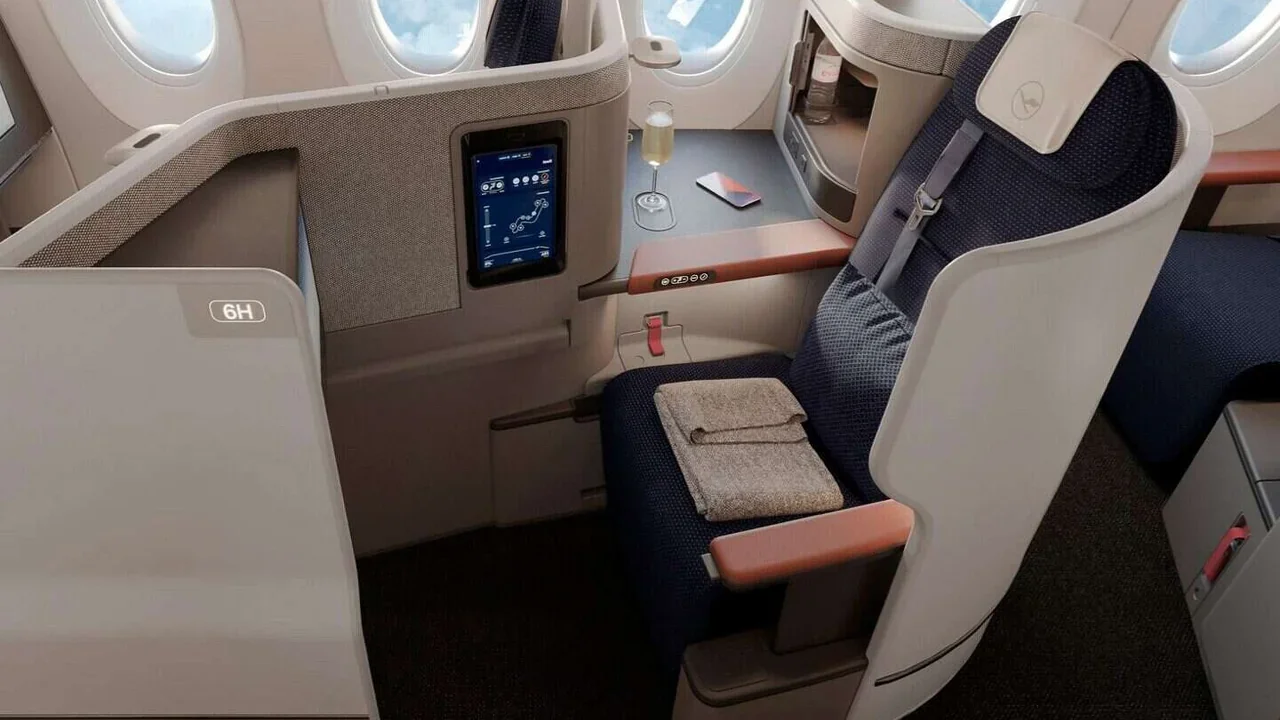
Asiana's business class on its A350-900 routes uses a 1-2-1 direct-aisle configuration with fully flat beds. The seat itself is comfortable — roughly 76 inches lie-flat, 23 inches wide — and Asiana's bedding has historically been a strong point. The mattress pad is noticeably thicker than what Korean Air puts out on equivalent routes. But the cabin design feels a few years behind. There are no suite doors, the privacy dividers are modest, and the in-flight entertainment screens on older A350 frames have some lag that gets annoying on a long flight.
Asiana also still operates the A380 on some routes with a separate First Class cabin (8 seats) and Business (66 seats). If you're in Business on the A380, you're in the same 1-2-1 layout, which is fine, but the product hasn't been refreshed in years. The IFE remote is genuinely bad — it's a touchpad design that almost never registers your input correctly on the first try.
On Korean Air, seats 11A and 11K on the 787-9 Prestige Suite cabin are window seats closest to the forward galley. Quieter than mid-cabin, and the crew tends to start meal service from the front, so you get first pick on the menu.
Which airline has the better seat for sleeping?
For a transpacific flight where you're trying to actually rest, Korean Air's Prestige Suite on the 787-9 wins. The door makes a real difference psychologically — even a partial enclosure helps with sleep in a way that's hard to explain until you've experienced it. The mattress topper is adequate but not plush. Bring a travel pillow if you're a side sleeper; the built-in pillow situation on Korean Air is fine for back sleepers and not much else.
Asiana's bedding edges ahead on pure comfort if you're lying flat on your back. The mattress pad they've been using on the A350 routes is genuinely one of the better ones in the industry at this price point. But without the privacy enclosure, you're more exposed to cabin light and movement. If the person next to you in the middle pair has their reading light on at 3am, you'll feel it.
Food and drink: where the real gap is

Both airlines lean heavily on Korean cuisine, which is, frankly, one of the better reasons to fly either of them. But there are differences.
Korean Air's business class menu on long-haul routes typically opens with an amuse-bouche, then a cold appetizer course, then your main. The bibimbap is almost always on the menu, served in a stone bowl that's been preheated, and it's the real deal — not a sad airline approximation. The galbi (braised short rib) option shows up frequently and is reliably good. The Western options are more variable. I had a salmon entrée on a Seoul–Paris run a few years back that was overcooked and underflavored. Stick to the Korean dishes.
Asiana's food has traditionally been the thing their frequent flyers brag about, and there's substance to it. The pre-departure service includes a warm towel and a proper welcome drink selection. The in-flight Korean menu is carefully composed — I've had a doenjang jjigae (fermented soybean paste stew) on an Asiana flight that I still think about. The dessert service is also better than Korean Air's on average: they do a proper cheese course on some routes rather than just dropping a piece of cake in front of you.
Wine lists on both carriers are decent but not exceptional. Korean Air has been working with a sommelier consulting program and the selections have improved. Asiana's wine list skews toward French and New World options and is reasonably solid, though nothing you'd call remarkable.
On the bibimbap
Both airlines serve it. Korean Air's stone bowl version on long-haul routes is consistently better — the rice gets slightly crisped at the bottom if the bowl is properly heated, which is the whole point. Asiana's version is fine but tends to arrive in a regular bowl.
Korean Air vs Asiana business class: the lounges at Incheon
Seoul Incheon (ICN) is a legitimately excellent airport, and both carriers have invested in their lounge facilities there. But they're not equivalent.
Korean Air's Prestige Lounge at Terminal 2 (which is Korean Air's home terminal after the 2020 move) is large, well-staffed, and has a proper a la carte dining section called the Lounge & Dine. You can order from a menu that includes Korean noodle dishes, rice options, and a selection of Western plates. The space is airy, the seating is varied, and there are dedicated quiet zones. If you're connecting through Incheon on a long layover, this is a genuinely comfortable place to spend a few hours. There's also a spa facility on-site, though appointments go fast and you need to book ahead.
Asiana's Business Lounge is in Terminal 1 (Asiana operates out of T1). The flagship option is the Asiana Lounge on the 3rd floor, and it's good — comfortable seating, solid food spread, decent bar. But the layout is a bit dated and can feel crowded during peak hours, particularly on evening departure banks when half of Seoul seems to be flying somewhere. The noodle bar inside the lounge is worth seeking out. The food quality is high. The space, less so.
Korean Air's lounge edges ahead purely on the physical environment. Asiana's food in the lounge is arguably better, particularly the hot dishes. Neither lounge has shower availability that I'd describe as "easy to get" — expect a wait during busy periods.
How do the miles programs stack up?
Korean Air runs SkyPass, which is a SkyTeam program and one of the better ones for award redemptions if you know how to use it. The sweet spot is using SkyPass miles to book partners — Delta, Air France, KLM — at rates that are often better than booking through those airlines' own programs. Korean Air's own award chart is reasonable for transpacific routes: 62,500 miles one-way in business class from North America to Korea, which is competitive but not a steal. Fuel surcharges on partner awards can sting.
Asiana's OZ program is also SkyTeam and has its own award chart. Historically, Asiana miles have been a good way to book Star Alliance partners at reasonable rates — United, Lufthansa, ANA — since Asiana itself is a Star Alliance member. With the merger progressing, OZ miles are in an uncertain state. Asiana hasn't announced a formal program sunset date, but if you're sitting on a large balance of OZ miles, I wouldn't be sitting on them for much longer.
OZ miles uncertainty
If you're accumulating Asiana OZ miles right now, pay attention to merger news. Program consolidation typically comes with a transition window, but the timeline isn't always generous. Use them, or transfer what you can, before any formal announcement.
The merger question: what actually changes
Here's the practical reality. Korean Air acquiring Asiana doesn't mean Asiana flights disappear overnight. The regulatory process required Korean Air to divest some of Asiana's European routes to other carriers (T'way Air picked up some slots), and the integration of two major carriers takes years. Asiana will likely continue flying under its own brand through at least 2025 and probably beyond, but the cabin product won't be getting new investment. You're not going to see a freshly installed Asiana business class suite in 2025 when the parent company is already rolling out its own new product.
What this means for you: if you're booking Asiana business class for a trip in the next 12 months, you'll probably get exactly what you'd expect based on current reviews. But if you're planning further out, or if you care about miles program longevity, Korean Air is the more stable bet.
There's also a route network consideration. Korean Air's combined post-merger network will be significantly larger, which is useful if you're building a multi-city itinerary through Asia. Browse the full route list to see where fares are currently sitting on both carriers.
Pricing: when fares drop and how to catch them
Business class between North America and Korea is genuinely expensive at retail. Korean Air's published business class fares on JFK–ICN hover around $4,000–$5,500 round-trip most of the year. You'll see them drop to $2,800–$3,200 during off-peak windows (February, parts of November) and occasionally lower during flash sales or when Korean Air needs to move inventory.
Asiana runs similar retail pricing, but their sale fares have historically been slightly more aggressive. I've seen Asiana ICN–LAX business class drop to around $2,400 round-trip during promotional windows, which is notably lower than Korean Air's floor on the same route.
The problem is these drops are short-lived. A fare that's $2,600 at 9am can be $3,800 by afternoon if a corporate booking block gets released. This is exactly the kind of thing BusinessClassSignal is built to catch — the system scans routes twice daily and sends you an alert when a fare drops below whatever threshold you've set. I built it because I was tired of manually refreshing Google Flights every morning hoping something had moved. You set a target price for a route, and it does the watching.
Korean Air's flash sales typically go live on Tuesdays and Wednesdays, Seoul time. Set your BusinessClassSignal alert with a target price about 15–20% below the current lowest fare and you'll catch most of the meaningful drops before they sell out.
If you're building a mixed-cabin itinerary — say, business class on the long haul and economy within Asia — FlightKitten covers the economy side of things. It monitors fares across 220+ airlines and alerts you when prices fall below your target, for around $4.99 a month. Good tool for the regional hops.
Honest verdict: which one to book
If you're flying transpacific and the 787-9 Prestige Suite is operating your route, book Korean Air. The hard product is meaningfully better, the suite doors matter on a 14-hour flight, and SkyPass is the more stable miles program heading into the merger period. The food is good, the lounge at Terminal 2 is excellent, and the overall experience is cohesive in a way that Asiana's currently is not.
Asiana still wins on a few specific things: the bedding, the food quality in the lounge, and the overall warmth of the cabin service. If you're flying a shorter segment where the seat product matters less, or if you find an Asiana fare that's significantly cheaper, it's not a bad choice. The service on Asiana long-haul routes is genuinely attentive in a way that some of the bigger global carriers have lost.
But as a general recommendation for someone asking me today about Korean Air vs Asiana business class on a transpacific booking? Korean Air, assuming the Prestige Suite is on the aircraft. Check the equipment. Then start monitoring the route and wait for the fare to move.
One more thing worth knowing: Korean Air's Prestige Suite is still rolling out across the fleet. Not every 787-9 has been retrofitted yet, and the 777-300ER routes are still running the older angled-flat product on some services. The seat map on the booking engine will show you the configuration, but it's not always labeled clearly. If you see a 2-2-2 layout in the Prestige cabin, that's the old product. The new suite is 1-2-1 with the door. Don't book without confirming which you're getting.
The Korean Air vs Asiana business class calculus is going to keep shifting as the merger progresses. Worth revisiting this comparison in six to twelve months — things will look different.
Monitor Korean Air and Asiana business class fares — get alerted when prices drop on your route
Try Free for 14 Days