Quick summary
There are no nonstop flights to Marrakech from North America, so every business class itinerary involves a European connection — most commonly through Paris CDG, Madrid MAD, or London LHR. The best carriers for business class to Marrakech are Royal Air Maroc, Air France, and Iberia, each with real tradeoffs. Prices vary wildly, but alert-based monitoring through BusinessClassSignal regularly surfaces round-trip fares under $2,500 from the US.
Marrakech is one of those cities that still has some mystique left. The medina, the Majorelle Garden, the Atlas Mountains forty minutes away — it holds up. And because it sits just outside the mainstream European short-haul circuit, the business class pricing can be surprisingly erratic. You'll see fares at $4,000 round-trip from New York one week, and then a Royal Air Maroc redemption window opens up or Air France has a flash sale and it drops to $1,800. That volatility is the whole game here.
The problem is that most people don't know which connection to target, which airline actually delivers a decent seat, and where the traps are. I've flown this routing several times now — once through CDG on Air France, once on RAM via Casablanca, and once on a slightly forgettable Iberia connection through Madrid. I have opinions.
Why there's no nonstop, and why that actually matters for pricing
Royal Air Maroc has talked about transatlantic expansion for years. They joined the oneworld alliance in 2020, which raised some expectations. But as of now, there's no nonstop service between the US and Marrakech Menara Airport (RAK). The only RAM transatlantic routes operate through Casablanca Mohammed V (CMN), and even those are limited to New York JFK and Washington Dulles, with seasonal service to Montreal and a handful of other cities.
So every business class itinerary to Marrakech is at minimum a one-stop trip. That changes how you shop for it — you're essentially buying two separate business class legs, which means pricing logic is messier and deal windows are shorter.
How the connection cities affect your price
Paris CDG generally offers the most competitive fares because Air France runs high-frequency service to Marrakech and competes with RAM on the route. Madrid MAD is worth checking if you're open to Iberia — fares can run $300–500 cheaper but the product is weaker. London LHR is the least consistent option; BA operates the LHR-RAK route but it's short-haul, which means Club Europe (a seat with a blocked middle seat, not a flat bed) on that final leg.
That last point about London is one I want to dwell on for a second, because it trips people up. If you're flying from the US to LHR on a transatlantic business class ticket and then connecting to Marrakech, that final British Airways segment will be in Club Europe — not the long-haul Club World product you just enjoyed over the Atlantic. The seat reclines, but it doesn't lie flat. For a 3-hour flight it's fine. Just don't book it expecting the full business class experience to continue.
Royal Air Maroc: the obvious choice, with caveats
RAM is the flag carrier of Morocco and the only airline that actually operates as though Marrakech is a real hub for it. They fly CMN-RAK constantly — it's a 45-minute hop — and their connecting product from Casablanca can be quite good if you get the right aircraft.
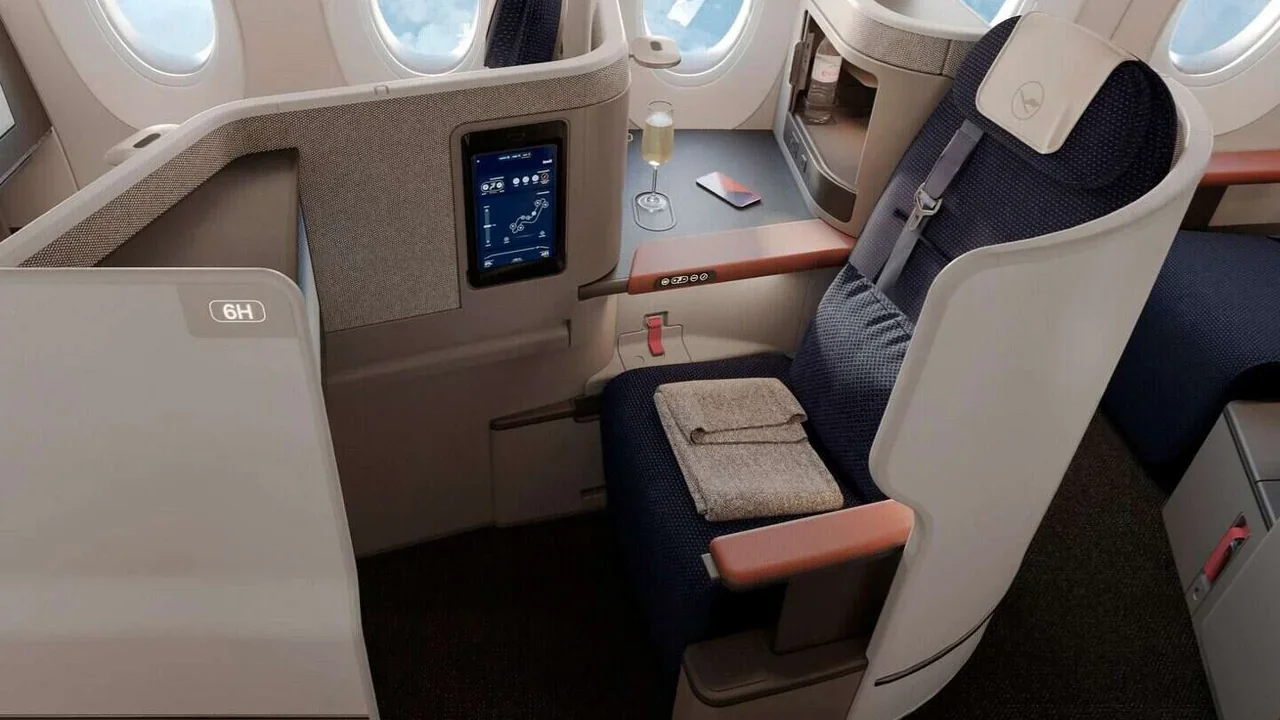
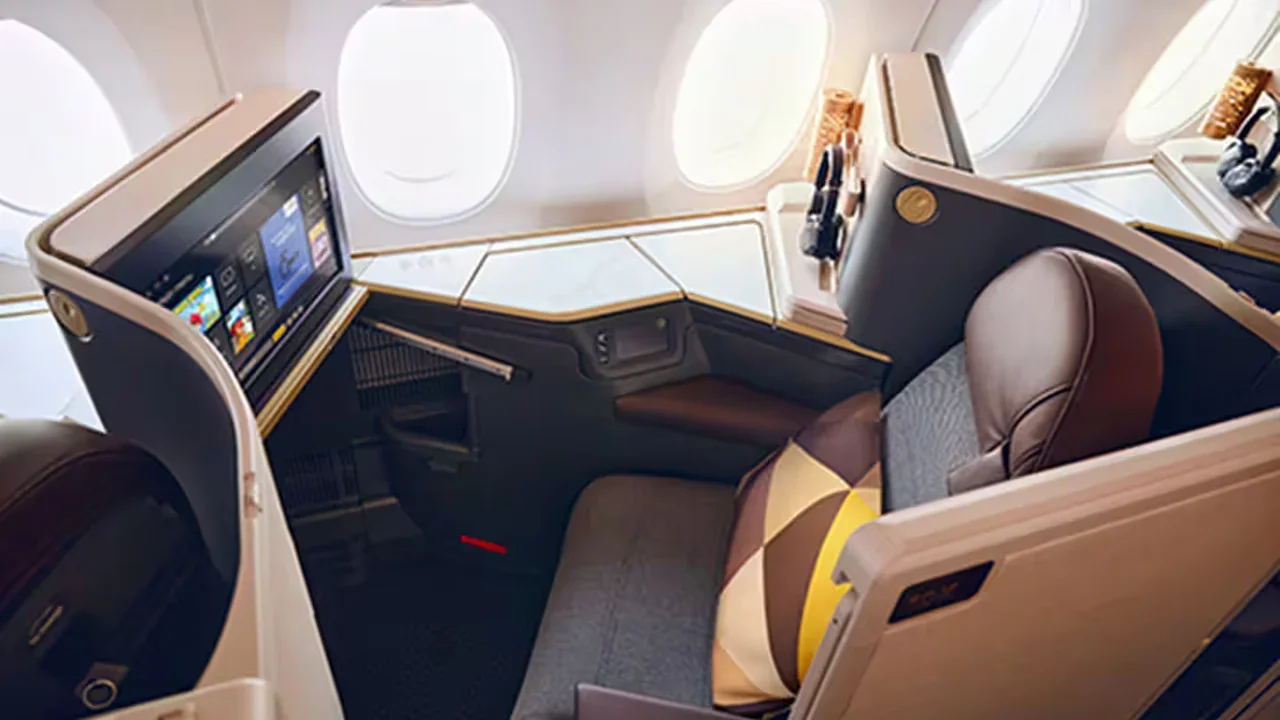
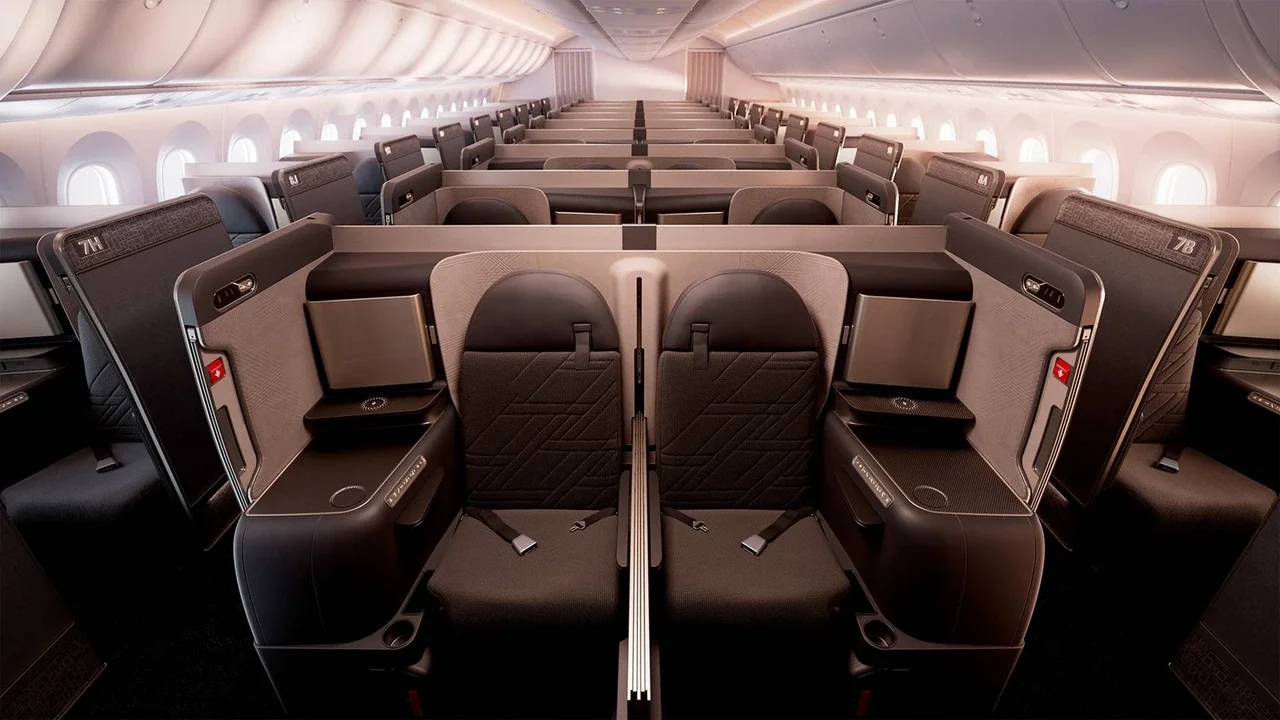
The long-haul RAM business class product on the Boeing 787 is better than most people expect. Fully flat seats in a 1-2-1 configuration, direct aisle access from every seat, decent Moroccan-influenced catering. I had a genuinely good bastilla on the JFK-CMN leg once, which isn't something I expected. The wines are hit or miss.
The Casablanca lounge (Salon Zenith, Terminal 1) is comfortable without being exceptional. The food leans Moroccan, which I appreciate, and the space doesn't get as overcrowded as comparable lounges at CDG. The coffee is fine.
Watch the CMN connection time
Royal Air Maroc's minimum connection time at Casablanca is officially 60 minutes, but I'd never book anything under 90 minutes. The transfer between international arrivals and the domestic/regional gates can involve a full security re-screen, and the airport has a habit of delays that ripple through the system. Book 2+ hours if you can.
The CMN-RAK leg itself is operated on an ATR 72 or a Q400 on some schedules — small turboprops where the "business class" is literally just an economy seat with the middle seat blocked. Don't let that bother you too much. It's 45 minutes. But manage your expectations about what "business class to Marrakech" means on that final segment.
RAM fares from JFK or IAD to RAK via CMN typically run $1,600–$2,800 round-trip in business class when bought at the right time. During Eid al-Adha and the Christmas-New Year period, expect that to spike significantly.
Air France via CDG: the most consistent product
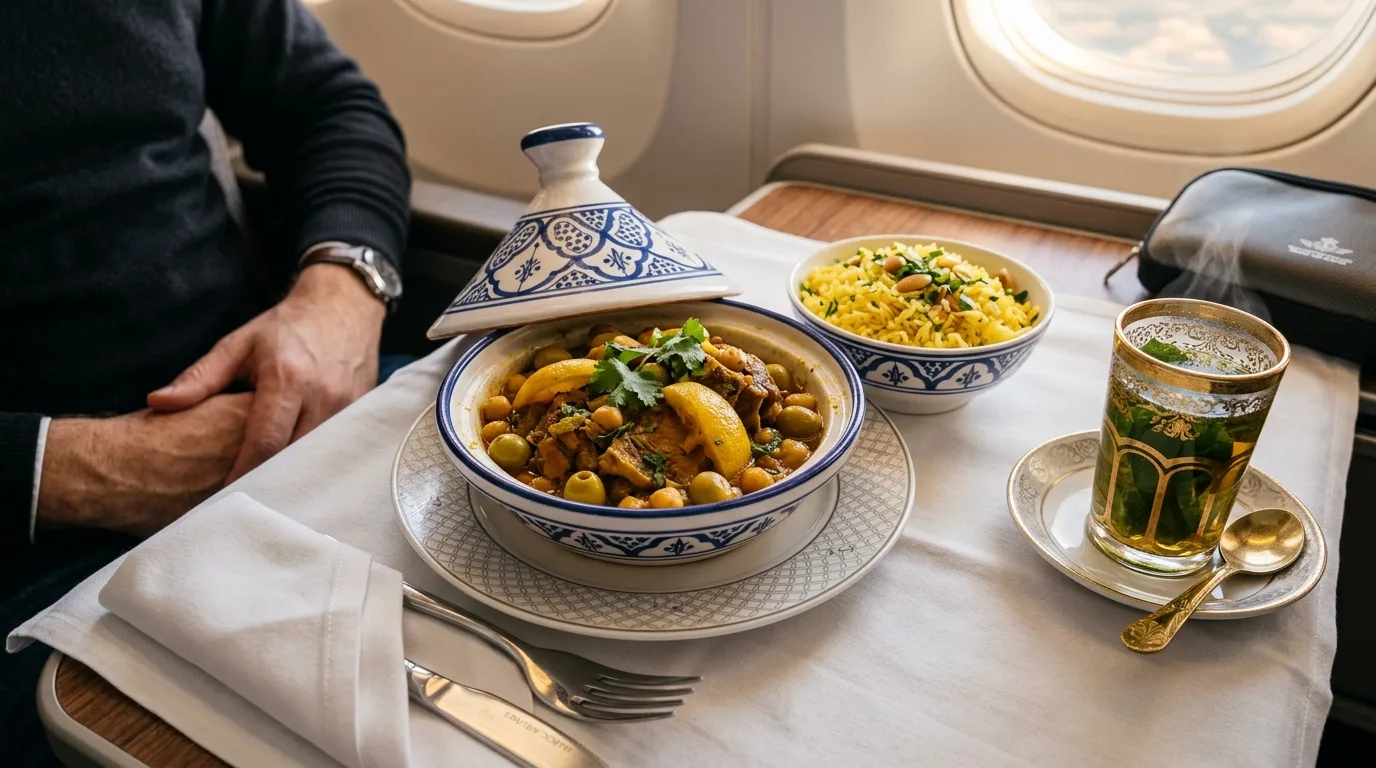
If I had to pick one routing for a first-time business class trip to Marrakech, it would be Air France via Paris Charles de Gaulle. The transatlantic AF product on the 777 or A350 is genuinely excellent — the new Air France business class seat (La Première aside) is one of the better long-haul products in the sky right now. Wide, fully flat, good storage, and the catering has improved noticeably in the last two years.
The CDG-RAK segment is operated on an A320 family aircraft in a 2-2 configuration. It's not a flat bed — same deal as the BA Club Europe situation — but Air France does a better job with the catering and service on this 3-hour flight than most carriers manage on routes twice as long. I've had proper warm meals and decent Bordeaux on AF's European business class segments when other airlines were handing out a sad cold sandwich.
The CDG lounge situation is worth knowing. Air France operates the Salon Première and the business class lounges in both Terminal 2E and 2F. If you're connecting through 2E (Hall K, which handles many long-haul departures), the lounge is busy but good. The hot food section is solid — I've had a respectable duck confit there at 7am, which felt either indulgent or appropriate depending on your philosophy. Terminal 2F, which handles the shorter European routes including many Marrakech flights, has a smaller lounge. It's fine. Don't expect the same scale.
If your AF connection at CDG is tight and you're clearing customs, aim for the fast-track business class lane at passport control in 2E. It's genuinely fast, usually under 5 minutes, and most passengers don't know to look for it.
Pricing on AF for this routing tends to be $1,900–$3,200 round-trip from East Coast gateways, with the better deals appearing on shoulder-season departures (April-May, October-November). BusinessClassSignal monitors this route and the AF fares on JFK-CDG-RAK and EWR-CDG-RAK both drop periodically, sometimes with less than 72 hours' notice.
Iberia via Madrid: the budget-friendly compromise
Iberia is worth considering if your priority is price over product. The IB transatlantic business class (they call it Business Plus) has improved — the flat-bed seat on the A330 is decent, the Iberian ham is legitimately good, and the Velázquez Lounge at Madrid T4 is one of the better airport lounges in Europe. Genuinely good jamón, actual hot food, and it's less frantic than CDG.
The issue is the MAD-RAK segment. Iberia operates this on an A320 in a standard European configuration. The business class is again a blocked middle seat product, but Iberia's short-haul catering and service is noticeably thinner than Air France's. It's functional, not enjoyable.
Where Iberia earns its place on this list is price. I've seen round-trip business class fares from Miami, Boston, and New York on Iberia to Marrakech dip below $1,800. Those fares don't last long and they're not always available on the dates you want, but if you're flexible and monitoring properly, the Iberia routing can save you real money.
Is Iberia business class worth it for this route?
Depends on what you're optimizing for. If you want the best possible product end-to-end, Air France wins. If you want the best value and you're not precious about the European short-haul segment, Iberia at $1,800 is hard to argue with. The transatlantic leg is genuinely good, and a 3-hour mediocre short-haul segment doesn't ruin a trip.
One thing to note: the T4 Iberia lounge at Madrid is split between Velázquez (business) and Fortuny (Iberia Plus Gold and above). If you have Oneworld Emerald status from another carrier, you'll access Velázquez, which is the better space. The Fortuny lounge is fine but less impressive.
What business class to Marrakech actually costs

Let's put some real numbers on this. These are observed fare ranges for round-trip business class from US East Coast and Southeast gateways, not theoretical prices.
Observed fare ranges (round-trip, business class)
- Royal Air Maroc (JFK or IAD → CMN → RAK): $1,600–$2,800
- Air France (JFK or EWR → CDG → RAK): $1,900–$3,200
- Iberia (JFK, BOS, or MIA → MAD → RAK): $1,750–$2,900
- British Airways (JFK → LHR → RAK): $2,100–$3,400 (note: LHR-RAK is Club Europe only)
These ranges reflect prices seen over the past 18 months. Peak holiday periods and school breaks will push fares higher.
The most important thing about these numbers is that they're moving targets. BusinessClassSignal tracks the JFK-RAK, EWR-RAK, MIA-RAK, and BOS-RAK routings continuously, and the variance between a sale price and a standard price on this destination can be $800 or more. That's not a small difference — that's the difference between feeling like you got a deal and feeling like you overpaid.
When do business class fares to Marrakech drop?
The best windows I've seen for low fares to Marrakech are:
- Late October to mid-November — after summer ends, before Christmas demand kicks in. Marrakech weather is still excellent (highs in the low 70s Fahrenheit), and the crowds in the medina are manageable.
- February — post-New Year, pre-spring break. Shoulder season pricing with cooler but perfectly pleasant temperatures.
- May — after Easter, before the summer spike. This is arguably the sweet spot: good weather, lower prices, and the city feels alive without being overwhelmed.
Avoid the week before and after Eid holidays if you can — not just for price reasons, but because Marrakech itself is packed with domestic and regional travelers, and some restaurants and businesses change their hours or close.
BusinessClassSignal lets you set a target price for a specific route. Set your alert for JFK-RAK at $2,000 or under and you'll catch the genuine drops without having to check manually. Most of the best fares I've flagged on this route appeared on Tuesday or Wednesday evenings and were gone within 48 hours.
Using miles and points for Marrakech
This is a legitimate strategy and worth a few paragraphs. Royal Air Maroc is a oneworld partner, which means you can book RAM award flights using American Airlines AAdvantage miles. The transatlantic RAM business class award on JFK-CMN runs around 57,500 AAdvantage miles one-way, which is reasonable if you value AA miles at around 1.5 cents each — that's effectively $860 in value for a flight that might cost $1,200–$1,500 in cash.
Air France is part of the SkyTeam alliance, so Flying Blue miles (Air France/KLM's program) are the natural fit. Flying Blue has monthly promo awards that periodically include CDG-RAK at reduced rates — I've seen it as low as 15,000 miles one-way in business class when a promo was running. Those promos are announced on the first of each month and sell out fast.
Iberia belongs to oneworld, so Avios (British Airways/Iberia) work here. The IB transatlantic business class redemption from JFK or MIA to MAD can be very efficient at around 34,000 Avios one-way (off-peak), and you can add the MAD-RAK segment for an additional 9,000 Avios. That's a strong use of points if you have them.
Mixed-cabin strategy
Some travelers book business class on the transatlantic leg and economy on the short European hop to Marrakech, which cuts costs significantly. If that approach works for you, FlightKitten — a fare monitoring tool built by the same team behind BusinessClassSignal — tracks economy fares across 220+ airlines and will alert you when the short-haul segment drops to a target price. It starts at $4.99/month and is useful for positioning flights or family members traveling in economy while you're up front.
What Marrakech Menara airport is actually like
Menara Airport (RAK) is small. It handles the volume well enough, but don't expect a premium arrival experience. There's no business class lounge operated by RAM or any other carrier at RAK — if you're connecting here or departing, the lounge situation is essentially nonexistent for most travelers. RAM has a small VIP lounge airside, but access is inconsistent and it's not something you should count on.
Arrivals can be slow. The passport control queue for non-Moroccan nationals can back up, especially on evening inbound waves from Paris and Madrid. I've waited 45 minutes at RAK passport control on a busy Friday evening. I've also sailed through in 10 minutes on a Tuesday morning. Budget time accordingly.
The taxi situation outside arrivals is the usual negotiation theater. Agree on a price before you get in. The standard fare to central Marrakech (Jemaa el-Fna area) is around 100–150 dirhams ($10–15), though some drivers will open at 300. The ride-hailing apps work in Marrakech but can be slow to connect at the airport.
One thing I'll say: arriving in Marrakech after a long transatlantic flight and a European connection, stepping out into that dry, warm air with the smell of something burning sweetly in the distance — it's worth the hassle. It's one of those arrivals that still does something to me, even after all this time.
How to actually monitor business class fares to Marrakech
The core challenge with this destination is that the best fares are unpredictable. They're not tied to a predictable sale calendar — they appear when an airline is filling seats, when award space opens up, or when connecting inventory briefly aligns at the right price point. Checking manually once a week won't catch them.
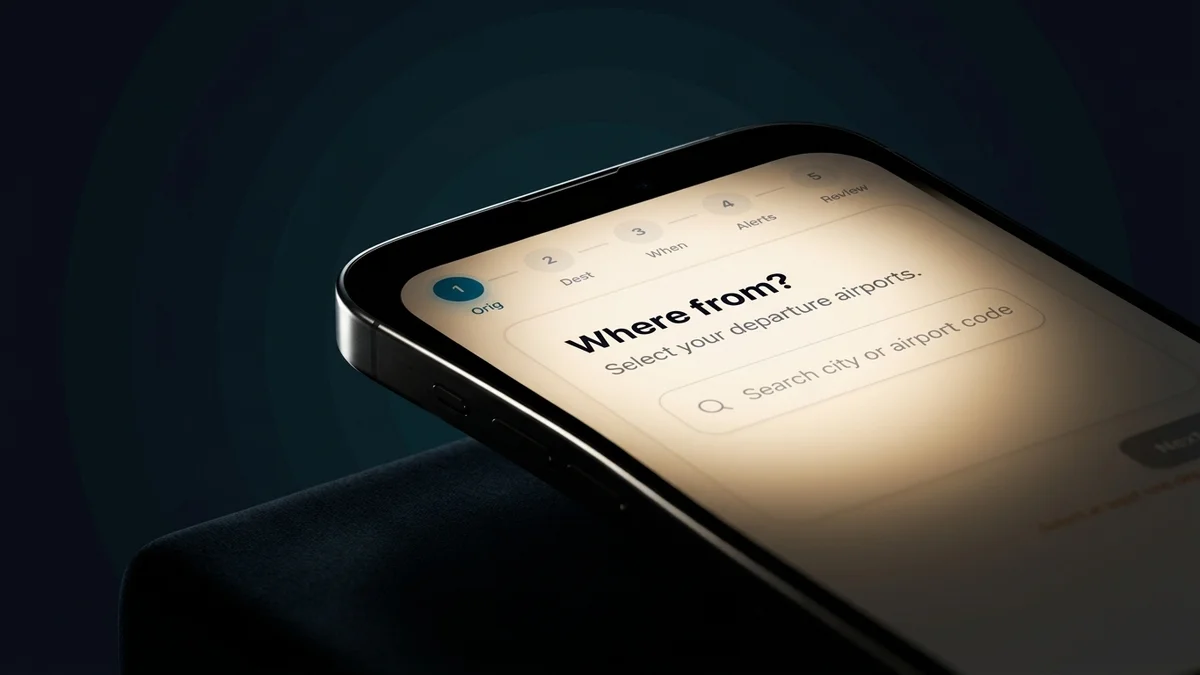
BusinessClassSignal monitors over 800 business class routes twice daily, including the main US-to-Marrakech routing combinations via CDG, MAD, CMN, and LHR. When a fare drops below your target threshold, you get an alert. That's the whole mechanism — no algorithm mystery, no "estimated" prices. You can read exactly how the monitoring system works if you want the details.
For Marrakech specifically, I'd suggest setting alerts on at least two routings — say, JFK-RAK via CDG (Air France) and JFK-RAK via CMN (RAM) — because they don't always drop at the same time. Sometimes the AF fare is $400 cheaper; sometimes RAM undercuts them. Having both monitored means you catch whichever one moves first.
You can browse all the routes we monitor to see what's available, and if you want to start monitoring this route specifically, the free trial covers the first 7 days with no card required.
The airlines flying this routing aren't running nonstop transatlantic service to Marrakech anytime soon — that hasn't changed. But the connection game is learnable, the fares do drop, and the destination is worth the effort.
Monitor business class fares to Marrakech — catch the drops before they're gone
Try Free for 7 Days