Quick summary
Business class to Reykjavik is a short, surprisingly affordable transatlantic hop — but "business class" means different things on different carriers. Icelandair's Saga Class is a premium economy product with a business class price tag, while Delta's seasonal service offers real lie-flat seats. This guide breaks down what you're actually getting, when to fly, and how to catch the price drops that make it worth booking up front.
The Reykjavik premium cabin situation, honestly
Let me get the uncomfortable truth out of the way first: there is no long-haul, fully-flat business class product on most flights to Reykjavik. Keflavik International (KEF) is roughly five to seven hours from the US East Coast. Airlines don't deploy their widebody flagship cabins on routes that short.
What you get instead is a range of premium products — some genuinely good, some dressed up in business class language — on flights that are barely longer than Boston to Denver. That changes the value calculation considerably.
And yet, business class to Reykjavik is still worth thinking about. Here's why: the prices are often lower than comparable transatlantic routes, the airport experience at KEF is weirdly pleasant, and if you're timing a trip around the northern lights, you're already spending real money on the ground. Paying a bit more upfront to arrive rested makes sense.
Icelandair Saga Class: what it actually is
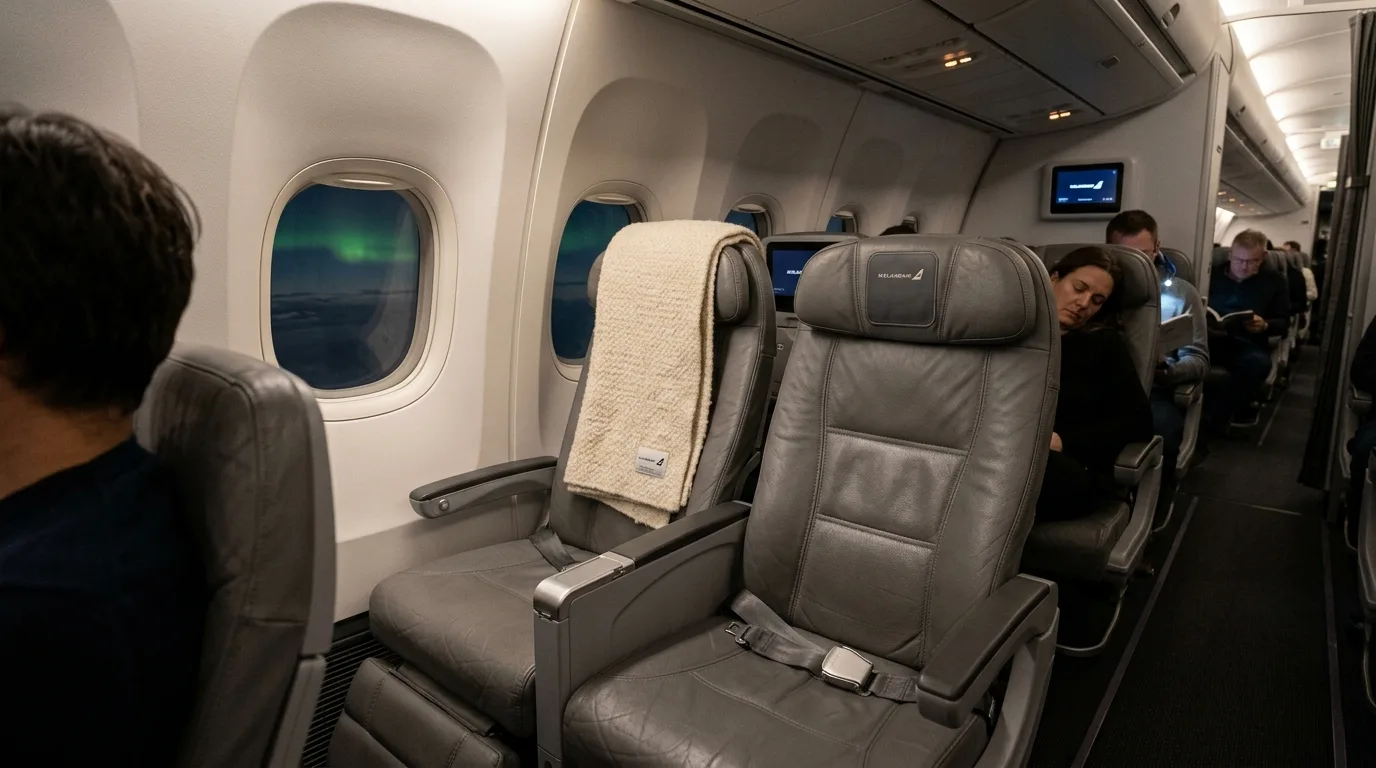
Icelandair is the dominant carrier on US-to-Reykjavik routes, and their premium cabin is called Saga Class. I want to be precise here because the marketing gets slippery.
Saga Class is not a lie-flat product. On Icelandair's Boeing 757s and 767s, you get a standard recliner seat — wider than economy, with more legroom, but it doesn't convert to a bed. On the 767, the seat pitch is around 38–40 inches and the seat width is noticeably better than the back of the plane. On the 757, which operates many of the East Coast routes, it's tighter.
The seat maps worth knowing: on the 767, rows 1–4 in Saga Class are the ones to target. Row 1A and 1C give you the most legroom and nobody reclines into your face. On the 757 configuration, I'd avoid the last row of Saga Class — it's right at the galley divider and the noise is constant.
Manage your expectations
Icelandair's Saga Class is better described as premium economy. If you're expecting a lie-flat seat or door-to-door suite, this isn't it. The product is comfortable for a 6-hour flight, but don't book it expecting Qatar-style business class.
What Saga Class does well: the meal service is a genuine step up. I've had the lamb with skyr sauce on the JFK-KEF route twice and it's one of the better airline meals I've eaten at 35,000 feet — not because it's technically impressive, but because they lean into Icelandic ingredients instead of generic airline food. The bread is actually good. The butter is actually cold. Small things, but they add up.
The lounge situation at JFK is handled through contracted lounge access, which in practice means the Icelandair lounge experience pre-departure from New York is underwhelming. At KEF itself, the Saga Lounge is worth your time — the hot buffet at 6am is surprisingly solid, and the views of the apron in winter light are genuinely nice.
The KEF Saga Lounge has a self-serve smoked salmon station that's available through most of the day. It's better than what they serve on the plane. Load up before boarding.
How much does Saga Class cost?
Icelandair prices Saga Class based on season, route, and how far out you book. From New York JFK, I've seen fares as low as $900 round-trip in the shoulder season (April-May, September-October). Peak summer, expect $1,400–$1,900 round-trip. From Boston (BOS), which Icelandair also serves, fares tend to run slightly cheaper because there's less connecting traffic.
The sweet spot, if you're watching fares, is the late April departure. Iceland isn't fully in summer mode yet, the crowds are thinner, and Saga Class prices haven't hit their summer ceiling. I've caught $1,050 round-trip fares in that window more than once.
BusinessClassSignal monitors Saga Class fares on this route as part of its standard East Coast-to-Europe coverage. The tool scans fares twice daily across 800+ routes and flags when prices drop below whatever threshold you set. If you want to catch the $900–$1,050 windows without refreshing Google Flights every morning, start monitoring this route and let the alerts do the work.
Delta's seasonal service: the real lie-flat option

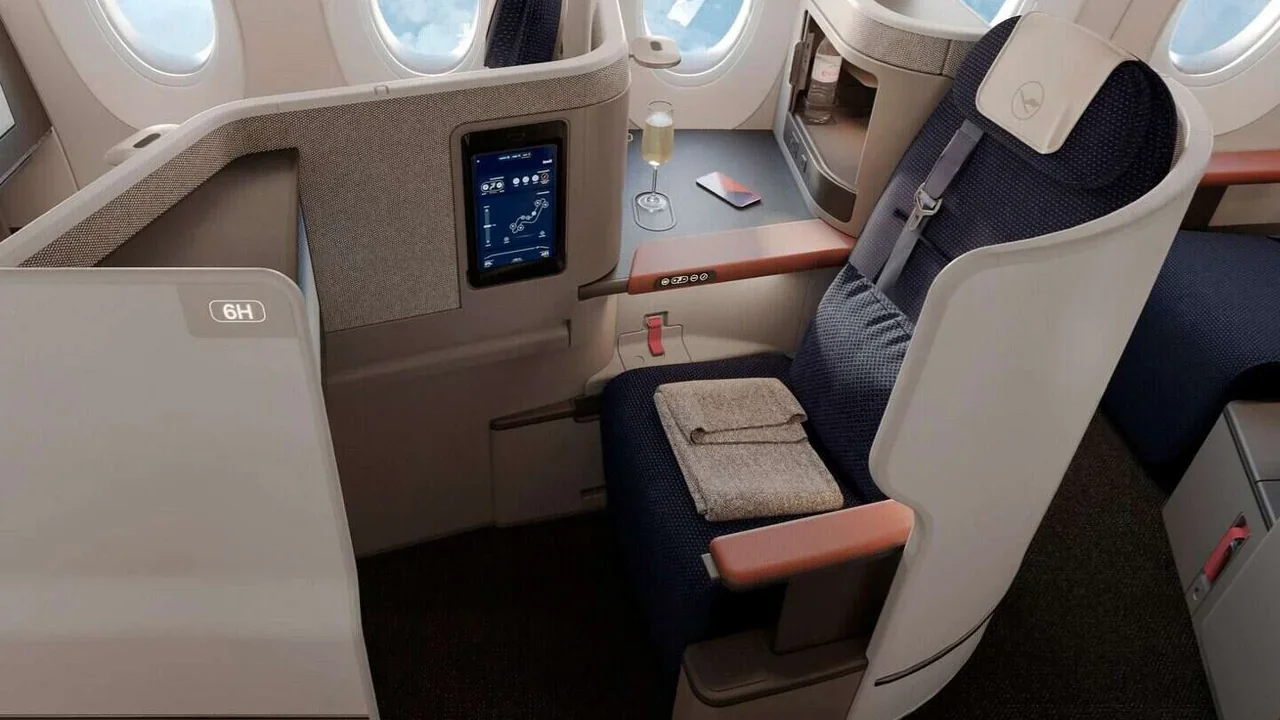
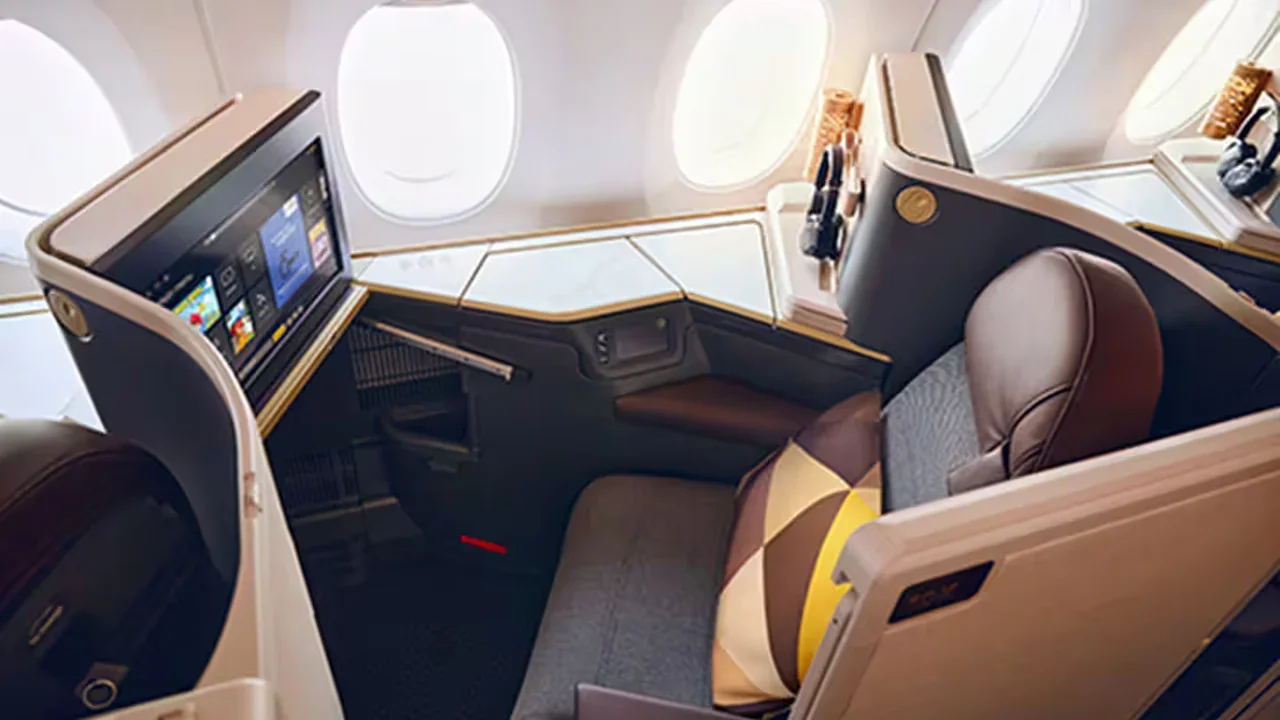
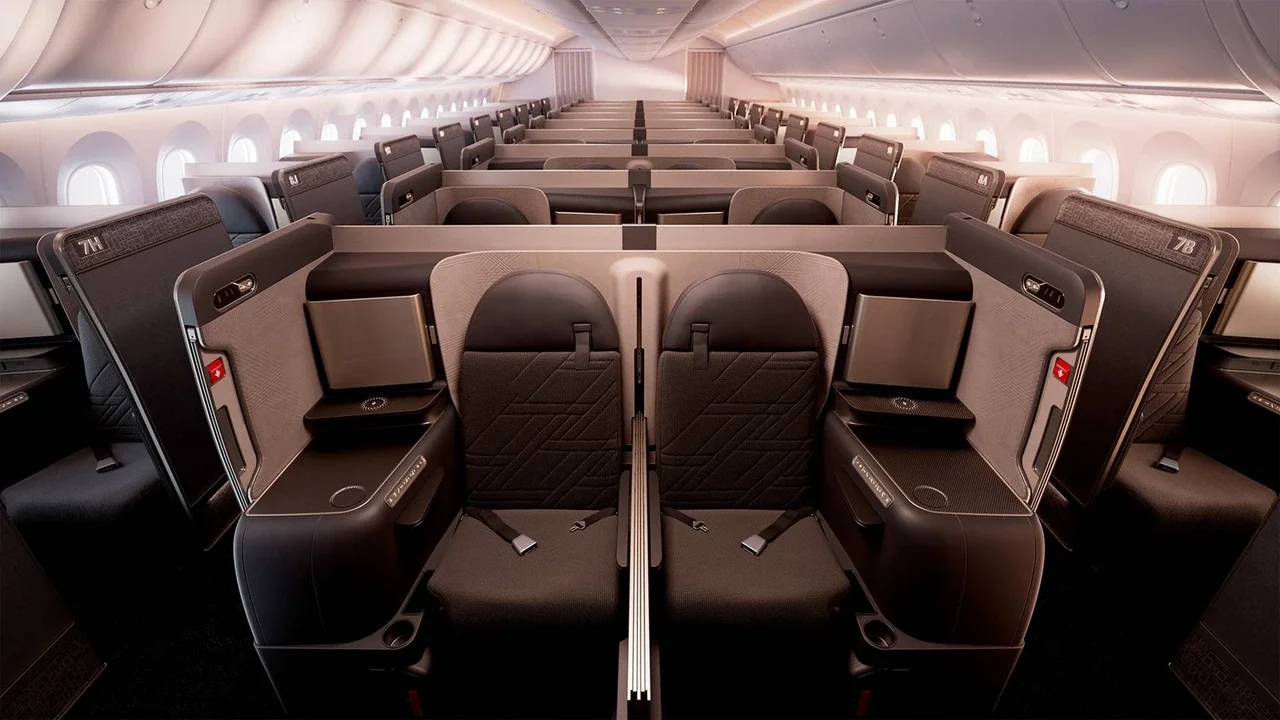
Delta runs seasonal nonstop service between New York (JFK) and Reykjavik, typically operating from late spring through early fall. The aircraft is usually an Airbus A330, which means Delta One business class — actual lie-flat seats, real bedding, the whole setup.
This is a materially different product from Saga Class. The Delta One seat on the A330 is a forward-facing, fully-flat configuration with direct aisle access (no climbing over a seatmate). The soft product has improved over the years. I flew this route in August a couple of years back and the meal service was solid — nothing that would embarrass them in a trans-Pacific context.
The tradeoff: Delta One to Reykjavik costs considerably more than Saga Class, and for a 6.5-hour flight, a lie-flat seat is a genuine luxury rather than a practical necessity. Unless you're arriving in Reykjavik and going straight to a meeting — which, honestly, almost nobody is — you'll have time to recover.
That said, if you're flying in late October or November for the northern lights and want the full premium experience, Delta One is the only way to get a true business class product on this route. Book early. Delta's seasonal KEF service sells out, and business class availability narrows quickly once the route opens for sale.
Delta One availability tip
Delta tends to release more saver-level award space and discounted Delta One fares in the January-February booking window for the following summer and fall. If you're planning a fall northern lights trip, January is when to watch.
When do business class fares to Reykjavik drop?
The fare calendar for KEF has some patterns worth knowing.
Shoulder seasons (April-May and September-October) consistently produce the lowest Saga Class fares. September is particularly good — the weather in Iceland is still reasonable, the tourists have thinned out, and you have a legitimate shot at northern lights activity. Fares in September have historically run 20–35% lower than peak July.
For Delta One specifically, the lowest fares I've tracked appeared in two windows: the January sale period for summer travel, and last-minute drops (within 14 days of departure) when Delta is trying to fill remaining premium seats. The latter is unpredictable, but BusinessClassSignal's alerts catch those drops as soon as they appear.
September 15 to October 15 is the sweet spot for combining reasonable fares, decent weather, and real northern lights potential. The aurora requires darkness, and Iceland doesn't get that in June.
Winter travel (November through February) is the peak aurora season but a tougher premium fare environment. Icelandair knows exactly why people are booking those dates. Fares don't drop as dramatically in that window, and the weather can be brutal. Budget accordingly.
The northern lights question and why it affects when you fly
I get asked about this constantly, so let me be direct: the northern lights are not guaranteed on any trip to Iceland, regardless of when you go or how much you pay for your seat.
What you can control is putting yourself in the right conditions. That means darkness (so not June-July), clear skies (Iceland is famously cloudy, so you need multiple nights), and being away from Reykjavik's light pollution. If you're going specifically for the aurora, budget at least five nights. Three nights in the city gives you maybe one clear night if you're lucky.
The best months statistically are September through March. October and November are underrated — the weather is less extreme than deep winter, and you still get long dark nights. February and March have the clearest skies on average, but you're dealing with cold that makes standing outside at 11pm genuinely unpleasant.
Aurora and flight timing
Flying overnight from the US East Coast means you land in Reykjavik in the morning, which is ideal. You get a full day to recover, and you're not burning a night's aurora-watching opportunity to jet lag. The Icelandair red-eye from JFK (typically departing around 8–9pm) gets you in around 6–7am local time.
If you're combining a premium cabin booking with a real aurora chase, don't blow your entire budget on the seat. Spend the money on extra nights or a stay outside the city. I've found that people who spend $3,000 on the seat and two nights in Reykjavik come home disappointed. People who spend $1,200 on Saga Class and four nights at a guesthouse in the south often see the lights twice.
Positioning flights and getting to the East Coast
If you're not based in New York or Boston, you've got a positioning flight to deal with. Icelandair's US gateways are JFK, BOS, SEA, MSP, ORD, DEN, and a handful of others depending on season.
The East Coast routes are the ones to focus on for business class to Reykjavik. The Seattle and Denver routes exist, but Saga Class availability is spottier and the fares are less competitive. JFK and BOS give you the most options and the most frequent schedule.
For getting to the East Coast cheaply, our sister product FlightKitten monitors economy fares across 220+ airlines and sends alerts when prices fall below your target. It's built by the same team that runs BusinessClassSignal, costs $4.99/month, and is genuinely useful for mixed-cabin strategies — fly cheap in economy to JFK, then splurge on Saga Class across the Atlantic. That's how I'd do it if I were coming from the Midwest.
What the KEF airport experience is actually like
Keflavik is about 50 kilometers from Reykjavik city center, which is a longer transfer than most people expect. The Flybus takes 45-50 minutes to the BSÍ bus terminal, then another 10-15 minutes to most hotels. A taxi or pre-booked transfer runs 12,000-15,000 ISK (roughly $85-110). There's no train.
The airport itself is modern and easy to navigate. Security is fast by international standards. The Saga Lounge, post-security on the departure side, is worth arriving early for. It's not enormous but it's well-stocked and considerably quieter than the main terminal, which gets chaotic during morning bank departures.
One thing that catches people off guard: KEF is a busy connection hub for Icelandair's Stopover program. If you're flying through on the way to continental Europe, the airport handles a lot of volume for its size. The Saga Lounge gets crowded between 6am and 9am when the European connections are banking. If you have a choice, earlier is better.
If you're doing a Reykjavik stopover as part of a longer Europe trip, ask Icelandair about their Stopover program. You can add up to 7 nights in Iceland on a transatlantic ticket at no extra airfare cost. Saga Class is eligible. It's one of the genuinely good deals in premium travel right now.
Using BusinessClassSignal to monitor these fares
BusinessClassSignal is a fare monitoring service that scans business and first class fares on 800+ routes twice daily. You set a target price for your route, and when fares drop below it, you get an alert. That's the whole thing. No booking through us, no affiliate markup — just the signal.
For the Reykjavik routes specifically, here's how I'd use it: set a target of $1,100 round-trip for Saga Class from JFK or BOS, and $2,200 for Delta One if you want the lie-flat option. Those numbers are achievable. They're not guaranteed, but they happen often enough in the shoulder season windows that the alert is worth setting.
The monitoring system covers both Icelandair Saga Class and Delta One on this route. You can browse all routes to see the full coverage before committing to a trial.
I've been running this service for several years and the Reykjavik route is one I get questions about constantly. The honest answer is that it's one of the more accessible premium transatlantic routes for East Coast travelers — the fares are lower than London or Paris, the flight is short enough that even a recliner seat feels fine, and the destination is genuinely unlike anywhere else in Europe.
The people who get burned are the ones who book at peak prices without checking whether a sale window is coming. Icelandair runs promotional fares several times a year. Delta One occasionally shows up at sub-$2,000 round-trip in the right booking window. You just have to be watching when it happens.
Best routes to monitor
For business class to Reykjavik from the US, the routes worth setting alerts on are JFK-KEF and BOS-KEF. Both have Icelandair Saga Class year-round, and JFK-KEF has Delta One seasonally. If you're on the West Coast, Seattle-KEF is worth a look in summer, but fares are less predictable.
There's also the question of award travel, which I haven't touched on much. Icelandair doesn't participate in any major airline alliance, so Saga Class isn't bookable on miles through the usual programs. Delta One to KEF can be booked on SkyMiles, and the sweet spot is around 50,000-60,000 miles one-way during off-peak periods. If you have Delta miles sitting around, the Reykjavik route is one of the better uses for them — it's a short enough flight that you're not paying the premium you'd expect, and availability is reasonable in the fall shoulder period.
One last thing worth knowing: the Icelandair Saga Class fare rules are more flexible than you'd expect. Most Saga Class fares allow free date changes up to a certain window, and the cancellation penalties are lower than on comparable business class products from legacy carriers. That matters if you're booking months out for an aurora trip and you're not 100% sure of your dates.
Reykjavik is one of those destinations where the premium cabin math actually works in the traveler's favor — short flight, lower fares than comparable routes, and an airport experience that doesn't punish you for arriving early. Just go in knowing what Saga Class is, set realistic expectations for the aurora, and watch the fare calendar. The deals are there.Monitor business class fares to Reykjavik — catch Saga Class and Delta One price drops with a 7-day free trial
Try Free