Quick summary
Business class to Rome from the US runs anywhere from $2,200 to over $6,000 round-trip depending on the airline, cabin, and how far in advance you book. The sweet spots are ITA Airways (especially in their Volare business class) and Delta One on their nonstop JFK–FCO route. Fares do drop — sometimes significantly — but they don't stay open long.
Why Rome is worth doing right
Rome is one of those cities where the flight sets the tone. You land at Fiumicino, clear customs, and you're already in it — the heat, the noise, the particular exhaustion of a long-haul crossing. If you arrived upright and reasonably rested, the city opens up fast. If you spent nine hours folded into a recline-only seat in the back of a 767, you're going to spend the first day recovering in your hotel instead of actually being in Rome.
I've flown this route more times than I can honestly remember. Some of those flights were spectacular. Some were fine. A couple were genuinely disappointing for the price. The point of this piece is to tell you what's actually worth your money and what's worth watching for when fares move.
The main carriers flying business class to Rome from the US
There are four airlines doing meaningful business class service between the US and Rome right now: ITA Airways, Delta, United, and American Airlines. Each has a distinct product, a distinct pricing philosophy, and honestly, a distinct type of passenger who tends to prefer them. Let me go through them.
ITA Airways — the one most people overlook
ITA is the rebranded successor to Alitalia, which doesn't exactly inspire confidence if you remember Alitalia's final years. But the new product is genuinely different. Their Volare business class cabin on the A330 runs a full flat-bed configuration — 180 degrees, direct aisle access from every seat, 1-2-1 layout. That's not a given on transatlantic routes, and on some competitors it absolutely isn't the case.
The cabin is quiet and the seat itself is well-padded. The meal service tends toward Italian food done with some actual care — not airline-catering generic, but real pasta and a reasonable cheese course. I had a rigatoni all'amatriciana on an FCO-bound flight two years ago that I still think about. That's either a sign of a good airline or a sign that I need to get out more.
The catch is that ITA's schedule is thinner than the US carriers. They fly JFK to FCO nonstop, and that's essentially it for direct US service. If you're connecting from somewhere other than New York, you're either connecting through JFK or flying through Rome on a partner itinerary. And their SkyTeam membership means you're earning miles on Delta if that's your program.
Delta One — the reliable workhorse
Delta's nonstop JFK to FCO is probably the most-watched route on BusinessClassSignal's monitoring list. The frequency is good (daily, sometimes more), the Delta One product on the A330 is solid, and the fare structure tends to produce legitimate drops a few times per month.
The seat on the A330 is a full flat-bed in the standard Delta One 1-2-1 layout. Nothing revolutionary, but the privacy is decent and the bedding is comfortable. Where Delta genuinely earns it is the service consistency — I've had more reliably good crew interactions on Delta transatlantic flights than on any other US carrier. That's not universal, but it's been my experience across a lot of segments.
Delta also flies JFK-FCO on the 767 occasionally, particularly during schedule changes or irregular operations. That's a different plane and a noticeably older seat. If you're booking and the aircraft type matters to you, check it before you confirm — the aircraft can swap without much warning, and the 767 Delta One product is older and more cramped than the A330 version.
United Polaris — good in theory, variable in practice
United flies Newark (EWR) to Rome, which is actually useful if you're in the New York area and want to avoid JFK. The Polaris seat on the 767-300ER is a fully flat bed, but the configuration is a staggered 2-2-2 on that aircraft, which means half the seats require you to climb over someone to get to the aisle. That's fine on a daytime flight. On a night flight where you're trying to sleep, it's annoying in a way that compounds over nine hours.
The Polaris soft product — bedding, amenity kit, food — is genuinely good when it's working. The issue is execution. United's transatlantic service quality varies more than Delta's in my experience. I've had fantastic Polaris flights and I've had ones where the crew was going through the motions. The meal quality has also been inconsistent; the starter course tends to be fine but the main can be hit or miss depending on which catering facility serviced the flight.
One thing United does well: award availability on this route is often better than Delta's, which matters if you're burning miles rather than paying cash.
Watch the aircraft on United EWR–FCO
United sometimes operates this route on the older 767-300ER with the staggered 2-2-2 Polaris layout. Check the seat map before booking — the window seats in that config require an aisle-cross to get out during the night, which gets old fast.
American Airlines — connecting through their hubs
American doesn't fly nonstop to Rome from most US cities. Their typical routing is through London Heathrow (T3) or Madrid Barajas, depending on the itinerary. That's a connection, which adds time, adds risk, and adds the particular tedium of a second boarding process.
The Flagship Business product on their 777 and 787 is fine — full flat-bed, direct aisle access, decent bedding. But I've found American's transatlantic food service weaker than Delta or ITA, and their lounge access story at connecting points can be frustrating (you're often in the Oneworld partner lounge rather than an AA flagship lounge, which varies wildly in quality).
If American is pricing significantly below the others — and sometimes they are — it can make sense. But the connection adds two to three hours to your total travel time, and that matters when you're already looking at a 9-hour ocean crossing.
American sometimes prices their connecting-itinerary business class to Rome $400–600 below Delta's nonstop. The math only works in your favor if the connection is under 90 minutes and the lounge at your hub is decent.
When to book business class to Rome — and when fares actually move
When do business class fares to Rome actually drop?
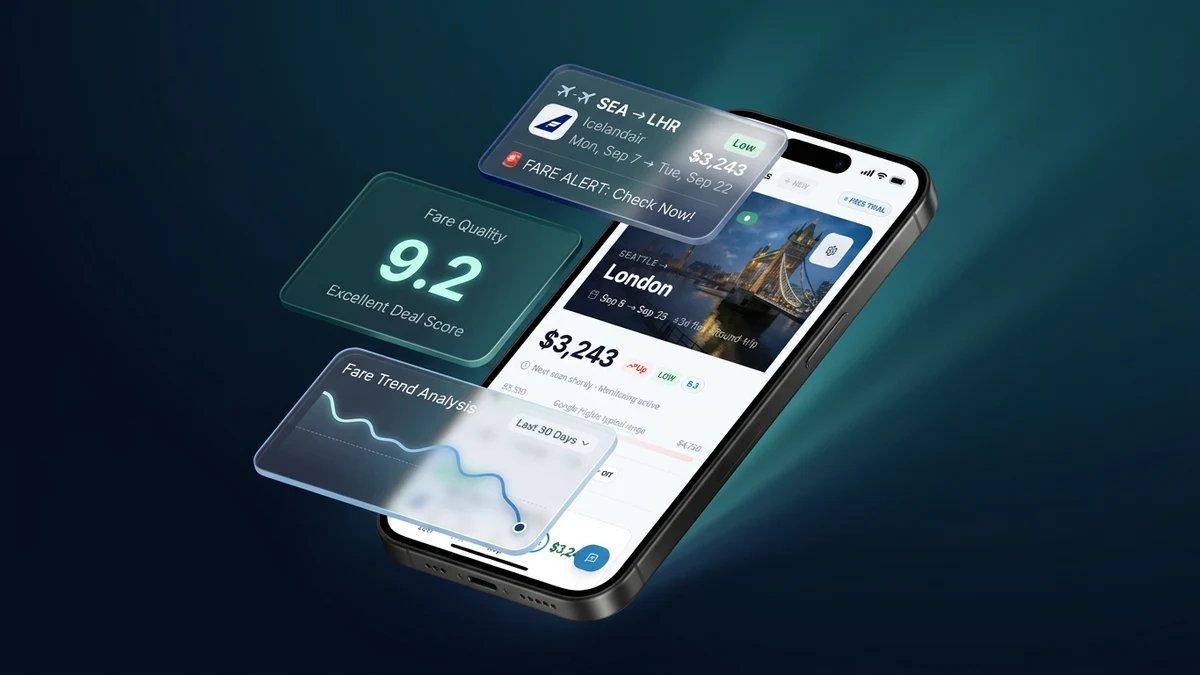
This is the question that drives most of what we do at BusinessClassSignal. The short answer: fares to Rome tend to drop in predictable windows, but the drops are short-lived — often 24 to 72 hours before they either sell out or get corrected.
The best windows historically have been:
Late January through mid-February, before the spring booking surge kicks in. This is when airlines are still managing inventory from the holiday season and haven't yet filled forward cabins with summer travelers.
October and early November for travel the following year. Airlines release business class inventory well in advance, and the initial pricing sometimes comes in lower than the eventual settled price.
Flash sales and error fares. These are rare but real. I've seen Delta One JFK-FCO drop to $1,400 round-trip for about 18 hours before it corrected. That kind of thing happens maybe three or four times a year on this route.
The catch is that you have to be watching when these happen. Checking Google Flights manually once a week won't cut it. By the time you see the low price and decide whether to book it, it's usually gone. That's the whole reason we built BusinessClassSignal — the monitoring system runs twice daily across 800+ routes and sends an alert the moment a fare hits your target threshold on a given route.
What's a realistic price to pay for business class to Rome?
Paid fares right now (as of mid-2025) sit somewhere between $2,200 and $3,500 round-trip on the nonstop routes from JFK or EWR. The upper end of that range is what you'll see if you book six to eight weeks out during summer. The lower end appears during off-peak travel periods or when airlines are moving inventory.
Above $3,500 round-trip, you're paying a premium that isn't justified by the product unless you're locked into a specific date with no flexibility. The cabin is the same seat whether you paid $2,300 or $4,800.
If you're using miles, Delta SkyMiles redemptions on this route fluctuate a lot since Delta moved to dynamic pricing. United MileagePlus is often the better value for this market — their Saver awards to Europe (including Rome) start around 60,000 miles one-way in business when availability opens up. That's not always easy to find, but it does exist.
Target price for JFK–FCO business class
Set your alert at $2,400 round-trip or below and you'll catch the legitimate sales without chasing fares that don't materialize. If you have flexibility on dates, going as low as $2,200 is realistic two or three times per year.
FCO airport — what to know before you land
Fiumicino (Leonardo da Vinci Airport) is bigger than it looks from the outside and more confusing than it needs to be. International arrivals from the US come into Terminal 3, which is fine — it's modern, the customs process is usually manageable, and the baggage claim is reasonably efficient. Immigration can back up on busy summer mornings when several transatlantic flights land within an hour of each other, so don't book a tight train connection if you're arriving in the 7–10am window in July or August.
The Leonardo Express train into Rome Termini is the right move for most business travelers. It runs every 30 minutes, takes about 32 minutes to Termini, and costs €14. Don't take the taxi queue unless your hotel is well outside central Rome or you have enough luggage that the train is genuinely impractical. The flat-rate taxis to central Rome run around €50, and while that's not outrageous, the train is faster and doesn't involve negotiating traffic on the GRA.
One thing that trips people up: if you're connecting onward within Europe on a separate ticket, you need to go through Schengen passport control at FCO, collect your bags, re-check them, and go back through security. Build in at least two and a half hours for that. The airport is not small and the re-check process can be slow.
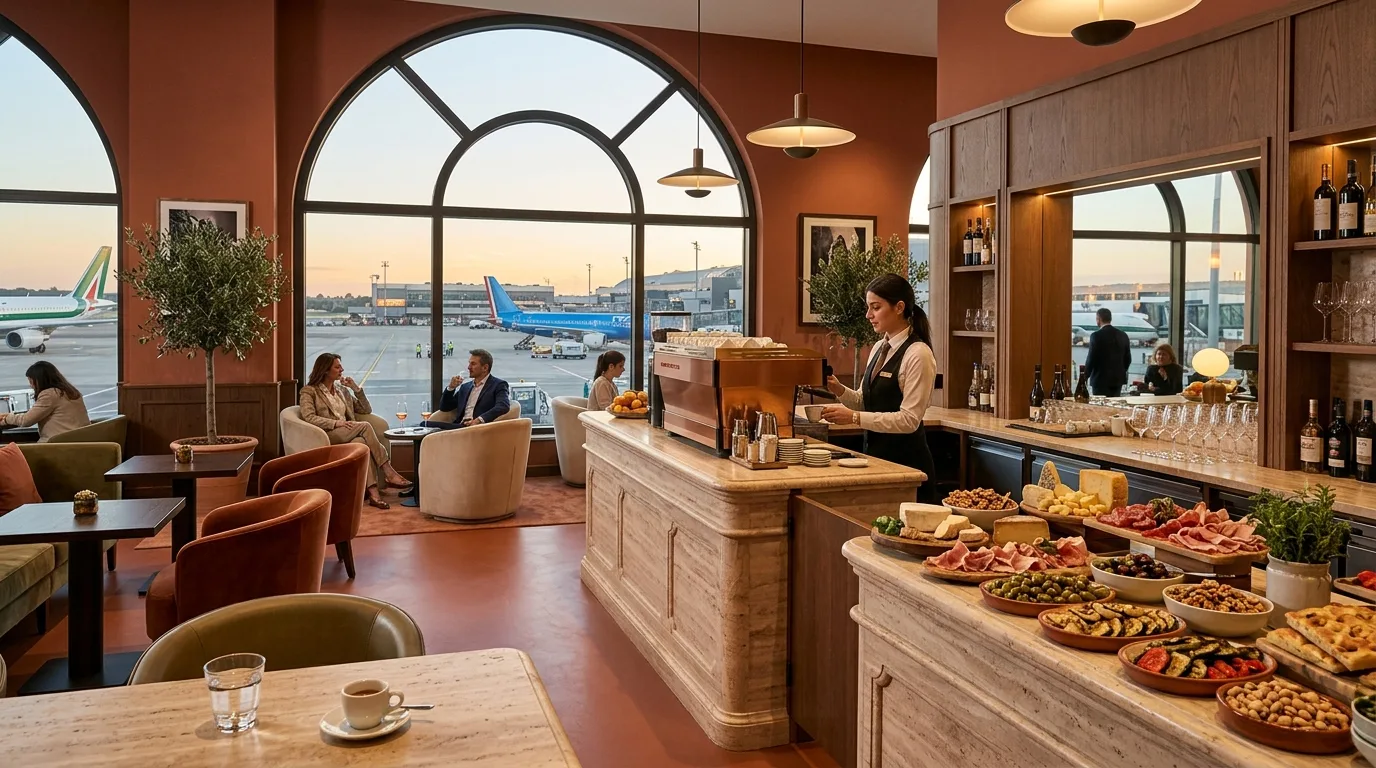
The Priority Pass lounge in Terminal 3 at FCO (the SALA VIP lounge near Gate G) is fine for a glass of wine and a sit-down before departure. The food is average but the seating is comfortable. Don't go expecting a Centurion Lounge experience.
The lounges — what you're actually getting before you fly
If you're flying business class out of JFK, your pre-departure experience depends heavily on which terminal you're departing from. Delta operates out of Terminal 4, where the Delta One lounge is the Sky Club — the main one is large, reasonably well-stocked, and the food options are better than they used to be after Delta's lounge expansion work over the past couple of years. The bar is self-serve, which I prefer. The Wi-Fi is fast enough to actually work on.
ITA Airways uses the Air France lounge at JFK T1 for their premium passengers. It's a decent lounge — better than the generic Centurion alternatives — with a proper hot food section and a reasonable wine selection. Not spectacular, but fine for a two-hour pre-departure sit.
United's Polaris Lounge at EWR is genuinely one of the better pre-departure options on this route. The food is restaurant-style, the seating is good, and the bar has a proper cocktail menu. I'd rather start a transatlantic flight from the EWR Polaris than from most JFK alternatives, honestly.
American's setup at JFK T8 is the Flagship Lounge, which is decent but not as impressive as the one at JFK T3 (which is now gone). The food is fine. Nothing to write home about.
Seats worth requesting — and ones to avoid
On ITA's A330 Volare cabin, the 1-2-1 layout means every seat has direct aisle access. The bulkhead row (usually row 1) has more legroom but the tray table and IFE screen are in the armrest, which some people find annoying. I prefer row 3 or 4 on the left side — it's quieter and away from the galley noise.
On Delta One A330, the 1-2-1 layout runs the same way. Avoid the last row of the business cabin if you can — it's near the galley and you'll hear the crew prep for meal service if you're trying to sleep. The sweet spot is the middle of the cabin, rows 3 through 6.
On United's 767-300ER Polaris in the staggered 2-2-2, the window seats in the odd rows (1, 3, 5, etc.) are the ones where you're against the wall and need to climb over the aisle seat to get out. The even rows (2, 4, 6) have the window seat closer to the aisle. If you're booking a window seat on this configuration, check SeatGuru before you confirm — the difference is significant on a night flight.
Seat maps change
Aircraft swaps happen, especially on transatlantic routes. If you've selected a specific seat, recheck it 48 hours before departure. Delta in particular has swapped A330s for 767s on the FCO route during irregular operations periods.
Getting the most out of business class to Rome
The honest case for flying business class to Rome isn't that the seat is luxurious — it's that you arrive functional. Rome in summer is relentless: the heat, the crowds, the distances between major sites. If you land at 9am having actually slept six hours, you can do the Vatican and the Borghese Gallery on the same day. If you land wrecked from a coach overnight, you're writing off the first 24 hours.
That's the math I always run. What does a day in Rome actually cost you, all-in? Hotels near the centro storico run €250–400 per night. Restaurants, activities, guides — it adds up fast. Against that context, paying an extra $800–1,200 for a business class fare that lets you use every day of the trip starts to look pretty reasonable.
Rome as a destination also rewards repeat visits more than almost anywhere I've been. The city layers on itself — you notice different things the third time than the first. Which means if you're going, you're probably going more than once. Building a fare-monitoring habit around this route makes sense.The thing most people don't do is set up ongoing monitoring for a route they care about. They check once, see the price is too high, and give up. The fares genuinely move — sometimes dramatically — and the travelers who catch the good prices are the ones who were watching when it happened. BusinessClassSignal monitors over 800 routes including all four of the US-to-Rome carriers, and it sends you an alert the moment a fare hits your target. That's it. You don't have to check anything manually.
Browse the full route list if you want to see what else is being monitored — there's a lot of transatlantic coverage beyond just Rome.Monitor business class fares to Rome automatically — 14-day free trial, no credit card required
Try Free