Quick summary
Cathay Pacific business class in 2026 is genuinely one of the better long-haul products you can book — particularly on the A350 with the Aria Suite, which finally gives the airline a fully flat, direct-aisle-access seat across the whole cabin. The older 777 configuration is still flying and still worth knowing about before you book. Lounge access at Hong Kong is excellent. Prices are high but they do drop, and when they do, they drop meaningfully.
I've flown Cathay Pacific business class eleven times over the past decade. The first was on a 747 that's now retired. The most recent was a Hong Kong to London Heathrow sector on an A350-900 in February this year, and it remains one of the cleanest long-haul experiences I've had in a while. Not flashy. Not trying too hard. Just well-executed.
That said, there are things about this product that people consistently oversell, and a few things that routinely get missed. So let me tell you what it's actually like.
The Aria Suite: what changed and why it matters
Cathay introduced the Aria Suite on its A350 fleet starting in 2022, and it replaced a business class product that was already decent but starting to show its age. The old reverse herringbone layout was fine — direct aisle access, fully flat — but the suite itself felt a bit clinical. Low privacy, narrow storage, the kind of seat where you're always slightly aware of the person next to you.
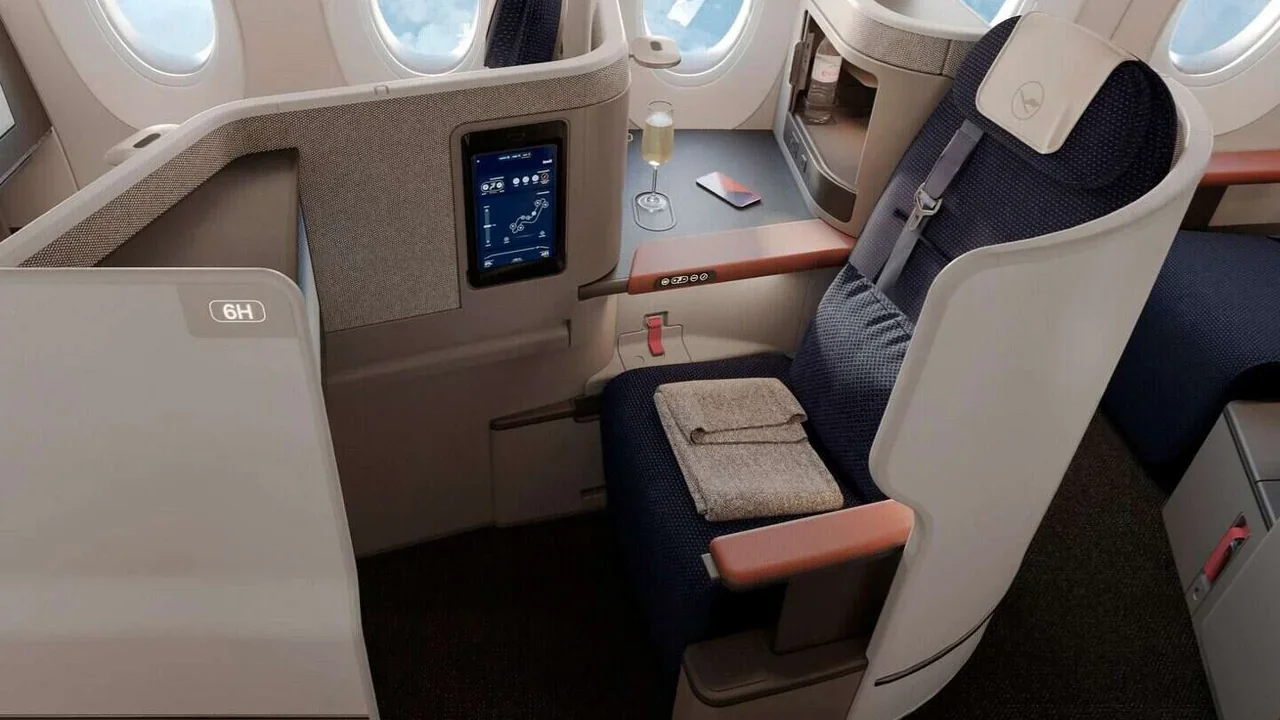
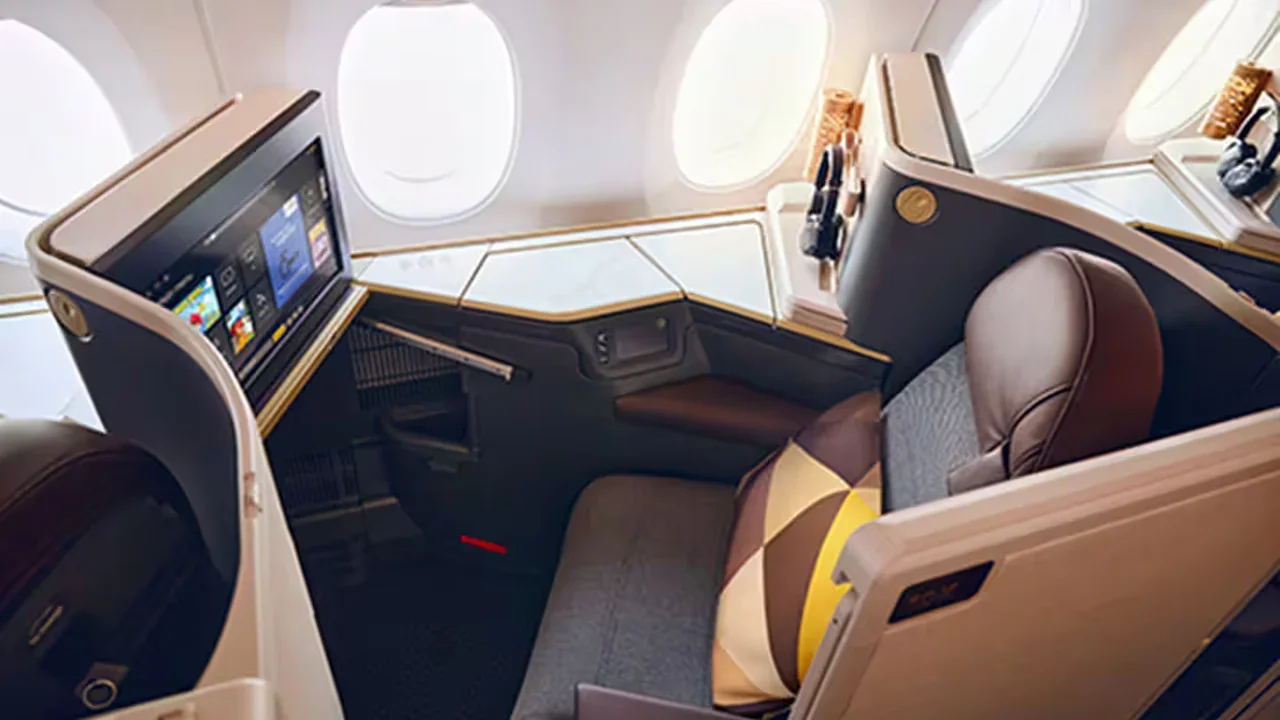
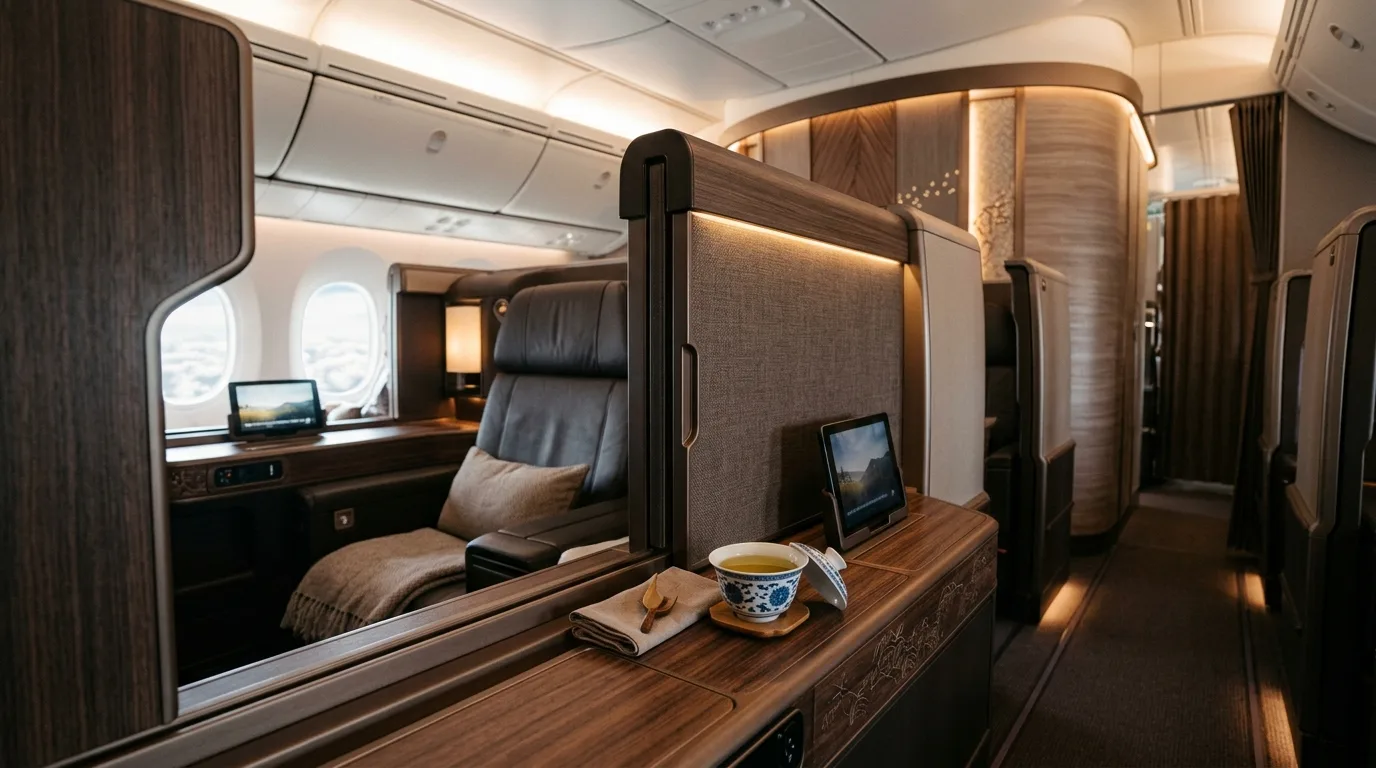
The Aria Suite fixes most of that. Each seat has a sliding door, which actually works and actually closes fully. The suite is noticeably wider than what came before, and Cathay has done something smart with the alternating forward/rear-facing arrangement — even-numbered seats face rearward, which I know some people hate, but you get used to it. In my experience, the forward-facing seats in the window positions (1A, 2A, etc.) are the ones to go for on a night flight. You're slightly more reclined when the seat is in bed mode, and the footwell doesn't feel as pinched.
The bed itself is 78 inches long, which is enough for most people. I'm 6'1" and I sleep fine. The mattress topper they put out on the night sectors is genuinely useful and not just for show.
One thing that doesn't get mentioned much: the Aria Suite has a small personal storage ledge at shoulder height when you're lying flat, which is where I keep my phone, water, and headphones. Sounds trivial. After 13 hours it isn't.
How does the Aria Suite compare to the old 777 seat?
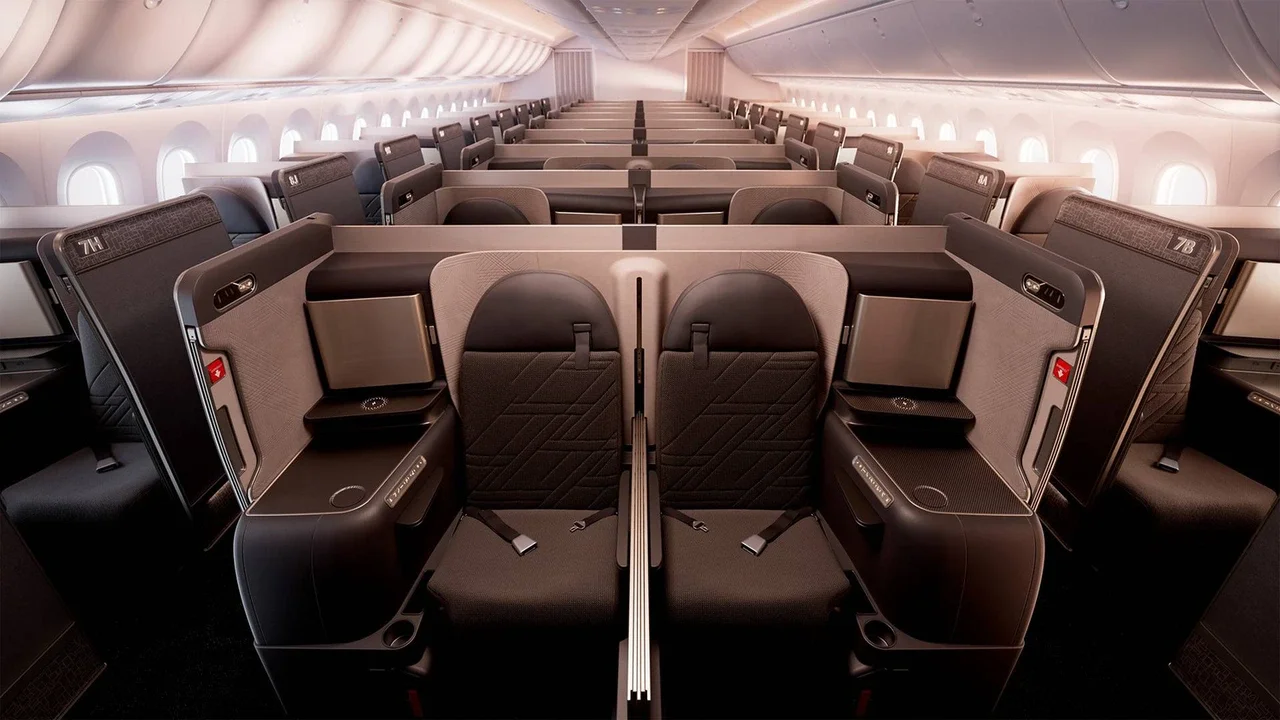
Here's the thing — not every Cathay Pacific business class flight you book will be on an A350. The airline still operates 777-300ERs on several routes, including some high-frequency runs to London, Los Angeles, and Sydney. The 777 seat is the older Cirrus product in a 1-2-1 configuration. Fully flat, direct aisle access, fine. But it's narrower, the privacy is lower, and there's no door. The IFE screen is smaller and the remote is one of those handheld units that always ends up wedged under the armrest.
If you're booking a long sector — anything over 10 hours — it's worth checking which aircraft is assigned before you commit. Cathay does publish this on their booking page, but it can change. I've had A350 bookings switch to 777s within a few weeks of departure, usually due to schedule shuffles.
Check your aircraft type
Cathay Pacific still operates 777s on routes that are also served by A350s. The seat product is noticeably different. Check the aircraft type when booking and again 2-3 weeks before departure — swaps happen.
The 777 isn't bad. I'd take it over a lot of products from other carriers. But if you're paying full fare or burning a significant chunk of miles, you want the A350.
What Cathay Pacific business class actually costs right now
Full-fare business class from New York JFK to Hong Kong HKG is sitting around $8,000–$9,500 round-trip as of early 2026. London to Hong Kong is in a similar range on full Y/C/J fares, roughly £5,500–£7,000 depending on travel dates.
But those aren't the prices you should be paying if you have any flexibility. Cathay drops fares periodically — sometimes into the $3,200–$4,500 range round-trip from the US West Coast, and I've seen sub-£2,000 round-trips from London on sale periods. These don't last long. Sometimes 24–48 hours. Sometimes less.
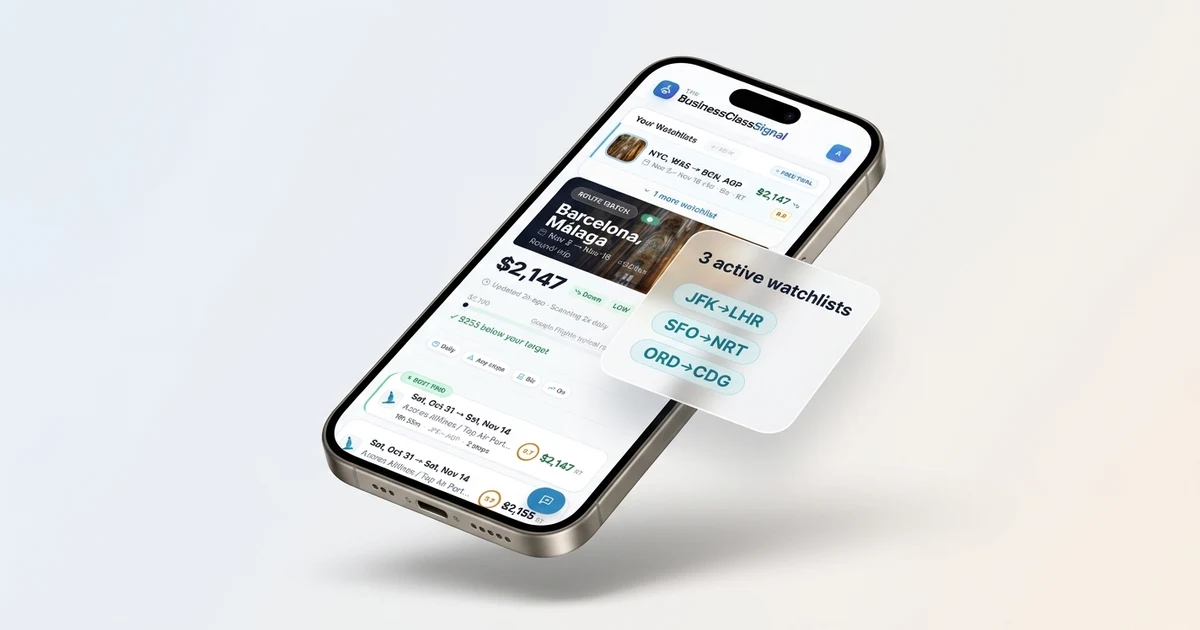
The trick is knowing when they appear. That's exactly what BusinessClassSignal monitors for this route — it scans fares twice daily and sends an alert when a price drops below your target threshold. If you're planning a trip to Asia in the next six months, it's worth setting up an alert now rather than checking manually every few days.
When do Cathay Pacific business class fares drop?
There's no single rule, but I've noticed a few patterns over the years. Cathay tends to run sales in January and September — post-holiday and post-summer, when demand softens. Flash drops also happen when award inventory opens up and airlines adjust cash pricing to compete with miles redemptions.
Midweek departures (Tuesday, Wednesday) are consistently cheaper than weekend flights, sometimes by $400–700 on the same route. If you're flying from the US, the Tuesday evening departure from LAX or SFO is often the one where pricing moves first.
Set your fare alert for 15–20% below the current listed price. That's usually where the genuine sale fares land, not the marginal "we dropped it $50" adjustments.
The lounges in Hong Kong: what you're actually walking into
This is where Cathay genuinely earns its reputation. Hong Kong International has two Cathay Pacific lounges worth knowing about: The Pier and The Wing. Both are in Terminal 1, both are accessible to business class passengers, and they're meaningfully different.
The Wing is the older of the two and it's larger. It has the famous first class cabin tucked at the back (which you won't have access to in business), but the business class section is still well-equipped. There's a noodle bar that I've eaten at more times than I can count — the wonton soup at 6am after a long connection is one of those simple pleasures of transit through HKG. The showers are good. There are enough of them that you rarely wait more than 10–15 minutes even during peak hours.
The Pier is newer, quieter, and has better seating configurations for actually getting work done. The food spread is similar but the space feels less chaotic. I tend to use The Pier when I want to sleep or concentrate, The Wing when I want food and don't mind a bit of noise.
Which lounge to use in Hong Kong
The Wing is better for food and showers. The Pier is better for quiet and sleep. Both are accessible on a Cathay business class boarding pass. If you have time, walk through both before settling in — they're connected airside.
One thing that doesn't get enough attention: the lounge coffee at The Pier is actually decent, which is not something I say often. Cathay invested in proper espresso equipment a few years back and it shows. The Wing's coffee, in my experience, is more variable — depends on which staff member is on.
The food in both lounges is a step above what you'll find in most European airline lounges. There's always a hot dish, there's always a noodle option, and they refresh the spread regularly. I've never sat down to a cold or depleted buffet at either lounge, which I can't say for half the carriers I cover.
Onboard food and service: the honest version
Cathay's catering on long-haul routes is good. Not Singaporean Airlines good, but genuinely good. The menu rotates by region and season, and on the HKG–LHR route, there's usually a proper Hong Kong-style dish alongside more Western options. On my February flight, the braised pork belly with rice was the right call. The beef option was fine. The pasta was forgettable.
One honest note: the starter portions are small. Like, notably small. If you're hungry after a connection, order the full meal service rather than grazing on appetizers and assuming the rest will fill you out. It won't.
The wine list is above average. Cathay works with a proper sommelier team and the business class selection usually includes a decent Burgundy and a Bordeaux alongside the New World options. I've had worse wine on flights that cost twice as much.
Service is where Cathay has historically been strong, and that largely holds. The crew on my recent HKG–LHR sector were attentive without being intrusive, which is the balance most airlines get wrong in one direction or the other. Requests were handled quickly. The do-not-disturb function actually got respected — I turned on the privacy light after the meal service and wasn't woken up until 90 minutes before landing.
That said, service consistency is not 100%. I've had mediocre crews on Cathay. One JFK–HKG sector a couple of years back where the meal service was slow, the crew seemed understaffed, and nobody came round with water for the first three hours. It happens. It's not the norm, but it happens.
The IFE, connectivity, and seat tech
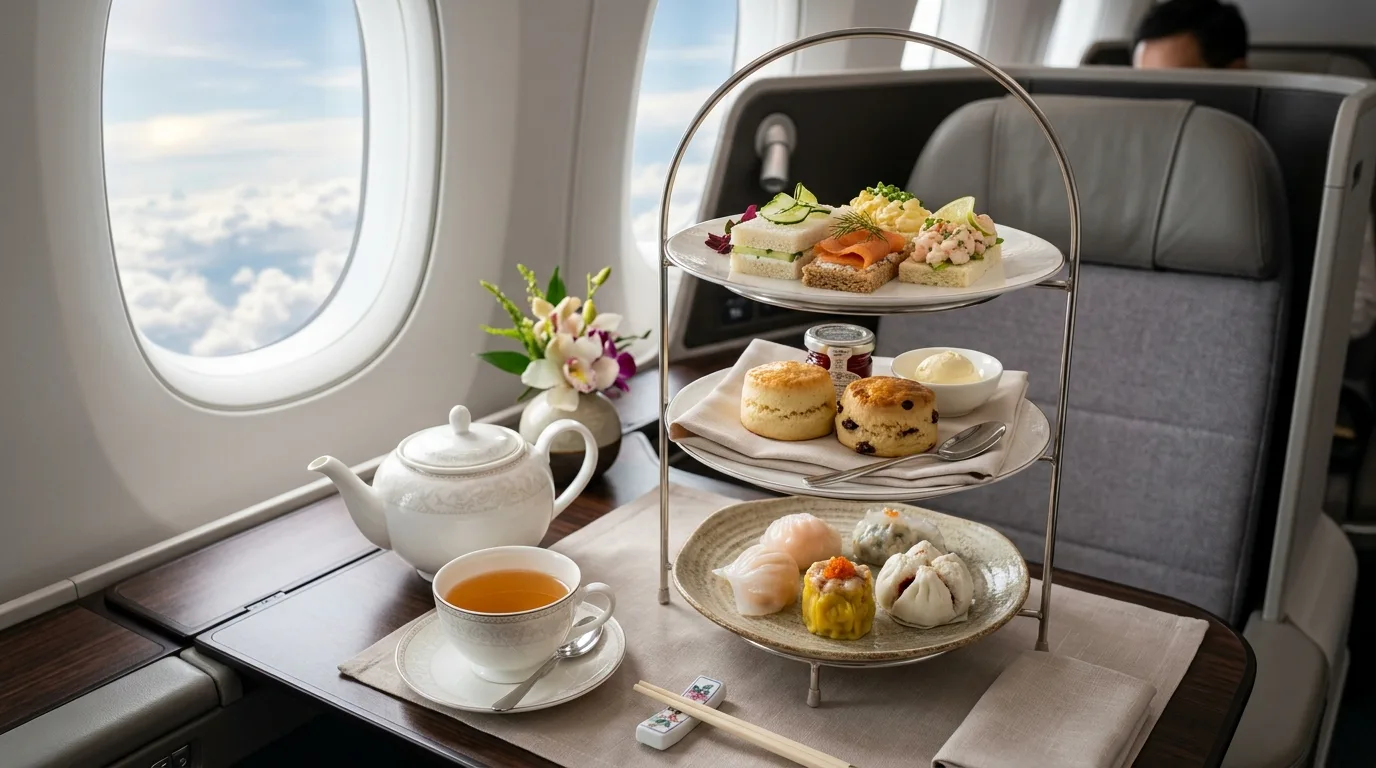
The Aria Suite screen is 18 inches, which is large enough to actually watch a film without squinting. The remote is built into the armrest rather than a separate unit, which sounds minor but makes a real difference when you're half-asleep and don't want to fumble around.
The content library is solid. Cathay has a good selection of Asian cinema alongside the usual Hollywood releases, and the Studio CX platform has gotten better over the past two years. I watched two films and a documentary on the February flight and never hit a buffering issue.
Wi-Fi is available on A350 flights. Pricing is around $19.99 for the full flight on the shorter routes, up to $29.99 for sectors over 12 hours. The speed is acceptable for email and light browsing. I wouldn't try to do a video call on it, but I've filed articles from 38,000 feet over Central Asia without much trouble.
The seat controls are intuitive — there's a physical panel on the side wall and a touchscreen option on the IFE. One small complaint: the lumbar adjustment is limited. If you have lower back issues on long flights, bring a small pillow. The built-in lumbar support does the job for the first few hours and then stops being noticeable.
Booking with miles: what's realistic in 2026
Cathay Pacific business class on Asia Miles is one of the better sweet spots in the loyalty world, but it's gotten more complicated. The airline moved to a distance-based award chart a while back, and pricing has crept up on popular routes.
A round-trip in business class from the US to Hong Kong now runs around 80,000–100,000 Asia Miles depending on distance. London to Hong Kong is in the 75,000–85,000 range. Partner redemptions (booking Cathay on American Airlines AAdvantage miles, for example) are in a similar ballpark and sometimes easier to find for availability.
The key issue with miles is availability. Cathay's own award space is tighter than it was pre-pandemic. I've had better luck booking 6–8 months out, particularly on midweek departures. Last-minute award availability exists but it's inconsistent — don't count on it.
Partner award bookings
American Airlines AAdvantage and British Airways Avios both allow redemptions on Cathay Pacific. If you're struggling to find award space through the Asia Miles program directly, checking partner programs is worth the effort — the availability isn't always identical.
One more thing worth saying: if you're on the fence between burning miles or paying cash on a discounted fare, do the math properly. At $3,200–$4,000 round-trip on a sale, you're often better off paying cash and keeping your miles. At full fare of $8,000+, the miles almost always win.
What to expect on specific routes
Not all Cathay business class routes are equal. Here's how the main ones break down based on what I know and what I've flown.
Hong Kong to London (LHR): Almost always A350 now. 13 hours eastbound, 12.5 hours westbound. This is the flagship route and it shows — catering and service tend to be at their best here. The overnight westbound sector is particularly good for sleeping. Hong Kong to New York (JFK): Mix of A350 and 777 depending on the schedule. The JFK–HKG sector is one of the longest in the network at around 15.5–16 hours westbound. Check your aircraft carefully. If you're on a 777 for 16 hours, you'll feel it by the time you land. Hong Kong to Sydney: Shorter sector, around 9 hours. Usually A350. The catering is slightly lighter on shorter routes — one meal service rather than two — which is fine, but worth knowing if you board hungry. Hong Kong to Tokyo (NRT/HND): Short-haul for Cathay's standards, 4–5 hours. Still operated in business class configuration but the experience is compressed — quick meal, limited film time, not really the right route to judge the full product on.If you're flying into or out of Hong Kong and want to see the full range of routes Cathay operates, the Hong Kong destination page has a breakdown of which routes are currently showing fare drops.
How it stacks up against the competition
People always want a direct comparison. So here's my honest take.
Singapore Airlines' A380 Suites and Business Class are better. The food is better, the service is more consistent, and the product has slightly more polish. But Singapore commands a price premium and the availability on sale fares is tighter.
Qatar's Qsuites are the best business class seat in the air right now in terms of privacy and space. The door is better, the suite is bigger, and the double-bed configuration for couples traveling together is something nothing else matches. But Qatar's catering is inconsistent and the service can be hit or miss.
Cathay sits comfortably in the tier just below those two, ahead of most European carriers and most US airlines without question. The combination of a good seat, reliable service, and genuinely excellent lounge access in Hong Kong makes it a strong choice, particularly if you're routing through HKG anyway.
I've written more about how Cathay Pacific compares on specific metrics over on the airline overview page, including historical fare data and reader reports on recent flights.
If you're connecting through Hong Kong with a layover of 4+ hours, you're entitled to lounge access for the full connection. Use it. The shower alone is worth building the itinerary around.
Is Cathay Pacific business class worth it in 2026?
At full fare, probably not for most people — $8,000+ is hard to justify unless it's a business expense or you have very specific reasons. But Cathay doesn't always cost $8,000. When the sales hit, this product at $3,500–$4,500 round-trip from the US or £2,000 from the UK is one of the better value propositions in long-haul business class.
The Aria Suite is genuinely good. The Hong Kong lounges are genuinely good. The food is good. The service is mostly good. There are no spectacular failures and no spectacular surprises — it's just a well-run product that does what it promises.
What makes the difference is catching it at the right price. That's the whole game here.
BusinessClassSignal monitors over 800 business class routes twice a day, including JFK–HKG, LAX–HKG, and LHR–HKG. When Cathay drops below your target price, you get an alert. Here's how the monitoring system works if you want the specifics before signing up.
Get alerted when Cathay Pacific business class drops — 14-day free trial, no credit card required
Start Monitoring