Quick summary
United Polaris business class is a genuinely solid long-haul product — the seat is flat, the bedding is good, and the lounges (where they exist) are among the better ones in the US. But the experience varies a lot depending on aircraft, route, and crew. This review covers what's actually worth your money and where the gaps are.
The pitch vs. the reality
United launched the Polaris rebrand in late 2016 with a splashy campaign and a lot of promises. New seats, new bedding, a new lounge concept, better food. The kind of announcement that travel press loves to cover. And to be fair, they followed through on most of it — eventually. The rollout took years, the lounge network is still incomplete, and some aircraft are still flying around with the old "p.s." configuration that predates the whole thing.
So when someone asks me about the United Polaris product, my honest answer is: it depends on what you're flying and where you're going.
Get the aircraft right and you'll have a genuinely good night's sleep across the Atlantic. Get stuck on an older 767 in the pre-Polaris config, and you're paying a premium fare for a seat that's noticeably worse than what Delta or American are running on comparable routes. That gap matters when you're spending $4,000+ on a ticket.
The Polaris seat: what it's actually like
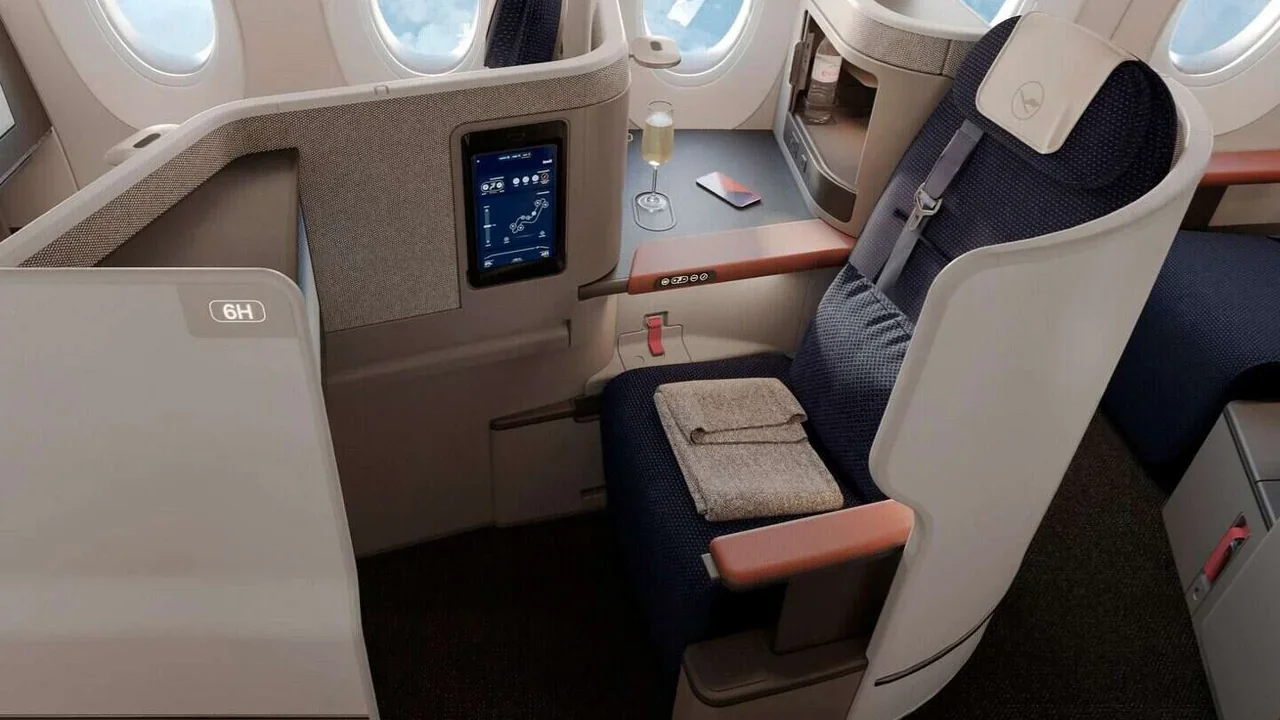
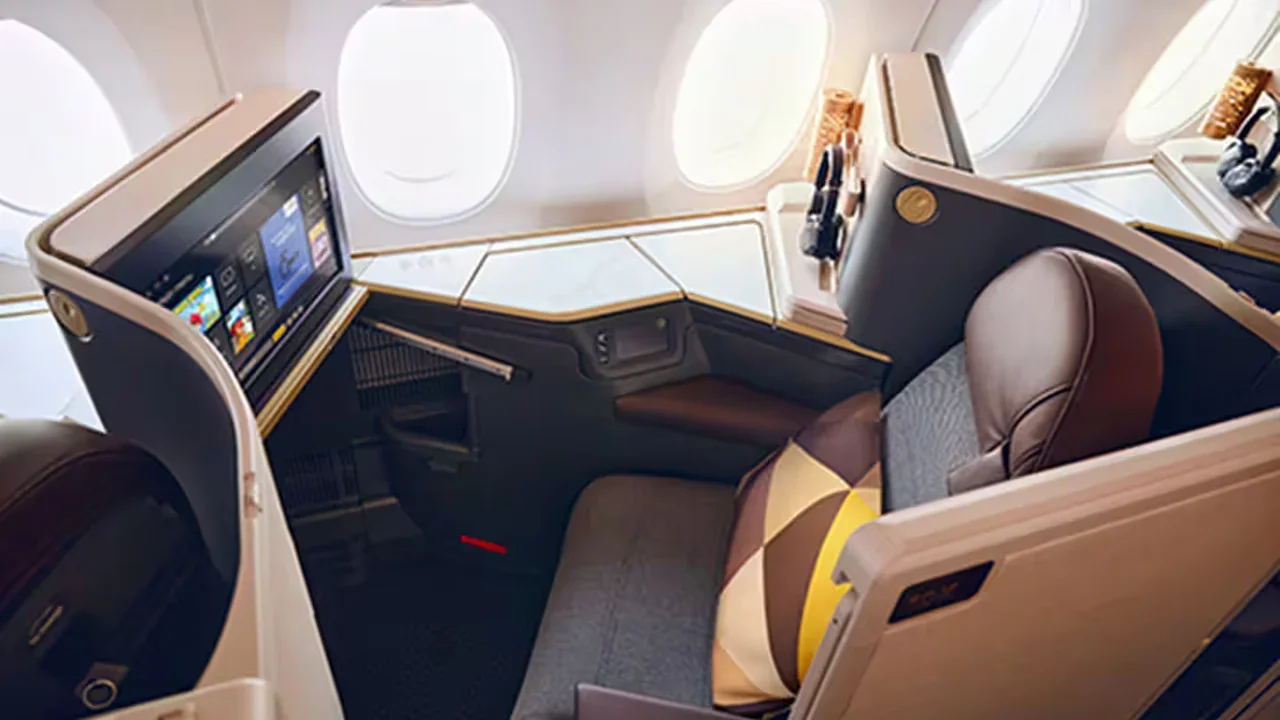
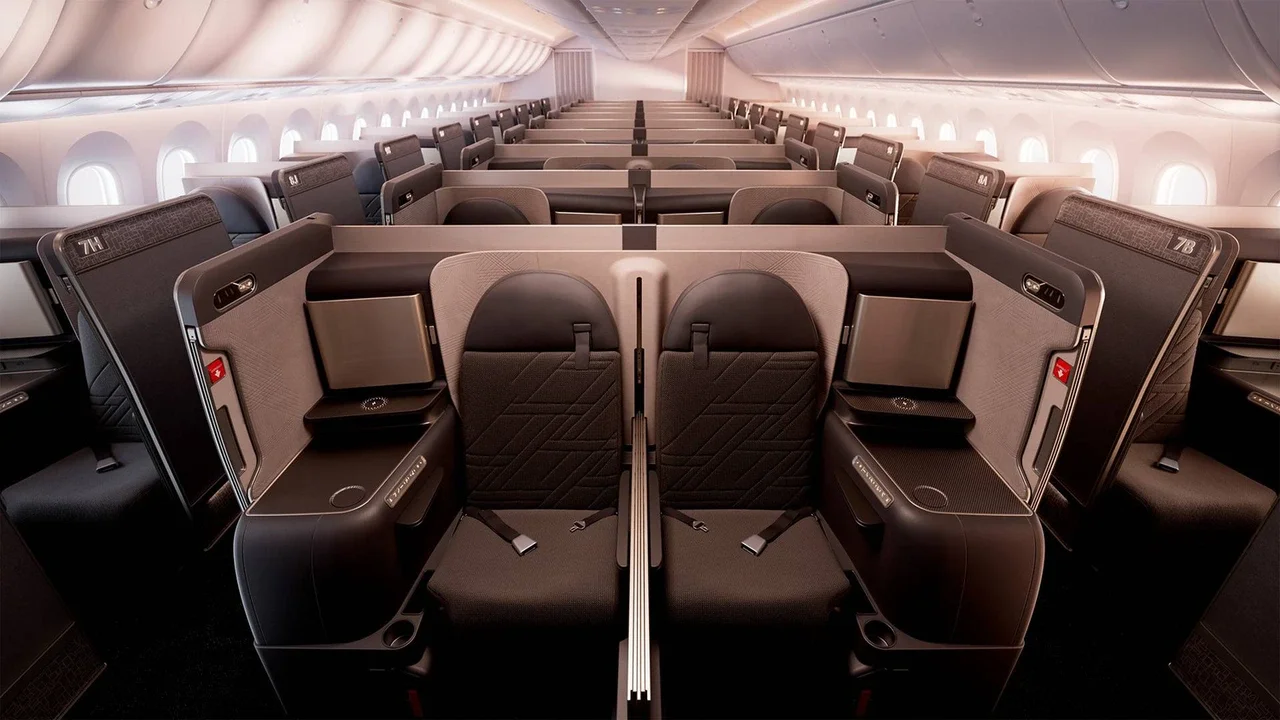
The flagship Polaris seat — the one United actually designed from scratch — is a direct-aisle-access configuration in a 1-2-1 layout. Every seat gets to the aisle without climbing over someone. That's the baseline now for any business class product worth taking seriously, and United gets it right here.
The seat itself reclines to a fully flat 78-inch bed. I'm 6'1" and I've slept on it without my feet hitting anything. The shell design means your neighbor's recline doesn't affect your space, which sounds obvious but isn't universal even at this price point.
Storage is decent. There's a spot for your shoes, a cubby for your water bottle, a surface for your phone. The seat has a small privacy divider on the window side that does something, though it won't block much if you're in a middle pair and your neighbor wants to chat at 35,000 feet.
Watch the aircraft type
Not all United business class is Polaris. The 767-300 on some transatlantic routes still runs an older 2-2-2 layout with angled-flat seats. Always check the aircraft before you book. SeatGuru is your friend here — and so is checking the specific flight number against United's fleet page.
The 777-200 and 777-300ER have the full Polaris setup. So do the 787-9 and 787-10. The 767 situation is more complicated and frankly more annoying than it should be in 2024.
How does the seat compare to Delta One?
This is the question I get more than any other on the transatlantic routes. My honest take: they're closer than the brand wars suggest.
Delta One on the A350 and the newer 767 config is excellent. The Vantage XL seat Delta uses is wide, the storage is thoughtful, and Delta's consistency across their fleet has historically been better than United's. If you're booking Delta One on a widebody configured for long-haul, you're in good shape.
But on the right aircraft, the United Polaris seat is competitive. I've preferred it on the 777-300ER specifically — the seat feels slightly wider to me and the bed is genuinely comfortable. The issue is that "on the right aircraft" qualifier. United's fleet inconsistency is a real problem that Delta doesn't have to the same degree right now.
Food is another area where Delta has an edge, at least on domestic routes. International Polaris dining has improved a lot since 2019. The pre-order meal system United introduced — where you lock in your entrée before the flight — is a good idea that actually works. I've had a decent braised short rib on the Newark–Frankfurt run that I wouldn't have been embarrassed to order in a mid-range restaurant.
Pre-order your Polaris meal. You can do it up to 24 hours before departure through the United app. The first-choice entrées run out fast on full flights, especially on the popular JFK and EWR transatlantic departures.
Bedding and sleep quality

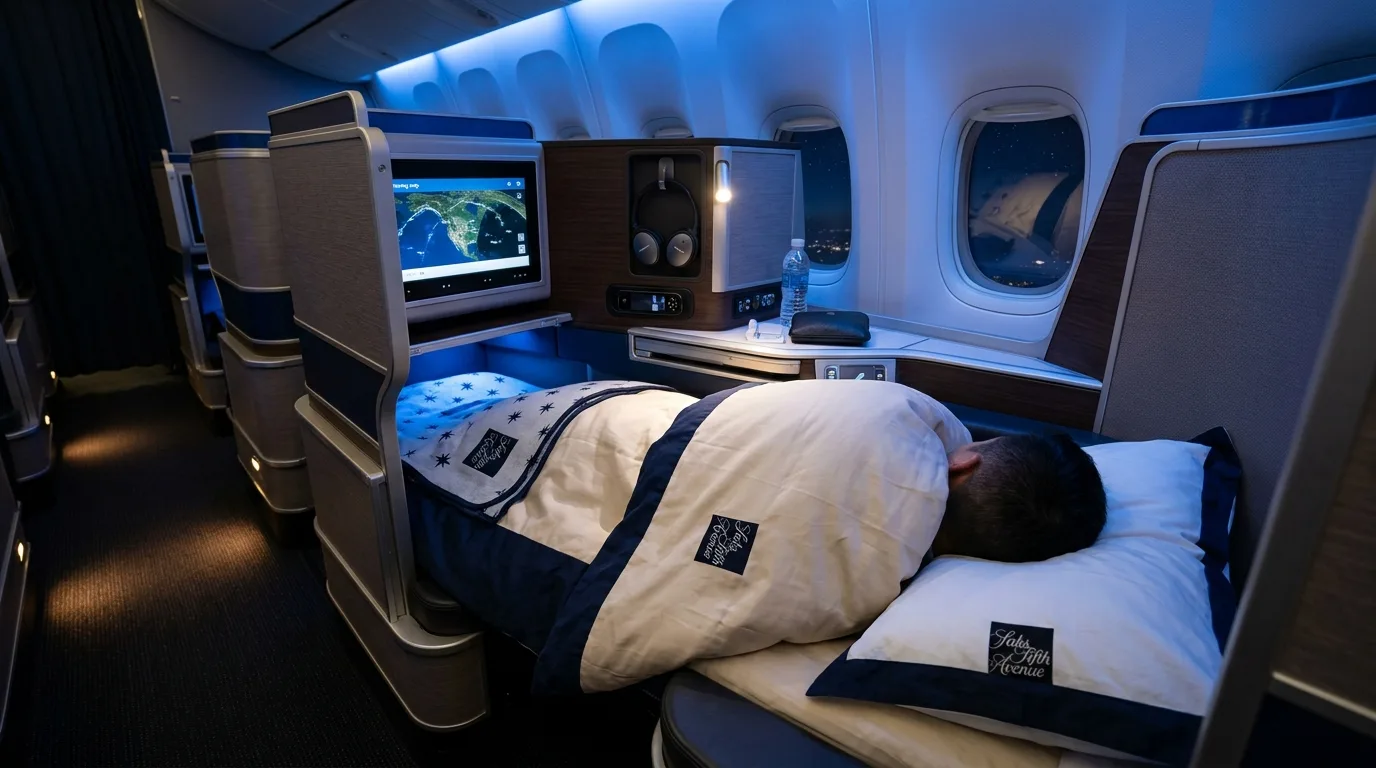
This is where United genuinely invested, and it shows. The Polaris bedding package — developed with Saks Fifth Avenue, which is a partnership they've leaned on heavily in marketing — includes a real pillow (not the thin foam rectangle most airlines call a pillow), a duvet that's actually warm, and a mattress pad that makes the flat seat feel like a flat seat with a mattress pad on it rather than just a flat seat.
I've had good sleep on Polaris. Not hotel-quality sleep, but good enough that I've landed in Zurich feeling functional. That matters.
The pajamas are available in Polaris on most international routes, though crew distribution varies. On one Newark–London flight last year, they were handed out proactively before pushback. On a Chicago–Frankfurt run, I had to ask. Small thing, but worth knowing you can request them.
The mattress pad does compress over a long flight, and by hour ten it's noticeably thinner than it started. That's a minor complaint, but on a 14-hour Sydney run it'd bother me more than it does on a seven-hour transatlantic hop.
The Polaris Lounge network: good idea, incomplete execution
United built a dedicated Polaris Lounge concept to sit alongside the regular United Club. The idea was a quieter, better-stocked space for long-haul business class passengers — proper food, proper bar, actual showers that don't feel like an afterthought.
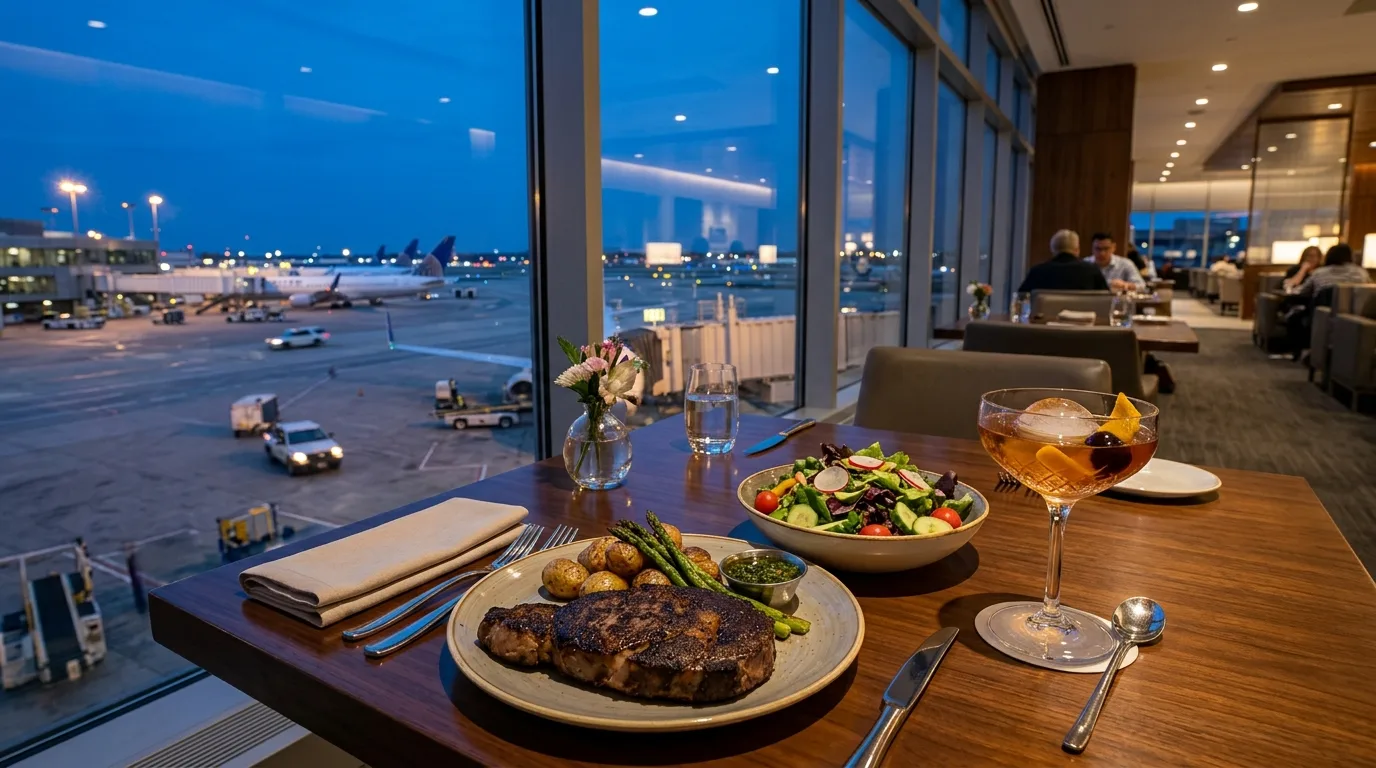
Where these lounges exist, they're genuinely good. The Chicago O'Hare Polaris Lounge is the flagship, and it's the best of the bunch. The food is served restaurant-style at a table, the bar stocks decent spirits, and the shower suites are large enough to not feel claustrophobic. I've had a better pre-flight meal there than on some short-haul business flights.
Newark has a Polaris Lounge at Terminal C. San Francisco has one. Houston (IAH) has one. Los Angeles opened one. That's the extent of the dedicated Polaris Lounge network as of mid-2024. If you're connecting through a hub that doesn't have one — Denver, for instance — you're in the United Club, which is fine but not the same experience.
Lounge access rules
Polaris Lounge access is for international business class passengers on United metal departing the same day. Revenue tickets, award tickets on United-operated flights, and Chase Sapphire Reserve cardholders with a Polaris ticket all qualify. Codeshare on a partner carrier usually won't get you in.
Is the Polaris Lounge worth arriving early for?
At O'Hare, yes. If I have a 90-minute window before boarding, I'll go straight there. The sit-down dining alone is worth the effort. The shrimp cocktail is reliably good, and the bartender at the main bar — at least on the evenings I've been there — has always been attentive without being hovering.
At Newark, it's more qualified. The lounge gets crowded on peak transatlantic departure windows (generally 5pm–9pm), and the food quality can be inconsistent. I've had a good steak there and I've had a dry chicken that I didn't finish. The shower suites are the stronger reason to show up early — they're well-maintained and the water pressure is legitimately good.
San Francisco is the weakest of the three main ones I've used. The space is fine but feels slightly smaller relative to the passenger volume on SFO's heavy international schedule.
In-flight entertainment and Wi-Fi
The IFE screens on the 777 and 787 are large — around 16 inches — and the content library is solid. United has a decent selection of current films and the screen responsiveness is good. Nothing revolutionary, but you won't be staring at a laggy 10-inch screen from 2014.
Wi-Fi is where things get complicated. United uses a mix of providers depending on aircraft, and the speed variance is significant. On good days — and I've had them — you can do video calls on Polaris Wi-Fi over the Atlantic. On bad days, you're waiting four minutes for an email to load. There's no reliable way to predict it before you board.
The pricing structure has moved toward a flat-rate model for business class passengers on some routes, which is a meaningful improvement over the old by-the-megabyte charging that made people miserable. Check the current policy for your specific flight before assuming it's included.
Download your content before you board. The United app lets you download movies and shows for offline playback, and even with good Wi-Fi it's the more reliable option for anything longer than a short clip.
Where Polaris falls short
I want to be straight about the weak spots, because there are a few that matter if you're spending real money.
The crew experience is inconsistent. On my best Polaris flights, the service has been warm and attentive — refills offered without asking, the meal pacing felt right, someone checked in during the night. On my worst, I pressed the call button twice without a response and ended up walking to the galley for water at 2am. United's crew quality varies more than Singapore or even British Airways in my experience, and there's no way to guarantee which version you'll get.
The amenity kit has been underwhelming. The Polaris kit has improved from what it was, but compared to what Qatar or Cathay Pacific hand you in first or business, it's thin. The skincare products are fine, the eye mask is usable. It's not a reason to choose or avoid the product, but it's a gap relative to the top-tier carriers.
And the food, while better than it used to be, still has off nights. The pre-order system helps, but the execution on a full 777 with 60 business class seats is not the same as on a 40-seat A380 upper deck. Volume affects quality, and United is running volume.
One more thing: the boarding experience at some hubs is chaotic. Newark Terminal C specifically — the gate areas for transatlantic departures are cramped, the lounge is a walk away, and if you're connecting domestically you're often walking a long distance with carry-on in tow. Not United's fault entirely, but it's part of the overall experience.
What you should pay for a Polaris ticket
This is the part that actually matters for most readers. Full-fare Polaris on a transatlantic route will run you $4,000–$7,000 round-trip from major US hubs. That's a lot of money, and at full fare I'd be comparing it hard against business class on Lufthansa, Air France, or Virgin Atlantic on the same routes, all of which have strong products.
The value case for Polaris gets much better when you find a fare drop. United runs saver business class awards at 70,000 miles round-trip to Europe through their MileagePlus program, and they do have occasional cash sale pricing that brings transatlantic Polaris down to the $2,000–$2,500 range. At that price point, it's a strong buy.
The problem is those prices don't stick around. A $2,200 round-trip EWR–LHR in Polaris might last 36 hours before it's gone. Which is why how the monitoring system works matters — you want to be watching specific routes rather than checking manually and hoping you catch the window.
BusinessClassSignal scans over 800 business class routes twice daily and sends you an alert when a fare drops below whatever threshold you've set. If you're watching the Newark–London route, you set a target — say, $2,500 round-trip — and you get a text or email the moment it hits. I built it because I was tired of hearing from readers who'd missed a $1,900 Polaris fare by two days. You can start monitoring this route or any other from the home page.
Best months for Polaris fare drops
January and February are historically the best months for transatlantic business class discounts. November shoulder season can also produce drops, particularly on routes to Western Europe. Summer and the December holiday window are when prices are at their worst.
Who the Polaris product is actually right for
If you're flying a 777 or 787 on a major transatlantic or transpacific route, and you've confirmed the Polaris seat configuration is on that aircraft, it's a good product. Not the best in the world — Qatar Qsuites is still the benchmark for business class, and Singapore's new A350 suites are extraordinary — but genuinely good, and on a well-priced fare it's very hard to beat.
If you're connecting through a hub with a Polaris Lounge and you have time to use it, that adds real value. Chicago O'Hare specifically — that lounge is good enough to make me choose a ORD connection over a direct on some routes, which is saying something.
The people I'd steer away from the product: anyone on a 767 that hasn't been reconfigured, anyone who prioritizes food quality above all else (Qatar, Cathay, ANA will serve you better), and anyone who needs Wi-Fi to be reliable for work. On those criteria, there are better options.
But for a long-haul flat-bed experience at a price that sometimes dips to genuinely reasonable levels, United Polaris is worth having on your radar. You can browse all routes we track including the major Polaris corridors to see what pricing looks like right now.
Get alerted the next time United Polaris drops to a fare worth booking — 14-day free trial, no credit card required
Try Free