
Quick summary
Dallas to London business class runs on three main carriers — American, British Airways, and Virgin Atlantic — with prices typically landing between $2,800 and $5,500 round-trip at standard fares. But flash sales and error fares on this route have pushed tickets as low as $1,400 round-trip. Set up alerts and be ready to move fast when those windows open.
DFW is one of the better-positioned hubs in the country for transatlantic business class. American has made it a flagship route, BA codeshares on some of the same metal, and Virgin Atlantic runs its own nonstop. That gives you real choice — three carriers, different products, different loyalty angles, and price points that diverge more than you'd expect for what's essentially the same city pair.
I've flown this route a handful of times over the years, on both American and Virgin. I have opinions about both. I'll get to those.
The route itself: what's actually flying DFW to LHR
American Airlines operates the DFW–LHR route daily, typically with a Boeing 777-200ER or 777-300ER depending on the season. The 777-300ER is the one you want — it has the newer Flagship Business seats in a 1-2-1 configuration, which means every seat gets direct aisle access. The 777-200ER has an older layout that puts some seats in a 2-2-2 arrangement, and the middle seats on a nine-hour flight are a tough sell no matter how good the catering is.
British Airways operates their own DFW–LHR service as well, usually on a 787-9. The Club Suite product on that aircraft is genuinely good — door, direct aisle access, decent storage — though BA's on-board catering has never been something I'd rave about. The Heathrow arrival experience with BA also puts you into T5, which is fine, but the connection experience there is one of the more tedious in aviation if you're continuing onward.
Virgin Atlantic's DFW service runs on the A350-1000, which is their flagship long-haul aircraft. The Upper Class suite on the A350 is one of the better products I've personally sat in on a transatlantic — more on that below.
American Airlines Flagship: the full picture
American's Flagship Business is a product that's gotten meaningfully better over the last few years, though it still has rough edges. The seat itself, in the 1-2-1 layout, is wide and lies fully flat. The bedding is Casper-branded and has been since 2018 — it's fine, better than a rolled-up blanket, not as good as what Qatar or Singapore put in front of you. The in-flight entertainment screen is large and responsive, which sounds like a low bar but plenty of carriers still miss it.
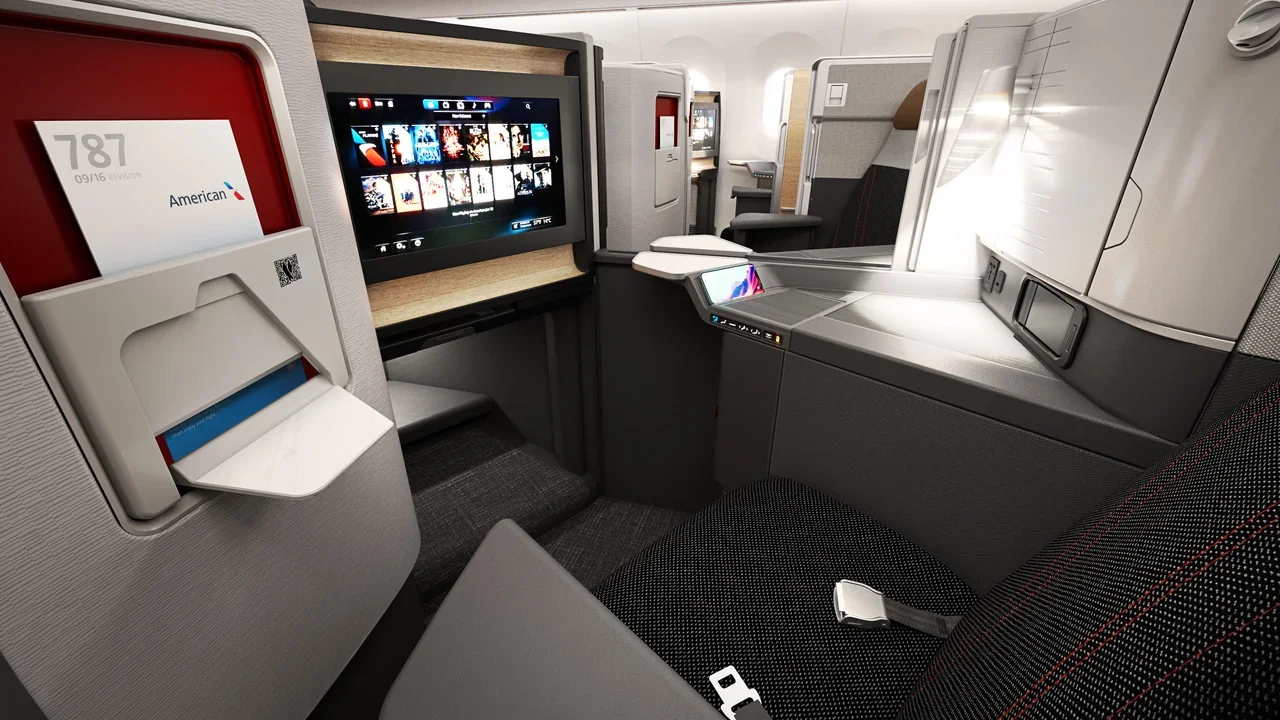
What American does particularly well on this route is the lounge experience at DFW.
The DFW Flagship Lounge sits in Terminal D, past security near gate D15. It's one of American's better domestic Flagship Lounges — not the JFK Flagship First Dining room, which is in a different tier entirely, but genuinely comfortable. There's a full sit-down dining area where they'll plate you a proper meal before departure. On my last visit I had a braised short rib that was actually decent, which is not something I say lightly about airport food. The bar is well-stocked, the seating is quieter than the main Admirals Club, and there's a dedicated shower suite area that's usually bookable within 30–45 minutes of arriving.
Lounge access at DFW
The Flagship Lounge at DFW is available to Flagship Business passengers on international itineraries — not just any business class ticket. If you've booked a revenue Flagship Business fare (not a basic economy upgrade), you're in. Citi Executive AAdvantage cardholders get Admirals Club access, but the Flagship Lounge requires the actual fare class or top-tier status.
The on-board service on AA's DFW–LHR flights varies more than I'd like. The crew can be excellent — I've had some genuinely attentive flights on this route — but consistency is an issue. The food in business is a three-course meal with a "dine on demand" option after the initial service, meaning you can order whenever you want rather than being locked into the main service window. That flexibility matters on a night flight when you'd rather sleep through the meal and eat before landing.
One thing AA does well here: the Flagship Check-in at DFW is fast. There's a dedicated lane for Flagship Business and Flagship First passengers that I've never waited more than a few minutes in, even during peak summer travel.
How much does Dallas to London business class cost on American?
At standard fares, American prices DFW–LHR Flagship Business at roughly $3,000–$4,800 round-trip for most of the year. Summer peaks push that toward $5,500 and beyond, particularly in June and July when leisure demand is high and American knows it. The sweet spot historically has been departures in late January through March, and again in October and November, when you can find fares in the $2,800–$3,200 range without much trouble.
The real opportunities come from flash sales and mistake fares. American has dropped this route into the $1,400–$1,800 range on a few occasions — briefly, usually for 24–48 hours, and almost never announced in advance. That's exactly the kind of window how the monitoring system works is built around. You won't catch those fares browsing Google Flights on a Tuesday afternoon unless you happen to be looking at the right moment.
British Airways Club Suite: worth the price?
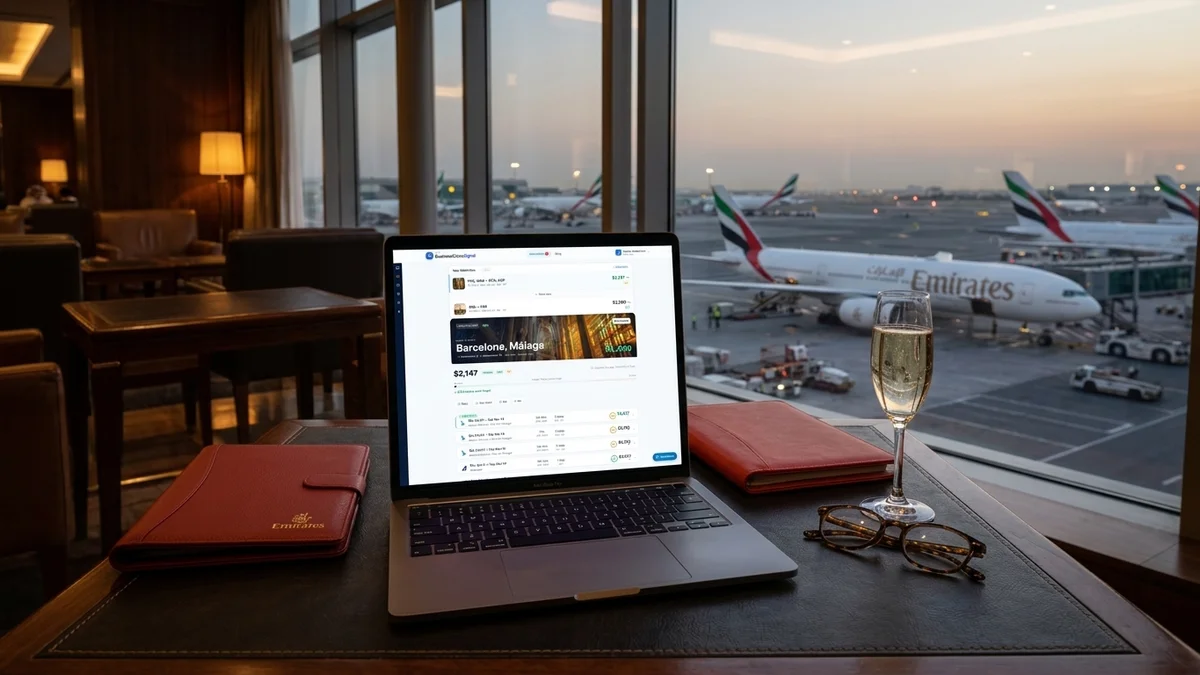
BA's DFW service lands at Heathrow T5, which is their home terminal. The Club Suite, when you get it on a 787 or A350, is a proper product — direct aisle access, a closing door (more of a privacy screen, really, but it works), and a flat bed that's more comfortable than the old Club World herringbone seats BA spent a decade defending past their expiry date.
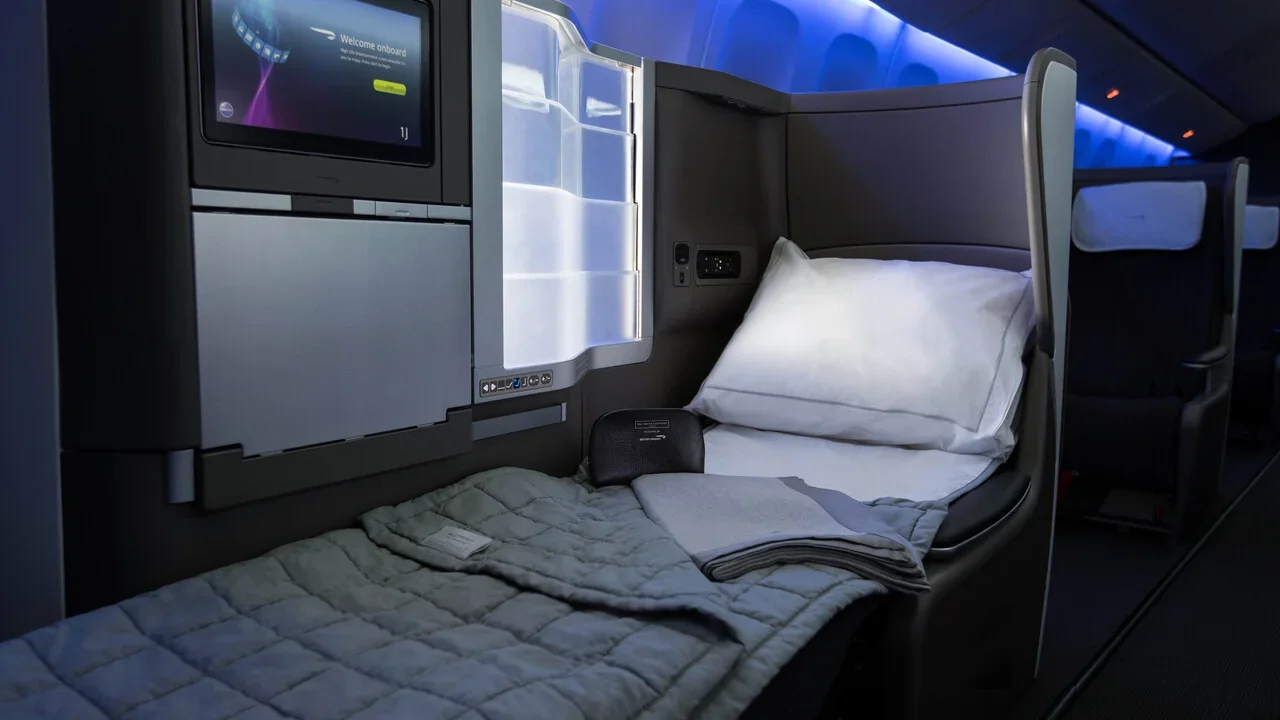
The issue with BA has always been consistency of aircraft. Book a Club Suite fare and there's a real chance you end up on older Club World product if the aircraft swaps. BA's website does show the seat configuration for your specific flight, and it's worth checking before you book. I'd specifically search for the 787-9 or A350 service on the DFW route and confirm the aircraft type closer to departure.
Catering in BA Club is fine. It's not exciting. The cheese course is reliably decent, the main courses are hit-or-miss, and the bar service is good — the Do&Co catering contract BA has for some routes has improved things on certain departures, but DFW isn't always one of them. The T5 lounge in London is large and crowded, especially in the morning. The Concorde Room is the premium lounge tier, but that requires First Class or Gold Guest List status. Club passengers get the main First Lounge at T5, which is perfectly fine but not a destination experience.
Aircraft swap risk on BA
If you book BA Club Suite specifically because of the door and 1-2-1 layout, set a reminder to check the aircraft type again 72 hours before departure. BA does swap equipment, and older Club World seats are a noticeably worse product. If you're swapped, it's worth calling and asking about options.
One advantage BA has here: the British Airways Avios program is often the better redemption vehicle for this route. Avios pricing on short-haul connections through LHR can be genuinely efficient, and if you're using BA as a gateway to somewhere else in Europe, the alliance connections are worth thinking about.
Virgin Atlantic Upper Class: the honest assessment
I'll say this plainly: the Virgin Atlantic Upper Class suite on the A350-1000 is my preferred product on the DFW–LHR run. I've sat in it twice, and both times the experience held up to the hype better than most airline products do.
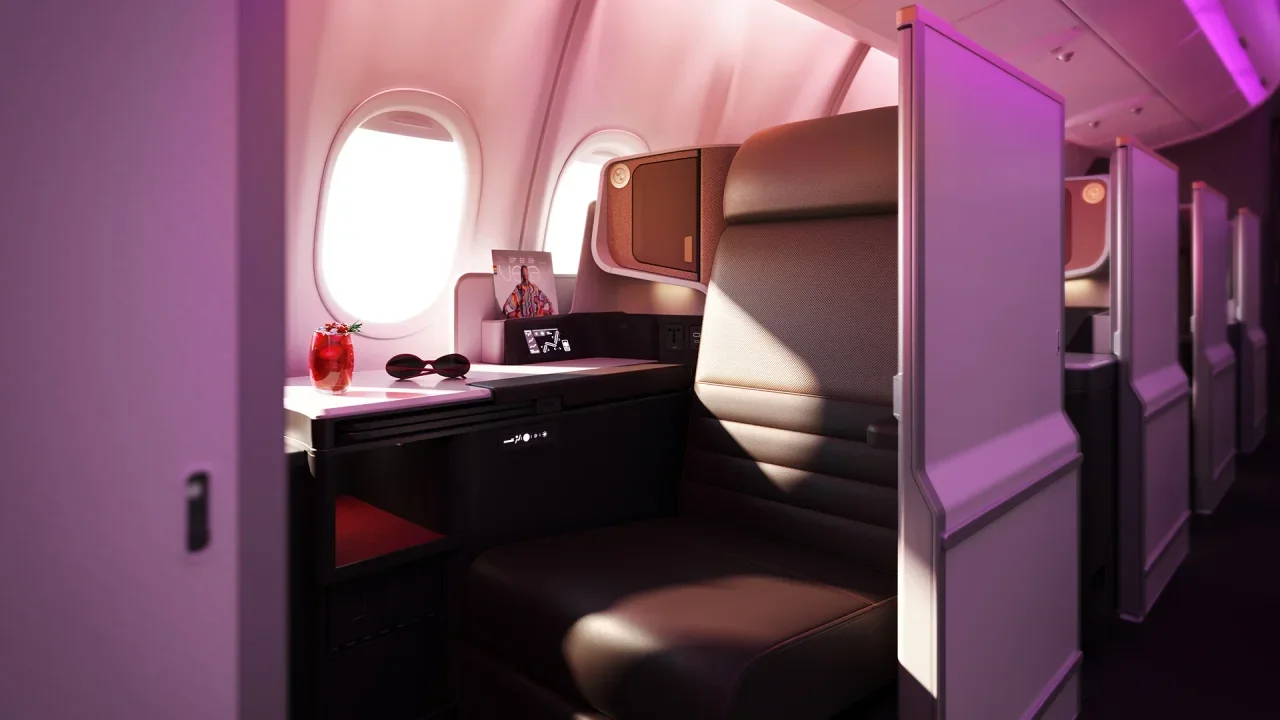
The seat is wide, with a proper door, and the social space at the front of the Upper Class cabin (called "The Loft") is actually used — a small lounge area with seating where you can get a drink and talk to other passengers or just decompress mid-flight. It sounds gimmicky until you're nine hours into a flight and you want to stand up without hovering over someone's sleeping face. The bed is genuinely comfortable, the mattress topper is thick, and the pillow situation is better than most carriers I can name.
The on-board bar is stocked with a curated cocktail list that rotates seasonally. On my last Virgin flight, I had a passionfruit martini that I thought about for several days afterward. That's either excellent cocktail-making or a sign that nine hours at altitude does things to your palate. Probably both.
Service on Virgin is usually warmer than AA or BA, in my experience. Less formal, more genuinely attentive. The crew on transatlantic routes tend to be experienced, and there's less of the rushed, tray-drop energy you sometimes get on legacy carriers.
Virgin Atlantic's Upper Class sale fares tend to drop in late January and early September. If you're flexible on travel dates, those are the months to watch closely on the DFW–LHR route.
The DFW lounge situation for Virgin is less impressive. They use a partner lounge at DFW rather than their own space, which is fine but not the premium pre-departure experience you get at their home base at Heathrow. At LHR, Upper Class passengers get access to the Clubhouse, which is genuinely one of the better airline lounges in the terminal. Spa treatments, a proper bar, a sit-down restaurant. The Heathrow Clubhouse is the arrival experience, basically — the flight is almost the warm-up.
When do business class fares drop on the DFW–LHR route?
There are patterns, and they're worth knowing.
Historically, the lowest standard fares on Dallas to London business class appear in the booking windows that open around 5–8 months before departure, particularly for winter travel. January and February departures often see the sharpest pricing because demand is weakest — post-holiday, pre-spring, nobody's excited about London in February unless they're going for work or they genuinely like grey skies and pubs. (I do, for the record.)
Flash sales are harder to time because they're not scheduled. American has run them ahead of long weekends, as competitive responses to other carriers dropping prices, and occasionally for no apparent reason. BA does similar promotions, often tied to their sale events in January and September. Virgin tends to be less aggressive on overt sales but occasionally drops targeted promo fares with short booking windows.
The practical answer to "when do fares drop" is: unpredictably, and usually for 24–72 hours. You either have an alert running or you miss them. That's not a sales pitch, it's just the reality of how these fares behave. If you're planning a DFW–LHR business class trip, set up monitoring on this specific route and let the alerts do the work.
Booking strategy: what actually works
A few things I've found to be true on this route specifically, after watching it for a few years.
First, booking directly with the airline almost always beats third-party for business class. The price difference is usually minimal and the flexibility you retain — free changes, easier upgrades, better customer service when things go wrong — is worth it. This isn't true for economy fares, where consolidators sometimes have genuinely better pricing, but for a $3,000+ ticket you want the relationship to be with the airline.
Second, Thursday and Sunday departures on AA's DFW–LHR service tend to have slightly lower business class loads than Monday and Friday, which are business-heavy. Lower loads mean better service and sometimes more upgrade availability if you're working with miles. This isn't guaranteed, but in my experience it's a consistent enough pattern to factor into your planning.
Third, the codeshare situation between AA and BA means some flights appear on both carriers' websites at different prices. It's worth checking both for the same flight number, particularly if you're looking to credit miles to a specific program. The AA-operated 777 service will sometimes show cheaper availability on BA.com or vice versa, depending on which carrier controls which fare buckets that week.
Codeshare quirk on this route
AA and BA are both oneworld carriers and have an antitrust-immunized joint venture on transatlantic routes. This means some DFW–LHR flights are sold by both carriers. If you're trying to credit miles to British Airways Executive Club, you can sometimes book the AA-operated flight through BA.com and earn Avios. Worth running the numbers if you're deep into either program.
If you're planning a mixed itinerary — say, business class across the Atlantic and then economy for a short European hop — it's worth looking at economy fares separately. FlightKitten monitors economy fares across 220+ airlines the same way we monitor business class — you set a target price, it watches the route, and alerts you when fares hit your threshold. It runs about $4.99/month and is worth having alongside a business class alert if you're building out a longer itinerary with mixed cabin legs.
Miles and points: using awards on this route
If you're holding a stack of miles and wondering whether Dallas to London business class is worth burning them on, the answer is usually yes — this is one of the more consistently valuable transatlantic redemptions.
American AAdvantage prices this route at 57,500 miles one-way in business class at the "MileSAAver" level, when available. Availability at that rate is tighter than it used to be, but it does open up, particularly in shoulder season. The cash value of a $3,000 ticket at 57,500 miles works out to roughly 5.2 cents per mile, which is strong for AAdvantage.
British Airways Avios pricing is distance-based, which means DFW–LHR falls into the 4,001–5,500 mile band at 50,000 Avios one-way in Club Suite. The fuel surcharges on BA-operated flights are painful — often $700–$900 on top of the Avios — which erodes the value significantly. Booking the same Avios on AA-operated metal largely avoids those surcharges, which is the classic move for anyone holding Avios and wanting to fly this route in business.
Virgin Points (formerly Flying Club) prices DFW–LHR Upper Class at around 50,000–75,000 points one-way depending on availability tier. Virgin's own surcharges are lower than BA's, and the transfer partners for Virgin Points — including Amex Membership Rewards, Chase Ultimate Rewards, and Capital One — make it a reasonably accessible currency if you're working with transferable points.
If you're holding Avios and want to fly Virgin Upper Class, you can't — the two programs don't have a reciprocal redemption for this route. But if you're holding Virgin Points and want to fly AA Flagship, that's also not available. The programs don't cross-pollinate despite both being oneworld-adjacent. Keep that in mind when deciding where to park transferable points.
What to actually expect on arrival in London
Heathrow is the landing point for all three carriers on this route. The experience diverges after touchdown.
AA arrivals go into T3. The immigration queue at T3 can be brutal during peak morning arrival windows (roughly 6am–9am London time), when multiple transatlantic flights land simultaneously. I've waited 45 minutes at T3 immigration on a bad morning. The UK Global Entry equivalent (called Registered Traveller) is largely defunct now, and the e-gates work for most nationalities including US passport holders, which helps. But the corridor from the gate to the e-gates at T3 is long, and there's no fast track for business class passengers through UK Border Control — once you're in the immigration hall, everyone waits the same queue.
BA arrivals at T5 are more organized. The terminal is purpose-built for BA's operation and the flow from gate to immigration is smoother, even if the absolute wait times are similar during peak windows.
Virgin arrives at T3 alongside AA. Same immigration situation. The difference is that Virgin passengers in Upper Class get a dedicated greeter through the arrivals process — at least in theory. In practice, this is more useful if you're connecting onward and need expedited handling.
If you're heading into central London, the Heathrow Express from T5 (or the Heathrow Connect from T3) to Paddington takes 15–21 minutes. Taxis are expensive. The Elizabeth line is now fully operational and runs from all terminals into central London for about £13.50, which is the move if you're not in a hurry and don't have an absurd amount of luggage.
You can track live pricing on the DFW to LHR route here, including current low fares across all three carriers.
And if you want to see what other transatlantic routes are doing price-wise, browsing the full routes list gives you a quick read on where the current deals are sitting.
BusinessClassSignal monitors the DFW–LHR route twice daily across all three carriers. When a fare drops below your target price, you get an alert. 14-day free trial, no card required.
Start free trial