
Quick summary
Denver to Munich business class runs on two main carriers: Lufthansa and United. Lufthansa's new Allegris suite is the product to target if you can get it, but United's Polaris on the right aircraft is a solid fallback. Fares drop below $2,000 round-trip a few times a year — knowing when to look is most of the battle.
DEN has quietly become a real transatlantic hub
Denver doesn't get enough credit for its international connectivity. For years, if you wanted to fly business class to Europe from DEN, you were almost certainly connecting through Chicago, Newark, or Houston and adding three hours to your day. That's still an option, but it's no longer the only one.
Direct service from Denver to Munich has made this a genuinely competitive route. Lufthansa operates it seasonally, and United runs it year-round with varying equipment. The point is: if you're based in Denver or flying through it, you no longer have to accept a connection penalty just to get a flat bed across the Atlantic.
I've watched this route for a few years now, and the pricing dynamics are interesting. Because Denver isn't a primary transatlantic gateway the way JFK or LAX are, the fares move differently. You get occasional drops that look almost accidental — like someone forgot to file a competitive fare and suddenly the route is $1,600 round-trip in business for a week before it corrects.
That $2,400 figure is roughly where this route sits at normal pricing. But "normal" is a loose concept in transatlantic business class.
The two carriers worth your attention on denver to munich business class
You've got two realistic options flying this route in business class: Lufthansa and United. They're different products, different vibes, different strengths. Neither is universally better — it depends on the aircraft, the departure time, and honestly what you're in the mood for.
What is Lufthansa Allegris, and is it on this route?
Lufthansa Allegris is the carrier's new long-haul business class product, launched in 2024 on the A350-900. The suite features a door that actually closes, a wider seat than the previous generation, a mattress topper that makes a real difference on overnight flights, and a center console design that finally makes the "cuddle seat" configuration usable rather than just awkward. The screen is larger, the storage is better, and the whole thing feels like Lufthansa finally caught up to the Qatar and Singapore standard.
Here's the catch: Allegris is rolling out gradually, and not every Munich-bound flight from Denver is going to have it. Lufthansa is deploying the A350 with Allegris on select routes out of Frankfurt and Munich, but schedule availability on specific routes shifts. When I last checked the DEN to MUC route page, Allegris-equipped flights were showing up on some departures but not all. You need to verify the specific aircraft before you book — SeatGuru and Lufthansa's own seat map will tell you whether you're looking at the new product or the older Business Class (which uses a 1-2-1 herringbone layout, still fully flat, still fine, just not the new thing).
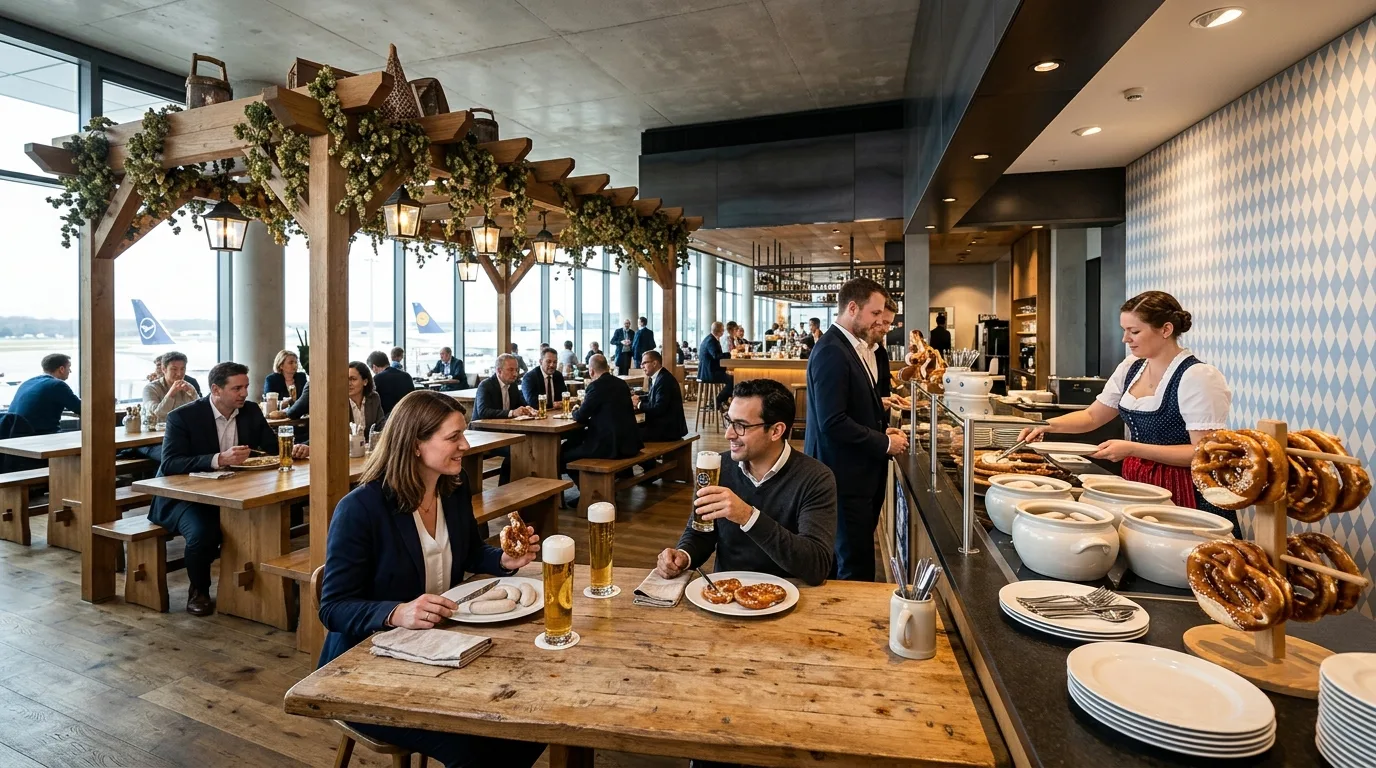
The older Lufthansa business class isn't bad. I've done the Frankfurt-to-LAX segment on it twice. The seat is fully flat, direct aisle access from every seat, the food is decent (the weisswurst at the Munich lounge is worth arriving early for, genuinely). But if Allegris is available on your dates, it's worth the extra effort to get it.
Check the aircraft type before booking
On Lufthansa.com, go to the flight details and look for "Airbus A350-900" in the equipment field. If you see that, you're likely on an Allegris-equipped aircraft — but cross-check with the seat map to confirm the new suite configuration is loaded.
How does United Polaris hold up on this route?
United operates Denver to Munich with Polaris business class, but the experience varies more than Lufthansa's does because United's long-haul fleet is a mixed bag. You might get a 767-300ER, a 787-9, or a 777-200ER depending on the season and schedule. The difference between those products is not small.
The 787-9 Polaris is the one you want. Fully enclosed suite, real door, 1-1-1 in business class, and the seat itself is comfortable enough that I've arrived in Frankfurt (connecting through) feeling like a person rather than a crumpled receipt. The 767-300ER, on the other hand, is where Polaris shows its age. It's a 2-2-2 configuration, no door, and the seats feel narrower than they should. Not terrible, but not worth the same price as the 787 product.
United's Polaris lounge at Denver is in Concourse B, and it's... fine. The food is better than it used to be. The bar is serviceable. It's not a destination lounge, but you're not going to be miserable. I've had worse starts to a transatlantic flight.
That $2,150 figure reflects the lower end of what United tends to price this route at during off-peak windows. Peak summer and Christmas will push you well above $3,000.
When fares actually drop on this route
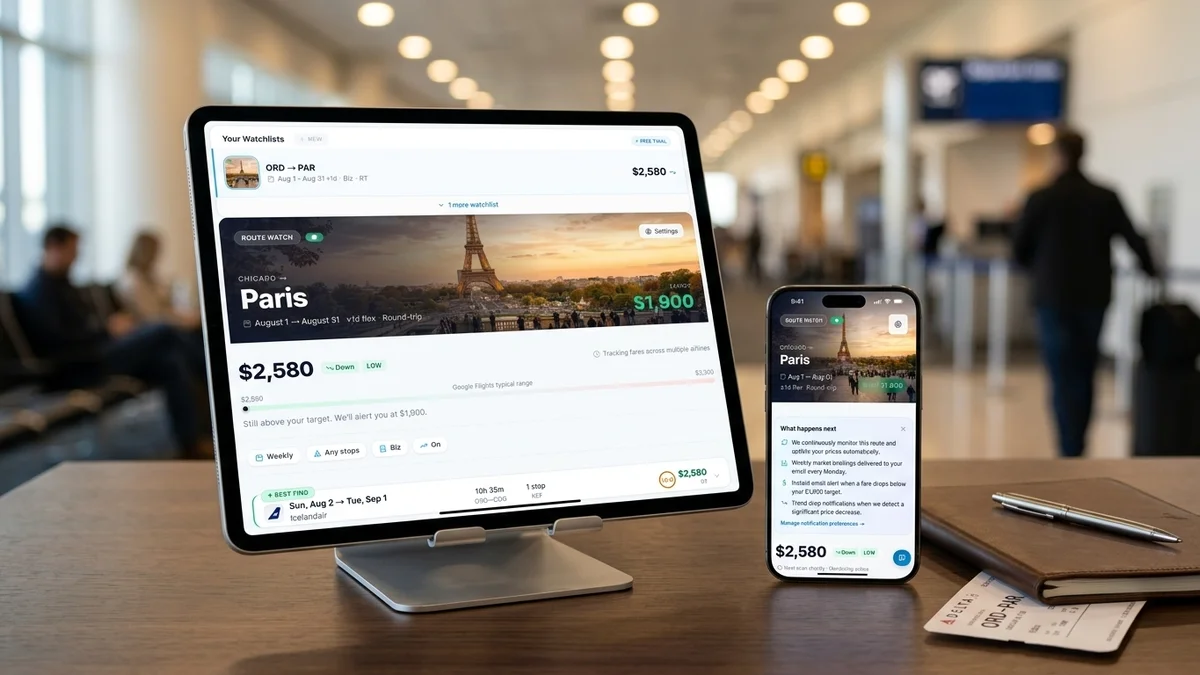
Transatlantic business class to Europe from Denver has a few predictable soft spots in the pricing calendar. January and February are the clearest — after the holiday rush, demand collapses and airlines get nervous. I've seen round-trip Polaris fares on this route dip to $1,750 in late January. February is slightly busier because of trade show season in Munich (think BAU, which runs in odd years), but it's still softer than summer.
September is underrated. The summer crowds are gone, Oktoberfest drives some demand in late September but it's not the same scale as the holiday surge, and shoulder season pricing often kicks in for the first two weeks of the month. If your travel is flexible, a September departure often hits a sweet spot between decent weather in Bavaria and reasonable fares.
The thing about flash fare drops is that they're genuinely unpredictable in timing. An airline might drop the price on a Tuesday afternoon and restore it by Thursday morning. You can refresh the search every day, or you can set up monitoring and let the fare come to you.
BusinessClassSignal tracks over 800 business class routes twice daily — including DEN to MUC — and sends you an alert when fares hit the threshold you set. I built it partly because I got tired of manually checking routes every morning. You can start monitoring this route and see what the fare history looks like before you commit to anything.
The Munich airport experience once you land
Munich Airport (MUC) is one of the better arrival airports in Europe for business class passengers. The Terminal 2 satellite, which is where most Lufthansa and Star Alliance international flights arrive, is clean, relatively calm at 6am (which is when you'll likely land from Denver), and the immigration queues move faster than Frankfurt's.The Lufthansa Senator and Business lounges in Terminal 2 are available if you're continuing onward or have a day-room situation. The Business Lounge food in Munich is above average — I've had a proper breakfast there at 7am after a red-eye and it was genuinely good. The smoked salmon with Bavarian bread isn't on every menu rotation, but when it's there, don't skip it.
One practical note: if you're picking up a rental car, the car rental center is a short walk through the terminal to the S-Bahn station area. It's well-signed and not the chaos you sometimes get at larger European airports. Ground transport into the city is straightforward — the S1 and S8 both run to Munich Hauptbahnhof in about 40 minutes.
Booking strategy: points, cash, or a mix?
This is the part where most guides get vague and I'm going to try not to.
In cash terms, the target price for this route is under $2,000 round-trip. Above $2,500, you're paying full retail and I'd push the trip or wait for a drop unless the dates are non-negotiable. Above $3,000, you'd better be on Allegris or have a specific reason.
In points terms, Lufthansa business class availability on miles is genuinely difficult. Miles & More (Lufthansa's own program) tends to hold back saver space, and partner programs like United MileagePlus can book Lufthansa awards, but availability is thin. When it does open up, the redemption rate through Air Canada Aeroplan (which is a Star Alliance partner) is often better than going through MileagePlus directly. Aeroplan prices Lufthansa business class at 85,000 points round-trip to Europe — not the best deal in the world, but workable if you have the points and can find availability.
United Polaris on this route books more predictably with MileagePlus miles. Saver space does open, particularly in the 2-3 week window before departure when United is trying to fill seats. I've seen this work more than once on transatlantic routes.
Don't book Lufthansa through Miles & More without checking Aeroplan first
Miles & More redemption rates for Lufthansa business class can be higher than what you'd pay through partner programs. Aeroplan and even Turkish Miles&Smiles (which prices Lufthansa at around 45,000 miles one-way for business) are worth checking before you commit to the obvious option.
What the actual flight is like
Denver to Munich is roughly 10 hours westbound (Munich to Denver) and about 10.5 hours eastbound. It's a proper overnight transatlantic — you depart Denver in the evening, sleep, and arrive Munich in the early morning.
On Lufthansa, the meal service on the outbound (DEN to MUC) typically starts within the first hour with a proper dinner. The food quality in Lufthansa business class is consistently better than United's, in my experience — not dramatically, but noticeably. The bread basket alone is a signal that someone cared. Wines are usually a German white and a Bordeaux-adjacent red, with a port option after dinner.
On the Allegris suite, the bed configuration is genuinely good. The mattress topper isn't marketing language — it's a real pad that changes the feel of the seat. I slept about 6 hours on my first Allegris flight, which is above average for me on transatlantic segments. The do-not-disturb light on the suite door actually works, which sounds like a low bar but isn't.
United Polaris food has improved. The 2024-era catering is better than what I was eating in 2019 on the same routes. But it still doesn't match Lufthansa's consistency. Where United does well is the bedding — the Saks Fifth Avenue duvet is legitimately warm, and the pillow situation is better than most carriers in this class.
On United Polaris, request the aisle-adjacent seat in rows 1 or 2 if you're a light sleeper. The galley noise in row 6 or 7 can be a problem on a 10-hour overnight.
The entertainment systems on both carriers are fine. Lufthansa's newer screens are larger and the touch response is better. United's system has a broader English-language content library, which matters if you want to watch something before you sleep rather than just putting on a film you don't care about.
Is denver to munich business class worth paying for?
This is the question people actually want answered, and the honest answer is: at the right price, yes.
A 10-hour overnight flight in economy is survivable. I've done it. You arrive stiff, underslept, and you spend the first day of your trip in a fog. In business class, particularly on a good product, you arrive functional. For a leisure trip, that might not matter. For a work trip where you're presenting to a client the afternoon you land, it matters a lot.
The break-even math changes based on what you're doing in Munich. If you're there for a week of vacation, the premium over economy might not be worth it. If you're there for two days of meetings and flying straight back, business class on both ends is practically a business expense.
The other factor is the specific product. Paying $2,400 for Lufthansa Allegris is a different proposition than paying $2,400 for United on a 767-300ER in 2-2-2 Polaris. Same price, meaningfully different experience. This is why checking the aircraft before you book matters as much as checking the fare.
Allegris availability is still limited
As of early 2025, Lufthansa Allegris is confirmed on select A350 routes. The DEN–MUC routing doesn't always guarantee Allegris — it depends on which aircraft Lufthansa assigns to the specific rotation. Check the seat map at booking and again at check-in, as equipment swaps happen.
How to actually track and book this route
The mechanics of booking denver to munich business class are straightforward. You can book directly through Lufthansa.com or United.com, or through Google Flights to get a fare overview. Google Flights will show you the price calendar, which is useful for spotting cheaper windows at a glance.
What Google Flights won't do is alert you when a specific route drops below a threshold you care about. It has price tracking, but it's blunt — it'll tell you prices are "low" based on its own historical data, not based on what you've decided is worth paying.
How the monitoring system works at BusinessClassSignal is a bit different: you set a target fare for your route, and you get an email when it hits. For DEN to MUC, I'd suggest setting a target around $1,900 round-trip and seeing what comes through. Over 6-12 months of monitoring, that route does dip into that range — not constantly, but enough to be worth watching.You can also browse the full fare history for DEN to MUC on the route page, which shows when prices have dropped historically and by how much. That context is useful before you decide what threshold to set.
Book directly with the airline after you find the fare through a monitoring alert. You want the airline's booking reference for seat selection, upgrade requests, and any disruption handling — not a third-party reference number that creates friction at the airport.
The 14-day free trial on BusinessClassSignal lets you set up monitoring on any route, including this one, and see what the alerts look like before you commit. No credit card required for the trial. If you're planning a Munich trip in the next 3-6 months, it's worth having the monitoring running even if you end up not using it.
Monitor Denver to Munich business class fares — get alerted when prices drop
Try Free for 14 Days