The Problem: Business Class Prices Are a Moving Target
If you've ever shopped for business class tickets, you know the pain. A fare you saw yesterday at $3,200 is suddenly $5,800 today. Or worse — you wait for a sale that never comes, and prices creep up as your travel date approaches.
Business class fares are among the most volatile products in the travel industry. Airlines use sophisticated yield management systems that adjust prices multiple times per day based on demand, booking patterns, competitor pricing, and dozens of other factors.
The travelers who consistently fly business class for reasonable prices aren't lucky — they're systematic.
Why Manual Tracking Doesn't Work
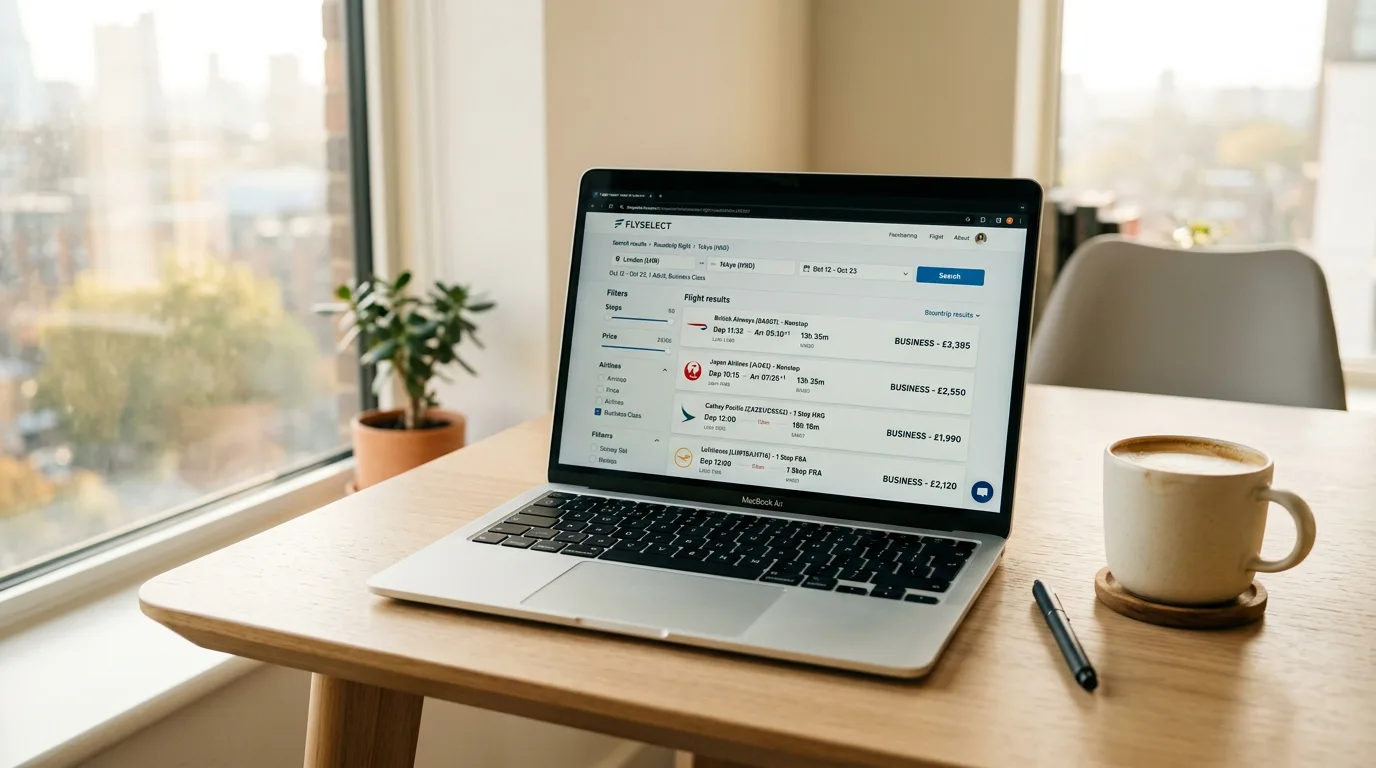
Most people try the "check every few days" approach. Here's why that fails:
- Price drops are fleeting. The best deals often last less than 24 hours. Some disappear within hours.
- There are too many variables. A single route with flexible dates might have 50+ date combinations to check.
- Fatigue sets in fast. You might check diligently for a week, but after a month of no results, you stop — right when the deal appears.
- You don't know what a "good" price is. Without historical context, you can't tell if $3,500 JFK→NRT is a steal or just average.
The Timing Trap
Most travelers give up monitoring after 1–2 weeks. But the best business class deals often appear 6–12 weeks before departure. The gap between giving up and the deal appearing is where money is left on the table.
The Smarter Approach: Automated Fare Surveillance
The most effective strategy is to delegate the monitoring to an automated system that watches prices 24/7 and alerts you only when something meaningful happens.
1. Set Your Parameters Once
Define the routes you care about (e.g., New York to Tokyo), your travel window (specific dates or an entire month), and your target budget. This takes about 2 minutes.
2. Let the System Scan Continuously
An automated tool like BusinessClassSignal runs surveillance across hundreds of fare combinations daily using Google Flights data. It tracks prices across airlines, dates, and routing options — far more comprehensively than you ever could manually.
3. Receive Actionable Intelligence
Instead of raw price data, you get two types of communication:
- Regular market briefings — daily or weekly snapshots of where prices stand, how they compare to historical averages, whether the trend is moving in your favor, and AI-generated expert analysis of the deal quality.
- Priority price alerts — instant notifications when a fare drops below your target budget, complete with airline, dates, stops, and a direct Google Flights booking link.

4. Book with Confidence
When you receive an alert, you know the price is genuinely low — not just a small fluctuation. One click takes you to Google Flights to book directly with the airline. No middlemen, no commissions.
What to Look For in a Price Tracking Tool
| Feature | Why It Matters |
|---|---|
| Business class focus | Generic fare alerts overwhelm you with economy deals |
| Google Flights data | The most comprehensive and accurate fare source |
| Historical price context | Know if a fare is actually low, not just different |
| Target budget alerts | Get notified only when YOUR budget is met |
| Flexible date scanning | Covers date windows around your target, not just one day |
| Direct booking links | Book straight with the airline — no markups |
Not just business class?
If you also fly economy on shorter routes or personal trips, FlightKitten applies the same automated fare surveillance approach to economy flights across 220+ airlines — including budget carriers. Plans start at $4.99/mo.
Real-World Example: JFK to Tokyo Narita
Let's say you want to fly business class from New York to Tokyo sometime in May 2026. Here's what happens with automated tracking:
- Day 1: You set up a watchlist — JFK to NRT, May 1–31, target budget $3,500.
- Days 2–14: Your briefings show average fares around $4,200. The system notes that May fares typically drop in late March.
- Day 18: ANA releases inventory for a partner booking — the fare drops to $3,180. You get an instant alert.
- Day 18, 20 minutes later: You click the link, book on Google Flights, and save over $1,000 compared to the average price.
Total time spent: 2 minutes setup + 30 seconds to book. The system handled the 18 days of monitoring in between — something that would have required 50+ manual searches.
Don't want to track prices yourself?
If monitoring fare charts isn't your thing, BestBusinessClass.com connects you with travel advisors who access unpublished private fares and book on your behalf. A practical option if you'd rather skip the DIY approach.
How to Get Started
- Go to BusinessClassSignal and create your first watchlist.
- Set your route, dates, and target budget. The system starts scanning immediately.
- Check your briefings. You'll receive market intelligence on your schedule — daily or weekly.
- Act when the alert arrives. One click to Google Flights. Book directly with the airline.
Start your free watchlist in 2 minutes. 14-day trial with full Core access — cancel anytime.
Start Monitoring PricesBusiness class doesn't have to cost a fortune. The key is patience combined with systematic monitoring — and that's exactly what automated fare surveillance delivers.