Quick summary
Singapore Airlines business class remains one of the best products in the sky in 2026 — but the experience varies more than the airline's marketing would have you believe. The A350 and 777 cabins are genuinely different products, the SilverKris lounges are uneven depending on which terminal you're in, and Book the Cook is the single best thing you can do before any long-haul flight on this carrier. Know which aircraft you're on before you book.
Why Singapore Airlines still gets talked about
There's a reason Singapore Airlines keeps appearing at the top of every "best business class" list. It's not just the soft product — the food, the service, the little touches. It's that the airline has spent decades building a culture where cabin crew actually seem to give a damn. I've flown enough airlines to know that's rarer than it sounds.
I've now logged 14 segments in Singapore Airlines business class, spread across their A380, A350, and 777 fleets. The product isn't identical across all three. That matters a lot if you're trying to decide whether a particular fare is worth booking, and it's the thing most reviews gloss over.
Singapore Airlines operates out of Changi Airport's Terminal 3 for most long-haul routes, with some regional services from Terminal 2. The mainline international routes — New York, London, Los Angeles, Sydney — almost all operate on either the 777-300ER or the A350-900ULR. Knowing which one you're getting is not a minor detail.The A350 vs 777 question — and why it actually matters
Let me be direct: the A350 and the 777 are not the same business class. They share a brand identity. They don't share much else.
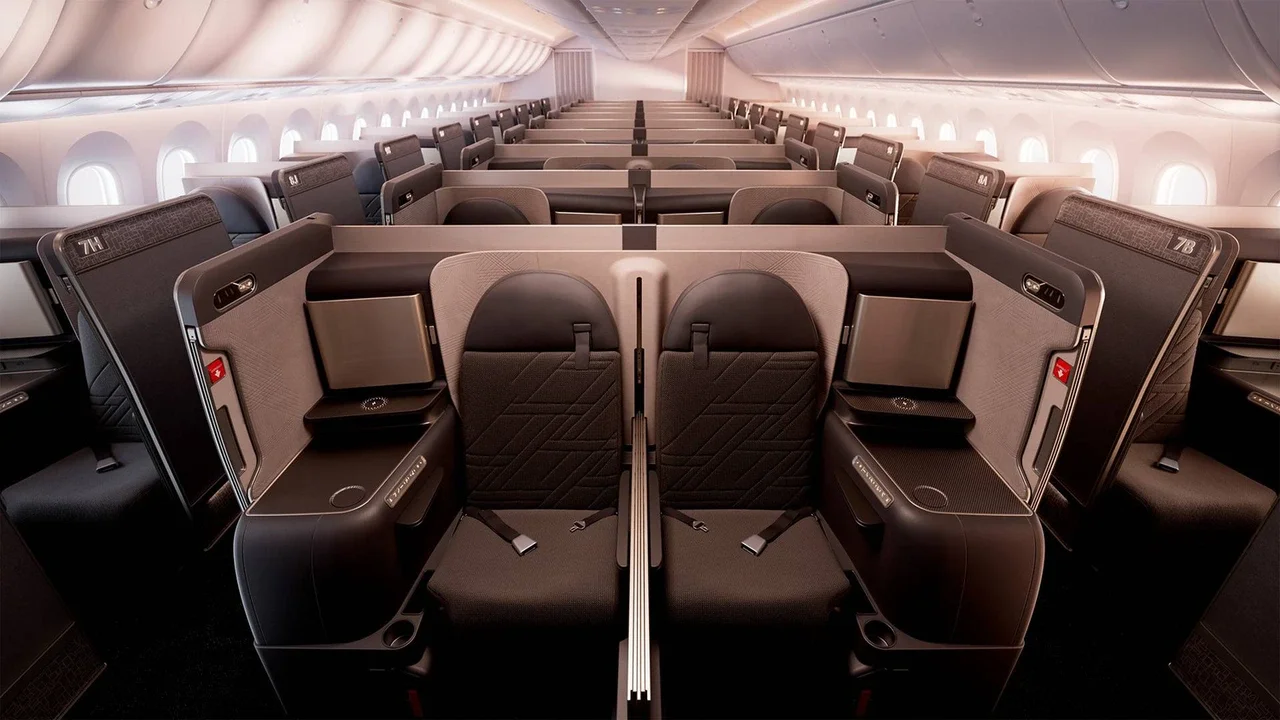
The 777-300ER runs a 1-2-1 configuration in business class with the older Raffles Class seat. It's a fully flat bed, it's private enough, and if you flew it five years ago you'd have been impressed. In 2026, it's showing its age. The seat is narrower than the A350 version — I measured it once with my elbow at around 22 inches of shoulder width, which starts to feel tight on a 13-hour flight. The IFE screen is smaller, the finishes feel more worn, and the storage options are oddly limited for a long-haul seat.
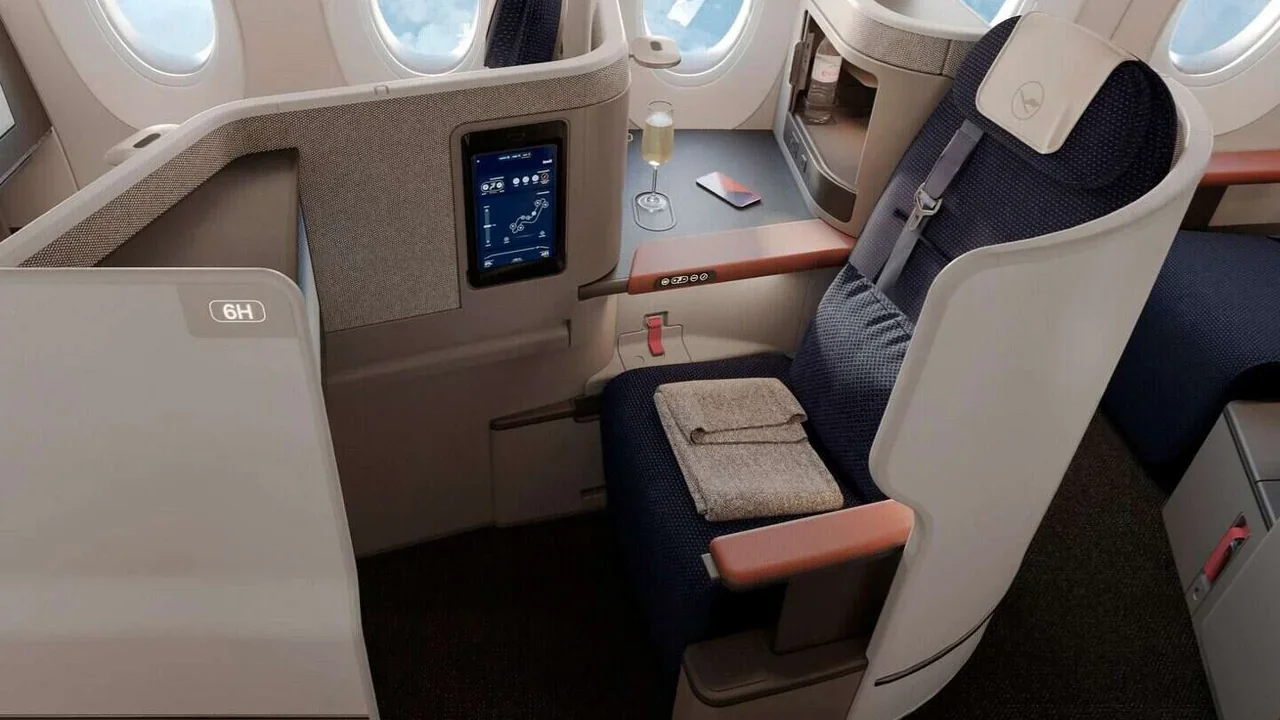
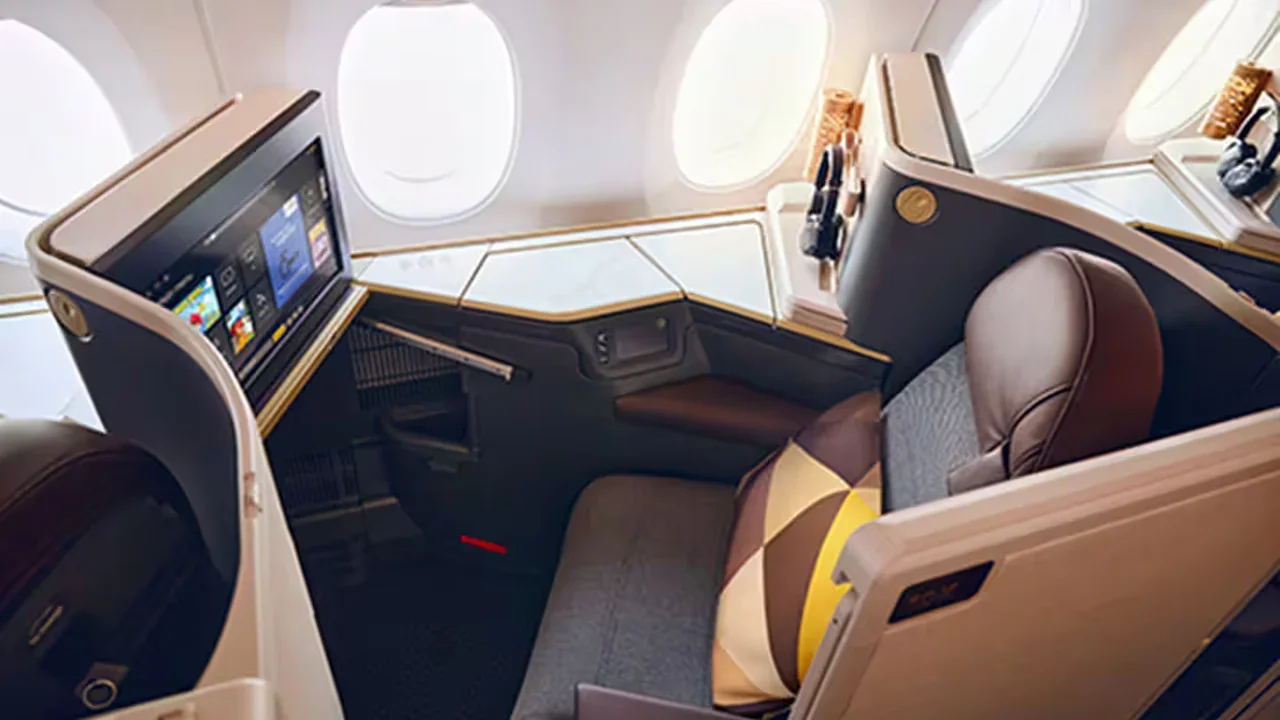
The A350, by contrast, runs the newer Business Class Suite product. These are actual suites — full closing doors, a bigger bed, a proper vanity mirror, and a seat that converts to a bed without the awkward ridge you get on some competitors. The screen is larger (18 inches versus the 777's 15.4), the lighting is better, and the whole cabin feels like it was designed this decade. Because it was.
Check your aircraft before booking
On most booking engines, you can see the aircraft type at the itinerary selection stage. If you're routing through Singapore on a long layover, you can sometimes swap onto a later flight with an A350 if one is available. Worth a call to the reservations desk if it matters to you.
The A350-900ULR is a different beast again. ULR stands for Ultra Long Range, and Singapore operates it specifically for their non-stop routes between Singapore and the US East Coast — Newark and JFK. This is the aircraft doing what is currently the world's longest commercial flight by distance: Singapore to New York, clocking in at roughly 9,534 miles and anywhere from 17 to 19 hours depending on wind. The cabin is configured entirely for long-haul comfort: 67 business class seats in a 1-2-1 layout, no economy class at all.
What's the world's longest flight actually like?
I did the SQ22 — Singapore to Newark — in October 2024. I'll be honest with you: 18 hours is a long time to be on any aircraft, no matter how good the seat.
The ULR A350 is optimized for it in ways you notice. The cabin pressure is kept lower than a standard widebody, and the humidity is slightly higher, which sounds like a minor engineering footnote until you land feeling less dehydrated than usual. The crew ratio is higher than a normal long-haul — they're not short-staffed on a flight where you're going to be awake for 12 of those 18 hours.
The bed, when flat, is 76 inches long and 28 inches wide at the shoulders. I'm 6'1" and I slept properly. I slept well, which I cannot say for the United Polaris 767 I took on the return leg two weeks later.
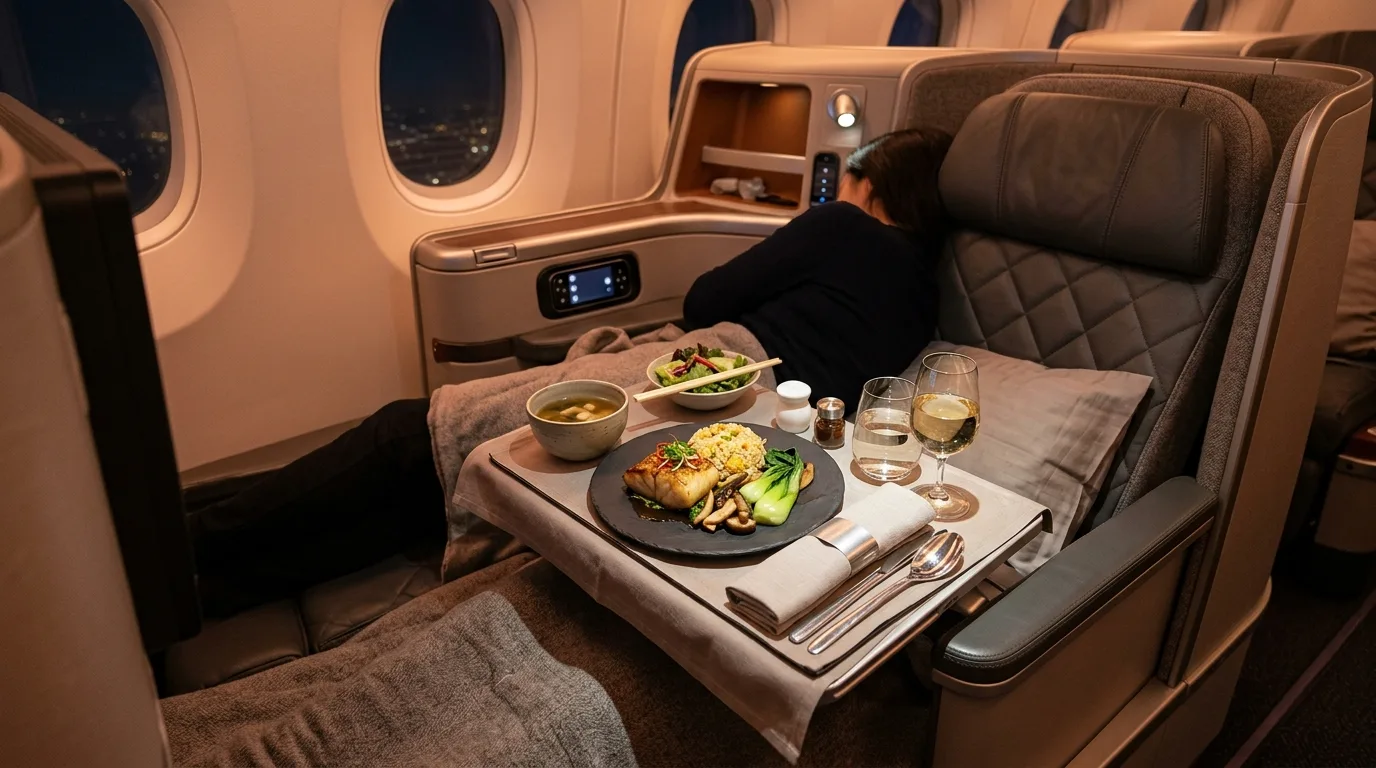
Meal timing on the ULR is staggered across the flight rather than the standard two-service model. You get a proper dinner, a mid-flight snack service, and breakfast before landing. If you've pre-ordered through Book the Cook, the crew knows your order and there's no scramble for the last available option.
Book the Cook: stop ignoring this
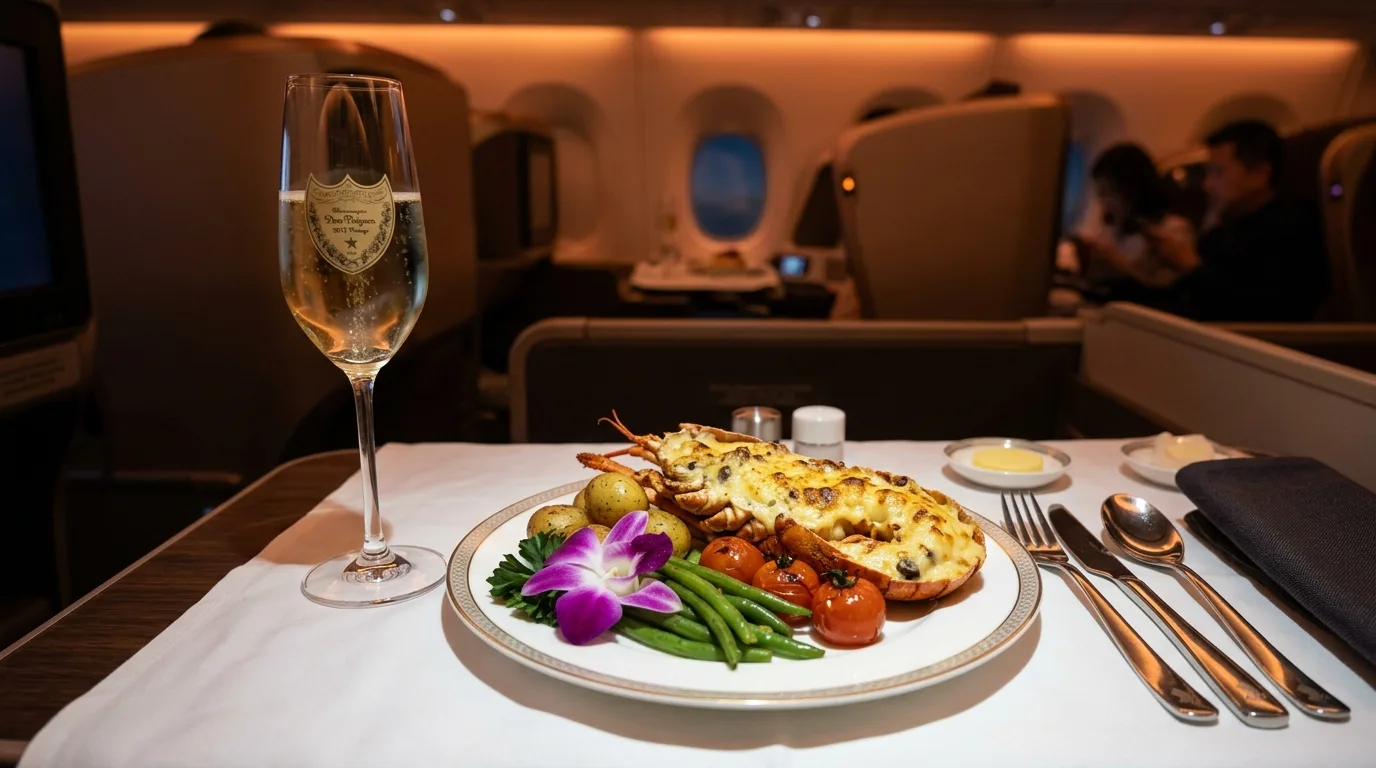
I've written about Book the Cook before and I'll keep writing about it because people still don't use it. Singapore Airlines lets business class passengers pre-order their main course from an extended menu — items that aren't available on the day as standard selections. You do it through the Manage Booking section of their website, up to 24 hours before departure.
The standard menu is fine. The Book the Cook menu is genuinely good.
On a recent Singapore to London flight, I pre-ordered the chilli crab with steamed rice — a Singaporean classic that absolutely does not need to be eaten at 35,000 feet but holds up remarkably well. The prawn laksa is another one that travels well. For the Western options, the beef tenderloin is consistently better than whatever the day-of beef option turns out to be.
Book the Cook opens 24 hours before departure but popular items sell out. Log in to Manage Booking as soon as the window opens — I usually set a reminder for 24 hours and 5 minutes before the scheduled departure time.
The reason this matters more than on other airlines is that Singapore's standard meal service is already good. Book the Cook takes it from "good" to the kind of thing you'd actually look forward to. That's a short list of in-flight meals, in my experience.
The SilverKris Lounge — which one you get depends on where you are
Singapore's SilverKris Lounge at Changi Terminal 3 is the one that gets photographed and written about. The satellite lounge at Terminal 2 — used for some regional and older-aircraft departures — is considerably more ordinary. If you're flying an international long-haul from T3, you're in the right place.
The T3 SilverKris Business Class Lounge is spacious, has a proper à la carte dining section (not just a buffet), and the bar is well-stocked. The satay station — present during dinner hours — is one of those lounge details that sounds gimmicky until you're standing there eating freshly-grilled satay at 10pm waiting for a flight. It's good. I'd go back for it.
The T3 lounge gets crowded
Singapore is a major hub with a lot of connecting traffic. The SilverKris lounge at T3 can get genuinely packed during peak connection windows — roughly 8pm to midnight. If you're arriving at 9pm for a midnight departure, don't expect a quiet corner. The dining area tends to overflow into the general seating.
The coffee, though. The espresso is mediocre. I don't know why an airline that does so many other things well hasn't sorted out their lounge coffee situation, but here we are. The food is better than the coffee.
For outstation lounges — meaning SilverKris locations outside Singapore — the quality drops. The London Heathrow SilverKris lounge at T2 is fine but unremarkable. The one in Los Angeles is small and feels like an afterthought. If you're departing from a major hub that isn't Changi, don't build your trip around the lounge.
Is Singapore Airlines business class worth the price?
This is the real question, and the honest answer is: it depends on what you're paying.
Published business class fares on Singapore Airlines are not cheap. A round-trip in business from New York to Singapore in 2026 runs anywhere from $4,500 to over $8,000 depending on timing and how far out you book. London to Singapore is typically in the $3,800 to $6,500 range. These are not discount fares. You're paying for the product, and mostly you're getting it.
Where it gets interesting is the sale fares. Singapore Airlines runs periodic promotions — often tied to Singaporean public holidays, their own anniversary sales, or just general capacity management — where business class drops to levels that are actually competitive. I've seen London-Sydney via Singapore at $2,900 round-trip in business during a flash sale. That's a genuinely good deal for a product that includes the A350 cabin, Book the Cook, and a proper flat bed for a 13+ hour flight.
The redemption picture is also worth mentioning. KrisFlyer miles — Singapore's own program — price business class at 85,000 miles one-way for Saver awards on long-haul. That's not low, but the sweet spot is partner redemptions. If you've got Star Alliance miles from United or Avianca, you can book Singapore Airlines business class through those programs at rates that are often more favorable. Avianca LifeMiles, in particular, has historically priced Singapore business class routes at rates that make people do a double-take.
Points redemption varies by partner
Avianca LifeMiles pricing on Singapore Airlines routes has been attractive historically, but these programs change their rates with some regularity. Always verify current partner pricing before transferring points — transfers are typically irreversible.
The product is worth paying for when you can get it at a reasonable price. At full published fares, you're paying a premium that's harder to justify unless you're on an expense account or the alternative is an airline with a significantly worse product.
Seat selection: the choices that actually matter
On the A350 Business Class Suite, the layout is 1-2-1. The window seats are the ones most people want — you've got a wall on one side and full privacy. But the middle seats in the 2-across section have a divider that raises between them, which makes them genuinely good for couples traveling together. If you're solo, take a window.
Row 11 on the A350 is worth knowing about. It's a bulkhead row, which means more floor space in front of you — useful if you're tall and want to stretch out. The trade-off is that there's no under-seat storage during takeoff and landing, which means your bag goes in the overhead. Minor inconvenience, but worth knowing.
On the 777 Raffles Class configuration, the best seats in a staggered layout are the ones positioned closest to the window — they give you direct aisle access without climbing over anyone. The seats alternate between closer to the window and closer to the aisle in adjacent rows. Check SeatGuru or the airline's own seat map and look at the exact seat, not just the row number.
On long Singapore Airlines flights, avoid seats directly in front of the galley if you're a light sleeper. The crew is professional and quiet, but galleys make noise during service prep regardless of how careful anyone is.
What the cabin crew experience is actually like
I want to be specific here because "great service" is the most useless phrase in travel writing.
Singapore Airlines crew don't hover. That's the thing that sets them apart from some of the Gulf carriers, where you sometimes feel like you're being attended to within an inch of your life. On Singapore, they're present when you want them and absent when you don't, and they seem to read the difference correctly more often than not. On my ULR flight, I was trying to sleep within an hour of departure. The crew dimmed the cabin, came by once to confirm I didn't want a meal, and then left me alone for six hours. No unnecessary check-ins. No "can I get you anything?" whispered at 2am.
They also remember things. If you ordered a specific drink on boarding and you're two hours into the flight, there's a decent chance they'll ask if you'd like another of the same without you having to repeat yourself. That's a small thing. It's also the kind of small thing that makes a 14-hour flight feel materially different.
The service is not infallible. I've had one or two crew members who were noticeably going through the motions — polite but mechanical, the kind of service that technically hits every mark without feeling warm. It happens. But it's the exception on Singapore, where on most carriers it's closer to the norm.
When Singapore Airlines business class fares actually drop
This is the part that matters most if you're trying to book smart rather than just book.
Singapore Airlines runs sales with some predictability. The major ones tend to cluster around January (post-Christmas capacity management), their own anniversary in May, and the Singapore Airlines sale periods that align with local events. But the most reliable drops aren't the headline sales — they're the quieter fare adjustments that happen midweek, often Tuesday or Wednesday, when the airline adjusts inventory based on load factors.
Routes that see the most frequent drops: Singapore to Melbourne and Sydney (high competition from Qantas), Singapore to Tokyo (regional competition), and transatlantic routes when they're up against Emirates or Qatar on connecting itineraries.
Routes that almost never drop significantly: Singapore to New York nonstop on the ULR. There's basically no competition for a non-stop Singapore-JFK route, so the airline has very little pricing pressure. If you want the ULR experience on a budget, you're either waiting for a rare sale or using miles.
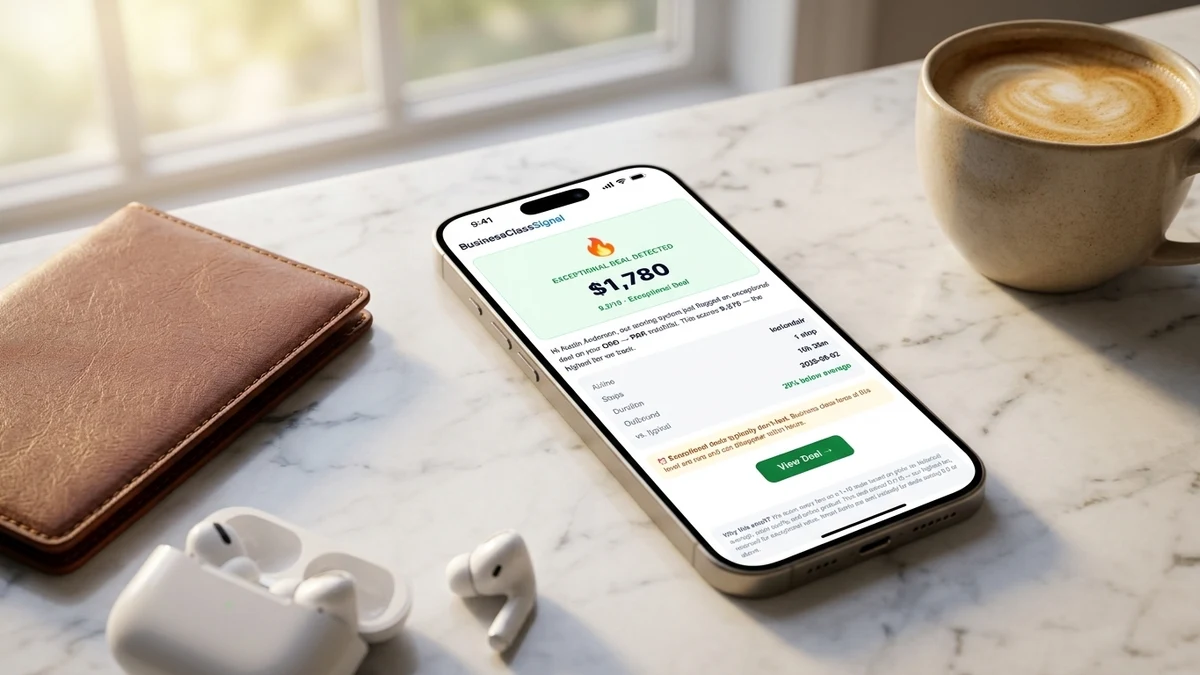
Monitoring this manually is tedious. I built BusinessClassSignal partly because I got tired of refreshing fare pages hoping to catch a drop. BusinessClassSignal scans over 800 business class routes twice a day — including all major Singapore Airlines routes — and sends an alert when fares cross below whatever threshold you set. You tell it your route, your target price, and it does the watching. The Singapore Airlines routes are among the most-monitored on the platform, which tells you something about how many people are trying to catch a deal on this carrier.
You can see how the monitoring system works if you want the specifics, or just browse all routes to see what's currently being tracked.
The honest verdict on Singapore Airlines business class in 2026
Singapore Airlines business class is very good. On the A350, it's among the best products flying right now. The ULR configuration for the long New York and Los Angeles routes is genuinely impressive if you can stomach the price.
The 777 product is fine but not exceptional by 2026 standards. If you're choosing between a 777-operated Singapore Airlines flight and, say, a Qatar Airways A350 or a Cathay Pacific flight on a comparable route, the Singapore brand doesn't automatically win on hardware anymore.
Book the Cook. Check your aircraft. Watch for the sale windows. And if you're doing the world's longest flight — the SQ22 to Newark — go in rested, pre-order the chilli crab, and take the window seat.
Monitor Singapore Airlines business class fares on 50+ routes — 14-day free trial, no credit card required
Start monitoring