Why some routes punch way below their price weight
Most people assume business class is a fixed luxury — something you either pay full fare for or redeem a mountain of points to access. And on plenty of routes, that's basically true. New York to London in business class on peak dates can run $6,000+ round-trip without blinking. Tokyo to Los Angeles on a premium carrier isn't much better.
But there's a separate category of routes where business class fares regularly drop to prices that make you do a double-take. Not mistake fares. Not glitchy one-hour sales. Just... structurally cheaper routes where competition, geography, or carrier economics push the price into territory that's genuinely accessible.
I've been tracking business class pricing for over a decade, and the routes below show up again and again as places where you can actually fly lie-flat — real business class, not premium economy with extra legroom — for under $2,000 round-trip, sometimes well under. Some of these I've flown myself. Others I've watched through our fare monitoring data at BusinessClassSignal and seen the deals repeat with enough regularity to call them a pattern.
These are the affordable business class routes worth knowing about. I'll give you price ranges, the best windows to book, the carriers to watch, and the honest tradeoffs — because there's always something.

The 10 routes — and what you're actually getting
1. Chicago (ORD) → Reykjavik (KEF) — Icelandair
Icelandair's Saga Class isn't the most glamorous product in the sky. The seats recline flat but the pitch is tighter than you'd get on a wide-body, and the cabin has a slightly utilitarian Scandinavian vibe — which you'll either find refreshing or underwhelming depending on your mood. The food is genuinely good though. I had smoked lamb with skyr mousse on a KEF-bound flight a few years ago and it was better than most of what I've eaten in airline business class.
The pricing is the real story. Round-trips from Chicago to Reykjavik in Saga Class regularly appear in the $1,400–$1,800 range, especially in shoulder season (late April through May, and September into early October). This is a sub-6-hour flight, so even if the seat doesn't fully flatten, you're not going to suffer.
Watch for Icelandair's periodic sales, which tend to drop mid-week. If you're using BusinessClassSignal, you can start monitoring this route and catch these when they surface — they often last 48 hours or less before inventory adjusts.
2. Los Angeles (LAX) → Mexico City (MEX) — Aeroméxico
This one surprises people. Aeroméxico's Club Premier cabin on the LAX-MEX route uses fully lie-flat seats on their Boeing 787 service, and round-trip fares regularly fall to $900–$1,300. That's not a typo.
The flight is about 4.5 hours, which makes the flat bed slightly absurd but completely welcome. The food service is solid — expect a proper multi-course meal with Mexican wine options, and the crew tends to be attentive without hovering. The amenity kit is modest (think: socks, an eye mask, basic skincare) but functional.
The catch: MEX's Terminal 2, where Aeroméxico operates, has a lounge situation that's fine but not spectacular. The Salon Premier is comfortable and the food spread is decent, but if you're used to Cathay's The Wing or even the Centurion Lounge at LAX, reset expectations. Still — at these prices, it's hard to complain.
Best booking window is 6–10 weeks out. Fares tend to spike in December around the holidays and in July. The sweet spot is March through May and September through November.
3. New York (JFK or EWR) → Bogotá (BOG) — Avianca
Avianca's business class product on this route — operated on their Airbus A319 and occasionally A320 — is not a flat-bed product. Let's be honest about that upfront. You get wide, recliner-style seats with good pitch and dedicated meal service, but this is a ~5-hour flight in what some people would classify as a premium economy-adjacent experience. Avianca calls it Business Class. The seats are noticeably better than economy. Whether that meets your threshold depends on what you're used to.
What makes it worth including here is the price. Round-trips frequently dip below $700, sometimes to $500–$600. For a sub-6-hour flight with decent food and a separate check-in lane, that's a legitimate value proposition even if you're not sleeping flat.
4. Dallas (DFW) → London (LHR) — American Airlines
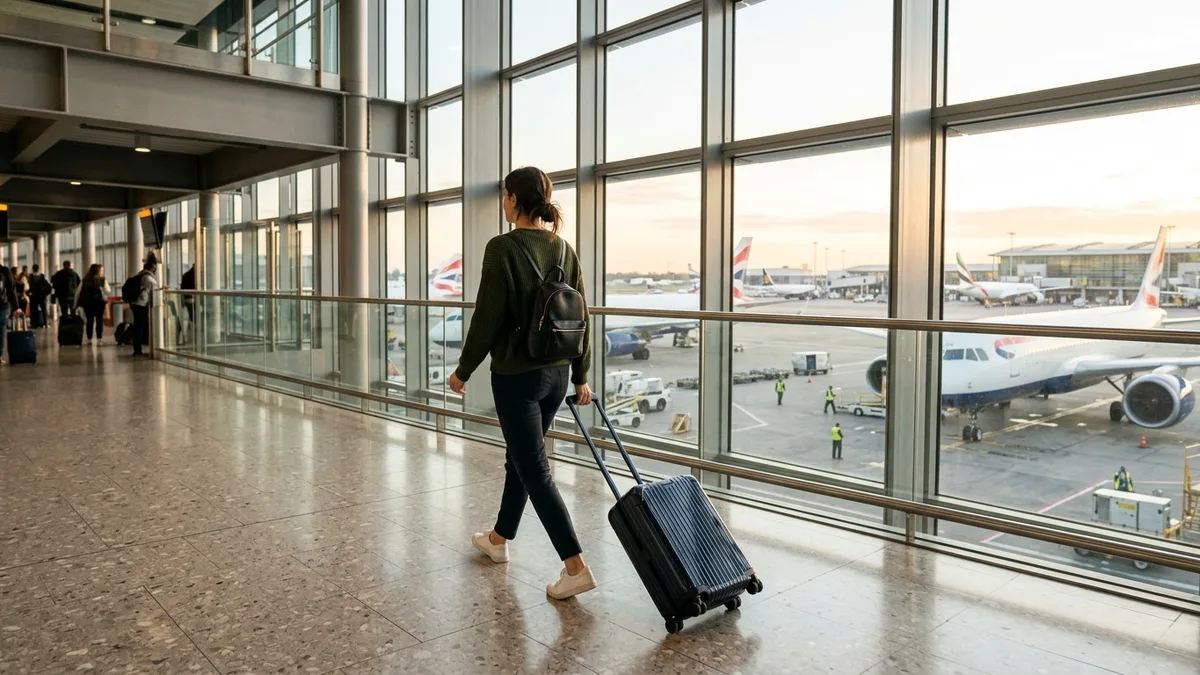
American's Flagship Business cabin on the DFW-LHR route uses the Zodiac Cirrus seat in a 1-2-1 configuration on their 777-200ER fleet — every seat has direct aisle access, the bed goes fully flat, and the soft product has improved meaningfully over the past few years. The Flagship Lounge at DFW's Terminal D is one of the better domestic carrier lounges in the U.S., with a proper sit-down dining room that serves a rotating menu. The last time I passed through, they were doing a smoked brisket with jalapeño cornbread that actually delivered.
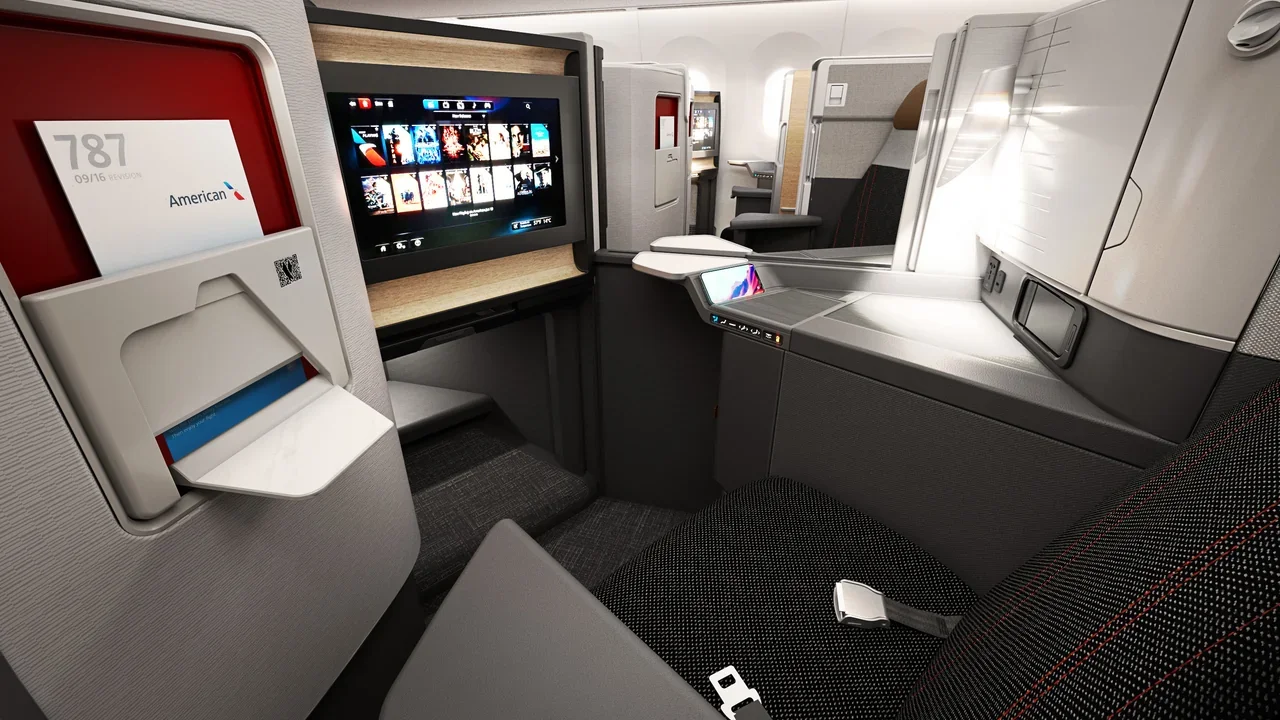
The pricing on this specific route tends to be softer than JFK-LHR or LAX-LHR because of how American manages its DFW hub. Round-trips in the $1,800–$2,400 range appear regularly, and during fare sales — typically tied to slow booking periods in January and February — you can see dips to $1,600 or below.
This is one of the more consistent affordable business class routes for transatlantic travel if you're based in Texas or willing to position to Dallas. London fares from DFW have been reliably cheaper than equivalent fares from the coasts for years now, and American has enough frequency (typically 2 daily departures) that you have scheduling flexibility.
5. San Francisco (SFO) → Tokyo (NRT or HND) — Japan Airlines
JAL's Sky Suite on this route is, frankly, one of the best long-haul business class products flying right now. The seats are in a staggered 1-2-1 configuration, every seat is direct aisle access, and the shell design gives you a genuinely private feel. The food service is exceptional — this is Japan Airlines, so the Japanese meal option on the SFO-NRT run is outstanding. I've had kaiseki-style courses at 35,000 feet on this cabin that I'd put up against a mid-range Tokyo restaurant.
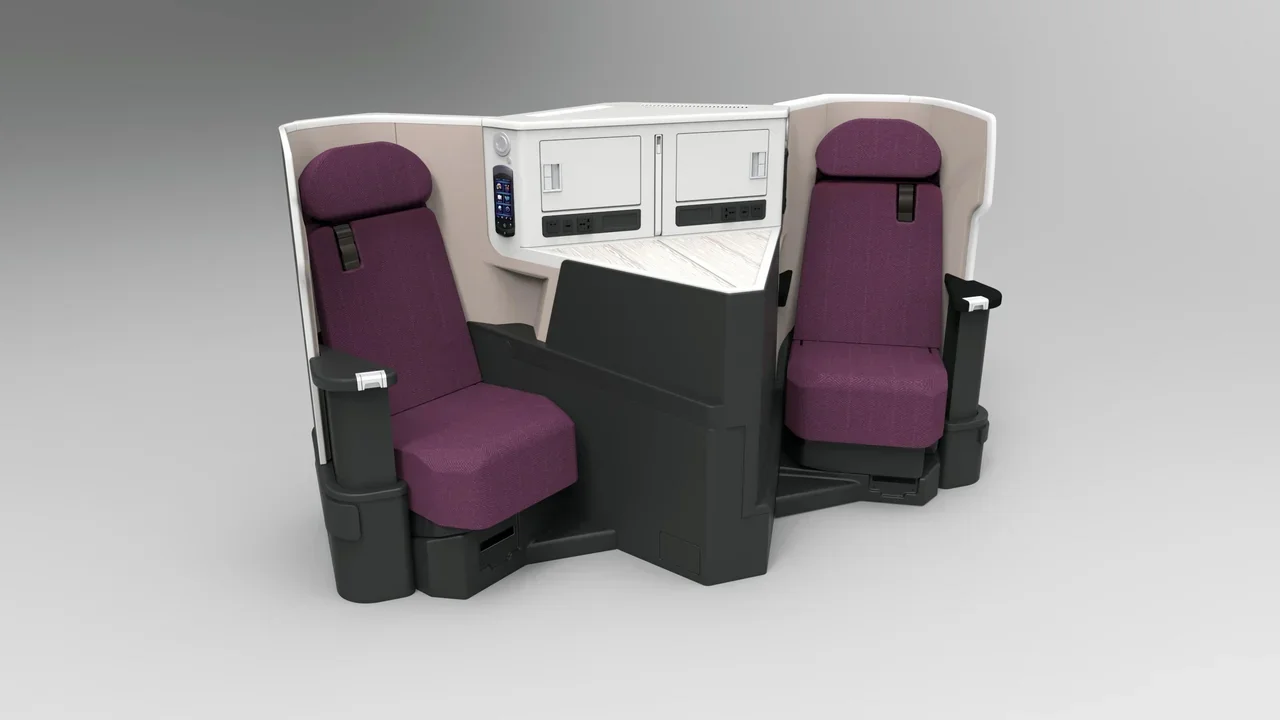
The surprise is the pricing. JAL runs promotions on this route — typically 2–3 times per year — where business class round-trips drop to $2,200–$2,800. For 10+ hours of flying each way in a product this good, that's genuinely competitive. Japan Airlines also tends to have better award availability than you'd expect if you're using miles, which makes this route worth watching from multiple angles.
Book early for spring travel (cherry blossom season, mid-March to early April, is wildly popular). September and October are the sweet spot for both weather and pricing.
6. Miami (MIA) → Buenos Aires (EZE) — LATAM
LATAM's business class product on the MIA-EZE route has been through several iterations over the years. The current configuration on their 787 service uses a fully flat seat in a 2-2-2 arrangement, which means middle-seat passengers don't have direct aisle access. That's a legitimate downside if you're traveling solo and get stuck in a window-side middle seat. Book early and select seats carefully — the window seats in rows 2 and 4 are your best options for solo travelers.
Pricing is the draw here. This is roughly a 10-hour overnight flight, and round-trips regularly come in at $1,500–$2,000. For a flat-bed product on a long South American overnight, that's hard to beat. LATAM's food service has improved — expect a proper meal on departure and a lighter service before landing, with a reasonable wine list featuring Argentine and Chilean options.
Best travel window: March through June, when Buenos Aires weather is excellent and fares haven't spiked for Northern Hemisphere summer. Avoid December through February if price is a priority — that's peak Southern Hemisphere summer and fares climb accordingly.
7. Seattle (SEA) → Amsterdam (AMS) — KLM
KLM's World Business Class product isn't the flashiest in the sky, but it's solid. The seats in their 777-200ER configuration are fully flat in a 2-2-2 layout, with the same middle-seat caveat as LATAM above. The real selling point is KLM's service culture — Dutch efficiency, genuinely warm crew, and a consistent product that doesn't vary wildly from flight to flight.
The SEA-AMS route tends to be significantly cheaper than KLM's JFK or LAX routes to Amsterdam, largely because Seattle is a secondary market for European carriers. Round-trips in the $2,000–$2,600 range are common, and during KLM's periodic flash sales — which tend to surface in January and September — you can see fares in the $1,700 range. Browse all routes to see how this compares to other European corridors on our monitoring data.
The Crown Lounge at AMS is worth the early arrival. They serve a rotating Dutch breakfast spread and the bitterballen at the bar are a small but real pleasure. Gate B, where most intercontinental KLM flights depart, has a separate section for business class passengers that's less chaotic than the main hall.
8. Houston (IAH) → Frankfurt (FRA) — Lufthansa
Lufthansa's business class product on this route — operated on their A330-300 or 747-8 depending on the season — delivers the full European flag carrier experience. The seats are fully flat, the food service is structured and serious, and the Senators Lounge at FRA is one of the better transfer lounges in Europe. The IAH departure typically uses the United Polaris Lounge given the Star Alliance partnership, which is a good lounge in its own right.
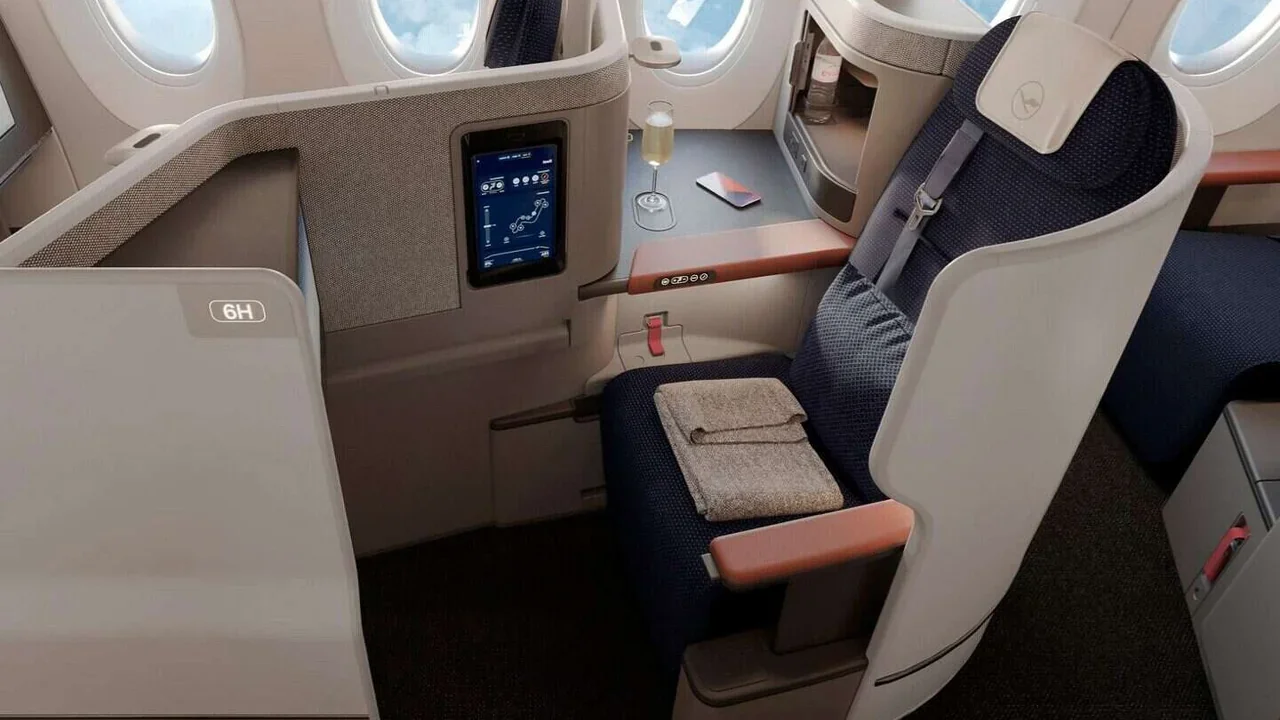
IAH-FRA is one of those routes where Lufthansa prices more aggressively than you'd expect, probably because Houston's corporate travel market keeps load factors high enough that they can afford to drop leisure fares. Round-trips regularly land in the $1,900–$2,500 range. If you're flexible on dates and can travel in late January or February, I've seen fares drop below $1,700.
One honest note: Lufthansa's business class catering has drawn criticism in recent years, and some of it is fair. The food is reliably good but rarely exciting. The wine selection is excellent — they take that seriously — but if you're expecting culinary ambition, Singapore or JAL this is not.
9. New York (JFK) → Lisbon (LIS) — TAP Air Portugal
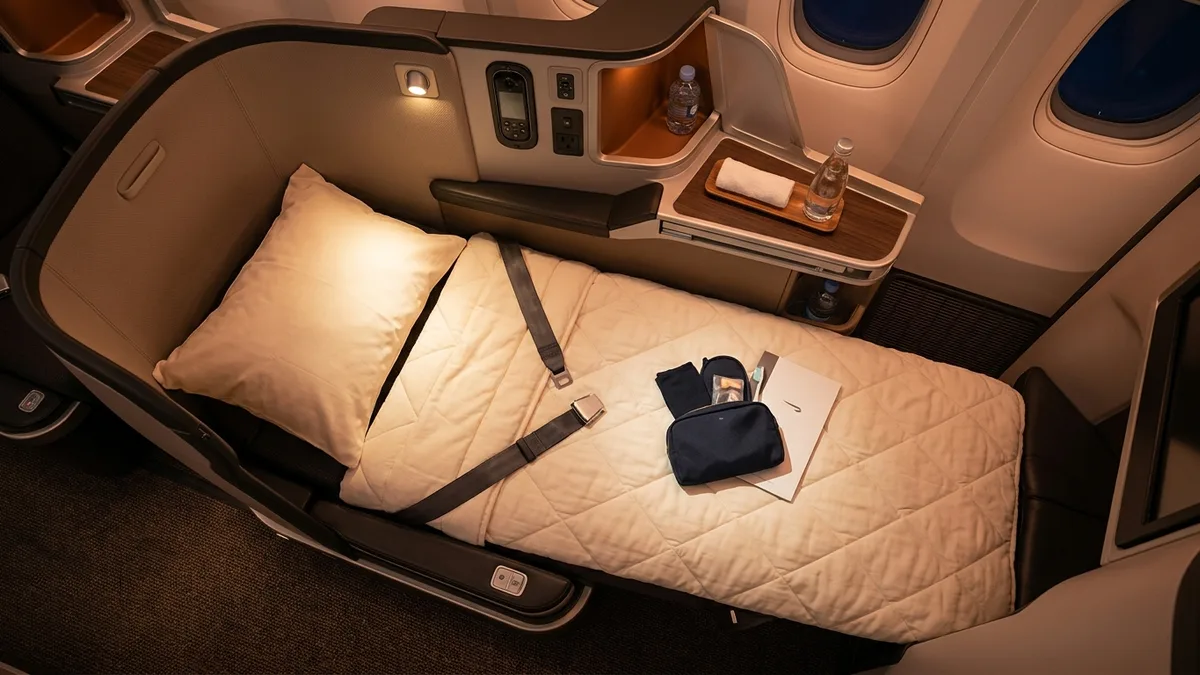
TAP gets overlooked by a lot of business class travelers, which is a mistake. Their long-haul business class product on the JFK-LIS route uses fully flat seats in a 1-2-1 configuration on the A330neo, with direct aisle access from every seat. The soft product — bedding, amenity kit — is decent without being exceptional. The food is where TAP genuinely shines: proper Portuguese cuisine, good seafood options, and a wine list that takes Alentejo and Douro seriously.
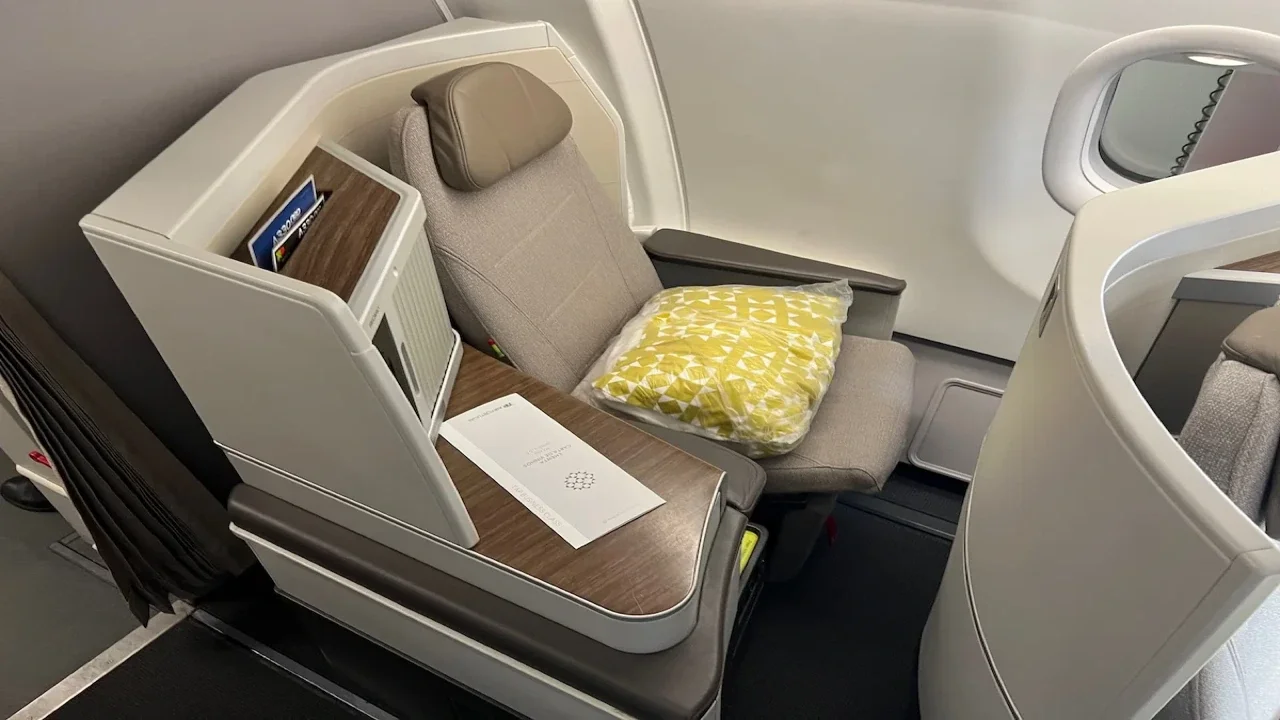
Pricing on this route is among the most consistently compelling I've tracked. Round-trips in the $1,400–$1,900 range appear multiple times per year, and TAP runs targeted sales that occasionally push fares below $1,200. The flight is about 7 hours westbound, 6.5 hours eastbound — long enough that the flat bed matters, short enough that you'll still get meaningful sleep even with meal service.
Lisbon as a destination also helps — it's one of the more accessible European capitals for first-time visitors and the city's food and wine scene has gotten genuinely excellent in the last several years. The TAP lounge at LIS Terminal 1 is comfortable and serves a solid spread of Portuguese pastries and savory snacks at breakfast.
Best booking window: 8–12 weeks out for spring travel. TAP sales tend to drop in November and January for the following spring and summer.
10. Los Angeles (LAX) → Seoul (ICN) — Korean Air
Korean Air's Prestige Class on the LAX-ICN route is a legitimate premium product — fully flat seats in a 2-2-2 configuration on their 777-300ER, with Korean Air's characteristically excellent food service. The bibimbap option is the right call. Their crew training shows: service is polished without being stiff, and the bedding setup is done properly rather than just dropping a pillow in your lap and moving on.
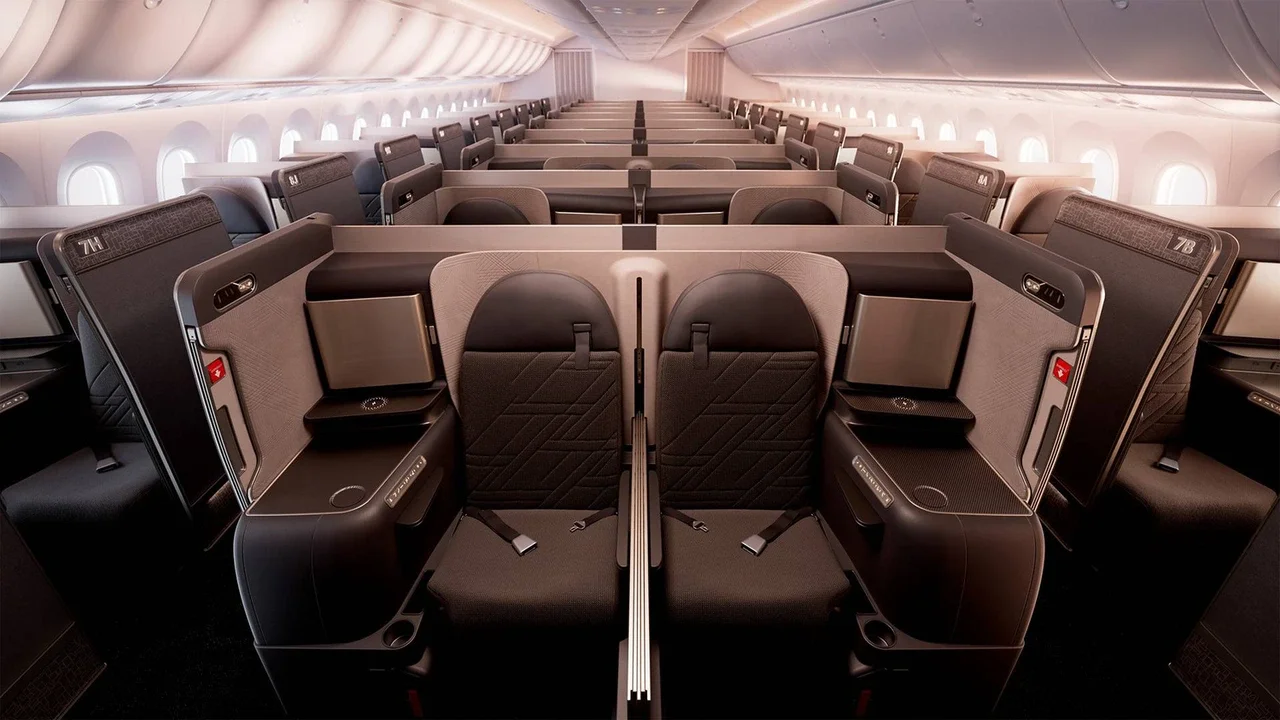
The pricing on this route fluctuates more than some others on this list, but the floor is low. Round-trips drop to $2,000–$2,600 several times per year, and Korean Air tends to run aggressive promotions targeting the LA Korean-American market. The Prestige Lounge at ICN Terminal 2 is excellent — one of the better carrier lounges in Asia, with a proper noodle bar, shower suites with actual good water pressure, and a quiet zone that's genuinely quiet.
Avoid the summer peak (July–August) if price matters. The best deals tend to appear for spring travel in the February–April booking window, or for fall travel booked in July and August.
How to actually catch these fares before they disappear
Here's the frustrating thing about affordable business class routes: the prices don't stay low. These aren't routes where the business class fare is always cheap — they're routes where the fare drops to these levels and then climbs back up, sometimes within hours. Airline revenue management systems adjust dynamically, and a $1,600 round-trip to Lisbon on Tuesday morning can easily be $2,400 by Wednesday afternoon.
The travelers who consistently fly business class without paying full fare are almost all doing one of two things: booking far out (4–6 months) on routes with historically soft demand, or moving quickly when a fare drop surfaces. The second approach requires either a lot of manual checking or a monitoring tool that does it for you.
BusinessClassSignal scans Google Flights data multiple times daily across hundreds of business class routes and scores each deal on a 1–10 scale based on how far the fare has dropped from the typical price range for that route. A score of 8+ means you're looking at something genuinely unusual. A 9 or 10 means move now.
You can start monitoring this route for free — the free tier gives you one active watchlist route, which is enough to track one of the routes above and get a feel for how often deals surface. If you want to watch multiple routes simultaneously (which is how most of our regular users operate), the Core plan at $36/month covers that. Pro at $78/month adds AI market briefings that give you a read on whether current prices are likely to drop further or have already hit their floor.
Understanding how the monitoring system works takes about two minutes and it's worth doing before you set up your first alert — the deal scoring logic is what separates "a fare that looks low" from "a fare that's actually a deal relative to that route's history."
Seasonality: the single biggest lever you have
If there's one thing I'd tell someone trying to fly business class more affordably, it's this: timing matters more than the airline you choose. A route that's expensive in peak season can be dramatically cheaper six weeks before or after the crowds arrive.
Some patterns I've watched hold up consistently over the years:
- January and February are the best months for transatlantic business class deals. Post-holiday travel demand collapses and airlines have inventory to fill. This is when you'll find DFW-LHR and IAH-FRA at their lowest.
- Late April through mid-May hits a sweet spot before summer demand kicks in. European routes in particular tend to be well-priced in this window.
- September is underrated. Kids are back in school, the summer rush is over, and carriers are still flying full summer schedules. Some of the best JAL and Korean Air fares I've tracked have been for September travel.
- Late October through mid-November works for South American routes specifically. Northern Hemisphere travelers are less interested in heading south as the weather turns, which pushes prices down on routes like MIA-EZE.
The routes that are hardest to find affordable? Peak-season transatlantic from the coasts (JFK-LHR in July, LAX-CDG in August), and anything into Tokyo during cherry blossom season or Golden Week. These are the routes where you genuinely need either miles or a very early booking to avoid full-fare territory.
A few things to watch out for
Not all business class is created equal, and some of the pricing gaps on this list reflect real product differences. The Avianca BOG route, for instance, is priced low partly because the seat doesn't go flat. The LATAM and KLM products both have 2-2-2 configurations that matter if you're traveling solo and want guaranteed aisle access. These aren't deal-breakers, but they're worth knowing before you buy.
Lounge access is another variable. Some of the carriers on this list operate through secondary terminals at their home hubs where the lounge situation is noticeably worse than what you'd get on a mainline European or Asian carrier. TAP's LIS lounge is fine but modest. Aeroméxico's MEX lounge is functional. If a pre-flight lounge experience is central to how you value business class, factor that into your decision.
Also: these price ranges are based on patterns I've observed and data from BusinessClassSignal's monitoring. Fares change. What was $1,600 last March might be $2,100 next spring. The ranges I've given are realistic based on historical patterns, but no one can guarantee a specific fare will appear. The best you can do is set up monitoring, understand the seasonal windows, and be ready to book when something good surfaces.
That last part — being ready to book — sounds obvious but it's where most people lose deals. A 9.2-scored alert at 7 AM is gone by noon half the time.
Which of these routes should you actually prioritize
If I had to rank these purely on value — the combination of price, product quality, and deal frequency — I'd put TAP JFK-LIS and JAL SFO-NRT at the top. Both offer genuinely excellent lie-flat products at prices that would be considered aggressive even for economy on some competing routes. Both routes have sales that appear with enough regularity to be worth monitoring year-round.
For purely domestic U.S. travelers who want an easy win, the DFW-LHR route on American is the most accessible entry point — the Flagship Lounge experience is legitimately good, the product is solid, and the fares are softer than equivalent transatlantic routes from the coasts.
And if you're in Latin America or traveling there frequently, the LAX-MEX route on Aeroméxico is almost absurdly affordable for a flat-bed product. I've recommended it to friends who were skeptical and came back converts.
The common thread across all of these: they reward preparation. Set the alert, understand the seasonal window, and when the deal score hits 8 or above, trust the data and book it.