Quick summary
American and Delta both run fully flat business class products across their widest international routes, but they're not really competing for the same traveler anymore. Delta One Suite is the more consistent, more polished product end-to-end. American's Flagship Suite, where you can actually find it, is genuinely impressive — but availability is patchy and the on-the-ground experience around it (lounges, service) is spottier than Delta's. If you're booking blind, Delta is the safer bet. If you can nail the right American flight, it's worth it.
The version of this comparison that most people get wrong
Here's the thing about the American vs Delta business class debate that gets muddied constantly in points forums and travel blogs: people compare the wrong products. They stack up a Delta One Suite flight against an American 777-200 with the old angled Zodiac seats, declare Delta the winner, and call it done. That's not a fair fight.
American has been running two very different business class experiences simultaneously for years now. There's the Flagship Suite — their genuinely good, door-equipped, newly refurbished product — and then there's whatever's left on their older widebody fleet, which ranges from passable to genuinely dated. When you're searching American Airlines business class, the aircraft matters enormously. More on that in a minute.
Delta, by contrast, has done a better job of fleet-wide consistency. The Delta One Suite has rolled out broadly across their long-haul international flying, and while it's not perfect, you mostly know what you're getting. That consistency counts for a lot when you're spending real money or burning a significant points balance.The seats: Flagship Suite vs Delta One Suite
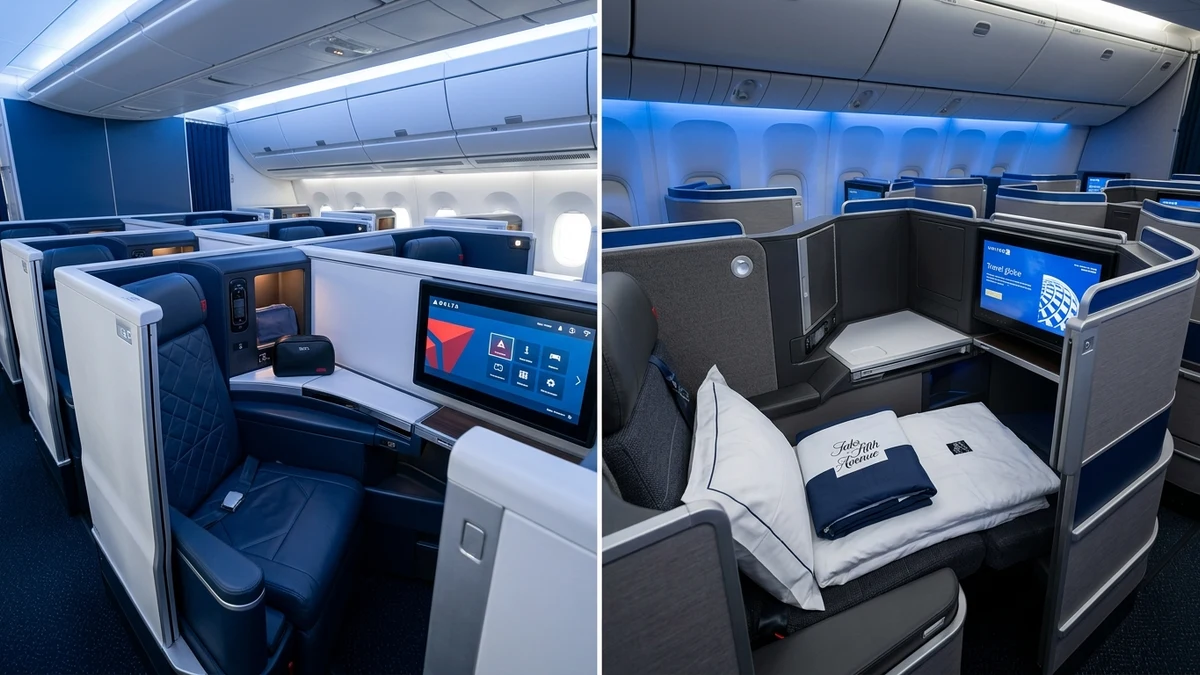
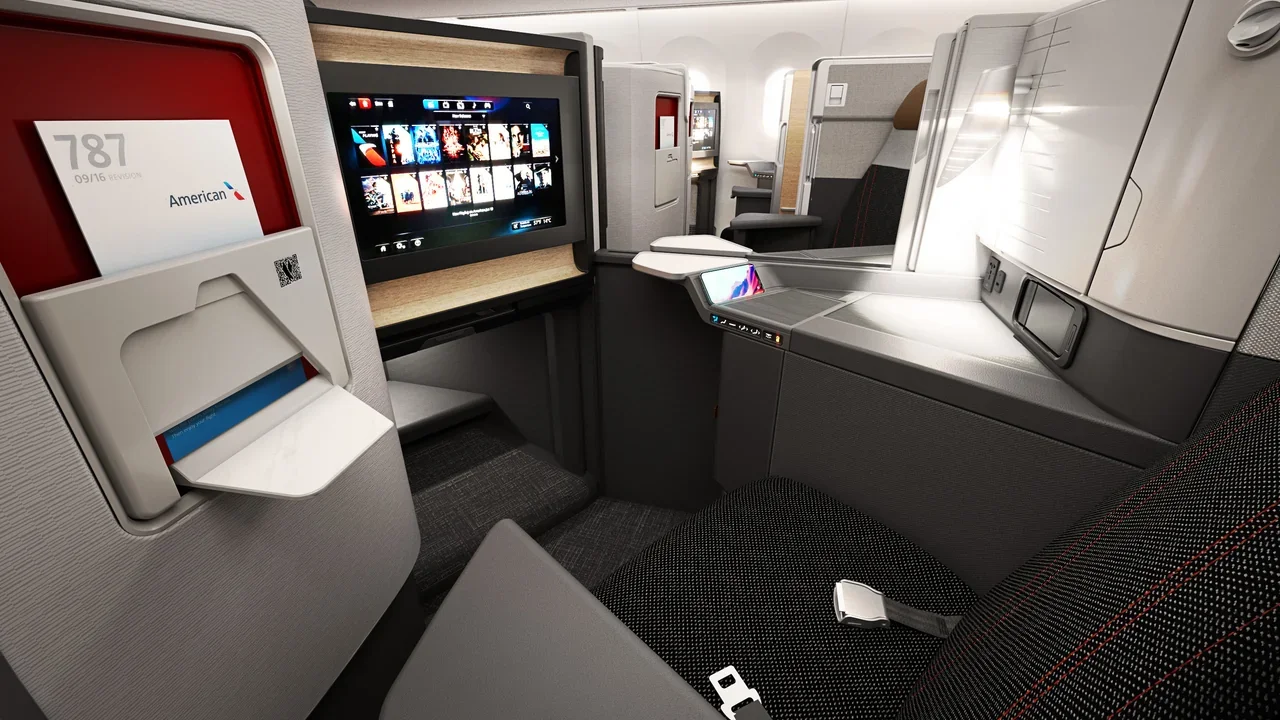
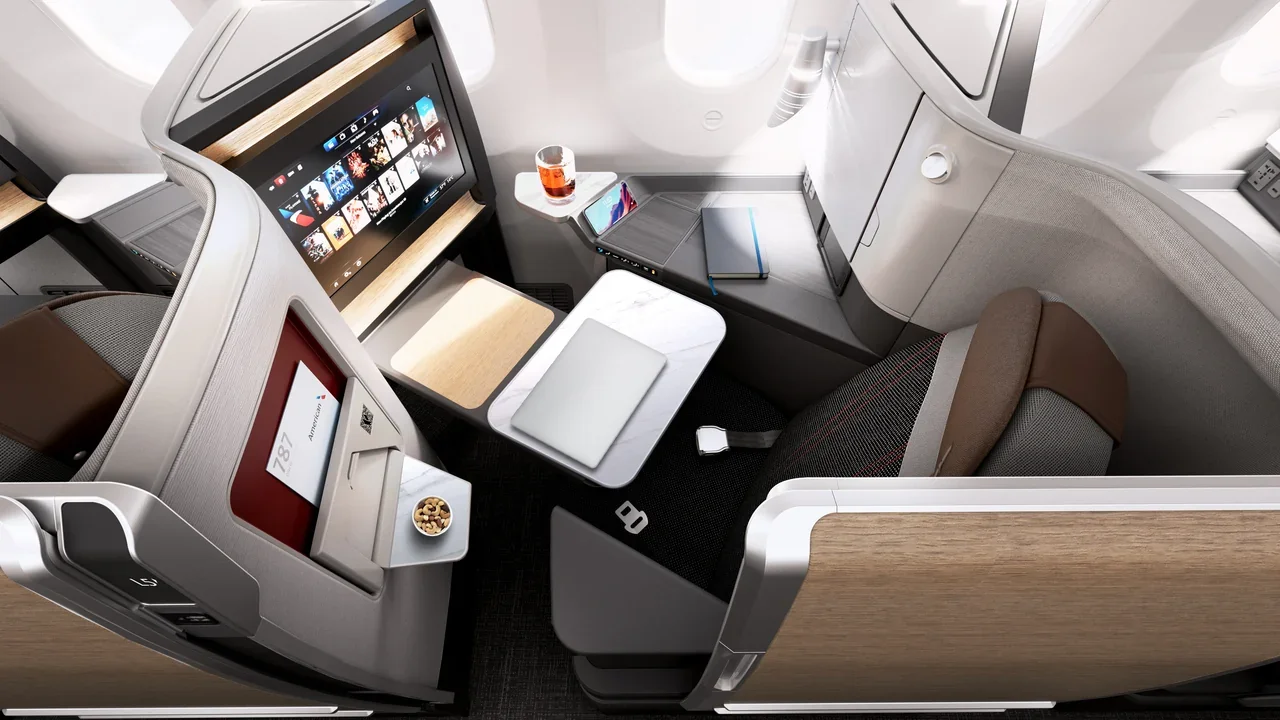
American's Flagship Suite, which first appeared on their reconfigured 777-300ERs and is now rolling out on the 787-9, is a proper hard-product competitor. You get a closing door, a fully flat bed that runs roughly 78 inches, a decent-sized personal screen (around 27 inches), and a suite design that actually gives you a sense of privacy. The forward-facing seats have a genuinely good sleeping angle, and the door — a real sliding door, not a half-panel — makes a difference when you want to block out cabin noise at 2am over the Atlantic.
But the layout matters. On the 777-300ER, the configuration is 1-2-1 in a staggered arrangement, and the middle seats (the "2" in that layout) are quite close together. If you're traveling solo, you'll want a window seat. The A or K positions are genuinely good. The D and G middle seats are fine if you're with someone, but I wouldn't choose them alone.
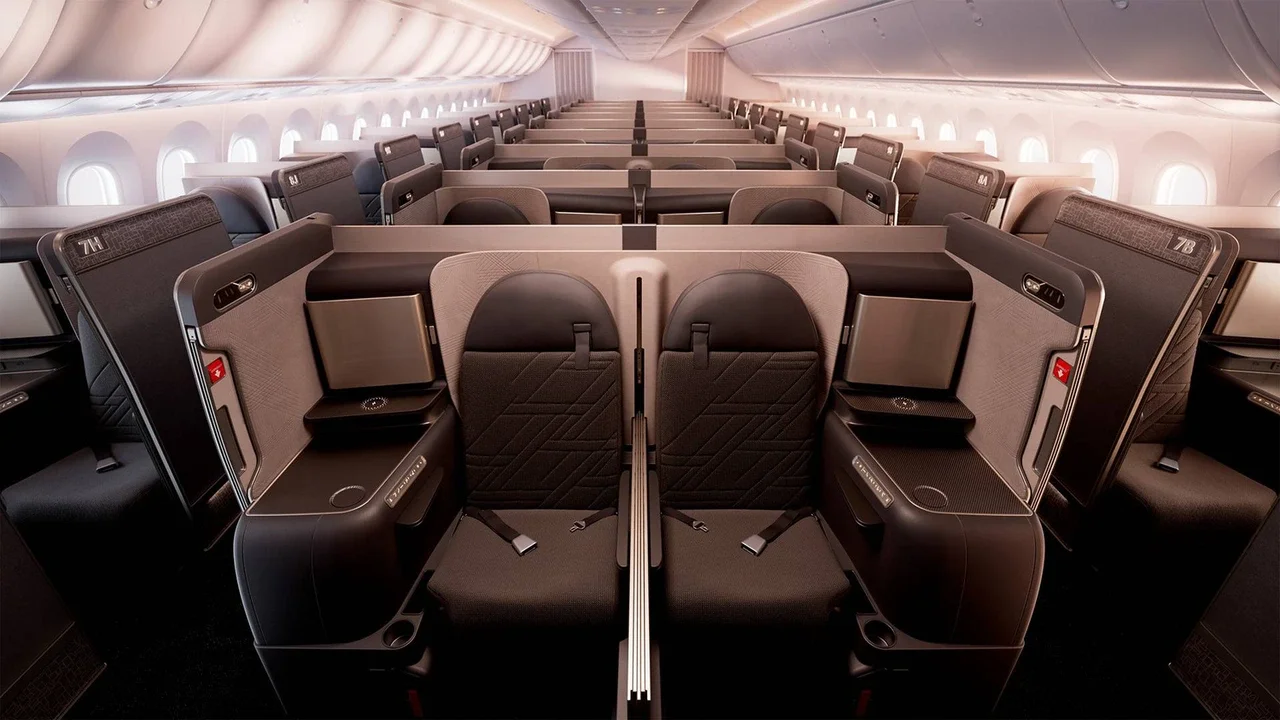
Delta One Suite, as configured on their A350s and reconfigured 767-400ERs, is a different geometry. The suite door is there — it's a proper panel — and the privacy feel is strong. The bed is comparable in length, and the window seats have a slightly better sense of enclosure than American's equivalent. The screen is around 18 inches on most aircraft, which is noticeably smaller than what American offers. I've actually found that difference matters more than I expected on a long overnight flight.
Seat selection on AA 777-300ER
On American's 777-300ER Flagship Suite configuration, row 8 window seats (8A and 8K) are forward-facing and have slightly more floor space than rows behind them. Avoid row 15 — it's directly above the galley and you'll hear it.
One thing Delta does better: the bedding. The Westin Heavenly bedding partnership has been going for years and the actual duvet and pillow quality is meaningfully better than what American provides. American's bedding is fine. Delta's is noticeably better. When you're trying to sleep on a flat bed at 35,000 feet, that margin actually matters.
On the transcon routes — JFK to LAX or SFO — the picture shifts. American runs Flagship First on their 777-200 transcontinental aircraft, a separate first class cabin with a different seat (the Flagship First seat, not the Suite). It's a wide recliner rather than a fully flat bed, which is a deliberate choice for a sub-6-hour flight. Delta matches this on select transcontinental routes with Delta One, which is fully flat even on the transcon. For an overnight red-eye, Delta's flat bed is the more useful product. For an afternoon departure, the difference shrinks.
American vs Delta business class on long-haul international routes

The routes where this comparison really plays out are the transatlantic and transpacific ones. JFK to London Heathrow, LAX to Tokyo Haneda, JFK to Paris CDG. These are the flights where you're spending 7 to 14 hours in a seat, and the differences compound.
On the JFK–LHR route specifically, American operates the Flagship Suite-equipped 777-300ER on most departures. That's a good thing. The evening departures (AA100 and AA106) are the ones I'd target — they get you into Heathrow in the morning with a reasonable chance of having slept. Delta runs the A350 on their JFK–LHR flying, and their Delta One Suite on that aircraft is one of the better hard-product experiences on that route. Both are genuinely good. The differentiator ends up being the soft product and the ground experience.
On longer Pacific routes, American's 787-9 Flagship Suite is increasingly what you'll find, and it's a solid product. The issue on very long Pacific flights — think LAX to Sydney or JFK to Tokyo — is that American's catering has historically been inconsistent. I've had excellent meals on AA international business class and I've had meals that felt like a hotel buffet running low at noon. Delta's catering partnership with various chefs has produced more consistent results, though "consistent" doesn't mean every dish lands.
How do the seats actually compare for sleeping?
This is the question that matters most on an overnight flight, and the honest answer is that both products are good but neither is perfect.
On the Flagship Suite, the fully flat position is genuinely comfortable. The mattress pad that American provides is thicker than it looks. My main issue is the pillow — it's decent but not great, and on a 7-hour overnight I found myself folding it in half. The suite door keeps the light and noise out well enough that I slept about 5 hours on a recent JFK–LHR run, which is about as good as it gets for me in business class.
On the Delta One Suite (A350 configuration), the sleeping experience is comparable. The Westin bedding genuinely helps. The suite feels slightly more enclosed, which I think contributes to better sleep. My concern with Delta's product is the seat width — in the window position, the space between the suite wall and the seat itself can feel tight if you're broader-shouldered. I've seen this noted elsewhere and I agree with it.
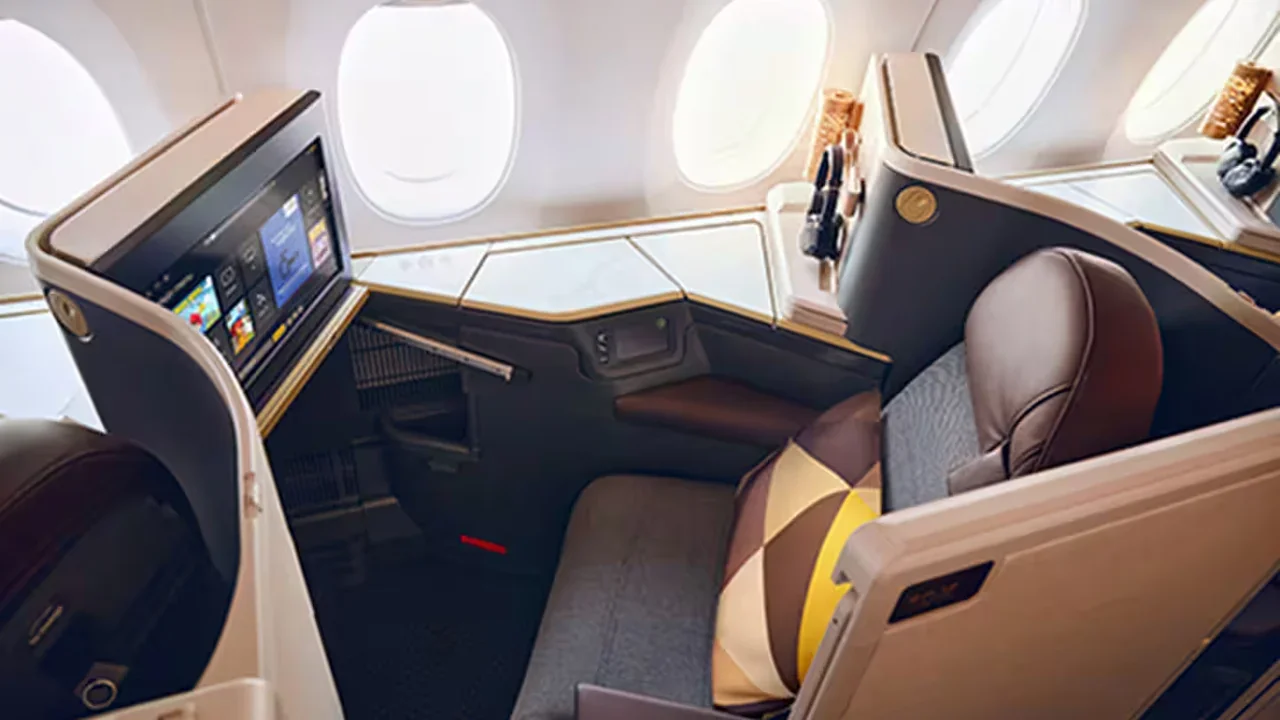
Neither seat competes with the best in class on this route — Qatar QSuites on the same JFK–LHR routing are a different tier of product — but both American and Delta are solid second-tier options.
The lounges: Flagship vs Sky Club
This is where Delta pulls ahead, and I'll be direct about it.
American's Flagship Lounges are located at JFK T8, LAX, Miami, Chicago O'Hare, and a handful of other hubs. The JFK Flagship Lounge is the one I've used most. It's a decent space — there's a proper sit-down dining room (called the Flagship Dining room, which is separate from the lounge floor), real table service, a reasonably good wine selection, and a quieter feel than the general Admirals Club next door. The food in the Flagship Dining room has been good on my visits. I've had a solid mushroom risotto there and a decent steak. The espresso, however, is weak. I've said this to anyone who will listen and I'll say it again: the coffee in the American Flagship Lounge is not good.
Flagship Dining access isn't automatic
Flagship Dining at JFK requires a same-day Flagship First or Flagship Business international departure. Domestic Flagship First passengers don't qualify. Check this before you assume you're getting the sit-down experience.
Delta Sky Clubs have a different problem: overcrowding. Delta's Sky Clubs have been notoriously packed in recent years, to the point where Delta introduced capacity caps and eventually tightened access rules. If you're flying Delta One, you still get priority access, but at peak times at ATL or JFK, the lounges can feel like a busy food court with nicer lighting. The food quality is higher than American's Admirals Clubs, and the bar program is better. But the sheer volume of people can make the experience less than premium.
The honest scorecard: American's Flagship Lounges, when you can access the dining room, are a better pre-flight experience than a crowded Sky Club. But Delta's lounge network is wider, and at off-peak times, a good Sky Club is a genuinely pleasant place to sit for two hours.
At Delta's JFK Sky Club in Terminal 4, the bar area near the windows on the far end of the club is significantly quieter than the main seating area, even at busy times. Worth walking past the crowded section to find it.
Service and soft product: where the gap shows
Hard product is measurable. Service is messier to evaluate, but it's real.
Delta's cabin crew on international business class routes have, in my experience, been more consistently attentive than American's. That's a broad statement and I know there are exceptions in both directions, but across the flights I've taken on both carriers over the past few years, Delta's service has felt more trained and more present. The pre-departure drink arrives faster. The meal pacing is better managed. The middle-of-night check-ins for water or a snack happen without you having to press the call button.
American's service is uneven. On some flights it's excellent — I've had flight attendants on AA transatlantic routes who were genuinely warm and attentive, who remembered what I was drinking, who anticipated needs. On other flights it's been perfunctory at best. The variance is wider than Delta's.
The amenity kits are roughly comparable. American uses a Allies of Skin kit on some routes, which I actually like — the products are useful rather than decorative. Delta has used various partners over the years and currently uses Kiehl's on many long-haul routes. Both are fine. Neither will change your opinion of the flight.
What about the food, honestly?
American's international business class menu has gotten better. The pre-order system (Book the Cook equivalent, which AA calls something less catchy) on some routes lets you reserve specific meals in advance. On JFK–LHR, I've had a decent chicken dish and a genuinely good cheese course. The bread service has improved. But the consistency issue remains — what you get can vary based on catering location, and some outstation catering (flying home from a secondary European city, for example) can be noticeably worse.
Delta's food has been more consistent, partly because they've invested more visibly in the catering program. The collaboration with chefs like Michelle Bernstein on the Atlanta-based routes produced some genuinely good results. The issue is that "consistent and good" sometimes tips into "consistent and safe" — Delta's menus can feel slightly corporate in their risk-aversion. You won't get a bad meal, but you might not get a memorable one either.
On transcontinental routes, American's Flagship First food service is legitimately good for a domestic flight. The salad course and the main on a JFK–LAX afternoon departure have surprised me more than once. Delta's transcon Delta One food is solid but less ambitious.
Pricing and when to book
Cash prices for both products fluctuate significantly, but there are patterns worth knowing.
American Flagship Suite business class on JFK–LHR runs somewhere between $3,500 and $6,500 round-trip depending on timing and how far out you book. The sweet spot tends to be 6 to 10 weeks before departure when unsold premium inventory starts to move. Delta One on the same route runs similarly, though Delta's pricing algorithms are, in my experience, slightly more aggressive about holding high prices until closer in.
The times when deals actually appear on both carriers are specific: Tuesday and Wednesday evening departures tend to have more availability at lower prices. International business class fares on both AA and Delta also tend to soften in early January (after the holiday surge), late August to mid-September, and the shoulder weeks around Thanksgiving. None of this is a guarantee, but these are the windows I watch.
If you're tracking these routes, how the monitoring system works on BusinessClassSignal is worth understanding — the service scans 800+ routes twice daily and flags when a price drops below your target. For a route like JFK–LHR where prices genuinely move by $800 to $1,200 within a week, having an alert set means you catch the drop rather than reading about it after the fact. You can start monitoring this route with a free trial and set your own price threshold.
Award space vs cash pricing
On American, AAdvantage award space in Flagship Suite is genuinely available on many transatlantic routes — sometimes even close in. Delta's SkyMiles redemptions for Delta One are more variable and the program has gotten less predictable since they moved to dynamic pricing. If you're points-focused, AA's award availability has been a real advantage recently.
Which one should you actually book
The "American vs Delta business class" question doesn't have a single answer, because the right choice depends on what you're optimizing for.
If you want the most consistent hard product with the least risk of disappointment, book Delta One Suite on an A350-operated route. You'll get a good seat, good bedding, and service that's reliably above average. The lounge experience will depend on timing, but the onboard product will deliver.
If you want the best possible single flight experience and you're willing to do the work of finding the right aircraft and routing, American's Flagship Suite on the 777-300ER is genuinely excellent. The larger screen, the suite door, the dining room access at JFK — when everything lines up, it's a better flight than Delta One. The catch is "when everything lines up." That requires checking the aircraft, selecting the right seat, hoping the catering is on, and getting one of the better crews. There's more variance.
For transcontinental flying specifically, if you're going overnight, Delta's fully flat bed on transcon Delta One routes is the more functional product. American's Flagship First transcon seat is wider and more comfortable for sitting, but it doesn't flatten fully and that matters on a red-eye.
And if you're trying to catch a price drop rather than paying full fare? Both carriers discount into the $2,000–$2,500 round-trip range on transatlantic routes a few times a year. Browse all routes we monitor to see the current floor prices on both airlines. The JFK–LHR route on American has dropped to $2,200 round-trip in Flagship Suite within the last 12 months. Delta has matched that price on the same route within the same period. These deals don't last long, but they exist.
Monitor American and Delta business class fares on your routes — get alerted when prices drop
Try Free for 14 Days