Why this comparison actually matters in 2026
I've had this argument at airport bars more times than I can count. Someone's booked on Delta One, someone else is on United Polaris, and within about four minutes everyone has a strong opinion. The thing is, most of those opinions are based on a flight from three years ago, or something they read on a forum from someone who flew in 2019 and thought the cheese plate was subpar.
Both products have changed. Not dramatically — airlines don't move fast — but enough that the conventional wisdom needs updating.
So here's where I land after flying both products multiple times in the past 18 months, across transatlantic and transpacific routes: Delta One and United Polaris are genuinely competitive in ways that should make you care about price. Because when the hard product is this close, paying $800 more for a marginally better meal program is a bad trade. And that's exactly the kind of gap that opens up when one airline has a sale and the other doesn't.
Let me break down what's actually different, what's overhyped, and where each one wins.

The seats: Delta One vs United Polaris, head to head
Both products offer direct aisle access from every seat. That was a genuine differentiator five years ago. Now it's table stakes on any serious long-haul business class product, and neither airline deserves special credit for it.
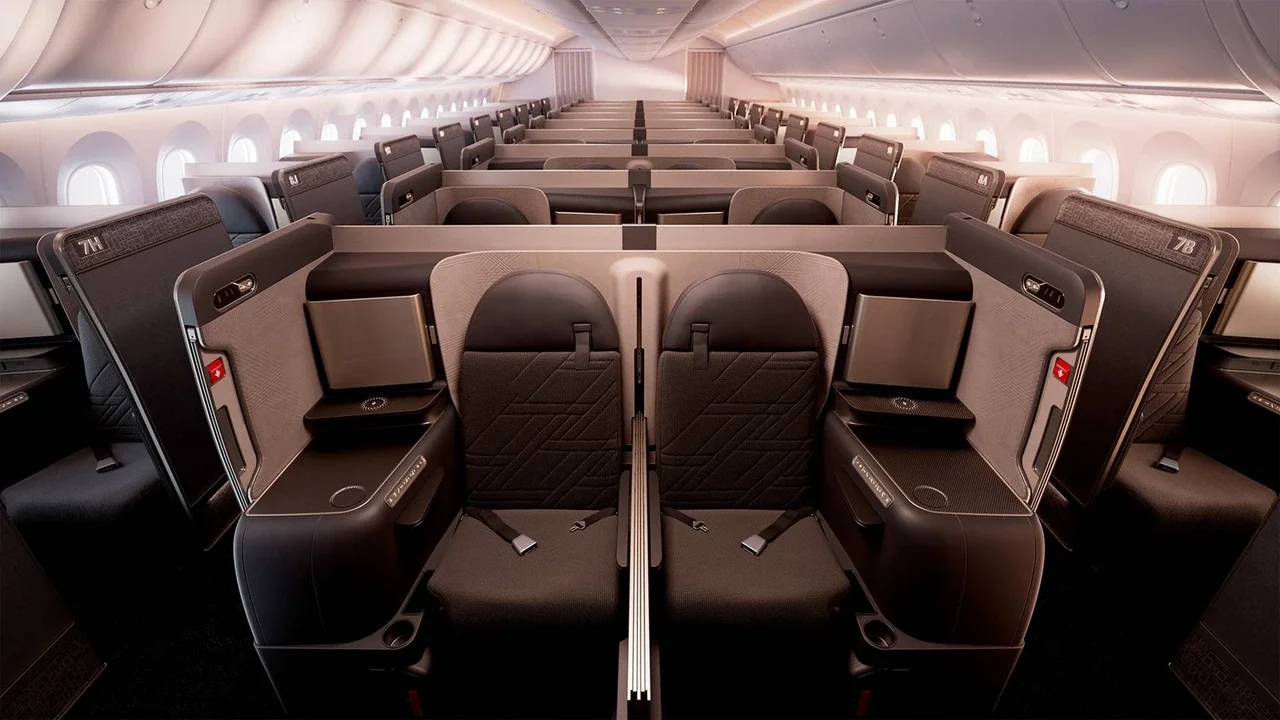
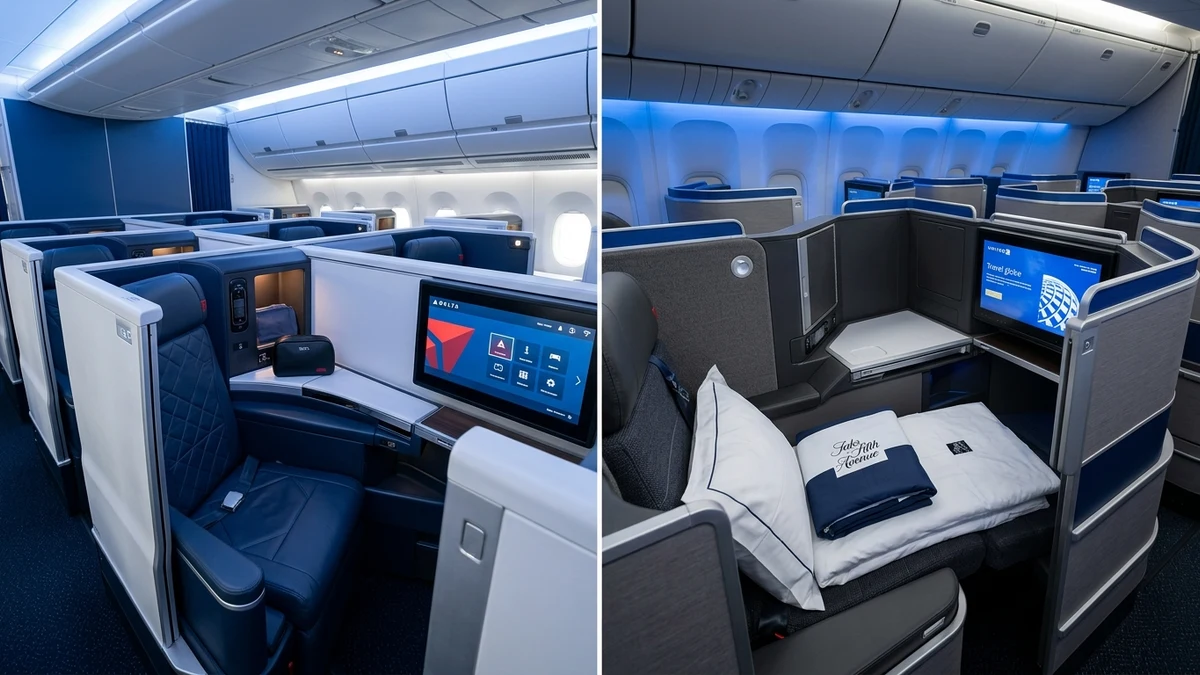
On Delta's widebody fleet — the A350s and 767-400s — the Delta One suite is a proper enclosed space. You get a sliding door, which I'll admit makes a real psychological difference on a red-eye. The A350 configuration runs 1-2-1, with the center pairs angled slightly toward each other, which is either cozy or annoying depending on whether you're traveling with someone. Solo travelers should grab a window seat. The bed length runs around 79 inches on the A350, and I've slept full nights without issue, and I'm six feet tall.
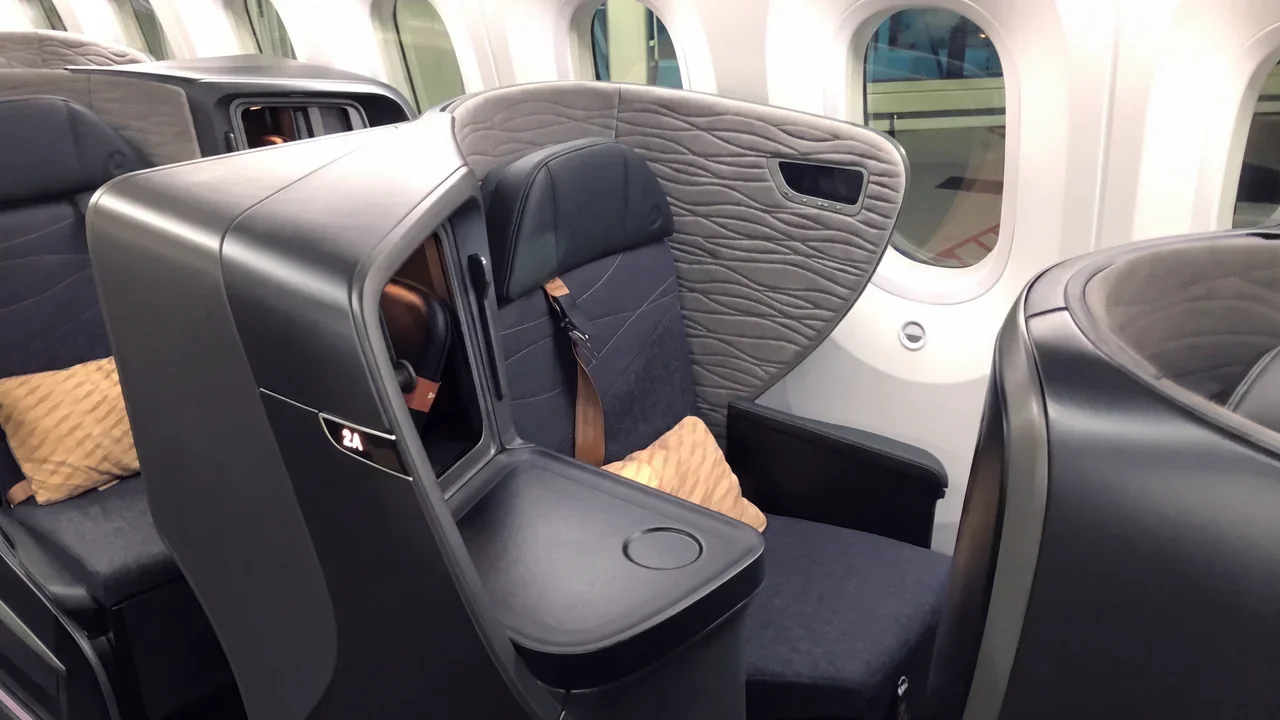
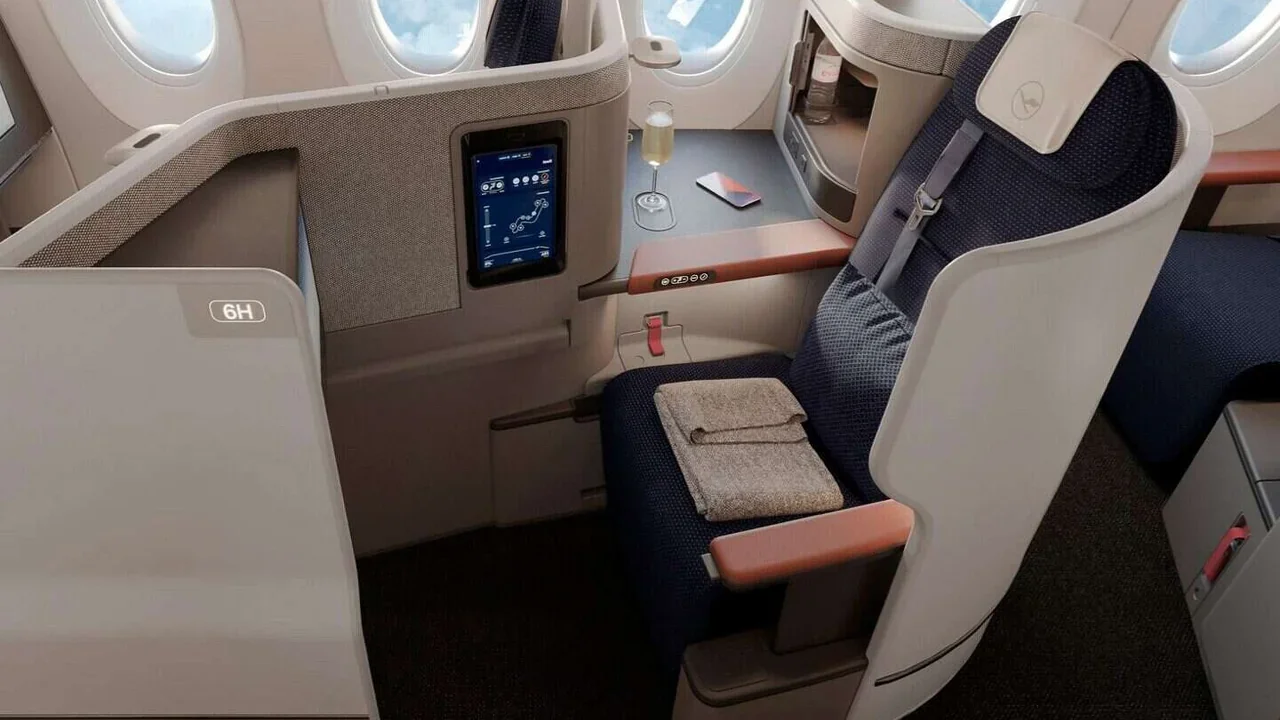
United Polaris, on their 777-300ERs and 787-9s, also runs 1-2-1. The Polaris seat on the 777-300ER is the Zodiac Cirrus product — a herringbone layout that feels a little narrower than Delta's offering. The 787-9 Polaris configuration is better, with Thompson Vantage seats that give you more shoulder room and a slightly more intuitive layout. Bed length is comparable, around 76-80 inches depending on the variant.
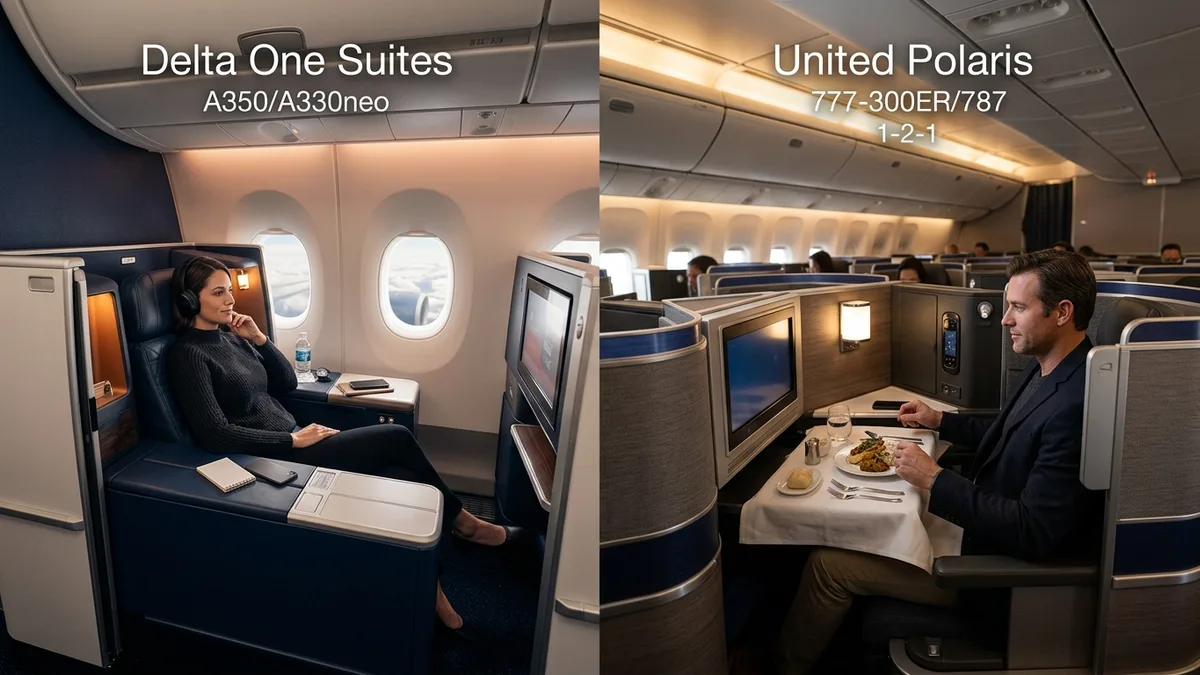
Here's my honest take: the Delta One suite on the A350 is the better seat. The door matters more than I expected it to, especially on daytime flights where the cabin is active. But — and this is important — Delta doesn't fly the A350 everywhere. If your route puts you on a 767-300ER, you're in an older Delta One product without the suite door, and suddenly the advantage shrinks considerably. Always check the specific aircraft before you book.
United has been slower to roll out consistent interiors across their fleet, which is a legitimate criticism. You can book Polaris on a transatlantic route and end up on a 767 with a configuration that feels a generation behind. Check SeatGuru or the aircraft type on your booking confirmation. It matters.
One thing United gets right that often goes unmentioned: the bedding. The Saks Fifth Avenue partnership on Polaris produces a genuinely good pillow and duvet set. Delta's bedding, supplied through a partnership with Westin Heavenly, is also solid. This is basically a coin flip. I've slept well on both.
Dining: where the real gap shows up
This is where Delta has quietly pulled ahead, and I don't think it gets enough attention.
Delta One's meal service — particularly on transatlantic routes — has improved meaningfully. On a JFK-LHR flight last autumn I had a roasted duck breast with lentils and a red wine reduction that was, genuinely, restaurant-quality. Not "pretty good for an airplane" quality. Actually good. The menu rotates by route and season, and Delta has invested in regional sourcing partnerships that show up in the food. They've also started offering a pre-order option on many routes, which means you're not stuck with the third-choice entrée because you were in seat 12A and service came to you last.
The appetizer spread on Delta One typically includes two or three options — I've seen a chilled seafood salad, a cheese and charcuterie board, and a soup course running concurrently. The bread service, with a warm pretzel roll that shows up early and unrequested, is something I look forward to more than I should admit.
United Polaris dining is... fine. The quality has improved since the low point of the early 2020s, but it still feels like the catering team is working harder on presentation than on actual flavor. The Polaris menu on a EWR-FRA route I flew in March included a beef tenderloin that arrived correctly cooked but somehow managed to be both adequately seasoned and boring at the same time. The appetizer course is typically a single plated option rather than a spread. The ice cream sundae service — which Polaris markets fairly heavily — is genuinely good and a legitimate differentiator for the dessert portion of the meal.
Wine programs on both airlines are respectable. Delta has a partnership with Flying Winemaker that sources interesting bottles, and United's wine list has historically leaned toward well-known California labels that are safe but unsurprising. Neither is going to embarrass you if you're entertaining a client in the seat next to you.
Delta wins dining. Not by a landslide, but clearly.
The lounges: a tale of wildly different strategies
This section is going to frustrate some people, because the honest answer is: it depends entirely on which airport you're flying from.
Delta's Sky Club network has been under real strain. They over-issued Amex Platinum access, the clubs got crowded, and Delta responded by restricting access — you now need to be flying Delta that day to use Sky Clubs with an Amex card, with tighter hour limits. For actual Delta One passengers, access is still included and generally uncapped, but the clubs themselves at major hubs can be uncomfortably busy during peak hours. Atlanta's Concourse F Sky Club is the best of the bunch — they've expanded it to include a proper sit-down dining room with an a la carte menu. I had a solid short rib there on a connection last spring. JFK's T4 Sky Club is smaller and feels it.
The Delta One lounge product at JFK has a dedicated check-in area and a separate section within the club, but it's not a fully separate facility. Compare that to what some international carriers offer and it's a step behind.
United's Polaris Lounges — the actual Polaris-branded spaces, not the regular United Clubs — are genuinely good. There are only a handful of them: Chicago O'Hare, Newark, Houston, Los Angeles, San Francisco, Washington Dulles, and a few international locations. If you're departing from one of those airports on a long-haul Polaris itinerary, you get access to a dedicated lounge that's a cut above the standard club experience. The ORD Polaris Lounge has a full restaurant with table service, real glassware, and a menu that changes seasonally. I've had a very decent mushroom risotto there at 7am, which is either impressive or disturbing depending on your relationship with breakfast.
The catch: if you're not departing from a Polaris Lounge city, you're in a regular United Club, which ranges from acceptable to grim depending on the airport. Denver United Club, for example, is cramped and perpetually out of the good snacks.

Overall lounge verdict: United wins if you're at a Polaris Lounge city. Delta wins everywhere else, marginally, because the Sky Club network is broader and more consistently adequate.
Routes and schedules: where each airline actually goes
This one is underrated as a decision factor. People obsess over seat specs and miss the fact that one airline has three times as many frequencies on their route.
Delta has historically been stronger on transatlantic routes, with solid coverage from JFK, Boston, and Atlanta to major European cities. Their partnership with Air France-KLM and Virgin Atlantic means you can often connect into a much broader European network on a single booking. For Europe-focused travelers, Delta's ecosystem is genuinely valuable.
United's strength is the Pacific. Their hub structure — particularly SFO and LAX — gives them better frequency and routing options to Japan, South Korea, Australia, and increasingly Southeast Asia. The United-ANA partnership is one of the better alliance relationships in aviation right now, and if you're heading to Tokyo or beyond, United's network is worth serious consideration.
On domestic routes, both airlines operate business class products that are, frankly, not worth paying a significant premium for. Delta First on domestic is a recliner. United Polaris branding on domestic routes is marketing, not a flat-bed product. Don't confuse the long-haul suite product with what you'll sit in on a two-hour flight.
For transatlantic routes departing the US East Coast, Delta tends to have more options from non-hub cities. If you're connecting through Atlanta or Boston, Delta's network is usually cleaner. United's strength from the East Coast is primarily Newark, which is a fine airport if you enjoy a certain kind of chaos.
Pricing: what you should actually expect to pay
Published business class fares between the US and Europe on both airlines typically sit in the $4,500–$7,500 range round-trip. That's the price you see when you search on a random Tuesday with no sale running.
But both airlines drop fares regularly, and the drops can be significant. We've seen Delta One fares to London come down to $2,200–$2,900 round-trip during sale windows. United Polaris to Frankfurt has hit similar lows. Transatlantic routes tend to be more volatile than transpacific, which means the monitoring game is more rewarding.
The challenge is timing. These fares typically last between a few hours and a couple of days. If you're searching manually, you'll miss most of them. That's the gap that how the monitoring system works at BusinessClassSignal is built to close — scanning Google Flights data multiple times daily, scoring deals on a 1-10 scale, and sending alerts before the inventory closes.
A fare that scores 9+ on our system is typically 45% or more below the market average for that route and cabin. Those are the ones worth moving on quickly.
On the award side: Delta's SkyMiles program has moved away from a fixed award chart, which means prices fluctuate with demand. Some routes are still bookable at reasonable rates — 50,000-70,000 miles one-way to Europe in Delta One — but the variance is high and the program has become harder to plan around. United MileagePlus still uses a saver award chart for partner bookings, which gives you more predictability if you're planning months out. Neither program is what it was five years ago, but MileagePlus is currently the more useful tool for award travelers who want to know what they're getting.
One thing worth doing before you book either airline: browse all routes to see where prices are sitting right now. The gap between Delta and United on a given route can be several hundred dollars in either direction depending on the week.
The honest verdict on Delta One vs United Polaris
If I'm booking a transatlantic flight and price is equal, I'm taking Delta One on an A350. The suite door, the food, and the generally more consistent product across their widebody fleet tips it for me. It's not a blowout — United has genuinely improved Polaris — but the Delta experience feels more thought-through right now.
If I'm flying to Asia, United is the better network choice and the Polaris product on a 787-9 is excellent. Don't let the transatlantic conversation obscure that.
If United is $900 cheaper on the same route? I'm taking United without much hesitation. The Polaris product is good enough that a $900 premium for Delta One doesn't make sense unless you have a specific reason — the lounge situation at your departure airport, a particular connection, something concrete. "Slightly better duck breast" is not $900 better.
And that's the real point of this comparison. Both airlines are running competitive products. The decision should be made on price far more often than it is. Most people pick an airline on loyalty habit and pay whatever's listed. That's how you end up paying $5,800 for a fare that was $2,700 last Tuesday.
Set up monitoring on both routes. Wait for the right fare. Then pick based on which one actually landed at a better price. That's the move.
If you want to start monitoring this route, the free tier gets you one watchlist, which is enough to cover a single route you're tracking. Core ($36/month) and Pro ($78/month) open up more routes and the AI market briefings, which are genuinely useful when you're trying to read whether a fare is likely to drop further or this is the floor.
I've been doing this long enough to know that the airline with the better duck breast isn't always the airline with the better fare. Chase the fare. The duck can take care of itself.