The question I get asked more than any other
Every few weeks, someone emails me asking some version of the same thing: "Steve, I'm flying to Tokyo — should I book ANA or JAL?" And every time, I resist the urge to give them a one-line answer, because the honest response is that it depends on things most comparison articles don't bother to explain.
I've flown both carriers multiple times across both cabins we're going to talk about here. I've eaten the meals, slept in the seats, sat in the lounges at Haneda and Narita, and I've watched both airlines go through product updates that changed the calculus. This isn't a spec sheet comparison. It's what I'd actually tell you.
The short version: ANA and JAL are two of the best long-haul business class products in the world, and they're closer in quality than the fanboys of either side will admit. But they're not identical — and depending on your priorities, the gap matters.
The seats: The Room vs JAL Sky Suite
This is where most people start, and fairly so. The seat is where you'll spend 12 to 14 hours depending on your departure city.
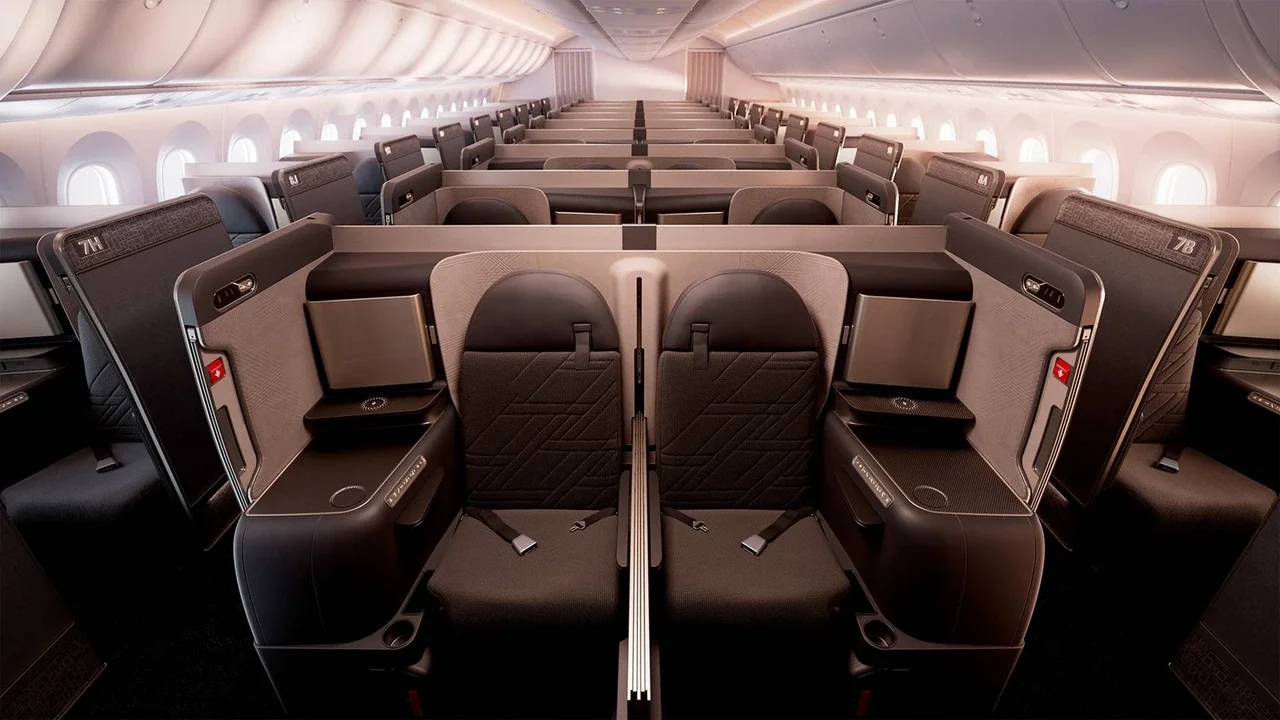
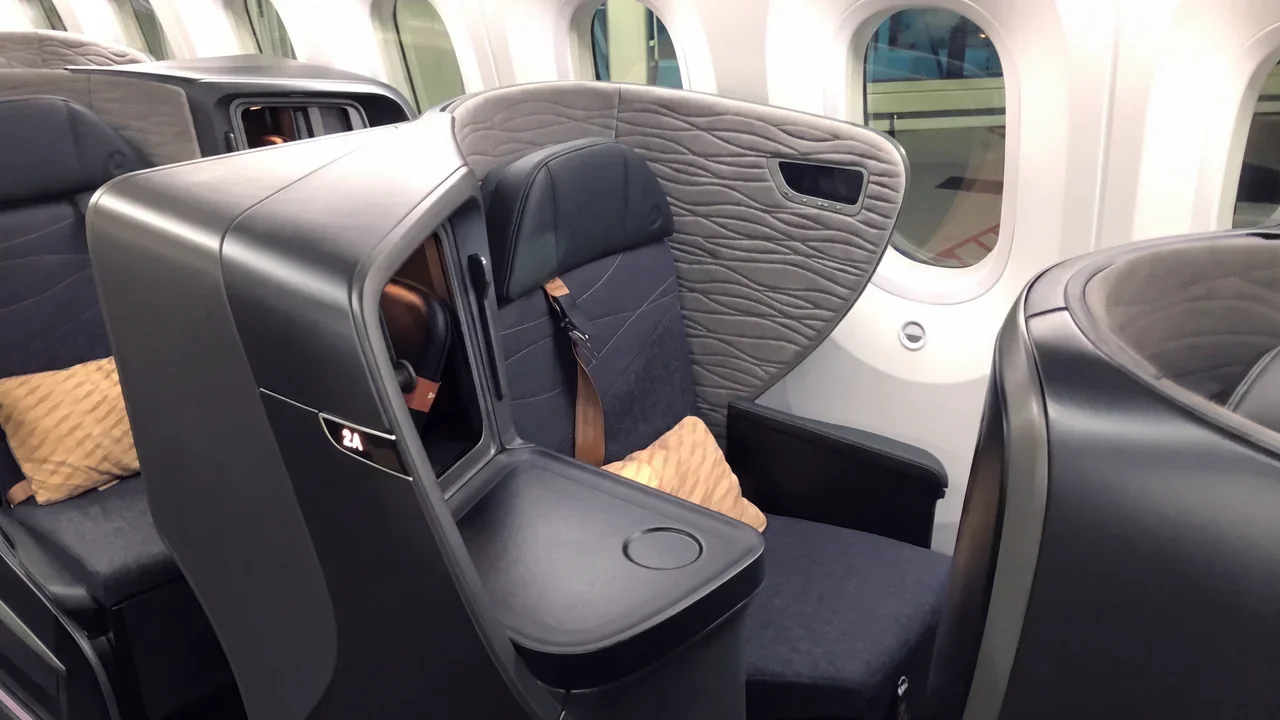
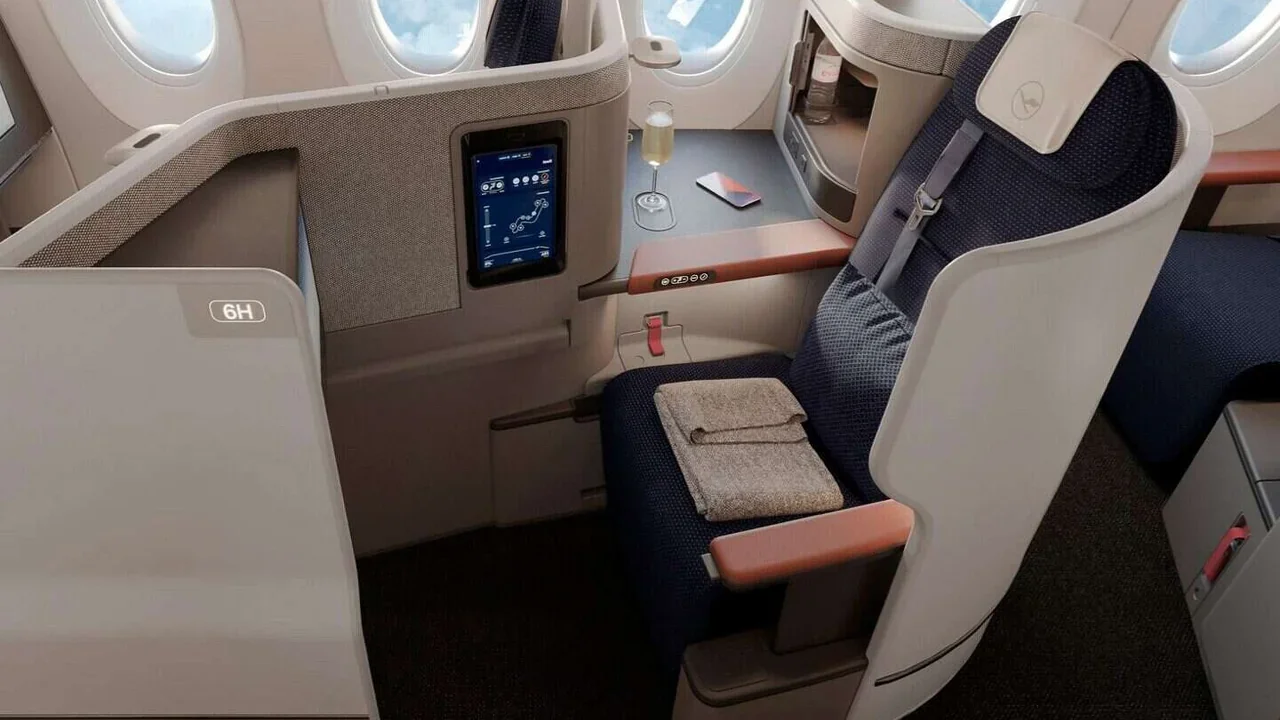
ANA's The Room is, genuinely, one of the best business class seats flying right now. It's configured in a 1-2-1 layout on their 777-300ER, which means every seat has direct aisle access — no climbing over a stranger at 3am. The door is a real door. Not a panel that sort of closes, not a privacy screen they're calling a door — an actual sliding door that latches. The suite itself is wide enough that when I was lying flat, I could stretch my arms out to the sides without immediately hitting a wall. The mattress topper they provide is thick enough to actually make a difference.
But here's what the ANA marketing doesn't tell you: The Room is only on select aircraft. Their 787-9s and some 777s still fly with the older ANA Business Staggered product, which is a perfectly good staggered flat-bed seat — but it's not The Room, and you can pay the same price and get a meaningfully different experience depending on which plane you're on. Always check the equipment before you book.
JAL's Sky Suite is the competing answer. Also 1-2-1, also direct aisle access, also a genuinely excellent flat bed. The Sky Suite III on their 787s and 777s is slightly narrower than The Room in my experience, but the privacy shell is well-designed and the seat converts to a bed without the awkward transitional phase some competitors make you manage yourself — the crew handles the setup. JAL also has the Sky Suite on their A350-900s deployed on some domestic trunk routes, which is either a nice bonus or irrelevant depending on your itinerary.
On pure hardware, The Room edges it. The door is a legitimate differentiator if you value privacy — and if you're traveling solo on a long overnight flight, you probably do. But JAL's Sky Suite is not a consolation prize. It's excellent.
One thing worth flagging: seat configuration varies by route. Not every flight from the US to Japan on either carrier uses their flagship product. JAL's JFK–Haneda service on the 777-300ER is a reliable Sky Suite flight. ANA's LAX–Haneda and SFO–Tokyo routes have been consistent with The Room on 777-300ERs in recent years, but the 787 routes are where you might end up with the older staggered product. Check SeatGuru or the airline's own seat map tool when you're booking — don't just assume.

Dining: where the real differences show up
Both airlines take food seriously in a way that most Western carriers have largely abandoned. But they have different philosophies, and that's not a marketing spin — you can taste it.
ANA's meal service is anchored by their "ANA Dining Style" concept, which on long-haul routes means a proper multi-course Western menu alongside a Japanese option. On a recent LAX–HND flight I took, the Japanese dinner started with a chilled tofu appetizer with ponzu, followed by a simmered pork belly dish with lotus root, then a surprisingly decent miso soup, and finished with green tea ice cream. The Western option that evening was a braised short rib that was... fine. The Japanese option was notably better, as it almost always is on Asian carriers.
ANA also runs a pre-order system called "ANA Selections" on some routes that lets you choose your meal before departure — useful if you have strong preferences or dietary restrictions, less useful if you forget to use it, which I always do.
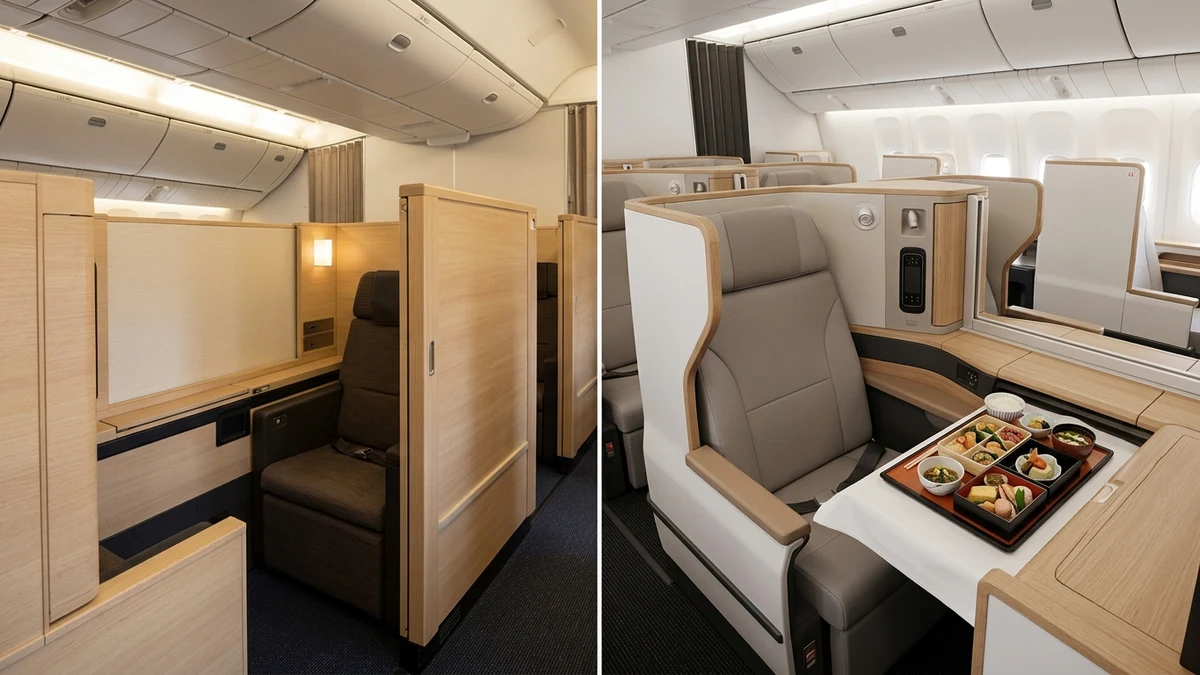
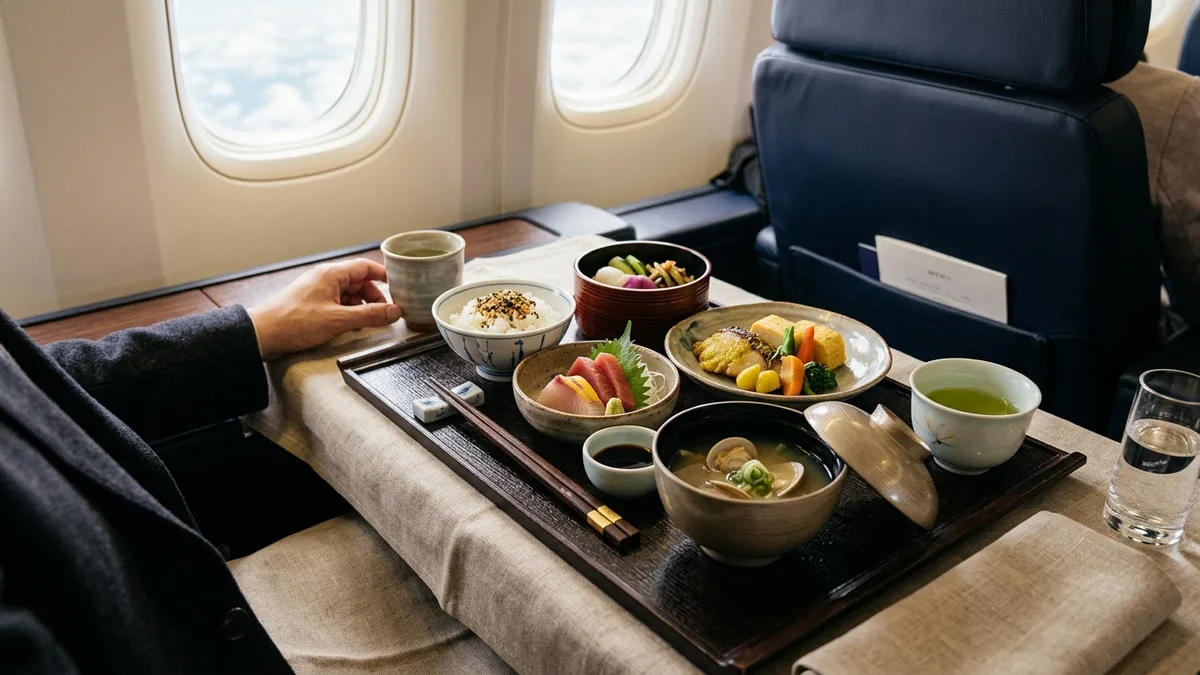
JAL's approach is slightly more theatrical. Their "Sky Aubergine" menu (developed in partnership with various Michelin-starred chefs over the years) rotates seasonally, and the Japanese kaiseki-style service on overnight flights from Japan is genuinely special. I had a JAL meal flying out of Haneda that started with a small lacquer box of seasonal appetizers — pickled vegetables, a piece of grilled fish, a tiny portion of chawanmushi — before moving into a proper rice course. It was the kind of meal you'd expect at a decent Tokyo restaurant, at 38,000 feet, which is still slightly absurd when you think about it.
The honest comparison: JAL's Japanese meal service, particularly when departing Japan, is probably the best food you can eat in business class on a US-Japan route. ANA is excellent but a half-step behind in presentation and execution. On the westbound flights departing the US, both airlines are working with galleys stocked in America, and the gap narrows considerably.
Both offer Dom Pérignon as their top champagne, which tells you something about how seriously they take the wine list. ANA has recently been pouring Billecart-Salmon as well. Neither will leave you wanting for decent wine, which puts them both ahead of about 80% of business class products globally.
Service style: the cultural dimension
This is the section that's hardest to write without sounding like I'm trafficking in stereotypes, but it's also genuinely useful information, so here goes.
Both ANA and JAL deliver exceptional cabin service. The crews are attentive, professional, and — critically — they don't disappear after the meal service the way crews on some European carriers tend to. If you want something, you can ask, and you won't feel like you're interrupting anyone.
The difference is in tone. ANA's service style has a slightly more formal, structured feel. Things happen on schedule. The pre-landing meal is offered at a specific time. Crew interactions tend to be warm but precise. JAL, in my experience, runs a little warmer — slightly more conversational, slightly more willing to improvise around your preferences. If you ask a JAL flight attendant a question about the sake list, there's a decent chance you'll get a genuine recommendation rather than a recitation of the menu.
Neither of these is a criticism. They're different expressions of the same underlying commitment to taking care of passengers. Some people prefer the ANA precision. Some people prefer the JAL warmth. I've had outstanding crews on both, and I've had nights where I just wanted to sleep and didn't care either way.
What I will say is that both carriers are significantly better on this dimension than most of their North American and European competitors, and that's before we get into the small touches — the pajamas (both provide them, ANA's are slightly better quality in my opinion), the amenity kits (JAL partners with Etro and has had some genuinely nice kits; ANA's vary by route), and the general sense that the crew actually prepared for the flight.
Lounges at Narita and Haneda
If you're connecting through Tokyo, you'll spend time in one of these lounges, and they're worth factoring into your airline choice.
ANA's Suite Lounge at Haneda (Terminal 3, accessible after security and immigration, near gates 110-114 area) is one of the better airport lounges I've sat in anywhere. There's a proper restaurant with table service — not a buffet — where you can order dishes including a very good ramen, soba, and a rotating selection of Japanese small plates. The bar is well-stocked. The shower rooms are spacious and have Bulgari toiletries. It's quiet, which matters if you're on a long transit.
ANA also has a lounge at Narita in Terminal 1, though I find the Haneda facility noticeably better. If you have a choice of airport for your connection, Haneda wins on the lounge front.
JAL's Sakura Lounge and the higher-tier JAL First Class Lounge at Haneda are the competition. Business class passengers access the Sakura Lounge, which is good — solid food selection, decent sake bar, comfortable seating. The First Class Lounge, which you'd only access if you're flying JAL First or have the right status, is on another level entirely, but that's a different conversation.
For business class passengers specifically: ANA's Suite Lounge edges JAL's Sakura Lounge on the dining experience. The table-service ramen alone is worth something. But both are dramatically better than anything you'll find in a US domestic terminal, so don't overthink it.

US route network and where you can actually fly each carrier
This is where the decision sometimes gets made for you, regardless of your seat preferences.
ANA currently serves the US from Los Angeles (LAX), San Francisco (SFO), New York (JFK), Chicago (ORD), Houston (IAH), and Seattle (SEA) — all routing through either Haneda or Narita. Their LAX and SFO routes have been among the most consistently discounted in my monitoring experience, partly because there's heavy competition on the Pacific from United (which has a codeshare with ANA) and other carriers.
JAL covers LAX, SFO, JFK, Chicago (ORD), Boston (BOS), and Dallas (DFW). The BOS and DFW routes are notable because they give JAL a presence in markets where ANA doesn't compete, which matters if you're not near a hub that both serve.
The codeshare situation complicates things. ANA is in the Star Alliance and has a deep partnership with United, which means you can sometimes book ANA metal on United.com and vice versa. JAL is in oneworld with American, which opens up a different set of earning and redemption options. If you're heavily invested in one alliance's elite status, that might settle the question before you even look at the seat.
On pricing: both carriers are capable of genuine sale fares. I've tracked round-trips from the West Coast in ANA business class as low as $2,100 during off-peak windows, and JAL has hit similar lows. The more typical discounted rate when a deal surfaces is somewhere in the $2,400–$2,900 round-trip range from LAX or SFO. From the East Coast, add $600–$900 to that. Full-fare business class on either carrier can easily run $6,000–$8,000 round-trip, which is why monitoring for drops matters.
These deals don't sit around. The window between a price dropping and the seats selling out is often measured in hours, not days. That's why how the monitoring system works matters — catching these fares manually requires either extraordinary luck or a lot of time refreshing Google Flights. BusinessClassSignal scans prices multiple times daily across both ANA and JAL routes, scores each deal on a 1–10 scale based on how far it's below market rate, and sends you an alert before the seats are gone.
If you want to start monitoring this route, the free tier gives you one watchlist slot — enough to track a single origin-destination pair. The Core plan at $36/month covers multiple routes and adds AI market briefings that tell you whether prices on a given route are trending up or down. Pro at $78/month adds the full route monitoring suite and priority alerts, which matters most if you're flexible on dates and want to catch the deepest discounts.
ANA vs JAL business class: which one should you actually book
Fine. You want a verdict. Here's mine.
Book ANA if: You're on a route where The Room is confirmed on the equipment, you prioritize the suite door and maximum privacy, you're flying westbound and want a slightly more structured service experience, or you have Star Alliance status to leverage.
Book JAL if: You're departing from Tokyo (the eastbound meal service is where JAL really shines), you want slightly warmer crew interactions, you have oneworld status, or you're flying from Boston or Dallas where JAL gives you a nonstop option that ANA doesn't.
Book whichever one is cheaper if the price gap is more than $400–500. Genuinely. At that spread, the differences I've described above don't justify paying more. Both airlines will get you to Japan in a flat bed, with good food and attentive service. The marginal quality gap between them is smaller than the quality gap between either of them and a middling European business class product.
That's the actual answer. The ANA vs JAL business class debate is a good problem to have — you're choosing between two excellent options, and the right choice depends on your specific route, your loyalty program situation, and what you can find for a price that doesn't make you wince.
You can browse all routes we currently monitor, including both Pacific carriers, to get a sense of what the market looks like right now before you commit to anything.
One more thing: don't sleep on shoulder season. March (post-cherry blossom rush), early June, and October tend to produce the most interesting fare drops on US–Japan routes from both carriers. I don't know your travel dates, but if you have flexibility, those windows are worth watching.