The question nobody answers honestly
Every few months I get an email from a reader that goes something like this: "Steve, business class is six times the price of economy. How could it ever be worth it?" And every time, I want to write back and say: you're asking the wrong question.
The price tag on the ticket is not the cost of the flight. That sounds like a riddle, but it isn't.
The real economy vs business class cost calculation includes what you lose in economy — sleep, working hours, recovery days, the lounge meal you didn't eat, the checked bag you paid for anyway, the hotel night you booked because you landed at 6am and couldn't face a full day on four hours of broken sleep in a middle seat. When you add all that up, the gap between the two cabins gets a lot narrower than the fare comparison websites would have you believe. Sometimes it disappears entirely. Sometimes it flips.
I've been writing about premium air travel for twelve years. I've flown over 200 business class segments, and I've also flown plenty of long-haul economy when the deal math didn't work out. I'm not here to tell you business class is always worth it — it isn't. But I am going to show you how to actually run the numbers, because most people never do.
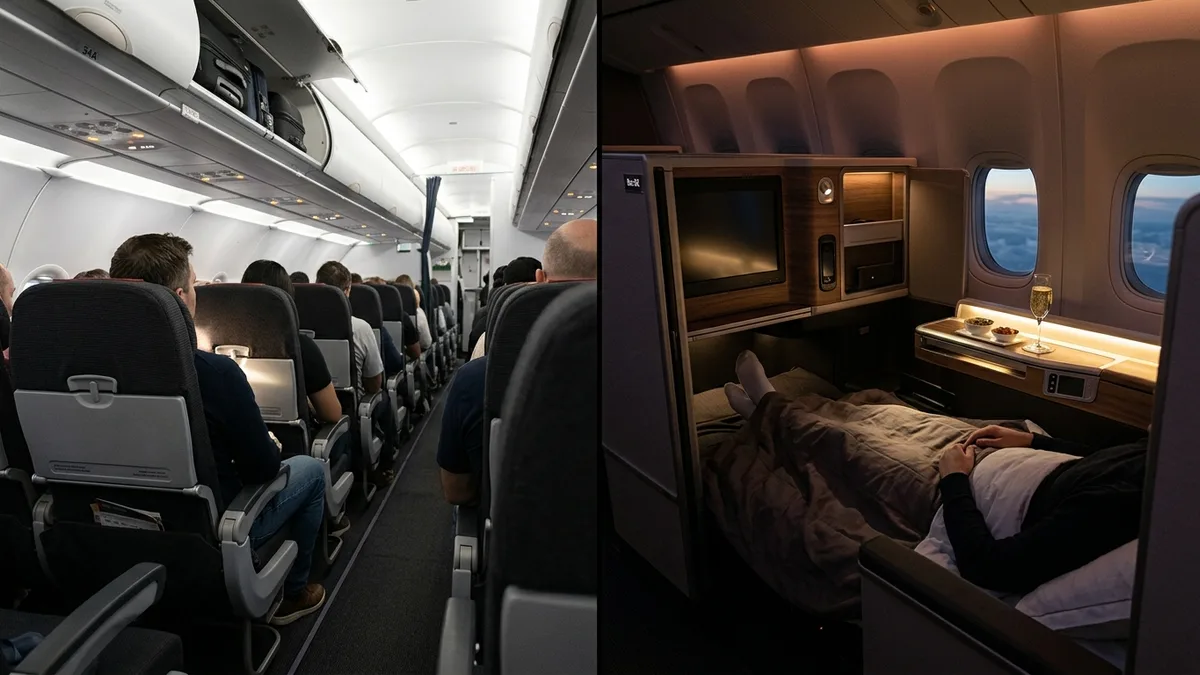
What economy actually costs you on a long-haul flight
Let's start with the base fare. A round-trip economy ticket from New York to London in peak summer will typically run you $700–$1,100 on a major carrier. Off-peak, you can find it for $450–$700. Those are real numbers. And on the surface, that looks like an obvious win compared to $3,500–$6,000 for business class on the same route.
But here's what the fare comparison leaves out.
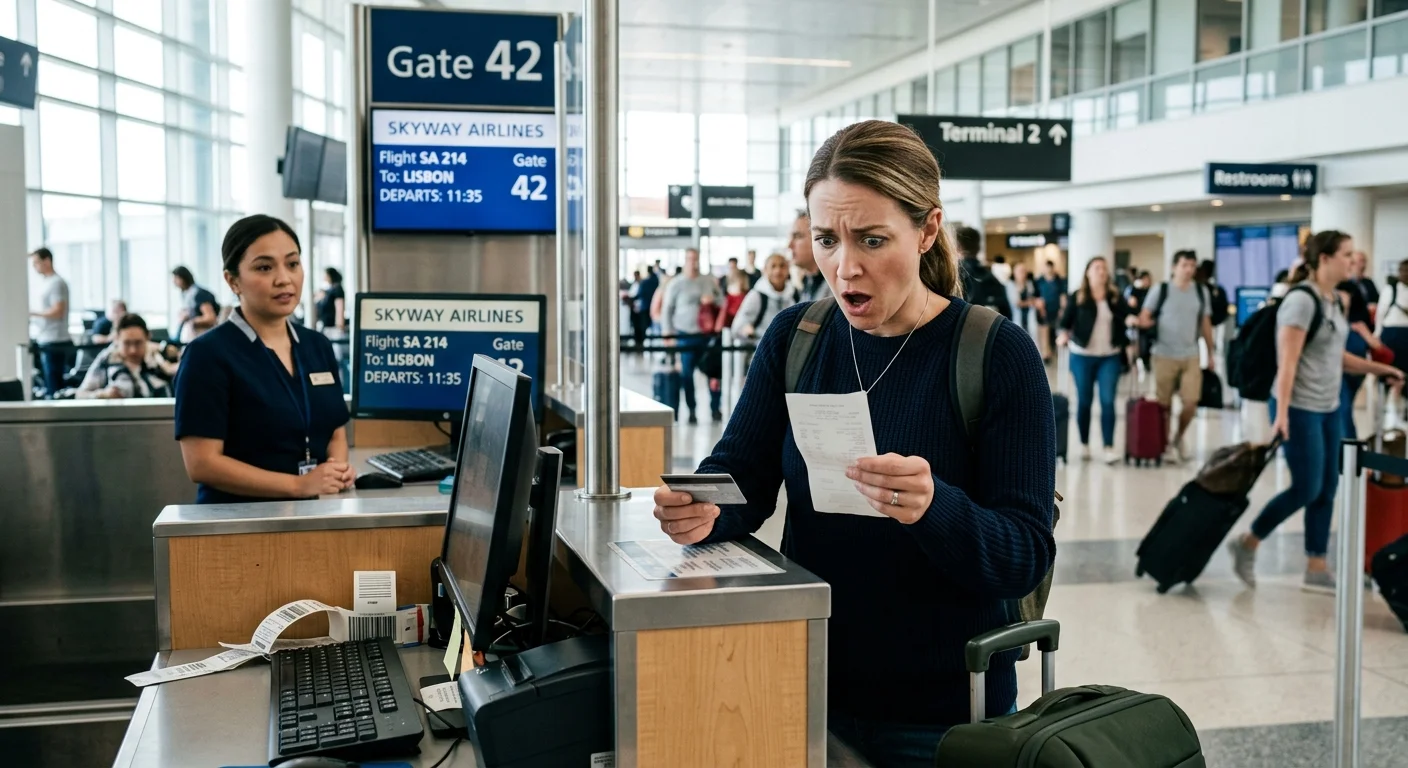
Checked baggage. Most transatlantic economy fares on US carriers now charge for the first checked bag. Delta, United, American — you're looking at $35–$40 each way on basic economy fares, sometimes more if you book through a third-party site. Business class includes bags, full stop. On a round trip, add $70–$80 back to the economy price.
Seat selection. Want an aisle seat so you're not climbing over two strangers every time you need the bathroom on a seven-hour flight? That's $30–$80 per flight on most carriers if you're in economy. Business class: included, always.
Food and drinks. Transatlantic economy meals are... fine. They exist. But if you want a real drink at the airport, or you end up buying anything airside because the economy meal service was a bag of pretzels and a can of ginger ale, you're spending money. Lounge access in business class typically includes a full meal, open bar, showers. At Heathrow Terminal 5, the British Airways Galleries Club Lounge has a proper hot buffet — smoked salmon, eggs, roasted vegetables, real coffee. That's a $30–$40 meal you're not buying at a terminal restaurant.
Recovery time. This one's harder to put a number on, but it's real. I've done the JFK–LHR red-eye in economy and landed ready to work. Once. And I was 31. Most people — especially anyone over 40, anyone with a bad back, anyone who doesn't sleep well in a reclined seat with a stranger's elbow in their ribs — lose at least a partial day on the other end. If your time is worth anything professionally, a lost half-day in London costs real money.
Add it up on a round-trip economy fare: $800 base + $80 bags + $120 seat selection (both ways) + $60 airport food + $200 in lost productivity (conservative) = roughly $1,260 in real cost. That's before you account for the fact that you arrive exhausted.
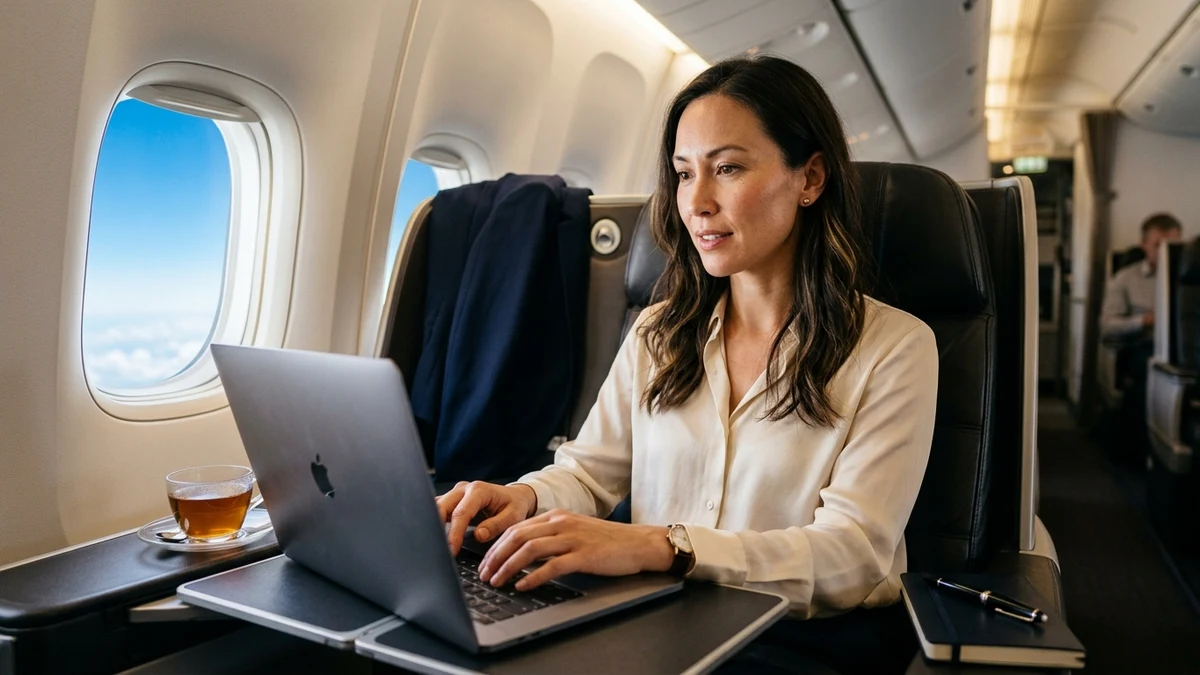
The economy vs business class cost gap at sale prices
Here's the thing that changes the entire calculation: business class fares go on sale. Frequently. Dramatically. And most travelers have no idea because they're not watching for it.
The standard published business class fare from San Francisco to London is somewhere around $4,500–$5,500 round-trip. That's the rack rate. That's what you pay if you book three weeks out on a Tuesday in August because you suddenly need to be there. Nobody who knows what they're doing pays that.
Error fares, off-peak windows, and genuine flash sales routinely push that same route down to $1,600–$2,200 round-trip. I've seen SFO–LHR business class drop to $1,890 on a legitimate published fare. I've seen JFK–CDG in Air France's Business cabin — the one with the fully flat beds in a 2-2-2 configuration — go for $2,100 round-trip during a slow sales week.
At those prices, the economy vs business class cost comparison looks completely different. You're paying maybe $900–$1,100 more than a comparable economy fare, and in exchange you're getting a flat bed, lounge access at both ends, priority boarding, included bags, and a meal that you'd actually order in a restaurant. The math starts to work.
The problem is catching those fares before they disappear. They typically last hours, sometimes less. Airlines don't advertise them. You're not going to stumble across them unless you're checking Google Flights twice a day — which nobody does. That's the whole reason the monitoring system we built exists. BusinessClassSignal scans Google Flights data multiple times daily, scores each deal on a 1–10 scale, and sends you an alert when something worth acting on shows up on your route. A deal scored 9.1 like the one above is the kind of thing that's gone by Thursday morning.
If you want to start monitoring this route, the free tier gets you one watchlist. Core is $36/month and Pro is $78/month — both worth it if you're flying business class more than twice a year, because one caught deal pays for years of subscription.
What you actually get for the money: an honest accounting
I want to be fair here, because not every business class product is created equal, and some of them genuinely don't justify the premium even at sale prices.
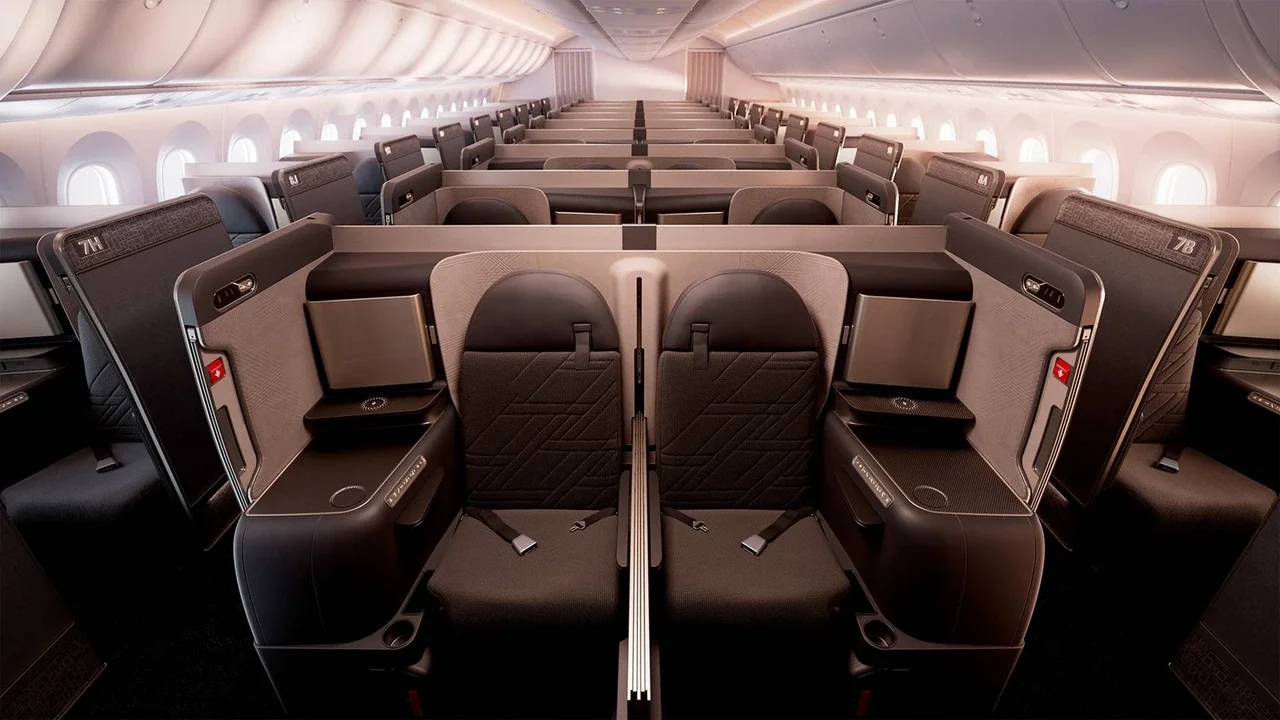
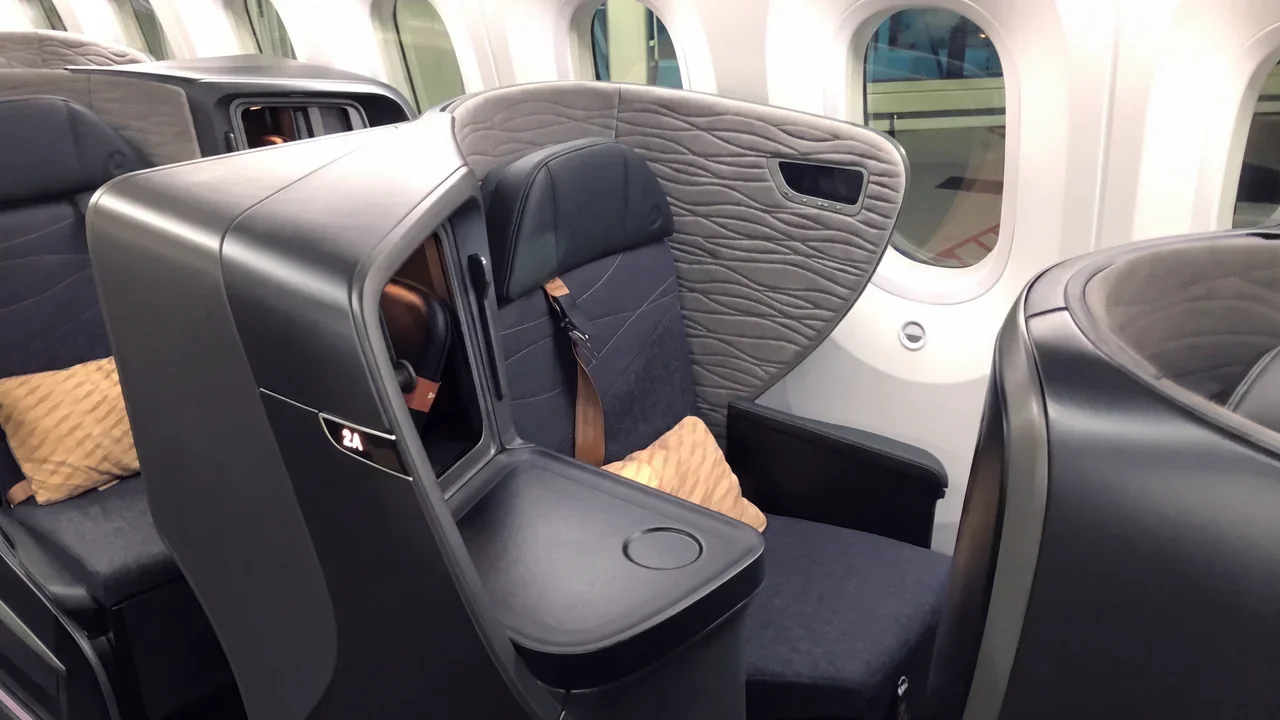
The good. On routes where airlines run their flagship long-haul products — United Polaris on JFK–LHR, British Airways Club World on transatlantic routes, Singapore Airlines Business Class on their A350s — you're getting a genuinely different experience. Polaris has fully flat beds in a 1-2-1 configuration, direct aisle access for every seat, a proper pillow and duvet, and Saks Fifth Avenue bedding that's actually comfortable. The lounge at ORD has a sit-down restaurant. On a 10-hour flight, the sleep alone is worth the premium.
Singapore's business class on the Singapore Airlines A350 routes is arguably the best in the sky right now at the price point. The seats are wide, the food is genuinely good (the satay on departure is famous for a reason — they've been serving it for decades), and the service is the kind that makes you feel like a person rather than a seat number.
The not-so-good. American Airlines' Flagship Business on older 777s has a 2-2-2 configuration, which means the middle seats require climbing over your neighbor to get to the aisle. I've sat in that middle seat on a transatlantic red-eye and it is not materially better than premium economy on most other carriers. The seats recline fully flat, yes, but the layout means you're not getting the privacy or the easy aisle access that justify the business class price tag. If American is your only option and you're in one of those middle pairs, I'd genuinely consider whether the premium is worth it on that specific aircraft.
Air France's Business cabin on the 777 is another one I have mixed feelings about. The herringbone configuration means your feet point toward the window at an angle — fine for most people, but if you're tall, your feet end up in a weird slot and you wake up with numb toes. I've done it. It's not ideal. The food, though, is excellent. Proper French cheese course, decent wine list, and they actually bring it to you on real plates rather than the plastic-tray-with-a-cloth-napkin approach most carriers use.
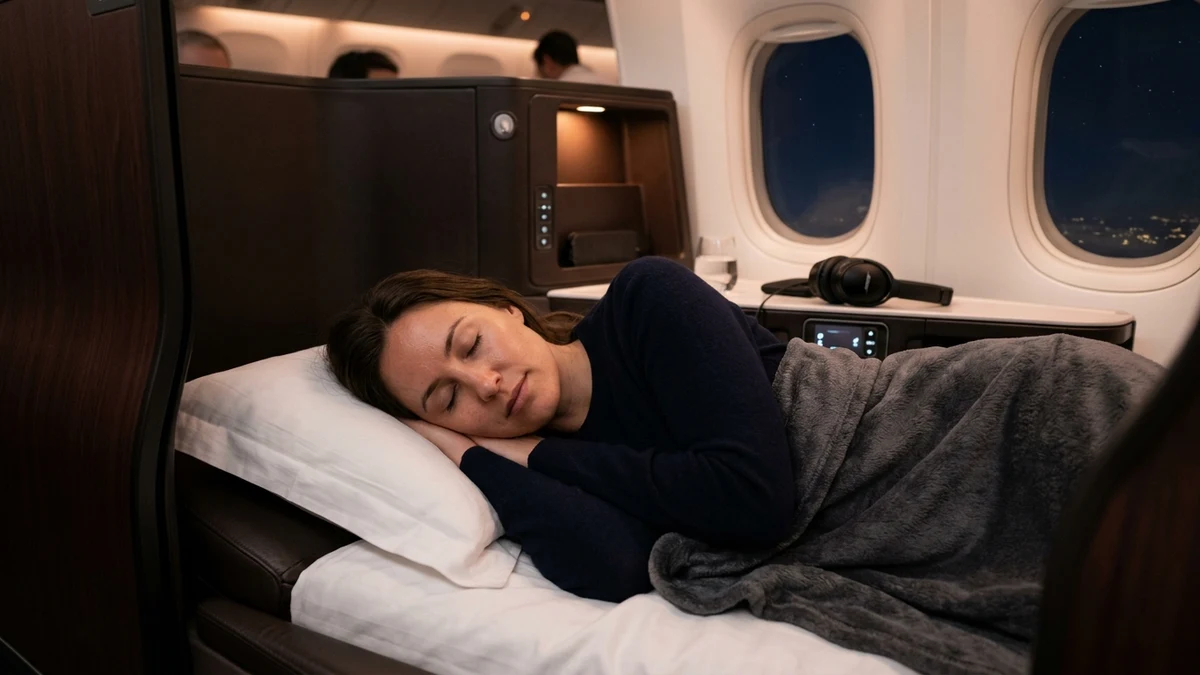
The productivity calculation most people skip
If you travel for work — and if you're reading BusinessClassSignal, there's a good chance you do — the productivity math is where the economy vs business class cost analysis gets genuinely interesting.
On a flat bed in business class, most people can get four to six hours of actual sleep on a transatlantic red-eye. I typically land at Heathrow having slept properly, showered in the lounge before the flight if I have time, and I'm functional for a full day of meetings. On a good night in economy, I get maybe two hours of broken sleep and spend the first day in London running on caffeine and stubbornness.
Think about what a day of genuine productivity is worth to you. If you bill by the hour, it's simple arithmetic. If you're salaried, it's fuzzier — but showing up to a client meeting sharp versus showing up visibly jet-lagged has consequences that compound. I've watched colleagues make bad calls in meetings because they were operating at 60% after a brutal economy crossing. Nobody says anything, but everyone notices.
There's also the working-on-the-plane factor. In business class, I regularly get three to four hours of actual work done on a flight. Laptop open, seat reclined to a comfortable working angle, no elbow negotiation with the person next to me, enough table space to have a coffee and a notebook out at the same time. In economy, I've tried. It doesn't really work. The seat pitch means my screen is too close to my face, I can't type properly when the person in front reclines, and the ambient noise and interruptions make sustained concentration nearly impossible.
For a freelancer or consultant billing $150/hour, three recovered working hours is $450. Add that to the cost comparison and the gap narrows again.
When economy is genuinely the right call
I don't want this to read like a business class advertisement, because sometimes economy is the right answer. Full stop.
Short-haul flights are the obvious case. Anything under three hours — London to Rome, New York to Chicago — the business class premium rarely makes sense unless you're getting it for close to the economy fare on miles or a sale. You're not sleeping. The lounge access helps, but the flight itself is over before the difference in seat comfort matters much.
Leisure travel where the budget genuinely matters is another one. If flying economy means you can afford the trip and flying business class means you can't, then fly economy. A great trip in economy beats no trip in business class every time. And with the right tools, you can find economy fares that are genuinely good deals too.
Which brings me to something I want to mention directly: if you're primarily flying economy and looking for fare deals in that cabin, check out FlightKitten. It's a sister product built specifically for economy fare monitoring — same deal-scoring logic, same alert system, optimized for the economy market. BusinessClassSignal is built for business class. FlightKitten is built for economy. Use the one that fits your travel style, or use both if you fly a mix.

Flying economy on part of the trip?
FlightKitten monitors economy fares across 220+ airlines — including budget carriers — and pings you when prices drop below your target. AI-powered briefings, starting at $4.99/mo.
Try FlightKittenThe other time economy makes sense: when you have a positioning flight to catch a connecting business class fare. I've flown economy from my home airport to a hub specifically because the business class deal out of the hub was so good that the total cost was still lower than flying business class from my local airport. That's not a failure of the system — that's the system working correctly.
How to actually close the gap between economy and business class prices
So you've decided you want to fly business class, and you want to do it without paying the rack rate. Here's how people actually make that happen.
Watch for off-peak windows. Transatlantic business class fares are cheapest in January and February (excluding holiday weeks), early November, and the shoulder weeks of September and October. Peak summer and the week before Christmas are when you pay full freight. If your travel is flexible, this alone can cut the fare by 30–40%.
Set alerts on specific routes and act fast. The genuinely good deals — the ones scored 8.5 and above on BusinessClassSignal — are typically available for 12–36 hours. Sometimes less. Setting an alert and checking it when it hits is the difference between catching a $1,890 SFO–London fare and paying $4,500 because you waited until the weekend to look. You can browse all routes we monitor to see which ones have the most deal activity.
Be airport-flexible. New York has JFK, EWR, and LGA. London has LHR, LGW, STN, LCY, and LTN. A business class deal out of EWR might be $400 cheaper than JFK on the same day. If you're driving to the airport anyway, the extra 40 minutes might be worth it.
Know which seats to avoid even in business class. On British Airways Club World, avoid row 1 on the upper deck of the 747 if you're sensitive to noise — the galley is right there. On United Polaris 777s, the middle seats in the 1-2-1 layout are seats like 7D and 7G — they're fine, but you lose some of the privacy of the window seats. Seats like 7A, 7K, 10A, 10K are the ones I'd target: window seats with direct aisle access and no one climbing over you at 3am.
Don't write off error fares. These are genuine pricing mistakes that airlines occasionally honor and occasionally don't. When they do, you're getting business class for economy prices. BusinessClassSignal flags these separately — they're high-risk, high-reward, and you should only book them if you're genuinely able to take the trip and won't be devastated if the airline cancels the ticket and refunds you. I've had three error fares honored in twelve years and two cancelled. The three that went through were extraordinary.
The real economy vs business class cost question isn't "can I afford business class?" It's "am I watching the right routes at the right times?" Most people who end up in business class regularly aren't necessarily spending more than people who always fly economy — they're just paying attention.