The question everyone asks
If you've spent any time researching premium cabin flights out of the US, you've hit this wall: Qatar QSuite vs Emirates business class. Which one do you book? Which one is actually worth the money — or worth burning your miles on?
I've flown both. Multiple times, on multiple routes. And I'll tell you upfront: this isn't a close call in every category, but it's more complicated than the internet's consensus suggests. The answer depends on what you're flying, when you're flying, and honestly, what kind of traveler you are.
Let me walk through what I've actually experienced — the seat, the food, the lounges, the pricing — and give you something more useful than a spec sheet comparison.
Hard product: the seats
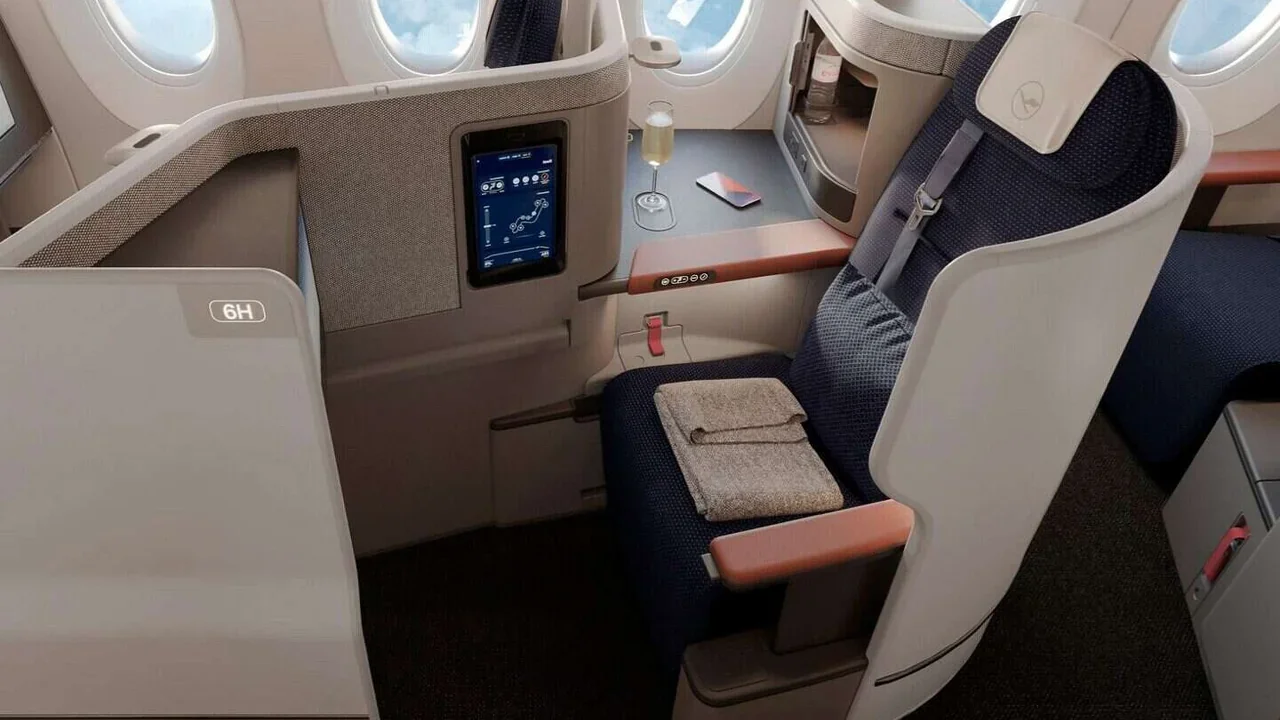
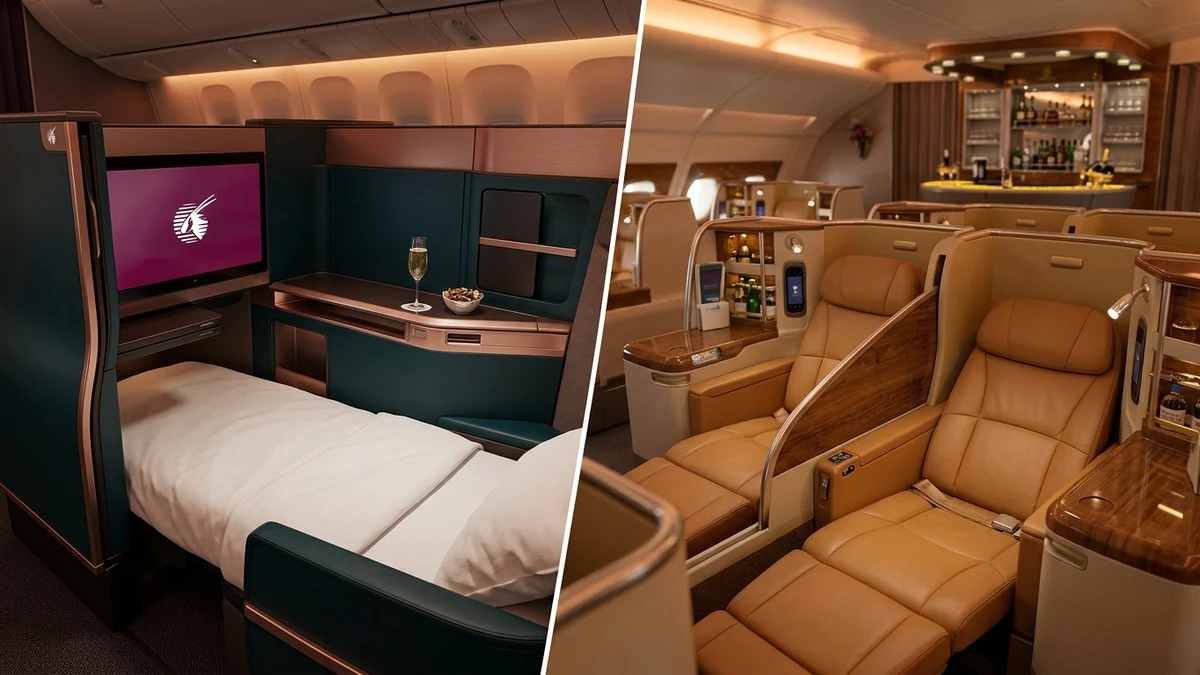
Qatar's QSuite is, by most measures, the best business class seat flying today. I don't say that lightly. The double bed configuration — where two center seats convert into a shared surface — is genuinely useful for couples or colleagues. The sliding door gives you real privacy, not the half-wall theater that most airlines call a "suite." The seat itself is a 1-2-1 configuration on most widebody aircraft, meaning every passenger gets direct aisle access.
The shell is well-designed. Storage is thoughtful. There's a proper door that latches. When the lights go down on a Doha overnight, you actually feel like you're in a private space.
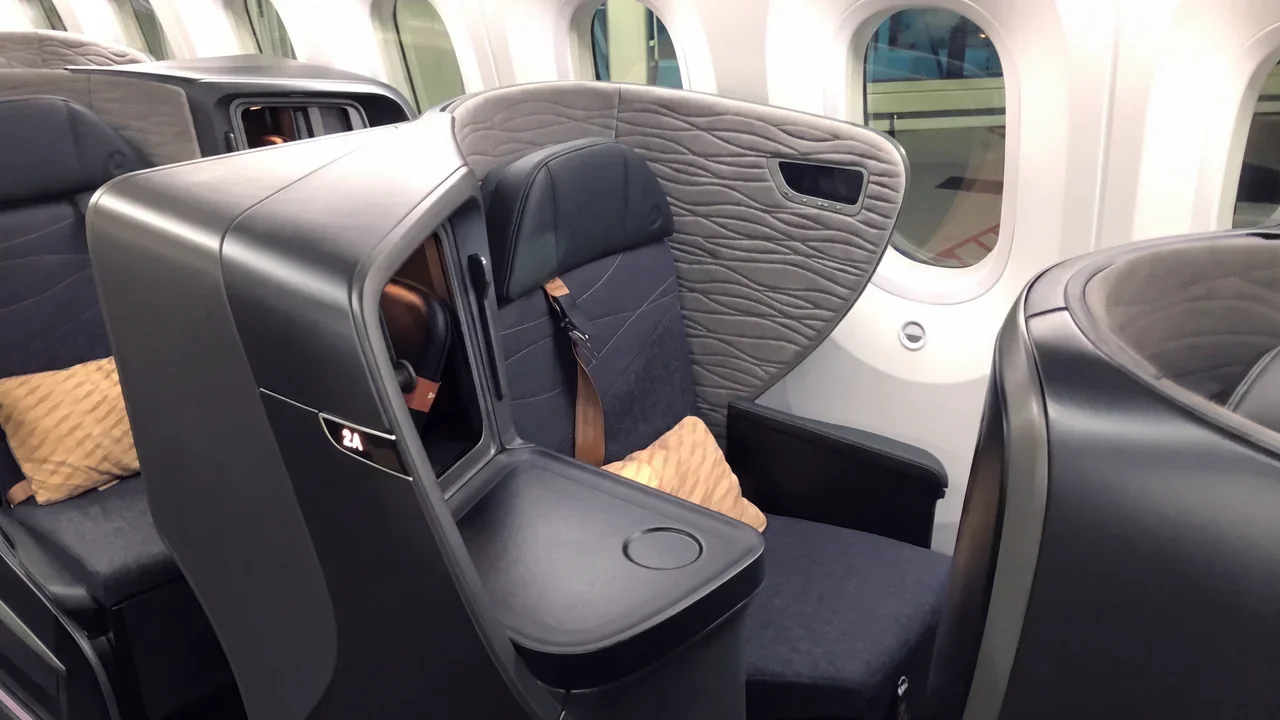
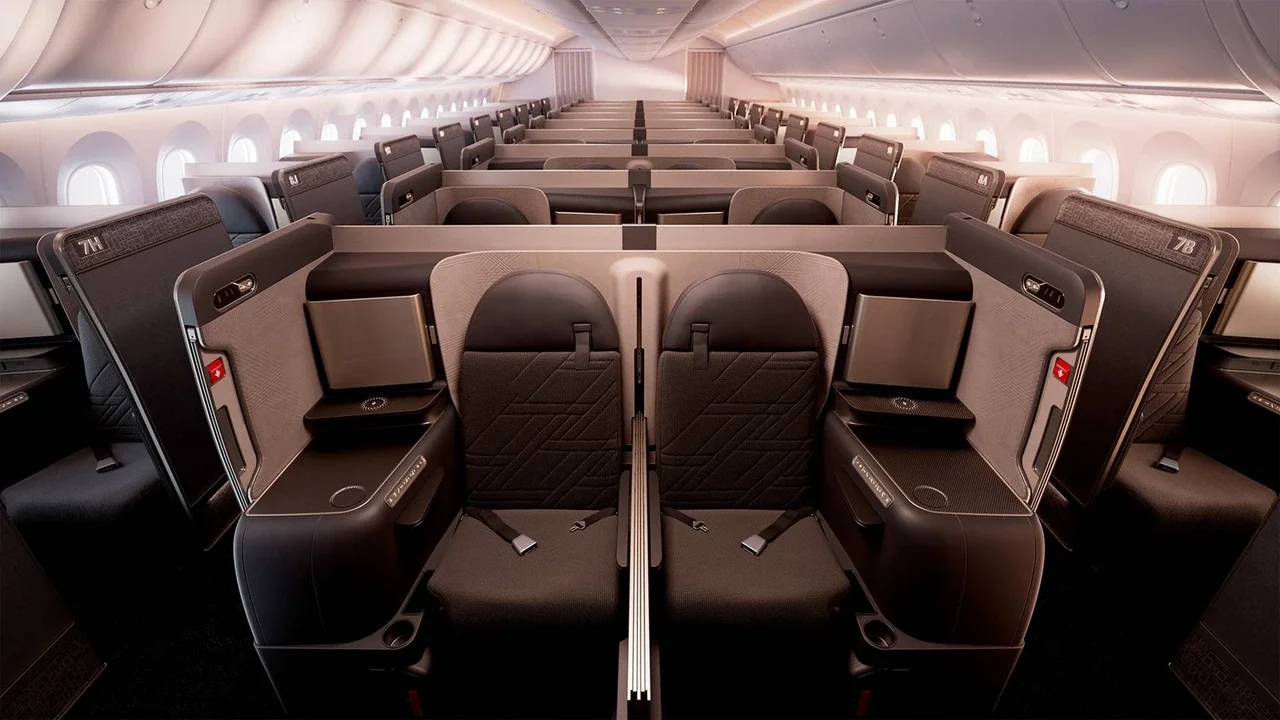
Emirates business class is a different story. On their 777s — which is what you'll be flying on most US routes — the configuration is a 2-2-2 herringbone layout in older cabins, or the newer 1-2-1 layout on the more recently retrofitted aircraft. The catch: not all Emirates 777s have been updated. If you're booking Emirates out of, say, Houston or Seattle, you may end up on an older-configured aircraft where the window seats angle toward the aisle rather than giving you a true flat bed facing forward. It's not bad. But it's not QSuite.
Emirates does operate the A380 on several US routes — JFK, LAX, SFO, IAH, DFW among them — and the business class on that aircraft is arranged in a 1-2-1 forward-facing configuration with a more updated feel. Still no door. Still no double-bed option. But the seat is wide, the storage is decent, and the shell feels solid.
On pure hard product, Qatar wins. The QSuite door alone puts it in a different class. But Emirates isn't embarrassing itself — especially on A380 routes.
Soft product: food, drink, and service
This is where things get interesting — and where the Emirates reputation probably outpaces reality a bit.
Emirates has built its brand on the bar. The onboard lounge on A380 upper deck is real and it's genuinely fun: you can walk back, order a drink, talk to strangers, feel like you're on a 1970s 747 in the best possible way. They pour Moët & Chandon Grand Vintage in business class, and they're not stingy about it. The Dom Pérignon is technically reserved for first class, but flight attendants on long-haul routes have been known to share. The wines rotate, but you'll typically find a decent Burgundy and a serviceable Bordeaux alongside the more commercial pours.
The food on Emirates is ambitious. Sometimes it delivers. The mezze starter is usually solid — hummus, tabbouleh, a couple of small plates. The main courses are inconsistent. I've had a lamb dish out of Dubai that was genuinely good, and I've had a "pan-seared sea bass" out of JFK that tasted like it had been pan-seared sometime the previous week. Service is warm but can feel slightly performative on busier routes.
Qatar's catering has improved significantly in recent years. The Qatari-inspired menu items — the spiced lamb kofta, the mezze, the Arabic desserts — tend to be the highlights. Their wine list is strong; they've invested in a proper sommelier program. Service style tends toward quieter professionalism rather than Emirates-style showmanship, which some people prefer and some find a bit cool.
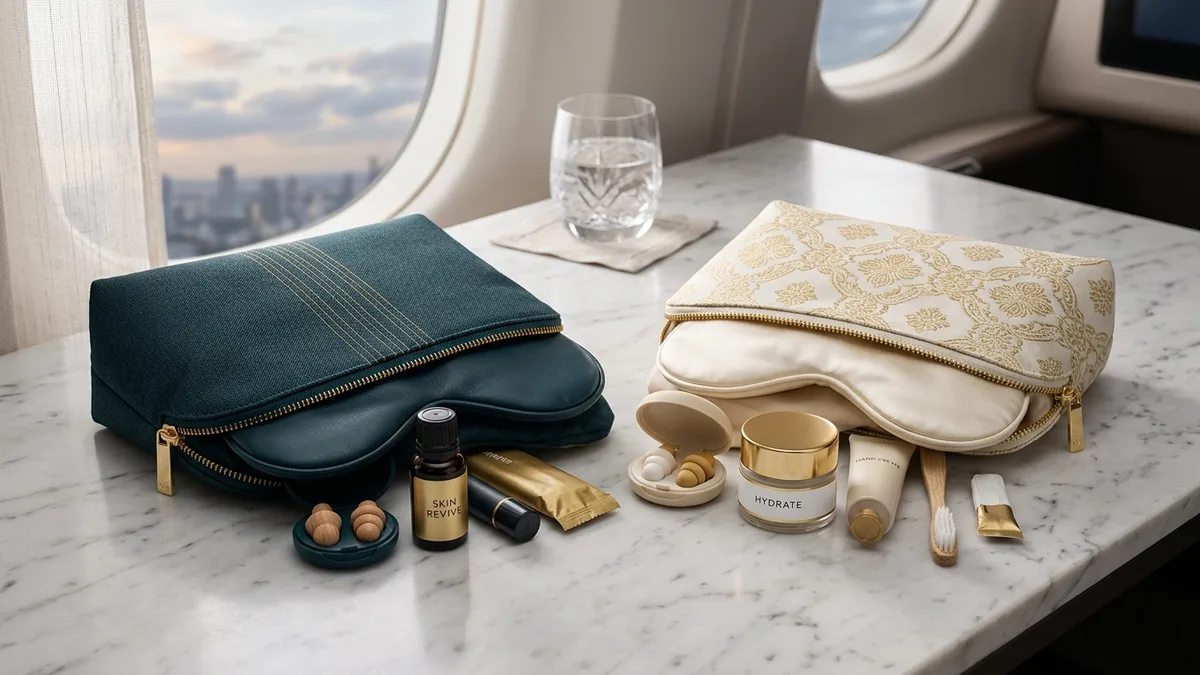
The amenity kits are roughly equivalent. Qatar uses BRIC's for its kits on some routes; Emirates has used various brands including Bulgari and more recently Byredo on certain long-haul segments. Both include the standard eye mask, socks, lip balm, and moisturizer. Neither will change your life.
One genuine edge for Emirates: the ice system. The onboard bar and the sheer variety of drinks — cocktails, non-alcoholic options, the Hennessy XO in business on some routes — is hard to match. If you want to drink well and socialize at 38,000 feet, Emirates is your airline.
Qatar vs Emirates business class: the lounge situation
This comparison matters more than people give it credit for, especially if you have a long layover.
Qatar's Al Mourjan Business Lounge in Doha (Hamad International Airport) is one of the best airport lounges in the world. That's not hype. The space is enormous — I've read estimates of around 10,000 square meters, though the exact figure shifts with expansions. The food is served restaurant-style: you're seated, you order from a menu, a waiter brings it to you. I had a very good slow-cooked lamb shank there on a connection from Cape Town to New York. There are showers with actual attendants who prepare the room for you, a spa, a quiet zone, and enough seating that it rarely feels crowded even when it's busy.
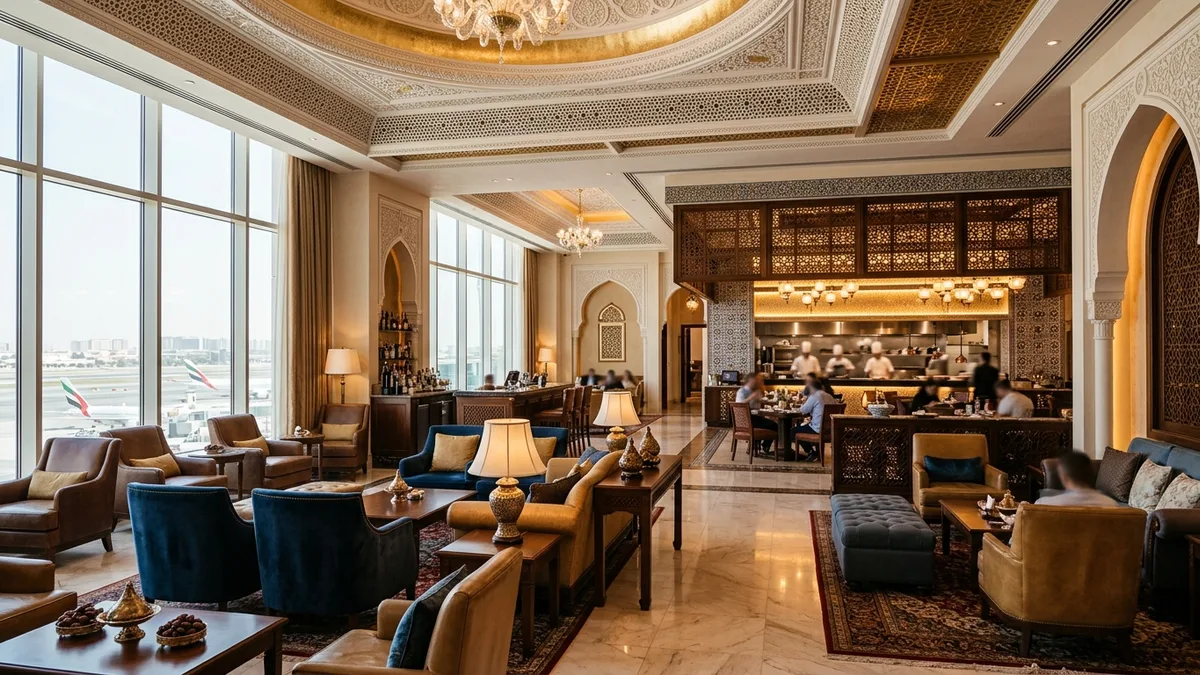
Emirates' Business Class Lounge at Dubai International (Terminal 3, Concourse B) is good. Genuinely good. Multiple food stations, a live cooking area, decent wine. But it's also a high-traffic lounge handling one of the busiest hub airports on earth. During peak hours, finding a seat can take a few minutes. The food quality is solid — there's usually a carving station, a sushi counter, hot mains — but the service is buffet-style rather than table service, which changes the feel considerably.
Emirates does have the First Class lounge with a pool and a full spa, and if you're connecting through and have a long layover, that lounge is extraordinary. But we're comparing business class, and in that tier, Al Mourjan edges ahead.
For US departures: both airlines have lounges at their US gateway airports, but they're not operating their own space in most cases. Qatar uses contracted lounges at several US airports. Emirates has dedicated lounges at JFK and LAX that are decent — comfortable, well-stocked, not especially memorable. Neither comes close to the hub experience.
US gateways and route networks
Where you live matters a lot in this comparison.
Emirates flies to more US cities than Qatar. As of recent schedules, Emirates serves New York JFK, Los Angeles, San Francisco, Houston, Dallas, Seattle, Boston, Chicago, Miami, Washington Dulles, and Orlando — among others. That's a wide spread. If you're in the Southeast or the Mountain West, Emirates may be the more practical option simply because you can get to Dubai without a connection, and Dubai connects onward to just about everywhere.
Qatar serves fewer US gateways but has been expanding. Current US departures include New York JFK, Los Angeles, Chicago O'Hare, Washington Dulles, Houston, Dallas, Miami, Boston, Atlanta, Philadelphia, and San Francisco. Connections route through Doha (Hamad International), which is a genuinely pleasant airport to transit through — much more so than Dubai's Terminal 3 during a morning bank when it's jammed.
If you're trying to get to Africa, South Asia, or Southeast Asia, both hubs work. For East Africa specifically, I'd give the edge to Qatar — better connections, shorter layovers on several routes. For the Indian Subcontinent, Emirates' frequency is hard to beat. For Europe, Qatar is often the better connecting option because Doha is geographically closer and the connections tend to be tighter.
And then there's the matter of QSuite availability. Qatar doesn't operate QSuite on every aircraft in its fleet. Some routes — particularly thinner US routes or certain regional connections — use older business class seats that are perfectly fine but not the QSuite product you came for. Always check which aircraft is scheduled on your specific route before booking. Qatar Airways route details can help you verify this before you commit.
Pricing: what you'll actually pay
Here's the part most comparison articles gloss over.
Published business class fares on both airlines are expensive. A round-trip JFK to Dubai in Emirates business class typically runs $5,000–$7,000 at rack rate. Qatar JFK to Doha in QSuite will run you similar numbers — sometimes a bit less, sometimes more depending on the season and how far out you're booking.
But both airlines discount aggressively and unpredictably. I've seen Emirates JFK–Dubai drop to under $3,000 round-trip. I've seen Qatar JFK–Doha in QSuite at $2,200 round-trip. These fares don't last. They appear, they fill, they're gone — sometimes within hours. They're not advertised. They're not on the airline's deal pages. They surface in Google Flights data and disappear just as fast.
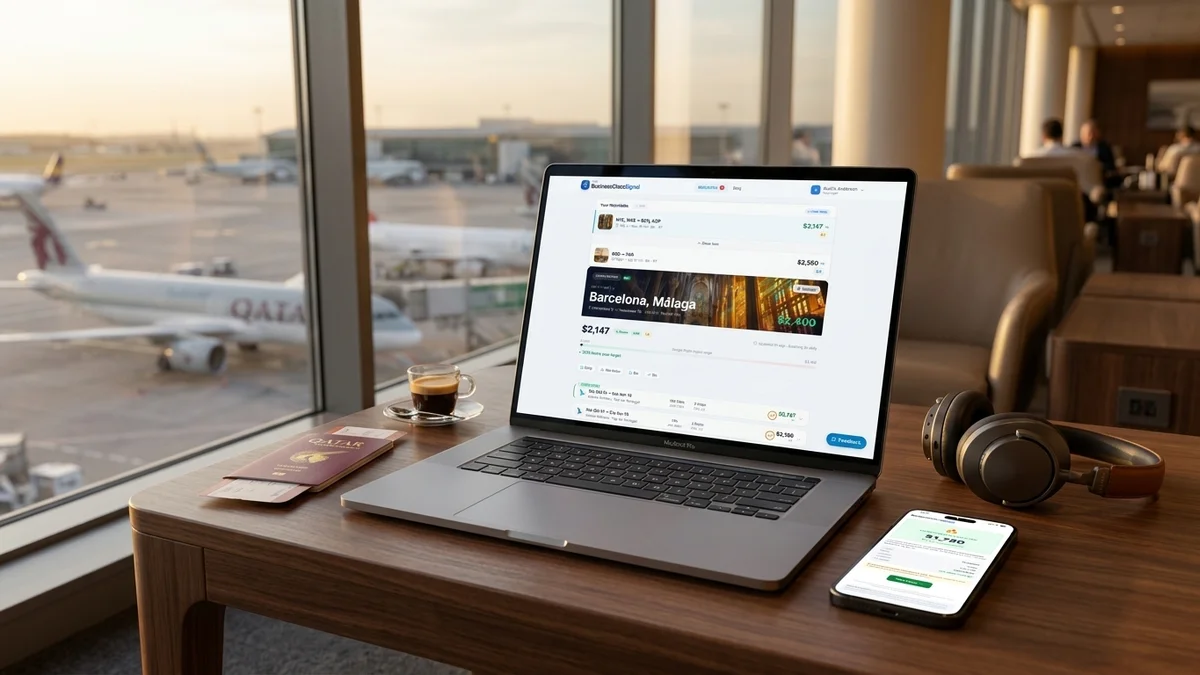
This is exactly why I built the monitoring system at BusinessClassSignal. We scan fares on these routes multiple times a day, score each deal on a 1–10 scale based on how far below market the price is, and send you an alert the moment something worth acting on appears. You're not going to catch a $2,800 Emirates business class deal by checking Google Flights on your lunch break twice a week.
On the miles side: Emirates Skywards has gotten less generous over the years. Partner redemptions through programs like Alaska Mileage Plan used to be the best way to book Emirates business class at reasonable rates, and while that option still exists, availability has tightened. Qatar's Avios redemptions through British Airways Executive Club or American AAdvantage can work well, but fuel surcharges on Qatar through BA can be brutal — sometimes $700+ on a round-trip. Through American, the surcharges are more manageable.
If you're paying cash, set up monitoring on the specific routes you care about. If you're burning miles, do the math on surcharges before you get excited about a "cheap" redemption.
You can browse all the routes we monitor to see which ones are currently showing below-average fares.
Who should book which airline
I get asked this constantly, so let me be direct about it.
Book Qatar QSuite if: you care about the sleep experience above everything else, you're traveling solo and want genuine privacy, you're connecting through a hub and want a great lounge, or you're flying as a couple and want to use the double-bed configuration. The QSuite is the best business class seat you can buy at cash prices that occasionally drop to reasonable levels. It's the one I'd pick if the fare is within $300–400 of Emirates.
Book Emirates if: you're departing from a city where Emirates has a nonstop and Qatar doesn't, you want the onboard bar experience, you're flying with someone who cares more about drinks and atmosphere than sleeping, or the fare is meaningfully cheaper. Emirates business class is a good product. It's not QSuite, but calling it a bad experience would be absurd — it's still better than 95% of what's flying.
One thing I'd add: Emirates has more consistent product delivery on their A380 routes specifically. The crews are well-trained for that aircraft, the catering is calibrated to it, and the lounge-to-seat experience feels cohesive. On their 777 routes, particularly older-configured 777s, the gap with QSuite widens considerably.
And Dubai as a destination has gotten genuinely expensive for hotels in recent years, which sometimes factors into the route choice — if you're transiting Doha, your hotel costs during a stopover are typically lower than Dubai's current rates.
The practical answer for most readers: monitor both routes from your nearest gateway. When either one drops to a score of 7 or above on our deal scale — meaning it's at least 35–40% below typical market pricing — that's your window. Don't overthink the brand loyalty angle until you're looking at an actual fare in front of you.
The best business class seat is the one you actually got a deal on.
If you want to start monitoring this route, the free tier gets you one watchlist — enough to track JFK–Dubai or JFK–Doha and see what comes through. Core and Pro tiers add more routes and the AI market briefings that tell you whether now is a good time to buy or whether fares are likely to drop further.
Set it up. Then wait. These deals come around more often than you'd think.