Quick summary
British Airways Club Suite and Virgin Atlantic Upper Class are both solid transatlantic business class products, but they suit different travelers. Club Suite wins on hard product refinement and lounge access at Heathrow. Upper Class wins on atmosphere, service warmth, and the bar. Neither is perfect — and the price gap between them at any given moment can be significant enough to change the decision entirely.
I've flown the London–New York route more times than I can count at this point. Probably 30-something times in the last decade, spread across both carriers, both directions, different seasons. I've had transcendent nights on Upper Class where everything clicked, and I've had Club Suite flights where the seat mechanism jammed and the food arrived cold. I've also had the reverse. So when people ask me to compare British Airways and Virgin Atlantic business class, I don't reach for a scorecard. I try to think about who's actually asking and what they actually need.
That said, there are real, structural differences between these two products. And if you're spending anywhere from $2,000 to $6,000 on a round-trip business class seat — which is the realistic range on this route depending on when you book — you deserve an honest answer.
The seats: Club Suite vs Upper Class
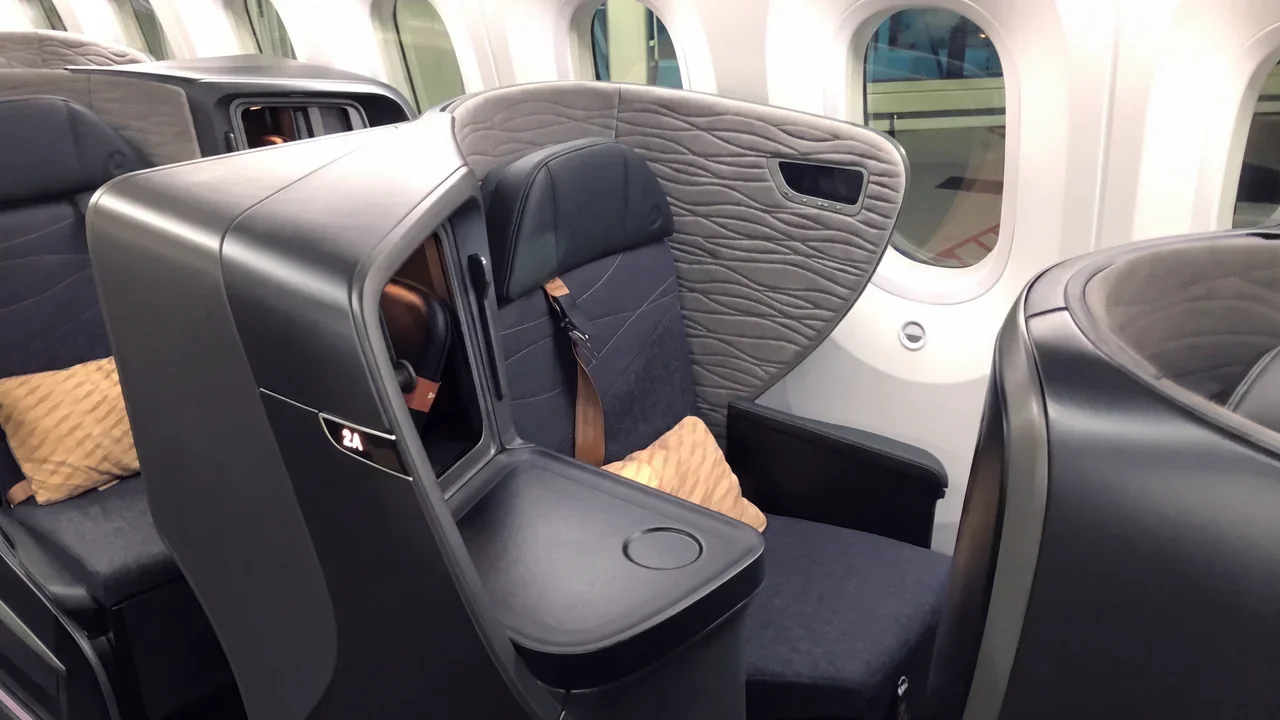
British Airways rolled out the Club Suite on its A350s and a portion of its 777 fleet starting around 2019. It took longer than anyone expected to get the product across the whole long-haul operation — and honestly, it's still not everywhere — but on the routes where you get it, it's a genuinely good seat.
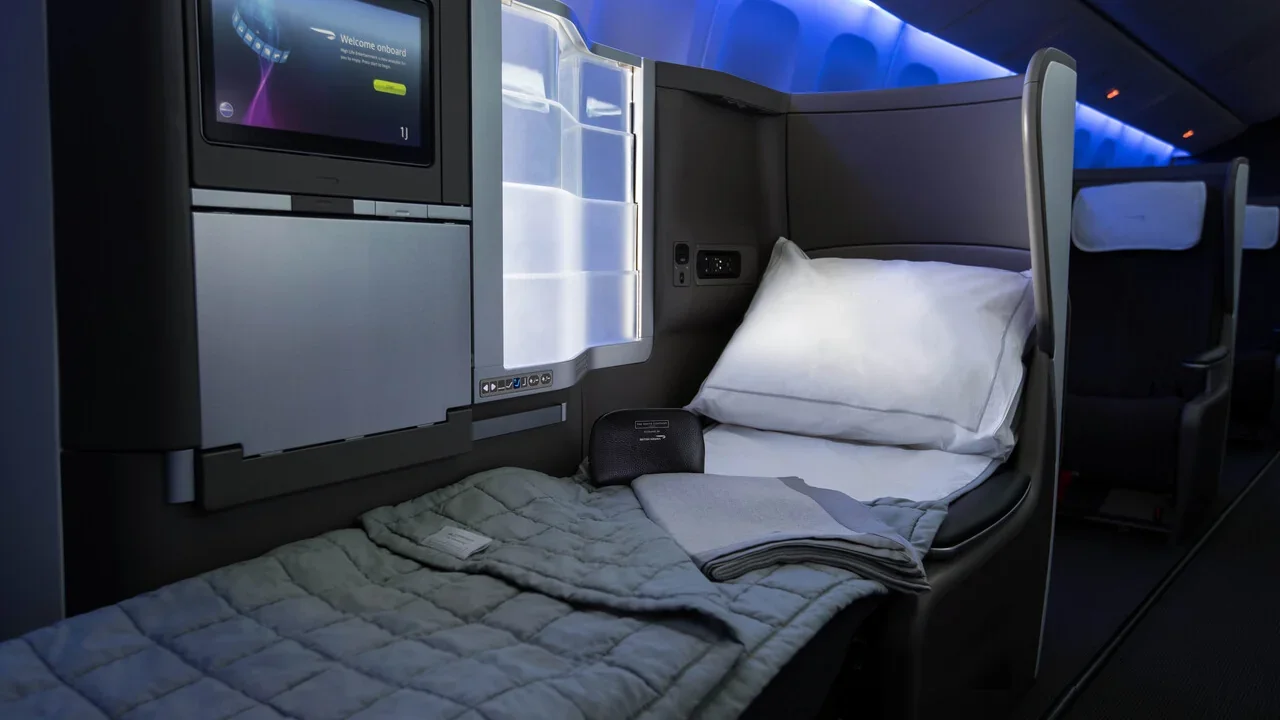
The configuration is 1-2-1, all-aisle access, with a proper door that closes. The door is the thing people obsess over, and it does make a difference when you're sleeping. The suite itself is around 40 inches long as a bed, which is fine for most people but starts feeling tight if you're over 6'2". The storage is decent, the IFE screen is large and responsive, and the Wi-Fi, while not free, works better than it used to. The seat converts to a flat bed at a slight angle — not fully horizontal — which some people don't notice and others find annoying after hour four.
What Club Suite does well is feel considered. The herringbone layout means you're not staring directly at the person across the aisle. The privacy door changes the psychology of sleeping on a plane. And the forward-facing orientation on most seats means you're not spending eight hours looking at the back of the cabin.
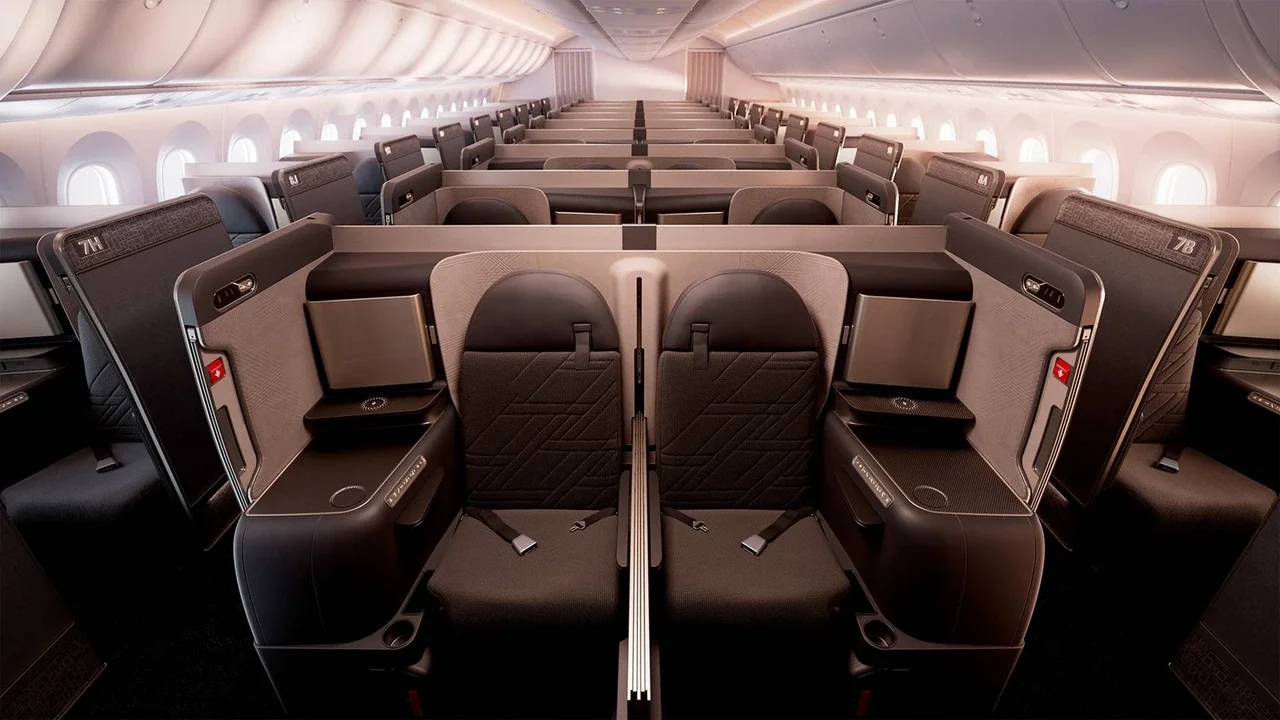
Virgin's Upper Class seat on the A330 is a different beast. It's a herringbone layout too, but the signature move is the ottoman-style seat that swivels to face a companion seat across a shared table. It's genuinely clever for two people traveling together. As a solo traveler, you'll probably use it twice — once to feel fancy, once to eat — and then wonder if you'd have preferred a simpler layout. The bed is about 80 inches long, which is actually longer than Club Suite, and the mattress topper they hand out is one of the better ones I've encountered.
On the A350-1000 (which Virgin started deploying on transatlantic routes), the Upper Class suite has been redesigned with a door, direct aisle access, and a layout that finally feels like it belongs in the same conversation as the best products out there. If you're booked on an A350 Upper Class, that changes the calculus somewhat. But check the aircraft type before you book — not every flight uses it.
Check the equipment before you commit
On both airlines, the business class experience varies significantly by aircraft. For BA, the A350 and newer 777s have Club Suite. Older 777s may still have the older Club World seats — no door, no direct aisle access. For Virgin, the A350-1000 has the newer Upper Class suite. The A330 has the older swivel seat. Check the aircraft type on your specific flight before you book.
Which seat is actually better for sleeping?
Flat-out, as a bed: Virgin's A330 Upper Class is longer, and the mattress topper is thicker. If sleeping is your primary goal and you're tall, Virgin has the edge on raw sleeping surface. BA's Club Suite is more private thanks to the door, but the bed angle (it's not fully flat) bothers some people.
On the A350-1000, Virgin's newer suite is competitive on both counts. BA's A350 Club Suite is still the more polished execution overall — the door mechanism is smoother, the storage is better organized, and the seat controls are more intuitive. But the gap is smaller than it was two years ago.
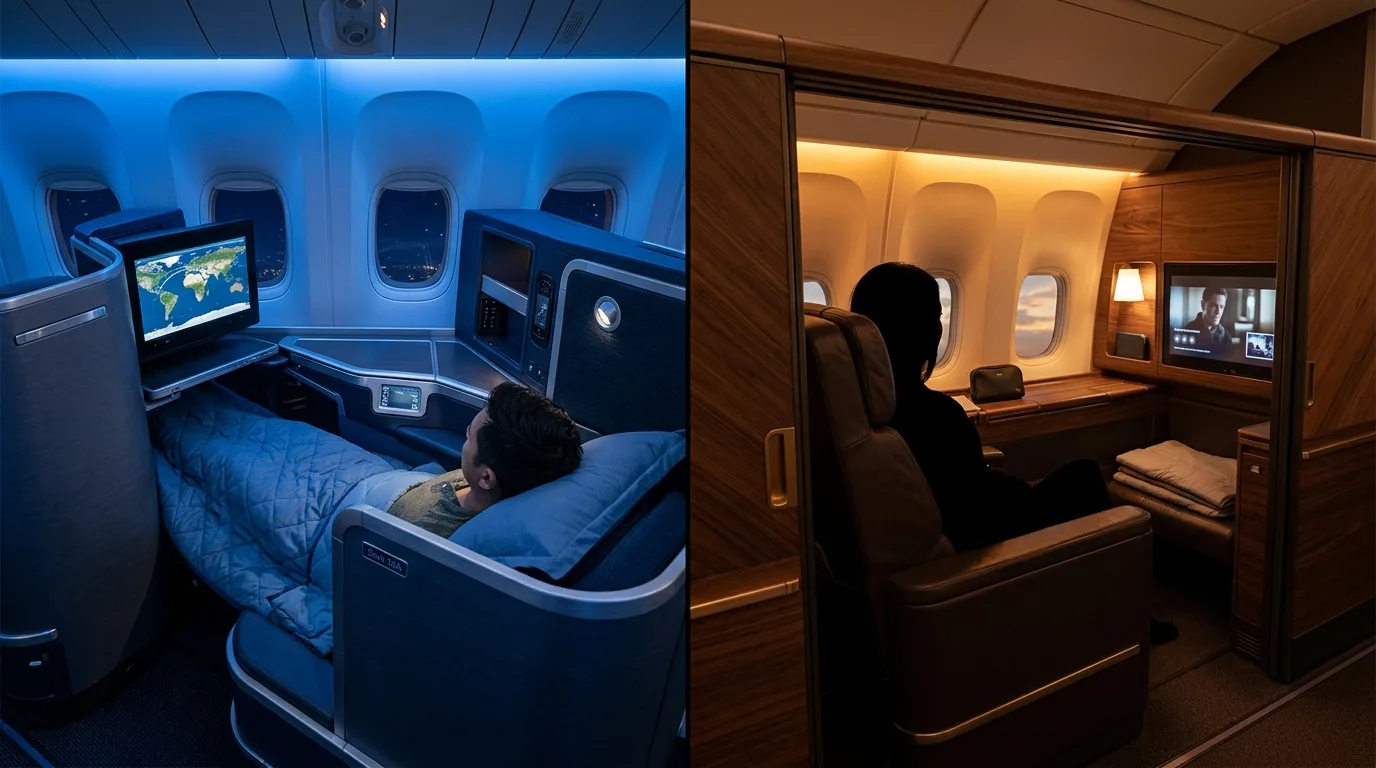
My honest preference: Club Suite for a redeye where I want to be left alone. Upper Class on the A330 if I'm traveling with someone and we want to actually share a meal and talk.
Lounges: Heathrow vs JFK
This is where the comparison gets genuinely complicated, because both airlines operate in multiple terminals and the lounge quality varies a lot depending on which end of the trip you're on.
At Heathrow, BA operates out of Terminal 5. The Galleries First lounge gets all the press, and it's fine — the champagne selection is decent, the spa bookings fill up fast, and the dining room has improved in the last couple of years. But the main Galleries Club lounge is, in my experience, overcrowded on most morning departures. The food is serviceable. The coffee is mediocre unless you find the barista station, which isn't always staffed. The Wi-Fi is slow when the lounge is full, which is most of the time before a bank of departures.
The saving grace at T5 is the satellite lounges in the B and C gates. If your flight departs from a C gate, you'll have access to a quieter, less chaotic space. Worth knowing before you plant yourself in the main lounge for two hours.
Virgin operates out of Terminal 3 at Heathrow, and the Clubhouse there is — I'll just say it — genuinely one of the better airline lounges in the world. Not because it's the biggest or has the most food options, but because it has a coherent design identity and the staff actually seem to enjoy being there. The cocktail bar is real. The beauty treatment area is bookable and actually good. The food is cooked to order. I've had a proper burger at 7am in that lounge and I don't regret it.
The Clubhouse wins at Heathrow. It's not close.
At JFK, the picture flips somewhat. BA uses Terminal 7, which is an older terminal and the lounge reflects that. It's been refreshed, but there's only so much you can do with the bones of that building. The food is fine. The space is adequate. The highlight is probably the Elemis spa treatment, which is complimentary for business class passengers — book it online before you get there or you won't get a slot.
Virgin operates from Terminal 4 at JFK, and the Clubhouse there is good but smaller than Heathrow. The bar is still a feature — the Bloody Mary is better than it has any right to be — but the seating fills up quickly on busy departure days. If you're flying in summer on a Friday evening, don't expect to find a quiet corner.
At JFK Terminal 4, Virgin's Clubhouse can get genuinely packed on Friday evening departures. Arrive at least 2.5 hours before your flight if you want a seat at the bar and time for a proper meal.
The service gap
Service is the hardest thing to compare because it varies by crew, by route, by time of day, and by whatever mood the airline gods are in. I've had warm, attentive BA crews and I've had Virgin crews that phoned it in. But in aggregate, over 30-something flights on this route, my sense is that Virgin trains for personality and BA trains for procedure.
That's not a knock on BA. Procedure matters. Consistency matters. When you board a Club Suite flight at 10pm and just want to be handed a glass of champagne, have your bag stowed, and be left alone until breakfast, BA delivers that reliably. The service is professional. It doesn't always feel warm, but it's competent.
Virgin's crew on Upper Class tends to engage more. They learn your name and use it. They'll ask about your trip. On a good flight, it feels like being taken care of by someone who actually chose this job. On a bad flight, the informality can shade into inattentiveness — I've waited 20 minutes for a drink refill on Virgin that I wouldn't have waited five minutes for on BA.
For solo business travelers who want to eat, sleep, and get off the plane: BA. For anyone who wants the flight to feel like an experience rather than a transport mechanism: Virgin.
Food and drink
Neither airline is serving restaurant-quality food at 35,000 feet. Let's establish that baseline and move on.
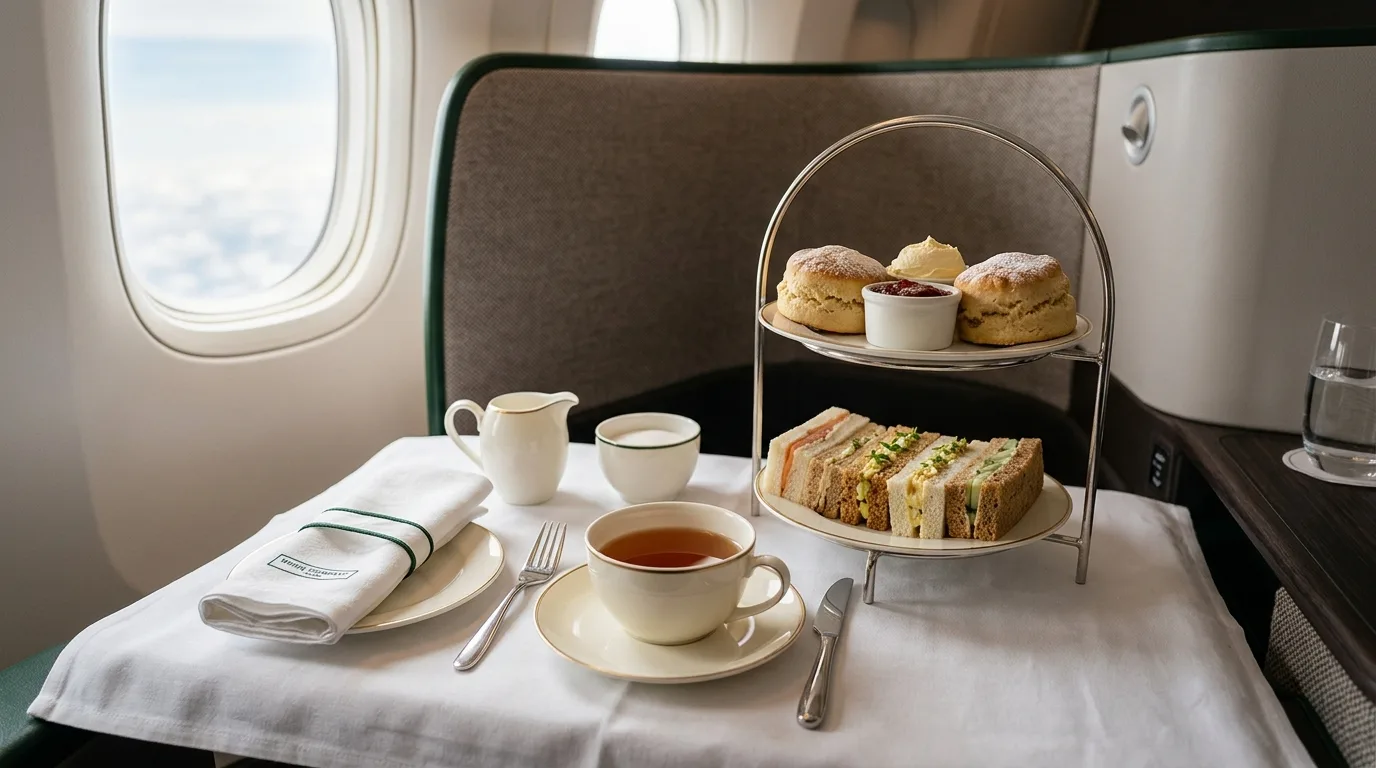
BA's Club Suite menus have improved since they brought in DO & CO for catering on some routes. On the JFK-LHR run, I've had a smoked salmon starter that was genuinely good and a main course beef option that was not. The bread is better than it used to be. The wine list has improved — they've put real money into it — and the champagne on departure (Laurent-Perrier on most flights) is a solid choice.
The "dine on demand" service that BA introduced means you're not locked into eating at crew-defined meal times, which is a significant quality-of-life improvement for redeye flights where you just want to eat quickly and sleep.
Virgin's food is more ambitious in concept and more inconsistent in execution. The menu reads well. The salad bar in Upper Class (on A330 flights) is a nice touch — fresh greens mid-flight are rarer than they should be. The main courses swing between surprisingly good and disappointing in ways that feel random. The dessert trolley, when they run it, is better than BA's dessert situation.
The bar program on Virgin is genuinely better. The cocktail list is more interesting, the spirits selection is wider, and the crew tends to treat the bar as something to be proud of rather than something to manage. If you're the type who wants a decent Negroni at altitude, Virgin is your airline.
On the wine question
BA's wine list has been curated by a Master of Wine since 2016 and it shows — particularly in the red selection. Virgin's wine is fine but not at the same level. If wine matters to you specifically, BA edges ahead here.
When does the price difference actually matter?
Here's the thing about BA vs Virgin Atlantic business class that doesn't get said enough: on any given day, the price gap between them can be anywhere from zero to $1,500 round-trip. And that gap should absolutely influence your decision.
If Club Suite is $500 cheaper than Upper Class on your dates, and you're indifferent between the products, book Club Suite. If Upper Class is running a sale and you can get it for $2,200 round-trip — which happens, maybe 8-10 times a year on this route — you'd be leaving a genuinely excellent deal on the table by paying $3,000 for BA because you have a loyalty preference.
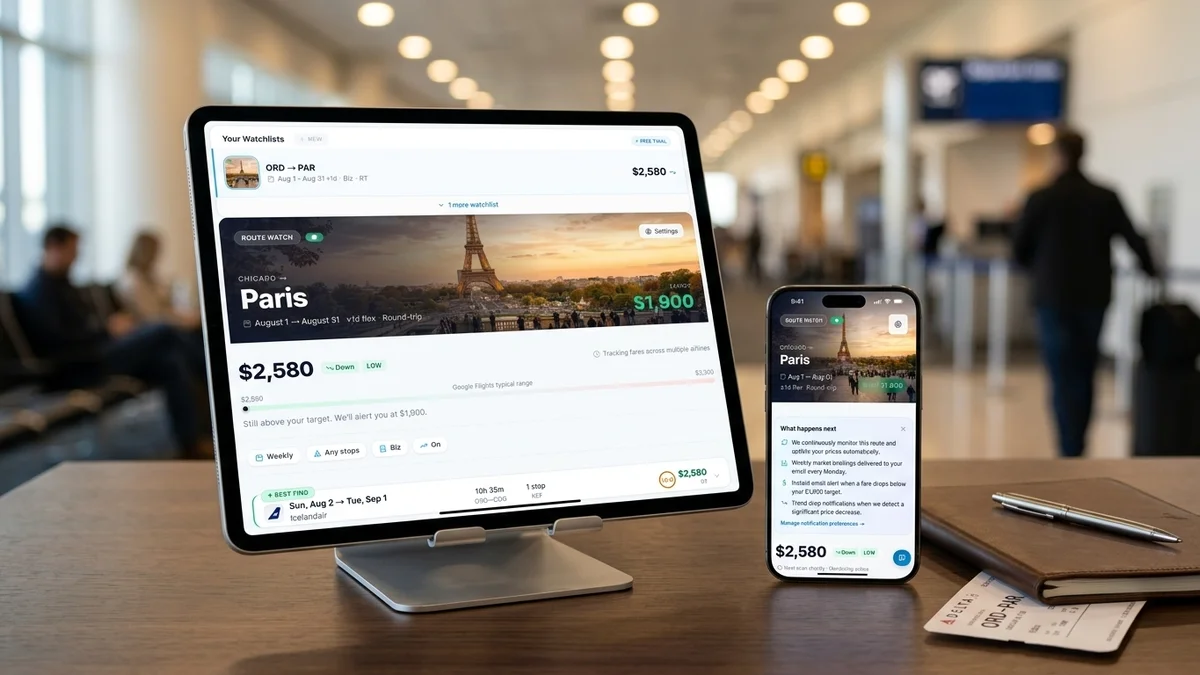
The fares on this route are not static. BA and Virgin watch each other closely and will match or undercut periodically, especially in shoulder season (October-November and February-March). The trick is knowing when those windows open, which is exactly what the monitoring system here works to catch. You set a target price on the route you care about, and you get an alert when a fare drops below it. Simple as that.
I've seen Club Suite on this route dip to $1,850 round-trip in November. I've seen Upper Class hit $1,950 in February. These aren't common, but they happen, and if you're not watching, you miss them.
If you're also considering economy for a leg of the same trip or for a companion, FlightKitten does the same fare-monitoring job for economy tickets — it tracks prices across 220+ airlines and alerts you when things drop below your threshold. About $5 a month. Useful if you're booking a mixed itinerary.
Loyalty programs and status
If you already have status on one of these airlines, that changes the math significantly. BA Executive Club status gets you into the better lounges, priority boarding, and extra Avios on every flight. If you're a Silver or Gold, the Club Suite experience is materially better than what a cash-booking first-timer gets.
Virgin's Flying Club is, in my opinion, a more generous program for occasional travelers. The tier thresholds are lower, the partner earning is solid (Delta is the big one), and the redemption rates for Upper Class on sale fares can be genuinely competitive. The program got a full redesign in 2023 and it's better than it was.
BA's Avios are more versatile across the wider IAG network — Iberia, Aer Lingus, Vueling — which matters if you're flying beyond just London. If your travel is 80% transatlantic and you don't care about the rest, Flying Club is worth a real look.
Neither program is perfect. Both have devalued redemptions over time, as every major airline loyalty scheme has. Don't choose your airline primarily for the points. Choose it for the product, the price, and the schedule.
JFK departures specifically
Since a lot of people reading this are flying out of New York, a few practical notes on the JFK experience with both airlines.
BA's Terminal 7 check-in for business class is efficient. The dedicated lane moves fast, the staff know what they're doing, and the lounge is a 5-minute walk from security. The terminal itself is tired — there's renovation work that seems to have been ongoing since 2019 — but the BA operation within it runs smoothly. Evening departures (the 10:05pm flight is the one to target for arriving rested in London) board on time more often than not.
Virgin's Terminal 4 operation is a bit more chaotic at peak times. The check-in area is larger but the flow isn't as well organized. The Clubhouse is upstairs past security and worth finding — the signage isn't brilliant. Once you're up there, it's a better pre-flight experience than BA's T7 lounge. Evening flights on Virgin typically depart around 9:55pm–10:20pm depending on the service.
One thing I'd flag: BA has more frequency on this route. If something goes wrong — weather, mechanical, whatever — having more flights per day means more rebooking options. Virgin typically runs one or two flights a day on JFK-LHR. BA runs multiple. For road warriors who can't afford a missed connection, that redundancy matters.
Aircraft type lottery
Both airlines will happily sell you a business class ticket without specifying which aircraft you'll be on. A BA flight on an older 777 without Club Suite is a meaningfully worse experience than the A350. Always check the equipment. Use SeatGuru or the airline's own seat map page before finalizing your booking.
So which one should you book?
There's no universal answer, which is annoying but true.
Book British Airways Club Suite if: you care about lounge access at Heathrow and fly through T5 regularly, you want a reliable, consistent business class experience, you have BA status or are building toward it, or you're on a redeye and want maximum privacy.
Book Virgin Atlantic Upper Class if: you're flying with a partner and want the social seat configuration, you care more about the overall atmosphere and bar experience than procedural consistency, you can confirm you're on an A350-1000 with the newer suite, or the price is meaningfully lower on your dates.
And if you're booking this route in the next few months and haven't locked in a fare yet, it's worth setting up a price alert on both airlines. The fares on JFK-LHR move constantly. I've watched the same Club Suite seat go from $4,200 to $2,350 in the space of three weeks. The product debate is real, but the price debate is sometimes louder.
You can browse current fares across both airlines on this route to see where things stand right now.
Monitor BA and Virgin Atlantic fares on JFK–LHR — get alerted when business class drops below your target price. 14-day free trial, no card required.
Start monitoring