Quick summary
Turkish Airlines and Emirates both offer business class well below what you'd pay on European carriers — but they're solving different problems. Turkish is the better pick if you want a lower cash price and a genuinely useful hub for connecting through Europe or the Middle East. Emirates wins on hard product quality and onboard experience, but you'll pay a meaningful premium for it. Which one is actually worth your money depends on where you're flying, how you're booking, and how much the seat itself matters to you.
The question people actually mean when they ask this
When someone types "turkish vs emirates business class" into a search bar, they're usually not doing an academic comparison. They've got a specific trip in mind — say, New York to Bangkok, or London to Cape Town — and they've pulled up fares on both carriers and one is noticeably cheaper. They want to know if the cheaper one is a trap.
It's a fair question. And the honest answer is: it depends on which route and which aircraft, because both airlines are wildly inconsistent in their hard product depending on what metal you're on.
I've flown Turkish business class seven times across four different routes. Emirates I've done eleven segments, including the A380 upper deck, the 777-300ER, and one deeply forgettable 737 substitute on a short hop that I try not to think about. So I'm not working from press releases here.
What you're actually comparing
Before anything else, let's establish what each airline is offering in business class at a structural level.
Turkish Airlines operates out of Istanbul Airport (IST), which is now one of the largest and most connected airports in the world. Turkish's business class product varies significantly by aircraft — their 787 and A350 seats are genuinely flat-bed and competitive. Their older 777 configuration is less impressive. The seat on the 777 is an angled flat, not a true lie-flat, which matters a lot on a 10-hour overnight flight and a lot less on a 5-hour afternoon hop. Emirates flies almost exclusively out of Dubai (DXB) and operates one of the most standardized fleets in the world — largely 777s and A380s. Their business class is consistent. The fully flat bed in a 1-2-1 configuration (on the A380 upper deck and most long-haul 777s) is a known quantity. You generally know what you're getting.How much does each airline actually charge for business class?
This is where Turkish gets interesting. On a lot of routes, Turkish business class runs 20–35% cheaper than Emirates for comparable itineraries. I've seen round-trip fares from the US East Coast to Southeast Asia on Turkish come in at $2,800–$3,400 when Emirates is sitting at $3,800–$4,500 for the same travel dates. That's not a small gap.
Part of this is structural. Turkish carries a lot of connecting traffic through IST and prices aggressively to compete. Emirates has the brand premium and charges accordingly.
Those numbers are representative of what I've seen over the past 18 months — not guaranteed, obviously, and fares move constantly. But the spread is real and persistent enough that it's worth thinking through.
Turkish business class fares to Asia tend to drop hardest in January and late September. Emirates drops are more sporadic — they happen, but there's less seasonality to them.
The seat: where the gap shows up

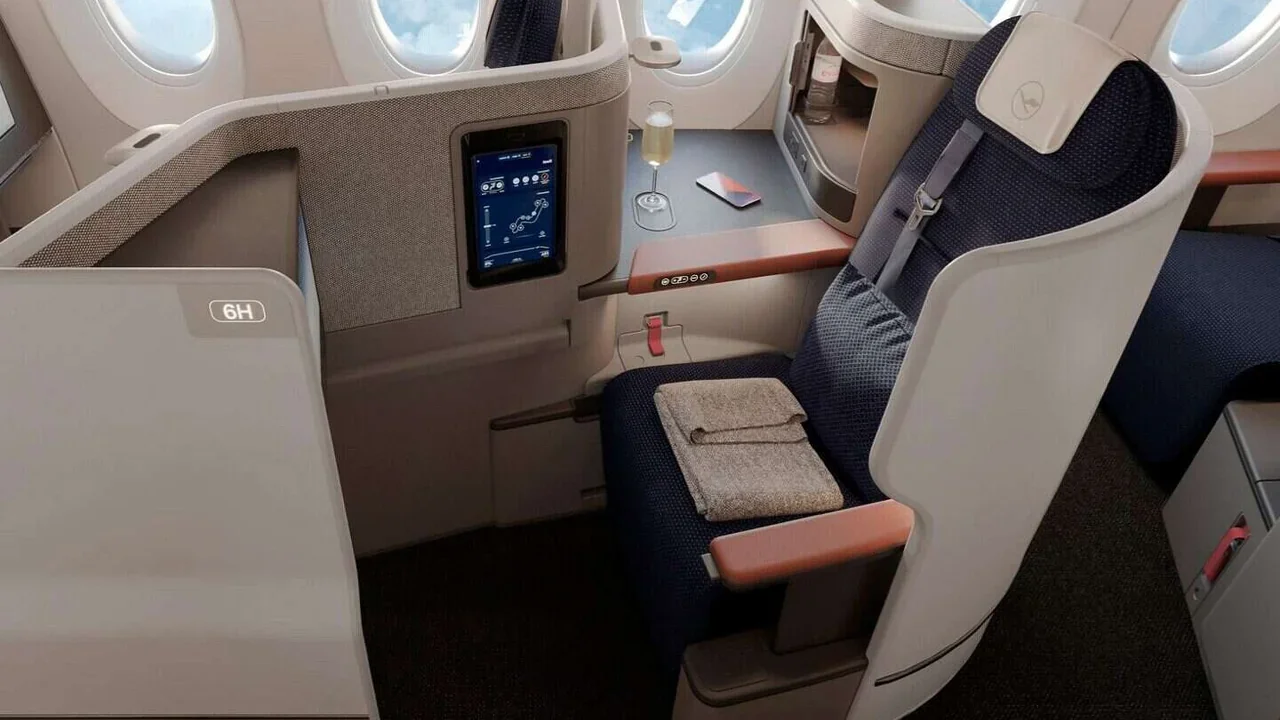
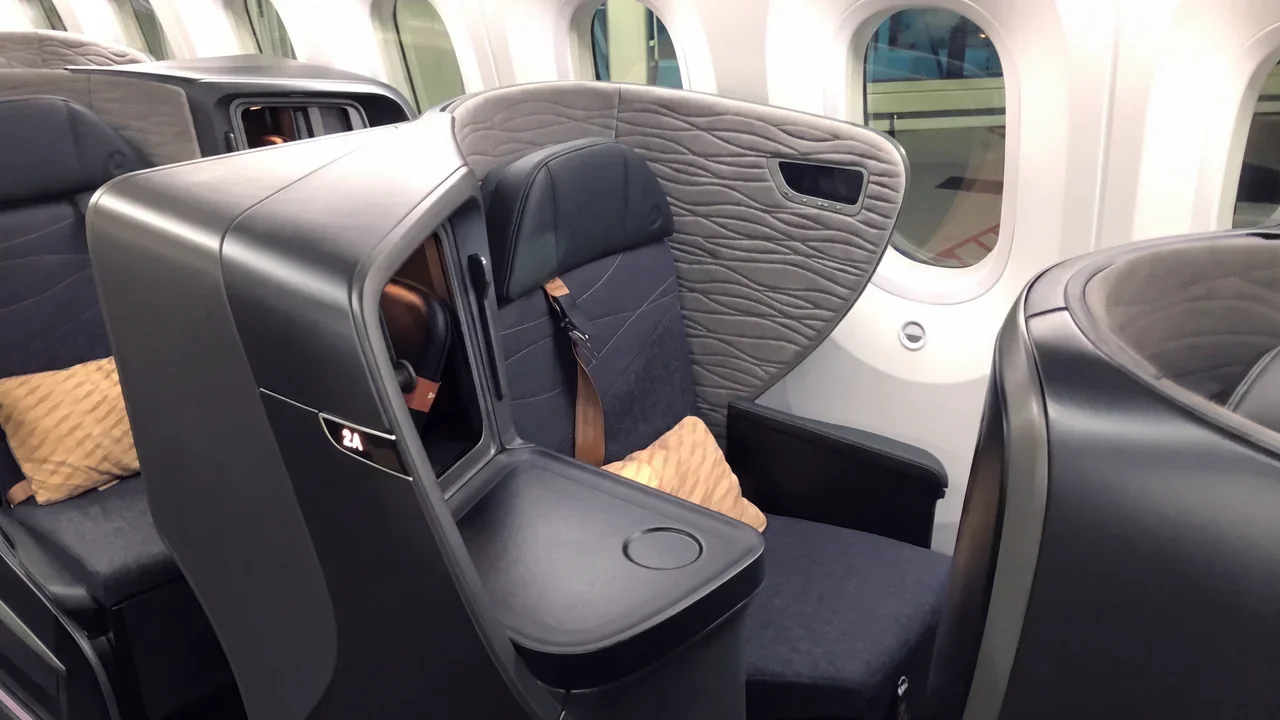
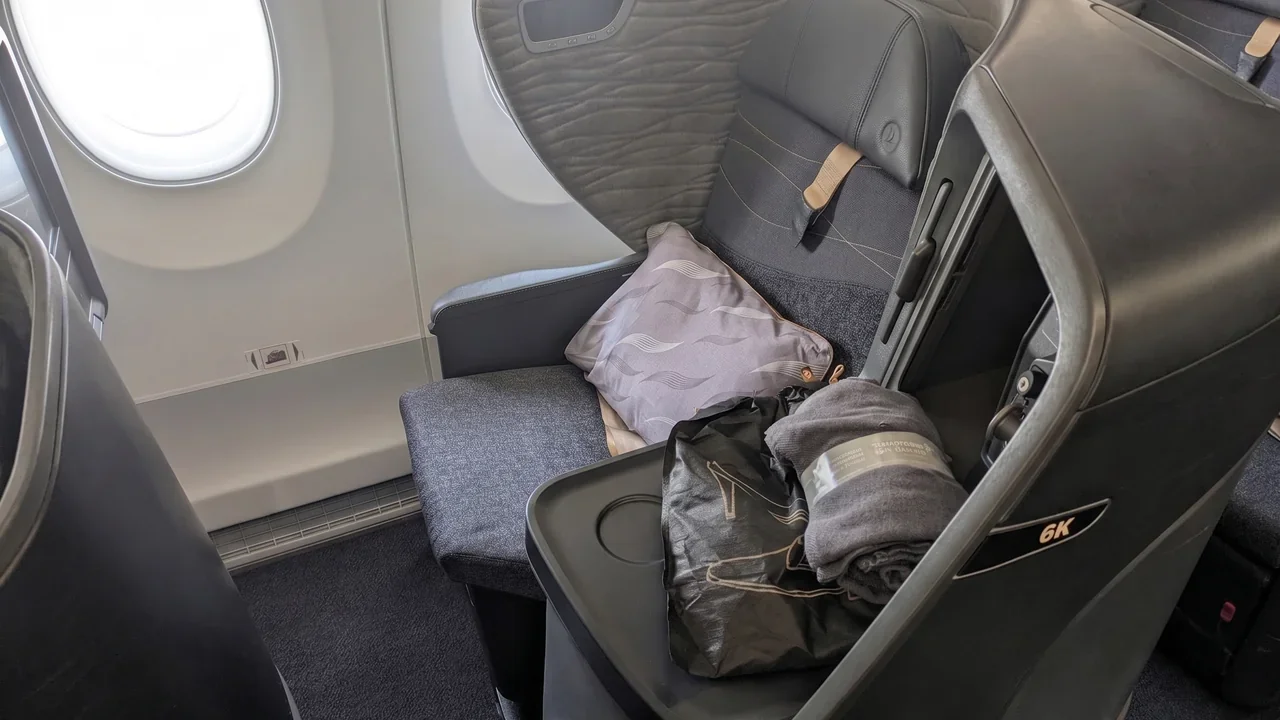
On their best aircraft, Turkish is genuinely good. The 787 Dreamliner seat is a proper herringbone configuration — fully flat, direct aisle access from every seat, reasonable width. The new A350 is similar. If you're booked on one of these, you're getting a solid business class product.
The problem is the 777. Turkish's 777 configuration still uses an angled-flat seat in a 2-2-2 layout on some routes. If you're in the middle seats, you're climbing over someone to get out. If you're on a long overnight, angled-flat is noticeably worse than fully flat. Your body knows the difference by hour six.
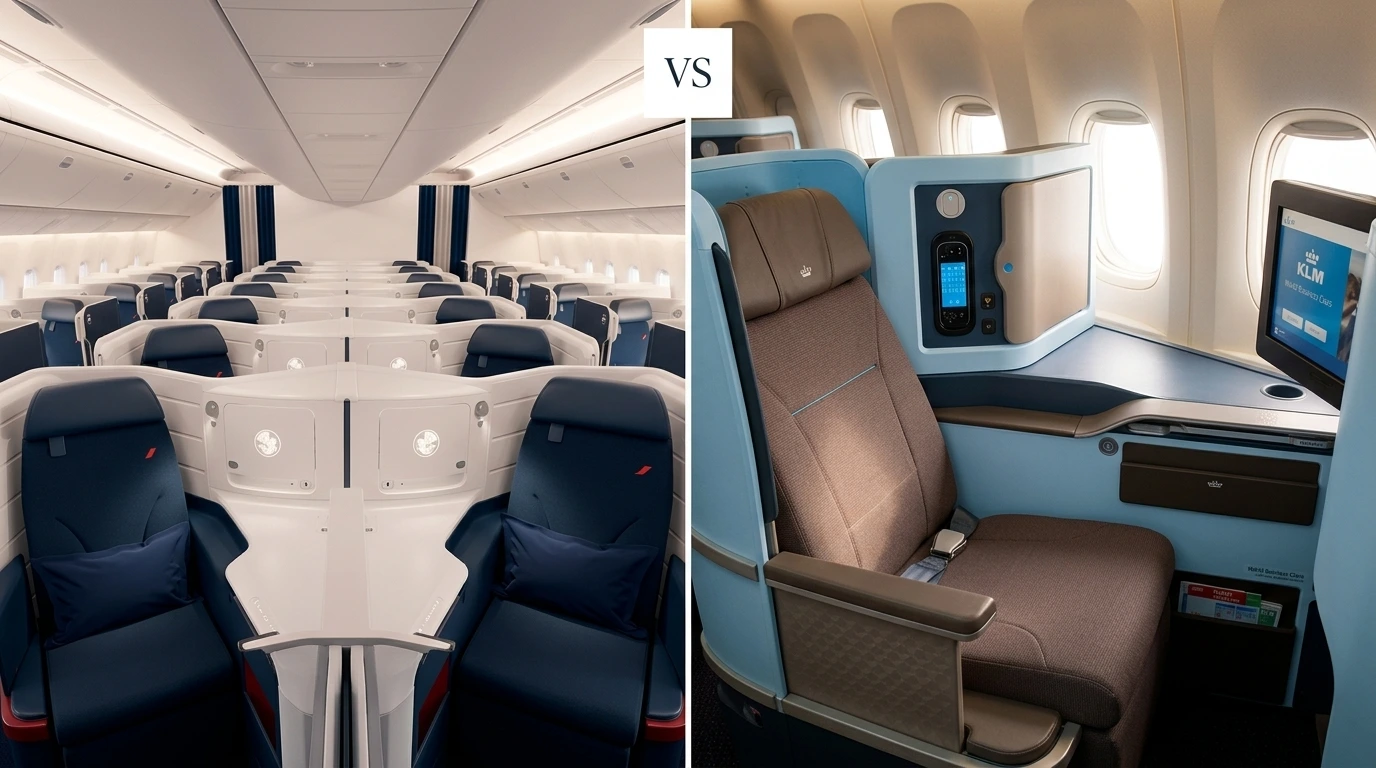
Emirates, on the other hand, has been running a mostly consistent 1-2-1 flat-bed product on their long-haul 777 fleet for years. The seat itself is wider than Turkish's 787 seat. The "mini-bar" between window seats and the aisle is a nice touch. And on the A380 upper deck, it's still one of the more pleasant business class environments in the sky — genuinely quiet, smooth, and the cabin crew have more space to work.
Check the aircraft before you book
Turkish Airlines' seat quality varies significantly by aircraft type. Always check Seatguru or the Turkish website before booking. If your routing puts you on a 777 for the long-haul leg, that changes the value calculation considerably.
I'll say this about Emirates: the bed is comfortable, the mattress topper is real, and the duvet is thick enough to actually sleep under. Turkish's bedding is decent but thinner. On a night flight from Istanbul to Singapore, I woke up with the Turkish blanket bunched at my feet. Small thing, but you notice it.
Turkish vs emirates business class: the lounge situation
This is one of the less-discussed factors, and it matters if you have a connection.
Istanbul Airport's Turkish Airlines Lounge (the Business Lounge, not the Miles&Smiles lounge) is genuinely impressive. It's one of the largest airline lounges in the world — over 54,000 square feet across two floors — and it's actually good inside, not just large. There's a proper restaurant with table service, a golf simulator, a cinema room, a spa. The food is Turkish, which means it's actually flavorful. I've had meze, fresh-made pide, and decent lamb at 2am in that lounge. That's not something I can say about many airport lounges anywhere.
The one downside: it gets crowded. IST is a massive hub and Turkish loads it hard. If you arrive during a peak wave, the restaurant wait can be 20–30 minutes. The lounge has enough space that you can always find a seat, but it's not the serene experience the photos suggest.
Emirates' Business Class Lounge at Dubai is good. The food is reliably solid, the bar is stocked, and the design is typically high-end. But I'll be honest — I find the Dubai lounge a bit anonymous. It's polished and efficient, but it doesn't have the character of the IST lounge. The Moët flows freely, which some people find very important.
If you're connecting through Istanbul with a long layover (3+ hours), eat in the lounge. The table-service restaurant in the Business Lounge is legitimately better than most airport restaurants you'd pay for.
Which airline has the better network for connections?
Both Istanbul and Dubai are exceptional connecting hubs. But they serve different parts of the world more naturally.
Istanbul sits at the geographic crossroads of Europe, the Middle East, Central Asia, and Africa. Turkish Airlines flies to more countries than any other airline — 129 at last count. If you're connecting to a secondary city in Africa, Eastern Europe, or Central Asia, Turkish almost certainly has a more direct routing with fewer stops than Emirates.
Dubai is the better hub for South Asia, Southeast Asia, and Australia. Emirates has an enormous presence in India, Sri Lanka, and across Southeast Asia, with frequencies that Turkish simply can't match on those corridors. If you're flying to a secondary city in India — Hyderabad, Kochi, Ahmedabad — Emirates likely has a direct flight from DXB where Turkish would require a connection within Turkey or a less convenient routing.
For the US and Canada, both hubs work, but Emirates has an edge in terms of partnership options and the sheer number of US gateways it serves. Turkish is competitive on East Coast departures, less so from the West Coast.
Think about your final destination, not just the hub
The better airline is often just whichever one has a more convenient onward connection. A great seat means nothing if you're spending an extra three hours in transit.
Food and drink: more different than you'd expect
Turkish's catering is one of its genuine strengths. The Istanbul-based catering arm (Do&Co) is well-regarded in the industry, and it shows. Menus on long-haul flights typically include proper Turkish dishes alongside international options. The mezze starter is usually fresh, the bread is good, and the Turkish breakfast service (on morning departures) is one of the better airline breakfasts I've had. Real olives, white cheese, tomato, fresh-made pastries.
The wine selection is where Turkish falls behind. Turkey produces wine — some of it decent — but the business class wine list has historically been thin. They've improved it in recent years, but if wine matters to you, Emirates is better.
Emirates' food is consistently well-executed but feels more international-hotel than specifically regional. The Arabic mezze starter is usually good. The main courses vary by route and aircraft. The dessert cart on the A380 upper deck is a nice touch. And the bar service is excellent — Emirates doesn't have the Islamic restrictions on alcohol that you might assume from a Dubai-based carrier, and they stock a proper selection of champagne, spirits, and wine.
One thing I'll give Turkish: the Turkish Delight with coffee service is a small, genuine pleasure. And the coffee itself has gotten better. Emirates' coffee has always been fine but unremarkable.
The miles and points angle
If you're booking with points rather than cash, the picture shifts.
Turkish Miles&Smiles is one of the most underrated frequent flyer programs for award bookings. The program has historically offered some of the lowest rates for Star Alliance partner awards — you can book Lufthansa First Class for 87,500 miles round-trip, which is a genuinely strong redemption. Turkish business class itself can be booked for reasonable rates, and the program sometimes allows one-way awards at exactly half the round-trip price.
Emirates Skywards is less generous on partner awards but has one significant advantage: Emirates First Class awards. If you're trying to get into Emirates First with miles, Skywards is essentially the only path (Alaska Mileage Plan has historically been the workaround, but that window has narrowed). For business class redemptions, Skywards rates are fair but not exceptional.
Miles&Smiles is worth a look even if you don't fly Turkish
Turkish Miles&Smiles miles can be earned on United, Air Canada, Lufthansa, and all Star Alliance carriers. If you're a Star Alliance frequent flyer, you can pool miles there and use them for surprisingly good value business class awards.
So which one is actually better value?
Here's where I'll give you a real answer rather than a hedge.
If you're paying cash, Turkish Airlines is almost always the better value proposition on routes where the fare gap is 20% or more. The seat on the 787 or A350 is genuinely good — not Emirates-level, but good enough that the price difference is hard to ignore. The lounge in Istanbul is excellent. The food is interesting. And the network is enormous.
The calculation flips when you're on a Turkish 777 route (older angled-flat configuration), when the fare gap is small, or when Emirates is operating the A380 and Turkish isn't. In those cases, Emirates' consistency and product quality make up the difference.
I've used BusinessClassSignal to monitor this exact route and the Turkish fares drop harder and more frequently than Emirates on London-Singapore. When Turkish hits $2,600–$2,800 round-trip on the 787 routing, it's a legitimately good deal that I'd book without hesitation.
BusinessClassSignal is a fare monitoring tool that scans 800+ business class routes twice daily and sends you an alert when fares drop below your target price. You set the route, set the threshold, and it tells you when to move. For routes like these where the price swings are meaningful — sometimes $800 or $1,000 in a matter of weeks — that kind of monitoring is what separates people who fly business class regularly from people who occasionally get lucky.
The sweet spot
If Turkish is operating a 787 or A350 and the fare is more than $600 below Emirates for the same dates, book Turkish. If it's an older Turkish 777 and Emirates is operating an A380, pay the premium. Everything else is situational.
The things neither airline tells you
A few things I've noticed that don't show up in airline marketing:
Turkish's business class check-in at Istanbul is fast and the dedicated security lane is usually quick. But the gates at IST are far. The airport is enormous and your gate might be a 15-minute walk from the lounge. Factor that in when you're calculating your lounge time.
Emirates' boarding process is chaotic relative to the product they're selling. Business class priority boarding is loosely enforced at DXB, and you'll often find yourself standing in a scrum with economy passengers. It's a small thing, but after 11 hours in the air, your patience for this on the return is approximately zero.
Turkish's Wi-Fi has improved significantly in the last two years. It's not fast, but it's functional for email on most long-haul flights. Emirates' Wi-Fi is priced annoyingly — you're paying $10–$20 for packages that would have seemed expensive in 2015. On a 14-hour flight, that adds up.
And one more thing: Turkish serves a hot towel before landing as well as before the meal. It's a small ritual. I've come to appreciate it more than I probably should.
Browse all business class routes we monitor if you want to see what fares are doing on specific corridors right now. The monitoring system works by checking published fares twice daily across GDS and airline direct channels — it catches mistake fares and flash sales that disappear in hours, which is exactly the kind of thing you miss if you're checking manually.Monitor Turkish and Emirates business class fares on your route — 14-day free trial, no credit card required
Try Free