Quick summary
Business class flash sales are short-lived pricing errors or intentional promotions where fares drop 40–70% below normal retail. They typically last 2–72 hours and disappear without warning. This article covers how they happen, what triggers them, and how to set up automatic monitoring so you catch them before they're gone.
The one that got away
I've missed more flash sales than I've caught. That's just the honest truth of it.
The one that still stings was a Lufthansa business class round-trip from Chicago to Frankfurt that surfaced on a Tuesday morning in February 2022 — $1,140 all-in. It was live for about four hours. I heard about it from a reader around 2pm. By the time I opened the browser, it was gone. Back to $4,800.
That's the thing about a business class flash sale. The opportunity is real. The window is brutal.
And I've spent the better part of the last decade trying to build a better system for catching them — which is why BusinessClassSignal exists. But before we get into the mechanics of monitoring, it's worth understanding what these sales actually are, because there's a lot of noise out there about this topic and most of it is vague.
What a business class flash sale actually is
A flash sale, in the context of business class fares, is any significant short-term price drop that's both dramatic and temporary. That's the working definition. But the causes vary, and knowing the cause tells you how long you have.
There are three main categories.
Mistake fares are genuine pricing errors — a missing zero, a currency conversion glitch, a fuel surcharge that didn't get applied. These are the famous ones. Air India once accidentally published transatlantic business class at around $300 round-trip. Those fares typically last one to six hours before the airline's revenue management system flags the anomaly. Airlines are not legally required to honor them in most jurisdictions, but many do anyway to avoid the PR hit. Promotional flash sales are intentional. An airline wants to fill seats on a specific route or cabin during a slow booking period, so they run a 24–48 hour sale — sometimes announced, sometimes not. You'll often see these from carriers like Emirates, Cathay Pacific, and Singapore Airlines targeting specific markets. These are generally more bookable without fear of cancellation. Distressed inventory is the quieter version. Seats haven't sold close to departure (typically within 21–45 days), and the airline's yield management system automatically drops prices to fill the cabin. These aren't "sales" per se — they're just the algorithm doing its job. But from a traveler's perspective, they look identical: a price that wasn't there yesterday.How flash sales are set — and why they disappear so fast
Airlines don't publish fares the way you'd think. There's no one person sitting at a desk typing "$4,200 to London." It's a layered system of fare buckets, booking classes, and distribution channels — global distribution systems like Sabre, Amadeus, and Travelport that sit between the airline and the booking sites you actually use.
When a flash sale fare goes live, it gets pushed into that distribution system. But the fare has conditions attached: an availability code (like "I" class or "D" class for business), applicable travel dates, advance purchase requirements, and a ticketing deadline. Sometimes the ticketing deadline is set wrong — "must purchase by January 1" instead of "January 31" — and that's how you get a fare that technically expires in 12 hours.
The speed of propagation is also uneven. A fare published by the airline might show up on Google Flights within minutes, but not appear on a specific OTA for another hour or two. And then it can vanish from one platform while still bookable on another. This inconsistency is part of why you often see reports of people booking a deal that "everyone said was dead."
Book directly when you spot one
When you see a flash sale fare, book directly on the airline's site if at all possible. Third-party bookings on mistake fares are more likely to be cancelled quietly — and you want the airline on the hook, not an OTA.
When do business class flash sales happen?
Is there a best time of year to watch for deals?
Yes, and I'll be specific about it.
The two periods I've seen the highest concentration of genuine business class flash sales are late January through mid-February, and late August through September. January/February is straightforward: it's after the holiday rush, premium cabins are emptier, and airlines start getting aggressive. The August/September window is the tail end of summer — leisure travel drops, corporate travel hasn't fully kicked back in, and distressed inventory starts showing up.
November is worth watching too, but for a different reason. Some carriers run pre-holiday promotions targeting the January–March departure window. You're booking two to four months out, which suits advance planners.
The weakest periods for flash sales are June through early August and mid-December through early January. Premium cabins fill naturally during those windows, and airlines know it.
What days of the week do fares drop?
Tuesday and Wednesday are the classic answers, and they're still broadly correct — but less reliably so than they were five years ago. The old pattern was that airlines would release sales on Monday evening after reviewing weekend booking data, and fares would hit distribution systems Tuesday morning.
That's still a real pattern. But revenue management is increasingly automated, which means price drops can happen any day, any hour. I've seen significant flash sale fares surface on Saturday evenings and Friday afternoons. The Tuesday rule is a starting point, not a guarantee.
What I'd say with more confidence: avoid checking only on weekends. That's when most casual deal hunters are browsing, competition for the fares is highest, and the juiciest drops tend to already be gone.
Real examples of business class flash sales worth knowing about
Let me give you some concrete numbers, because this is where most articles go vague and useless.
ANA has run sub-$2,500 round-trip business class sales from JFK to Tokyo several times in the past three years. The most recent I tracked was in October 2023 — the fare was live for roughly 31 hours. Normal retail at the time was sitting around $5,800–$6,200.
Emirates has a pattern of running flash promotions on the LAX–Dubai route specifically, usually targeting their less-full A380 upper deck. I've seen this one drop to $2,100 round-trip during promotional windows, against a normal price of $5,400–$7,000 depending on season.
The BOS–LHR route in BA business class has hit the $1,800–$2,000 range a handful of times during what I'd call "quiet promotions" — no press release, no email campaign, just fares that quietly appear in the GDS. These are the ones that are genuinely hard to catch without automated monitoring.
Why email alerts and deal forums aren't enough
I say this as someone who ran a deal newsletter for three years before building something better: the email model is broken for flash sales.
Here's the problem. Someone spots a fare. They post it to a forum or Slack group. The editor of a deal newsletter sees it, verifies it, writes a blurb, schedules it in their email system. By the time it hits your inbox, you're looking at a one to four hour delay minimum. For mistake fares, that's often the entire window. For promotional sales, you're catching the last few hours.
Deal forums are faster, but they require you to be watching. And the good ones — the communities that actually catch real flash sales — are full of noise. You're sifting through posts about economy sales, hotel points bonuses, and credit card promotions to find the two business class fare drops that matter to you.
Set your monitoring specifically on routes you'd actually book. The more targeted your alerts, the faster you can act — and acting fast is everything with flash sales.
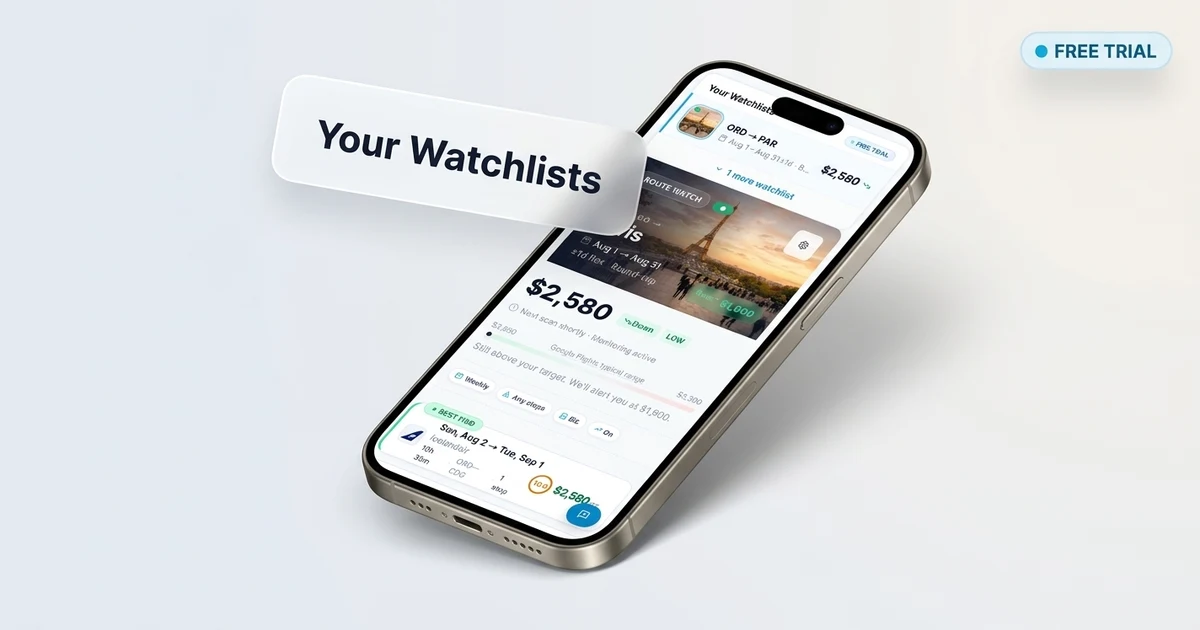
This is the gap that BusinessClassSignal's monitoring system was built to address. BusinessClassSignal is a fare monitoring tool that scans 800+ business class routes twice daily and alerts subscribers when prices drop below their target threshold. You set a route and a target price — say, JFK to Tokyo under $2,600 round-trip — and the system checks it every few hours and emails you the moment a qualifying fare appears. No forums, no newsletters, no waiting.
The difference between twice-daily monitoring and checking manually is that you don't miss the Tuesday morning drop because you were in a meeting.
How to actually catch a business class flash sale

This section is the practical part. Here's the setup that works.
Know your routes in advance. The biggest mistake people make is waiting until they have a trip in mind and then trying to catch a deal. Flash sales don't wait for you to decide you want to go to Japan. You need to know, right now, that you'd book JFK–NRT business class if it hit $2,500. That's the mindset. Set specific price thresholds. "Alert me when it's cheap" is useless. "Alert me when JFK–LHR round-trip in business class drops below $1,900" is actionable. To set a meaningful threshold, you need a baseline — check Google Flights for your target routes and note what normal business class retails for. Then set your alert at 50–60% of that number. That's your flash sale territory. Keep flexible travel dates if you can. Not everyone can do this, but if you have flexibility within a two to three month window, your chances of the fare aligning with your alert go up dramatically. Promotional sales are usually date-specific — they might only apply to travel in a four-week window. The more dates you're willing to fly, the more likely one of those dates hits your target. Have your passport and payment ready. This sounds obvious. But I've heard from readers who spotted a deal, spent 20 minutes finding their passport number, and came back to a sold-out or expired fare. When an alert fires, you should be able to complete a booking in under eight minutes. That means knowing your frequent flyer numbers, having a credit card ready, and keeping your passport details somewhere you can grab them fast. Book first, optimize later. If you see a legitimate flash sale fare on a route you care about, book it. You can request seat changes, check upgrade options, and review the connection times after. The fare is the perishable thing. The seat assignment is not.Check the fare rules before you get excited
Some flash sale fares come with non-refundable, non-changeable conditions. Read the fare rules before you book. A $1,900 business class ticket that can't be changed isn't necessarily a bad deal — but you should know what you're getting into.
What BusinessClassSignal monitors and how it works
Since we built this thing and I use it myself, I'll tell you how it actually works rather than what the marketing copy says.
BusinessClassSignal pulls fare data from the GDS twice daily — once in the early morning (around 6am ET) and once in the early afternoon (around 1pm ET). Those windows aren't random: they're timed to catch the Monday evening revenue management updates (which usually push into distribution by Tuesday morning) and any midday adjustments that airlines make when they see booking pace for the day.
When a fare on a monitored route drops below a subscriber's threshold, the system sends an email alert with the fare details, the booking class, travel date windows, and a direct link to book. No aggregation, no "deals roundup" — just the specific fare you asked to be notified about.
You can start monitoring your routes free for 14 days. No credit card required for the trial. I'd say set up at least three routes you genuinely care about — that's enough to understand how the alert frequency works and what kinds of price drops actually show up in the real world.
The business class deals page also shows recent drops we've tracked, so you can see what's been firing lately before you commit to monitoring anything.
One honest note: twice-daily monitoring isn't the same as real-time. A mistake fare that goes live at 10am and dies at 2pm might not get caught in a morning scan if it launched after 6am. This is a limitation, and I won't pretend otherwise. What the system is genuinely good at is catching promotional sales and distressed inventory drops, which tend to stick around long enough for a twice-daily check to catch them.
The routes worth monitoring for flash sales right now
If you're starting from scratch and want to know which routes have historically produced the most flash sale activity, here's where I'd focus attention based on what we've tracked.
Transatlantic routes — particularly JFK, BOS, ORD, and LAX to London, Paris, Frankfurt, and Amsterdam — are the most active for flash sale pricing. These are high-volume routes with a lot of airline competition, and carriers regularly undercut each other with short-term promotions. London is probably the single most flash-sale-prone destination for US-originating premium travelers.
Transpacific routes to Tokyo, Hong Kong, and Seoul show up regularly, particularly on ANA, Cathay, and Korean Air. These tend to be promotional rather than mistake fares, which means slightly more warning and slightly longer windows.
Middle East routes (Dubai, Doha, Abu Dhabi) come and go. Emirates and Qatar both run aggressive sales campaigns periodically, and when they fire, they're often genuinely good value — not just slightly-less-expensive-than-normal, but actually competitive with what you'd pay in economy on a legacy carrier.
The routes I'd watch less obsessively: domestic US business class (the price dynamics are completely different), and ultra-premium routes like JFK–SYD or LAX–JNB where inventory is thin and flash sales are rare.
Browse all the routes we monitor if you want to see the full list before setting up alerts.If you're targeting a specific anniversary trip or bucket-list destination, set your alert 6–9 months before the trip. Flash sales for premium cabins sometimes surface well in advance, especially on routes where airlines are trying to build load on new or relaunched service.
One last thing about patience
I've had readers tell me they set up monitoring, waited two months, and never saw a flash sale on their route. And I believe them — some routes just don't produce them consistently. Certain carriers are more rigid on pricing than others. Some routes have limited competition and the airline knows it.
But I've also had readers who set an alert on a Thursday and got a hit by the following Tuesday. The variance is real.
What I'd push back on is the idea that you need to get lucky. You don't need luck if you have the right infrastructure set up and you act fast when it fires. The luck part is already baked into the monitoring — the system is doing the watching so you don't have to. Your job is just to be ready.
BusinessClassSignal monitors 800+ routes and alerts you the moment a business class fare drops below your target price — 14-day free trial, no credit card required.
Start monitoring free