Quick summary
Flying out of a cheaper departure city can cut your business class fare by $800–$2,000 on transatlantic and transpacific routes. The strategy is simple: position yourself to a secondary hub by economy, then board your long-haul business class flight from there. This article covers the specific airports worth knowing, the routes where the savings are biggest, and the logistics that make or break the whole thing.
The positioning flight idea, and why more people don't do it
Most travelers anchor themselves to the nearest major airport without questioning it. If you live near JFK, you fly from JFK. If you're in London, you fly from Heathrow. And that makes sense most of the time — convenience has real value. But when you're buying business class across the Atlantic or Pacific, you're already spending serious money, and a $150 positioning flight to a cheaper departure city can save you four or five times that on the main ticket.
The concept is called positioning, and it's been used by frequent flyers for years. You fly a short domestic (or intra-European) leg in economy, often the night before or on the same day, and then board your actual long-haul flight from an airport where fares run structurally lower. It sounds fussier than it is.
The reason more people don't do it is mostly psychological. There's something about adding a connection that feels like regression — like you're going backwards. But a 90-minute domestic hop the evening before your transatlantic departure isn't a connection. It's a travel day well spent.
Why fares are cheaper from certain airports
This isn't random. Airports with lower business class fares tend to share a few characteristics.
Less premium demand is the main one. When a route doesn't have a lot of corporate travelers booking last-minute full-fare tickets, airlines can't hold out for those prices. They discount to fill the cabin. Secondary business hubs — think Houston, Philadelphia, Manchester, or Milan Malpensa — often have this dynamic working in your favor.
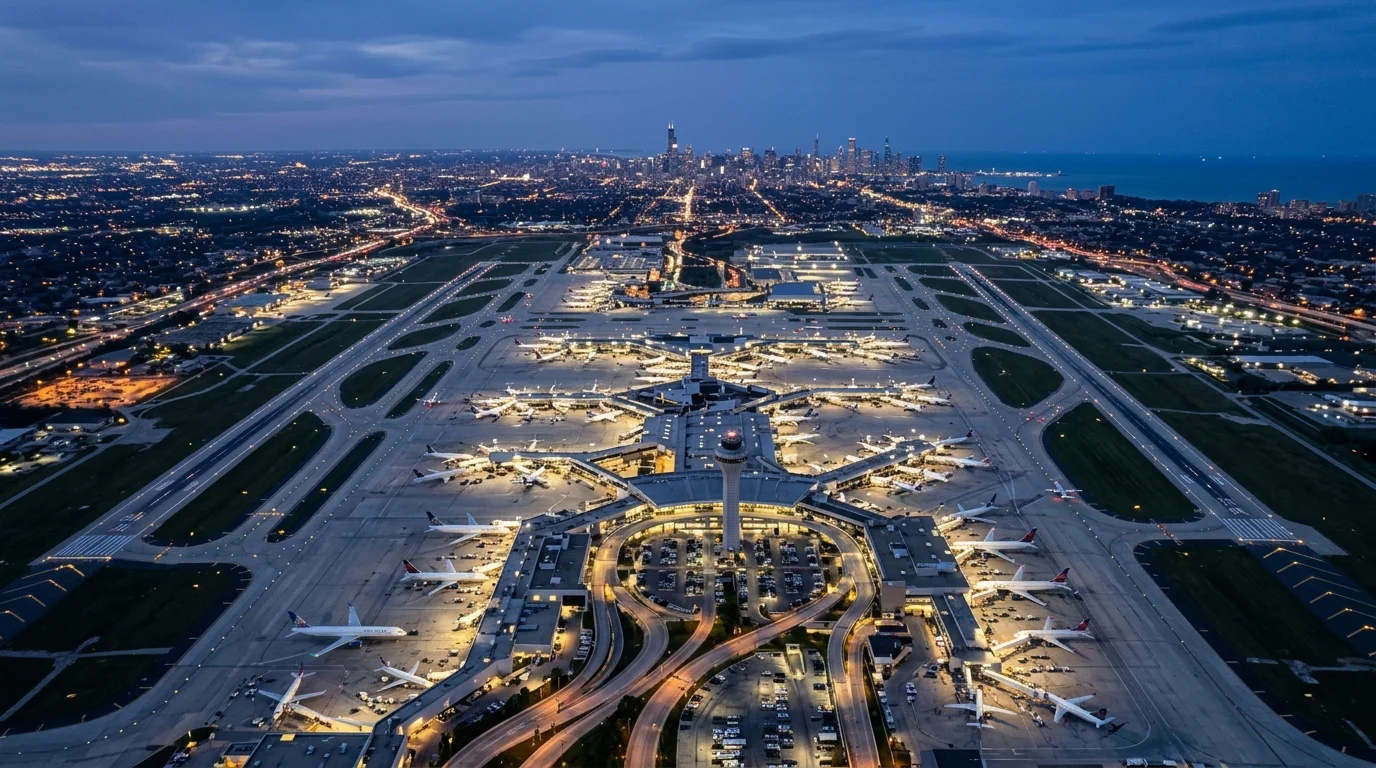
Competition matters too. At airports where multiple carriers operate the same long-haul route, they undercut each other. Chicago O'Hare is a good example: United and American both fly to London from there, and that pressure keeps prices from drifting as high as they do at constrained hubs.
And then there's fuel stops and routing. Some of the most interesting cheap departure cities are technically "tag" cities on multi-stop itineraries, where pricing quirks in the airline's revenue management system produce fares that look almost accidental. Milan Malpensa to New York in Lufthansa business class via Frankfurt, for instance, is frequently $500–$700 cheaper than the same itinerary originating in London.
The best cheap departure cities in North America
Which US airports consistently produce the cheapest business class fares?
Let me be specific here, because "secondary airports" is too vague to be useful.
Houston (IAH) is one I keep coming back to. United's hub there generates a steady stream of business class deals to Europe and South America — often $200–$400 cheaper than the same United itinerary out of Newark or JFK. The Houston market just isn't as corporate-saturated as New York, and it shows in the fares. I've personally caught IAH–LHR in United Polaris at $2,100 round-trip when the same routing from EWR was sitting at $2,800.The positioning math
A positioning flight from New York to Philadelphia costs around $80–$120 on a bad day. If you're saving $600 on your transatlantic ticket, that's a clean $480–$520 net saving. Do that twice a year and you've essentially funded a free business class ticket.
Cheap departure cities in Europe
The European angle is slightly different, because the continent is smaller and positioning flights are cheaper. A €49 Ryanair or easyJet hop is a reasonable price to pay for a significantly cheaper transatlantic or Middle East business class fare.
Manchester (MAN) is probably the single best cheap departure city in Europe for North America-bound business class. British Airways, Virgin Atlantic, and American all fly direct to the US from there, and fares consistently undercut London Heathrow by a meaningful margin. I've tracked MAN–JFK in Virgin Upper Class at £1,800 round-trip when the equivalent LHR departure was £2,400. That's enough to fly London–Manchester return in business class on Avanti and still come out ahead. Milan Malpensa (MXP) is one for Lufthansa Group fans. Routing through Frankfurt or Munich on Lufthansa or Swiss from Milan regularly produces transatlantic fares that are cheaper than originating in the UK or Germany itself. There's a quirk in how Lufthansa prices European origin points that makes MXP particularly interesting. Keep an eye on Lufthansa fares out of Milan specifically. Lisbon (LIS) has become a legitimate cheap departure city in recent years, partly because TAP Air Portugal uses it as a hub and prices aggressively to fill premium cabin seats, and partly because the growing expat and digital nomad crowd in Lisbon hasn't translated into premium demand the way you'd see in Frankfurt or Paris. TAP's business class product isn't the most luxurious, but the fares to North America and Brazil are frequently $400–$600 below what you'd pay from London or Amsterdam. Dublin (DUB) is worth knowing about for one specific reason: US pre-clearance. You clear US customs and immigration in Dublin before you board, which means you land at a domestic terminal in the US and skip the immigration queue entirely. Aer Lingus business class from Dublin to New York or Boston runs cheaper than most transatlantic options, and the pre-clearance benefit is real. I've used it and the difference at JFK arrivals is dramatic.If you're routing through Dublin, book the Aer Lingus Gold Circle lounge access in advance. Walk-up rates are higher and the lounge does fill up on busy summer evenings.
The logistics that actually matter
How do you handle luggage when positioning to a cheaper departure city?
This is the question that stops people, and it's a fair one. There are a few ways to handle it.
The cleanest option is to book your positioning flight on the same ticket as your long-haul itinerary. Some search tools let you set a different origin and connection point, and if you can get everything on one booking, your bags check through automatically and you're protected if the positioning flight delays you. The downside is that booking this way often means using the long-haul carrier's domestic feed, which can be more expensive than a separate budget airline ticket.
The more common approach for experienced travelers is two separate bookings. You fly your positioning flight the evening before and stay overnight near the departure airport. This eliminates any risk of the positioning flight disrupting your long-haul departure, and it lets you use whatever cheap carrier you want for the hop. The cost of a budget hotel near the airport (usually $80–$150) should be factored into your savings calculation, but it rarely changes the math enough to make the strategy not worthwhile.
What I actually do: I book the positioning flight separately, usually on Southwest or JetBlue domestically where I can check bags without fees, fly the evening before, and stay at a decent airport hotel. I've never missed a long-haul flight using this approach. The one time I came close, a Southwest delay meant I landed with about 90 minutes to spare before check-in closed — uncomfortable, but fine.
Don't book tight same-day connections
If you're doing two separate bookings and something goes wrong with the positioning flight, the airline operating your long-haul flight has zero obligation to rebook you. Give yourself a buffer. Same-day positioning is a risk that isn't worth the saved hotel night.
Carry-on only is the third option and the simplest. For positioning flights under two hours, a carry-on and personal item is genuinely fine. This works especially well for Europe, where a 90-minute Ryanair hop doesn't require much.
Finding the cheap departure city fares before they disappear
Here's the frustrating part: these fares don't stick around. A business class deal out of Philadelphia or Manchester might last 48 hours, sometimes less. Revenue management systems at major carriers are sophisticated, and once a route starts booking up, the algorithm pulls the cheap inventory fast.
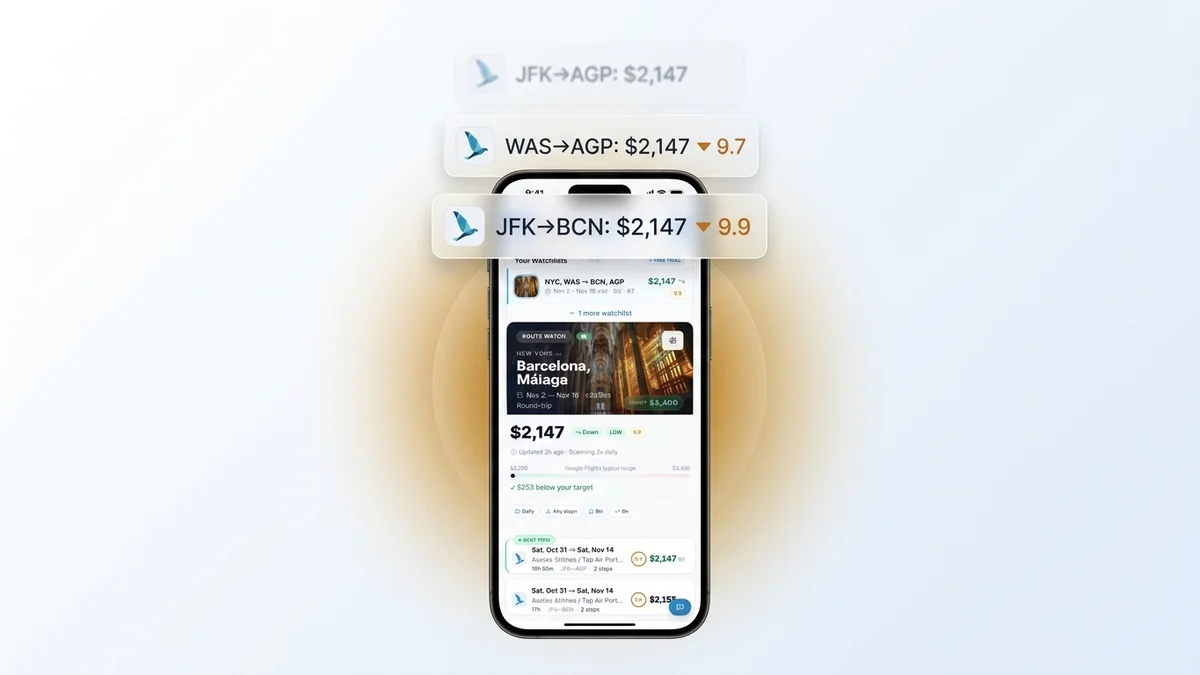
This is exactly the problem that BusinessClassSignal was built to solve. BusinessClassSignal is a fare monitoring tool that scans 800+ business class routes twice daily and alerts subscribers when prices drop below their target threshold. You set the route you care about — say, PHL to LHR or MAN to JFK — enter the maximum price you're willing to pay, and you get an email or push notification the moment a fare comes in under that number.
What makes it useful for the positioning strategy specifically is that you can monitor multiple departure cities for the same destination simultaneously. If you're flexible about whether you position to Philadelphia, Boston, or Chicago before flying to Europe, you can track all three and take whichever fires first. You can see how the monitoring system works in detail, but the short version is: it checks fares more frequently than you realistically can, and it doesn't forget to look.
The fares I've cited in this article — IAH–LHR at $2,100, MAN–JFK at £1,800 — those are real numbers I've seen, but they're not sitting there waiting for you right now. They appear, they disappear, and the people who catch them are the ones who were already watching. Browse all routes we monitor if you want to see what's available for your specific itinerary.
Set your target price about 15–20% below the average fare for that route, not 50% below. You'll get more realistic alerts more frequently, and you'll actually book them.
When the positioning strategy doesn't work
I want to be honest about this, because it's not always worth it.
If you have status with a carrier and you're flying out of a hub where you get upgrades or lounge access, adding a positioning flight on a different airline means you lose that. If you're positioning from JFK to Philadelphia on American to fly British Airways to London, you're not getting your British Airways lounge access during the positioning leg. You're sitting in a crowded American terminal in coach.
Short trips are also harder to justify. If you're flying business class for a three-day trip to London, the overhead of positioning — the extra travel day, the hotel, the earlier departure — starts to eat into the time you actually have. The strategy makes most sense for longer trips where the savings are significant and the positioning effort is a small percentage of the total travel involved.
And sometimes the fares just aren't that different. Not every route has a meaningful gap between the main hub and a secondary airport. New York to Tokyo is a good example: the major carriers price that route fairly consistently across JFK, EWR, and even ORD. The positioning math doesn't always work.
Check the numbers before you commit. American Airlines fares out of Philadelphia versus New York vary by day and season. Some weeks the gap is $700. Some weeks it's $80. Only one of those is worth the hassle.
A few routes where I've seen it pay off personally
To make this concrete: here are routes where I've actually used the positioning strategy and found it worthwhile.
London–New York via Manchester. I was living in London and needed to get to New York for a conference. The LHR options were brutal that week — BA and Virgin were both over £2,600 return in business. I booked a £49 easyJet flight to Manchester the night before and caught a Virgin Upper Class fare from MAN at £1,750. Net saving after the easyJet ticket and a £110 Travelodge near MAN: roughly £650. That's not nothing. East Coast US to Tokyo via Seattle. I was based in Washington DC and the IAD–NRT options were genuinely terrible that month. Delta had a SEA–NRT fare in Delta One at $2,400 return. A $140 JetBlue positioning flight to Seattle and an Airbnb near the airport cost me $260 total. Compared to what I'd have paid from IAD, I saved about $900. The Delta One product on that route, for what it's worth, is solid on the 767-400 — the reverse herringbone seats are comfortable, though the 767 fuselage is narrower than you'd like. New York to South America via Miami. LATAM prices its MIA–GRU and MIA–SCL routes aggressively when they're trying to fill the cabin, and those fares often don't appear on the JFK or EWR version of the route. A $120 round-trip positioning flight to Miami on Spirit — yes, Spirit, which I used with zero checked bags and zero expectations — saved me $500 on the main ticket.The common thread is flexibility. You need to be willing to look at multiple departure cities, run the math honestly including positioning costs, and book quickly when something good appears. It's a bit more work than just searching your home airport and clicking buy. But over time, the savings compound into something real — an extra trip you wouldn't otherwise have taken, or a significantly better seat on trips you were going to take anyway.
Monitor cheap departure cities for business class — 14-day free trial, no card required
Try Free