```html
Quick summary
Business class price drops are real, but most of them disappear within 6 to 48 hours — and the best ones are often gone in under 90 minutes. Manual deal-hunting almost never catches them in time. Automated fare monitoring is the only reliable way to act before the window closes.
I've been doing this long enough to have a folder on my desktop called "missed it." Screenshots of fares I found an hour too late. A $1,400 round-trip on Lufthansa to Frankfurt. A $1,900 lie-flat deal on Air France to Paris that I spotted after it had already repriced to $4,600. These weren't rumors. They were real fares that real people booked — just not me, because I wasn't watching at the right moment.
That folder is part of why I built BusinessClassSignal. But I'm getting ahead of myself.
The question I get more than any other from readers is some version of: "If I see a business class deal, how long do I have?" The honest answer is: not long. Sometimes minutes. Occasionally a few days. The variance is genuinely huge, and understanding what drives it changes how you approach fare monitoring entirely.
What a "price drop" actually means in practice
Airlines don't publish a sale and go home. Revenue management systems are running constantly — repricing seats based on load, competition, booking pace, time to departure, and signals nobody outside the airline fully understands. When a business class fare drops, it's usually not intentional marketing. It's the system doing what it's designed to do: fill seats at the best available yield.
Sometimes a competitor drops their price on a route and the system matches it automatically. Sometimes a block of seats gets released from a corporate contract that didn't get used. Sometimes it's a fare filing error that slips through before someone catches it. And sometimes — genuinely — it's just the algorithm deciding that $2,100 is the right price for a Tuesday departure that's sitting at 40% load with 10 days to go.
None of these scenarios have the same lifespan. That's the part most deal-hunters don't account for.
The anatomy of a short-lived deal
The fastest-disappearing drops tend to be the best ones. There's a cruel logic to that.
Fare errors — where a business class ticket gets filed at economy prices, or where a fuel surcharge gets miscalculated — can be live for as little as 20 minutes before someone at the airline notices. These are the fares that get shared on deal forums and then vanish while people are still arguing in the comments about whether to book. I've seen it happen in real time. By the time a post gets 50 upvotes, the fare is gone.
Competitive matching is slightly more durable, but not by much. If Delta drops JFK–LHR to $2,200 because Virgin Atlantic quietly repriced, British Airways might match within a few hours. But once the original trigger fare gets corrected or the competition decides to re-anchor higher, the matched fares often follow within a day.
The longer-lived drops — the ones that stay bookable for two or three days — tend to be deliberate soft sales. An airline testing demand on a thin route. A carrier trying to stimulate bookings on a departure that's historically underperforming. These are less dramatic percentage-wise, but they're actionable with a more normal decision timeline.
Don't wait on a
I see this constantly. Someone spots a solid business class fare and decides to hold off, hoping it drops further. In my experience, that works maybe 15% of the time. The other 85%, the fare either holds or reprices up. If the number works for you, book it.
How quickly do the best deals disappear?
I've tracked this informally for years, and more systematically since we started building out the data side of BusinessClassSignal. The pattern is pretty consistent.
Fares that drop more than 50% below the typical price for a route — what I'd call genuinely exceptional deals — have a median lifespan of around 90 minutes to 4 hours. Some are gone faster. A few survive a full day if they're on a lower-traffic route where demand doesn't immediately spike.
Fares that drop 30–50% below typical tend to last longer: often 12 to 36 hours. These are the deals most worth optimizing for, because they're still excellent value and the window is wide enough to actually act on.
Drops in the 15–30% range can last days. These are the ones airlines sometimes let ride intentionally — they're not giving away the store, they're just being competitive. You'll see these on routes with multiple carriers where pricing pressure is ongoing.
Why manual searching almost never works
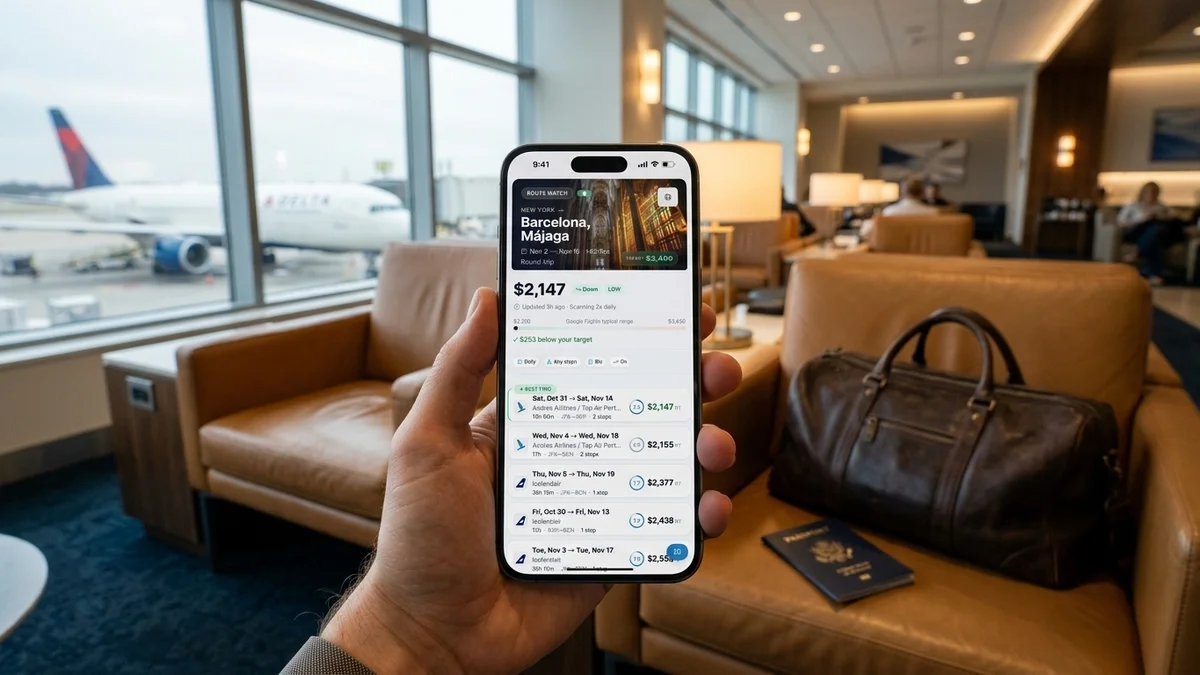
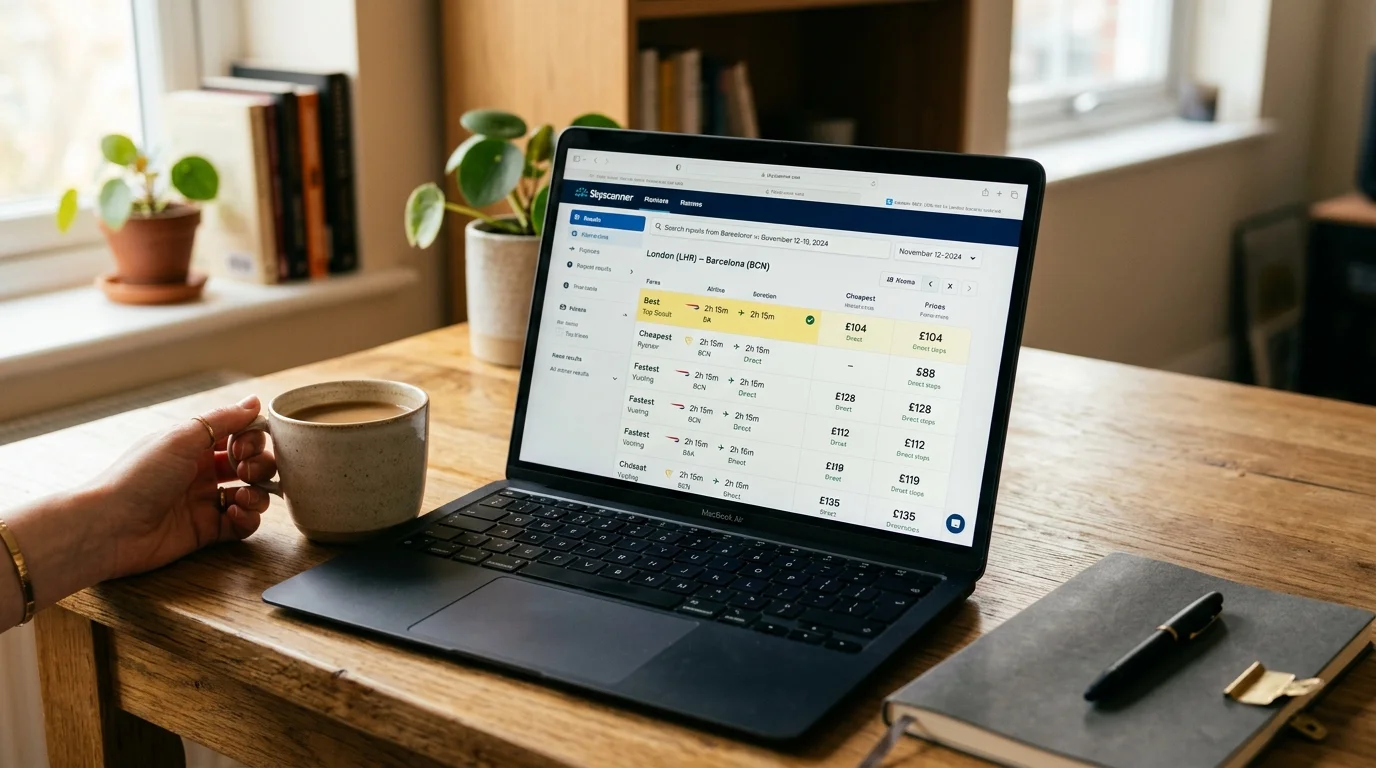
Here's what manual fare searching actually looks like. You open Google Flights or Kayak. You pick a route. You scan a few dates. Maybe you check a second site to cross-reference. The whole process takes 10 to 20 minutes if you're reasonably practiced at it. Then you close the browser and go back to your life.
That search captures a single snapshot in time. You have no idea what the fare was an hour ago, or what it'll be in two hours. You might be looking at a price that's been stable for a week, or you might be looking at a window that closes in 45 minutes. There's no way to tell from a single search.
To manually catch a short-lived business class price drop, you'd need to be searching the same route multiple times per day, every day, for weeks or months. Nobody does that. And even if you tried, you'd miss the overnight drops — which are, in my experience, some of the most common ones. Airlines reprice overnight when traffic is low. A fare that gets filed at 2am is often gone before the East Coast wakes up.
If you're manually monitoring a specific route, try searching at 6am your time. Overnight fare changes are common, and you'll catch them before demand spikes and triggers a reprice.
This is where automation earns its keep. BusinessClassSignal scans over 800 business class routes twice daily — and for high-priority routes, more frequently than that. When a fare drops below your target threshold, you get an alert immediately. Not in a weekly digest. Not in a "here are some deals we found this month" newsletter. Right away, while the window is still open.
You can read more about how the monitoring system works if you want the technical side of it. The short version: we're not scraping Google Flights. We're pulling from GDS data and airline direct feeds, which means we catch things that don't always surface on consumer search tools.
Real examples of how fast things move
Let me give you a few specific cases from the past couple of years, because the abstract stuff only goes so far.
Last spring, a BusinessClassSignal subscriber caught a fare on Lufthansa — business class, round-trip from Chicago O'Hare to Munich — at $1,680. The typical price on that route runs $3,800 to $4,500 depending on season. The alert went out at 7:14am. By 9:30am, the fare had repriced to $2,900. The subscriber booked at 7:47am. That's a 33-minute decision window between alert and reprice.
Different situation: an Air France sale on JFK to Paris CDG earlier this year. Business class dropped to $2,100 round-trip, which is low but not shocking for that route during a slow period. That fare stayed bookable for about 52 hours. Multiple subscribers caught it at different times over two days. That's the other end of the spectrum — a deliberate soft sale with a real booking window.
And then there are the ones that are just painful. A reader emailed me last fall about a Cathay Pacific deal from LAX to Hong Kong — business class, around $1,900 round-trip. She'd seen it mentioned on a forum, went to book it, and it was already gone. The forum post was four hours old. She didn't have an alert set. She just stumbled across it too late. That's the most common story I hear.
Does the route affect how long a deal lasts?
Yes, and it's one of the more useful things to understand if you're trying to time your bookings.
High-traffic routes — JFK to London, LAX to Tokyo, ORD to Frankfurt — have more eyes on them at all times. More deal-hunters, more corporate travel managers, more automated booking tools. A price drop on one of these routes gets noticed fast and books fast. The window is shorter because demand is higher.
Thinner routes — secondary cities, less popular destinations — tend to have longer-lived drops simply because fewer people are watching. A business class deal on a route like Lisbon or Budapest might sit for a day or two because the audience of people actively monitoring it is smaller.
That's actually an argument for broadening your route monitoring beyond just the obvious ones. If you're flexible on destination and you're primarily trying to fly business class at a good price, secondary European cities often have better deals with longer booking windows. I've flown into Lisbon and trained to Madrid more than once specifically because the fare was significantly better than flying direct to MAD.
Consider secondary gateway airports
Fares into secondary hubs — Lisbon, Budapest, Warsaw, Dublin — often drop further and stay low longer than fares into London, Paris, or Frankfurt. If you're flexible on entry point, you can meaningfully expand your chances of catching a good deal with time to act on it.
The psychology of "I'll book it tomorrow"
This is the thing that kills more deals than anything else.
You get an alert, or you find a fare yourself. The price is good. You think, let me just think about it overnight. Maybe check with my partner. Maybe see if the dates line up perfectly. Maybe wait to see if it drops a bit more.
I understand this impulse completely. Business class tickets aren't impulse buys. They're real money — even a "deal" at $2,200 round-trip to Europe is a meaningful purchase for most people. Of course you want to think it over.
But the data is pretty unambiguous. The vast majority of business class price drops that are meaningfully below market don't wait for you. They're gone before you've finished your morning coffee the next day. The deliberate sales with multi-day windows are the exception, not the rule.
What actually helps: doing the decision-making work before you see the deal. Know your routes. Know your approximate travel dates or at least your date flexibility. Know your price threshold — the number at which you'd book without needing to think about it. If you've already decided "I'd book JFK to London business class at $2,200 or under for any dates in October," then when the alert comes in, the decision is already made. You're just executing.
That's the mental model that makes fare monitoring actually work. You're not deciding when you see the alert. You're confirming.
How to catch business class price drops before they're gone
There's a practical checklist here that I've refined over the years, partly through my own experience and partly from talking to the subscribers who consistently book good deals.
First, set specific targets rather than vague alerts. "Alert me when business class to Europe drops" is too broad to be actionable. "Alert me when JFK to London Heathrow business class drops below $2,400 round-trip" is something you can act on immediately without second-guessing whether it's good enough.
Second, have your payment details ready. This sounds stupidly obvious, but I've talked to people who lost deals because they had to hunt for their credit card. When you're working with a 90-minute window, every minute matters. Know which card you're using. Have your passport details saved in your browser or a password manager. Be ready to complete the booking in under five minutes.
Third, turn on push notifications if you're using an automated monitoring tool. Email works, but push notifications are faster. A fare that's live at 6am might be gone by 8am. If the alert goes to your inbox and you don't check until 9am, you've already missed it.
Fourth — and this is the one most people skip — check a couple of dates around the alerted fare. Airlines sometimes drop fares across a range of dates when they're adjusting yield on a route. The specific date in the alert might be sold out, but the adjacent Thursday departure might still be available at the same price.
When you get a fare alert, immediately check ±3 days around the alerted date. Airlines often drop pricing across a date band, and adjacent dates sometimes have more availability than the exact date that triggered the alert.
Fifth, use the airline's own site to book whenever the price matches. Third-party sites sometimes show fares that are already gone on the airline side, and booking direct tends to make changes and cancellations less painful. If the fare is significantly cheaper on an OTA and the airline won't match it, book through the OTA — but direct is usually better when the prices are equal.
If you want to see which routes we're currently monitoring and what the typical price ranges look like, you can browse all routes on the site.
What automation actually gets you
BusinessClassSignal is a fare monitoring tool that scans 800+ business class routes twice daily — and more often on high-demand routes — and sends alerts when prices drop below your set threshold. That's the core of what it does. You set a target price, we watch the route, you hear about it when it happens.
The reason I built it the way I did is because I was tired of the alternative. I spent years doing manual searching, and I was good at it — better than most people, because I'd been doing it long enough to have a feel for what routes typically cost and when they tend to drop. And I still missed deals constantly. Not because I wasn't paying attention. Because I couldn't pay attention every hour of every day.
Automation doesn't get tired. It doesn't forget to check a route because it got busy. It doesn't take weekends off. The deals that happen at 3am on a Tuesday don't require you to be awake.
I've had subscribers tell me they booked deals they would have never found manually — not because they weren't looking, but because the drop happened during a workday meeting, or while they were traveling, or just at a moment when checking flight prices wasn't remotely on their radar. The alert was there when they picked up their phone.
That's the actual value. Not just that it finds deals — it's that it finds them at the moment they exist, which is the only moment that matters.
You can start monitoring this route (or any of the 800+ we track) today. There's a 14-day free trial, no credit card required to start. If you book one deal in that window, it's paid for itself several times over. If you don't, you've lost nothing except two weeks of getting alerts you didn't act on.
Monitor 800+ business class routes with real-time price drop alerts — 14-day free trial, no card required
Try Free```