Quick summary
Jet fuel prices have more than doubled since late February 2026, driven by the effective closure of the Strait of Hormuz. Airlines are passing those costs on fast — through surcharges, base fare hikes, and a combination of both — and business class is taking some of the biggest hits. If you're planning a long-haul trip in the next six months, waiting for prices to drop is probably the wrong strategy right now.
What's actually happening to fuel prices right now
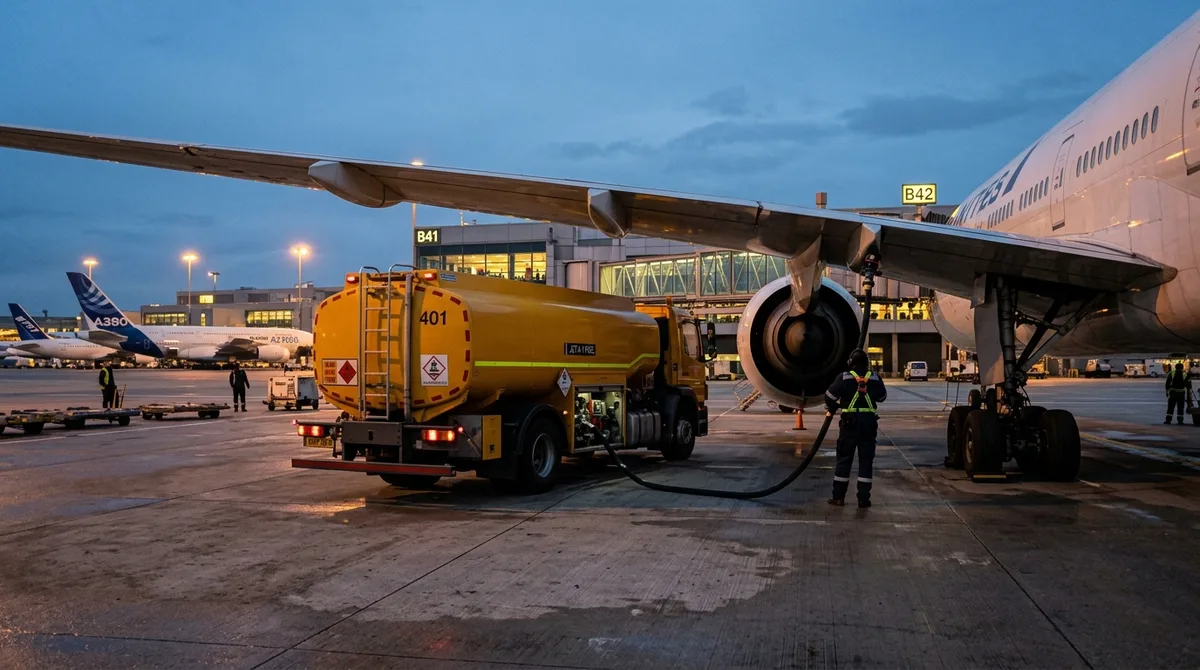
Since late February 2026, the Strait of Hormuz has been effectively closed to most commercial shipping. Iran declared the waterway under "strict management and control" — which is diplomatic language for a blockade with teeth. There have been multiple reported incidents of gunfire on vessels attempting to transit. About 20% of the world's oil and natural gas normally moves through that strait. When it doesn't, prices move.
Jet fuel has more than doubled since the conflict began.
That's not a rounding error. That's not a seasonal blip. Fuel typically accounts for 25 to 35% of an airline's operating expenses. When that line item doubles, airlines don't absorb it quietly. They pass it on, and they do it quickly.
The mechanism varies by carrier. Asian and European airlines tend to itemize fuel surcharges as separate line items, so the increases are visible and traceable. US carriers bake fuel costs into base fares, which makes the increases harder to isolate but no less real. You're paying either way. The only difference is whether you can see exactly what you're paying for.
The surcharge numbers, broken down by airline
Let me give you the actual figures, because the specific numbers here are worse than the vague headlines suggest.
Cathay Pacific doubled its fuel surcharges on long-haul routes on March 18, 2026. Then added a further 34% increase from April 1. If you're flying Hong Kong to London or Hong Kong to New York, that's a meaningful chunk of money hitting your total before you've even looked at the base fare.Air India has been doing phased increases. On North American and Australian routes, long-haul surcharges are reaching $280 per leg by mid-April. That's $560 round-trip in surcharges alone on top of whatever fare you're seeing in the search results.
Asiana went harder. Business class surcharges up to $405 per leg on North American routes as of April 1. A round-trip Seoul to Los Angeles in business class now carries up to $810 in fuel surcharges before a single cent of base fare.
Air France-KLM is looking at business class round-trip long-haul increases of up to €360, roughly £300. That's not trivial on a route where business class was already running €3,000 to €5,000 for a round-trip to begin with, but it's a meaningful bump.
And then there are the US carriers. Delta, United, American — they're not publishing surcharge line items. The increases are folded into base fares. Industry projections are pointing to 5 to 10% increases across all classes near-term, with long-haul transatlantic and transpacific routes expected to see 10 to 20% fare hikes. So if you were seeing a transatlantic business class fare at $3,200 round-trip in January, you could be looking at $3,500 to $3,840 for the same itinerary by summer.
Why business class is getting hit harder than economy

There's a pattern here worth understanding, because it affects how you should think about timing.
Airlines are dealing with something called K-shaped demand right now. Leisure travel — economy seats, vacation packages, budget-conscious bookings — is softening. The broader economic uncertainty from the Hormuz situation is making people cautious about discretionary spending. But premium cabin demand? It's holding. Corporate travel is largely inelastic, and the kind of traveler who books business class on their own dime tends to be less sensitive to a $400 price increase than someone shopping for a $600 economy fare.
Airlines know this. And so business class becomes the place they lean on to recover profitability.
This is a rational business decision that is annoying for those of us who fly up front. The surcharges are higher in business class not just because fuel costs more per seat (it does, proportionally) but because airlines have calculated that the demand will largely hold. They're right, mostly. But "largely holding" doesn't mean everyone absorbs every increase without flinching.
Don't wait this one out
The "wait-and-see" approach is genuinely riskier than usual right now. Fares are expected to stay elevated until the energy and geopolitical situation stabilizes — and there's no sign of that happening soon. For late spring and summer 2026 travel, the window for catching pre-surge pricing is mostly closed. For autumn and beyond, you're booking into uncertainty, but booking early still looks better than waiting.
Business class prices 2026: what routes are most exposed
Not all routes are taking the same hit. The geography of the Hormuz closure matters.
Routes that fly over or near the Middle East are the most exposed. That covers a lot of long-haul itineraries: Europe to Southeast Asia, Europe to Australia, North America to the Gulf, North America to South Asia. Aircraft flying these routes are either burning more fuel on longer diversionary paths or paying higher fuel prices at affected airports.
Transpacific routes are next in line. North America to Japan, South Korea, Southeast Asia — these are taking heavy surcharge hits from carriers like Cathay and Asiana. The Tokyo and Hong Kong routes, already competitive, are now significantly more expensive.
Transatlantic routes are somewhat less exposed in terms of surcharge additions, but the base fare increases from US carriers are real. The JFK-LHR corridor is one of the most-monitored routes on BusinessClassSignal's route list for good reason — it's deep, competitive, and historically prone to short pricing windows. Those windows are getting shorter.
Which airlines are adding surcharges vs. raising base fares?
This matters for award bookings and for how you read search results.
If you're booking with points or miles, fuel surcharges often (not always) pass through to the award ticket. Cathay's surcharge doubling is particularly painful for anyone booking Asia Miles or partner awards on Cathay Pacific metal, because those surcharges hit even when the base fare is covered by miles. Check your program's rules before assuming an award booking insulates you from the increases.
For cash bookings, the distinction between a surcharge and a base fare increase is mostly cosmetic — you're paying the total either way. But it does affect how you shop. If you're searching Google Flights or Kayak and filtering by price, a carrier that buries fuel costs in the base fare will look more expensive upfront than one that shows a lower base fare with surcharges added at checkout. The total is what matters.
Always compare the total price at checkout, not the base fare shown in search results. Carriers with explicit fuel surcharges (most Asian and European airlines) will look artificially cheap in initial search results.
Are there routes or airlines where prices are holding steady?
Honestly, not many — but a few patterns are worth noting.
Middle Eastern carriers like Emirates and Qatar Airways are in an unusual position. They operate out of the Gulf, which means they're close to the disruption, but they also have long-term fuel hedging contracts and state backing that can buffer short-term cost spikes. Their pricing has been more stable than some of their competitors in the near-term. That said, if the Hormuz situation persists through Q3 2026, even those buffers will thin.
Shorter long-haul routes — North Atlantic narrowbodies, intra-European premium cabins — are less affected simply because fuel is a smaller share of the total operating cost on shorter flights. A British Airways A320 flying London to Amsterdam doesn't have the same fuel exposure as a 777 flying London to Singapore.
And there are still fare drops happening. Not because airlines are being generous, but because pricing is dynamic. Seats go unsold. Revenue management systems adjust. Surcharge schedules update on specific dates, leaving windows between the old price and the new one. I've seen legitimate business class fares at pre-surge prices appear and disappear within 48 hours over the past few weeks. Those windows exist. They're just shorter and less predictable than they were six months ago.
How fare monitoring becomes more valuable when prices are volatile
Here's the thing about a pricing environment like this one: the variance goes up. When fuel costs are stable and demand is predictable, business class fares on a given route tend to cluster in a fairly narrow band. You know roughly what JFK-LHR is going to cost in business class on a given date. You might wait for a sale, but the floor and ceiling aren't moving much.
When costs are spiking and airlines are adjusting surcharges on specific dates — Cathay on March 18, Asiana on April 1, Air India mid-April — you get a different kind of pricing environment. The floor is rising, but it's rising in steps, not smoothly. Between those steps, there are windows. Fares that haven't yet been adjusted to reflect the new surcharge schedule. Revenue management algorithms that haven't fully caught up. Occasionally, a carrier that's slow to match a competitor's increase.
This is exactly where a service like BusinessClassSignal earns its keep. BusinessClassSignal is a fare monitoring tool that scans over 800 business class routes twice daily and alerts subscribers when prices drop below their target threshold. That's not a passive "set it and forget it" service — it's designed for exactly this kind of environment, where checking manually once a week means you'll miss the window every time.
I'll be straight with you: I built the editorial side of this site partly because I was frustrated with missing fares. I'd hear from readers who caught a $1,800 round-trip to Tokyo and I'd missed it because I wasn't watching closely enough. In a stable market, you can afford to check occasionally. In a market where surcharge schedules are updating every few weeks, you can't.
Set your threshold, then forget about it
In volatile markets, the temptation is to check obsessively. A better approach: set a realistic target price on BusinessClassSignal (something 15-20% below current market for your route), then let the alerts do the work. You'll catch the dips without the anxiety of daily manual searches.
What booking strategy actually makes sense right now
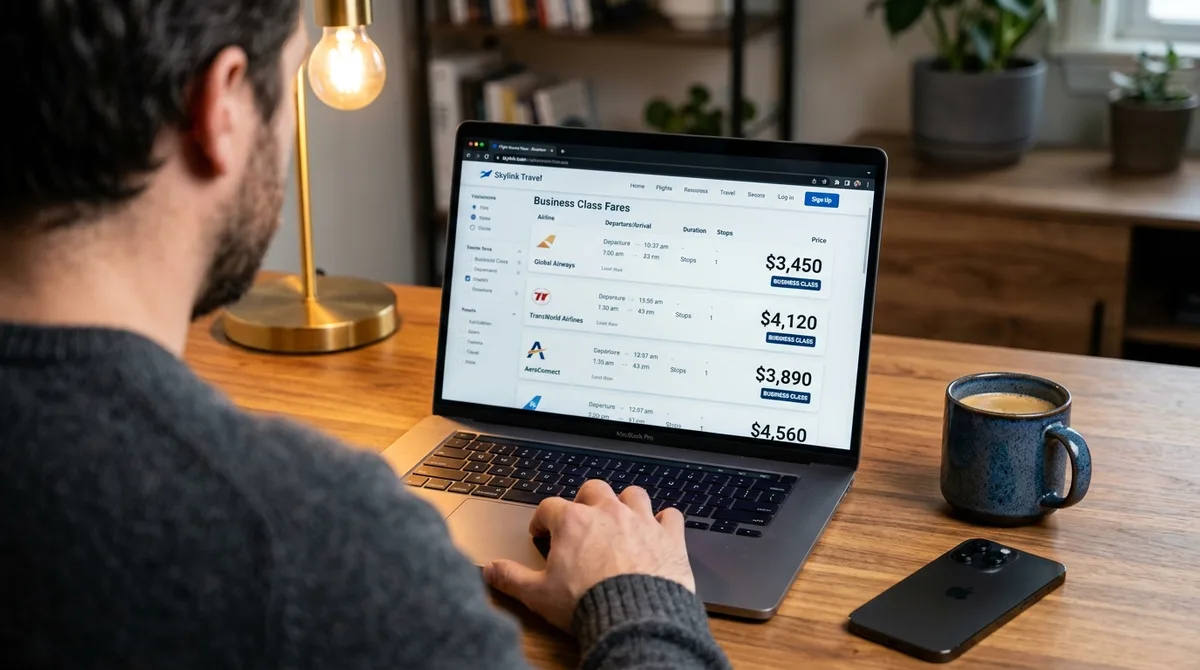
I want to be careful here, because I've seen too many "booking tips" articles that just tell you to book early without acknowledging the tradeoffs. So let me give you the honest version.
For travel in late spring and summer 2026 (May through August): the pre-surge window is mostly gone. Fares for peak summer travel in business class were already pricing in strong demand. The fuel surcharge increases are now on top of that. If you're traveling this summer and haven't booked, you're booking at elevated prices. The question isn't whether to wait for a better deal — it's whether a specific fare drop might appear before your flexibility runs out.
For autumn 2026 travel (September onward): more uncertainty, but also more opportunity. Airlines are still pricing these dates, and the surcharge schedules aren't fully locked in. There's a reasonable argument for booking sooner rather than later if you have a specific trip in mind, because the trajectory of costs is pointing upward. But there's also a case for monitoring and waiting for a dip, especially on competitive routes where multiple carriers are fighting for the same passengers.
For award bookings: this is where the calculus gets complicated. Your miles aren't losing value directly, but the surcharges on award tickets are going up. Burning 60,000 miles for a business class seat that still costs you $600 in surcharges is a different proposition than it was a year ago. Check the surcharge situation for your specific program and carrier before committing points.
If you're considering a cash booking on a route with explicit fuel surcharges (Cathay, Asiana, Air India), book before the next announced surcharge adjustment date — not after. The dates are public. Cathay's April 1 increase was announced in advance. Watch for the next round.
The broader point is that the "wait for a sale" instinct that served frequent fliers well for the past few years is genuinely riskier now. Sales still happen. Fare drops still occur. But they're happening against a rising baseline, and the baseline is moving faster than it has in years.
Business class prices 2026: the longer view
Let me step back from the immediate crisis for a second, because I think the framing of "prices are surging, panic accordingly" misses some important context.
Business class has been a seller's market since the post-COVID rebound. Demand for premium cabins recovered faster than airlines expected, and carriers pulled forward deliveries of wide-body aircraft that had been deferred during the pandemic. Capacity has been tight. Prices have been high. The Hormuz situation is accelerating something that was already happening, not creating a new trend from scratch.
The question that matters for anyone who flies business class regularly is: what does the 2026 pricing environment look like compared to what you're used to? If you've been booking business class since 2019, you've already adjusted to a higher baseline from the post-COVID period. Another 10 to 20% on top of that hurts, but it doesn't change the fundamental math of whether business class is worth it for long-haul travel.
If you're a relatively new business class traveler who got into it during a period of softening prices in 2023 or early 2024, the current environment will feel more jarring. Fares that seemed accessible are now looking steep again.
Either way, the routes worth monitoring are the ones with genuine competition. JFK-LHR, LAX-NRT, SFO-HKG, ORD-CDG — these corridors have enough carriers fighting for business class passengers that pricing still moves around. The deals that appear on these routes are real, even now. They're just shorter-lived.
Reading the surcharge schedule like a traveler, not a journalist
One practical thing I haven't seen covered well elsewhere: surcharge changes are announced in advance, and you can use that information.
When Cathay Pacific announced its April 1 surcharge increase in mid-March, there was a roughly two-week window to book at the pre-April-1 rate. People who were watching caught that. People who weren't, didn't. The window wasn't enormous — business class fares on Cathay's long-haul routes were already elevated — but the difference between booking on March 25 vs. April 3 was real money.
Air India's phased increases have a similar structure. The surcharge reaching $280 per leg by mid-April means there's a specific date before which the per-leg cost is lower. These aren't secrets. Airlines file these changes with the relevant aviation authorities, and the information gets picked up by fare-tracking services.
BusinessClassSignal tracks surcharge changes on top of fare movements, which means when a carrier announces a future surcharge adjustment, subscribers on affected routes get flagged. That's the kind of thing that's hard to replicate with manual searching, and it's exactly the kind of edge that matters in a market where the timing of your booking is costing or saving you hundreds of dollars.
What 'business class prices 2026' actually means for your budget
If you're planning long-haul travel and budgeting for business class, the working assumption right now should be 15-20% higher than comparable trips in late 2025. That's not worst-case. That's roughly where the data points. Build that into your planning, then monitor for dips.
Business class fares are moving fast right now — set a price alert on your route and catch the dips before they disappear. 7-day free trial, no credit card required.
Start monitoring free