Quick summary
Jet fuel has more than doubled since late February 2026, airlines are reviewing surcharges every two weeks, and a temporary ceasefire expires April 22. If you're asking whether you should book business class now or wait, the data points in one direction: book now, especially for travel within six months. Waiting is a gamble with bad odds.
The question everyone's asking right now
I get some version of this email every week. "Steve, I've got a trip to Tokyo in August — should I pull the trigger or wait for prices to come down?" Normally I'd give a nuanced answer about travel windows, airline pricing cycles, and demand curves. Right now, I'm going to skip most of that, because the situation we're in is not normal.
Since late February 2026, jet fuel prices have more than doubled. Not crept up. Not risen meaningfully. Doubled. That single fact changes the calculus on almost every booking decision you could be weighing.
And it's not just the fuel price itself. It's the pace of change, the structural reasons behind it, and the specific mechanisms airlines are using to pass costs onto passengers — mechanisms that are moving faster than most travelers realize.
What's actually driving fares up
The short version: a combination of regional conflict, damaged energy infrastructure, constrained supply routes, and hedging contracts that are quietly expiring.
The longer version matters if you want to understand why waiting is the riskier call.
The conflict affecting Middle Eastern energy supply hasn't just disrupted transit through key chokepoints. It's also damaged regional energy infrastructure directly — refining capacity, export terminals, pipeline networks. That means the problem isn't purely a "ships can't get through" story. Even if transit routes reopened tomorrow, the production and export of refined jet fuel products is constrained at the source.
Dubai's DXB airport is operating under a capacity cap through May 31, 2026. Fewer slots, fewer seats, less competition on pricing. That affects not just Gulf carrier routes but the entire hub-and-spoke network that DXB feeds — which is enormous.
Then there's the hedging situation, which most passengers don't think about but which matters a lot for where fares go from here. Airlines buy fuel contracts in advance to protect themselves from price spikes. IAG (the parent company of British Airways and Iberia) was hedged at roughly 75% for Q1 2026. By Q4, that drops to around 50%. As those hedging contracts roll off quarter by quarter, the airlines are increasingly exposed to spot fuel prices. Fares will follow.
Why are airline surcharges changing so fast?
This is the part that catches people off guard. Fuel surcharges aren't set once a year anymore. Airlines are now reviewing them on roughly two-week cycles. Every review is an opportunity to add another layer of cost.
Cathay Pacific has raised its surcharges 34% since April 1 alone. Asiana is now charging $405 per leg on North American routes. Air India's long-haul surcharge sits at $280 per leg. These aren't hypothetical future increases — they're already in effect, and the next review cycle is always two weeks away.
The math on waiting is brutal. If you're looking at a round-trip business class ticket to Asia that would cost $6,000 today, and surcharges go up by another two cycles before you book, you could easily be looking at $6,800 or more — for the exact same seat. And that assumes no further base fare movement, which is also unlikely given the capacity constraints.
The ceasefire deadline and what happens if it breaks
There's a temporary ceasefire in place right now. It expires April 22, 2026.
I'm not a geopolitical analyst and I'm not going to pretend I know what happens next. What I can tell you is what the airlines are pricing in, and what the energy market is signaling. Neither is optimistic about a swift, comprehensive resolution.
If the ceasefire collapses — or simply isn't renewed — expect immediate fare spikes. Not gradual increases over a few weeks. Immediate. The kind where you check a route on Tuesday morning and the price is $800 higher by Thursday afternoon.
The IEA has issued warnings about limited remaining jet fuel inventories, particularly in Europe and Asia. A supply disruption at this point, layered on top of already-stressed inventory levels, would hit those markets hard and fast.
Ceasefire deadline: April 22, 2026
If the current temporary ceasefire expires without renewal or a broader resolution, fare spikes on European and Asian routes could happen within days. Locking in current prices before that date is worth serious consideration.
If a comprehensive diplomatic resolution does materialize — actual peace, not just another temporary pause — energy prices could normalize over weeks to months, and airlines would eventually recalibrate. That's the scenario the "wait" camp is betting on. It's possible. Experts are broadly describing it as the riskier bet right now, and I think they're right.
Should I book business class now? A framework that actually works
I've thought about this a lot over the past few weeks, and here's how I'd approach it based on travel timing.
If your trip is within the next three months: Book now. Stop reading, open your preferred booking tool, and lock in current fares. The downside risk of waiting is real and immediate. Surcharge review cycles alone could move your fare meaningfully before your departure. If you're traveling four to six months out: Book now, but prioritize a flexible or refundable fare. Yes, you might pay a small premium for the flexibility. That premium is worth it as insurance against the scenario where a ceasefire holds and prices soften. You get protection in both directions: if prices rise further, you're locked in; if they somehow drop, you have options. If travel is seven or more months out: This is where it gets more complicated. The situation could look very different by then. But "wait and see" doesn't mean "ignore it." It means monitoring closely, setting fare alerts, and being ready to move fast if you see a dip or if conditions deteriorate further.For travel 7+ months out, set a target price in BusinessClassSignal and let the alerts do the work. The system scans 800+ routes twice daily — you'll know within hours if a route drops to a price worth booking.
How much could fares rise if I wait?
On transatlantic and transpacific routes, analysts are projecting 10–20% fare increases from current levels. That's the range being discussed assuming no major escalation — just the continuation of current conditions and the rolling-off of airline fuel hedges.
To put that in concrete terms: the average round-trip business class fare to Europe is currently sitting around $2,200 on sale fares and significantly higher at full fare. A 15% increase on a $4,500 full-fare ticket is $675. On a $7,000 premium cabin fare to Asia, it's over a thousand dollars.
The Strait of Hormuz situation adds another layer of risk specifically for summer 2026. If the strait remains effectively closed or constrained through peak travel season, the expectation from analysts is widespread cancellations and a significant reduction in low-fare inventory. Airlines in survival mode pull discounted seats first.
What the data from our monitoring actually shows

BusinessClassSignal is a fare monitoring service that scans over 800 business class routes twice daily and sends alerts when prices drop below a subscriber's target threshold. I run the editorial side and have been watching the data closely since late February.
What we're seeing: the frequency of significant price drops — the kind worth acting on — has fallen sharply on routes touching the Middle East, South Asia, and East Asia. Not because airlines have stopped having flash sales or making pricing errors, but because base fares and surcharges are rising fast enough that even "discounted" fares are landing higher than the fares we were seeing two months ago.
Routes to Western Europe are holding up a little better, but the trend line is the same direction.
The routes where we're still seeing meaningful drops are primarily domestic-international connections where one leg is outside the affected regions, and some transatlantic routes where airlines are competing aggressively on a few specific city pairs.
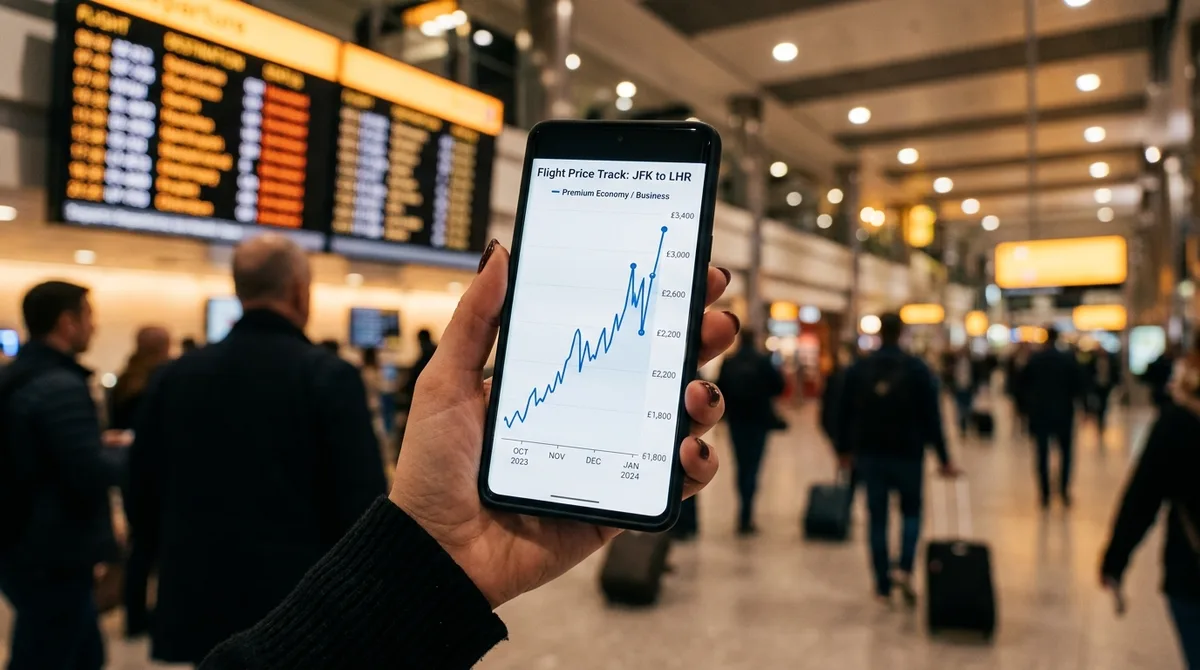
On the JFK-LHR route specifically, we're still catching fares in the $2,200 range on occasion. Those windows are narrowing. The BA business class product on this route is solid — the Club Suite on the 777 is genuinely good — but I've seen the lounge coffee at T5 and I'll tell you it's not worth going to Heathrow early for. The seat, though, is worth locking in at $2,200 if you can get it.
The specific routes to watch most carefully
Not all routes are equally exposed to what's happening right now.
Routes through or near the Gulf are most directly affected. If you're considering Emirates, Etihad, or Qatar Business Class — which are genuinely excellent products — the DXB capacity cap and the fuel surcharge trajectory make those fares particularly volatile right now. The DXB cap runs through May 31, and there's no guarantee it gets lifted on schedule.
East Asian routes, particularly those that rely on Middle Eastern fuel supply chains, are facing the Cathay Pacific and Asiana surcharge escalations I mentioned. The 34% Cathay Pacific surcharge increase since April 1 is the kind of number that should make you stop scrolling and pay attention.
South Asian routes — Air India and others — are seeing the $280/leg surcharge structure eating into what were recently some of the better-value business class options in the market.
Transatlantic is the relative bright spot, but "relative" is doing a lot of work in that sentence. The 10–20% projected increases apply here too. You're just not dealing with as many compounding factors.
Where to look for remaining value
Transatlantic routes, particularly off-peak departures on Thursday evenings or early-week return flights, are still producing occasional fare drops worth acting on. In my experience, Thursday evening JFK departures are consistently worth checking — airlines adjust inventory Tuesday-Wednesday and sometimes release seats at lower prices for that window.
How to actually use fare monitoring in a volatile market
The instinct when fares are rising fast is to either panic-buy immediately or freeze up and do nothing. Neither is optimal.
What actually works is setting a target price that reflects the current market, not the market from three months ago. I've talked to subscribers who set alerts at prices they saw last year and are waiting for fares to return to those levels. That's not a monitoring strategy, it's wishful thinking.
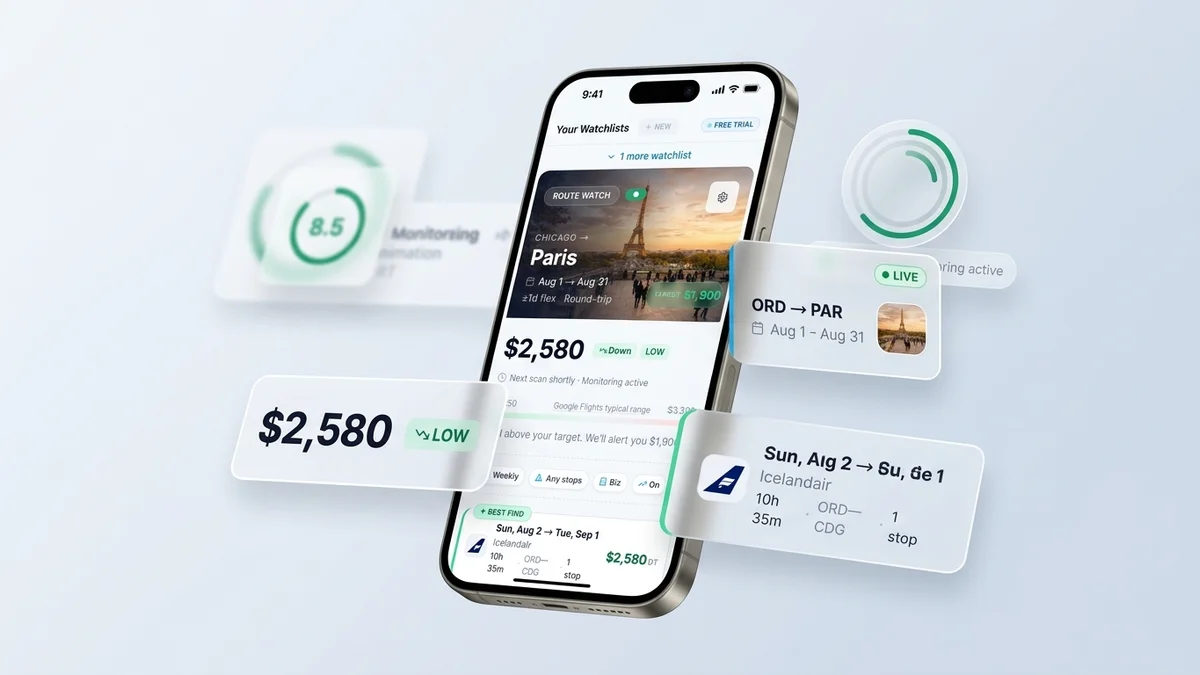
The way the monitoring system works is straightforward: you set a target price for a route, and you get an alert the moment a fare drops below that threshold. The value in a market like this one isn't finding fares at pre-crisis levels. It's catching the momentary dips — a pricing error, a flash sale, a last-minute inventory release — that still happen even in rising markets.Those dips are brief. We're talking hours, sometimes less. You can't catch them by checking a booking site once a week.
Browse the routes we monitor and you'll see which ones are still producing actionable drops. I'd focus your attention on transatlantic city pairs right now and set realistic targets — 10–15% below current asking price rather than 30–40% below.For anyone who hasn't set up alerts yet and is trying to figure out whether this is worth doing: start monitoring your route and see what comes through over a week. The trial period costs you nothing and you'll have a much clearer picture of what the market is actually doing in real time.
The honest case for waiting — and why I still don't recommend it
I want to be fair to the other side of this, because there is one.
If a comprehensive ceasefire is reached before April 22 and holds, if diplomatic negotiations produce an actual resolution rather than another temporary pause, if energy infrastructure in the region gets repaired faster than expected — fares could come down. Meaningfully. Airlines are not running charity operations; if fuel costs drop, competition will eventually push fares lower.
That scenario is real. It's not zero probability.
But here's the problem with betting on it. The downside if you're wrong is not symmetric. If you wait and the situation deteriorates further — ceasefire collapses, Strait of Hormuz stays constrained through summer, IEA's inventory warnings materialize — you're not just paying 10% more. You could be looking at routes with significantly reduced capacity, fewer available seats at any price, and fares that have moved well beyond the current projections.
The upside if you wait and the situation improves is that you save maybe 15% on your fare. You can probably get a refund or rebook if you bought a flexible ticket anyway.
It's an asymmetric bet in the wrong direction. That's why I keep coming back to the same answer: book now, buy flexibility, monitor for dips.
The flexible fare premium is worth it right now
On most transatlantic and transpacific routes, the difference between a refundable and non-refundable business class fare is relatively small compared to the risk you're hedging. A $300–400 premium for a fully flexible ticket is cheap insurance given the number of things that could still change before your travel date.
What I'd actually do if it were my trip
Someone asked me last week: "Steve, if you had a trip to Hong Kong booked for July, what would you do right now?"
I'd book it. Today. On a flexible fare if I could get one at a reasonable premium. I'd set a BusinessClassSignal alert for the route at about 12% below what I paid, so if something unexpected opens up I'd know about it within hours. And I'd stop checking fares obsessively, because that way lies madness.
I've flown enough business class segments — well over 200 at this point — to know that the anxiety of watching fares move after you've booked is not worth it. You book, you have a plan, you move on. The monitoring system does the work of watching for something better. That's the whole point of a fare tracker built specifically for this cabin class.
The one thing I wouldn't do is wait on the assumption that prices will return to where they were in January. That market is gone for now. The question isn't whether you can get that price back. The question is whether you want to travel and what the seat is worth to you at today's prices.
For most people with a real trip planned, the answer is still yes.
BusinessClassSignal monitors 800+ business class routes twice daily and alerts you the moment fares drop below your target — 7-day free trial, no credit card required
Try Free