Quick summary
The Iran conflict has triggered a cascade of airspace closures, rerouting costs, and capacity cuts that are pushing business class fares higher on routes across the Middle East, South Asia, and Europe — particularly on US carriers with no fuel hedging protection. If you're booking anything that touches the Gulf region in the next several weeks, you need to understand what's happening before you pay list price.
What's actually happening right now
Iran's airspace has been partially closed since the current round of hostilities escalated, and the reopening has been slow, partial, and conditional. As of April 18–20, 2026, Iran initiated a phased four-stage plan to reopen. The eastern section of Iranian airspace is now open for international transit. The western section remains closed — security protocols and the ongoing situation in the Persian Gulf and Strait of Hormuz are keeping that corridor shut.
Six civilian airports, including Tehran Imam Khomeini International and Mehrabad, have resumed limited international operations. But "limited" is doing a lot of work in that sentence. They're operating on an 11-hour window, roughly 03:30am to 02:30pm local time. Outside those hours, nothing's moving commercially. That constraint alone creates ripple effects on connecting schedules across the Gulf.
And then there's Dubai.
The Dubai cap and why it matters more than you think
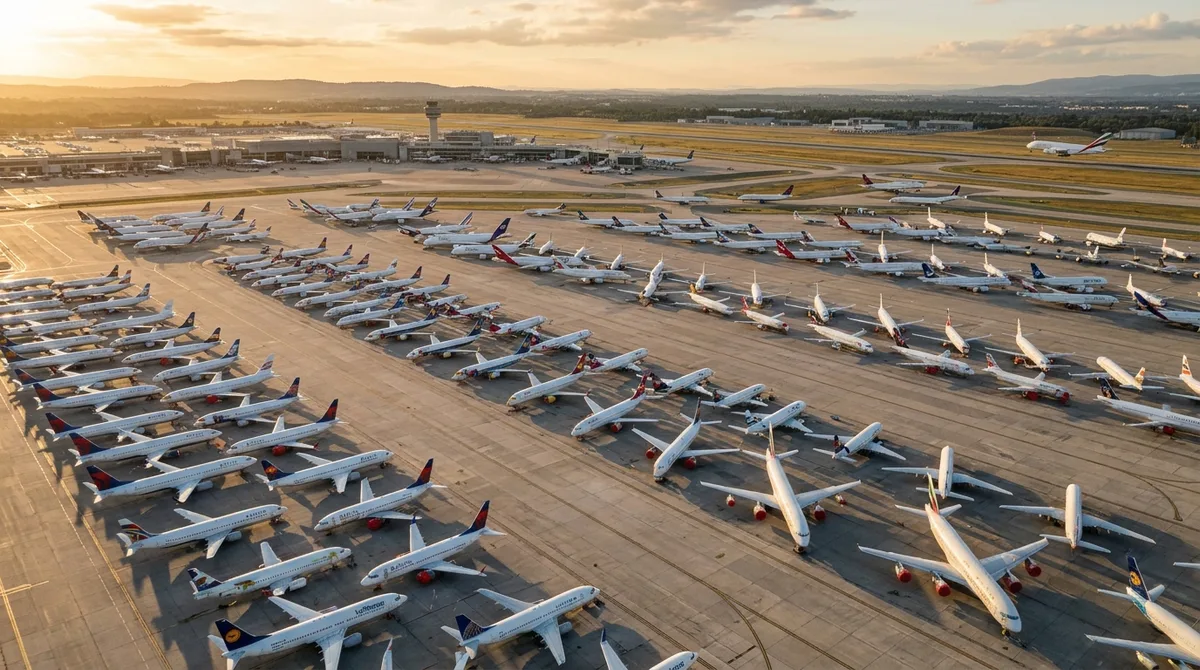
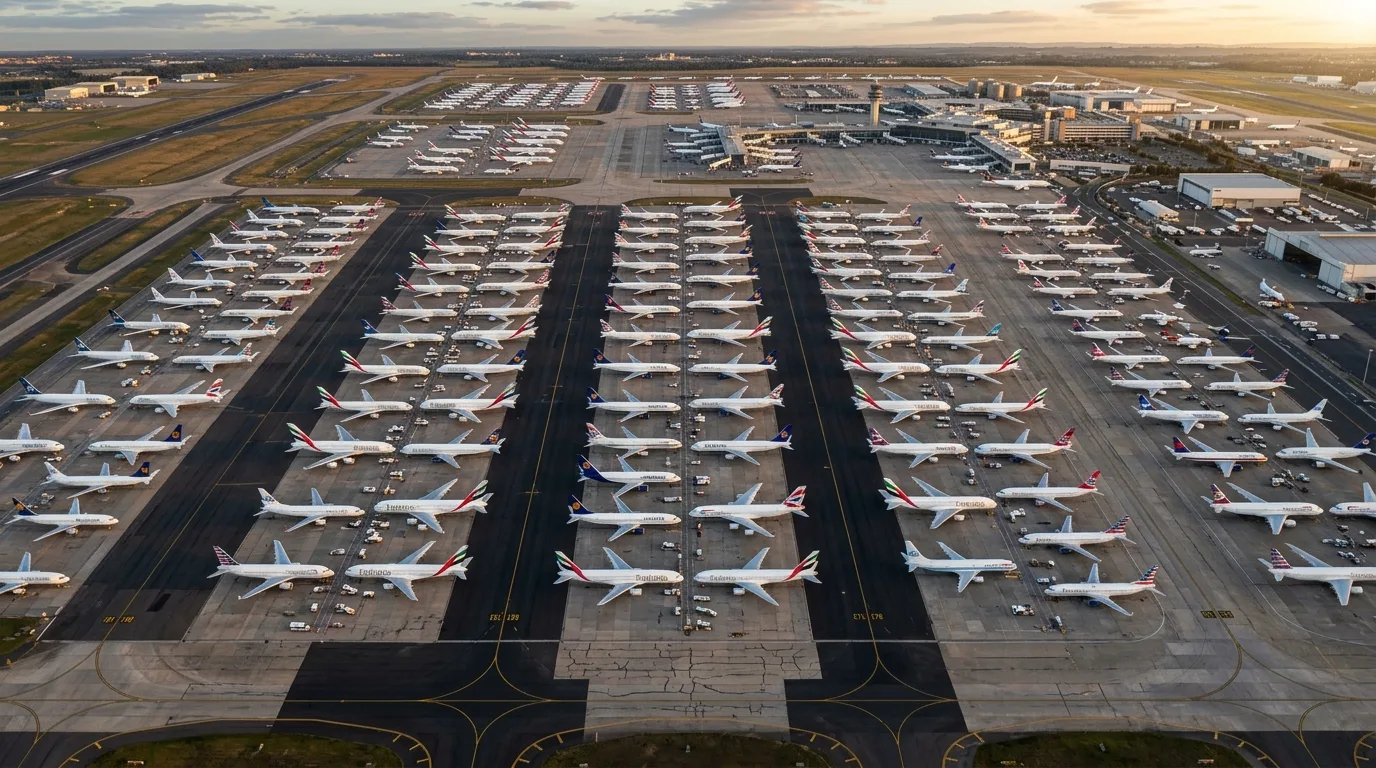
From April 20 through May 31, 2026, non-UAE airlines are limited to one round-trip flight per day at Dubai International (DXB) and one at Al Maktoum (DWC). Emirates and flydubai are exempt. The cap exists because military-managed airspace corridors have reduced the number of aircraft movements that can be safely handled per hour.
Think about what Dubai represents in global business class connectivity. DXB is consistently one of the busiest international airports in the world. It's the primary hub connecting Europe to South Asia, East Africa, Australia, and Southeast Asia. When you cap non-UAE carriers to a single daily rotation each, you're cutting available seats dramatically on routes where demand hasn't dropped at all.
Business travelers don't stop needing to get from London to Mumbai because there's a conflict. They still need to get there. But now there are far fewer seats available to do it.
Emirates, operating without restriction, is absorbing some of that demand — but not all of it. And Emirates knows it. When you're the only airline with full frequency into a hub that everyone else has been capped out of, you don't need to discount. Prices on Emirates business class to and from DXB have reflected that reality since the cap was announced.
Iran conflict flight prices: the rerouting math

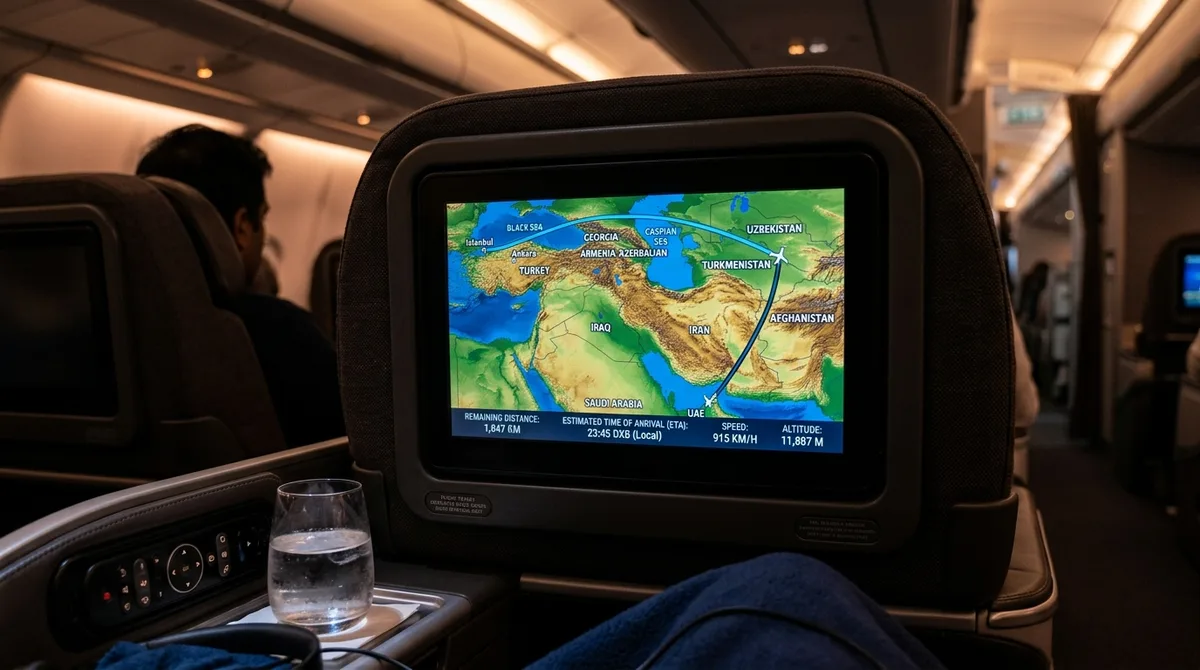
Here's where the iran conflict flight prices story gets genuinely interesting from a cost perspective. When carriers can't use Iranian airspace — either because it's closed or because their own risk assessments say don't — they have to go around. That means longer routings, sometimes significantly so.
A flight from Frankfurt to Delhi that would normally cross Iranian airspace might now be routed south via the Arabian Sea, adding 90 minutes or more to the journey. Ninety minutes of extra flight time on a widebody aircraft isn't just an inconvenience. It's fuel. It's crew hours. It's maintenance cycle pressure. All of that costs money, and on routes that were already operating on thin margins, those costs get passed somewhere.
They get passed to you.
If you're booking Europe-to-India or Europe-to-Southeast Asia routes right now, check the actual routing before you book. Some carriers are showing longer scheduled flight times than usual — a 12-hour flight that's now showing as 13:40 is a sign the airline is routing around Iran.
The carriers most exposed to this rerouting cost aren't necessarily the ones you'd expect. The fuel hedge positions each airline holds tell a very different story about who's absorbing these costs versus who's pushing them onto ticket prices.
The hedging divide: who's protected and who isn't
This is the part that actually determines what you'll pay. Fuel hedging is how airlines lock in fuel costs in advance by buying contracts at a fixed price. When jet fuel spikes — which it has, given the Gulf disruption — airlines with strong hedge positions are partially insulated. Airlines without them feel every cent of the increase immediately.
The gap right now is striking.
Air France-KLM is approximately 87% hedged for 2026. Lufthansa is around 82% hedged. Qantas sits at 81%. easyJet is 84% hedged for the first half of the year. These carriers have meaningful protection against fuel cost spikes, which means their pricing isn't being forced upward by the conflict at anything close to the rate of their unhedged competitors.
IAG — the parent company of British Airways — is at 75% for Q1, declining to 50% by Q4. That declining hedge coverage means BA's exposure grows as the year progresses. If the conflict situation drags into autumn, BA will be feeling it considerably more than it does right now.
Then there are the US carriers. United, American, JetBlue, Spirit — none of them hold significant fuel hedge positions. Southwest discontinued its hedging program entirely in 2025, which was already an eyebrow-raising decision before a Gulf conflict materialized. Delta is a partial exception: it doesn't hold financial hedges but owns Monroe Energy, a refinery in Pennsylvania, which functions as a physical hedge against crude price swings. It's a different kind of protection, but it's something.
The practical consequence of all this is that US carriers are passing fuel cost increases most aggressively into ticket prices. If you're comparing a United transatlantic business class fare against a Lufthansa one right now, some of that price difference isn't about the product — it's about who's absorbing the fuel shock and who isn't.
How much are business class prices actually moving?
It varies by route, airline, and booking window, but the directional movement is clear. On routes that cross or border the affected airspace — Europe to South Asia, Gulf connections, anything routing through the Middle East — business class fares have moved upward since early April 2026. Routes that don't touch the affected region are seeing more moderate effects, mostly from general capacity tightening as airlines pull older, less fuel-efficient aircraft out of service.
What I'm watching on BusinessClassSignal right now: Europe-to-India routes are showing the most acute pressure. Some carriers have pulled one of their two daily frequencies, which halves available premium cabin inventory overnight. BusinessClassSignal — which scans 800+ business class routes twice daily — has been flagging unusual fare spikes on these corridors since the eastern airspace closure began.
That LHR-BOM number is a round-trip and it's on the higher end of what I'd normally consider acceptable for that route. Under normal conditions, you'd occasionally find sub-$4,000 fares with some patience. Right now, patience isn't paying off the way it usually does because supply is genuinely constrained.
Lufthansa's hedge position is helping keep that Frankfurt-Delhi number more reasonable than it might otherwise be. That's worth factoring into your carrier choice.
The ceasefire deadline and what happens if it collapses
There was a temporary ceasefire in place as of this writing, with expiration expected around April 22, 2026. What happens after that is genuinely unclear. If the ceasefire holds and extends, you'd expect gradual airspace normalization and some easing of the capacity pressure. If it collapses, the scenario shifts quickly.
Airlines have been canceling routes with limited notice throughout this period. If hostilities escalate after April 22, expect further cancellations — particularly from carriers already operating reduced schedules — and a secondary spike in business class prices as remaining available seats absorb demand from canceled flights.
Watch the April 22 ceasefire deadline
If the ceasefire expires without extension, airlines operating through Gulf corridors may cancel or suspend flights with very short notice. If you have travel booked in late April or May on routes through the Middle East, monitor your airline's communications closely and understand your rebooking rights before you need them.
I've seen this pattern before. During the early weeks of the 2022 Russia-Ukraine conflict, carriers that had been rerouting around Ukrainian airspace were periodically suspending routes entirely when operational costs hit thresholds they couldn't sustain. The calculus here isn't that different. An airline running one flight a day into Dubai under the current cap, on a rerouted path burning 15% more fuel, with no hedge protection, is doing math on whether that route makes financial sense. Some of them will decide it doesn't.
Which routes are most at risk of cancellation or further price spikes?
Routes with the highest risk profile right now are those that depend on Iranian or Gulf corridor airspace and are operated by unhedged carriers on thin margins. That points primarily to certain US carrier Gulf routes, some South Asian connections, and mid-tier European carriers without strong hedge positions.
Routes through Dubai are constrained by the DXB cap, but Emirates' exempt status makes Emirates-operated itineraries somewhat more stable in terms of frequency. The premium is in the price, though.
Singapore Airlines deserves a mention here. It's 40–60% hedged for the April-June quarter, which is meaningful exposure. SIA routes from Europe and the Middle East to Southeast Asia via Gulf corridors could see further pricing pressure if the situation extends into Q3. I'd watch that space.
How to navigate iran conflict flight prices if you're booking now
Practical question: what do you actually do with all of this?
First, understand which carriers are best positioned to hold prices. Lufthansa, Air France-KLM, Qantas, and easyJet (for short-haul) have the strongest hedge protection and are least likely to be forced into aggressive price hikes by fuel costs alone. If you have flexibility on carrier, that matters right now.
Second, if you're booking a route that touches the Gulf or South Asia, don't wait. The scenario where prices come down significantly in the next 4-6 weeks requires a ceasefire extension, airspace normalization, and airlines choosing to restore capacity — all of which take time even in the optimistic scenario. Holding out for a fare drop on a London-Mumbai booking right now is probably wishful thinking.
Third, pay attention to actual routing. Some carriers are marketing Gulf-region routes on normal schedules but operating them on significantly longer paths. Check the scheduled flight time against historical norms for that route. If it's 90+ minutes longer than you'd expect, factor that into your decision — both as a comfort consideration and as a signal about the airline's cost exposure.
On routes affected by Iranian airspace closures, compare scheduled flight times across airlines on the same city pair. The airline showing the shorter scheduled time has likely secured a more efficient corridor or partial airspace access — which often means lower fuel burn and more pricing stability.
Fourth, watch for brief windows when iran conflict flight prices drop. They do happen, even in disrupted markets. Airlines occasionally release inventory at lower prices when they're managing load factors on specific departures, or when a temporary airspace opening allows them to restore capacity briefly. These windows don't last long — often hours, sometimes less.
This is exactly what how the monitoring system works at BusinessClassSignal is designed to catch. The twice-daily scans across 800+ routes will flag when a fare on a monitored route drops below your target price, even briefly. On disrupted routes, those brief drops are often the only opportunity to get a reasonable price.
The longer view on capacity and pricing
Airlines have been using this disruption as cover to accelerate fleet rationalization decisions they were already considering. Older, less fuel-efficient widebodies — certain 767 configurations, older A330s — are being grounded or retired faster than planned because their economics don't work when fuel costs are elevated. That reduces overall seat capacity across the market, not just on affected routes.
This matters for business class buyers because premium cabin inventory on widebodies tends to shrink when airlines swap to smaller or older aircraft. A carrier that was operating a 777 with 48 business class seats switching to a 767 with 28 seats has just cut premium inventory by 40% on that route. Even when the conflict resolves and airspace normalizes, capacity doesn't come back overnight. Aircraft orders are measured in years, not weeks.
I've been writing about business class pricing long enough to recognize when a disruption is creating a temporary spike versus when it's accelerating a structural shift. This one has elements of both. The acute pressure from airspace closures and the Dubai cap will ease eventually. But the fleet rationalization decisions airlines are making right now will affect capacity and pricing for longer than the conflict itself.
If you're a frequent business class traveler and you're not monitoring fares on your key routes, you're flying blind in a market that's moving faster than usual. The difference between booking at the right moment and booking at the wrong one on a Europe-India route right now can be $1,500 or more on a round-trip.
One thing worth doing today
Pull up your next three planned business class trips and check current fares against what you'd normally expect to pay. If the gap is significant, you have a decision to make now rather than later. If the gap is small or favorable, set a price alert — because fares on disrupted routes can move quickly in either direction.
You can browse all routes on BusinessClassSignal to see which corridors are currently showing elevated pricing relative to historical averages. The Middle East and South Asia filters will tell you a lot about where the pressure is concentrated.
One more thing worth saying plainly: the carriers advertising "normal operations" on routes through the Gulf region aren't always being fully transparent about what "normal" means right now. Longer flight times, reduced frequencies, and substitute aircraft aren't advertised prominently. Read the details on what you're actually buying.
Monitor business class fares on affected routes — 7-day free trial, no credit card required
Try Free