Quick summary
Flying business class to Bali from the US means connecting — there's no nonstop, full stop. The best routings go through Singapore (on Singapore Airlines) or Hong Kong (on Cathay Pacific), with fares typically ranging from $2,800 to $5,500 round-trip depending on when you book and which carrier you end up on. Set a price alert and be patient; the drops happen, but they don't last long.
The routing reality nobody warns you about
Let's get this out of the way early: you are not flying direct to Bali from anywhere in the United States. Ngurah Rai International (DPS) doesn't have the runway capacity or the demand to support transpacific nonstops, and that's unlikely to change anytime soon. What you're actually booking is a two-leg or three-leg trip, and the layover city you choose shapes your entire experience.
The good news is that the connecting options are genuinely excellent. Singapore and Hong Kong are two of the best airport experiences in the world, and if you're flying business class, you'll have lounge access that makes a long layover feel almost… fine. I've done both routings multiple times. They're different animals.
The bad news is the sheer distance. Los Angeles to Bali, routing through Singapore, is somewhere around 18,000 miles of flying. You're looking at roughly 17–18 hours in the air across two legs, plus layover time. Even in a flat-bed seat, that's a commitment. Book it knowing what you're signing up for.
Singapore Airlines via Singapore: the benchmark routing

If you ask most frequent flyers which carrier they'd pick for business class to Bali, the answer is usually Singapore Airlines. And it's not just reputation — the product genuinely holds up.
From the US, SQ operates out of Los Angeles (LAX), San Francisco (SFO), New York (JFK), and Houston (IAH) to Singapore Changi (SIN), with onward connections to Denpasar (DPS). The US-to-Singapore leg is where you'll spend most of your flying time, typically 16–17 hours westbound from LA. That's where the business class cabin really matters.
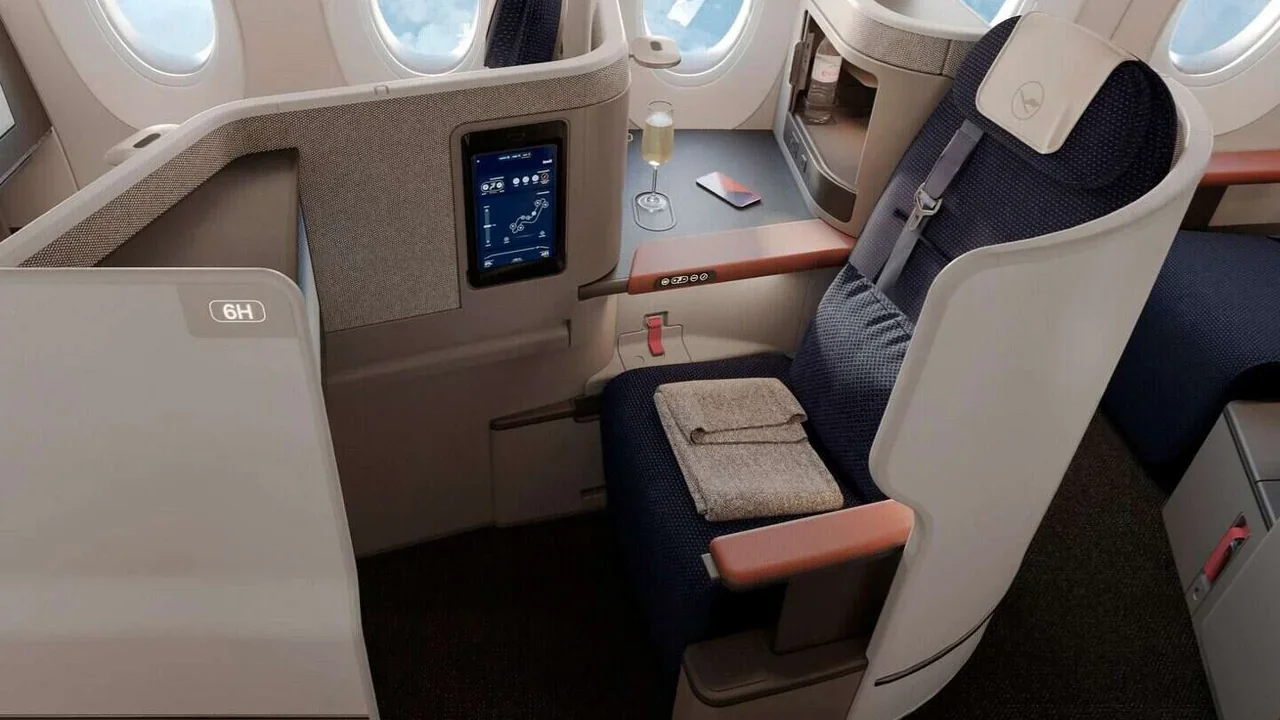
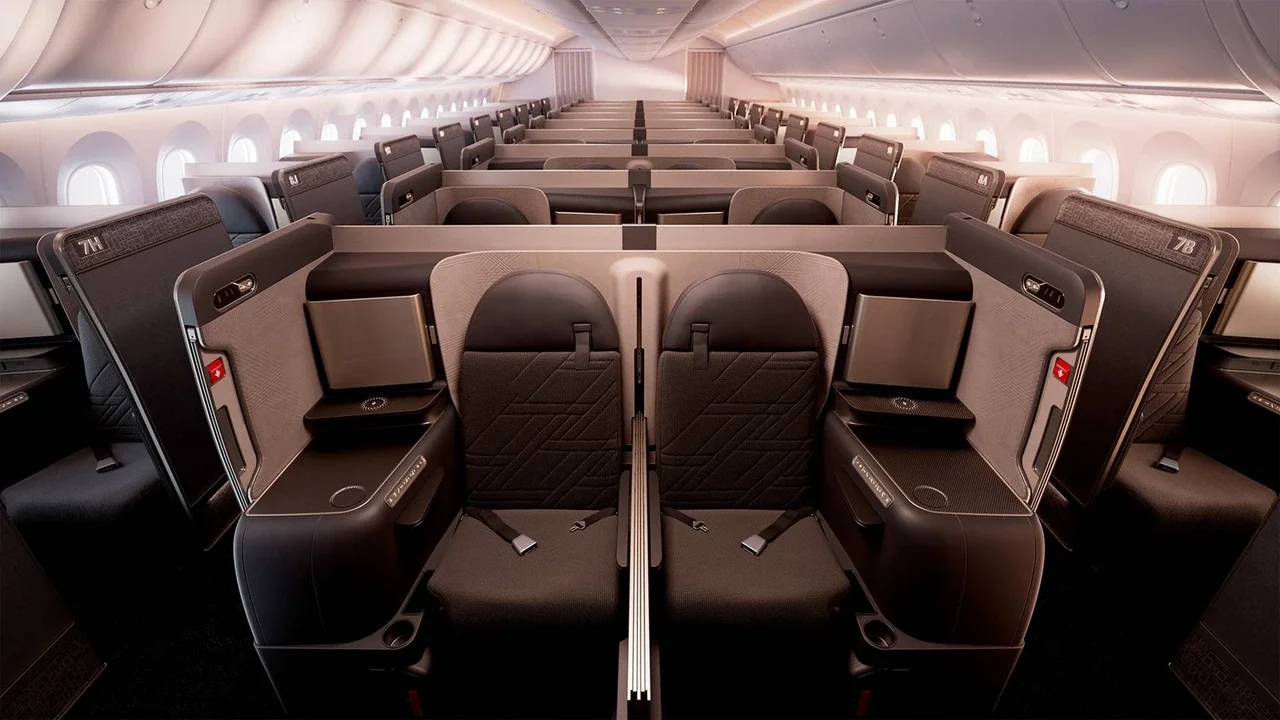
The SQ business class product varies by aircraft. On the A350-900ULR that operates the SFO-SIN route, you get the newer Vantage seat in a 1-2-1 configuration — every seat has direct aisle access, which should be the minimum standard in 2024 but somehow still isn't universal. The JFK routing uses the B777-300ER with the older "Book the Cook" cabin, which is still solid but the seats feel a bit more dated. The difference matters. If you care about the seat itself, I'd prioritize the SFO departure.
Book the Cook on Singapore Airlines lets you pre-order dishes up to 24 hours before departure. The laksa is genuinely good. The chicken rice is not. Order it anyway for the experience, but manage expectations.
The SIN-DPS leg is short — about 2.5 hours. SQ operates it on narrowbody aircraft (typically A320 family), and the business class product on regional hops is just widened economy seats with the middle seat blocked. It's fine. You'll be asleep or watching something.
Changi is the layover. And if you've never been, it's worth knowing that Terminal 3's SilverKris Lounge (for business class passengers) has a proper hot food spread, good noodles in the morning, and shower facilities that are clean and quick to book at the lounge reception. The Jewel is right there if you have a long enough layover. I've spent four hours there happily. I've spent twelve hours there and wished I hadn't.
Cathay Pacific via Hong Kong: the underrated option

CX flies to Hong Kong (HKG) from Los Angeles (LAX), San Francisco (SFO), New York (JFK), Chicago (ORD), and Boston (BOS). The onward HKG-DPS connection runs daily and is about 4 hours — longer than the SIN-DPS hop, but CX operates it on widebody equipment (A330 or B777) which means a real business class seat, not a blocked middle seat on a narrowbody.
That's actually a meaningful difference. On the Cathay routing, you're in a proper flat bed for the entire journey, both legs. On SQ, the second leg is a regional product. If you're sensitive to that kind of thing — and after 20-something hours of travel, some people are — CX's approach is more consistent.
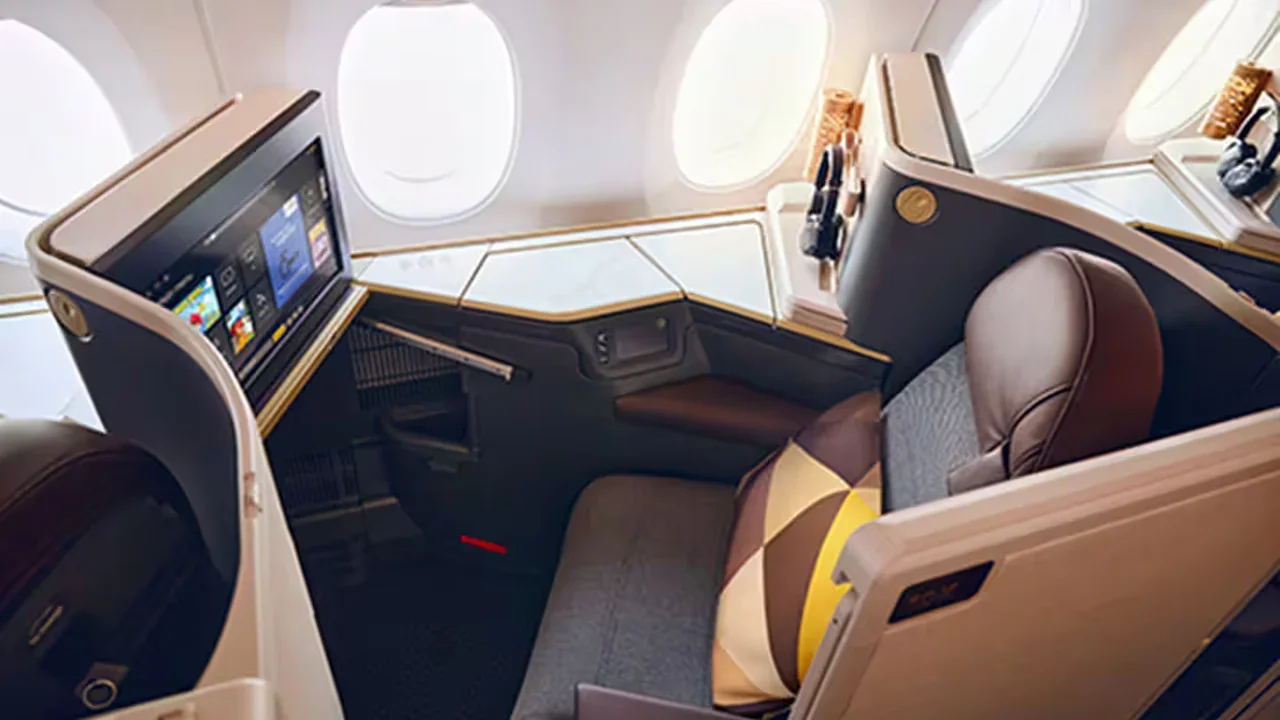
The business class cabin on Cathay's longhaul aircraft uses the Vantage XL seat in a 1-2-1 configuration. It's not flashy but it's well-designed — the storage is good, the mattress pad makes a real difference, and the IFE library is extensive. The food has improved noticeably over the past two years. I had a decent Hong Kong-style braised beef on the LAX-HKG leg that I wouldn't have been embarrassed to order in an actual restaurant.
The HKG lounge situation: Cathay's The Pier business class lounge in Terminal 1 is one of the better airport lounges in the world. The noodle bar is the thing people talk about, and they're right to. Congee at 6am after a red-eye is exactly what it sounds like. Showers are private, spacious, and bookable via the app before you land. If you have a layover of more than three hours, you'll use it well.
HKG connection timing
Cathay's minimum connection time at Hong Kong is 60 minutes, but I wouldn't book anything under 90 minutes. The airport is efficient but it's large, and if your inbound flight comes in at a remote gate, you'll be moving fast. For a relaxed layover with lounge time, aim for 3–4 hours.
Garuda Indonesia and the codeshare question

You'll see Garuda Indonesia (GA) show up in searches for business class to Bali, sometimes at prices that look significantly cheaper than SQ or CX. Worth understanding what you're actually buying before you get excited.
Garuda operates its own longhaul routes from Amsterdam and Tokyo, but from the US, what you're mostly seeing is codeshare or interline ticketing — you'd be flying a partner carrier for the transpacific leg and connecting onto a GA metal flight for the regional hop. The booking experience can be clunky, the through-check baggage rules vary, and if something goes wrong mid-journey, the coordination between carriers gets complicated fast.
That said, Garuda's own product on the DPS routes is respectable. Their business class cabin on the B777 uses a fully flat seat, the Garuda Indonesia hospitality is warm, and the food leans Indonesian in a way that feels intentional rather than apologetic. If you find a genuine GA fare that includes their own metal for the regional segment, it's worth considering.
What I'd avoid is cobbling together a multi-airline itinerary on separate tickets to chase a lower price. When a five-hour delay at your connection turns a 30-minute gap into a missed flight, separate tickets mean you're buying a new ticket out of pocket. Browse the full route options and compare what's actually available as a single ticket before you start mixing and matching.
When do fares drop on this route?

How much does business class to Bali actually cost?
The range is wide. I've seen round-trip fares from the US West Coast as low as $2,400 on sale, and I've seen the same routing priced at $7,000+ at peak season. The typical range for a reasonably well-timed booking sits between $2,800 and $4,500 round-trip.
A few patterns I've noticed over the years tracking this route:
- Shoulder season fares (April–May and September–October) are consistently lower than peak Bali season (July–August and December–January)
- Thursday and Friday departures from the US tend to price higher than Tuesday or Wednesday
- Flash sales on SQ and CX tend to drop 6–10 weeks out, not the 3–4 months out that conventional wisdom suggests for longhaul business class
- Award availability opens up on Singapore Airlines about 14 days before departure for saver-level seats — useful if you're flexible
The honest answer is that fare monitoring is the only reliable way to catch the good prices. This route doesn't have a predictable weekly sale cycle the way some transatlantic routes do. BusinessClassSignal scans over 800 routes twice daily — including LAX-DPS, SFO-DPS, and JFK-DPS — and sends alerts when fares drop below whatever threshold you set. I built the monitoring system around exactly this kind of route: high variance, infrequent drops, but real savings when they appear.
Is Bali worth flying business class for?
Genuinely yes, and I don't say that about every destination. The flight is long enough that the difference between economy and business class isn't marginal — it's the difference between arriving functional and arriving wrecked. Bali isn't a short-haul city break where you can sleep it off at the hotel. You're looking at 20+ hours of travel door to door, and the first day matters.
The other factor: Bali is not a cheap destination the way it used to be. Mid-range villas in Seminyak or Canggu are running $200–$400/night. If you're already spending that on accommodation, the premium for a flat-bed seat starts to look more proportionate.
Positioning flights and mixed-cabin strategies
If you're not based in Los Angeles, San Francisco, or New York, you're looking at a positioning flight to catch the transpacific leg. This is where a lot of people overcomplicate things.
The simplest approach: book a cheap domestic fare to LAX or SFO the day before your international departure. Don't cut it close. Give yourself a night in the city, use the airport hotel points you've been sitting on, and board your morning flight to Singapore or Hong Kong without the anxiety of a tight connection.
If you're flying with family or a group where not everyone needs business class, the mixed-cabin strategy is worth running the numbers on. Book business class for yourself (or whoever needs the sleep most) and economy for the rest. For the economy legs, FlightKitten — the sister product to BusinessClassSignal, built by the same team — monitors economy fares across 220+ airlines and alerts you when prices drop below your target. It starts at $4.99/month and I've used it personally for positioning flights when I don't want to pay business class rates for a 90-minute domestic hop.
If your itinerary has a long layover in Singapore (6+ hours), book a day room at the Crowne Plaza Changi Airport — it's connected to Terminal 3. A few hours of horizontal sleep mid-journey is worth every dollar, especially if you're continuing to Bali the same day.
What the Bali arrival actually looks like
Ngurah Rai International has improved over the past few years but it's still not a slick operation. The international terminal is adequate, immigration can be genuinely slow (I've waited 45 minutes on a busy Saturday afternoon), and the baggage claim is chaotic during peak arrivals.
Business class passengers don't get a dedicated immigration lane at DPS — unlike some airports where premium cabin status fast-tracks you through. You're in the same queue as everyone else. Worth knowing before you expect a seamless transition from your flat-bed seat to a waiting car.
The good news: pre-arrange your airport transfer. The official taxis are metered and fine, but the traffic between the airport and Seminyak or Ubud can be genuinely brutal. A pre-booked transfer from your hotel or a local service means someone's holding a sign, the AC is on, and you're not negotiating a price while jet-lagged.
Arrival timing matters
Flights from Singapore and Hong Kong tend to arrive at DPS in the late morning or early afternoon. That puts you hitting the main road into Seminyak during afternoon traffic. If you can, book a villa that's closer to the airport corridor (Jimbaran, Nusa Dua) for the first night, then move north the next day.
Which routing should you actually book?
After all of this, here's my honest breakdown:
Choose Singapore Airlines via Singapore if:- You're departing from SFO and can get the A350 product
- You want the best longhaul business class seat on the transpacific leg
- You're interested in spending time in Singapore on a stopover (SQ makes this easy to add)
- You want a consistent flat-bed product on both legs, not just the longhaul
- You're departing from the East Coast (the BOS or JFK routing via HKG works well)
- You want the best airport lounge experience at your connection
- The price is meaningfully lower and it's on a single ticket
- You're flexible enough to absorb a delay or rebooking without it ruining the trip
The monitoring system on BusinessClassSignal lets you set separate alerts for different routings — SIN vs HKG, for example — so you can see which one drops first and make the call then rather than committing now. That's genuinely how I'd approach it. Set both alerts, wait six weeks, and book whichever one breaks below your price target.
BusinessClassSignal tracks business class fares on this route across both carriers, scanning twice daily and sending alerts the moment a price drops below whatever threshold you set. The free 7-day trial is enough time to see whether the fare on your route is moving or sitting still — and that information alone is worth something when you're deciding whether to book now or wait.
Monitor business class fares to Bali — get alerted when prices drop
Try Free for 7 Days