Quick summary
Business class to Barcelona from the US runs anywhere from $1,800 to $5,000+ round-trip depending on the season and how patient you are. Iberia, American, and Delta all fly nonstop. TAP Air Portugal via Lisbon is the sleeper value play most people overlook. This article covers the routes, what the fares actually look like by month, and how to stop missing the drops.
Why Barcelona is an interesting business class target
Barcelona is one of those cities that sounds expensive until you actually look at the fares. Madrid gets more corporate traffic. Paris and London hoover up the premium seats on the most-flown transatlantic routes. Barcelona sits in this odd middle ground where demand is high but it's not quite the fortress hub that JFK–LHR or JFK–CDG can be.
That matters for pricing. When airlines fill seats on a route through a combination of business travelers and leisure passengers, you get more volatility — which means more windows where prices dip.
I've flown into El Prat a handful of times over the years, and I'll say this: it's not the most glamorous airport arrival, but the city makes up for it fast. The business class question is whether you can get there without paying full-fare prices. More often than you'd think, the answer is yes.
The nonstop options: Iberia, American, and Delta
These are your three main nonstop carriers from the US. Each one has a different personality, and the fares don't always line up the way you'd expect.
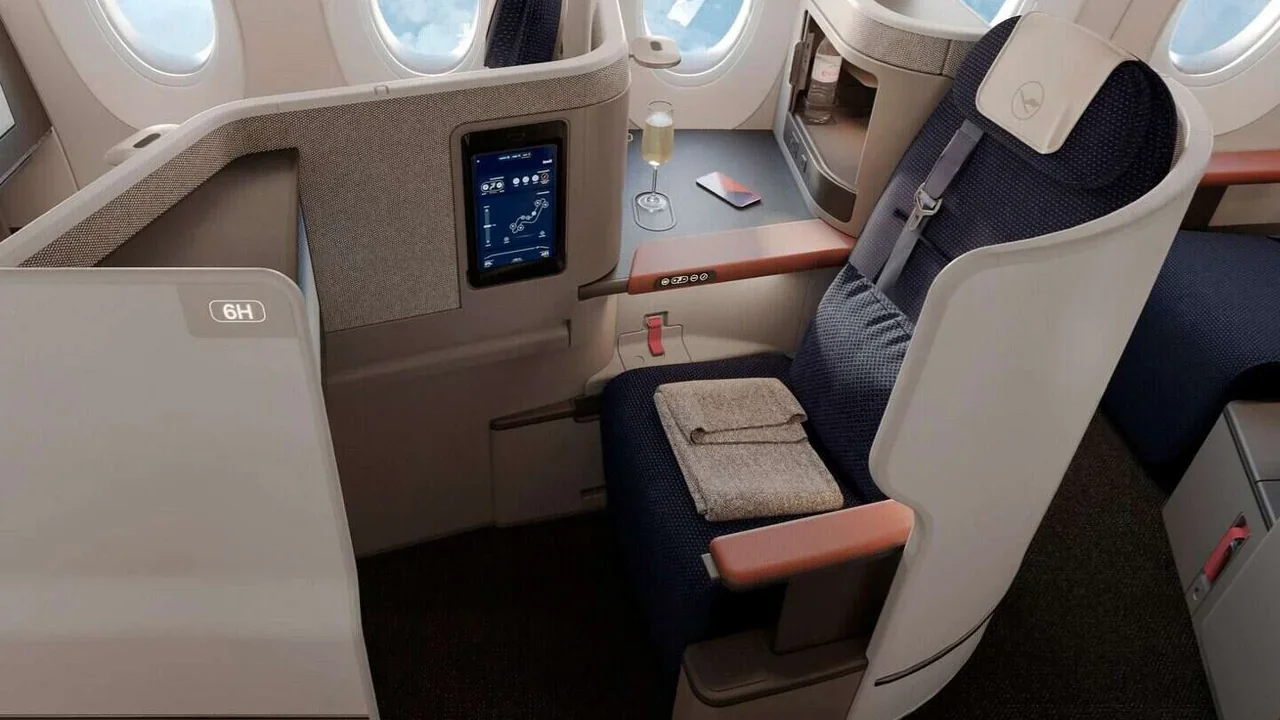
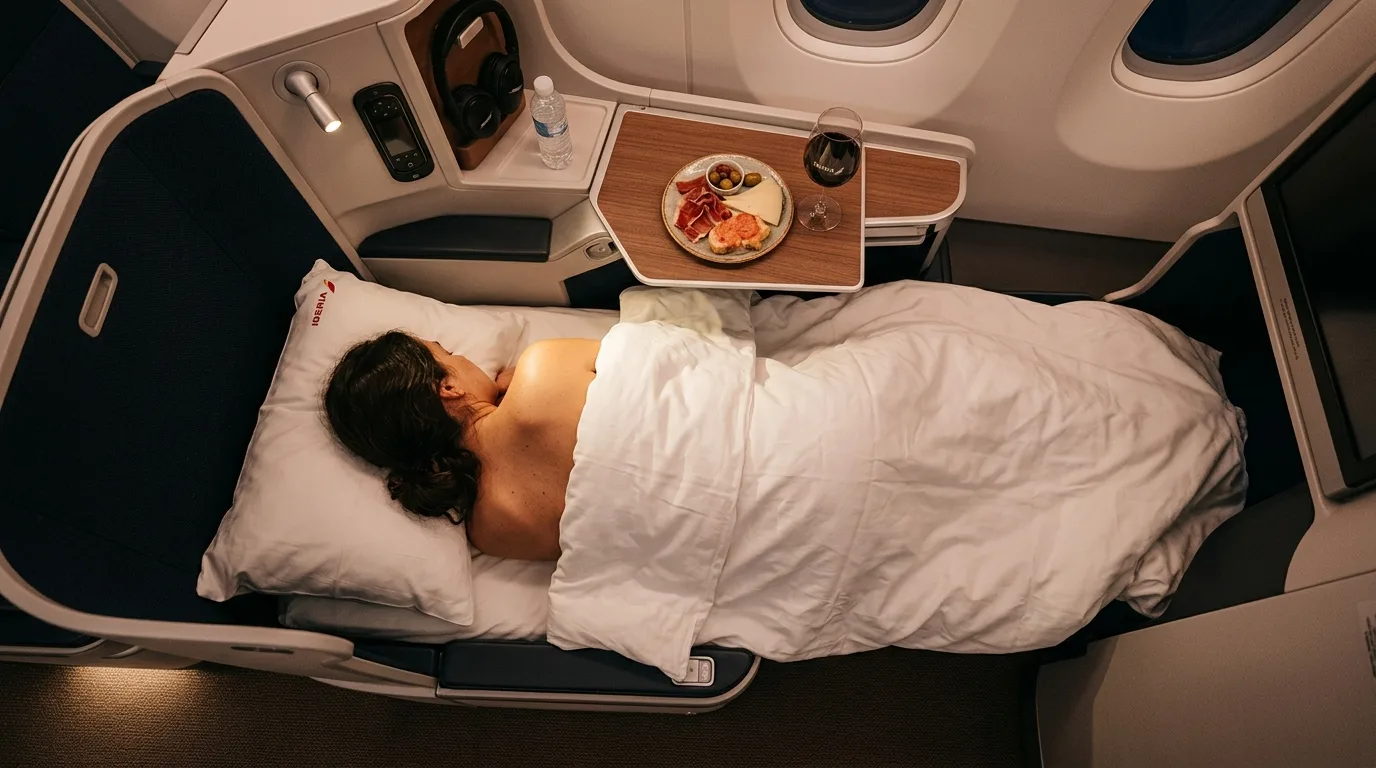
Iberia is the obvious headliner. They fly nonstop to Barcelona from JFK, and the product is genuinely good — the Vantage XL seat in a 1-2-1 configuration means every seat has direct aisle access, which matters on an eight-hour overnight. The Velázquez suite on their newer A350 deliveries is a real step up. I've found the food on Iberia to be better than most US carriers on this route, particularly the Spanish ham situation, which is not a small thing. Iberia's business class fares out of JFK to BCN typically range from around $2,100 to $3,800 round-trip at published rates. But they drop. Sometimes hard. Their flash sales — often tied to Spanish public holidays or end-of-quarter inventory clearing — can push that down to $1,800 or occasionally lower. American Airlines also flies JFK–BCN nonstop as part of its joint business with Iberia. The catch: you might be on an AA-operated flight, which means older 777 hardware depending on the aircraft assigned. The Flagship Business product on their newer 787s is solid, but if you get put on a 777-200 with the older angled flat seat, it's a different experience entirely. Check the equipment before you book. Seriously.Watch the aircraft type
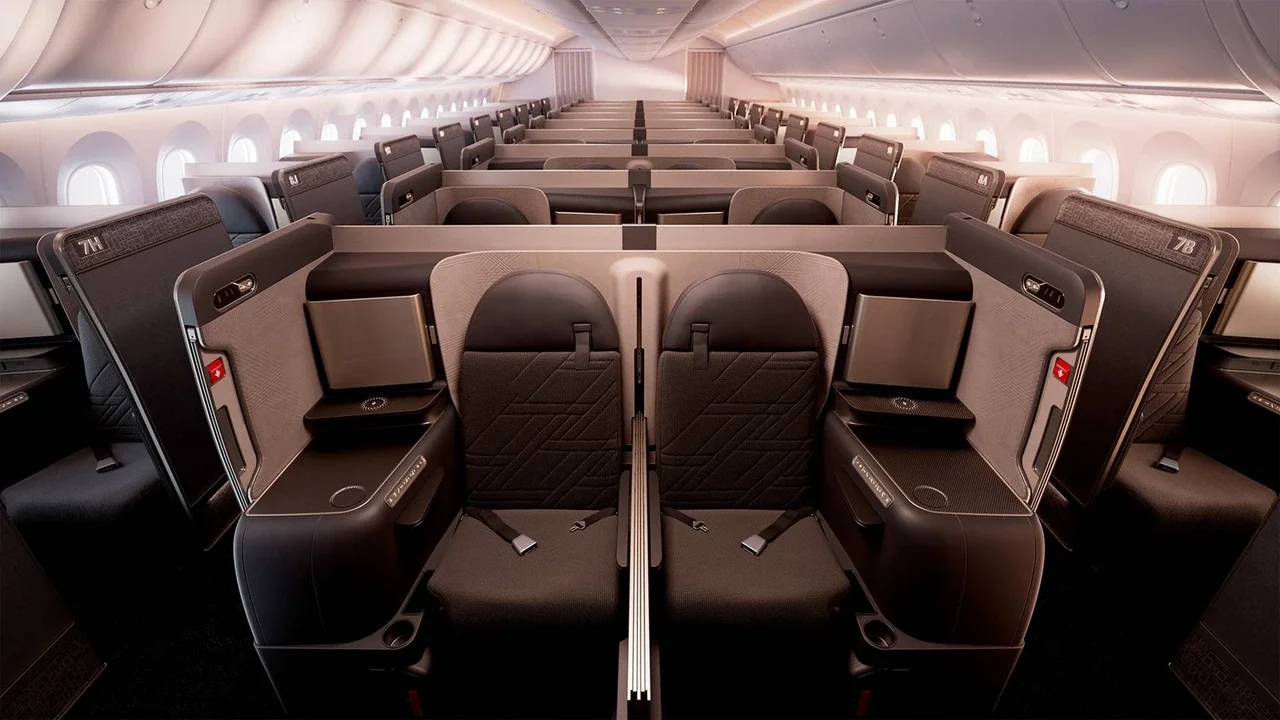
American's JFK–BCN service can operate on either a 787-9 (good) or a 777-200 (significantly worse seat). The 787 gets you a true lie-flat in a 1-2-1 layout. The 777 older config is angled and you will feel it by hour six. Always check Seatguru or the booking flow for equipment before committing.
How much does business class to Barcelona actually cost?
Let me give you real numbers rather than ranges wide enough to be useless.
At full published fares, you're looking at roughly $3,500–$5,500 round-trip on most carriers. Nobody should be paying that unless it's a last-minute emergency or a corporate card that isn't theirs.
Sale fares — the ones worth actually booking — tend to cluster in the $1,800–$2,800 round-trip range from East Coast gateways. From the West Coast, add $400–$800 depending on the connecting itinerary. LA and San Francisco travelers are almost always connecting through JFK, ORD, or MIA, which adds complexity but doesn't necessarily kill the deal.
The lowest I've personally seen on a bookable Iberia fare to BCN was around $1,750 round-trip from JFK during an early January sale. That's not a weekly occurrence, but it happens more than once a year if you're watching.
TAP Air Portugal: the connecting play most people sleep on

Here's where I'll spend a minute, because TAP via Lisbon is genuinely underrated and the fare patterns are different enough that it deserves its own section.
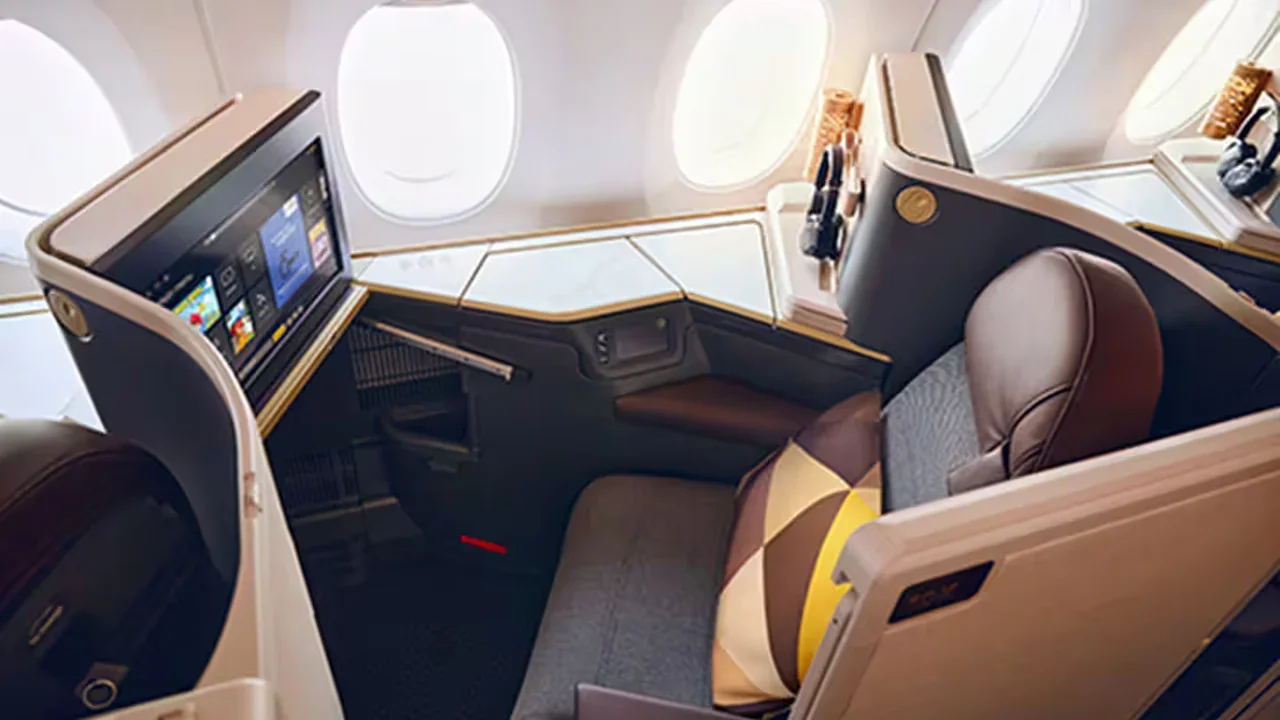
TAP operates a hub-and-spoke model through Lisbon that catches a lot of US gateway cities — New York JFK, Newark, Boston, Miami, Washington Dulles, and a few others. Their business class product on the A330neo (the "TAP Executive" cabin) is a proper lie-flat in a 1-2-1 configuration. The seat isn't the most luxurious thing in the air, but it's comfortable, it's functional, and the fares are often well below what Iberia or American charge for nonstop service.
TAP's Lisbon connection to Barcelona is short — about two hours — and the intra-European leg is operated in a standard European business class setup, meaning a blocked middle seat rather than a lie-flat. That's the trade-off. You get a proper flat bed across the Atlantic, then a very ordinary seat for the hop from LIS to BCN.The fares can be striking. I've seen TAP J fares to BCN via LIS sitting at $1,600–$1,900 round-trip when the nonstop carriers are asking $3,000+. The layover in Lisbon runs anywhere from 90 minutes to several hours depending on the itinerary, and LIS is a reasonably pleasant airport — the Terminal 1 lounge isn't spectacular, but it's fine.
If you're connecting through Lisbon on TAP, the 2-3 hour layover options are actually worth targeting over the tight 90-minute connections. You get more lounge time and you're not sprinting between gates. The airport is compact enough that it's not a hardship either way, but the buffer is nice.
One more thing on TAP: they run sales fairly aggressively, particularly in the January–February window and again in the fall. Their email list is worth being on. The deals don't stay live long.
Seasonal pricing: when to book and when to wait

Barcelona's tourism peak is June through August. Business class fares follow that curve, with a lag — prices start climbing in April for summer travel and don't really ease until late September.
Here's how I'd roughly characterize the year:
- January–February: Best window for low fares. Post-holiday demand collapse. Sales from multiple carriers. Travel in this period isn't ideal weather-wise but the city is quiet and the fares are real.
- March–April: Prices start moving up. Spring in Barcelona is genuinely lovely — mild, less crowded than summer. Still some deal windows, particularly for April departures booked in January.
- May: Shoulder season fares mostly gone. You're paying closer to mid-range now.
- June–August: Peak season pricing. Expect to pay $3,000+ round-trip unless you catch a flash sale or have points to burn.
- September–October: This is the window I personally like most. Prices start softening in late August for September/October travel. The weather is still warm, the city is less chaotic, and you can find fares in the $2,000–$2,500 range more reliably.
- November–December: Good fares return through most of November. December picks back up for the holiday period.
The Thursday evening departure out of JFK — particularly on Iberia — is one I've noticed tends to hold fares slightly lower than the Friday evening rush. Not always, but often enough that it's worth checking Thursday departures when you're flexible.
When do business class fares to Barcelona drop?
This is the question that actually matters, and the honest answer is: unpredictably, but with patterns.
Iberia tends to drop fares 6–10 weeks out when seats aren't filling. They also run announced promotions a few times a year, often in January, around their anniversary sales, and occasionally tied to Spanish national events. American mirrors a lot of Iberia's pricing given the joint business arrangement, though not always in lockstep.
Delta's drops are more tied to their SkyMiles flash sales, which are announced to email subscribers and don't last long — sometimes 24–48 hours. TAP tends to run longer sale windows, sometimes 3–4 days.
The problem with watching this manually is that by the time you see a deal tweeted or posted on a forum, it's often gone or picked over. The fares that go from $3,400 to $1,900 don't sit there waiting for you.
This is actually why we built BusinessClassSignal the way we did. It scans 800+ business class routes twice a day and alerts you the moment a fare drops below whatever threshold you've set for your route. For JFK–BCN, I'd set a target around $2,100 round-trip and let it run. You'll catch the Iberia drops, the TAP windows, and the occasional Delta flash without refreshing Google Flights at midnight.
Connecting from the West Coast

If you're flying out of Los Angeles, San Francisco, Seattle, or similar, the calculus changes. There are no nonstop business class options from the West Coast to Barcelona — you're connecting regardless.
The most common routing is through a US hub (JFK, ORD, MIA, or DFW) and then nonstop to BCN. Or you connect through a European hub — Madrid on Iberia, Lisbon on TAP, or London/Paris/Frankfurt on their respective carriers before a short hop to BCN.
West Coast strategy
For LAX and SFO travelers, TAP via Lisbon can be particularly good value — you're already accepting a connection, and TAP's US gateway fares from the West Coast are often lower than AA or Delta for the same quality of transatlantic product. Check both JFK-connecting and direct-to-LIS options.
One thing worth considering: if you're traveling as a couple or with family where some seats are economy, a mixed-cabin approach can work well. Book yourself into business class on the transatlantic leg and put the economy seats on a separate ticket. For the economy monitoring side of that, the same team that runs BusinessClassSignal built FlightKitten, which watches economy fares across 220+ airlines and alerts when prices hit your target. It starts at $4.99/month and is genuinely useful for that family-in-economy, one-adult-in-business situation that comes up more than people admit.
What business class to Barcelona actually gets you on arrival
A few practical things worth knowing before you land at El Prat.
The airport has two main terminals — T1 and T2. All the major international carriers use T1, which is the newer, better-equipped terminal. The Iberia Velázquez Lounge at T1 is decent — good jamón, reasonable wine selection, functional showers. It's not going to make your Instagram feed but it does the job. The Sala VIP at T2 is considerably more basic, and if you're transiting through a smaller terminal, manage expectations.
Business class passengers arriving at BCN get the usual priority baggage benefit, which actually works reasonably well here. I've had bags off the belt within 15 minutes on Iberia arrivals, which is better than some European airports I could name.
The Aerobus into central Barcelona from T1 is €5.90 and takes about 35 minutes to Plaça Catalunya. Taxis run €30–€40 depending on traffic. If you've just flown business class across the Atlantic, you might reasonably decide the taxi is worth it. That's between you and your expense account.
If you're staying in the Eixample or Gràcia neighborhoods, the Aerobus drops you at Plaça Catalunya and you're within walking distance or a short cab ride. For the Gothic Quarter or Barceloneta, the taxi from T1 is probably the cleaner option.
How to actually monitor for fare drops
Manual fare watching is a losing game for most people. You'd need to check multiple carriers, multiple departure dates, and multiple routing options — daily — to catch the windows when they open. Most people don't do that, so they pay full price or miss the sale entirely.
BusinessClassSignal runs automated scans on JFK–BCN, LAX–BCN, MIA–BCN, and the other major US gateway routes twice daily. You set your price target, choose your travel window, and the system emails you when a fare crosses below that threshold. It covers Iberia, American, Delta, and TAP on this route specifically.The free trial runs seven days and costs nothing to start. If you're planning a Barcelona trip in the next six months, it's worth having the alerts running even if you're not ready to book yet — the point is to know when the fare window opens, not to scramble after the fact.
One thing I'll say honestly: BusinessClassSignal isn't magic. It catches the fare drops when they happen, but it can't manufacture them. If you're trying to fly Barcelona in July with three weeks' notice, the tool will find whatever exists, but the inventory may simply not be there at a price worth paying. The system works best when you have a four-to-six month window and some flexibility on exact dates.
Browse all monitored routes to see the full list — there are a few BCN-adjacent options (Madrid, Malaga, Valencia) that sometimes price interestingly if Barcelona specifically isn't coming up with deals.The points angle
I've focused mostly on cash fares here because that's what most people actually use, and because the cash fare windows are real and worth catching. But it'd be incomplete not to mention the points side.
Iberia Avios is the most direct currency for IB business class to BCN. Their off-peak award chart can price JFK–MAD at 34,000 Avios one-way in business class, and the JFK–BCN route prices similarly. That's a strong redemption if you have British Airways Avios (which transfer to Iberia Avios) or if you've accumulated them through Chase Ultimate Rewards.
American AAdvantage is another path, given the joint business arrangement — you can sometimes book Iberia metal through AA miles, though partner availability can be patchy.
The points conversation gets complicated fast and probably deserves its own article. The short version: if you have Avios sitting around, JFK–BCN on Iberia is one of the better redemptions on the transatlantic map.
A note on award availability
Iberia's off-peak award pricing requires travel outside peak periods — roughly June through August is excluded. The sweet spots are January–May and October–December. Off-peak availability can be genuinely good, but you need to search directly on the Iberia website rather than through partner tools, which often don't surface the best inventory.
Monitor business class fares to Barcelona — 7-day free trial, no card required
Start Free Trial