```html
Quick summary
Business class to the Maldives from the US means at least one connection — usually Singapore, Dubai, or Doha — and a short hop down to Malé (MLE) on a regional carrier. Prices vary wildly, but you can find round-trip fares in the $3,500–$5,500 range if you're patient. BusinessClassSignal monitors this route family daily and alerts you when something worth booking actually appears.
The Maldives is one of those trips that sounds simple until you start pricing it out. A week at an overwater bungalow. Clear water. No agenda. But getting there in business class from the US is a routing puzzle, and the fare gaps between "good deal" and "you got taken" can run to thousands of dollars.
I've made this trip twice — once through Dubai on Emirates, once via Singapore — and the experience on either end of the journey shapes the whole thing. You're looking at 20+ hours of travel no matter what you do, so the seat you're in for that long-haul leg matters.
Here's what I've learned about making it work.
Why business class to the Maldives is more complicated than it looks
No US carrier flies direct to Malé. That's just the reality. You're always connecting, which means you're actually booking two distinct business class products: the long-haul transoceanic leg, and then a shorter regional hop from your hub to MLE.
The regional leg is the catch. Maldivian, the national carrier, operates the final stretch from Colombo or sometimes from Dubai. Sri Lankan Airlines handles some of the Colombo traffic. Neither is what you'd call a premium business class product — you're often on a turboprop or a narrow-body regional jet where "business class" means a slightly wider seat with a meal tray.
That said, the hub routing you choose determines a lot. Singapore, Dubai, and Doha are the main options from the US, and each one has real differences in lounge access, layover quality, and seat product on the main leg.
The three best routing options from the US

Let's get specific about what each hub actually gives you.
Singapore Airlines via Singapore (SIN)
Singapore Airlines is the strongest option if you can get it at a reasonable price. Their Business Class on the A350 and 777-300ER — the jets most likely to operate the US to Singapore leg — is genuinely good. The seat converts to a full flat bed, the food is better than most, and Changi Airport is the cleanest, most functional transit hub I've been through anywhere.
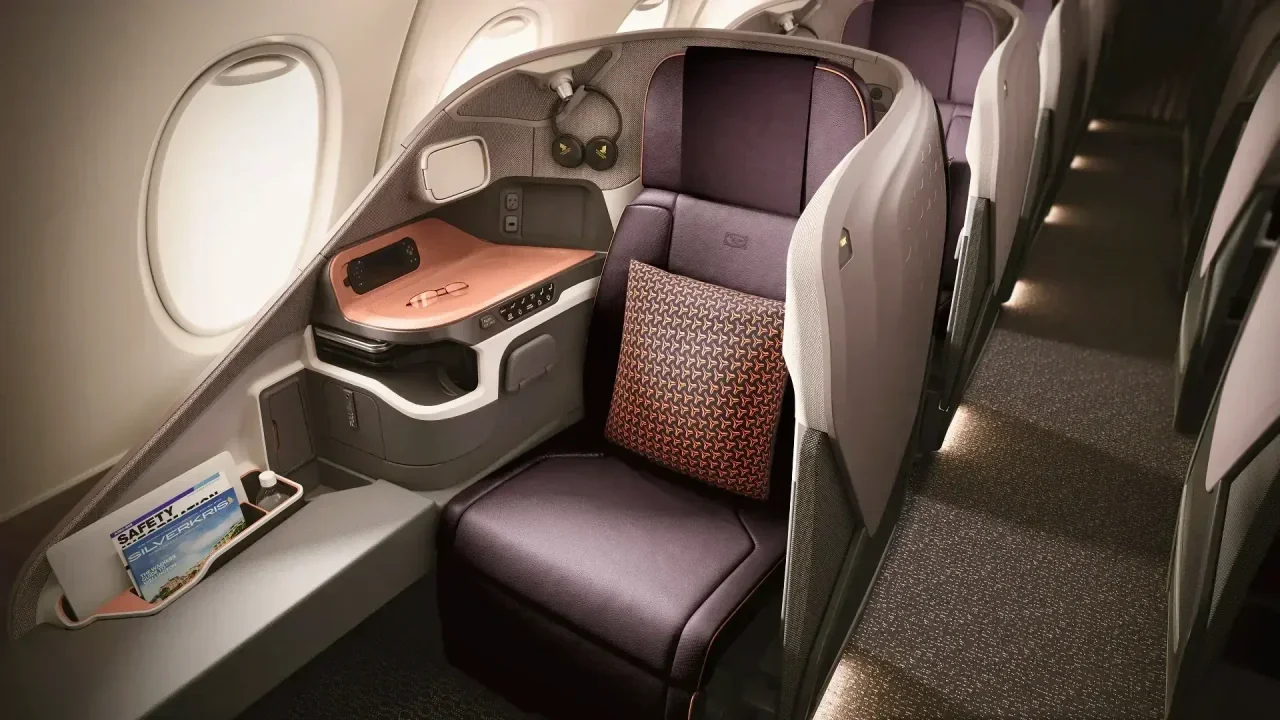
The Singapore routing typically goes JFK or LAX to SIN, then SIN to MLE on SilkAir/Scoot or a connection via Colombo. The SIN to MLE leg is around 4 hours and is operated on an A330 or A320 depending on the day. Business class on that sector is real — proper seats, a meal, the works. That makes this routing the most consistent in terms of premium product end-to-end.
The downside: Singapore Airlines doesn't discount heavily, and award space is hard to find. You'll pay for the quality. But when BusinessClassSignal catches a sale fare on this routing — and it does, a few times a year — it's usually the one I'd book without hesitation.
Emirates via Dubai (DXB)
Emirates is the other obvious choice, and for a lot of US cities it's more accessible since they fly from more American gateways. New York, Los Angeles, Dallas, Houston, Chicago, San Francisco — the network is broad.
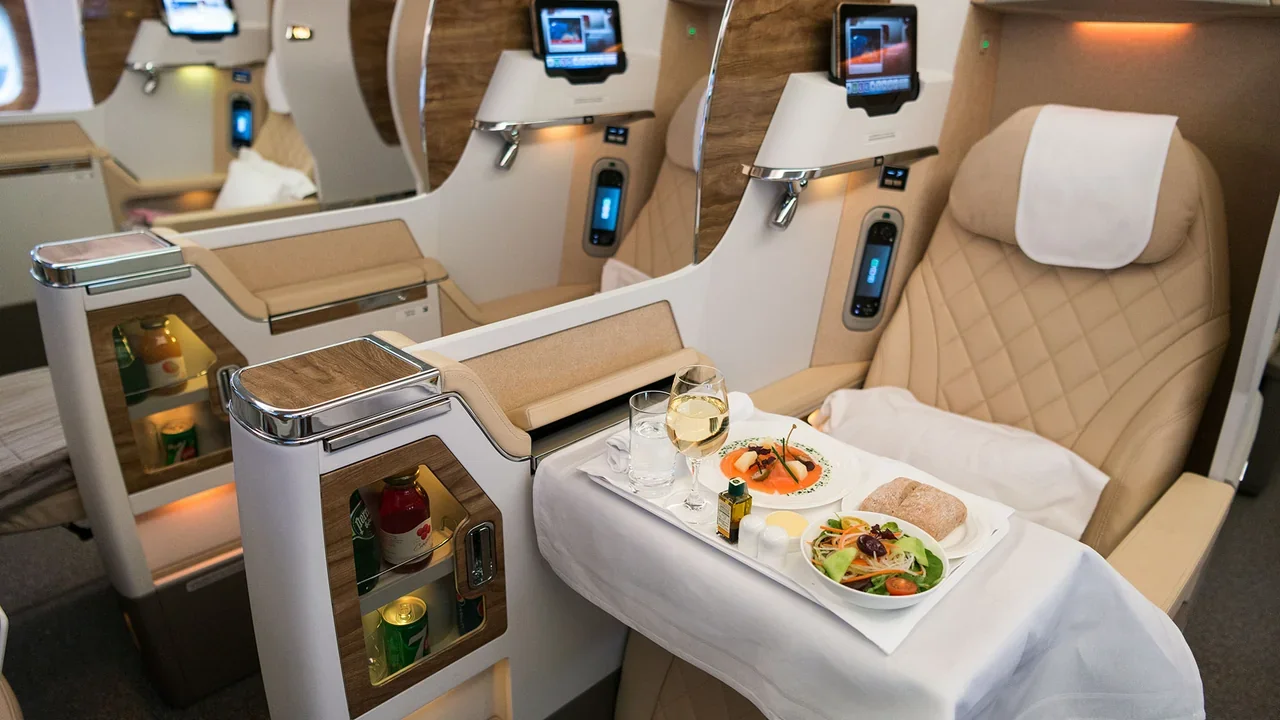
The Emirates A380 Business Class (the one with the private suite) is spectacular if you get it. The 777 business class is fine but not in the same conversation. Check which aircraft is operating your specific flight before you book — it makes a meaningful difference.
Dubai to Malé is about 4 hours, operated on a 777 or A380 depending on the day. Emirates flies this route directly, which removes the Colombo connection entirely. That's a real convenience advantage. The DXB lounge situation is good if you're in Business — the main Business Class lounge in Concourse B is large and well-stocked, though it gets crowded on peak evenings.
Check the aircraft type
On Emirates, the A380 Business Class and the 777 Business Class are very different products. The A380 suite is one of the better seats in the sky. The 777 configuration is older and more cramped on some aircraft. Always check Seatguru or the Emirates website for your specific flight before committing.
Qatar Airways via Doha (DOH)
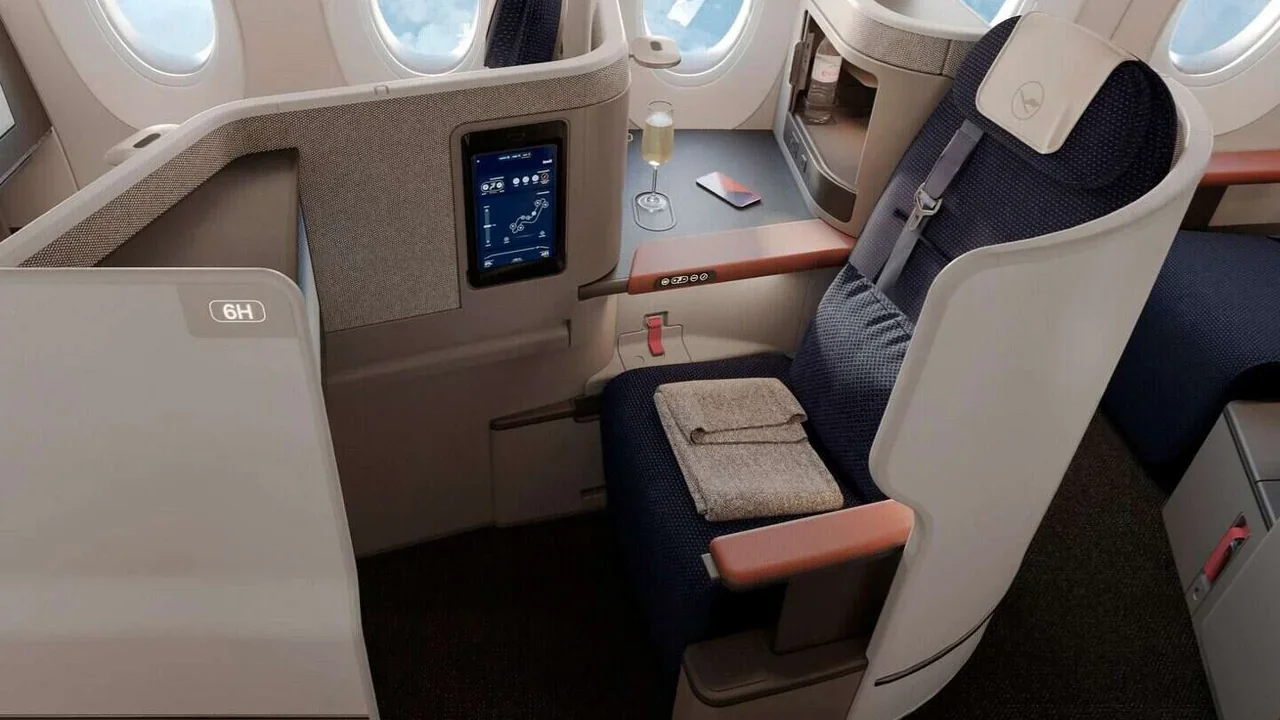
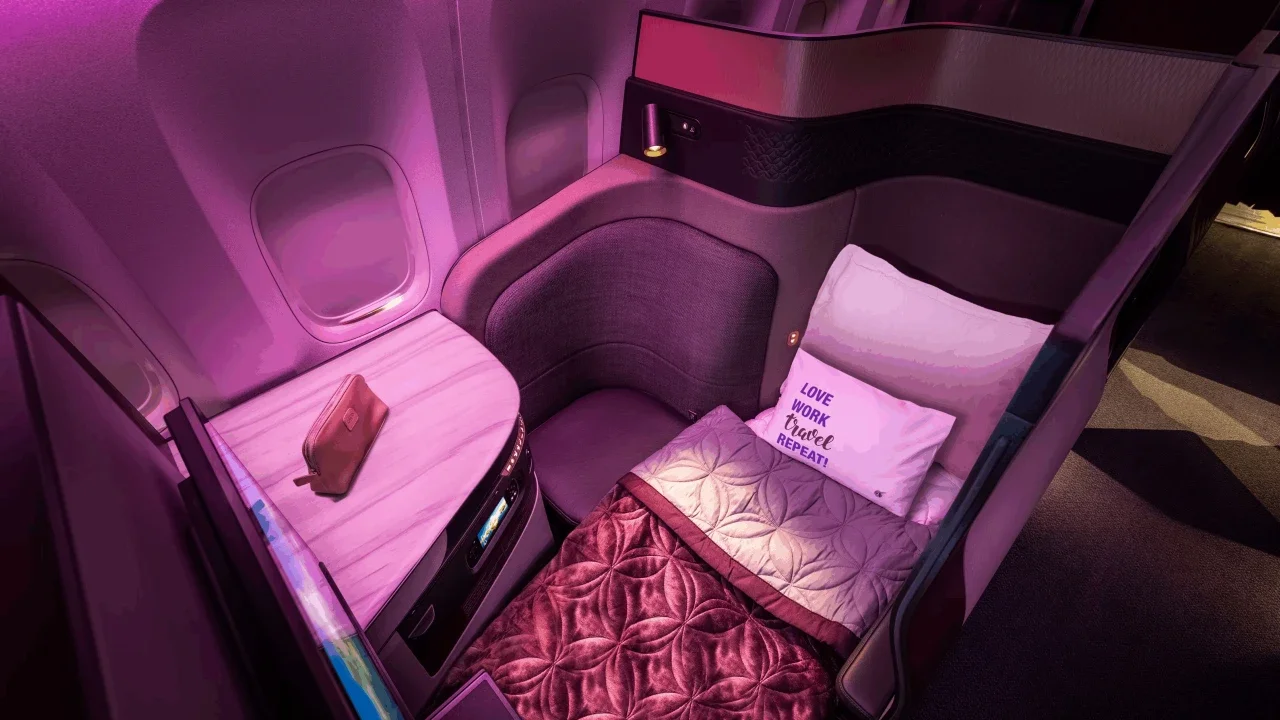
Qatar Airways is the third strong option, and honestly one I've come around to more than I expected. Their QSuite is the best business class seat product available on the US to Gulf routing right now — it's the one with the sliding door, the double-bed configuration, and the genuinely private feel. If you're traveling with a partner, the QSuite pairs are worth seeking out.
Doha to Malé connects via Colombo (CMB) on SriLankan Airlines in some itineraries, or Qatar sometimes runs the DOH–MLE segment directly. Check which applies to your specific booking — a direct DOH to MLE is around 5 hours, while routing via Colombo adds time.
Hamad International Airport (DOH) has gotten a lot of attention lately, and the Al Mourjan Business Lounge lives up to most of it. The food there is genuinely good — I've had better mezze at 3am in that lounge than at restaurants I've paid for. Worth the layover.
What Malé transfer logistics actually look like
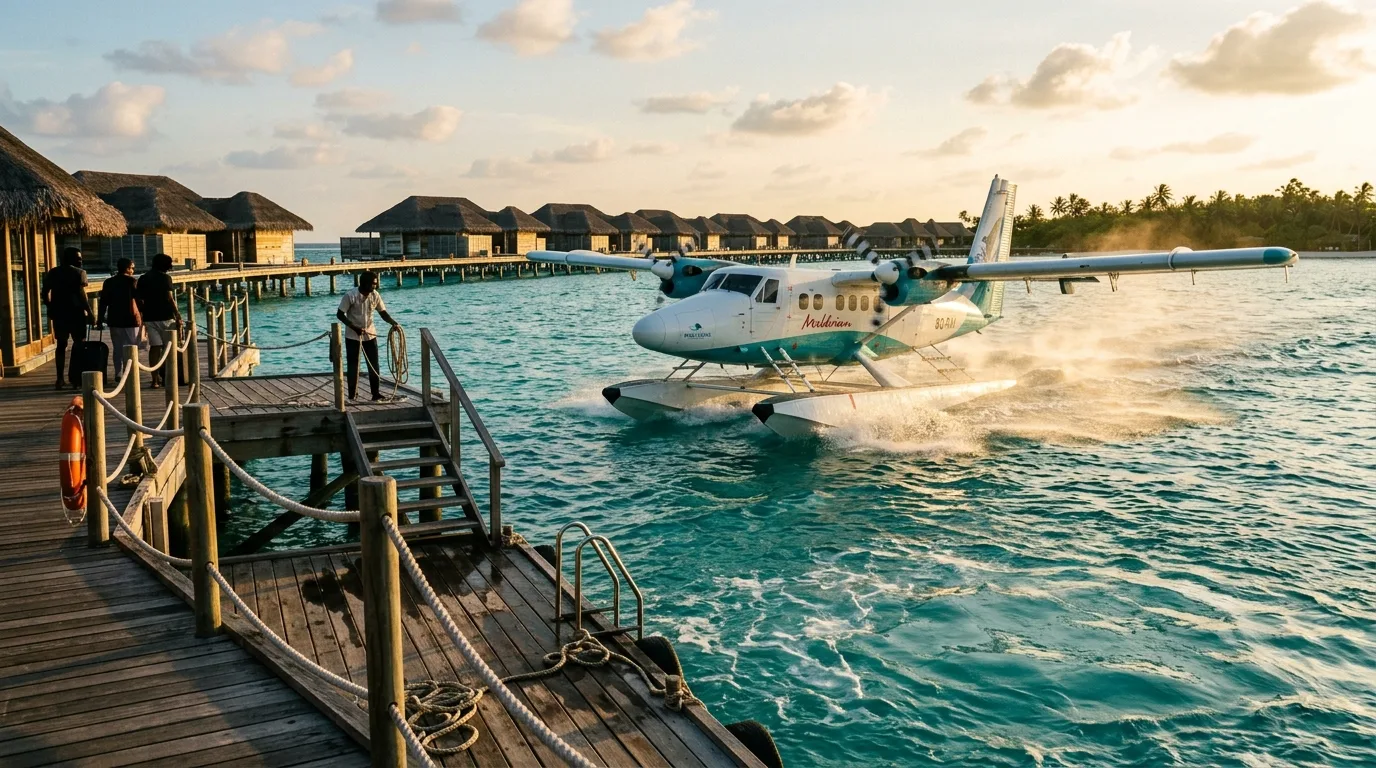
Here's the part most articles skip over: landing in Malé doesn't mean you're at your resort. Velana International Airport (MLE) is on its own small island, and almost every resort in the Maldives requires a second transfer — either a speedboat or a seaplane.
Seaplane transfers are the iconic Maldives experience, but they only operate during daylight hours. If your long-haul flight arrives late, you may need to overnight near the airport before continuing to your resort the next morning. Most resorts will tell you this upfront, but it's worth checking before you book a 2am arrival and expect to wake up at your overwater villa.
Seaplane transfers are daylight-only
Trans Maldivian Airways and other seaplane operators don't fly after dark. If you arrive in Malé after around 3pm local time, there's a real chance you'll need a hotel night near the airport before your resort transfer. Build this into your itinerary — don't assume the resort will sort it out seamlessly.
The airport itself is fine — there's a small lounge in the international terminal, and if you're arriving on a late connection, the Park Hyatt Maldives Hadahaa has a waiting area arrangement worth asking about. Nothing fancy, but functional.
How do you actually book business class to the Maldives?
The honest answer: with patience, or with a tool watching fares for you. Business class to the Maldives isn't a route where prices are stable or predictable. The fares move a lot. A JFK–SIN–MLE round-trip in business can sit at $7,000+ for months, then drop to $4,200 for a 48-hour window when Singapore Airlines runs a flash sale or releases partner award space.
That's exactly the kind of thing BusinessClassSignal is built to catch. The monitoring system scans 800+ business class routes twice daily and fires an alert when fares drop below your target price. You set the threshold — say, $4,500 round-trip from JFK to MLE — and you get notified when something bookable appears.
I've used it to catch Emirates sales that I'd have missed entirely because the window was literally two days. That's not something you find by checking Google Flights every morning.
The monitoring system is also useful for figuring out seasonality. Once you've been watching a route for a few weeks, you start to see patterns — which airlines drop prices in which months, whether Tuesdays or Thursdays tend to show better fares for this region. For a trip to the Maldives, where you're also coordinating resort availability, having that runway to plan matters.
The best time to fly and what that does to prices
The Maldives has a dry season (roughly November through April) and a wet season (May through October). Most travelers aim for dry season, which means prices — both for flights and resorts — are at their peak from December through March.
The best value window I've found is late April or early May. The dry season is ending but hasn't fully flipped, and flight prices start to soften noticeably. You'll get occasional showers, but the water visibility is still good and resort rates drop considerably.
October is another underrated window — the wet season is winding down, resorts are running promotions to fill rooms, and airlines sometimes discount business class to match. I've seen some of the better fares on the Emirates routing appear in September and October.
Set your BusinessClassSignal alert 6–9 months before your target travel dates. Airlines release business class inventory further out than most people realize, and early-release fares are sometimes the best you'll see.
Airline lounges on the way through
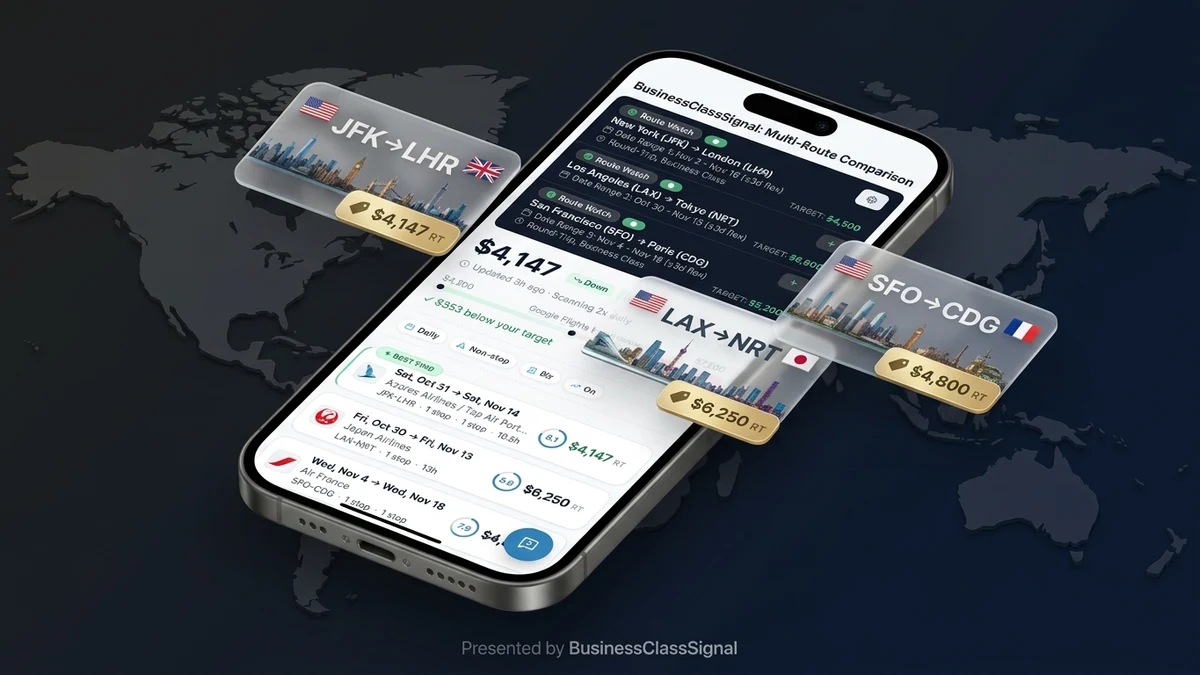
You're spending time in at least one major hub on this routing, so the lounge situation matters.
Changi (SIN): The SilverKris Business Class lounge in Terminal 3 is genuinely good — quiet, well-designed, with a proper hot food selection including laksa that I still think about. It's one of the better transit lounges in the world, and I don't say that lightly after sitting in a lot of mediocre ones.
Dubai (DXB): The Emirates Business Class lounge in Concourse B is large and well-stocked, but it can feel hectic during peak hours. The food spread is decent, the bar is solid, and there are shower suites that are worth booking ahead if you have a long layover. The Concourse A lounge for First Class is on another level, but you're not there on a business class ticket.
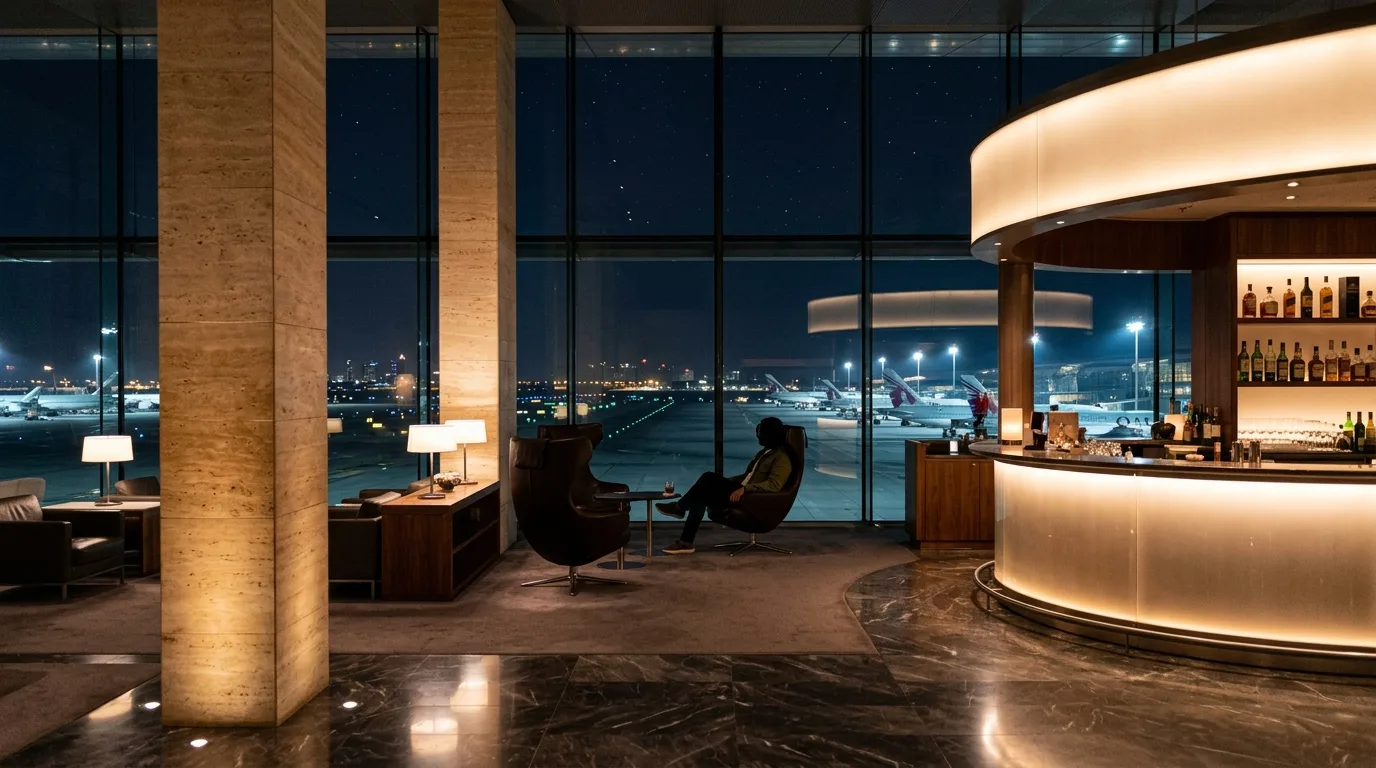
Doha (DOH): Al Mourjan is probably the best of the three for the overall experience — calmer than Dubai, better food than most, and the architecture actually makes you want to spend time there. The lamb chops at the hot food station are worth mentioning specifically. Small detail, but it's the kind of thing that makes a 4-hour layover feel like less of a grind.
Lounge access on regional legs
When you're connecting on to Malé from Singapore or Doha, check whether your regional carrier gives you lounge access at the transit hub. SilkAir and Sri Lankan sometimes don't provide access to the main premium lounge on connection tickets — this depends on how your ticket is issued. Ask at check-in or call ahead.
Mixed cabin strategies and when economy makes sense
Not every leg of this trip needs to be business class. The SIN to MLE or DOH to MLE segment is 4–5 hours, and if you've just come off a 17-hour lie-flat flight and slept well, a decent economy seat for the final stretch isn't the end of the world.
Booking the long-haul leg in business and the regional leg in economy can save $800–$1,500 on the round-trip, depending on the airline and routing. That's real money, and for some people it's the difference between making the trip happen or not.
If you're traveling with family or a group where some people are in economy for the full routing, it's also worth knowing about FlightKitten — it's built by the same team behind BusinessClassSignal and does the same fare monitoring work for economy across 220+ airlines. Starts at $4.99/month. I use it when I'm booking positioning flights or when I've got companions traveling in economy and I want alerts on their fares separately.
If you're flying mixed cabin, book the business class long-haul leg first and separately. Don't let the airline bundle it with the regional economy leg under one fare — you'll often overpay for the combination versus booking each segment independently.
What the seat products are actually like on these long-haul legs
I want to be specific here because the marketing language around business class is almost universally useless.
Singapore Airlines A350 Business Class: Forward-facing, full flat bed, good privacy, the seat shell is well-designed. The food is the best of the three options I'm covering here — they take it seriously, the satay on the SQ menu is a known thing among frequent flyers for a reason. The IFE screen is large and responsive. My one complaint: the mattress pad they provide is thin, and on a 17-hour flight you feel it by hour 12.
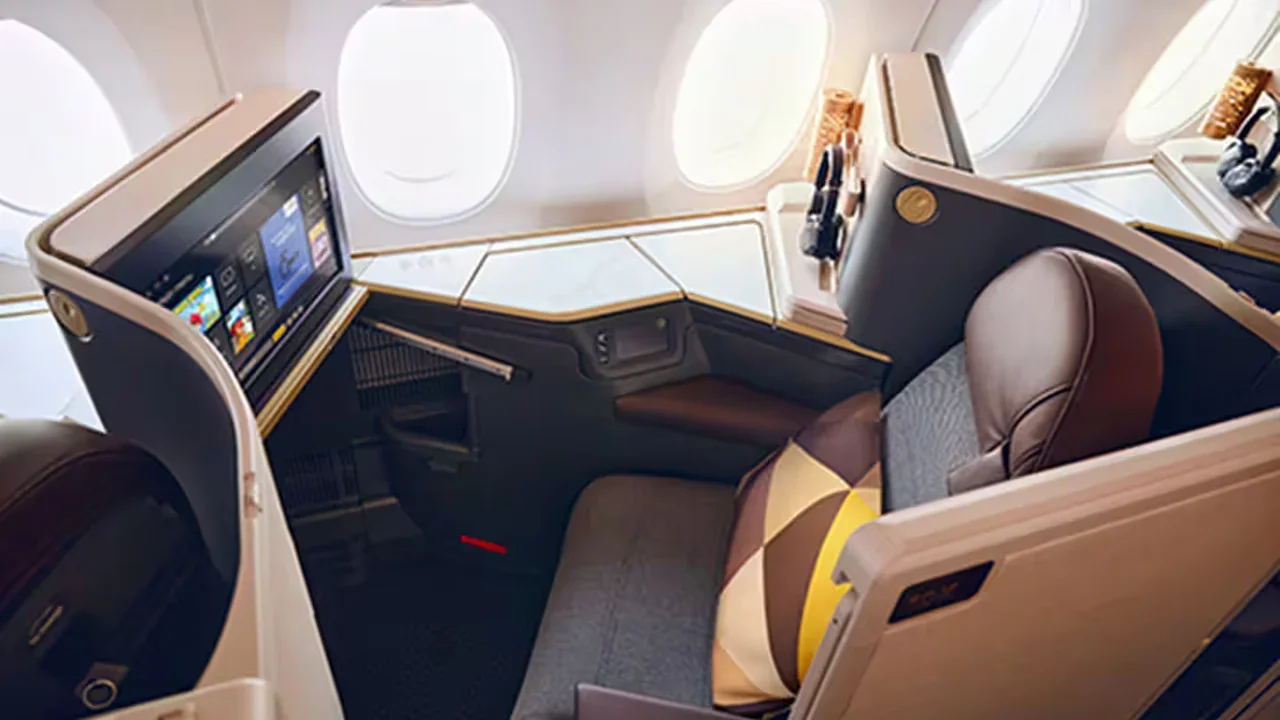
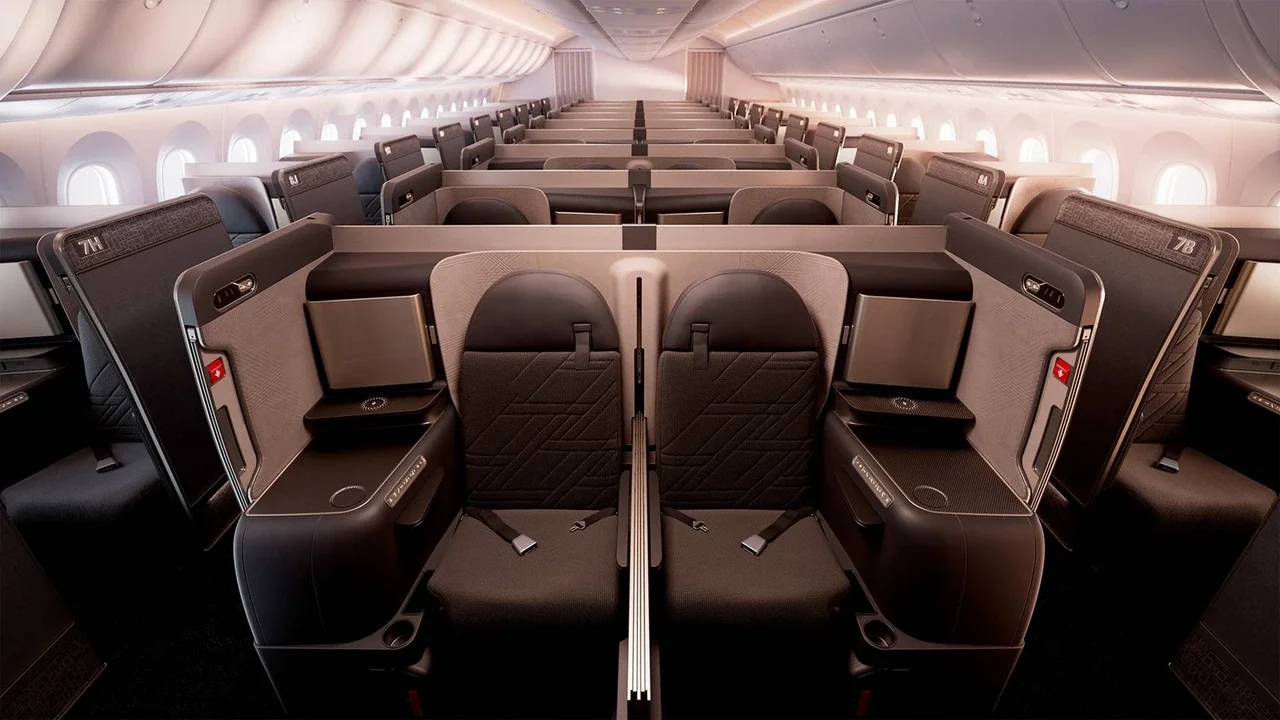
Emirates A380 Business Class (new suite configuration): The private suite is excellent — sliding door, full flat bed, genuinely good storage. On the A380 upper deck, the atmosphere is calmer and quieter than the main cabin. The bar on the upper deck is a real feature, not a gimmick. That said, not all Emirates 777 flights have the new configuration, and the older 777 business class is noticeably more cramped. Know what you're booking.
Qatar QSuite: The best seat product of the three in my opinion. The privacy is real, the double-bed configuration for couples is something the other two don't offer, and the sliding door actually blocks light and noise. The food is good, not exceptional. The IFE is fine. The seat itself is the reason to choose QR if you can get it at a competitive price.
Booking tips that actually move the needle
A few things I've found consistently useful on this specific routing:
- Book on a Tuesday or Wednesday. It's not magic, but I've seen more business class sales on this route drop mid-week than on weekends. Not a rule, but worth knowing.
- Target shoulder-season travel in April–May or September–October. The fare difference versus peak December–March can be $1,500+ round-trip in business.
- Check positioning flights from smaller US cities. Sometimes flying from a secondary city to JFK or LAX in economy, then picking up a business class ticket to your hub, is cheaper than originating from a smaller city on a through-itinerary. The math doesn't always work, but it's worth checking.
- Watch for Singapore Airlines' anniversary and seasonal sales. They run them a few times a year and the Maldives routing often appears. These are the fares that make this trip genuinely good value in business class.
- Set alerts at $4,500 and $5,000 round-trip from major US gateways. Those are the thresholds where I'd consider pulling the trigger without overthinking it.
Award space timing
If you're hunting award tickets rather than cash fares, Singapore Airlines KrisFlyer releases partner award space on a rolling 11-month basis. Check at exactly 11 months out for the best availability on peak dates. Qatar Avios space is more variable but sometimes opens up 2–3 weeks before departure when seats go unsold.
The one thing I'd say above everything else: don't book this trip at the first price you see. The fares move too much for that to make sense. Set a target, start monitoring the route, and wait for the market to come to you. It usually does.
The Maldives isn't going anywhere. The overwater villa will still be there in six months when Singapore Airlines decides to run a flash sale. That patience is worth real money on a trip like this.
Monitor business class fares to the Maldives — set your target price and get alerted when fares drop. 7-day free trial.
Try Free```