
What you're actually dealing with on this route
There's no nonstop from the US to Bangkok. Never has been, probably won't be for a while. So the question isn't just "which airline flies business class to Bangkok" — it's "which connection is worth your time and which one turns a long trip into a miserable slog." Those are very different questions, and the answer depends a lot on where you're connecting and who's flying the metal on the second leg.
I've done this route six times in the past four years. Different carriers, different hubs, different seat products. Some of those trips were genuinely excellent. One was a near-disaster involving a 4-hour delay in Doha and a flat bed that reclined about 160 degrees, which is not the same thing as flat. So I'll give you the version that's actually useful.
Total flying time from the US West Coast runs around 18–22 hours depending on your routing. From the East Coast, add three to four hours. You're almost always looking at two flights, one connection, and somewhere between 14 and 20 hours in the air. Business class matters on this route. Economy on a 17-hour itinerary is survivable, but you'll feel it for days.
The four main connection hubs for business class to Bangkok
Your realistic options are Tokyo Narita (NRT), Seoul Incheon (ICN), Doha (DOH), and Dubai (DXB). Each hub comes with a different set of tradeoffs — flight times, seat quality, lounge access, and the overall sanity of the connection.
Tokyo Narita is the cleanest routing if you're on the West Coast. Japan Airlines and ANA both operate wide-body aircraft on the US–Japan leg, and JAL's Sky Suite product is legitimately one of the better business class seats flying this sector right now. The connection to Bangkok via NRT is typically 6–7 hours of flying, and the Narita transit experience is calm and efficient in a way that Doha on a Friday night is absolutely not. JAL's Sakura Lounge in Terminal 2 has a hot food section that's worth the layover alone — the soba and the chicken rice are both decent, and I've never had to hunt for a seat there the way I have at some Middle Eastern hubs.
The downside with Tokyo is that ANA and JAL can be expensive out of the US, and the award availability is inconsistent. Cash prices on the US–NRT–BKK routing in business often land between $2,800 and $4,200 round-trip depending on the season. Not the cheapest option.
Seoul Incheon is where Korean Air and Asiana come in. Korean Air's Prestige Class on the 787 is a solid product — forward-facing seats, good legroom, and the bibimbap they serve on the long-haul leg is one of the better airline meals I've had at 37,000 feet. Incheon itself is an excellent transit airport. Fast, logical, and the Korean Air lounge on the concourse level has a hot noodle station that I've been known to visit twice on a long layover. Prices out of cities like LA, San Francisco, and Seattle tend to be competitive, sometimes dipping to $2,400–$2,800 round-trip during shoulder season.
Doha via Qatar Airways is the Middle Eastern option most people reach for first, and I understand why — Qatar has a strong brand and the Qsuite product on the 777 and A350 is genuinely excellent. But here's the thing: not every US–DOH–BKK itinerary gets you Qsuite. Plenty of them operate on older aircraft with the older angled seat, and you won't necessarily know which until you're checking in. The connection can also be brutal depending on your arrival time. If you land in Doha at 11pm and your Bangkok departure is at 2am, you're going to be tired and the Al Mourjan lounge, while nice, starts to feel less impressive when you're running on four hours of sleep.
Prices via Doha can be attractive — I've seen round-trip business class fares around $2,100–$2,600 from the East Coast, which is genuinely good for this length of trip.
Dubai via Emirates is the other Gulf option. The A380 Upper Deck on Emirates is a real experience if you can get it — the bar, the shower on the A380, the sheer size of the cabin. But Emirates business class on the 777, which is what you often get on the Bangkok segment, is not the same thing at all. It's a 2-3-2 configuration with seats that are fine but not flat, and after a 14-hour flight from the US you're going to notice. Prices are similar to Qatar, sometimes slightly higher.
Thai Airways Royal Silk and EVA Royal Laurel — the second leg matters
Most US passengers think about the transpacific leg first. That's understandable — it's the long one. But the connecting flight into Bangkok is where the experience can either land well or fall apart, and the carrier flying that second leg makes a real difference.
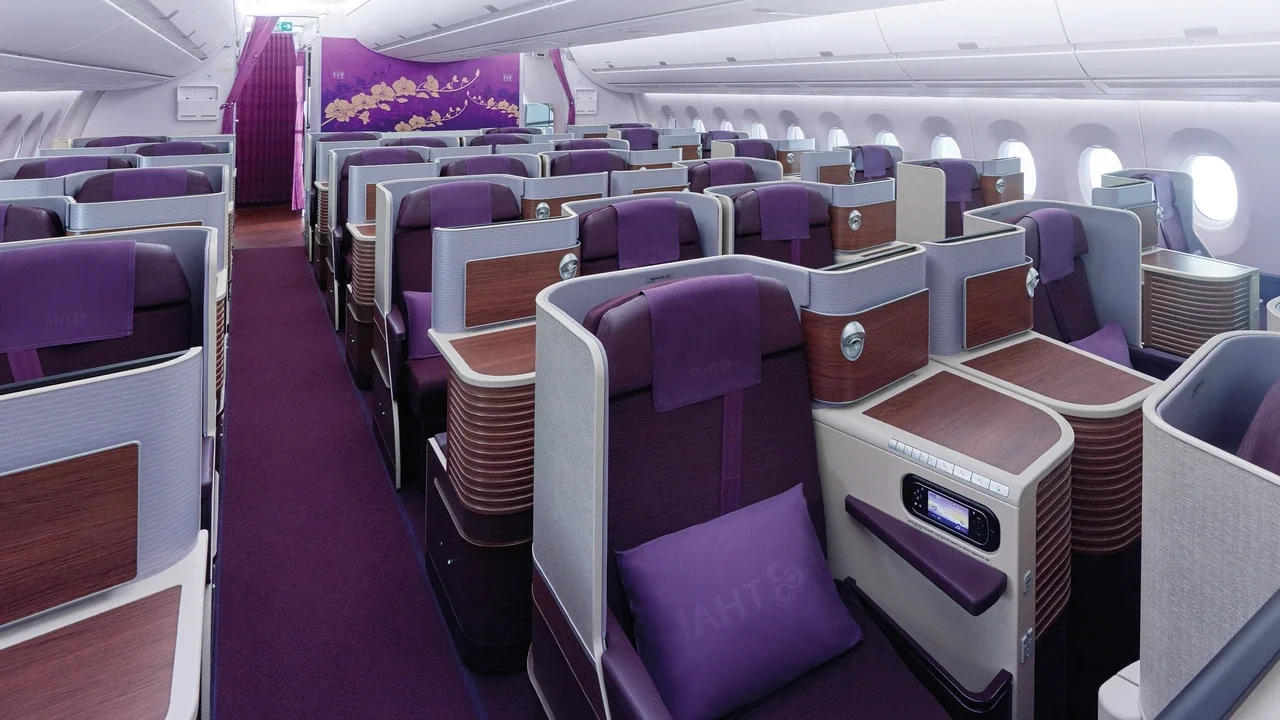
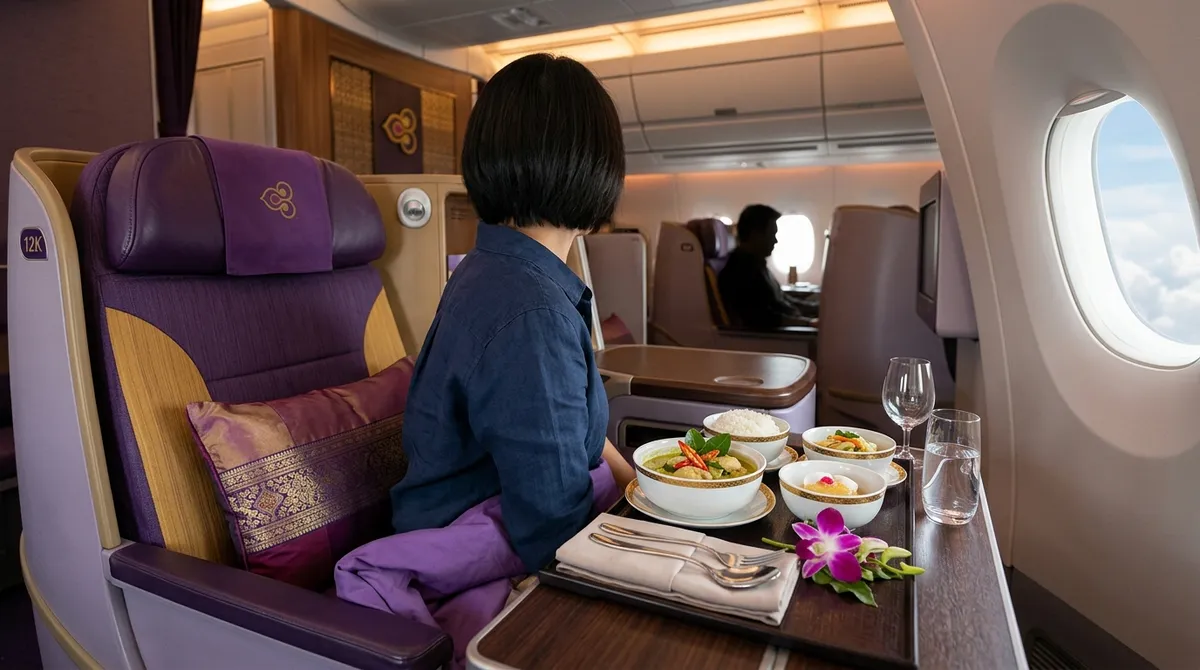
Thai Airways Royal Silk is the national carrier's business class product, and it's had a complicated few years. Thai went through bankruptcy restructuring in 2020 and has been working its way back. The onboard product varies a lot by aircraft. On their newer 787-8 and 787-9 routes, Royal Silk is a proper lie-flat seat in a 1-2-1 configuration — aisle access for every seat, decent pitch, and the Thai-style meals are genuinely good. The green curry and the mango sticky rice they serve as a dessert option on some routes are the kind of thing you actually remember.
On older aircraft, particularly the A330, the seat is more of a reclined cradle than a true flat. It's comfortable enough for a 6-hour flight but don't expect the same thing you got on the long-haul leg. Check the aircraft type before you book — it matters.
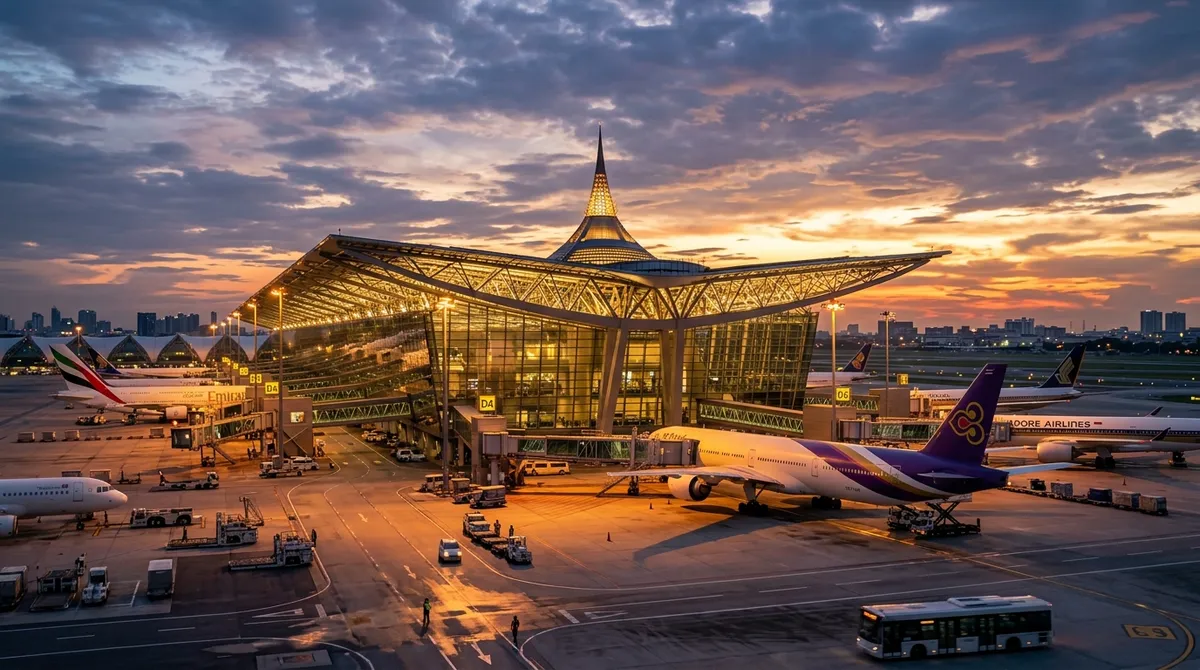
The Royal Orchid Lounge at Bangkok's Suvarnabhumi Airport (BKK) is decent. Nothing spectacular. The food selection is better in the evening than the morning, and the shower facilities are available if you've just landed a 20-hour itinerary and need to feel human before your onward connection or hotel arrival.
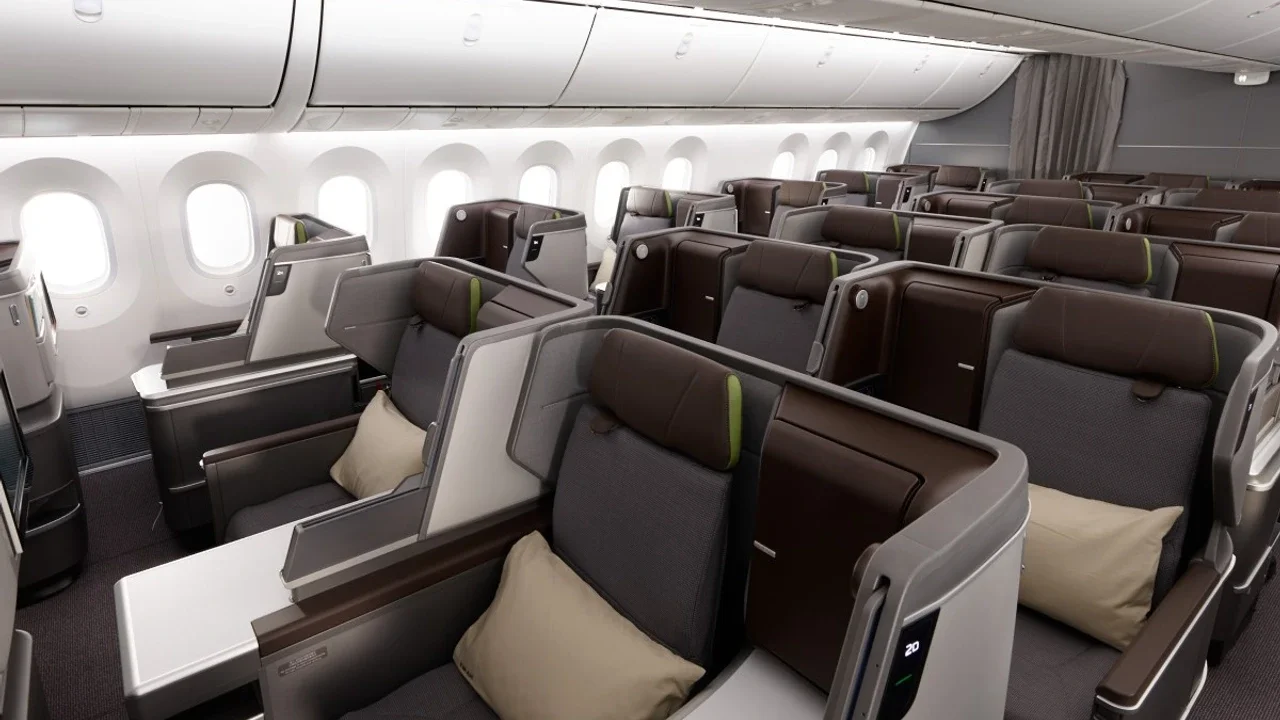
EVA Air's Royal Laurel is a different story. EVA operates out of Taipei (TPE), which means it's a NRT or TPE connection rather than a Gulf hub, but it's worth mentioning specifically because the product is strong. The Royal Laurel seat on EVA's 777-300ER is a fully flat bed in a 1-2-1 layout, and the Taiwanese carrier consistently gets high marks for service consistency — meaning the crew actually delivers what the product promises, which is not always guaranteed. The food quality is above average for the cabin, and I've found EVA to be one of the more underrated options on this entire routing.
Fares routing through Taipei can sometimes be found in the $2,500–$3,200 range round-trip from West Coast cities, and EVA occasionally drops business class prices significantly during promotional windows — the kind of short-lived fare that disappears within hours.
When fares actually drop, and what to watch for
Business class pricing on US–Bangkok routings is genuinely erratic. That's not a complaint — it's actually useful information. I've seen round-trip fares on this route swing by $800–$1,200 within the same week depending on load factors and what the airline's revenue management system is doing. The mistake most people make is checking once, deciding it's too expensive, and either booking economy or waiting until the last minute when prices are even higher.
The windows I've found most productive are 3–5 months out, particularly for travel in April-May and September-October, which are shoulder periods around the Thai high season. January through March tends to be peak pricing because everyone wants to escape winter. July and August are hot and rainy in Bangkok, which actually softens demand and sometimes produces interesting fares.
Tuesday and Wednesday departures tend to be cheaper than weekend travel. And the Thursday evening departure on some carriers — particularly out of LAX — is one I've flagged as worth watching because it often gets priced to fill seats that weekend travelers don't want.
If you're planning a mixed itinerary and want to track economy fares on connecting legs or side trips, FlightKitten monitors economy prices across over 220 airlines and alerts you when a route drops below your target price. It's about $5 a month and it's genuinely useful if you're piecing together a trip that involves both cabins.
For business class specifically, this is exactly what our monitoring system is built for — watching these routes around the clock and flagging the drops when they happen, because most of them are gone in under 48 hours.
Practical notes on booking and connecting
A few things that don't make it into most writeups but that I've found matter in practice.
When booking through a hub like NRT or ICN, pay attention to minimum connection times. Tokyo Narita requires a terminal change for some connecting flights and 90 minutes is tight if your inbound is delayed. Two hours is comfortable. Incheon is more forgiving — the airport is large but well-signed, and Korean Air's connections within their own terminal are usually smooth.
For Gulf connections, the difference between a 2-hour layover and a 5-hour layover is significant. A 5-hour layover in Doha gives you time to use the lounge properly, eat, sleep a little, and board the Bangkok flight without feeling wrecked. A 2-hour connection is doable but stressful, especially if Doha is busy.
Suvarnabhumi (BKK) is the airport you want. Don't accidentally book into Don Mueang (DMK) thinking you're saving money — it's the domestic and low-cost terminal, and if your business class itinerary ends at DMK something has gone wrong in the booking process.
Seat selection on the Bangkok leg is worth doing the moment it opens. On Thai 787 flights, the window seats in rows 1 and 2 of the Royal Silk cabin get natural light without the galley noise you sometimes get further back. On EVA's Royal Laurel cabin, the solo seats on the left side of the aircraft (1A, 2A, 3A on the 777 configuration) are genuinely private — good if you're traveling solo and want to sleep without a neighbor.
What you should actually budget for this trip
Realistic round-trip business class pricing from the US to Bangkok, based on what I've seen booked through this site and what I've paid personally:
- West Coast (LAX/SFO/SEA) via NRT or TPE: $2,400–$3,800. Can drop to $2,100 during sales.
- West Coast via DOH or DXB: $2,200–$3,400. The Gulf carriers discount more aggressively but less predictably.
- East Coast (JFK/EWR/IAD) via DOH or DXB: $2,100–$3,200. The routing is more natural from the East Coast, and Gulf fares tend to be sharper.
- East Coast via NRT or ICN: $2,600–$4,000. Longer routing, often more expensive.
The sweet spot I keep coming back to is West Coast via Seoul or Tokyo on a carrier with a strong transpacific product, connecting onto EVA or Thai on the 787. You're getting lie-flat both ways, the connections are manageable, and when the pricing cooperates you're looking at a genuinely good value for the cabin.
Prices drop fast on this route and they don't come back. If you want to catch them, start monitoring this route with a free 14-day trial — you set the route, the price target, and we watch it for you. No card required to start, and it's the kind of tool that pays for itself the first time you catch a $600 drop you would have otherwise missed.
Bangkok is one of those cities that rewards arriving rested. The traffic, the heat, the sheer pace of the place — you want to hit the ground ready for it. Business class on a 20-hour itinerary isn't a luxury on this route. It's the difference between arriving and arriving well.
Browse all routes we monitor if you're comparing this against other long-haul options or building out a longer Asia itinerary.