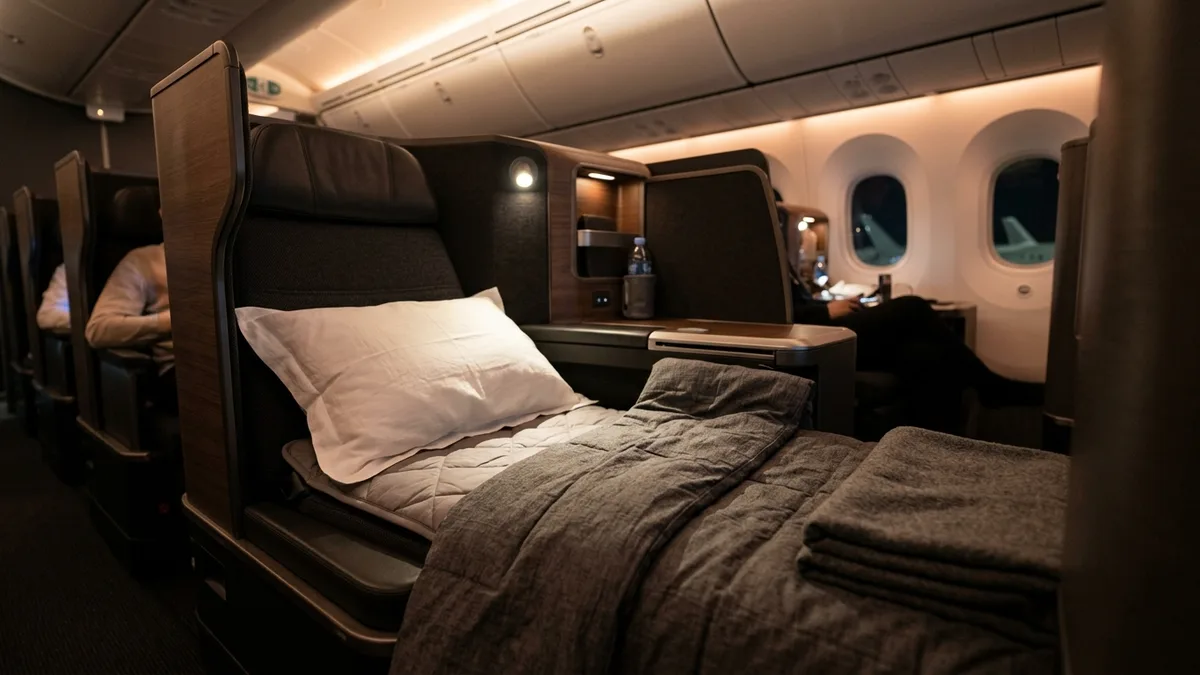
What "lie-flat" actually means — and why it matters
The phrase "lie-flat seat" gets thrown around so loosely in airline marketing that it's almost lost meaning. I've seen carriers describe seats that recline to 160 degrees as "lie-flat." They are not. And if you've ever tried to sleep on a long-haul flight in one of those, you already know the difference between waking up rested and waking up with your neck at a 20-degree angle wondering why you paid a premium.
So let's be precise about what we're actually talking about.
There are three distinct categories of business class seat you'll encounter when searching for lie-flat seats in business class, and they are not equal. The difference between the worst and the best is roughly the difference between sleeping on a cot and sleeping in a hotel room. The price gap, ironically, isn't always that dramatic — which is exactly why knowing what you're booking matters so much.
I've flown somewhere north of 200 business class segments over the last 12 years. Some of those were on genuinely excellent products. Some were on seats that had no business being sold at business class prices. This guide is my attempt to help you tell the difference before you book, not after you've boarded.
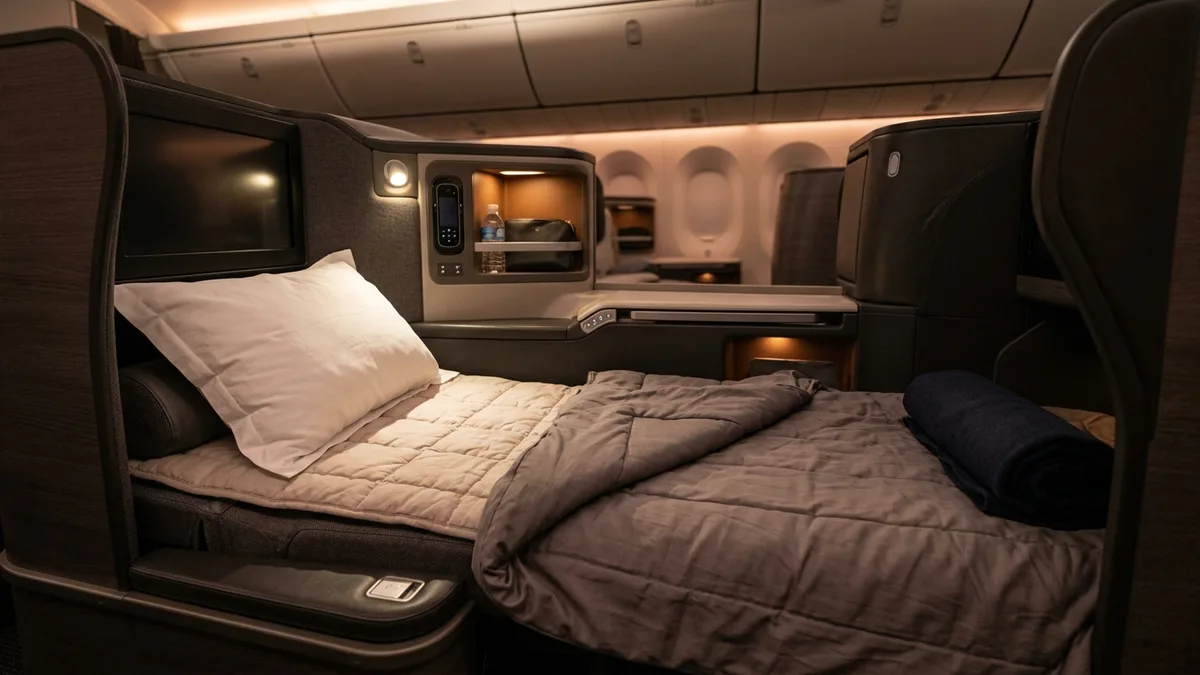
The three types of business class seats
Angled flat
This is the one that trips people up. Angled flat seats recline to somewhere between 150 and 170 degrees — close to flat, but not actually flat. You're sleeping on a slight incline, feet lower than your head. On a five-hour flight, it's fine. On a thirteen-hour flight from Los Angeles to Sydney, you'll spend the last four hours quietly sliding toward the footwell.
These seats were the industry standard through most of the 2000s and you still find them on some regional carriers and older narrowbody aircraft. Some airlines — I won't name them all, but certain Middle Eastern carriers operating older 767 fleets come to mind — still charge full business class fares for angled flat products on routes where competitors offer something far better. Always check before you book.
Full flat (horizontal lie-flat)
A true lie-flat seat reclines to 180 degrees — completely horizontal. Your feet are level with your head. You're sleeping on a flat surface, the same as a bed. This is what the phrase "lie-flat seats in business class" should mean, and on most major long-haul routes operated by competitive carriers, it's now the baseline expectation.
But "full flat" still covers an enormous range of quality. A full-flat seat in a 2-2-2 configuration where you're in the middle seat, climbing over a stranger to use the bathroom at 3am, is a very different experience from a direct-aisle-access seat in a 1-2-1 configuration where you can slide out without disturbing anyone. The flat part is just the floor. Everything else — width, privacy, storage, the aisle situation — varies enormously.
Enclosed suites
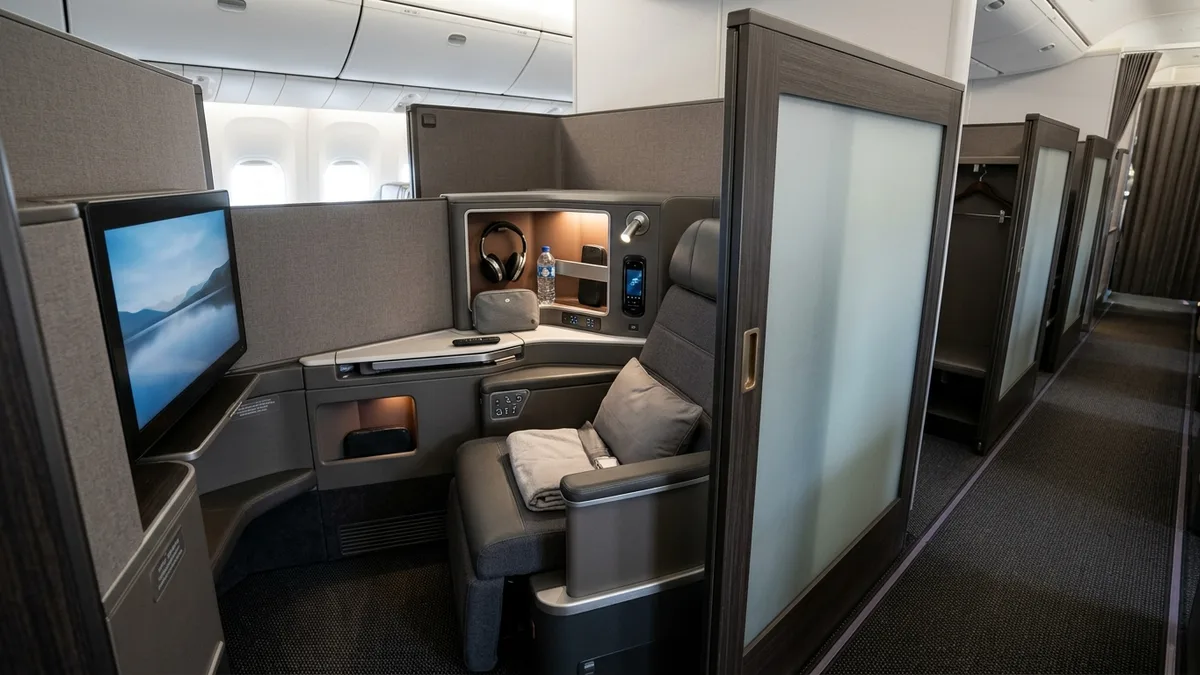
The top tier. Full-height or near-full-height walls, a closing door or privacy screen, sometimes a window seat that still has direct aisle access. Qatar Airways' Qsuites are the most talked-about example right now, and they deserve the attention. Singapore Airlines' new Business Class on the 777-9 and their A380 Suites are in a different category entirely (that's technically first class, but worth knowing about).
Emirates' Business Class on the 777 has a partial privacy door. Lufthansa's new Allegris business class suite, currently rolling out on select 787-9 and A350 routes, has a full door. Air France's new long-haul business class on the A350 gives you solid side walls and a privacy screen. These products feel qualitatively different from even a good open-plan flat seat — quieter, more personal, less exposure to the cabin at large.
The best lie-flat business class products right now
I'm going to be honest: this list reflects what I'd actually book with my own money, not what's easiest to write nice things about.
Qatar Airways Qsuites
Qatar Airways redesigned business class with Qsuites in 2017 and it still holds up better than almost anything else in the sky. The configuration is 1-2-1 with a sliding privacy door, a 21-inch flat-screen, and enough surface area to actually work at. The seat converts to a bed that's roughly 79 inches long and 22 inches wide — genuinely comfortable for most adults. The "double suite" option (two center seats with the divider folded down) is popular with couples and occasionally gets booked for that reason alone.
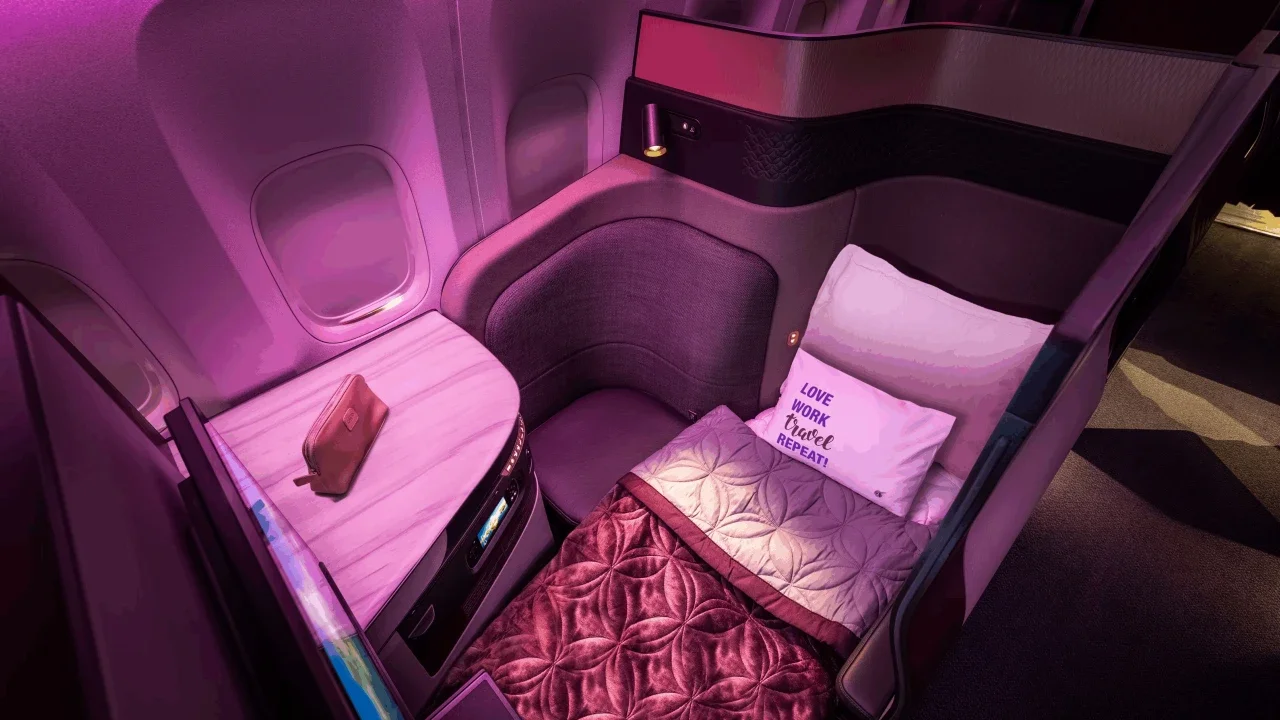
It's on Boeing 777s and A350s on routes like London to Doha, New York to Doha, and onward connections across Asia and Africa. Not every Qatar 777 has Qsuites — the older 777-200LR aircraft still have an older product — so check the aircraft type when you book. SeatGuru is useful here: look up the specific flight number and confirm the seat map before you commit.
Singapore Airlines Business Class (A380, 787-10)
Singapore's regional business product and its long-haul product are different things, and you want the long-haul version. On the A380 and 787-10, you get a forward-facing or angled-flat-to-full-flat seat (depending on the aircraft and cabin position) in a 1-2-1 configuration. The 787-10 product has a 23-inch seat width in bed mode, direct aisle access from every seat, and a privacy divider that's genuinely tall.
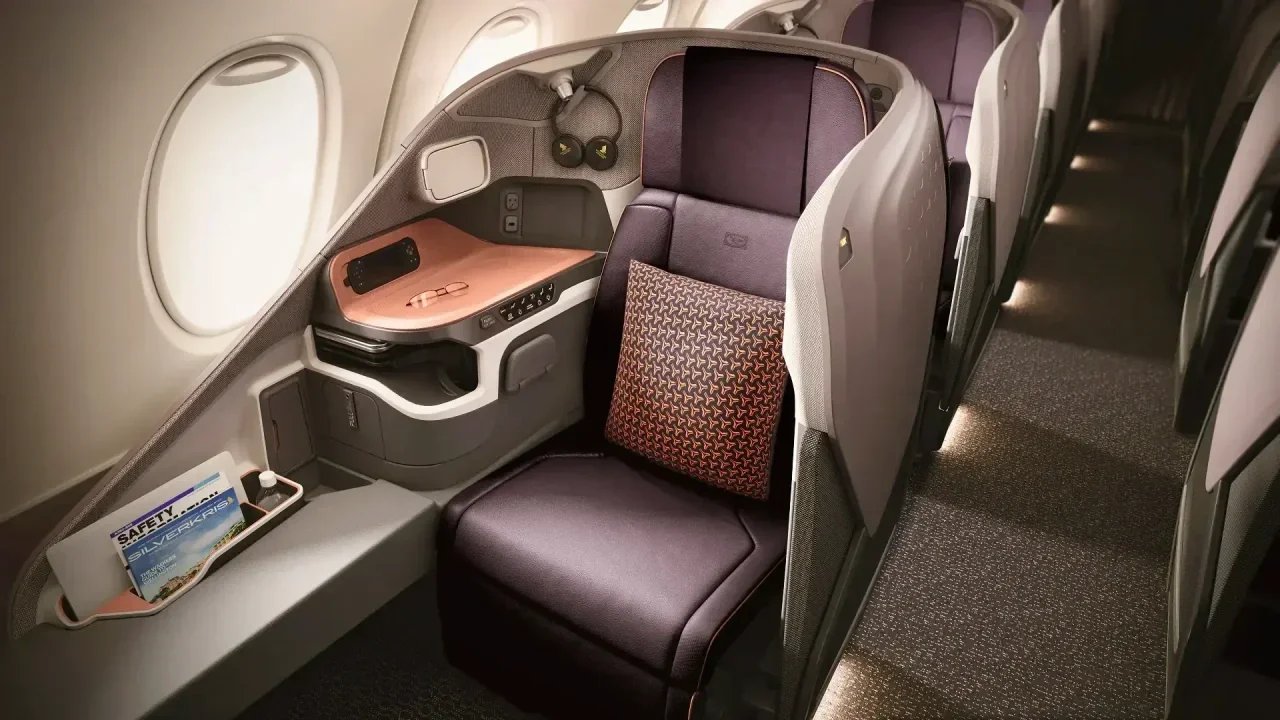
The food is better than most. I've had a satay starter at 35,000 feet over the Indian Ocean that I'd order again. The "Book the Cook" pre-order system lets you select from an extended menu before departure — use it. The standard catering is fine; the Book the Cook options are noticeably better.
Air France Business (La Première is a separate product)
Air France's long-haul business class on the A350 is one I keep coming back to. The seat — developed with Safran and Zodiac Aerospace — is a full-flat 1-2-1 in a herringbone configuration, with a proper privacy shell and a wide armrest that converts to a dining surface. At roughly 76 inches in length and 26 inches at its widest, it's one of the roomier products in the sky.
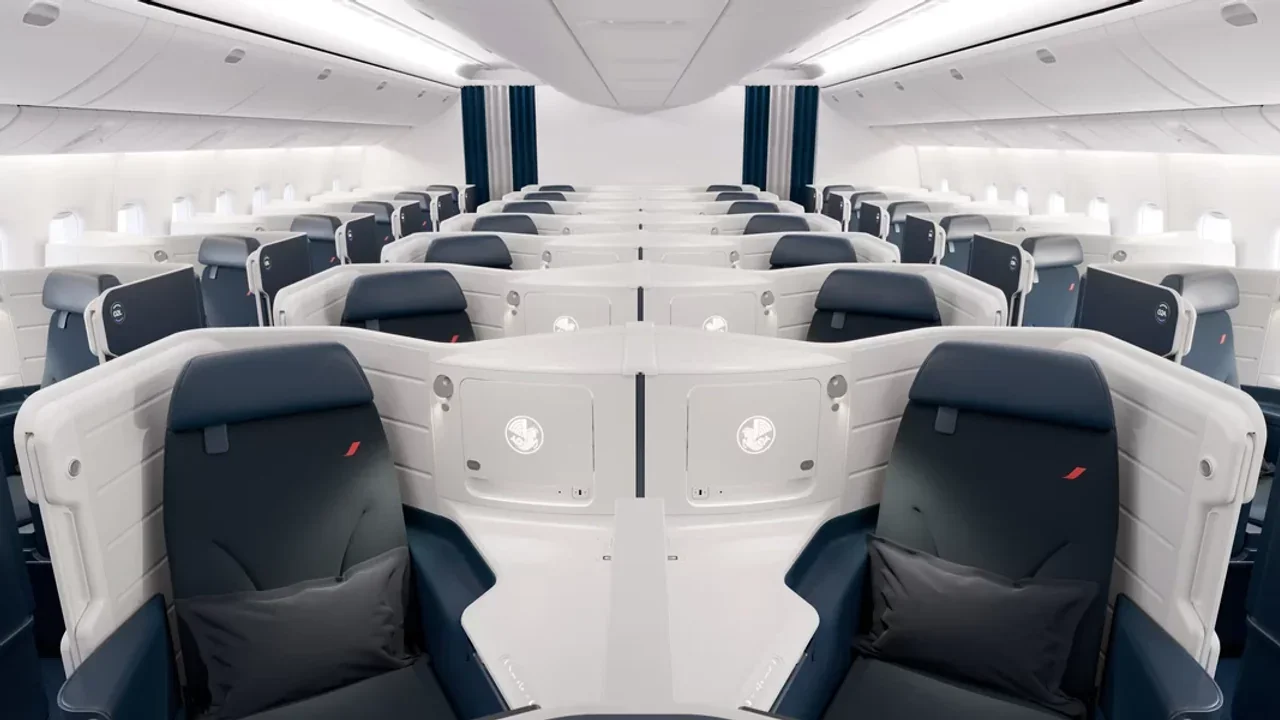
Paris CDG is a frustrating airport, full stop. The lounge situation is fine — the business lounge in Terminal 2E Hall M is better than average, with actual hot food that changes by time of day — but the terminal connections can be genuinely chaotic during irregular ops. That's not the seat's fault, but it's part of the Air France experience and worth factoring in.
United Polaris
United's Polaris business class gets underrated because United's ground experience is so hit-or-miss. But the seat itself — the Polaris seat on 777-200ER, 787-9, and 787-10 aircraft — is a genuinely good lie-flat product. Direct aisle access from every seat, 180-degree flat, around 76 inches in length. The bedding is Saks Fifth Avenue co-branded and the mattress pad makes a real difference on overnight flights.
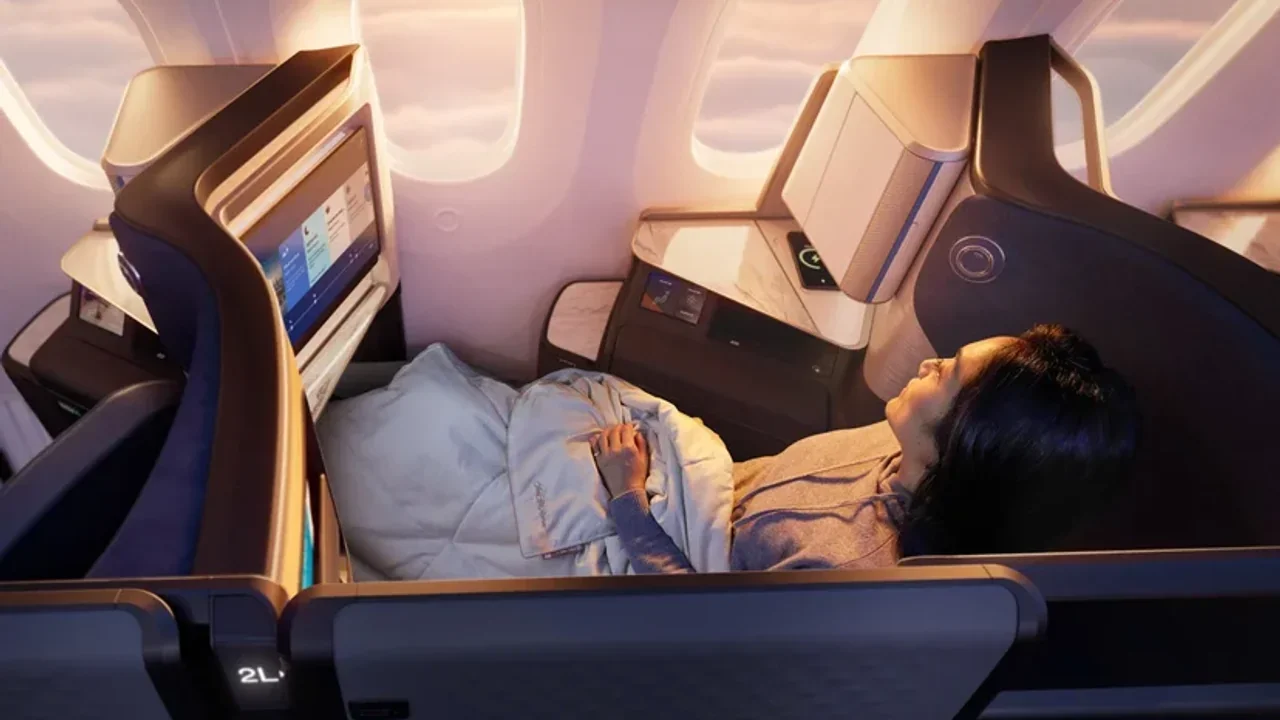
The inconsistency is the problem. Some United routes still operate with older interior configurations — the 767-300 Polaris product, for instance, is a 2-2-2 layout, meaning the middle seats don't have direct aisle access. On a 767 transatlantic overnight, that matters. Again: check the aircraft, check the seat map, confirm before you book.
Cathay Pacific Business Class
The reverse herringbone configuration on Cathay's A350s and some 777s means every seat faces slightly toward the window and has direct aisle access. The seat is 76 inches long in flat mode, 20 inches wide. It's not the roomiest product but the layout is clever and it works well for solo travelers. The noise-canceling headphones they provide are among the better ones I've used in any cabin.
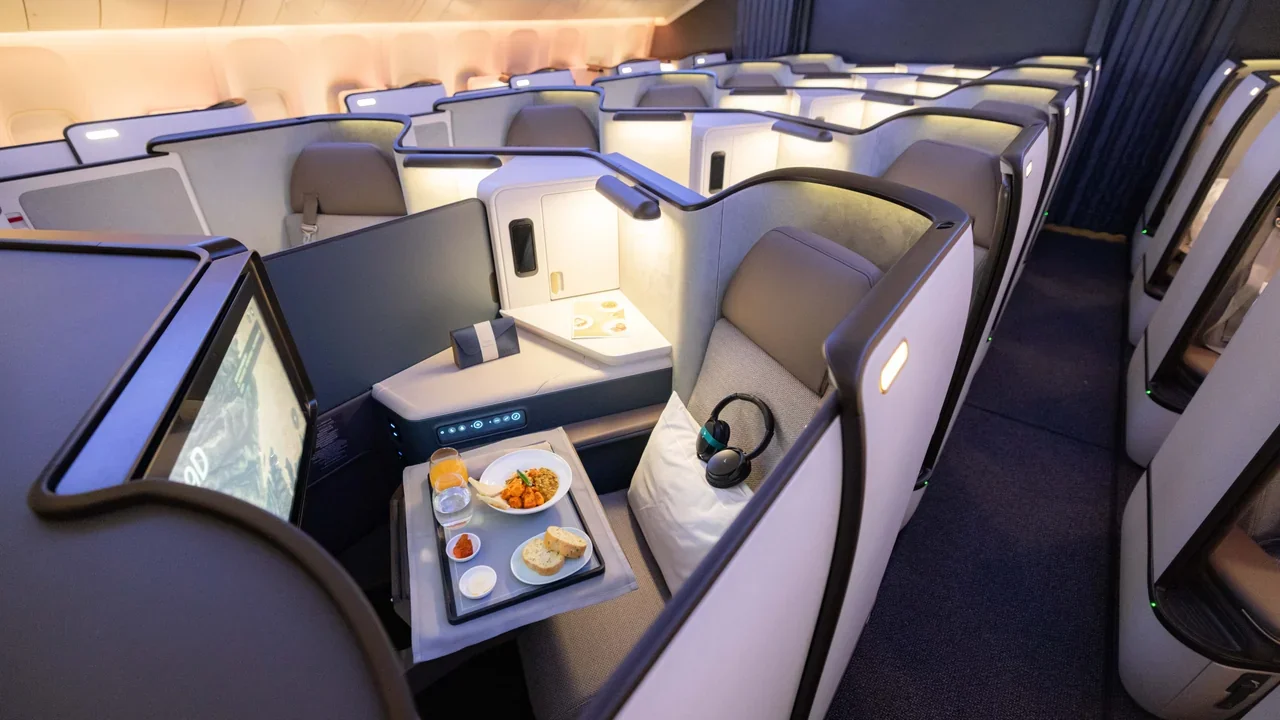
Hong Kong is a genuinely excellent connecting hub, which makes Cathay's network more attractive than it might look on a map. And the Hong Kong lounge situation at HKG is excellent — The Pier business class lounge is one of the better airport lounges in Asia, with a proper noodle bar that I've used at 6am more times than I should admit.
How to use SeatGuru (and where it falls short)
SeatGuru is the first tool I recommend to anyone trying to figure out what they're actually getting before they board. The basic workflow: go to seatguru.com, enter your flight number and date, and you get a color-coded seat map with notes on which seats have reduced legroom, proximity to galleys, misaligned windows, and so on.
For business class specifically, I use it to confirm two things: the configuration (1-2-1 vs 2-2-2 vs 1-2-1 herringbone) and whether the specific aircraft on my flight has the newer or older interior. Airlines will sometimes swap aircraft, and SeatGuru's data reflects the scheduled aircraft type, not a real-time guarantee. So check it, but also check it again closer to departure.
Where SeatGuru falls short: it doesn't tell you much about the actual sleep quality, the food, the service, or the software running the IFE system. For that, you want to cross-reference with The Points Guy reviews, Airline Ratings, and honestly — forums. FlyerTalk's trip report threads are dense and sometimes obsessive, but they're written by people who flew the exact flight and noticed whether the seat motor was slow or the power outlet was a USB-A that couldn't charge a modern phone.
One specific SeatGuru tip for lie-flat seats in business class: on herringbone configurations, look at which direction the seats face. Forward-facing is almost always preferable for sleep — some people find sleeping feet-first toward the nose of the aircraft disorienting, and a few report it worsens turbulence sensitivity. This is personal, but it's worth knowing your preference before you're 40,000 feet over Greenland.
When to book, and what prices actually look like
Business class fares are genuinely volatile. The same JFK to London Heathrow Qsuite seat that costs $8,000 round-trip in peak summer can drop to $2,200 on a shoulder-season Tuesday departure. I've seen it happen. The challenge is that those drops are often brief — hours, sometimes less — and they don't happen on a schedule you can predict by watching the calendar.
The mechanics of how airlines price seats involve a mix of load factor management, competitive matching, and occasionally what looks like algorithmic error. When one airline drops a price on a competitive route, others sometimes match it automatically. That's when you get the genuinely good deals — the ones that feel like they shouldn't exist and disappear before most people notice them.
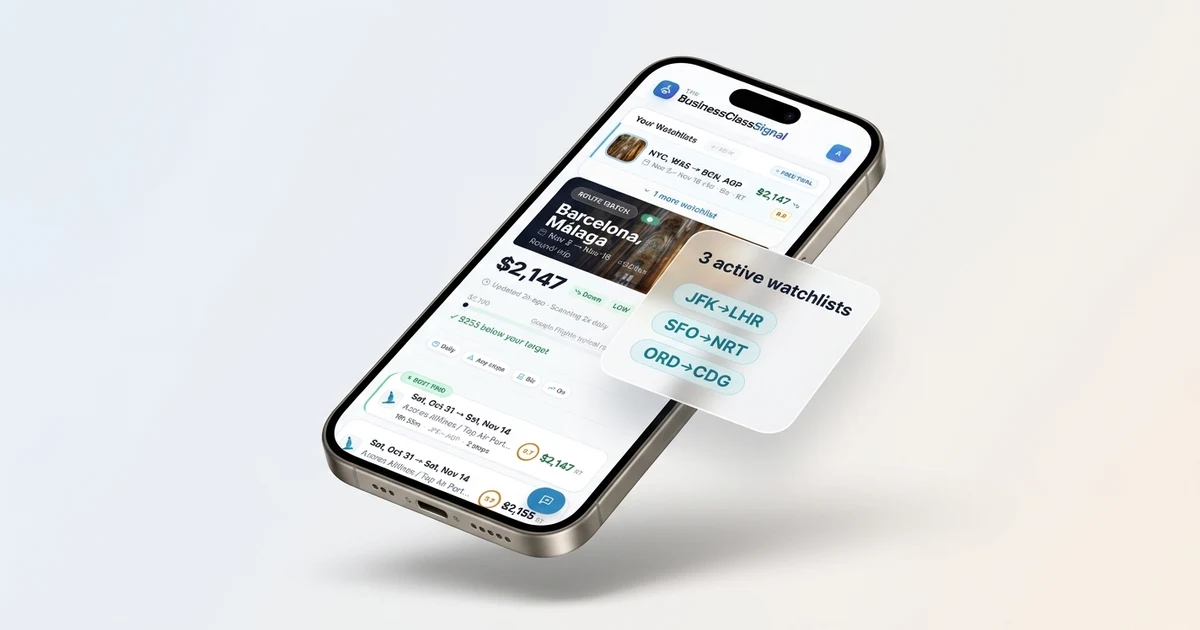
This is exactly what how the monitoring system works is designed for. BusinessClassSignal scans Google Flights data multiple times a day, scores deals on a 1-10 scale based on how far below market rate they are, and sends alerts before the price recovers. The free tier gets you one route to watch. Core ($36/month) covers more routes with AI market briefings. Pro ($78/month) is for people who travel frequently enough that catching one good deal more than pays for the subscription.
If you want to start monitoring this route, setup takes about two minutes. You enter the origin, destination, and your travel window, and it does the rest.
For context on what "good" looks like: a round-trip Qsuites fare under $3,500 on a transatlantic or transpacific route is worth serious attention. Singapore Airlines business class under $2,800 round-trip from the US West Coast happens a few times a year. United Polaris transatlantic under $1,800 is rare but real — I've seen it on JFK-LHR in February. These aren't numbers I made up; they're benchmarks from deals that have actually cleared our scoring threshold.

Flying economy on part of the trip?
FlightKitten monitors economy fares across 220+ airlines — including budget carriers — and pings you when prices drop below your target. AI-powered briefings, starting at $4.99/mo.
Try FlightKittenThe details that actually affect how well you sleep
Here's what the airline marketing photos don't show you: the seat pad. Most business class seats have a surface that, when fully flat, is somewhere between firm and hard. The ones that provide a mattress topper — United Polaris, Singapore Airlines, Qatar Qsuites — make a noticeable difference on flights over ten hours. If your airline doesn't provide one, you can bring a thin inflatable camping pad. It sounds absurd. It works.
Noise is underrated as a factor. The galley proximity issue that SeatGuru flags is real — I once spent a Tokyo-JFK flight in a seat directly adjacent to the galley on a 777, and the sound of cart preparation starting at hour eight was not what I needed. But beyond the galley, the cabin position on the aircraft matters too. On a 777, the business class cabin forward of the wing is notably quieter than seats positioned over or aft of the engines.
Seat width in bed mode versus seat width in seated mode are different measurements, and airlines sometimes quote whichever one is more flattering. The relevant number for sleep is the shoulder width in flat mode — how much space you have when lying on your back. A seat that's 21 inches wide in sitting mode might narrow to 18 inches in flat mode because of the way the mechanism works. Qatar's Qsuites and the Air France A350 product are among the wider ones at 22+ inches. Some older herringbone seats narrow significantly when flat.
And the window shade situation. This sounds minor. It isn't. On a daytime flight where you want to sleep, a seat near passengers who insist on keeping shades open floods the cabin with light. Window seats — even on direct-aisle-access products — give you control over your own shade. On a 1-2-1 product where the aisle seat has no window access, you're dependent on your neighbor's preferences. Another reason I almost always book window seats on overnight flights.
What to actually look for when you're comparing routes
When I'm evaluating whether a specific business class fare is worth booking, I'm running through a short checklist. Aircraft type first — 787s and A350s are generally quieter and have higher humidity than older 777s or 767s, which matters on long flights. Configuration second — 1-2-1 with direct aisle access is the baseline I want. Seat age third — a product that launched in 2010 and hasn't been refreshed is a different thing from a product launched in 2022, even if they're both technically "lie-flat seats in business class."
The airline matters too, but perhaps less than people think. The seat is what you're sleeping on. A mediocre airline with a great seat is often better than a great airline with a mediocre seat on a 14-hour overnight. I'd rather have Qsuites on a Qatar flight with average food than a 2-2-2 flat seat with excellent food on anyone.
You can browse all routes we monitor to see what's currently flying with which products on specific city pairs. It's a useful way to cross-reference aircraft type against current pricing before you start watching a route.
One more thing: the position of the seat within the cabin can affect how quickly you board and whether you're in the first or second service for meals. On long flights with a single aisle, forward business class seats get meal service first, which matters if you want to sleep early. On the 777 with a forward business cabin, rows 1-3 are typically served first. On some airlines, the last rows of business class can wait 90 minutes for their first meal course, which compresses your sleep window significantly on a ten-hour flight. It's a small thing that becomes less small at 2am.