Quick summary
Business class to Mexico City from the US is a legitimately short flight — most routes clock in under four hours — which means you're not getting a flat bed or a full international product on the majority of departures. What you're actually buying is a domestic first class seat on a narrowbody jet, and the quality gap between carriers is significant. This guide breaks down what each airline actually puts in front of you, when fares drop to levels that make the upgrade worthwhile, and how BusinessClassSignal can help you catch those windows before they close.
Why this route is trickier than it looks
Mexico City is close. From Houston it's under three hours. From Dallas, Los Angeles, Miami — you're looking at two and a half to four hours in the air. That sounds like a short hop, and in some ways it is. But MEX is also one of the busiest international airports in the Americas, and fares on these routes behave more like transatlantic business class than a domestic shuttle.
Prices regularly sit above $1,500 round-trip. Sometimes considerably above that.
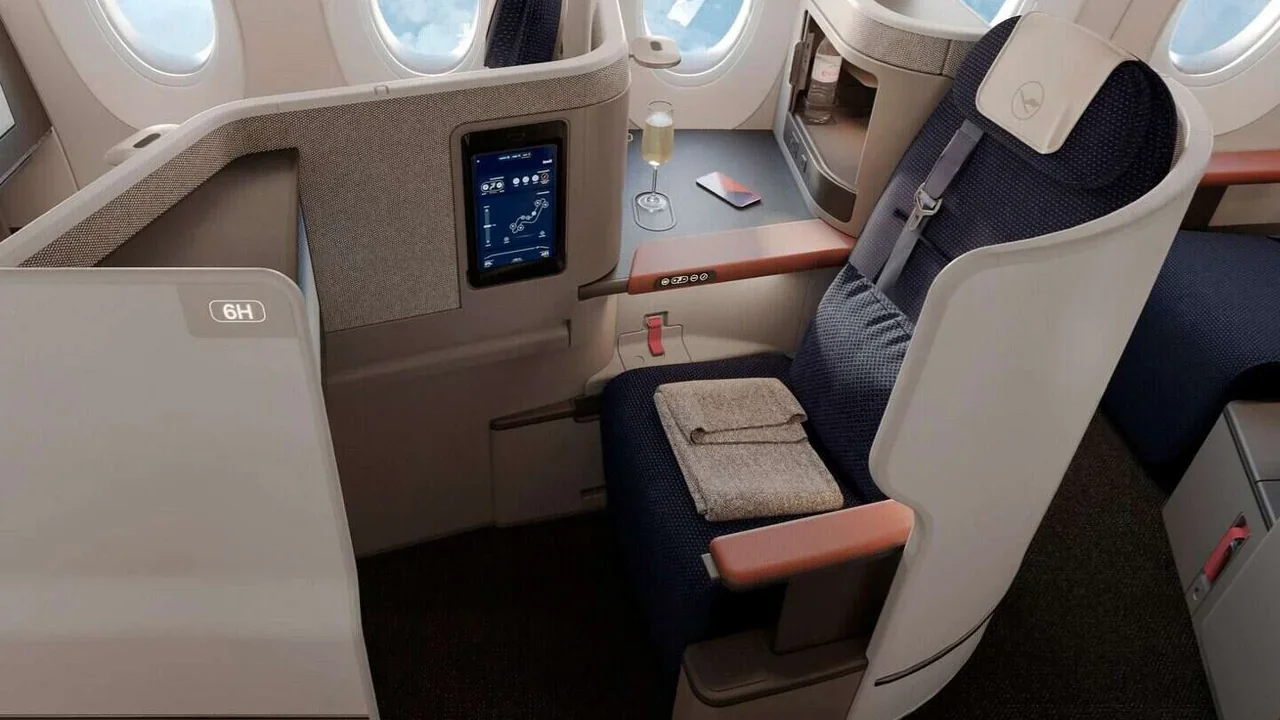
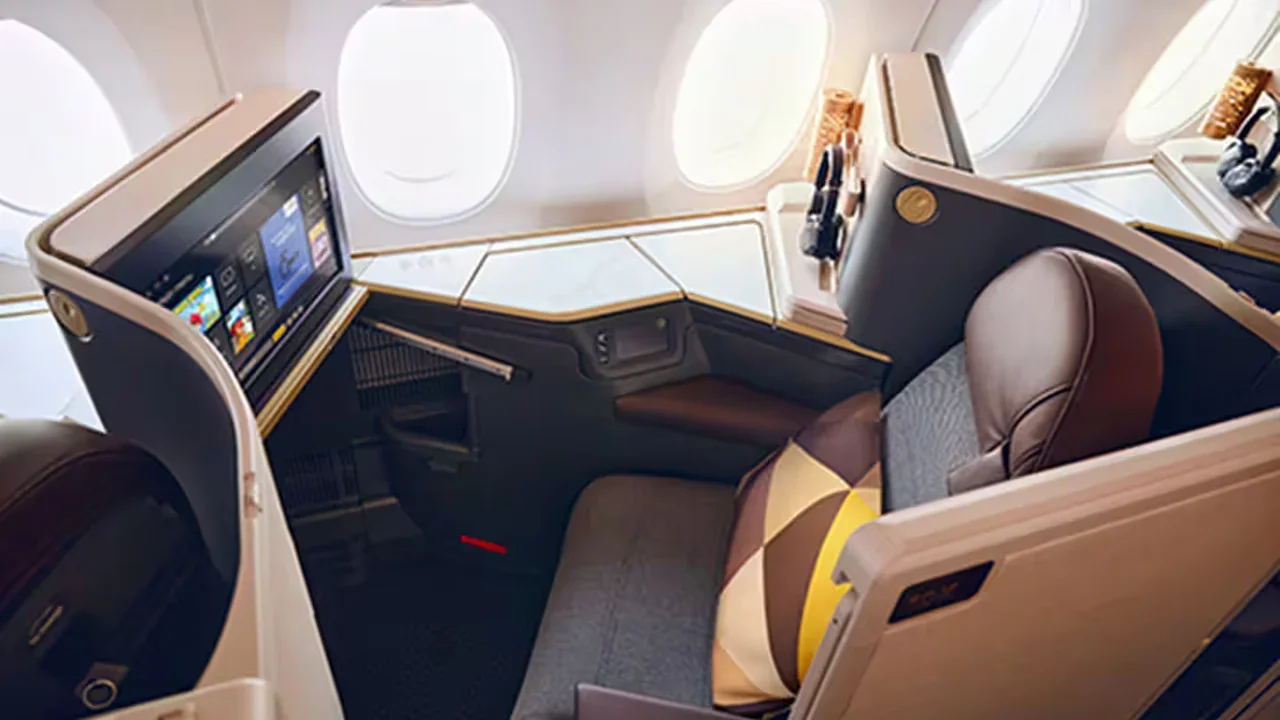
The catch is that most of what's being sold as "business class" on this route is, in practice, a domestic first class cabin on a Boeing 737 or Airbus A321. You'll get a wider seat, real food, and actual service — but no lie-flat bed, no door, no amenity kit in a nice pouch. If you're expecting Cathay Pacific-level product because your ticket says "Business Class," you're going to be disappointed.
That said, there are real differences between what the carriers offer. Some of this matters a lot. Some of it is the kind of thing that only bothers you after your third trip.
Aeromexico: the best product on this route, full stop
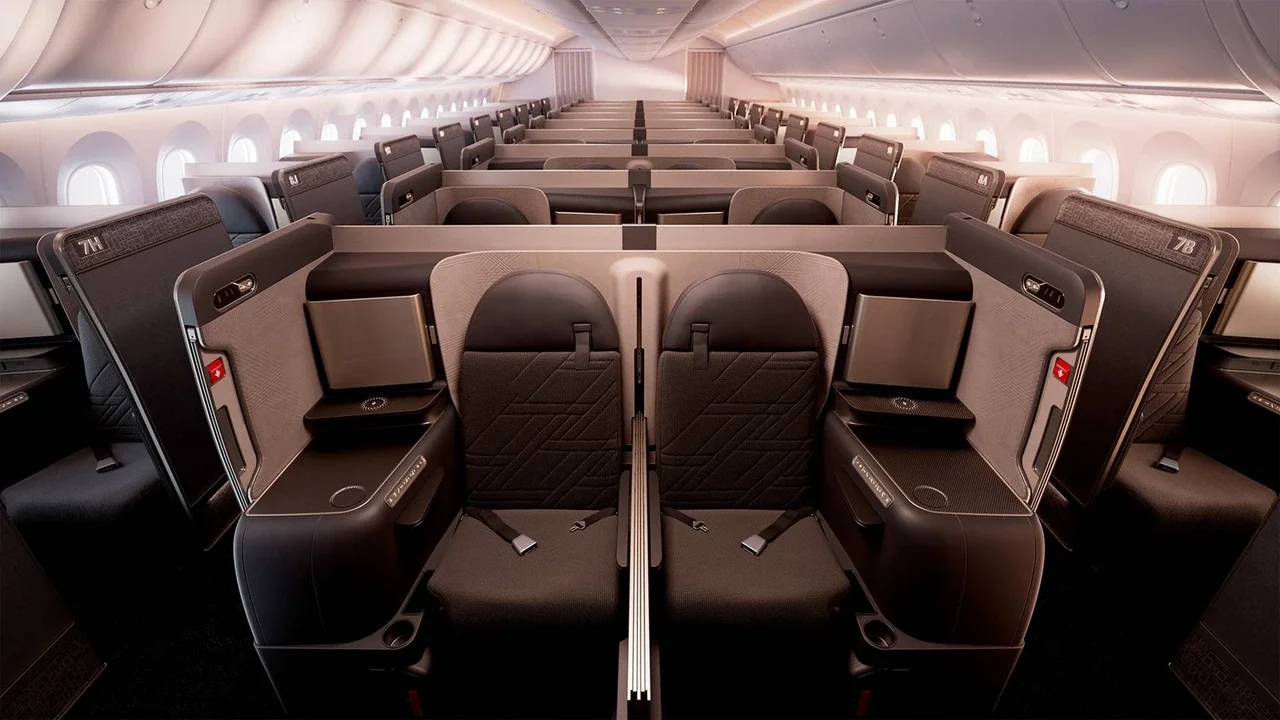
Aeromexico is the one carrier where you can actually get a proper international business class product on select routes to Mexico City. On their long-haul metal — typically the Boeing 787 Dreamliner — out of Los Angeles, New York JFK, and a few other gateways, you'll find fully flat-bed seats in a 1-2-1 configuration. Real lie-flat. Real aisle access from every seat. This is a different animal from what the US carriers are operating.
The seat itself is the Zodiac Cirrus shell, which is fine. Not the best in the business, but solid. The food has been genuinely good in my experience — I had a mole negro dish on a LAX-MEX flight a couple of years back that I still think about, which is not something I say about airline food often.
The Club Premier lounge at MEX Terminal 2 is decent. Nothing spectacular, but the food selection is better than most US carrier lounges, and they pour actual tequila, which should be the baseline for any lounge in Mexico.
The wrinkle with Aeromexico is that the 787 doesn't operate on every route. From Houston Intercontinental or Dallas/Fort Worth, you're often on a 737 or an Embraer, and the product drops to something more like what AA and United are running. Always check the aircraft before you book. The difference between AM's 787 business class and their narrowbody product is not subtle.
Check the aircraft type before booking Aeromexico
On Aeromexico routes to MEX, use Google Flights or the AM booking flow to confirm equipment. A 787 on LAX-MEX is a genuinely good international product. A 737 on IAH-MEX is domestic first with an Aeromexico logo. They're not the same ticket.
Delta: comfortable, consistent, and a little boring
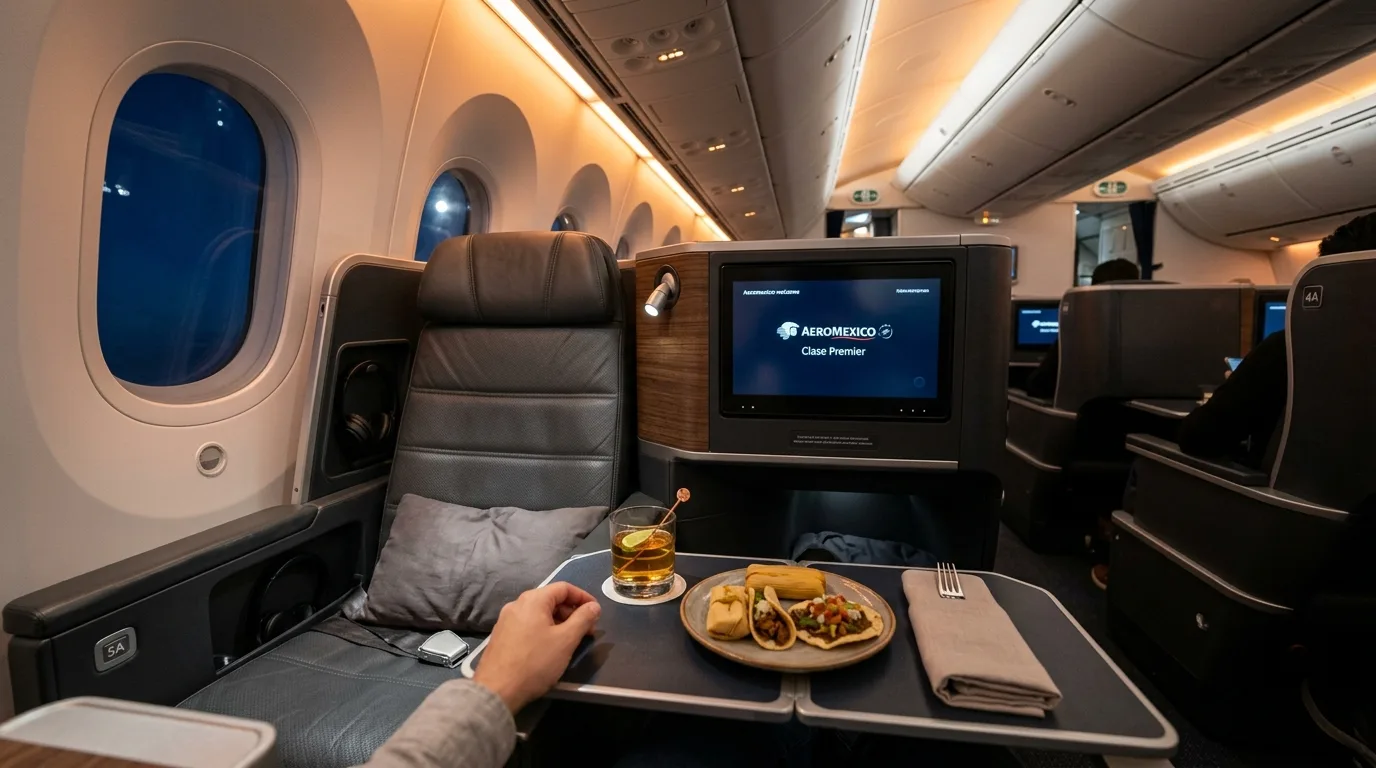
Delta runs MEX from Atlanta, Los Angeles, JFK, and a few other hubs. The product you'll get is Comfort+ or domestic First depending on the fare class, and on most of these routes it's a standard domestic first cabin on a 737-900 or A321.
The seats are fine. Delta's domestic first seats are about 21 inches wide with a decent recline, and they do a better job than most of feeding you actual food rather than a sad cheese plate. The service is generally reliable. Delta flight attendants on international routes tend to be more attentive than on domestic hops — I've noticed this consistently, and other frequent flyers I know report the same thing.
What Delta doesn't have going for it is anything distinctive. You won't be talking about your Delta first class seat to Mexico City at dinner. It's clean, functional, competently executed. Sometimes that's exactly what you want.
The Sky Club in Atlanta T-F is the access point for most Delta MEX departures, and I'll be honest: it's overcrowded most evenings. The food has improved, but the seating situation at peak times is genuinely bad. If you're connecting through ATL on a Friday afternoon, manage your expectations.
Delta's MEX fares tend to soften in the weeks following major US holidays — late November, early January. Those windows are worth watching if you have flexibility.
United: the widest network, the most variable product
United has the most US gateways to Mexico City of any American carrier. Houston IAH is the hub that matters most here — it's United's main Latin American operation, and MEX is one of the highest-frequency routes out of it.
The problem with United is that the product varies more than it should. On some routes you'll get their Polaris business class seat — specifically on certain widebody departures — but the majority of MEX flying is on narrowbody aircraft with domestic Polaris first (which is basically a standard domestic first class seat with the Polaris branding attached to it, which I find slightly irritating).
The Polaris lounge at IAH is one of the better airport lounges in the US. I've spent a lot of time in there over the years. The hot food is consistently good, the bar is well-stocked, and it doesn't get as slammed as the Centurion or Sky Club equivalents at comparable hubs. That's a genuine point in United's favor if you're routing through Houston.
Polaris branding doesn't mean a Polaris seat
United sells "Polaris business class" on routes where the actual seat is a standard domestic recliner. The Polaris branding refers to the service and catering tier, not the hardware. On narrowbody MEX flights, you're in a first class seat — not the Polaris lie-flat you see in the ads. Read the fine print before you book.
United's fares to MEX from IAH are often the cheapest of the major carriers, partly because of the sheer volume of seats they're running. If price is your primary filter and you're not precious about the product, United from Houston is frequently where the value is.
American: solid from DFW, inconsistent everywhere else

American's main MEX operation runs out of Dallas/Fort Worth, which is a short two-and-a-half-hour flight. They also operate from Miami, Chicago O'Hare, Los Angeles, and a handful of other gateways.
The product is domestic first on narrowbodies across the board. There's no widebody option on AA's MEX routes that I'm aware of — if you're seeing a 777 or 787 in the booking flow, double-check, because that would be unusual. What you'll get is an A321 or 737 with a 2-2 first class cabin, recliner seats, and American's catering, which has improved in recent years but isn't going to win any awards.
The Admirals Club at DFW Terminal D is actually pretty good. The food is better than average for an airline club, and the bar has a reasonable selection of mezcal and tequila, which feels appropriate given the route. The lounge at ORD and MIA is more of a mixed bag — ORD in particular feels dated.
One thing to know about AA's MEX operation: the DFW-MEX route has a lot of frequency, which means fares get competitive, and it also means there are more opportunities to catch a discounted business class fare. I've seen DFW-MEX business class dip below $700 round-trip during quiet periods, which for an international ticket is genuinely cheap.
American's MEX fares from DFW are worth setting an alert on. That route has enough frequency that pricing fluctuates more than you'd expect, and the drops can be sharp.
Domestic first vs. international business class — what you're actually paying for
This distinction matters more on the US-Mexico corridor than almost anywhere else, and I think a lot of people don't fully understand it before they book.
What does "international business class" actually get you on a short-haul route?
On a route under four hours, the main practical differences are seat width, recline, and service. You're not getting a flat bed on a two-and-a-half-hour flight regardless of what the ticket says. What you are getting (ideally) is a wider seat with more personal space, a proper meal rather than a snack, and priority boarding.
On Aeromexico's 787 product, you also get a real lie-flat seat — which sounds irrelevant on a three-hour flight, but actually makes a difference if you're on a red-eye or just want to decompress. On every US carrier operating narrowbodies to MEX, the seat is a domestic recliner, full stop.
The service quality difference is real, though. On an international routing, even on a short flight, the catering tends to be better. You'll usually get a proper appetizer and main rather than a first class snack box. And the wine selection is noticeably better on international flights than domestic — this sounds trivial, but if you're paying $1,500 for a ticket, you're allowed to care about the wine.
Is business class to Mexico City actually worth the price?
It depends on the fare, which I know is a frustrating answer, but it's the honest one.
At $700-$900 round-trip (which happens, especially on AA from DFW or United from IAH during off-peak windows), yes — absolutely worth it. You're getting real food, real space, lounge access, and a stress-free experience through customs and immigration on both ends. For a business trip, that's a straightforward call.
At $2,500-$3,200 round-trip, it's a harder sell. You're on a three-hour flight in a domestic recliner. The math only works if someone else is paying, or if you're burning miles and the opportunity cost is low.
The sweet spot on this route is somewhere in the $1,000-$1,500 range. That's where I'd say it's genuinely good value — competitive with what you'd pay for a transcon domestic first class ticket, but with a better overall experience and lounge access at MEX.
Miles vs. cash on MEX routes
If you're holding Aeromexico Club Premier miles or Delta SkyMiles, MEX is often a reasonable redemption. AM's own metal to MEX can price at 25,000-30,000 miles round-trip in business class, which is solid given the cash price. Delta's partner awards on AM metal are less consistent but worth checking.
When fares drop — and how to catch them

Business class fares to Mexico City don't follow a predictable weekly pattern the way some transatlantic routes do. The drops tend to be event-driven: an airline adjusting inventory, a load factor issue on a specific date, a sale that quietly extends to MEX even though the headline is about European routes.
What I've consistently seen is that midweek departures — Tuesday and Wednesday specifically — tend to have softer pricing than the weekend bank. Mexico City is a major business travel destination, and the Friday evening DFW-MEX and Monday morning MEX-DFW flights are priced accordingly. If you can fly out Tuesday and back Thursday, you'll usually find better fares.
The other pattern worth knowing: January and September are historically the weakest months for leisure travel to Mexico City, which means airlines are more willing to discount business class to fill seats. August is busy (Mexican school holiday season), December is busy, March/April around Semana Santa is extremely busy. Those are the windows where you're unlikely to see a deal.
This is exactly the kind of route where a fare monitor earns its keep. BusinessClassSignal scans 800+ routes twice daily, including all the major US gateways to MEX, and sends you an alert when the price drops below whatever threshold you set. I built this tool partly because I got tired of manually checking GDS fares every morning — the drops happen fast and they close fast, and by the time you read about a deal in a newsletter, it's usually gone.
If you want to see how the monitoring system works, that page explains it in detail. The short version: you set a target price for your route, and BusinessClassSignal emails you when it's hit. You don't have to be watching.
Set separate alerts for each gateway. A DFW-MEX drop might not show up on the ORD-MEX route, and vice versa. If you're flexible on departure city, monitor multiple origins simultaneously.
Positioning flights and the economy angle
A lot of readers use MEX as a connection point for onward travel to Oaxaca, Guadalajara, Cancún, or further into Central and South America. If that's your situation, the math on business class changes a bit.
Flying business class from, say, New York to MEX and then catching a domestic Mexican flight in economy is a totally normal strategy. You get the comfort on the longer international leg, you save money on the domestic connector, and the total cost is usually more manageable than trying to book business class all the way through.
For the economy positioning flights or the domestic connectors within Mexico, I'd point you toward FlightKitten — it's our sister product, built by the same team, and it monitors economy fares across 220+ airlines with the same alert logic. Starts at $4.99/month. If you're flying family members in economy while you're up front, or you want to track a cheap Volaris or VivaAerobus fare from MEX to GDL, that's what it's designed for.
The mixed-cabin strategy is underrated on this corridor. Business class international + economy domestic is often the right call, both for comfort and cost.
What to actually book right now
If I were booking a business class seat to Mexico City from the US today, here's how I'd approach it:
Browse the active routes on BusinessClassSignal to see current fare levels across all the US-MEX gateways. The spread between carriers can be $400-$600 on any given week, and it's not always the carrier you'd expect to be cheapest.For the product, if you care about the actual flying experience, target Aeromexico's 787 departures from LAX or JFK. That's the best seat you can get on this route by a meaningful margin. If you're routing through a hub where Aeromexico doesn't operate widebodies, the carriers are roughly equivalent on hardware — pick based on lounge access and price.
For the price, United from IAH and American from DFW tend to have the most aggressive discounting. Those are the routes I'd set alerts on first.
And if you're not already using BusinessClassSignal to monitor these fares, you should be. The MEX routes are genuinely volatile — I've seen DFW-MEX business class drop from $1,800 to $780 in a single day. That kind of move happens in a window of hours, not days. An alert system is the only reliable way to catch it.
You can start monitoring this route with a 7-day free trial. No card required to get started.
Monitor business class fares to Mexico City — get alerted when prices drop
Try Free for 7 Days