Quick summary
Most business class booking mistakes aren't about finding secret deals — they're about timing, flexibility, and knowing which levers to pull. The seven errors below are the ones I see repeated constantly, and each one can cost you anywhere from a few hundred to several thousand dollars on a single itinerary.
The mistakes that keep showing up
I've been writing about premium air travel for twelve years. I've sat in more flat beds than I can count, watched fare prices do strange and irrational things, and talked to enough frequent flyers to know that most people aren't losing money on business class because they're unlucky. They're losing it because of patterns — predictable, fixable habits that are quietly bleeding the budget on every trip.
Some of these business class booking mistakes are obvious once you hear them. Others feel counterintuitive. A few will probably make you wince because you've done them yourself.
Let's get into it.
Mistake 1: booking too far in advance
This one is probably the most common, and it's the one that catches careful planners the hardest. You have a conference in Frankfurt in six months. You go to book business class immediately because you're organised, because you want the good seats, because that's what sensible people do.
And you pay full freight for the privilege.
Here's the thing about long-haul business class fares: airlines don't release their best prices at booking open. They release a small inventory of seats at the lowest fare bucket, sell those quickly (often to corporate accounts), and then hold the remaining seats at higher prices until load factors force them to get aggressive. That can happen anywhere from three weeks to three months before departure, depending on the route, the season, and what the airline's revenue management system is telling them.
For transatlantic routes specifically, I've consistently seen prices drop in that six-to-eight-week window before departure. Not always. Not on every route. But enough that booking at 200 days out — unless you're using miles or there's a specific sale — is often a mistake.
The exception
Peak travel periods (Christmas, summer school holidays, major events) are a different beast. For those windows, earlier booking does matter because load factors stay high. The general rule doesn't apply uniformly.
When do business class fares actually drop?
Broadly: 6–8 weeks before departure for most North Atlantic routes. 4–6 weeks for routes to Asia, where airlines are more aggressive about filling premium cabins. And then there's a second, riskier window right at the 2-week mark, when airlines sometimes dump remaining seats — but you're gambling on availability at that point, and for trips that require hotel and ground logistics, two weeks isn't much runway.
The smarter play is to set a target price and monitor. Which brings me to mistake number four, but we'll get there.
Mistake 2: ignoring the wrong-airport problem
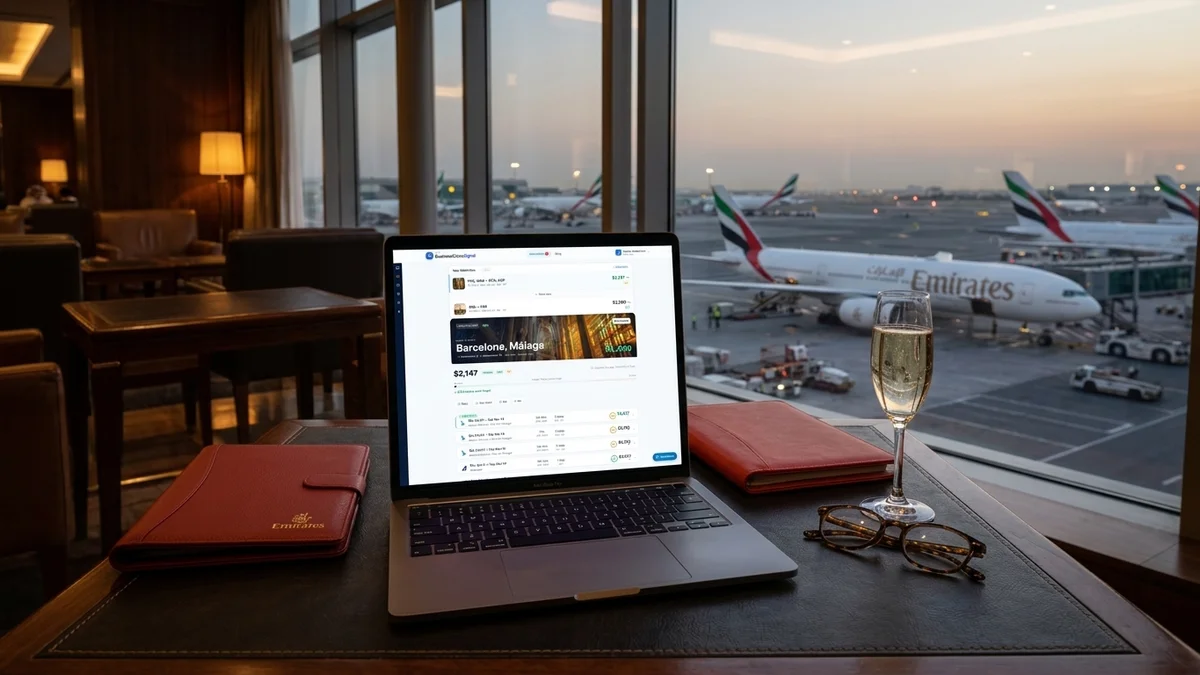
If you're flying from the New York metro area and you're only checking JFK, you're missing deals. EWR regularly comes in cheaper on the same routes — sometimes by $600–800 round-trip on transatlantic business class. And if you're doing a positioning flight (more on that shortly), BOS or even PHL can open up options that the New York airports simply don't have.
Same principle applies at the destination end. London has five airports. If you're flying into LHR exclusively because it's "the London airport," you might be leaving money on the table. LGW has direct business class service from the US on a handful of carriers, and the fares sometimes look very different.
These aren't made-up numbers — that spread is roughly what I've seen on comparable travel dates. The actual gap varies, but the point is that treating "New York to London" as a single market when you're shopping is a mistake that can cost you real money.
Always run your search from the metro area code if your booking tool supports it. For New York, that's NYC. For London, LON. You'll get results across all airports in each market and can compare properly.
Mistake 3: skipping the positioning flight
This one requires a bit more flexibility, but the savings can be significant enough that it's worth understanding.
A positioning flight is a short domestic or regional leg you take specifically to access a better-priced international departure. Fly from your home city to a hub, then take the international business class segment from there. The logic is that premium cabin fares vary enormously by departure point, and sometimes flying 45 minutes in economy to get to a different hub and then connecting into a much cheaper business class ticket is entirely rational.
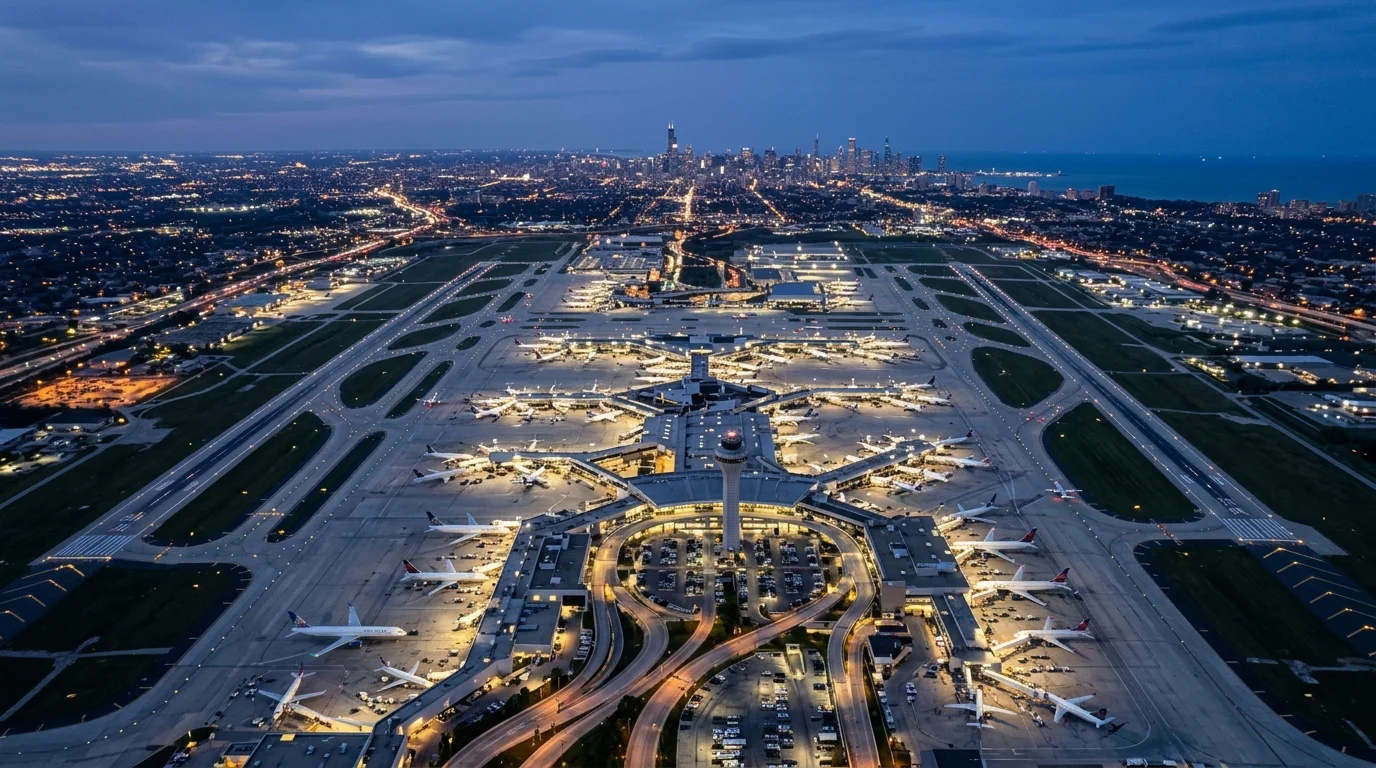
The classic example: Chicago O'Hare to Frankfurt versus flying from a smaller Midwest city. The ORD-FRA route is brutally competitive, and Lufthansa, United, and American all price it aggressively. If you're based in, say, Indianapolis, you might be looking at a $3,800 fare from IND to FRA with a connection — or you could buy a $129 economy ticket from IND to ORD, then a separate business class ticket from ORD to FRA at $2,100, and come out ahead by over $1,500 on the premium cabin alone.
The mechanics matter here. You'd need to book these as separate tickets, which means separate check-in and separate bag claim (you collect bags, recheck, or pack carry-on only). It's a bit of friction. But if you're organised about it and the savings are real, the friction is worth it.
Separate tickets = separate risk
When you book positioning flights on separate tickets, a delay on your first flight is entirely your problem — the airline operating your international flight has no obligation to rebook you. Build in serious buffer time, and consider travel insurance that covers missed connections on separate tickets.
Mistake 4: not using fare alerts (the one that costs the most)
This is probably the single most expensive business class booking mistake I see, and it's also the easiest to fix.
Business class fares are not static. They move constantly — sometimes multiple times a day — in response to inventory changes, competitive pricing, seat availability, and whatever logic the revenue management algorithms are running. A fare that's $4,200 round-trip on Monday can drop to $2,700 on Wednesday because a corporate block of seats got released back into retail inventory. It can come back up to $3,800 by Friday.
If you're only checking fares when you happen to think about your trip, you're playing the game with one hand tied behind your back. You need a system that watches the route for you and tells you when the price hits a level worth booking.
BusinessClassSignal is a fare monitoring tool that scans over 800 business class routes twice daily and alerts you when prices drop below whatever threshold you've set. You tell it the route, the rough travel window, and your target price — and it does the watching. I built the editorial side of the service around this exact problem: the deals exist, but they're fleeting, and most people aren't checking at the right moment.
You can read how the monitoring system works if you want the specifics, but the basic value is simple. You stop trying to time the market manually and let an alert do it for you.
How much can you actually save with a fare alert?
It depends heavily on the route and how flexible you are on dates. For a New York to London round-trip, I've seen fares range from roughly $1,800 to $6,500 for the same airline and cabin class depending on timing. That's not a small spread. On routes like Los Angeles to Tokyo or Chicago to Paris, the variance can be even wider.
The subscribers who save the most tend to have two things in common: they're monitoring 4–10 weeks before departure (which is when fares typically show their biggest movements), and they're willing to book within 24–48 hours of an alert because the prices at those levels don't last. Start monitoring this route and you'll see what I mean pretty quickly.
Mistake 5: only searching direct flights

I get why people do this. You're paying for business class, you want the experience, you don't want to spend three hours in a connecting airport. Fair enough.
But filtering to nonstop only is one of the more reliable ways to ensure you pay maximum price.
Connecting itineraries in business class are frequently priced $700–1,500 lower than nonstop equivalents on the same route. Sometimes more. Airlines price connecting itineraries more aggressively because they're competing against the nonstop product — if they don't offer a price incentive for the inconvenience, no one takes the connection.
And "connection" doesn't always mean a miserable layover. A two-hour connection at Zurich to connect onto a Swiss longhaul flight, or through Helsinki on Finnair, can actually be a fairly pleasant experience. The Zurich airport is efficient. The Finnair Helsinki lounge is one of the better ones I've used — quiet, decent food, no chaos.
The layover lounge factor
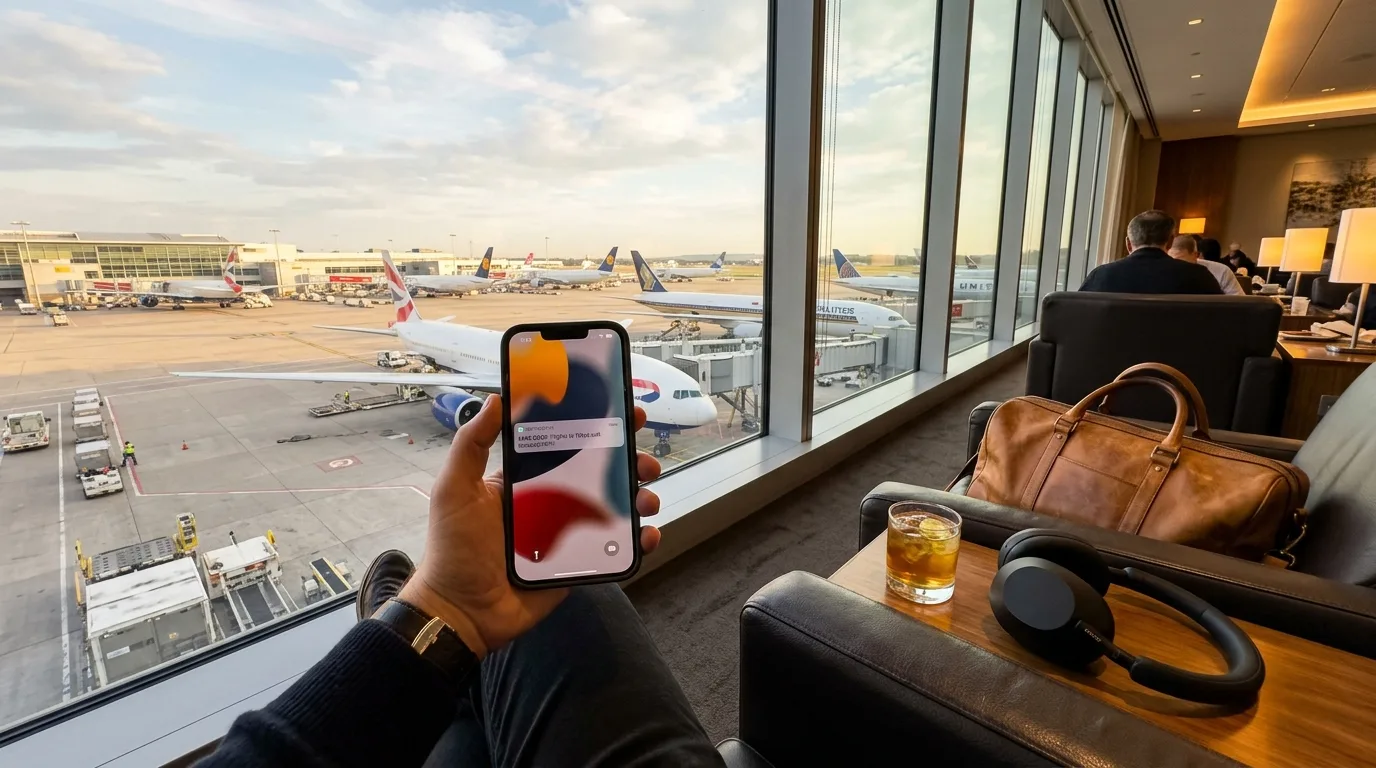
A long connection in a good lounge isn't the punishment it sounds like. Four hours in the Lufthansa First Class Terminal (if you're positioned to access it) or the Singapore Airlines SilverKris lounge at Changi is genuinely enjoyable. Sometimes I've deliberately chosen longer connections for this reason.
The point isn't to always take a connection. It's to at least price it out before you dismiss it. The savings sometimes make it an easy call.
Mistake 6: treating all business class as equivalent
This one isn't about saving money directly — it's about not wasting it.
Business class is not a consistent product. The difference between the best and worst business class seats on a long-haul flight is enormous, and if you're paying $3,000 or more for a ticket, you should know what you're actually getting before you book.
The United 767-300 flying some transatlantic routes still has a 2-2-2 configuration in business class. The middle seats in that layout require climbing over your seatmate to get to the aisle. It's cramped, the IFE is dated, and the bedding is thin. I've flown it. It's not what you imagine when you picture business class.
Contrast that with a Qatar Airways QSuite on the same route — direct aisle access from every seat, proper privacy dividers, a genuinely good meal service. Or even the Air France new long-haul cabin, which has been solid in my experience.
Seat configuration matters. Aircraft type matters. For anything over seven hours, I'd strongly recommend checking SeatGuru or the airline's own seat map before booking, and cross-referencing with recent passenger reviews. A $400 premium for a better aircraft on the same route is often worth it.
When comparing fares on competing airlines, always check which aircraft operates the specific flight — not just the route. Airlines swap equipment regularly, and the aircraft listed at time of booking isn't always the one that flies.
You can browse airline-specific seat configurations and reviews on our routes pages, which pull in current equipment data for most major carriers.
Mistake 7: missing the sale window because you weren't ready
This is the mistake that makes me slightly crazy, because it's entirely preventable.
Business class sales happen. Real ones — not the "20% off" marketing events, but actual flash sales where fares drop to genuinely compelling levels for 24 to 72 hours. Air France, Lufthansa, and Cathay Pacific in particular run these fairly regularly. British Airways has its Executive Club sales. Singapore Airlines drops fares on specific routes with almost no warning.
The problem is that most people aren't ready to book when the sale hits. They see the price, they think "I should book that," and then they spend three days checking with their partner, looking at hotel availability, trying to figure out if they can take that week off — and by the time they're ready, the fare is gone.
I'm not saying you should book impulsively. I'm saying you should do the legwork in advance so that when a price you've been waiting for appears, you can move quickly.
That means: decide on your travel window before you start monitoring. Have your passport details and credit card in your browser's autofill. Know which airlines you're willing to fly and which you're not. Know roughly what price makes the trip make sense for you. If you've done all that preparation, booking on a 24-hour alert is a five-minute job, not a three-day deliberation.
The pre-book checklist
Before you start monitoring a route, confirm your travel window, check your passport expiry, verify you have a card that earns miles on the booking, and if you're using points, check award availability so you know whether to book cash or miles. Doing this upfront means you're ready to act when the price moves.
BusinessClassSignal sends alerts with a direct link to the fare. Subscribers who book within the first few hours of an alert have a significantly higher hit rate on actually securing that price. The ones who wait until evening often find it's gone. That's not a sales pitch — it's just the reality of how these fares behave.
The pattern underneath all of this
If you look at these seven business class booking mistakes together, they share a common thread: they're all about passivity. Booking early because it feels safe. Checking one airport because it's familiar. Not setting up alerts because it's one more thing to do. Waiting too long to pull the trigger because you wanted to be certain.
Premium air travel rewards the people who are prepared, specific, and willing to act when the conditions are right. That's not complicated. It just requires building a few habits that most people don't have.
The full route library on BusinessClassSignal covers over 800 city pairs, and you can see recent fare history for most of them — which gives you a real benchmark for what "a good price" actually looks like on your specific route. That context alone changes how you shop.
I've been recommending fare monitoring to readers for years, long before we built our own tool. The concept isn't new. What matters is whether you actually set it up and use it, or whether you keep checking fares manually at random intervals and wondering why you never seem to catch the good prices.
Stop guessing on business class fares — BusinessClassSignal monitors 800+ routes and alerts you the moment prices drop to your target. 14-day free trial, no credit card required.
Try Free