
The Chicago to Frankfurt business class options worth knowing
There are routes where you have one real choice and you make peace with it. Chicago to Frankfurt isn't one of them. You've got Lufthansa flying its newest long-haul product, United running Polaris on a route it's operated for decades, and the occasional positioning fare that makes the whole thing feel almost reasonable. It's one of the more interesting transatlantic decisions you'll make, and I've made it enough times that I have some opinions.
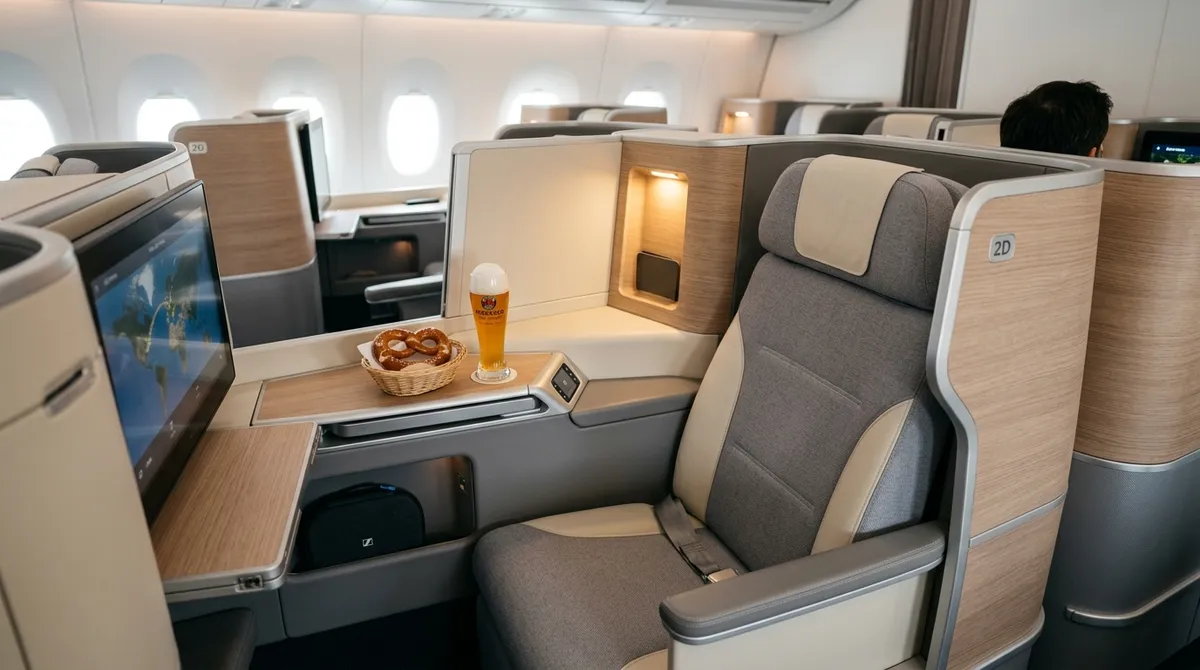
Let me be direct about what this piece is: a practical comparison of what you're actually getting on each carrier, what the fares tend to look like, and what I'd personally watch for. Not a press release for either airline.
Lufthansa Allegris: what it is and what it still isn't
Lufthansa has been rolling out Allegris on its flagship routes since mid-2024, and Chicago to Frankfurt is one of the routes now operating the new product. On paper, this is the most significant cabin redesign the airline has done in years. The headline feature is the new Business Class seat — a fully flat bed in a 1-2-1 configuration on the upper deck of the 747-8, with some seats offering direct aisle access from both sides, which Lufthansa is calling "Business Class Suite" positions. These are the window seats in rows 11 and 12 on the upper deck, and if you're booking Allegris specifically, those are the ones you want.
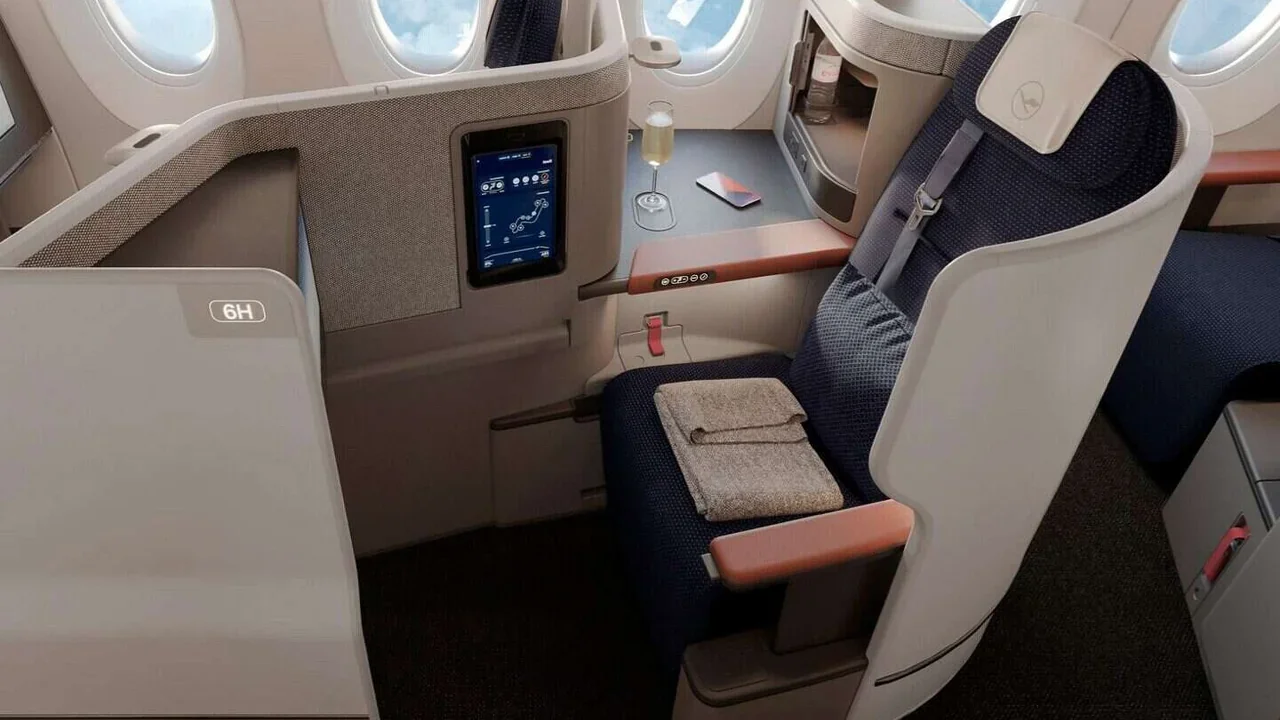
The shell itself is genuinely good. I flew the Allegris product on the Munich–New York route last autumn and found the seat more comfortable than I expected — the privacy screen is substantial, the mattress topper they bring out after dinner is thicker than the standard issue stuff you get on most carriers, and the storage is better organized than the old Business seat. The IFE screen is large and responsive. These are things Lufthansa has historically been mediocre on, so the improvement is real.
Where it still falls short: the food. Lufthansa's catering on European carriers has never quite matched what you'd get on Singapore or ANA, and Allegris doesn't fix that. The main course options are fine. The appetizer spread is better. But don't board expecting a revelation. The wine list is solid, particularly if you ask the crew what they'd actually recommend rather than defaulting to the first option.
One more thing: not every Chicago–Frankfurt departure will be on an Allegris-equipped aircraft. Lufthansa operates this route with both 747-8 and A350 equipment, and the Allegris rollout on the A350 variant is still in progress. Check the aircraft type when you book. If it shows 74H (that's the 747-8 IATA code), you're on the Allegris product. If you see 359, the cabin may still be the older configuration. Worth verifying before you commit.
United Polaris on ORD–FRA: the honest version
United has been flying United Polaris between Chicago O'Hare and Frankfurt for long enough that it's easy to take for granted. The route typically operates on a 767-300ER or 777-200ER depending on the season, and that matters quite a bit.
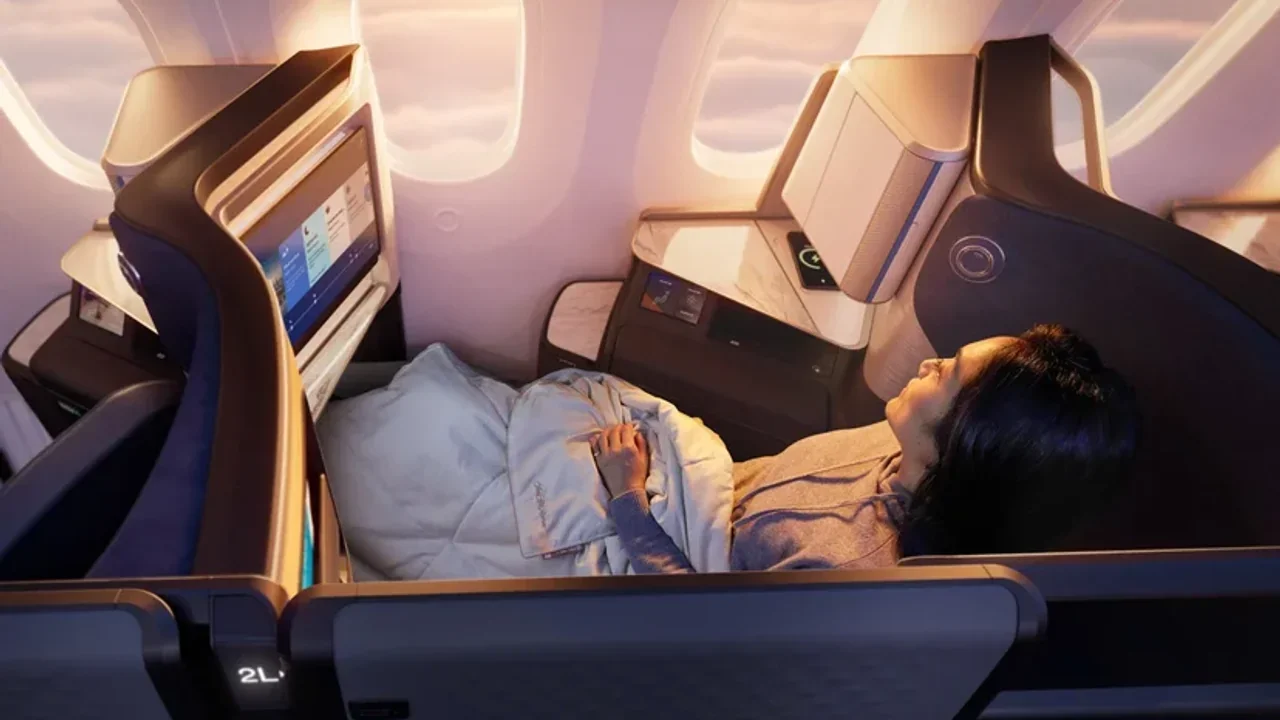
On the 777, Polaris is a genuinely competitive product. The seat is fully flat, 1-2-1 in business, and the direct aisle access for every passenger is the baseline expectation now. United's bedding is good — the Saks Fifth Avenue collaboration gets mentioned a lot in press materials, but honestly, the duvet is legitimately comfortable and the pillow situation is better than most. The dining on United Polaris has improved since the early rollout days when it was a running joke. It's not exceptional, but I've had decent meals on the Chicago departures specifically. The evening flights tend to have better service in my experience, and the crew on the ORD–FRA route tends to be senior and efficient.
On the 767, the calculation changes. United still uses the Polaris seat on this aircraft, but the cabin is narrower, the overhead bins fill fast, and the whole thing feels more cramped than the product deserves. The 767 is a workhorse and United runs it hard. If you're booking this route and the equipment shows 767, that's not necessarily a dealbreaker, but go in with adjusted expectations.
The other honest thing about Polaris: the Wi-Fi is inconsistent. I've had full-flight connectivity on ORD–FRA and I've had it cut out over the Atlantic and not come back. United has been upgrading its fleet with Viasat satellite Wi-Fi, but the rollout is uneven. If you're planning to work the whole flight, that's a gamble.
Terminal situation at O'Hare, which nobody talks about enough
Here's something that doesn't show up in most fare comparison articles: the ORD terminal experience for this route is actually worth thinking about before you book.
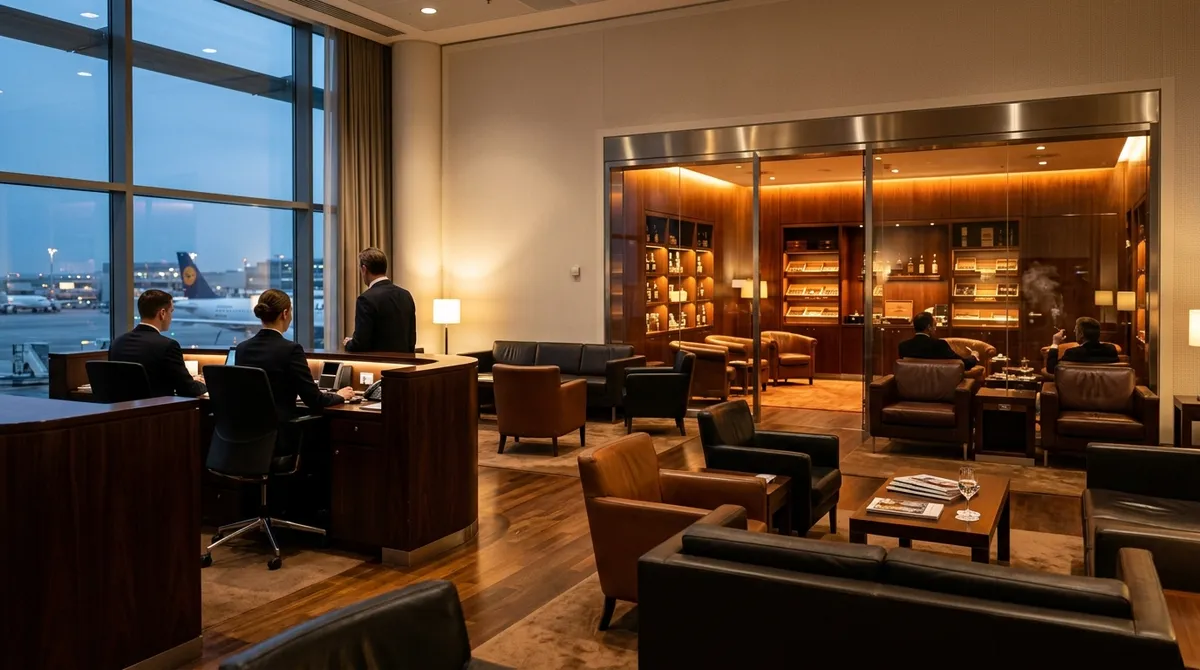
Lufthansa departs from Terminal 5, the international terminal. If you're connecting from a domestic flight, that means clearing the terminal transfer — either the shuttle bus or the underground walkway depending on where you're coming from. The Lufthansa Senator Lounge in Terminal 5 is decent. It's not the Munich lounge, not by a long shot, but it has a proper hot food section, a reasonable bar, and it's usually less chaotic than you'd expect for a major hub departure. Shower suites are available and usually bookable without a long wait if you arrive before the peak evening rush.
United operates from Terminal 1, which is the main United hub at O'Hare. The Polaris Lounge at ORD is in the B concourse, and I'd call it one of United's better domestic Polaris Lounges — good à la carte dining, a proper bar, and enough space that you can usually find somewhere quiet. The food is better than the average lounge meal and you can order off a menu rather than grazing a buffet, which I prefer. The walk to the international gates (the M gates for transatlantic departures) is long. Budget the time.
Neither terminal is a disaster. But if a smooth connection is a priority, the United setup at T1 is easier to navigate if you're coming in on a domestic United feeder.
What fares actually look like on Chicago to Frankfurt business class
This is where it gets interesting, and also where most articles go vague on you. So let me be specific.
Published business class fares on this route sit between roughly $4,500 and $7,000 round-trip for most of the year. Peak summer (June through August) and the December holiday window push the top end higher. Those published fares are what you'll see if you search on a random Tuesday afternoon with no particular timing strategy.
But the route has a history of fare drops that are worth watching for. I've seen Chicago to Frankfurt business class fares fall to the $2,200–$2,800 range during off-peak windows, typically in February, early November, and the shoulder weeks in September. These aren't advertised. They appear, they sit for a few hours or sometimes less than a day, and they disappear. The airlines don't announce them. They're usually the result of fare matching, inventory adjustments, or a brief pricing error that takes a while for someone to catch.
Award space is its own conversation. Frankfurt is a Star Alliance hub, which means both Lufthansa Miles & More and United MileagePlus have saver award space available on this route, at least in theory. In practice, Lufthansa is notoriously stingy with partner award space on its own metal. If you're trying to book Lufthansa business with United miles, you're going to have a frustrating time unless you're booking very far out or very close in. Lufthansa's own program (Miles & More) has better access to its inventory, but the redemption rates are high. United's Polaris product is easier to access with MileagePlus miles, and the sweet spot saver rates for this route are 70,000 miles one-way in business, which is reasonable if you've been accumulating.
One specific thing I've noticed: United tends to release additional saver award space about 3–4 weeks before departure on this route when loads are lighter. If you're flexible and not booking far in advance, that window is worth checking regularly.
Frankfurt as a hub and why the connection math matters
Most people flying Chicago to Frankfurt aren't stopping there. Frankfurt Airport (FRA) is one of the largest Star Alliance hubs in the world, and it functions as a connection point for onward travel into Eastern Europe, the Middle East, Africa, and across to Asia. If that's your situation — if Frankfurt is a layover, not the destination — then the carrier you choose into FRA affects your connection options significantly.
Arriving on Lufthansa into FRA puts you in the best possible position for onward Lufthansa Group connections. Terminal 1 at Frankfurt is massive and the transit is well-signed, but give yourself at least 90 minutes for any connection, more if you're clearing passport control. The Lufthansa Senator Lounge in Terminal 1 is genuinely one of the better airport lounges I've been in — the hot food section is proper, the bar is staffed by people who know what they're doing, and there's a quiet zone that actually stays quiet.
Arriving on United into FRA means you're arriving into Terminal 2, which is where the non-Lufthansa Star Alliance partners land. The connection experience is fine but you're further from the main Lufthansa hub infrastructure. If your onward flight is on Lufthansa, budget extra transfer time and check whether your bags will be automatically transferred or whether you need to assist that process at the transfer desk.
For people whose final destination actually is Frankfurt — for business travel, for the trade shows, for the financial district — the transit from FRA into the city is straightforward. The Fernbahnhof (long-distance rail station) is inside the airport, and ICE trains run to Frankfurt Hauptbahnhof in about 12 minutes. Taxis are available but the train is faster and about a third of the price.
How to actually catch the fare drops on this route
I'll be honest with you about how I approach this personally. I don't sit at a search engine refreshing fares. I set up monitoring and let it work. The drops on chicago to frankfurt business class routes are fast-moving — sometimes they're gone in under six hours — and if you're only checking when you happen to think about it, you'll miss most of them.
That's essentially why BusinessClassSignal exists. The system watches specific routes and sends you an alert the moment a fare drops below a threshold you set. For this route, I'd set your alert somewhere in the $2,500–$3,000 range for round-trip business class and let it run. You'll get a lot of silence, and then occasionally an alert that's actually worth acting on. There's a free 14-day trial if you want to test it without committing — you can start monitoring this route and see whether it catches anything in the first two weeks. Most people who try it on a route like ORD–FRA end up sticking around because the transatlantic business class fare market is genuinely unpredictable and the drops are real.
The other thing I'd say: if you find a fare in that $2,200–$2,500 range, book it. Don't spend three days thinking about dates. These fares don't wait.
For broader context on what else we're tracking across the Atlantic, you can browse all routes — there are some interesting patterns right now on other Star Alliance hub routes that are worth knowing about if your travel is flexible.
Both Lufthansa Allegris and United Polaris are solid products on this route. Allegris has the edge on hardware right now if you get the right aircraft. Polaris has the edge on predictability and lounge access at ORD. The fares, when they drop, are worth jumping on regardless of carrier. That's the honest version of it.