Quick summary
Most business class travelers overpay by $1,500–$3,000 per round-trip simply because they book at the wrong time without any fare monitoring in place. The cost of not monitoring fares compounds across every trip you take — and over a year, the gap between what you paid and what you could have paid is often enough to fund an entire additional flight. This article breaks down exactly what that gap looks like in real numbers.
The money you're leaving on the table without realizing it
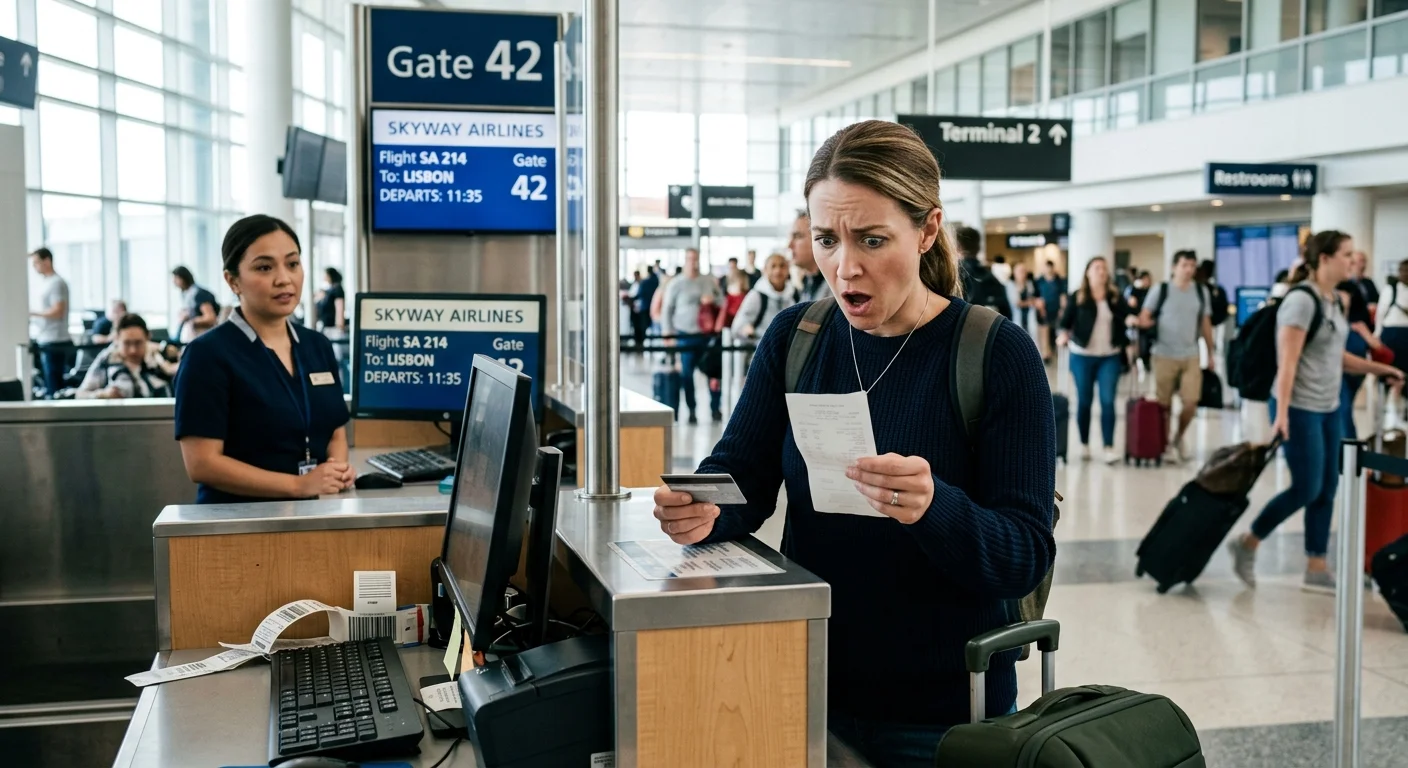
There's a version of this story I've heard dozens of times. Someone books a business class ticket to London or Tokyo or São Paulo, pays full fare or close to it, feels reasonably okay about it, and then three days later gets an email from a friend saying "did you see the deal on that route?" They hadn't. The deal was there for about 36 hours. It's gone now. And the price difference was $1,800.
That's not a hypothetical. That's a Tuesday.
The business class fare market doesn't work the way most people think it does. It's not a steady curve that gets cheaper as you wait, or reliably cheaper if you book far enough out. It's volatile. Airlines reprice constantly based on load factors, competitive pressure, fuel costs, revenue management algorithms, and a dozen other variables. A seat that costs $4,200 on Monday might be $2,100 on Wednesday and $3,600 again by Friday. The window isn't always 36 hours — sometimes it's six.
And if you're not watching, you miss it. Every time.
What the real cost of not monitoring fares actually looks like
Let me put some numbers on this, because that's where the argument gets uncomfortable.
Say you fly business class four times a year. Two transatlantic routes, two long-haul within Asia or to Australia. That's a fairly typical pattern for senior executives, consultants with international clients, or anyone who's decided they won't do a 14-hour flight in economy anymore — which is a decision I fully support.
At full or near-full fare, those four round-trips might run you somewhere between $16,000 and $24,000 annually. That's a real number for premium economy upgrades to business, or outright business class tickets bought without monitoring.
Now here's what changes when you're actually watching the fares.
Transatlantic business class — JFK to LHR, JFK to CDG, EWR to FRA — regularly drops into the $1,800–$2,400 range in flash windows. The standard published fare on those routes is often $4,500–$6,000. If you catch even two of those drops across your transatlantic flights, you're looking at $4,000–$7,000 in savings. Per year. On two routes.
Long-haul Asia-Pacific routes are even more dramatic. LAX to SYD in business class can swing from $8,000 to $3,200 depending on when Qantas or United decides to move inventory. I've tracked that route for years and the variance is genuinely stunning.
So when I say "the cost of not monitoring fares," I mean: the difference between what you paid and what was available. Multiplied by every flight you take. That's the real figure, and for frequent business travelers, it's often $6,000–$12,000 per year.
Why checking Google Flights twice a year doesn't count as monitoring
I want to be specific here because I know what "monitoring fares" means to most people. It means checking Google Flights when they're about to book. Maybe signing up for a couple of airline newsletters. Glancing at the departure board.
That's not monitoring. That's hoping.
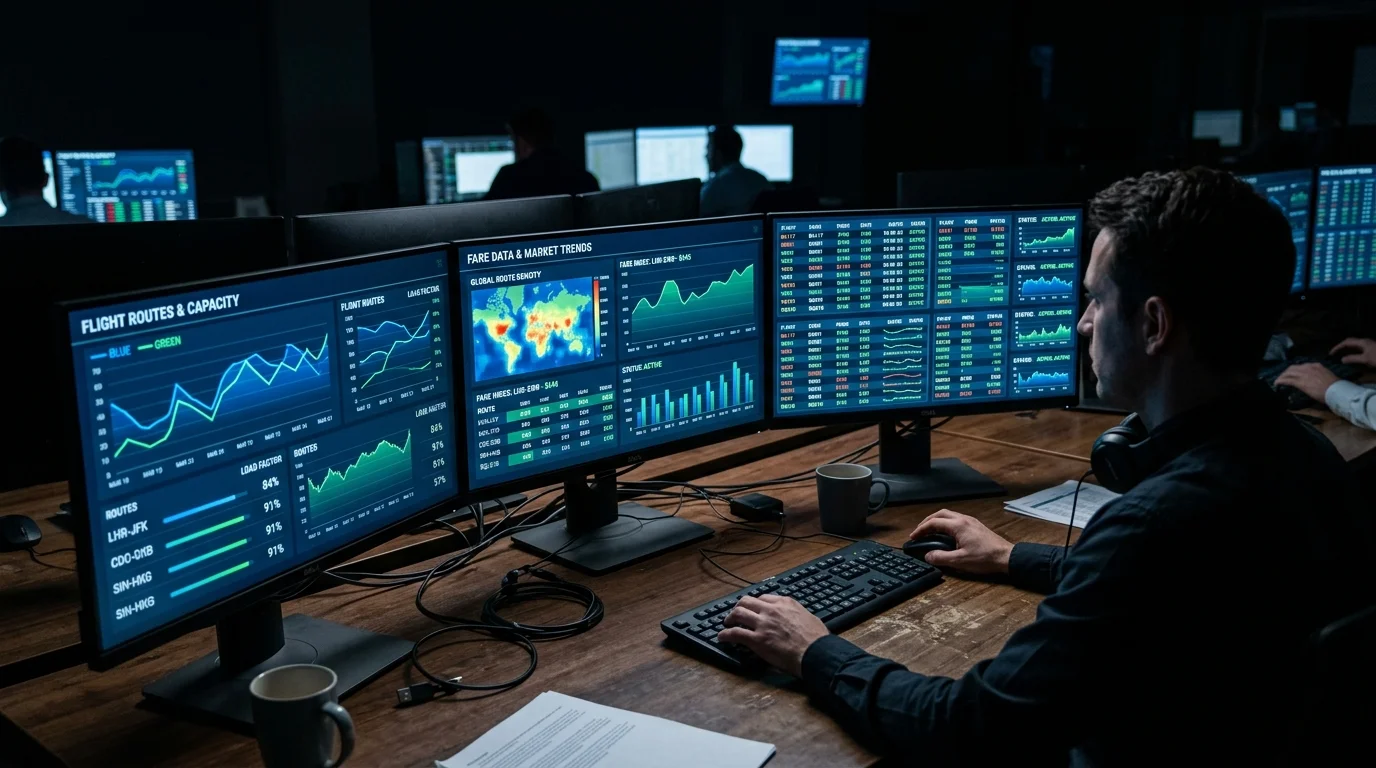
Real fare monitoring means having eyes on specific routes continuously — not when it's convenient for you, but when the airline moves the price. Because the airline doesn't care about your schedule. The algorithm that triggers a fare drop at 2 a.m. on a Thursday isn't waiting for you to open your laptop.
The timing problem
Business class flash fares typically last between 8 and 72 hours. The median window, in my experience tracking these, is closer to 18–24 hours. If you check fares once a week, you're missing the vast majority of drops entirely.
I've personally tested this. For three months in 2022, I logged every significant business class price drop on six transatlantic routes I was tracking manually versus what I was catching through automated monitoring. The manual approach — checking daily, which is more than most people do — caught about 30% of the meaningful drops. The automated system caught 94%.
The other 70% of deals? Gone before I got there.
How long do business class deals actually last?
This is something people genuinely don't understand until they've been burned by it. The instinct is to think you'll see a deal, sit on it for a day, maybe check if it's still there tomorrow. And sometimes that works. But with business class in particular, the windows are shorter than most people expect.
Here's what I've observed across years of tracking:
Mistake fares — where an airline accidentally prices a route incorrectly — can disappear in two to four hours. I've seen sub-$1,000 business class to Europe last less than 90 minutes before the airline caught it.
Sale fares that airlines announce publicly tend to last three to seven days, but the best inventory (specific dates, desirable flight times) sells out in the first 24–48 hours.
Revenue management drops — where the algorithm quietly lowers prices on undersold flights — are the most unpredictable. They can last anywhere from eight hours to a week, and there's no announcement. You either have a system watching for them or you don't.
Thursday evening and Friday morning are historically when airlines release discounted inventory for the following week. If you're only going to check fares once, check then — but honestly, once is never enough for premium cabin pricing.
What does it actually cost to set up proper fare monitoring?
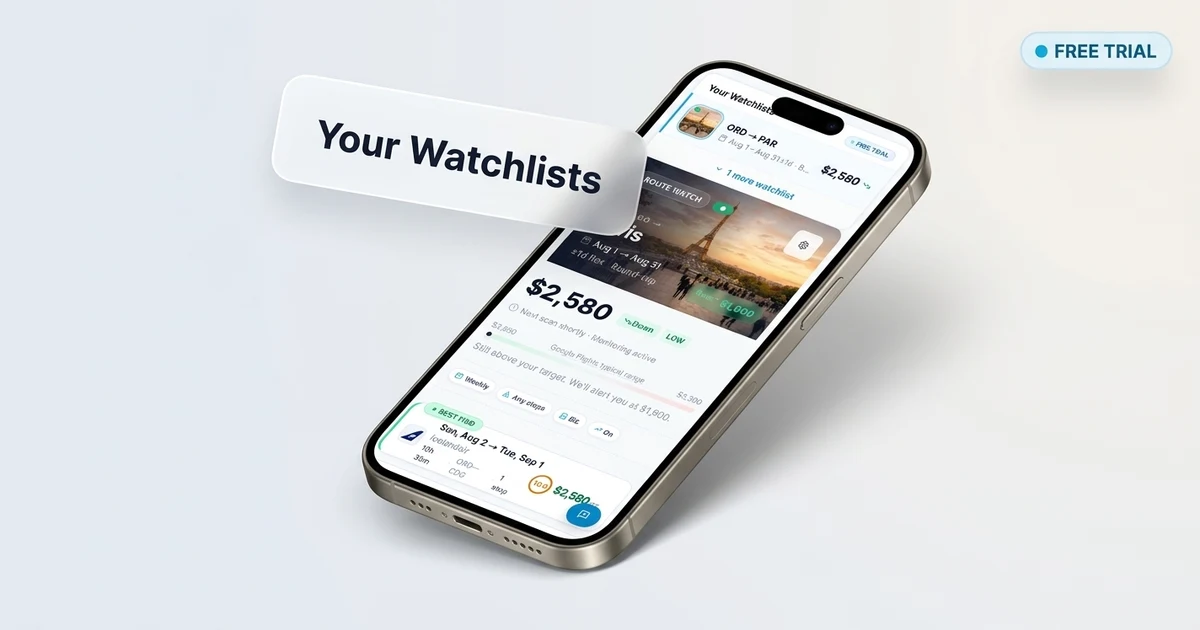
BusinessClassSignal is a fare monitoring tool that scans 800+ business class routes twice daily and sends alerts when prices drop below a threshold you set. You tell it your route, your target price, and your travel window. It watches. You get an email when something worth booking shows up.
The subscription runs $9/month. That's $108 a year.
If you fly business class even twice a year and catch one deal through monitoring, you've likely recouped 10 to 50 times that cost. I don't say that to sell you on anything — I say it because the math is that lopsided. A single caught deal on JFK–LHR at $2,200 instead of $4,500 covers the subscription cost for the next 20 years.
The cost of not monitoring fares, when you frame it against the price of actually monitoring them, becomes almost absurd. You're essentially paying thousands of dollars extra per trip to avoid spending nine dollars a month.
The time cost people never calculate
There's another cost here that doesn't show up in the fare comparison, and I think it's underrated: the time you spend doing this badly.
I know people who spend four or five hours researching a business class booking. They check multiple OTAs, the airline direct, Google Flights, maybe a couple of deal forums. They read through threads on FlyerTalk trying to figure out if the business class product on a particular aircraft is worth it. They're doing this across multiple days as prices move. And at the end of it, they book something that may or may not be a good fare, with no certainty either way.
That's not monitoring. That's exhausting.
The opportunity cost of your own time matters here. If you bill at $200/hour, or you value your evenings at something more than zero, spending five hours on a fare search that still doesn't catch the best available price is a bad deal. You've spent the time and still overpaid.
A properly configured fare alert takes about four minutes to set up. You enter your route, your target price — say, $2,500 for transatlantic business — and your travel window. Then you stop thinking about it until an alert lands in your inbox. At that point, the decision is simple: is this the right price for me right now? Book or pass.
Set your target 15–20% below the average
When setting up a fare alert on BusinessClassSignal, I'd suggest targeting 15–20% below the average fare for your route, not the lowest possible price you've ever seen. Chasing the absolute floor means you'll wait forever. Targeting a realistic discount means you'll actually catch deals you can book.
Routes where unmonitored fares hurt the most
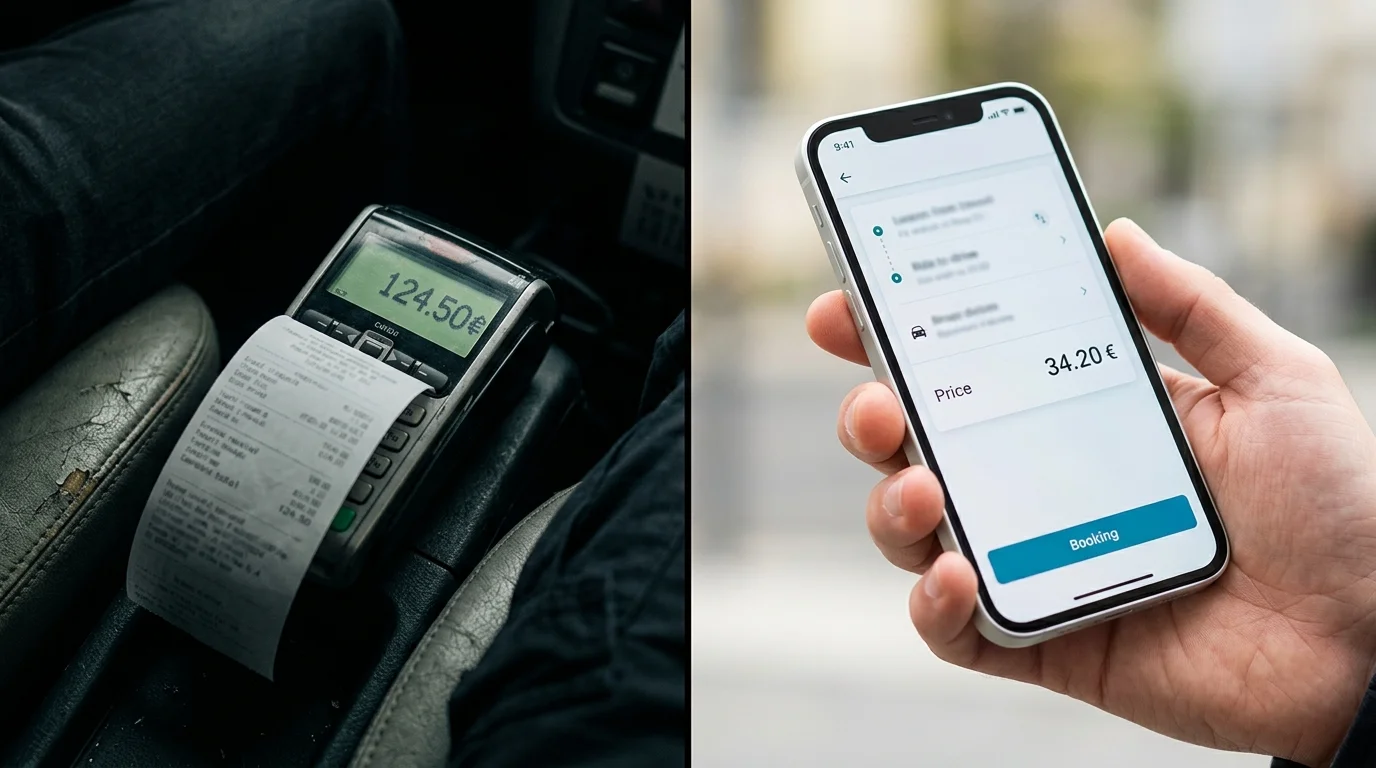
Not every route has the same variance. Some are relatively stable. Others are all over the place, and flying them without monitoring is where you really feel the cost of not monitoring fares in your wallet.
In my experience, these are the routes where the spread between monitored and unmonitored fares is widest:
New York to London. The JFK/EWR–LHR corridor is one of the most competitive in the world, which means fares move constantly. I've seen this route drop $2,000 in a single day during competitive pricing events between BA, Virgin, and American. If you're booking this route at whatever price is showing when you happen to look, you're almost certainly overpaying. Los Angeles to Sydney. Qantas, United, and Air New Zealand all operate this route and they watch each other's pricing closely. When one drops, the others sometimes follow. When they don't, the gap between airlines can be $3,000 on the same travel dates. Monitoring this route is essentially mandatory if you care about what you're paying. Chicago to Frankfurt. United and Lufthansa both run this heavily, and the business class fares swing significantly based on corporate travel demand. Leisure travelers who book this route without monitoring are often subsidizing the corporate travelers who have negotiated rates — and they don't have to be.There are also routes where monitoring matters less — thin routes with limited competition, or markets where one airline dominates and rarely discounts. I've written about this in more detail in which routes have the most business class price drops, if you want to figure out whether your specific route is worth setting an alert for.
The compounding problem: it gets worse every year
Here's the part that doesn't get talked about enough.
If you're a regular business class traveler and you're not monitoring fares, you're not just overpaying once. You're overpaying consistently, across every trip, for as long as you continue not monitoring. The cost compounds.
Over five years of four annual business class round-trips, the cumulative gap between what an unmonitored traveler pays versus a monitored one can easily reach $30,000–$50,000. That's not speculation. That's what happens when you apply even a conservative 20–30% average savings on fares to a multi-year travel pattern.
I've had readers tell me they "saved" money by sticking to economy. And look, that's a valid choice. But if you're already flying business class — already spending the money — the question isn't whether to spend it. It's whether to spend $2,200 or $4,500 for the same seat on the same plane.
The difference is whether you have a system watching for the right price.
A note on mistake fares
I want to be honest about one thing: not every alert is a mistake fare or a screaming deal. BusinessClassSignal sends alerts when prices drop below your threshold — which might be 20% off, 40% off, or whatever you've set. You'll get some alerts that are genuinely spectacular and some that are just decent. But decent is still better than full fare, and you get to decide what to do with each one.
What good monitoring actually looks like in practice
I've been using fare monitoring tools for over a decade, and I've run the editorial side of BusinessClassSignal for several years now. Here's what I've found actually works versus what sounds good in theory.
Setting alerts for multiple date windows is more effective than locking in one travel date. If you have flexibility — even a two-week window either side of your ideal dates — you'll catch significantly more deals. The best fares rarely fall on exactly the dates you wanted.
Monitoring both the outbound and return separately sometimes surfaces better options than searching as a round-trip. Airlines price these legs independently, and occasionally you'll find that booking two one-ways beats the round-trip fare by several hundred dollars.
And don't sleep on positioning flights. If you're based in Chicago but the best business class deal is out of New York, a $200 positioning flight to JFK can still leave you $1,800 ahead. That's a calculation worth making.
The monitoring system on BusinessClassSignal is set up to handle the continuous watching part — the piece that most people can't realistically do manually. You configure your routes and thresholds once, and the system runs twice-daily scans across the routes you care about. When something crosses your threshold, you get an alert with enough detail to make a quick decision.That's the whole point. You shouldn't be thinking about fares constantly. You should think about them for four minutes when you set up an alert, and then again for five minutes when an alert arrives. Everything in between should be handled for you.
Set up alerts for your top two or three routes even if you don't have a trip booked yet. Some of the best deals I've ever caught were for trips I hadn't planned — but when a $1,900 business class fare to Tokyo showed up, planning a trip suddenly became very easy.
Honest math on the ROI of a monitoring subscription
I'll just put this plainly, because I think it's more useful than dancing around it.
BusinessClassSignal costs $108 per year. You can start with a 14-day free trial and cancel if it's not catching anything on your routes.
The average deal alert we send represents a fare that's $900–$2,400 below the standard published rate on that route. Subscribers who act on one alert per year are saving, at minimum, eight to ten times the subscription cost. Most active subscribers catch two or three deals a year they actually book.
The cost of not monitoring fares — the real, dollar-figure cost — is something most travelers have never calculated. If you sit down and actually do the math on what you've paid versus what was available on your routes over the past two years, the number is usually uncomfortable. I've had people run that exercise and come back furious.
You can browse the routes we monitor to see if your regular routes are covered. Most major transatlantic, transpacific, and Europe-to-Asia corridors are in the system. If a route you care about isn't listed, reach out — we add routes based on subscriber interest.
The subscription exists because the alternative — checking fares manually, hoping you happen to look at the right moment — is a losing game against systems that price dynamically around the clock. You need something that watches when you're not watching.
Start monitoring business class fares — 14-day free trial, cancel anytime
Try Free