Quick summary
There are legitimate ways to get a free business class upgrade — but most of them require either significant upfront effort, a credit card you're already paying for, or a fair amount of luck. This article covers the five methods that actually work, what each one realistically costs you in time and money, and how to stack them for better odds.
Let's be honest about the odds first
Every few months someone publishes a piece with a headline like "I flew business class for FREE — here's how!" and it gets shared ten thousand times. And every time, the actual story buried in paragraph eight is: "I spent 14 months collecting miles, applied for three credit cards, and happened to be flying on a slow Tuesday in February."
That's not a complaint. It's just useful context.
Free business class upgrades are real. I've gotten them. I've gotten them more than once, and I've watched friends stumble into them with almost zero effort. But I've also burned a lot of time on strategies that didn't pan out, and I'd rather give you a clear-eyed picture than a highlight reel.
The five methods below are ranked roughly by how reliably they work, not by how exciting they sound.
Operational upgrades: the one that actually costs you nothing
An operational upgrade is when the airline moves you up because they need to. Oversold economy cabin, weight distribution issues on smaller aircraft, a mechanical problem that reduces available seats. The airline has to put someone in business class, and that someone is occasionally you.
This is the only method on this list that is genuinely free with no strings attached.
The problem is you can't engineer it. You can position yourself for it.
Airlines almost always upgrade passengers in this order: elite status holders first (top tier first), then lower tiers, then full-fare economy passengers, then everyone else. If you're sitting on a basic economy ticket with no status, you are last. You might still get it — especially on thinner routes — but you're at the back of the queue.
How to position yourself for an operational upgrade
Check in exactly when the window opens. On most carriers that's 24 hours before departure. Early check-in doesn't guarantee an upgrade, but being in the system early matters. Also: always ask at the gate. Politely. Once. Don't hover.
A few things that genuinely help:
- Dress reasonably well. It's not a myth. Gate agents have discretion on borderline calls.
- Travel solo. Upgrading one seat is far easier than finding two together.
- Book seats near the back of economy on narrow-body aircraft. Those seats get swapped first when there's a balance issue.
- Be nice to the gate agent. This is so obvious it's almost embarrassing to write, but I've seen people blow an upgrade opportunity with attitude.
I got an operational upgrade on an AA 737 from JFK to MIA about three years ago. The gate agent pulled me up about 20 minutes before boarding, no explanation given. I was traveling alone, checked in the moment the window opened, and had no status at the time. It happens.
Credit card upgrade certificates: the most reliable path
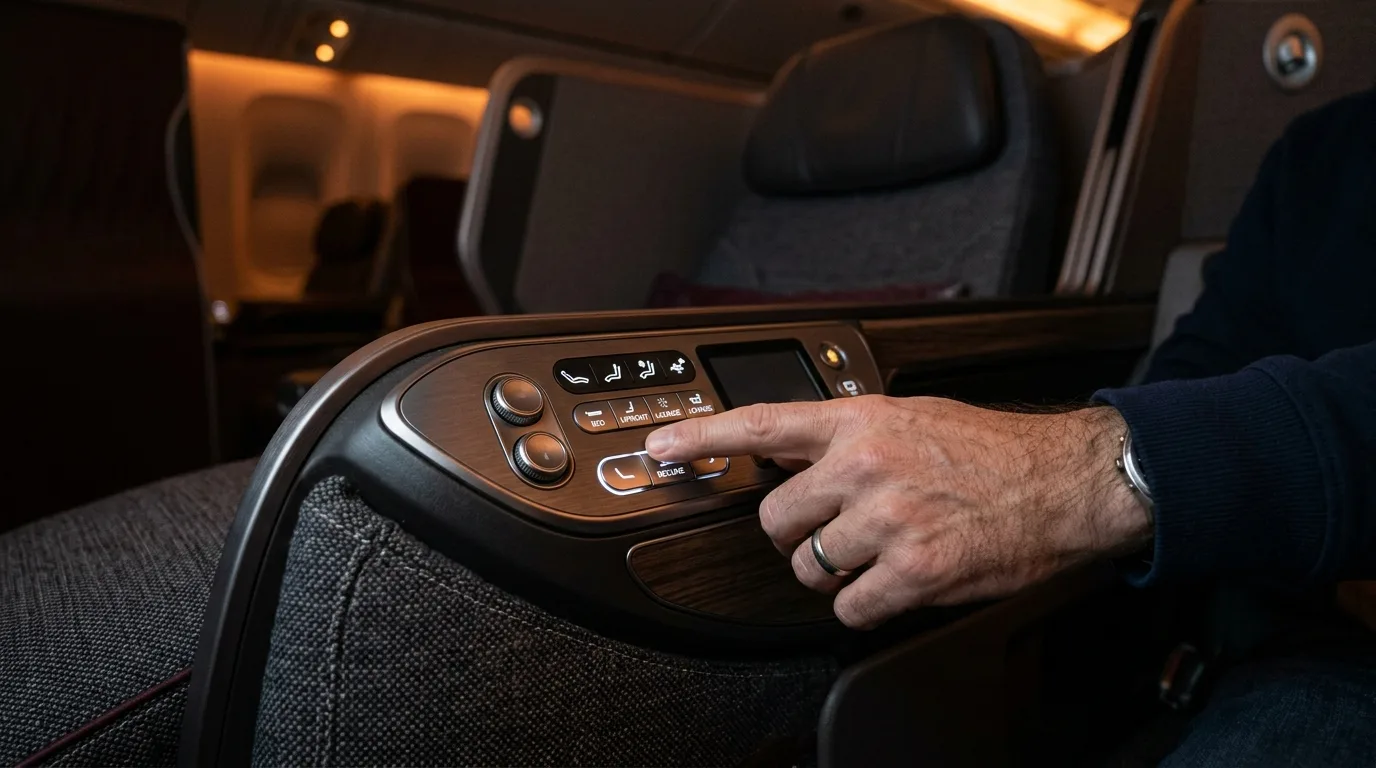
This is the method I actually use most often, and it's the one I'd recommend to anyone who flies long-haul at least twice a year.
Several premium travel credit cards include companion certificates or upgrade vouchers as part of their annual benefits. The most useful ones I've come across:
- Chase Sapphire Reserve — earns Ultimate Rewards points transferable to United, Air France/KLM, Singapore Airlines, and others. Not a direct upgrade certificate, but the transfer rates are good enough that I've used it to book business class outright for the cost of a points transfer.
- Amex Platinum — earns Membership Rewards transferable to Delta, Air France, ANA, Cathay Pacific. Again, not a voucher, but the point value is real.
- United Explorer Card — includes two one-time-use upgrade certificates annually, valid for domestic and some short-haul international routes.
- Alaska Airlines Visa — the companion fare benefit here is legitimate. Book a business class ticket and bring someone along in the same cabin for just taxes and fees on certain fares.
Read the fine print on companion certificates
Most companion certificates have blackout dates, minimum fare requirements, or cabin restrictions that aren't obvious from the marketing. The Alaska companion fare, for instance, requires you to purchase the companion's ticket on the same booking, and it's not valid on partner metal. Check before you get excited.
The annual fee on most of these cards runs $95–$695. That sounds like money, but if you use the certificate once on a transatlantic business class ticket that would otherwise cost $2,200+, the math is pretty straightforward.
What's the best credit card for a free business class upgrade?
Honestly, it depends on where you fly most. If you're a loyal United flyer, the Explorer card's upgrade certificates are the most direct path. If you fly internationally on multiple airlines, Amex Platinum's transfer partners give you more flexibility. The Chase Sapphire Reserve is a solid middle ground if you want one card that does most things well.
What I'd avoid: co-branded cards for airlines you don't fly regularly. The points accumulate slowly and the upgrade availability on award seats is often terrible.
If you're applying for a card primarily for the upgrade benefit, wait for elevated welcome bonuses. Amex and Chase both run limited-time offers that can be worth $1,000+ in travel value, and those bonuses alone can cover multiple business class segments.
Frequent flyer status: the long game that eventually pays off
Elite status is how the people who fly business class regularly actually get free business class upgrades on domestic routes. Once you hit United Silver, Delta Silver Medallion, or AA Gold, complimentary upgrades start clearing — first on short-haul domestic, then on longer routes as you climb the tiers.
I'll be honest: this is the slowest path if you're starting from zero. It typically takes 25,000–50,000 qualifying miles in a calendar year just to reach the lowest elite tier, and at that level you're still last in the upgrade queue behind Platinum and 1K members. On a busy transcon route, a Silver member clearing to business class is genuinely rare.
But here's where it gets interesting.
Does status matching actually work for upgrades?
Yes, and it's underused.
Most major airlines will match your status from a competing carrier if you ask and provide proof. You apply, they verify your current status, and they give you equivalent (or occasionally one tier lower) status on their airline for a trial period — usually 90 days to a year. You're expected to fly enough to re-earn it, but during that window, you have real upgrade priority.
The practical play here: if you've built Silver status on United, apply for a status match to Alaska, Delta, and American simultaneously. You can often hold matched status on two or three carriers at once, which dramatically widens your upgrade opportunities. I've done this. It works.
Airlines that have historically been generous with status matches include Alaska (often matches without requiring revenue activity), Air Canada Aeroplan, and British Airways Executive Club. Delta and United have tightened up their match policies in recent years, but they still do them.
Stack a status match with a mileage run
If you get a status match to a new airline, look for cheap positioning flights on that carrier within the first 60 days. Even a short domestic round-trip puts mileage on your account and signals intent to the airline's retention team. It makes requalification easier.
Mistake fares and deeply discounted business class
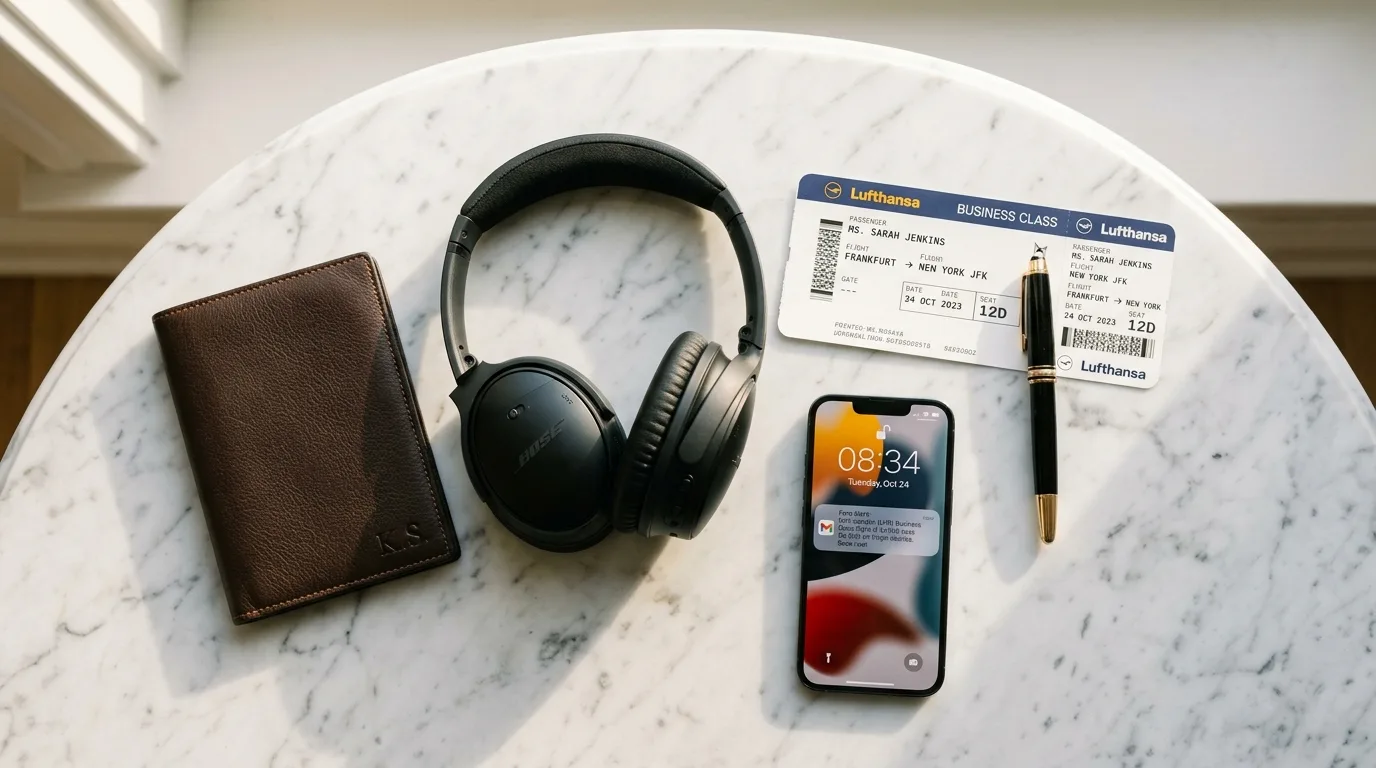
A mistake fare isn't free, but sometimes it's close enough that the distinction barely matters.
Carriers occasionally publish business class fares at a fraction of the normal price — sometimes due to a currency conversion error, a pricing system glitch, or a miscategorized fare bucket. I've seen transatlantic business class drop to $400 round-trip. I've personally booked a round-trip in business to Tokyo for $780 out of SFO on a fare that lasted about four hours before it was pulled.
The above is a typical fare. A mistake fare on the same route might surface at $400–$600. The gap is your free business class upgrade, in a sense — you're flying the same seat for economy money.
Mistake fares aren't guaranteed to be honored
Airlines have the right to cancel tickets booked on obvious pricing errors, though US DOT rules require them to honor the fare if you've already traveled. The safest fares are ones that are merely very cheap rather than impossibly cheap — those are more likely to stick.
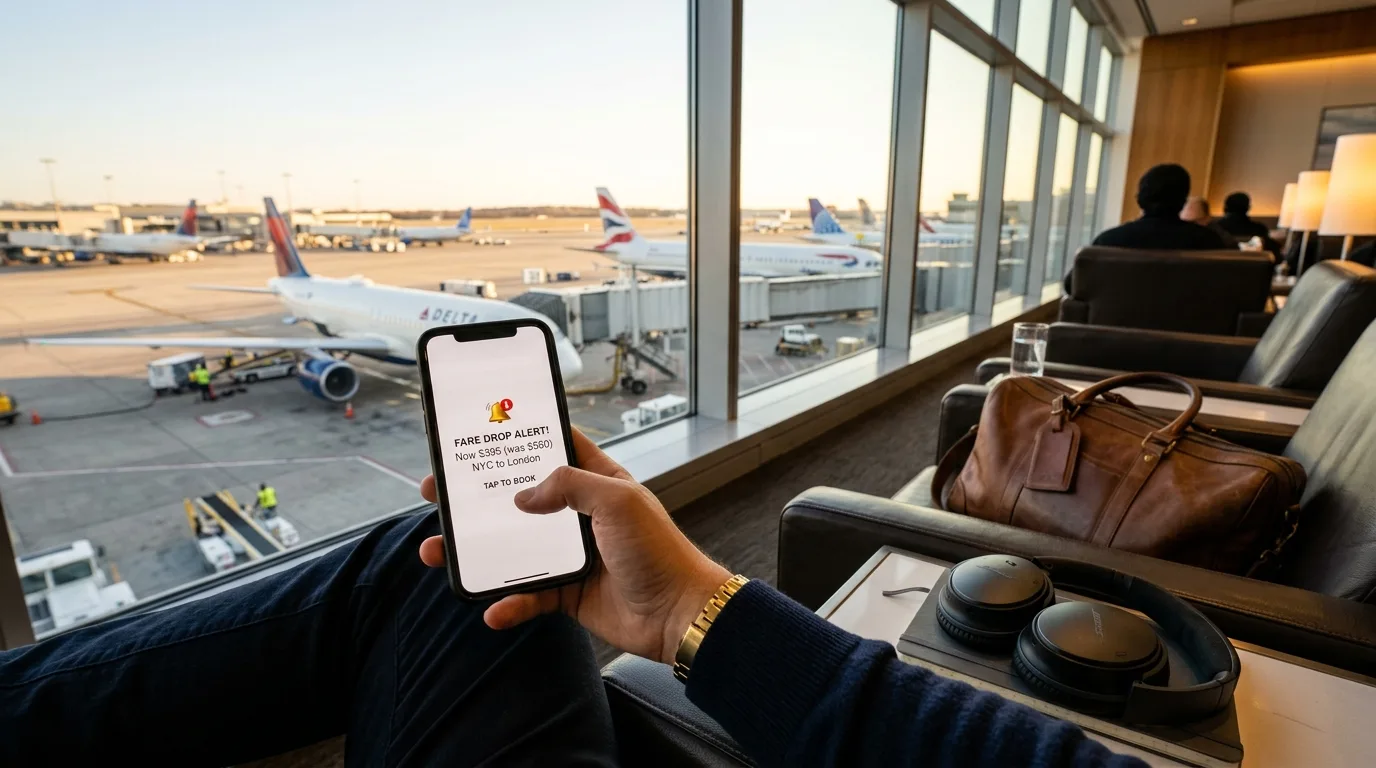
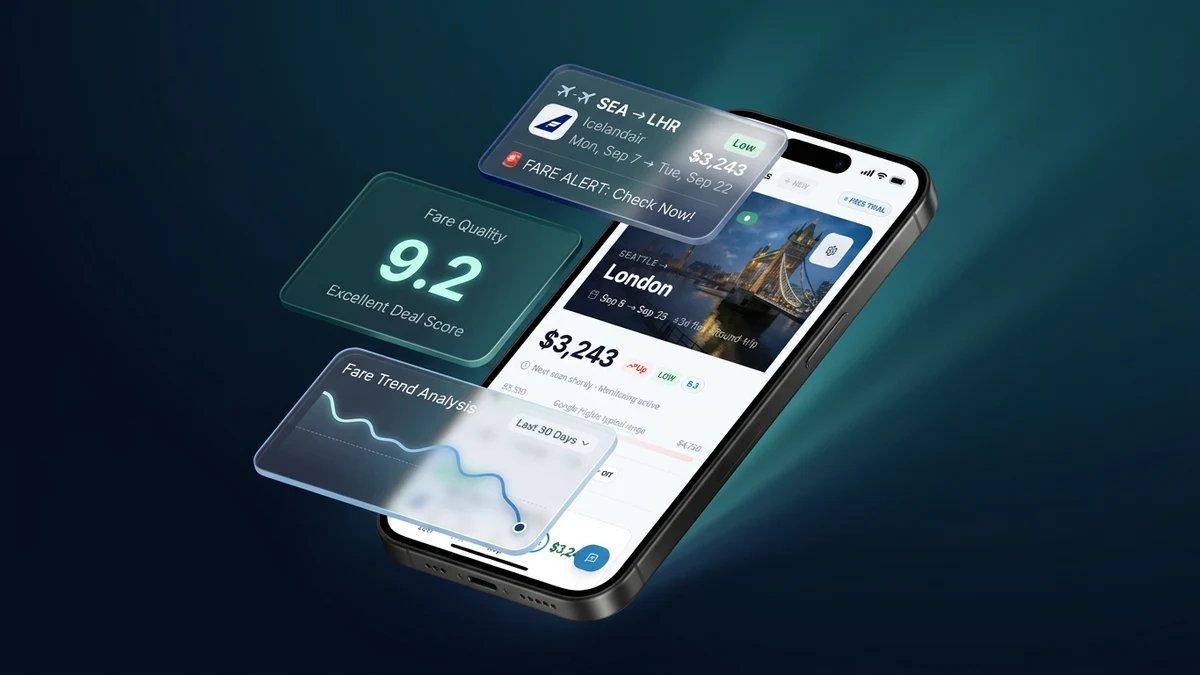
Catching mistake fares requires monitoring. They typically last between two and six hours, sometimes less. You will not catch them by checking Google Flights once a week. You need automated alerts on specific routes you actually want to fly.
That's what BusinessClassSignal does. It scans 800+ business class routes twice daily and sends you an alert when a fare drops below your target price. I built the editorial side of this tool because I was tired of missing deals I found out about three days later. If a mistake fare or a flash sale surfaces on a route you're watching, you'll hear about it within hours, not after it's gone.
For economy positioning flights or family members flying coach, our sister product FlightKitten does the same thing across 220+ airlines at the economy level — starts at $4.99/month, built by the same team. Worth knowing about if you're running a mixed-cabin strategy where some of the group is up front and some aren't.
When you find a mistake fare, book it immediately, then research it. Don't spend 20 minutes reading forums to verify it's real — by the time you're done, it's gone. Book first, cancel within 24 hours if you change your mind (US carriers are required to allow this on tickets purchased more than 7 days before departure).
Points redemptions that feel like free business class
Technically you paid something to accumulate the points. But if you collected them through credit card spending you were going to do anyway, the marginal cost of the business class seat can be genuinely close to zero.
The redemptions worth knowing about:
Air France/KLM Flying Blue has been running promo awards for years — monthly flash sales where business class to Europe drops to 50,000–60,000 miles round-trip from the US. The typical cash fare for the same route is $2,000+. If you earned those miles through an Amex Membership Rewards transfer, you might have gotten them at 1 cent per point through everyday spending, meaning the "cost" of that business class seat is $500–$600 in card spend. That's not free, but it's not $2,200 either. ANA Mileage Club is the redemption I recommend most for premium cabin travel. Their award chart is old-school generous. Round-trip business class to Japan can be had for 88,000 ANA miles, and their business class product — the NH "The Room" suite on 777s — is legitimately excellent. Transfer from Amex or Chase. Avianca LifeMiles allows you to book United flights (including Polaris business class) for around 63,000 miles round-trip to Europe. United's own redemption rate for the same itinerary is 110,000+ miles. The gap is significant.Points values change. Devaluations happen.
Every frequent flyer program I've mentioned has devalued its award chart at some point in the last five years. Book the redemption when the value is there. Don't stockpile miles for a future trip that may cost 40% more by the time you get around to it.
How to actually stack these methods
The people who consistently fly business class for free (or near-free) aren't relying on one method. They're running two or three simultaneously.
Here's a realistic stack that I'd actually recommend:
Start with a card that earns transferable points — Amex Platinum or Chase Sapphire Reserve. Use it for everyday spend. Don't do anything exotic with the points yet.
Meanwhile, apply for a status match to an airline you'll fly at least twice in the next six months. Even mid-tier status on Alaska or Air Canada opens up meaningful upgrade priority on shorter routes.
Set fare alerts on BusinessClassSignal for routes you actually want to fly — not just routes you think sound interesting. Specificity matters. When a deal surfaces, you have points ready to transfer and status that might push you to the front of a waitlist.
Then, when you do book, position yourself for an operational upgrade anyway. Check in early. Travel solo when you can. Be pleasant at the gate.
None of this is passive. I want to be clear about that. Running this kind of strategy takes maybe two to three hours of setup and then ongoing attention. It's not hard, but it's not zero effort either.
Browse the routes we monitor if you want to see what kinds of fare drops are realistic on your specific itinerary. The transatlantic and transpacific routes tend to see the most dramatic swings.The methods that aren't worth your time
A few things people spend energy on that I'd skip:
Bidding programs. Lufthansa, British Airways, and a few others let you bid cash for an upgrade close to departure. I've tried this on BA out of Heathrow twice. Both times I lost. When I've spoken to people who won, the bids were barely below the full business class price. The expected value here is poor unless you're bidding on a genuinely underbooked flight. Showing up at the airport and asking. This works in movies. In real life, airlines have optimized their seat inventory to the point where there are very few unsold business class seats by departure time. Asking at check-in is not a strategy. Asking at the gate after a delay or a cancellation — that's a different story, but that's a reactive move, not a plan. Airline credit cards with poor earning rates. A co-branded airline card that earns 1 mile per dollar on non-airline spend is a slow road to an upgrade. You'd need to charge $88,000 to earn enough for that ANA redemption I mentioned. A transferable points card earning 3x on dining and travel gets you there much faster.And one honest note: some of what I've described above is genuinely easier if you live near a major hub. If you're in Bozeman or Burlington, the math on operational upgrades and mistake fares changes significantly because your route options are narrower. That doesn't mean it's impossible — transatlantic routes are worth monitoring regardless of your origin — but it's worth being realistic about your local airport's role in all this.
Setting up fare monitoring so you don't miss the good stuff
The single biggest reason people miss free business class upgrade opportunities — whether it's a mistake fare, a flash sale, or an award seat opening — is that they check prices reactively rather than having alerts running in the background.
BusinessClassSignal scans more than 800 business class routes twice a day. You set a target price (or a target points value) for the route you want, and we alert you when it drops below that threshold. The alert goes out by email within hours of the fare appearing.I'm not going to oversell it. It won't manufacture deals that don't exist. But it will make sure you hear about the ones that do before they disappear. That's the actual gap between people who regularly fly business class for free and people who almost did.
Start monitoring business class fares — 7-day free trial
Try Free