
The LAX to Tokyo business class options, ranked honestly
I've flown this route more times than I can count on one hand, and I'll tell you upfront: it's one of the better long-haul business class runs you can book out of Los Angeles. Roughly 11 hours depending on winds and routing, a handful of genuinely good carriers, and prices that occasionally — occasionally — drop to something reasonable. When they do, you want to be ready.
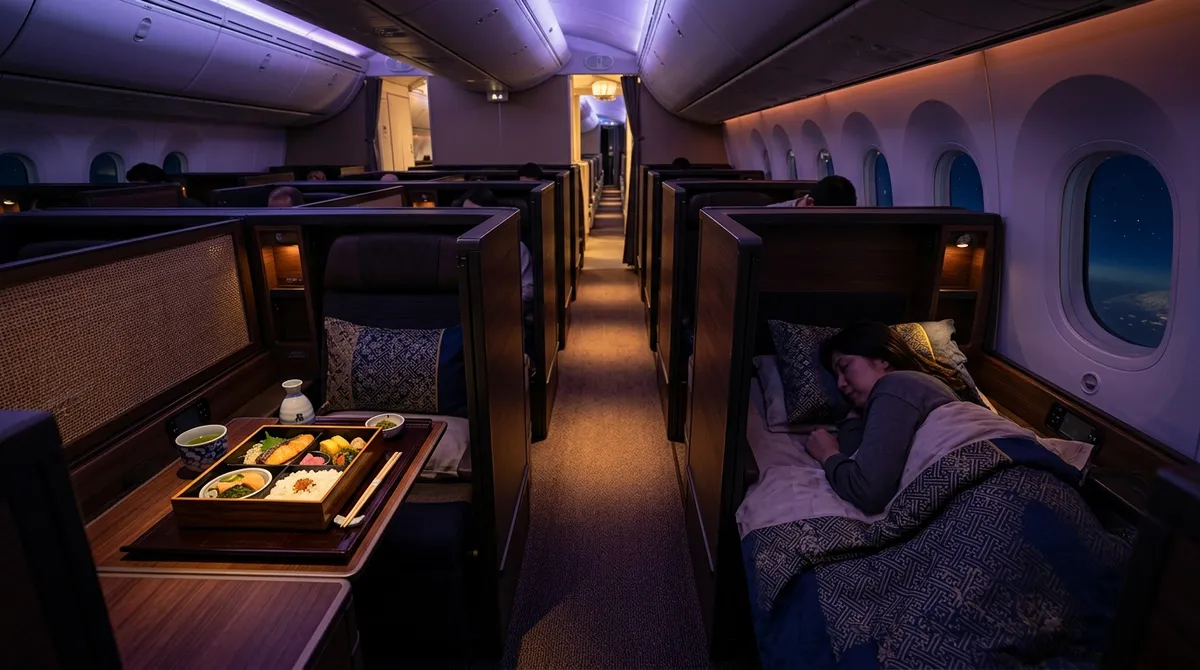
The main carriers worth your attention are ANA, JAL, and Singapore Airlines (connecting through either Narita or Changi, depending on the fare). United and American technically fly this route too. I'd skip both unless the price difference is enormous and you've made peace with a subpar product.
Here's what actually matters when you're deciding which airline to book.
ANA vs JAL: the real comparison
These two dominate LAX to Tokyo business class, and picking between them is genuinely difficult. Both are excellent. Both are miles ahead of most Western carriers on this route. But they're different in ways that matter depending on what you actually want from an 11-hour overnight flight.
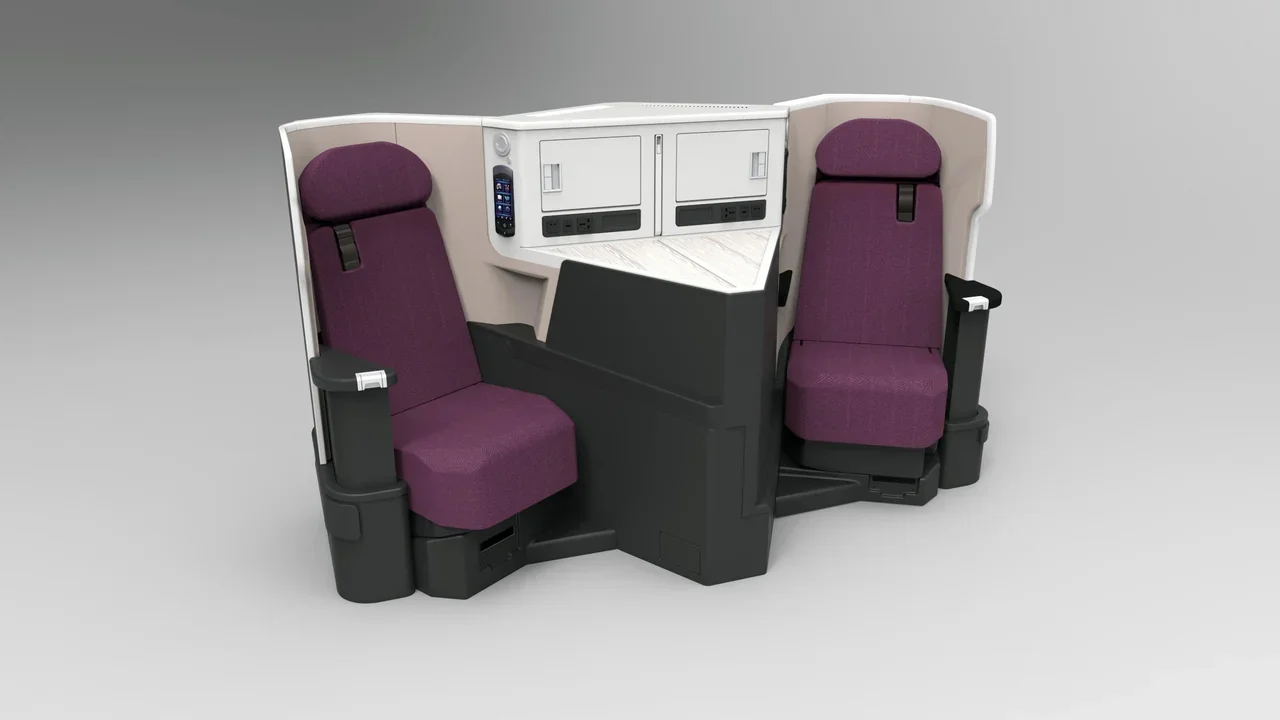
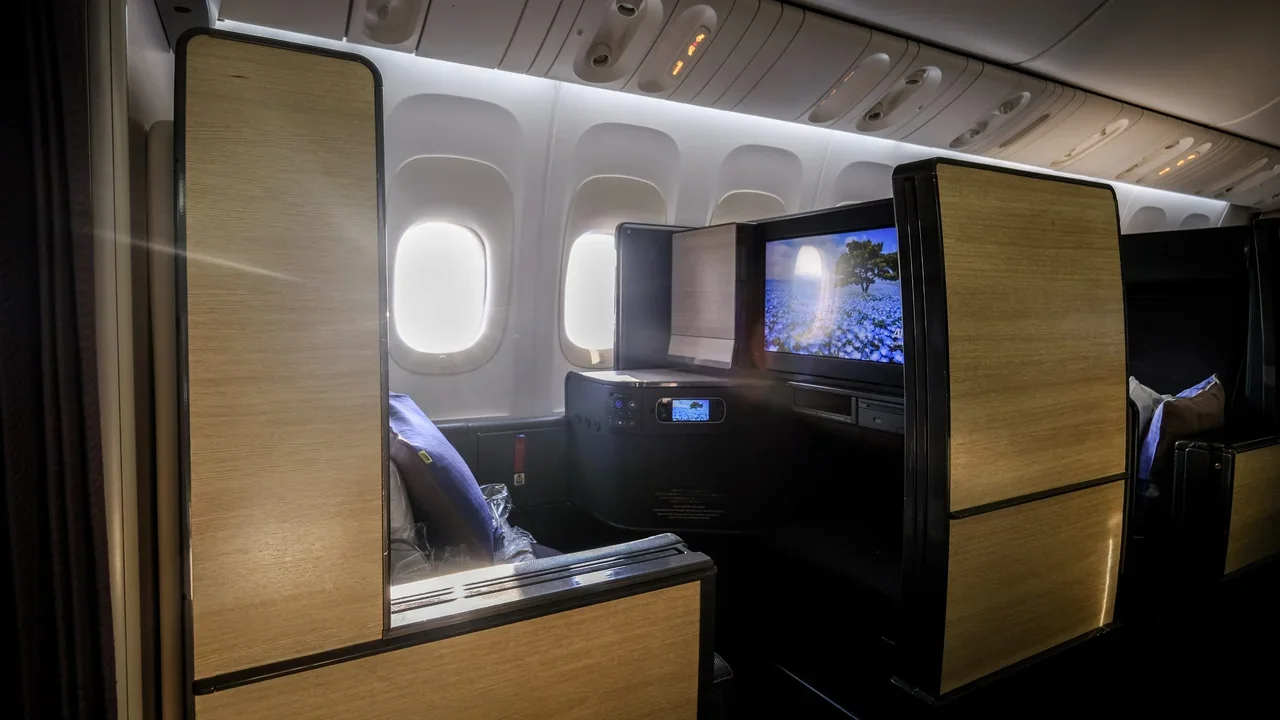
ANA's The Room is the product I keep coming back to. Launched on their 777-9 fleet and now appearing on select 777-300ER routes including LAX-HND, it's one of the most private business class products flying anywhere right now. The suite has a full closing door, a bed that's genuinely flat (not "flat-ish"), and a personal wardrobe compartment that's actually deep enough to hang a jacket without it crumpling against the wall. The seat pitch runs around 83 inches in bed mode. I've slept eight solid hours on the Tokyo run in The Room. That doesn't happen often.
The catch: not every LAX-HND departure uses the 777 with The Room. ANA also operates the route with their older 787 configuration, which has the Business Staggered seats — still good, still fully flat, but a noticeable step down. Check the equipment before you book. The flight number you want for The Room product on the HND route is typically NH106, though this changes seasonally, so verify it. You can monitor the LAX to HND route here and filter by aircraft.
JAL's Sky Suite competes hard. On their 777-300ER operating LAX-NRT (JL62 most days), the Sky Suite III configuration puts every seat in direct aisle access, which sounds basic until you've spent 11 hours in a herringbone seat waking up your neighbor every time you need the bathroom. The suite itself is slightly narrower than The Room — around 25 inches at shoulder level versus ANA's 28 — but JAL's padding and mattress topper situation is genuinely better. I've said this before and gotten pushback, but the JAL bedding beats ANA's by a meaningful margin.
JAL also tends to win on food. The kaiseki-style meal service on the NRT route has been consistently good in my experience, and the sake selection is more interesting than ANA's wine-forward approach. That's not a knock on ANA — it's just a different priority. The JAL business class product has been remarkably consistent over the years, which is its own kind of achievement.
If I had to pick: The Room for the privacy and the sleep. Sky Suite if you care more about the overall dining and cabin atmosphere. Neither choice is wrong.
Singapore Airlines via Changi — worth the stop?
Singapore's routing adds roughly 3-4 hours to your total travel time, depending on the connection. That's not nothing on a trip that's already a full day of flying. But the product is good enough that some people book it deliberately, and I understand why.
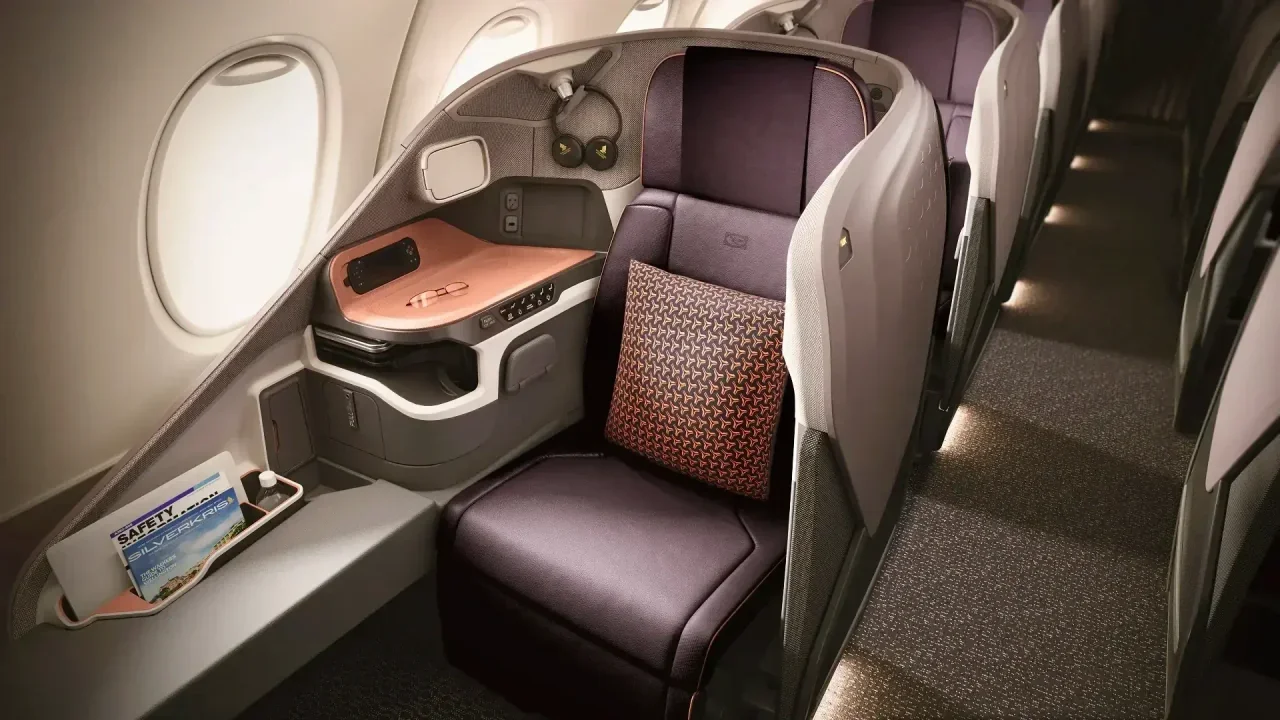
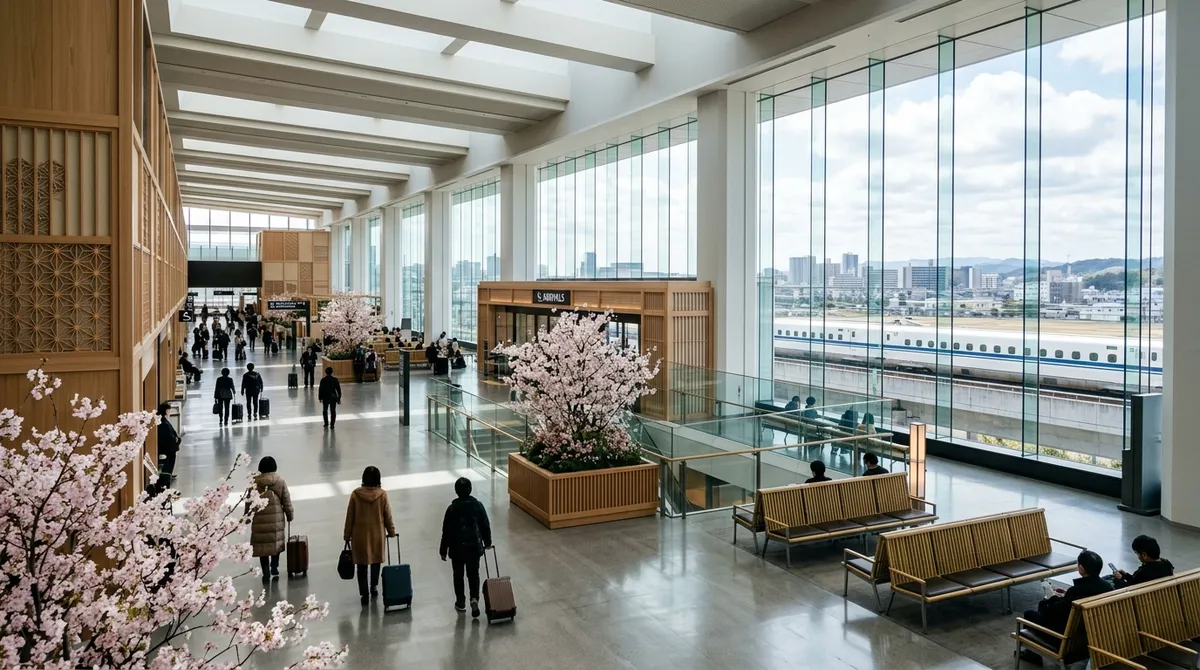
On the LAX-SIN leg you'll typically get the A380 or 777-300ER in Business Class — the latter with the newer forward-facing seats in a 1-2-1 configuration. The A380 upper deck business cabin is one of the quieter environments I've sat in at 35,000 feet. The SIN-NRT hop is shorter and you may get a different aircraft, so check that leg carefully.
The honest tradeoff: Singapore's ground experience at Changi is exceptional (the SilverKris lounge is legitimately good, and the Jewel is worth the layover if you have time), but you're adding a connection. If your goal is getting to Tokyo rested and ready, a nonstop on ANA or JAL is usually the better call. Singapore makes sense if you're a KrisFlyer miles collector, if you find a significant fare discount, or if you just genuinely like the product and don't mind the extra time.
Prices on Singapore for this routing tend to run $300-500 higher than comparable ANA/JAL fares anyway, so the math rarely works out in its favor on a pure value basis.
What LAX to Tokyo business class actually costs right now
Published fares on this route are brutal. You'll regularly see $5,000-7,000 round-trip as the standard asking price on ANA and JAL. I've seen them push past $8,000 during peak summer and cherry blossom season (late March through early April). Those prices are not worth it. I'll just say that plainly.
But this route drops. It drops more than people realize, and when it does, it moves fast.
The sweet spots I've tracked over the years: ANA runs flash sales on LAX-HND that occasionally hit the $2,200-2,600 round-trip range, usually with 2-4 weeks lead time and specific travel windows. JAL's comparable drops tend to cluster around $2,400-2,800. These aren't constant, they're not predictable by calendar, and they're gone in hours. Sometimes less.
The best positioning for a deal on this route is flying Monday through Wednesday, avoiding the weeks surrounding Golden Week in Japan (late April/early May), and being flexible on whether you land at NRT or HND. Narita fares often run slightly cheaper than Haneda even though Haneda is the more convenient airport for central Tokyo. That gap narrows during promotions, so watching the LAX to NRT route separately from HND is worth doing.
One more thing: positioning flights from nearby airports rarely help on this route. LAX has enough direct competition between ANA and JAL that it's usually the cheapest origination point on the West Coast anyway.
Tom Bradley terminal — what the lounge situation is actually like
LAX's Tom Bradley International Terminal handles both ANA and JAL departures, which is convenient. The lounge situation is a bit more complicated.
ANA operates the ANA Lounge on the upper level of TBIT. It's decent. Good enough. The noodle bar serves a rotating hot menu — I've had a perfectly reasonable tonkotsu ramen there at 10pm before a midnight departure — but the space gets crowded during peak evening hours when multiple long-haul flights are boarding simultaneously. The seating layout is functional rather than comfortable, and the wifi has historically been inconsistent. The Kirin draft beer is fine. I'm not going to oversell it.
JAL uses the Qantas First Lounge in TBIT, which JAL business class passengers can access. Here's the honest truth: it's a nicer physical space than the ANA Lounge, with better seating and a quieter atmosphere, but the food quality fluctuates. The barista coffee station near the main bar is genuinely good — worth seeking out rather than grabbing whatever's closest to the door. The shower suites book up fast; request one as soon as you arrive if it's a priority.
Neither lounge is exceptional by the standards of what you'll find in Tokyo on the return leg. The ANA Suite Lounge at Haneda Terminal 3 is a significant step up, and the JAL Sakura Lounge at Narita has a noodle bar that puts TBIT's version to shame. Manage expectations going out, and you'll be pleasantly surprised coming back.
One practical note: TBIT security lines can be long and slow on Friday evenings. Give yourself 90 minutes from curb to gate, especially if you want any meaningful time in the lounge before boarding.
A few things worth knowing before you book
On the ANA side, if you're booking with miles, ANA's own program (ANA Mileage Club) is rarely the best use of their miles for this route. Virgin Atlantic Flying Club and Air Canada Aeroplan both price ANA business class at lower rates than ANA charges its own members. That's a quirk of the partner award system that's been around for years and still trips people up.
JAL awards through American Airlines AAdvantage are similarly underpriced relative to JAL's own program. The sweet spot is 60,000 AA miles one-way for a JAL business class seat on this route — when availability opens up, which is the hard part.
On The Room specifically: window seats in the middle section (seats like 1A, 1K, or 11A, 11K) give you more privacy than the center pairs. If you're traveling solo, grab a window. The center seats are fine for couples but feel slightly exposed for a solo traveler who wants to sleep.
JAL's Sky Suite has a similar dynamic. Odd-numbered rows in the window seats on the left side of the cabin tend to have slightly more overhead bin space because of how the closet partitions fall. Row 5 or 7 in window seats are worth requesting at check-in if they're available.
The flight from LAX departs in the late evening on most schedules — ANA's NH106 around 11:55pm, JAL's JL62 around 12:30am. Both arrive in Tokyo mid-to-late afternoon local time. The overnight departure is actually ideal: you board, eat if you want, sleep as much as you can, land with enough afternoon left to check in and get your bearings. Don't fight the schedule. Eat lightly before you board, skip the first drink service if you're trying to sleep, and you'll arrive in reasonable shape.
If you want to set up an alert so you're notified when the fare drops below a price you've set — rather than checking manually — that's exactly what the monitoring system here does. You set a target price for a route, and it watches the fare 24/7 and emails you when it hits. The free trial runs 14 days and covers any routes you add during that window. I built it because I was tired of missing the drops while I was busy doing other things.
This route rewards patience more than most. The fares come down. They just don't stay down long.