The price you see is not the price
I've been covering premium air travel for over a decade, and the single most common question I get — from readers, from friends, from my brother-in-law at every family dinner — is some version of this: "Why did the business class fare I was looking at go from $2,400 to $4,900 overnight?"
The honest answer is that business class pricing explained in full would fill a graduate-level economics course. But the practical answer — the one that actually helps you book smarter — fits in a long article. So here's what's really happening when you watch those prices move.
Airlines don't price seats the way a hardware store prices bolts. There's no sticker on the back. The price you see when you search is the output of a system that's been running calculations since before you woke up that morning, factoring in dozens of variables you'll never see. And that system is specifically designed, whether airlines will say so plainly or not, to extract the maximum amount of money from each individual traveler based on what that traveler is likely to pay.
Understanding how that system works is the difference between paying $2,200 for a lie-flat seat to Tokyo and paying $6,800 for the exact same seat, same flight, same meal service. I've done both. The seat doesn't know what you paid.
Fare classes: the invisible buckets your ticket lives in
Every seat on a plane — economy, premium economy, business, first — is divided into fare classes. These are letter codes that you'll sometimes see on your boarding pass or e-ticket, and they matter more than almost anything else when it comes to what you paid and what you're entitled to.
In business class, you'll typically see fare class codes like J, C, D, Z, I, and a few others depending on the airline. J is usually the full, unrestricted, walk-up fare — the one a corporate travel manager books the night before a meeting without flinching at the price. It earns full elite miles, it's fully refundable, and it costs accordingly. On a transatlantic route, a J-class business ticket can run $8,000–$12,000 one-way without breaking a sweat.
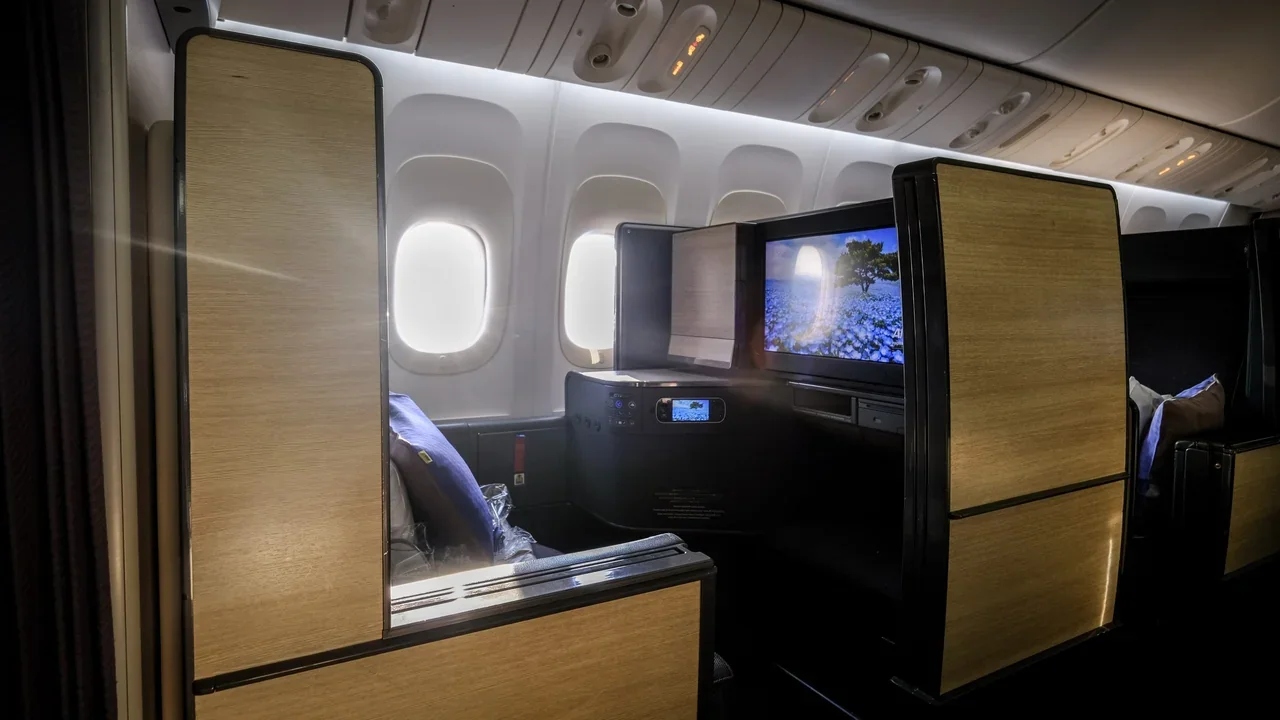
Then there are the discount business class codes — I, Z, sometimes D — which are technically still business class seats with the same lie-flat bed and the same Champagne, but sold at a fraction of the price. These are the fares that show up at $1,800–$2,800 round-trip when you catch them. They earn fewer miles, they have more restrictions, and the airlines release them selectively. That last part is key.
The seat is identical. The product is identical. The fare class is different, and that's everything.
Airlines guard their discount fare class inventory carefully because releasing too many of those seats means leaving money on the table when a last-minute business traveler would've paid full J. The revenue management system is constantly making that bet — how many discounted seats can we release without cannibalizing the premium fares we expect to sell later?
How yield management actually works — and why it moves prices daily
Yield management is the formal name for what airlines have been doing since the 1980s, when American Airlines more or less invented the modern version of it to compete with discount carriers. The core idea is simple: an empty seat generates zero revenue, so it's better to sell a seat cheaply than not at all — but only if you've already given up on selling it at full price.
In practice, the system works by forecasting demand for every flight, every day, and adjusting how many seats are available in each fare bucket accordingly.
Picture a flight from Los Angeles to Singapore departing in 90 days. Today, the revenue management system might make 8 seats available in the discounted I fare class, because it's early and the airline wants to stimulate bookings. As those seats fill, the system closes the I bucket and opens fewer seats in the next bucket up — Z, maybe — at a higher price. When Z fills, it moves to D, then C, then J. By two weeks out, if the flight is tracking well against forecast, only full J fares might be available, and a seat that was $2,400 three months ago is now $7,200.
But here's where it gets interesting: the system can move backwards. If bookings slow down and the flight isn't filling the way the algorithm expected, the airline might reopen lower fare buckets to stimulate demand. That's when you get the "mistake fare" effect — prices that drop suddenly and dramatically, not because of a human error, but because a model decided the flight needed help. These windows typically last hours, sometimes less.
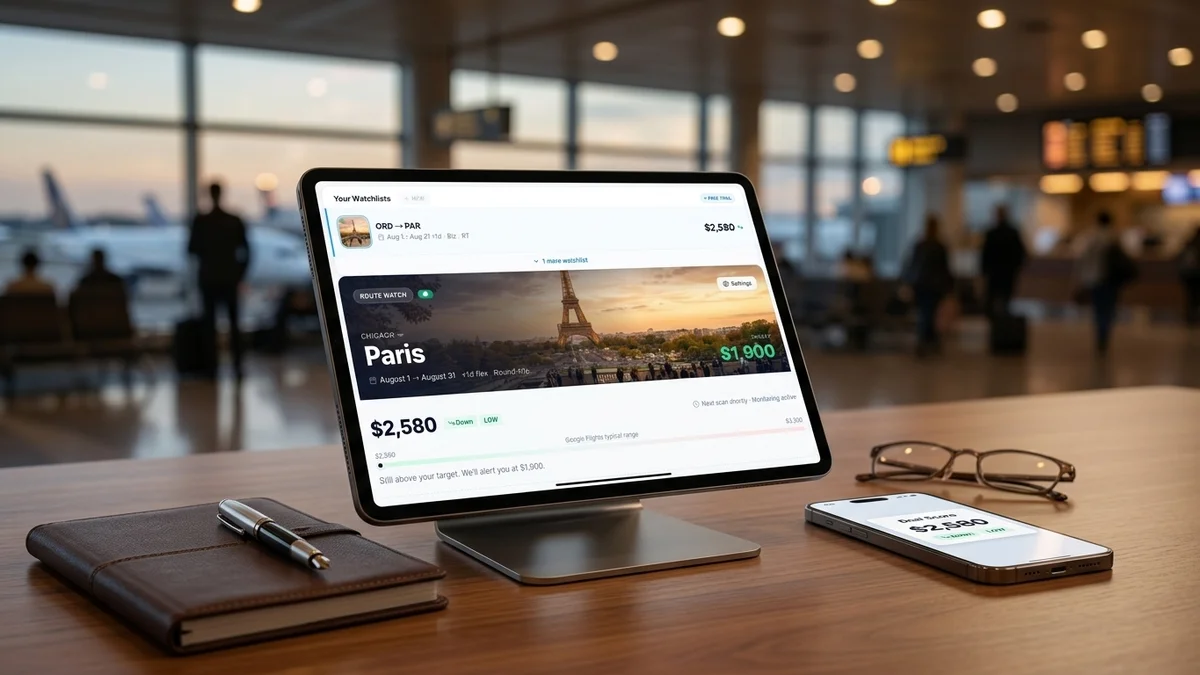
I've personally booked seats that dropped from $4,100 to $1,950 round-trip on a route I'd been watching for weeks. By the time I refreshed the page an hour later, they were back to $3,800. The window was real. It was brief. And I only caught it because I had an alert running.
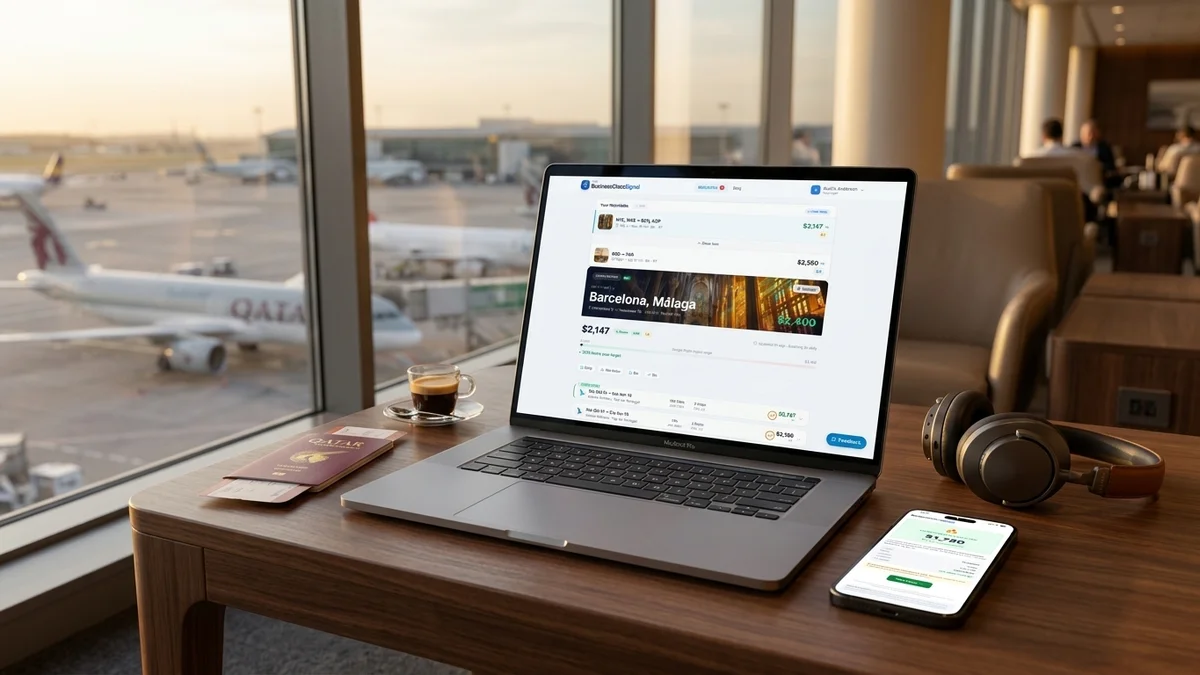
That's the entire reason start monitoring this route exists as a feature. You can't stare at Google Flights all day. But a system that checks prices multiple times daily and scores the deals it finds — that can do the watching for you.
Business class pricing explained: what actually moves the needle
So what are the specific variables that push prices up or down? There are more than I can list, but these are the ones that matter most in practice.
- Days to departure. The classic pattern is high prices when flights first go on sale (because early bookers tend to be corporate travelers with budgets), a dip in the middle window of roughly 60–120 days out, and then a spike again as the flight fills. That middle window is where a lot of the best deals live.
- Day of week — both travel day and search day. Midweek departures (Tuesday, Wednesday) tend to price lower than weekend departures on many routes. And there's some evidence, though airlines won't confirm it, that prices can vary based on when you search.
- Route competition. On routes where multiple carriers compete — say, New York to London — you'll see much more price movement than on routes where one airline dominates. When British Airways drops a sale fare on JFK-LHR, American and United typically respond within hours. That competition is good for buyers.
- Fuel prices. Less of a real-time variable than it used to be, since airlines hedge fuel costs, but big swings in oil prices eventually work their way into fare structures.
- Corporate contract season. Airlines negotiate bulk deals with large corporations, typically on annual cycles. In the months before these renewals, airlines sometimes release more discounted public fares to demonstrate route value. This sounds obscure, but it's a real phenomenon on certain routes.
- Positioning flights and schedule anomalies. When airlines need to reposition aircraft, or when a new route launches, you can see genuinely anomalous pricing that has nothing to do with demand.
- Codeshare and partner availability. Booking a United-operated flight on Lufthansa's metal through a codeshare can sometimes surface different fare class availability than booking the same physical seat directly. This is one of the more arcane corners of how the system works, and how the monitoring system works accounts for it by scanning multiple booking paths.
None of this is random. But it's complex enough that it looks random to anyone who doesn't spend serious time watching specific routes.
Why the same route can price so differently across airlines
I want to spend some time on this because it confuses even experienced travelers. You can search JFK to Tokyo on the same day and find Japan Airlines at $2,400 round-trip in business while ANA is at $5,100 and United is at $4,800. Same route. Roughly the same product quality. Wildly different prices.
Part of this is fare class availability — JAL may have simply opened more discounted inventory on that particular day. Part of it is strategic: JAL has historically been more aggressive about releasing discounted business fares on North American routes, possibly because they're trying to grow their U.S. market share against the entrenched carriers.
But some of it is structural. Different airlines have different cost bases, different revenue targets for specific routes, and different philosophies about how to fill premium cabins. Some carriers would rather fly with a fuller business cabin at lower yield per seat. Others would rather fly half-empty at full fare. You can see this play out in the data if you watch routes long enough.
Cathay Pacific, for example, has a reputation for releasing excellent discounted business fares on their Hong Kong routes — sometimes down to $1,800–$2,200 round-trip from the U.S. West Coast — but those fares are deeply inconsistent. They appear, they disappear, and they don't follow a clean pattern. Hong Kong is one of the routes I'd specifically recommend monitoring rather than searching manually, because the deals are real but the timing is genuinely unpredictable.
Turkish Airlines is another one. Their business class fares from the U.S. to destinations beyond Istanbul — using IST as a hub to reach Africa, the Middle East, or secondary European cities — can be shockingly cheap when they open up discount inventory. I've seen round-trip business class fares to Nairobi via Istanbul for under $2,000. Those are real fares on a real airline with a genuinely good business class product, and they don't last.
The mistake fare myth — and what actually causes "errors"
Every few months, a fare circulates on travel forums with people breathlessly calling it a "mistake fare." Sometimes it is — a genuine human or system error where a transatlantic business class seat prices at $400 round-trip. Airlines typically honor these, though not always, and they're increasingly rare as pricing systems have gotten more sophisticated.
But the vast majority of what gets called mistake fares aren't mistakes at all. They're the yield management system doing exactly what it's designed to do — opening discounted inventory when a flight needs demand stimulation — and the price just looks shocking to people who've only ever seen that route at full price.
This matters because it affects how you should think about acting on these fares. A true system error might get pulled and refunded. A yield management drop that looks like a mistake is almost certainly valid — it's just the airline making a calculated decision you happened to catch. Book those without hesitation.
The way to tell the difference, in my experience: if the fare is bizarre on a single flight with no logical pattern, it might be an error. If the fare is low but coherent — say, $1,700 round-trip on a route that occasionally prices at $2,200 — it's almost certainly a legitimate discount bucket opening up. Book it.
When to watch, when to book, and when to walk away
The practical question is always: given everything above, when should I actually pull the trigger?
There's no clean answer, and anyone who gives you a precise formula is oversimplifying. But here's how I think about it based on watching business class pricing across hundreds of routes over 12 years.
For long-haul routes — transatlantic, transpacific, routes to Asia, Africa, or South America — the sweet spot for discounted business class fares is typically in the 60–120 day window before departure. That's when airlines have enough data to know whether a flight is tracking well, and if it isn't, they'll open discounted inventory to stimulate bookings. You're not booking so close that only corporate walk-up fares remain, but you're not so far out that the airline is holding inventory hoping for full-fare buyers.
That said, I've seen excellent fares at 14 days out on routes that simply didn't fill. And I've seen the 90-day window produce nothing but full J fares on popular routes during peak travel periods. The 60–120 day guideline is a starting point, not a guarantee.
What I'd actually recommend: set a price alert on any route you're seriously considering, as early as possible, and let the monitoring run. Browse all routes to see what's currently active and what typical price ranges look like for specific origin-destination pairs. When a deal score comes in high — say, 8 or above on BCS's 1–10 scale — treat it seriously. When it's a 6 or 7, use your judgment based on your flexibility.
The free tier on BusinessClassSignal gets you one watchlist route, which is genuinely useful if you have a single trip on the horizon and you know the route. Core at $36/month gets you unlimited route monitoring plus the AI market briefings, which I find particularly useful because they explain why a fare moved, not just that it moved. Pro at $78/month adds priority alerts and deeper deal analysis — worth it if you're booking premium travel regularly or managing travel for a team.
One thing I want to be direct about: no monitoring service, including this one, can guarantee you'll catch every deal. The best fares sometimes last two or three hours. If you get an alert at 11pm and don't check until morning, you may have missed it. That's the nature of yield management pricing — the windows are real, they're just not always convenient. What monitoring does is dramatically increase your odds of being in the right place when the window opens.
Business class pricing explained at its most fundamental level really comes down to this: the airlines have a sophisticated system for pricing seats dynamically, and most travelers interact with that system at random, usually at the worst possible time. The people who consistently pay less aren't luckier. They're watching more carefully, and they're ready to act when the numbers line up.
That's the whole game.