Quick summary
Lufthansa and SWISS are sister airlines under the Lufthansa Group umbrella, and the choice between them is closer than most people expect. Lufthansa is rolling out its new Allegris cabin, which is genuinely impressive on the routes where it's deployed — but SWISS has been the more consistent product for years. If you're flexible on routing, the hub you connect through (Frankfurt vs Zurich) and the specific aircraft you're booked on matter more than the brand name on the ticket.
They're related, but they're not the same airline
Lufthansa acquired SWISS in 2005, and the two carriers have shared Miles & More, ground infrastructure, and corporate strategy ever since. But they've always operated as distinct products with different cabins, different service cultures, and genuinely different flying experiences. The "they're basically the same" assumption trips people up constantly.
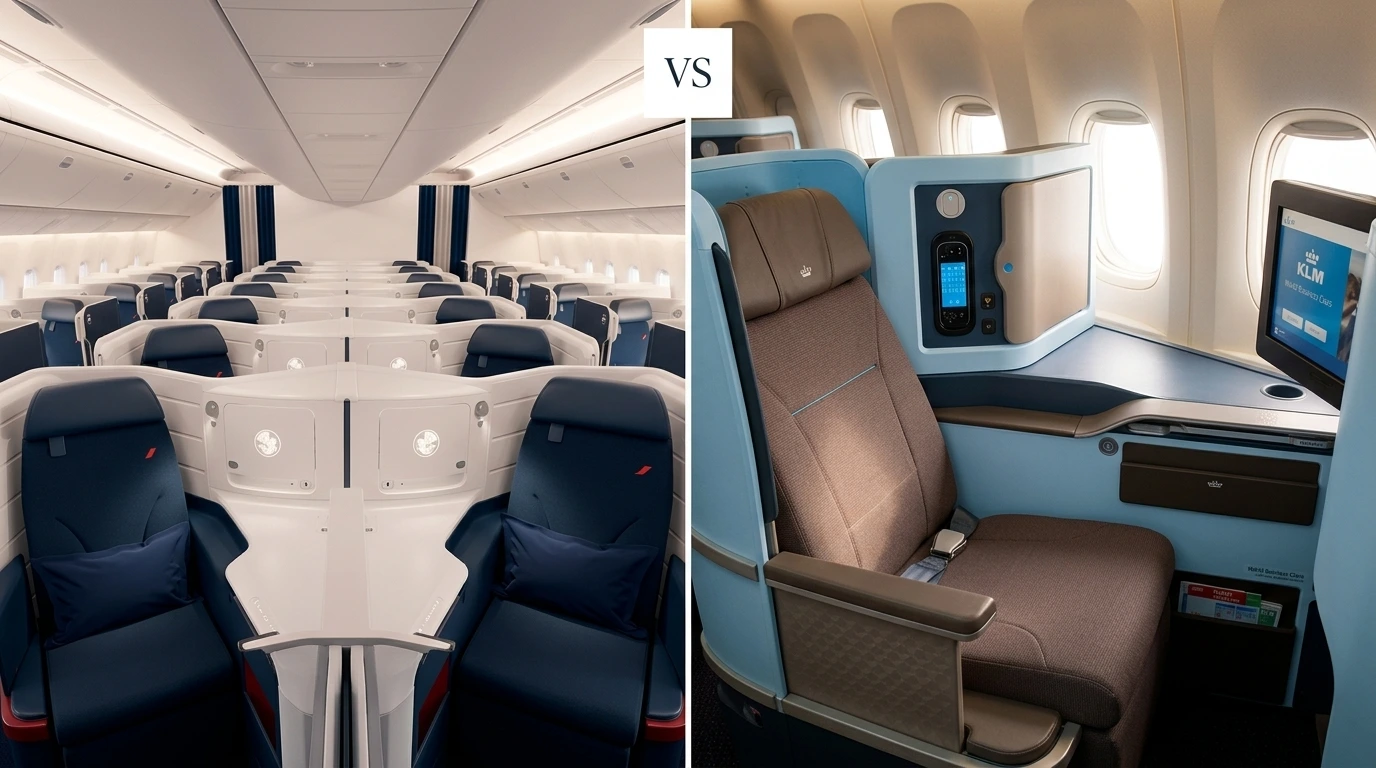
What is the difference between Lufthansa and SWISS business class? At the product level, it comes down to hardware and service style. Lufthansa is mid-transition — its long-haul fleet is a patchwork of older Business seats and the new Allegris product that's slowly rolling out across widebody aircraft. SWISS runs a more standardized product: the SWISS Business cabin with direct-aisle access, good storage, and a service philosophy that leans into the Swiss hospitality angle without being cloying about it.
Neither airline is cheap. Paid business class fares on both carriers to Europe from the US routinely start around $3,500–$4,500 round-trip at normal pricing, with award redemptions through Miles & More running 58,000–87,000 miles one-way depending on route and season.
The interesting part is what happens when prices drop. Both carriers show up regularly in fare alerts on BusinessClassSignal, and when they do, you'll sometimes see the same transatlantic routing priced $800–$1,200 apart depending on which metal you're booked on and which hub you connect through.
The Allegris situation
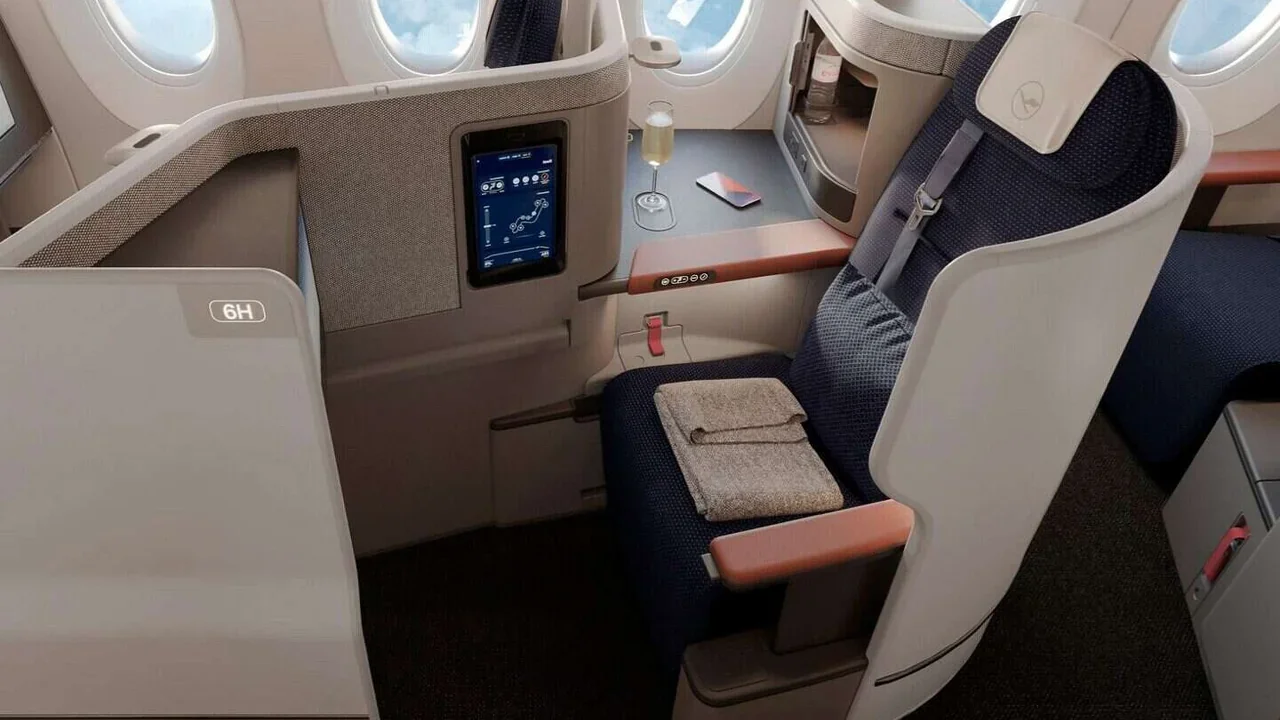
Lufthansa's Allegris cabin is the real variable in the Lufthansa vs SWISS business class comparison right now. If you're on a flight that has it, Lufthansa wins on hardware. Full stop.
The suite option — Allegris Business Suite — is legitimately one of the better business class products flying out of Europe. You get a sliding door, a wide seat that converts to a proper flat bed, direct aisle access, and a storage configuration that actually makes sense. The window seats have an ottoman that a companion can perch on, which is a detail that matters if you're traveling with someone. The IFE screen is large and responsive. The meal service on Allegris-equipped flights has been noticeably better in my experience too, though I'd attribute some of that to the routes Allegris is currently deployed on (Frankfurt–New York, Frankfurt–Los Angeles, Frankfurt–San Francisco being the primary ones as of early 2025).
But here's the catch: Allegris is not everywhere. Lufthansa is retrofitting its A350 fleet and some 747-8s, but as of 2025 you still have a real chance of ending up on an older 747-400 or A340 configuration with the legacy Business seat, which hasn't had a meaningful update in years. The legacy seat isn't bad. It's just not competitive with what SWISS is flying.
Check the aircraft before you book
Lufthansa's booking flow doesn't always make it obvious which cabin configuration you're getting. Use SeatGuru or the Lufthansa seat map at booking and look for the Allegris designator. If you're on a 747-8 and you see the older 2-2-2 layout in Business, that's not Allegris. The Allegris 747-8 has a distinctly different configuration with fewer center seats.
What SWISS business class is actually like
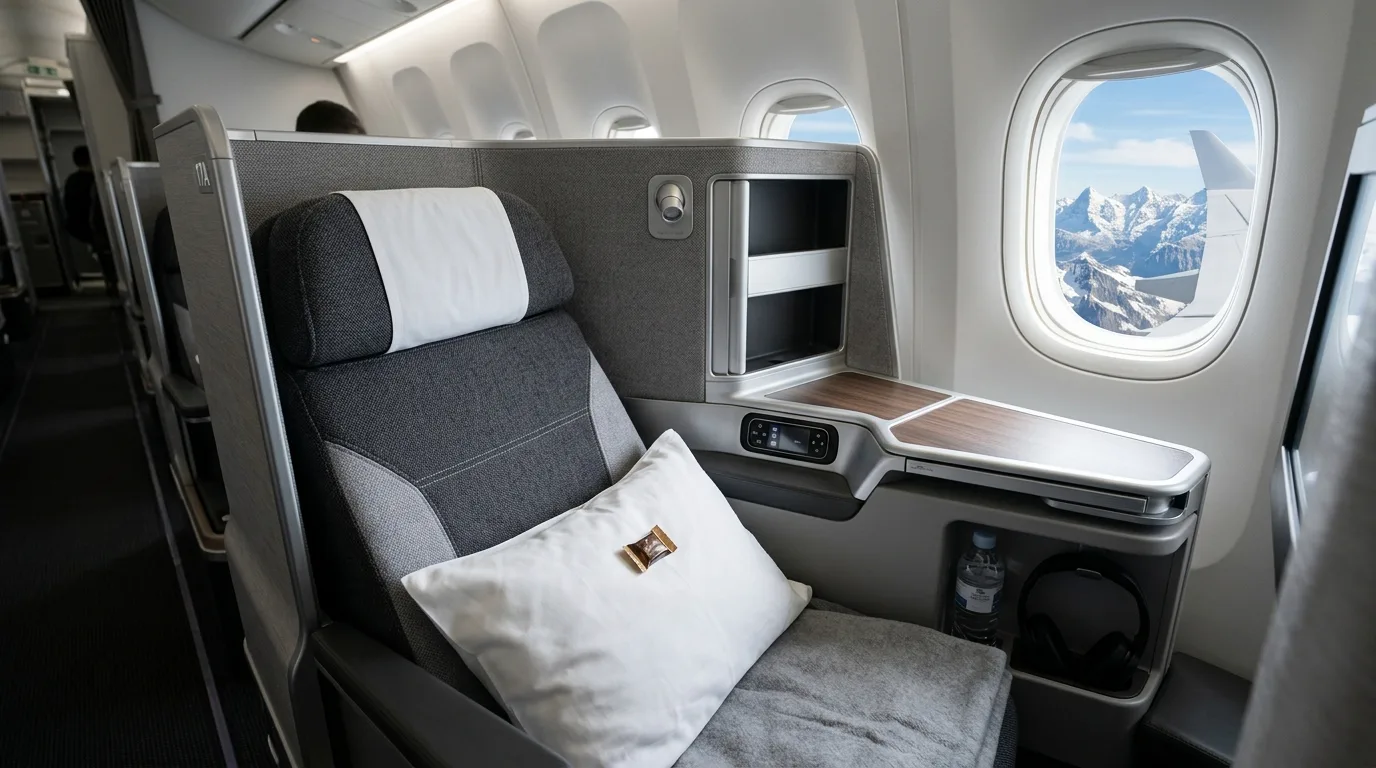
SWISS flies the A330, A340, and 777 on long-haul routes, and the cabin product is consistent across all of them in a way that Lufthansa's isn't right now. The seat is a reverse-herringbone configuration on the A330 and 777 — direct aisle access from every seat, 1-2-1 layout. It's not a new design, but it's been executed well and maintained properly. I've flown the SWISS 777 from JFK to Zurich twice and the seat felt solid, the bedding was good (they use a proper duvet, not a thin blanket), and the cabin felt quieter than I expected.
The food is where SWISS has historically made its case. The "SWISS Taste of Switzerland" program rotates chefs from different Swiss cantons — the menu changes quarterly, and on a recent ZRH–JFK leg the main course was a braised veal with a rösti cake that was genuinely better than most business class food I've had. That's not a low bar — it's just an honest observation. They also do a cheese course that's worth staying awake for.
Service is attentive without being intrusive. The crew on SWISS flights tends to be calmer and more professional in my experience than the inconsistency you sometimes get on Lufthansa's mainline. That's a generalization and I'll own it — I've had excellent Lufthansa crews and mediocre SWISS ones — but the average is better on SWISS.
One thing that doesn't get mentioned enough: SWISS business class seats in the bulkhead rows have noticeably less under-seat storage. If you're the type who likes your bag at your feet, avoid row 1 and row 7 on the 777 configuration. Rows 3 and 4 in the middle section are the sweet spot — you get a bit of extra privacy and the storage situation is better.
Frankfurt vs Zurich as a hub
This matters more than people give it credit for, especially if you're doing a connect.
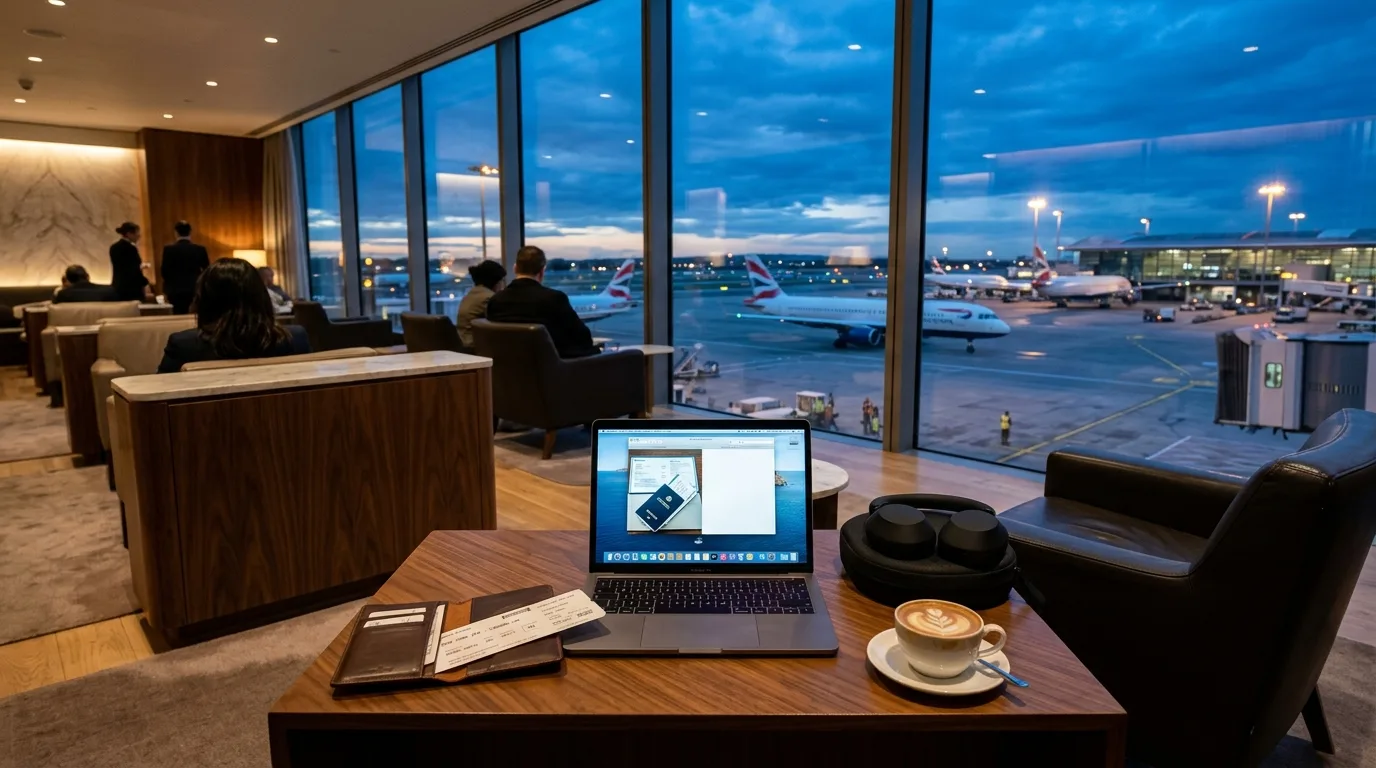
Frankfurt (FRA) is Europe's third-busiest airport by passenger volume and it shows. The place is massive. Terminals A and B handle most intercontinental Lufthansa flights, and the transit between gates can involve a bus transfer, a long walk, or both. If you're connecting from a short-haul feeder flight, Lufthansa uses Terminal 1 for mainline and the transit can eat 40–50 minutes of your connection time on a tight day. The Lufthansa Senator Lounge in Terminal 1 (concourse B, near gate B42–B48) is large and well-stocked, but the coffee has been uninspiring every time I've visited. The food spread is solid — hot options, a decent cheese selection — but the lounge feels like a large cafeteria more than a premium space.
Zurich (ZRH) is just a nicer place to spend a few hours. It's smaller, which means connections are faster and less stressful. The SWISS First and Business lounge in the E-gates (post-security, past the Airside Center) has a proper dining room where you can order à la carte — the cheese board is worth ordering specifically. The lounge itself is quieter, the design is more considered, and the staff-to-passenger ratio feels better. I've had two-hour connections at ZRH that felt relaxed. I've had two-hour connections at FRA that felt like a sprint.
If you're booking a connection and the layover is under 90 minutes, Zurich is significantly more forgiving than Frankfurt. FRA connections under 75 minutes are stressful even when nothing goes wrong.
The other hub consideration is onward connectivity. If you're flying to a German city (Munich, Hamburg, Berlin, Düsseldorf), connecting through Frankfurt often makes more sense on Lufthansa metal. If you're heading to Switzerland obviously, or to destinations in southern Europe and the Middle East that SWISS serves well, Zurich is the better hub.
Lufthansa vs SWISS business class: how the pricing compares
At rack rates, the two carriers are close. But the pattern of when and how they discount is different.
Lufthansa tends to drop business class fares aggressively on routes where they have competition — particularly transatlantic routes where Delta, United, and the Gulf carriers are fighting for the same passengers. I've seen FRA–JFK in business drop to $1,800 round-trip during slow periods (January, early February, late August), which is genuinely cheap for a transatlantic lie-flat fare.
SWISS discounts less frequently but does show up with good fares around the same slow periods. ZRH–JFK has dropped to $2,100–$2,400 round-trip a handful of times in the last year. Not as low as Lufthansa's floor, but still well below the average.
The pricing gap tends to widen when Lufthansa is under pressure from the Gulf carriers on specific routes. Emirates, Qatar, and Etihad all offer one-stop connections from the US to Europe via the Middle East, and when those carriers run sales, Lufthansa often responds. SWISS doesn't have the same level of direct competition on the Zurich routing, so the fares stay higher more often.
For award travel, both carriers use Miles & More. The program isn't generous by current standards — partner awards are expensive and the sweet spots have narrowed — but redeeming Miles & More miles on either SWISS or Lufthansa metal gives you access to the same product you'd pay cash for, which isn't always a given with partner redemptions.
When do Lufthansa and SWISS business class fares drop?
The cheap windows are predictable if you're watching. January through mid-February is consistently the lowest period for transatlantic business class across both carriers. You'll also see drops in late August (post-summer rush, pre-fall corporate travel) and occasionally in early December before the holiday surge.
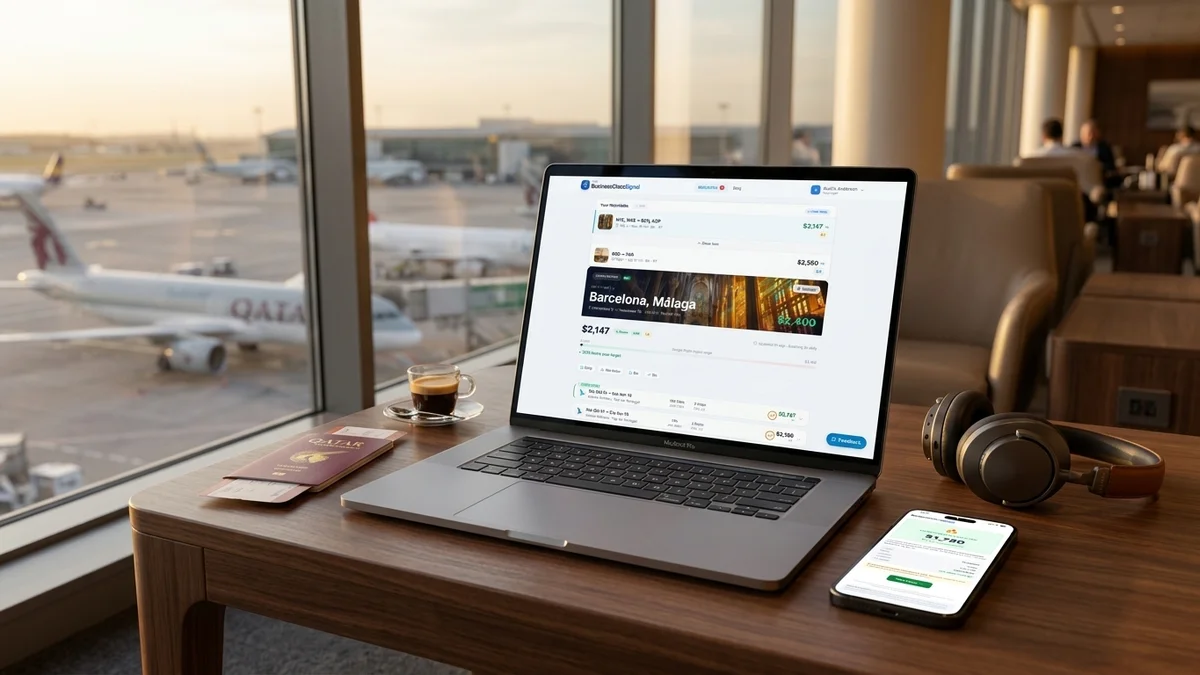
Sales are rarely announced loudly. They show up in the GDS, get booked out within 24–72 hours, and disappear. This is exactly the pattern that a tool like BusinessClassSignal's monitoring system is built to catch — you set a target price for a specific route, and you get an alert when the fare drops below it. I've used it for my own travel planning and it's caught Lufthansa fares that I would have missed entirely.
The Thursday evening trick
For transatlantic departures, Thursday evening and Sunday evening flights on both Lufthansa and SWISS tend to hold inventory longer than Monday and Friday departures, which fill up with corporate travelers. If you're flexible on departure day, Thursday out of JFK often has better availability and sometimes better pricing.
Which airline is better for a solo traveler vs a couple?
If you're flying solo, the SWISS product is slightly more polished and consistent, especially if you can get a window seat in the reverse-herringbone cabin. You've got your own space, direct aisle access, and you're not sharing an armrest with anyone.
For couples, Lufthansa's Allegris actually has an interesting answer: the Business Suite Plus configuration has a shared ottoman between window seats that lets two people sit next to each other during the meal service. It's a small thing, but it makes a difference on a long flight. SWISS's 1-2-1 layout has center seats (the two middle seats in each row) that work reasonably well for couples — seats 4D and 4G on the 777, for example — though you lose direct aisle access from the window side.
The hard truths about both carriers
Neither of these airlines is perfect and I'd be doing you a disservice by pretending otherwise.
Lufthansa's inconsistency is its biggest problem right now. The Allegris rollout has been slower than announced, and the gap between flying Allegris and flying a legacy-configured 747 is significant. If you book Lufthansa and end up on the old product, you're not getting a bad flight — you're getting a perfectly acceptable lie-flat seat that's just not competitive with what SWISS, Air France, or Virgin Atlantic are running. The food on Lufthansa's older-configured flights is also more variable. I've had good meals and I've had a chicken dish that I'd rather forget.
SWISS has its own issues. The Zurich hub can get congested in summer, particularly in July and August when weather delays compound. The A340 — which SWISS still operates on some routes — is an older aircraft and the cabin feels it. The 340 flights tend to run longer due to lower fuel efficiency, which means you're spending more time in the air on a seat that's showing its age. And while the service is generally good, SWISS has quietly reduced some of the extras that made the product feel special a few years ago — the amenity kits aren't as nice as they were, and the pajamas that used to be standard on long-haul flights are now more selectively offered.
The lounge situation at both hubs is fine but not exceptional. If you've been through the Cathay Pacific lounge in Hong Kong or the ANA lounge in Tokyo, you'll find both Frankfurt and Zurich a step down in terms of the overall experience.
Which one should you actually book?
Here's how I'd think about it:
Book Lufthansa if you can confirm you're on an Allegris-equipped flight and the fare is lower. The Allegris product is genuinely excellent and if Lufthansa is running a sale on that metal, it's hard to beat. The Lufthansa business class page on BusinessClassSignal shows current fares and will flag when Allegris routes are discounted.
Book SWISS if the routing works, the pricing is close, or you want a more predictable experience. The SWISS product is what it is — consistently good, rarely surprising in a bad way. The ZRH hub is more pleasant to connect through. And on the SWISS business class page, you can track fares on the routes SWISS operates from the US, including JFK–ZRH and ORD–ZRH.
If price is the deciding factor and you're flexible on dates and routing, set alerts for both. The fare gap can swing $400–$800 in either direction depending on the week, and the better deal changes regularly. I've booked SWISS over Lufthansa in the same month I booked Lufthansa over SWISS — it just depends what's available when you're looking.
One more thing: if you're considering Europe business class fares more broadly, don't anchor too hard on either carrier. Air France, Virgin Atlantic, and Iberia all show up with competitive fares on overlapping routes and have strong products. The Lufthansa vs SWISS business class question is worth asking, but so is "is there a better deal on a different carrier this week?"
Browse all monitored routes on BusinessClassSignal to see what's currently available across all carriers.Monitor Lufthansa and SWISS business class fares — get alerted when prices drop on your route. 14-day free trial, no credit card required.
Start Free Trial