
The route, the airlines, and what you're actually choosing between
Miami to São Paulo business class is one of those routes where the gap between airlines is genuinely wide. You've got American, LATAM, and Azul all flying it, and they're not interchangeable. The product differences matter. So does the airport you land at. So does the departure time, because this is an overnight flight and some seats are significantly better for sleeping than others.
I've done this run more times than I can precisely count — GRU arrivals, CGH arrivals, a few connections I'd rather forget — and the version of the trip that goes smoothly versus the one that grinds you down often comes down to small decisions made before you even get to MIA.
Here's what I'd tell you over a beer.
Miami to São Paulo business class: which airline is actually worth it
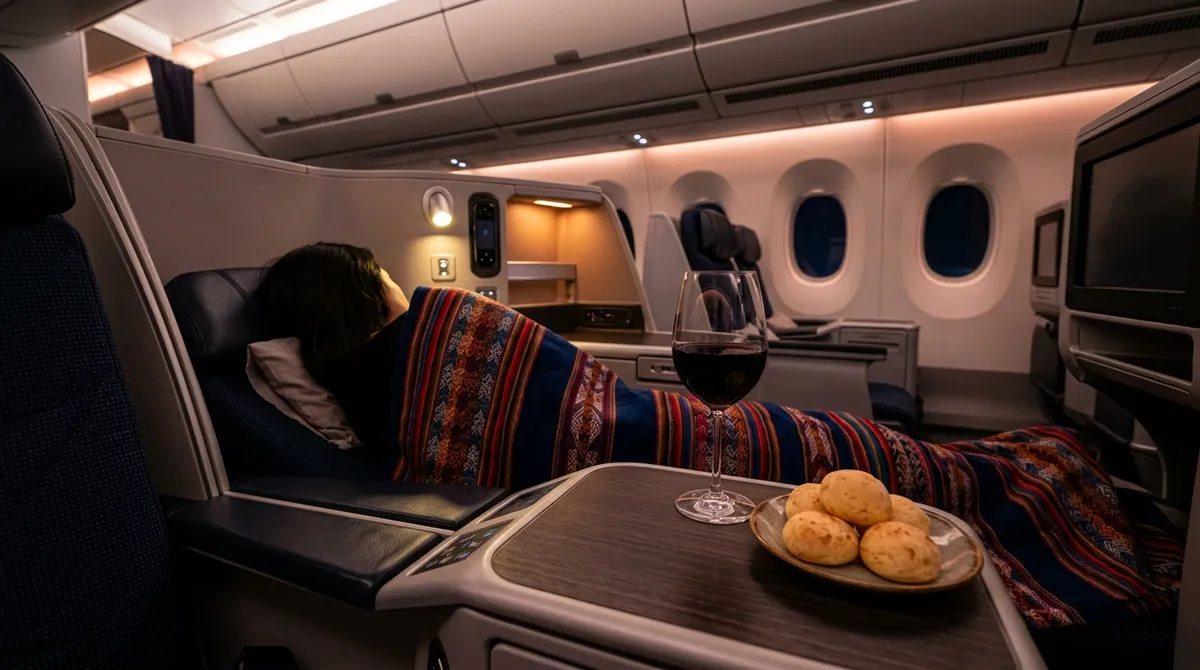
LATAM is the one I'd fly first if the price is close. Their Boeing 787-9 configuration on this route runs a 1-2-1 layout in business, which means every seat has direct aisle access. The seats are fully flat, and the longer ones (window seats on the right side, rows 3–7) give you enough room to sleep without feeling like you're in a coffin. The IFE screen is large and the selection is decent, though the Portuguese-language film library is obviously deeper than the English one.
The meal service on LATAM out of Miami has improved noticeably over the last two years. They've leaned into Brazilian ingredients more than they used to — I had a legitimately good bacalhau with cassava on a late-2023 departure, which isn't the kind of thing you expect at 35,000 feet. The caipirinha is there if you want it. You do want it.
One honest gripe: the cabin crew consistency varies. Some flights feel polished. Others feel like everyone's going through the motions. I haven't cracked the pattern.
LATAM's full business class profile is here if you want the seat specs.
American Airlines is the other main player. AA flies this route on the 777-200, and here's where I have to be blunt: the 777-200 business cabin is showing its age. The seats are in a 2-2-2 configuration, which means if you're in a middle seat you're climbing over someone to get to the aisle. For a red-eye that's genuinely annoying. The window seats (A and K) are better, but even those don't fully recline to flat the way LATAM's do — they're angled-flat, which is a meaningful distinction when you're trying to sleep for six hours.
The AA Flagship lounge at MIA is one of the better things about flying American on this route. It's on the B concourse, and the food there is a step above the standard Admirals Club. The pasta station is usually solid. The bar is well-stocked. If your flight is delayed — and late-evening departures out of Miami in summer often are — you'll be glad you have it.
Pricing-wise, AA sometimes drops to $1,800–$2,100 round-trip on this route during off-peak windows, which is genuinely good value even with the older product. If you catch one of those fares and you're not precious about seat configuration, it's hard to argue with.
Azul is the dark horse. They fly MIA-VCP (Viracopos, not GRU or CGH), which immediately complicates things if São Paulo proper is your destination. Viracopos is 100km from the city center. That's not a typo. Getting from VCP to, say, Vila Olímpia at rush hour is a two-hour exercise in patience.
That said, Azul's business class product — they call it Azul Business — has gotten genuinely good reviews, and their fares are often lower than LATAM or AA on comparable dates. The seats on their A330s are fully flat. The service tends to be warm in a way that feels less corporate than the other two. If your final destination is Campinas, or you're renting a car, or you have a driver meeting you, Azul makes a lot of sense. Otherwise, factor in the ground transfer cost and time before you book.
GRU vs CGH: the airport question nobody thinks about until it's too late
Most international flights from Miami land at Guarulhos (GRU), which is São Paulo's main international airport. It's 25km northeast of the city center, and in normal traffic that's a 45-minute drive. In São Paulo traffic — which is essentially always — budget 75–90 minutes to Paulista or Itaim Bibi, and longer to the south zone.
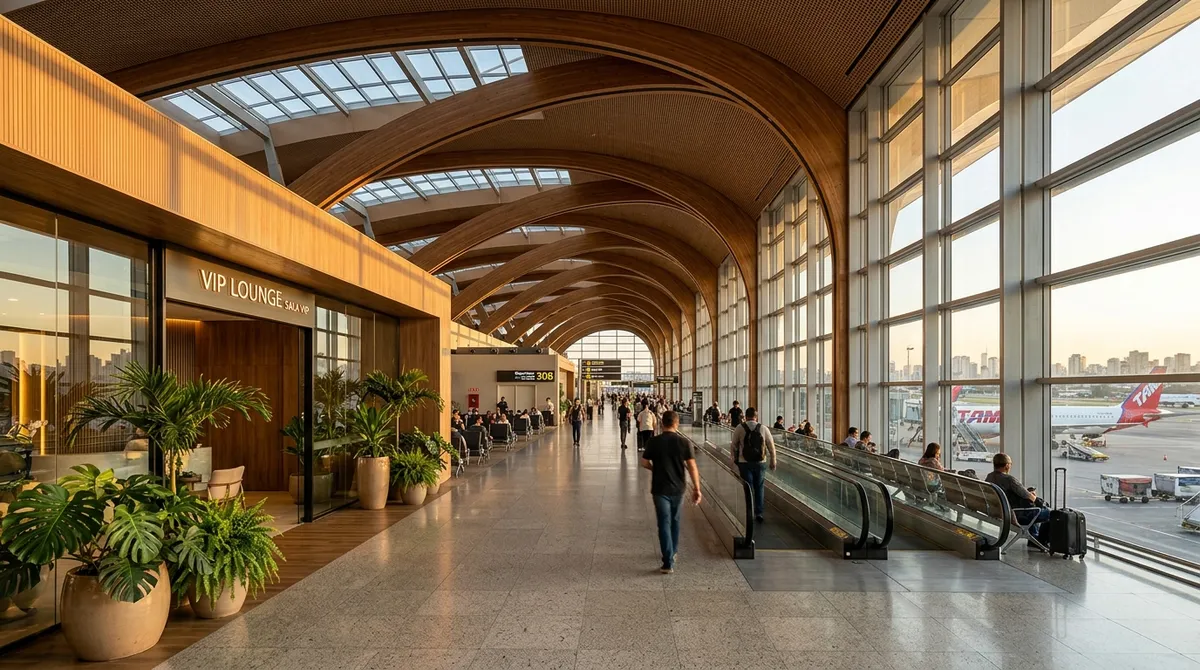
CGH is Congonhas, the city airport. It's slap in the middle of the metro area, genuinely close to most business districts. The problem is it handles almost entirely domestic flights. If you're arriving internationally from Miami, you're almost certainly landing at GRU. The exception would be a routing through Rio or another Brazilian hub, where you'd clear customs there and take a domestic leg into CGH. That itinerary adds time but can make a real difference if your hotel is in Moema or Brooklin and you want to skip the Guarulhos crawl.
My honest advice: if you're on a tight schedule and staying south of Paulista, it's worth checking whether a GRU connection through a Brazilian city and a quick hop to CGH actually saves you time. Sometimes it does. Sometimes the domestic connection eats everything you gained. Check the math on the specific day.
One GRU tip that's saved me more than once: the taxi queue on the arrivals level can be brutal, especially weekend mornings when everyone lands at once. The Uber pickup zone is on a different level (follow the signs to the "Desembarque" area near the parking structure) and usually moves faster. Have the app ready before you clear immigration.
Sleeping on an overnight flight: seat strategy matters more than you think
The Miami to GRU flight runs roughly 9–10 hours depending on winds, departing typically in the late evening and arriving mid-to-late morning São Paulo time. That's a workable overnight if you actually sleep. A lot of people don't, and they arrive wrecked.
On the LATAM 787, I prefer the window seats on the right side in the mid-cabin rows. You get the full flat bed, the window shell blocks ambient light from the aisle, and you're not getting bumped by the crew cart. Row 5K is a specific seat I've had good results with. It's worth checking SeatGuru before you pick, because the 787 business cabin has a few seats near the galley that get more noise than others.
Eat lightly before the flight. I know that sounds obvious but the temptation on a business class seat is to eat the full three-course service, drink two glasses of wine, and then wonder why you can't sleep. Have the main, skip the dessert, drink water. You'll land in a different state than the person who had the cheese plate.
Ask for the mattress topper early. LATAM provides one on this route and they run out. Same with the pajamas on some configurations — not all cabins stock them, and when they do, the medium size disappears fast.
Melatonin is more useful than a sleep mask on this route because the arrival is morning São Paulo time and you want to be on local schedule by the time you land. Take it about an hour after takeoff. Don't rely on the Ambien-and-wine approach unless you've got nothing on arrival day.
When prices actually drop on this route
The MIA to GRU business class market is seasonal in ways that aren't always obvious. Brazilian school holidays (July, and the January–February summer break) drive prices up on both ends. Carnival is the other obvious spike — if you're flying into São Paulo in the week before Carnival, you're paying for it.
The windows I've seen produce the best fares: mid-March through April, late May to mid-June, and September through early November. These aren't guarantees, they're patterns. Any given week can have a flash drop at other times of year, usually when an airline is managing unsold inventory in the 3–6 week window before departure.
That's actually the main thing monitoring the MIA–GRU route is useful for — catching those drops when they happen, rather than checking manually every few days and missing them. I built BusinessClassSignal specifically because I was tired of hearing from readers who'd paid $4,000 round-trip when the same seat went for $2,200 two weeks earlier and nobody told them. The free trial monitors your route and pings you when something worth looking at shows up. It's not complicated. It just watches so you don't have to.
Round-trip business class on this route in a decent fare window typically runs $2,000–$2,800. Above $3,500 and you're either flying at a peak time or you waited too long. Above $4,500 and I'd genuinely consider whether the trip timing can shift.
A few things I'd tell you that don't fit anywhere else
MIA's international terminal has gotten better but it's still a bit of a maze if you're departing from one of the satellite gates on the north end. Leave more time than you think you need after the lounge. The walk from the AA Flagship Lounge to some of the D-gates is legitimately long, and the gate area for the GRU flights can shift at the last minute.
Brazilian customs on arrival at GRU can be slow or fast depending entirely on what else has landed in the previous hour. If a couple of wide-bodies from Europe touched down 30 minutes before you, you're in for a queue. If you're traveling with only carry-on, the "nothing to declare" lane still requires you to stop at the scanner belt. Don't assume you can walk straight through.
The LATAM lounge at MIA (they use the LATAM VIP Lounge in terminal D) is fine but not exceptional. The food selection is limited and the seating gets crowded on evening departures. If you're flying AA, the Flagship Lounge is the better pre-departure experience by a clear margin — better food, more space, quieter. If you have Priority Pass, there are a couple of options in the terminal but none of them are worth going out of your way for.
One more thing: if you're connecting through Miami from a domestic flight rather than originating there, factor in the terminal transfer. Domestic arrivals and the international terminal are connected but the walk is not short, and if you're checking in for an international departure with luggage, you need to get to the right check-in zone early. AA's international check-in for GRU opens three hours before departure. LATAM's is similar. Don't cut it close.
You can track current fares and alerts for this specific route here, or if you want to look at other South American routes while you're at it, browse what's being monitored across the network. The São Paulo corridor has some of the more interesting pricing swings I've seen in South American business class — worth having eyes on it.