Quick summary
Five genuinely significant new business class products are rolling out across 2026 — from Lufthansa finally delivering Allegris at scale to Qantas attempting something it's never done before on ultra-long-haul. Some of these are worth rerouting your itinerary for. A couple have caveats worth knowing before you get excited.
I've been covering premium cabin changes long enough to know that airline announcements and actual delivery are two very different things. So when I say 2026 is shaping up to be a genuinely interesting year for business class, I mean it cautiously. These aren't vaporware renders. These are products that are either in service now at small scale or confirmed for rollout this year — and a few of them are worth paying attention to if you're planning travel 6–12 months out.
The new business class products 2026 is bringing aren't all equally impressive. I'll tell you which ones I'd actually go out of my way to book, which ones are incremental, and where the marketing is getting ahead of the reality.
1. Lufthansa Allegris — finally reaching the routes you'd actually fly
Lufthansa has been teasing Allegris since 2022. The first seats flew in mid-2024 on a handful of Munich departures, and by the time most people tried to book it, it was either unavailable or wildly overpriced. The real story for 2026 is fleet rollout. Lufthansa is fitting Allegris across more A350s and beginning the process of bringing it to select 747-8 routes out of Frankfurt — which is where most of their premium transatlantic traffic actually lives.
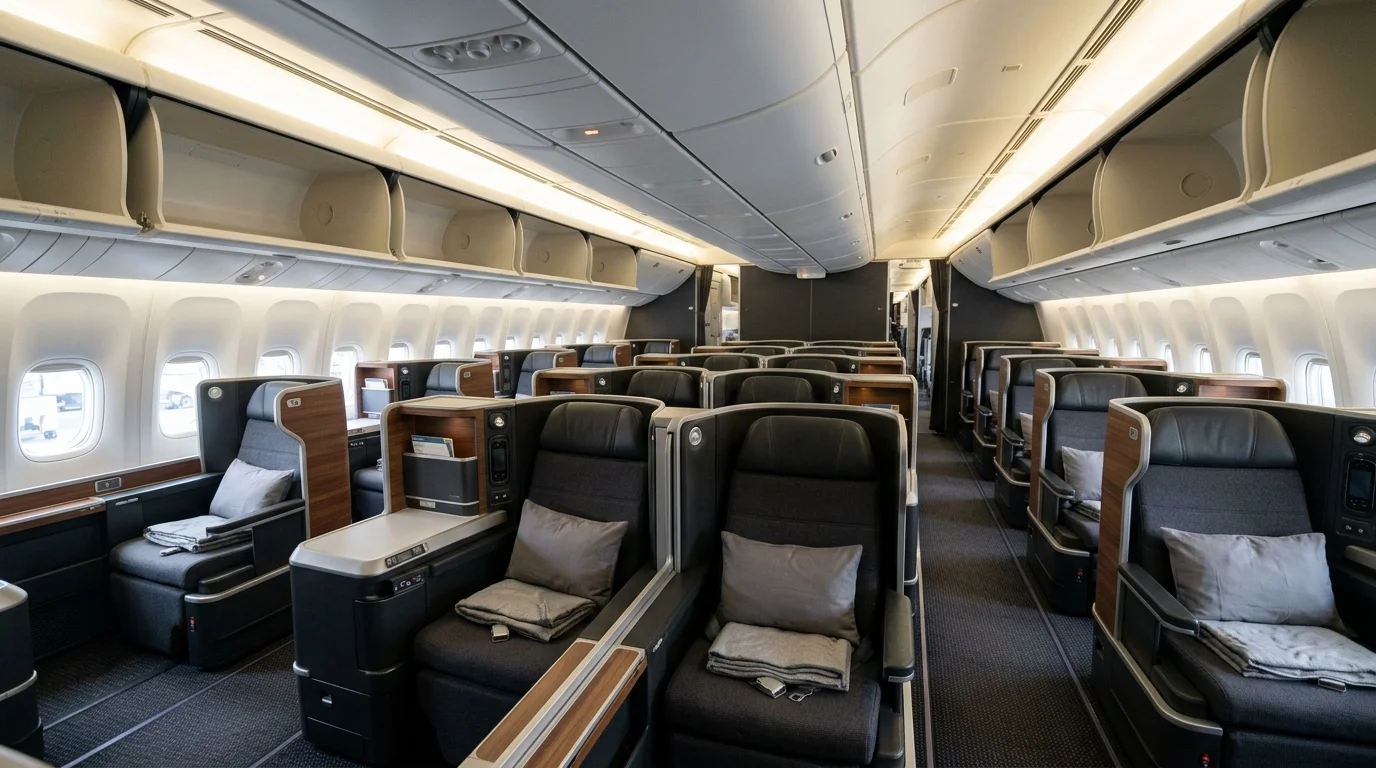
The product itself is legitimately good. The double-wide Business Class Suite (the one with a companion seat and a door) is one of the better-designed spaces I've seen on a European carrier. The standard solo suite isn't quite as dramatic, but the direct aisle access from every seat and the general attention to storage is a step up from what Lufthansa had before. The lie-flat is genuinely flat, which sounds like a low bar but wasn't always the case on their older 747 configuration.
What I'd caution is this: the lounges in Frankfurt haven't kept pace. The Senator Lounge in the C gates area is fine — decent food, quiet enough — but it's not matching the onboard product. And the boarding process at FRA remains chaotic regardless of what seat you're in. The product is on the plane. Everything around it is still very much a legacy carrier operation.
Which Allegris seat to pick
On the A350 configuration, seats 11A and 11K are the solo window suites with the most privacy. The double suite option (for couples or solo travelers who want the extra space) is in row 3. If you're booking solo and want quiet, avoid the center doubles — they feel less private than they look in the renders.
For fares, Lufthansa business class out of the US typically runs $3,800–$5,200 round-trip on transatlantic routes at standard pricing. But there are periodic drops, especially on mid-week departures from secondary US gateways like Miami and Boston, where Lufthansa is trying to build share. Those are the ones worth watching.
2. British Airways Club Suite — the refresh nobody asked for, or did they?
BA's Club Suite launched in 2019 and was, honestly, a genuine improvement over the old Club World product. Doors, direct aisle access, better bedding. But five years in, the early-delivery seats are starting to show their age in small ways — worn upholstery, IFE screens that lag, the occasional broken seat mechanism that ground crew have clearly taped back together.
The 2026 refresh is less a redesign and more a targeted renovation: updated IFE hardware across the fleet, revised bedding (the duvet situation was a common complaint), and what BA is calling a "refreshed" catering approach on long-haul routes. They're also expanding Club Suite to more of their 777 fleet, which still has a mix of old and new configurations depending on what aircraft you get. If you're flying London on a 777, it's genuinely worth checking which aircraft is rostered before you book.
Here's my honest read: the Club Suite, even post-refresh, sits in the middle of the pack among European carriers. It's not as good as Air France's La Première or the new Lufthansa Allegris suite. It's better than most of what you'll find on short-to-medium haul. The T5 lounge at Heathrow is mediocre — I've said it before and I'll keep saying it. The Concorde Room is fine if you're flying First, but for Club World passengers the regular lounge is overcrowded, the coffee is weak, and the food is the kind of thing you eat out of obligation rather than enjoyment.
That said, BA's network is genuinely useful. If you're routing through Heathrow to East Africa, South Asia, or certain parts of the Middle East, you're often on BA whether you plan to be or not. In that case, knowing which 777 has the new Club Suite matters.
BA's Club Suite is most consistently found on their A350 fleet and the newer 777-300ER deliveries. If the aircraft shows as a 777-200 or older 747 (yes, a few are still flying), the product is different. Check Seat Guru or the BA seat map before you book.
3. Qantas Project Sunrise — the most ambitious thing any airline is attempting right now
I don't use the word ambitious lightly. Project Sunrise is Qantas flying A350-1000ULRs nonstop from Sydney to London and Sydney to New York. No stop in Singapore. No stop in Dallas. Direct. The flights are scheduled to begin in 2026, with Sydney–London clocking in at roughly 20 hours and Sydney–New York around 19–20 hours depending on routing.
This is not a small thing. The A350-1000ULR has the range — barely — and Qantas has designed a completely new cabin around the demands of that kind of flying time. Business class on Project Sunrise gets its own dedicated cabin with what Qantas calls a "wellness zone," a proper onboard space for stretching and light movement that's more than the token galley area most airlines gesture at. The seats themselves are fully flat, private, and wider than the current Qantas Business Suites on the 787.
There's a lot riding on this. Qantas has staked real marketing capital on the passenger experience side, commissioning specific in-flight meals developed in consultation with sleep scientists and nutritionists to help passengers manage circadian disruption. Whether that translates to you actually feeling better when you land in London is something I'll be reporting on once I've flown it. The first commercial departures are scheduled for late 2026.
Pricing hasn't been fully confirmed, but Qantas has signaled these will be premium fares. Don't expect $3,000 round-trips. Think more in the range of $6,000–$8,000 for business class, possibly higher at launch. Award redemptions may be limited early on.
Manage your expectations on timing
Qantas has pushed Project Sunrise back before. The original target was 2025. Watch for any further delays tied to A350-1000ULR delivery slots and regulatory approval for extended ultra-long-haul operations. I'd give it 70% odds of beginning commercial service by December 2026.
If you're planning a trip to Australia and the nonstop angle appeals to you, this is worth monitoring. But I wouldn't structure a trip around it until the inaugural departure is confirmed.
4. Singapore Airlines — new A380 business class suites
Singapore Airlines is the standard everyone else gets measured against, and they know it. The 2024–2026 period is their quiet recalibration: new Business Class Suite configurations rolling onto their A380s and select A350 routes, with a particular focus on the Singapore–London and Singapore–Los Angeles routes.
What's changing? The new suite is wider by about 4 inches compared to the previous generation, with a revised door mechanism that actually closes more fully (the original suite doors were more symbolic than functional). The IFE screen has been upgraded to 24 inches, which sounds small but genuinely matters on a 13-hour flight. They've also revised the storage — there's now a proper spot for your shoes that doesn't require you to tuck them under the footwell like an afterthought.
Singapore's catering was already among the best in business class, and they're not messing with what works. The laksa is still on the menu out of Singapore, and that alone is worth the routing. I'm not joking.
The new business class products 2026 includes from Singapore Airlines aren't a full redesign — they're careful refinements. That's actually appropriate for a product that was already excellent. The risk with big redesigns is you sometimes break things that worked. Singapore is choosing not to take that risk, and I respect the call.
5. United Polaris — the long-overdue 787-10 rollout
United's Polaris product has had an awkward few years. The seat itself — the one on the 767 and some 777s — is fine. The problem is that "fine" is doing a lot of work there. The seat is narrower than most competitors, the privacy is inconsistent depending on where you sit in the cabin, and the old 767 configuration has windows that don't always line up with the seats in a way that makes sense.
What 2026 brings is meaningful: United is accelerating Polaris deployment on the 787-10, which is a significantly better aircraft to experience it on. The 787-10 cabin is quieter, the windows are larger (and they actually line up with seats), and the Polaris seat on that airframe feels less compressed. United has also been quietly upgrading the mattress pad situation, which was a genuine weak point — the original Polaris padding was adequate but not competitive with what Qatar, Singapore, or even Air France was offering.
They're expanding 787-10 service on transatlantic routes, including additional frequencies from Newark to Zurich, Amsterdam, and Frankfurt in 2026. If you're flying United internationally, those are the routes where the product gap between Polaris and the competition narrows considerably.
Best Polaris seats on the 787-10
Seats in rows 1–3 are the forward mini-cabin and are noticeably quieter. The window seats in even rows (2A, 2K, etc.) are slightly angled toward the window, which some people love and others find disorienting. I prefer the aisle-adjacent window seats — you get the view without the lean.
Honest take: United Polaris is still not at the level of the top-tier Asian carriers or Air France's La Première. But it's a solid mid-tier product that's getting better, and for transatlantic routes where you're primarily using it to sleep, the 787-10 version is genuinely good enough that I wouldn't go out of my way to avoid it anymore.
How to actually book the new products before prices spike
When do fares for these new routes go on sale?
This is the practical question most people don't think about until too late. For new routes and new products, airlines typically release seats 330–355 days in advance. For something like Project Sunrise, expect Qantas to open bookings well ahead of the first departure — probably 11–12 months out — and those initial fares will be elevated. The sweet spot tends to be 3–6 months before departure, when load factors on new routes are uncertain and airlines quietly drop prices to fill seats.
For the Lufthansa Allegris expansion and the United 787-10 routes, you're looking at existing routes with new equipment. Those don't follow the same pattern. Fares can drop any time, sometimes with very little notice, and the best deals tend to come on Tuesday and Wednesday evenings when airlines are adjusting the following week's load factors. A Monday morning deal on a route to Frankfurt is rare. A Wednesday night deal is not.
Do these new products cost more than standard business class?
Sometimes, and sometimes not in the way you'd expect. Airlines don't always charge a premium for newer product aircraft — they charge based on demand, competition, and route economics. A new Lufthansa Allegris seat on a Frankfurt–Chicago route might price identically to an older configuration, simply because the Chicago route has more competition. Qantas Project Sunrise will almost certainly carry a premium, at least at launch.
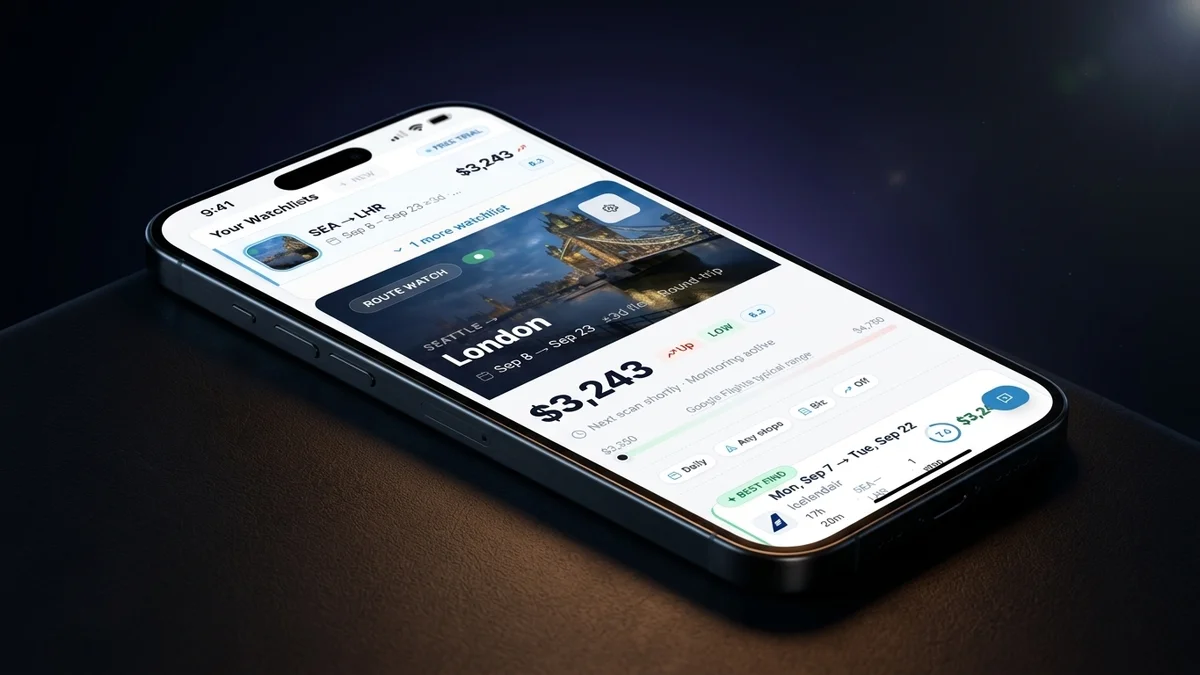
The smarter play is to monitor specific routes rather than trying to time the market manually. That's exactly what BusinessClassSignal does — it watches 800+ business class routes twice a day and pings you when fares drop below your target price. I built it because I was tired of doing this manually for my own travel, and the fare drops it catches are genuinely ones that don't stay open for long. If you're targeting any of the routes mentioned in this article, here's how the monitoring system works.
For economy options on the same routes — or if you're planning a mixed-cabin trip where one leg doesn't need to be business — FlightKitten is worth a look. They do for economy what we do for business: monitor fares across 220+ airlines and alert you when prices fall. It's about $4.99/month and handles the grunt work of watching economy pricing so you don't have to.
What the new business class products 2026 actually mean for how you plan travel
There's a temptation to read articles like this and immediately start rebooking everything around the newest product. I'd push back on that a little. The best business class seat in the world doesn't fix a bad connection, a terrible arrival time, or a routing that adds four hours to your trip. Product quality is one input, not the whole equation.
That said, these five products are genuinely worth routing around in some cases. If you're flying Australia–London and the Project Sunrise timing works, the nonstop case is obvious — you're not just getting a better seat, you're saving a connection and potentially half a day. If you're flying Munich or Frankfurt regularly and Allegris is available on your dates, it's worth paying attention to the equipment on your booking.
For the BA Club Suite refresh and the Singapore updates, the practical implication is simpler: check which aircraft is operating your specific flight. The product delta between old and new configurations on these carriers can be significant, and it costs you nothing to look.
The United Polaris 787-10 story is probably the most underrated item on this list. It's not getting the press that Qantas Project Sunrise is getting, but for travelers who fly United transatlantic regularly, the shift to 787-10 metal on more routes is a real and meaningful improvement that doesn't require any special planning — just booking the right routes when they're available.
Browse all routes we monitor if you want to see which of these specific airlines and routes are currently in the system.
A note on award availability
New products, especially at launch, tend to have limited award space. Airlines are cautious about releasing premium seats on new routes for points redemptions when they're trying to establish cash fare pricing. If you're planning to use miles for any of these — particularly Qantas Project Sunrise — start accumulating now and watch for the brief windows when award space opens, usually around schedule changes in March and October.
One thing I'll be watching closely through 2026 is whether the gap between announced products and delivered experience holds up. Qantas has staked a lot on Project Sunrise delivering something genuinely different. Lufthansa Allegris has been in development long enough that expectations are high. The new business class products 2026 is rolling out are, on paper, some of the most interesting I've seen in a decade of covering this space. Whether the execution matches the intent — that's what the next twelve months will tell us.
Start monitoring business class fares — 14-day free trial
Try Free