Quick summary
Most travelers default to Emirates, Singapore, or Qatar when they think about premium cabins — and they're not wrong to. But there's a whole tier of business class products that quietly match or beat the big names at a fraction of the price. This list covers 10 airlines that consistently get overlooked, why they deserve more attention, and where to find the fares when they drop.
I've been writing about business class for twelve years. I've sat in the Qsuite. I've had the Dom Pérignon on Singapore. I know the greatest hits. But some of the best seats I've ever been in weren't on those flights — they were on carriers most people wave off because they don't recognize the name or assume the product is second-rate.
It isn't.
The underrated business class airlines on this list aren't obscure for quality reasons. They're obscure because they don't have the marketing budgets, the frequent flyer partnerships, or the cultural cachet of the Gulf Big Three. Some of them are regional carriers that happen to fly long-haul routes. Some are legacy airlines that quietly upgraded their hard product while nobody was paying attention. A few are just geographically inconvenient for most Western travelers, which keeps demand low and fares reasonable.
That last part matters. Because when you're looking at $2,200 versus $6,500 for a transatlantic business class seat, "underrated" stops being an abstract compliment and starts being worth real money.
Why underrated business class airlines are worth your attention
The premium cabin market has a perception problem. Travelers spend hours researching economy seats but often pick business class based on brand recognition alone. Someone will pay $1,800 more for a Qatar Airways ticket over a comparable Oman Air flight without ever comparing the actual hard product — the seat, the flat bed, the pitch, the shell design. That's brand premium, not quality premium.
What I've found, after sitting in well over 200 business class seats, is that the correlation between airline fame and actual seat quality is pretty loose above a certain baseline. Yes, Singapore Airlines First is probably the best cabin in the sky. But between "decent business class" and "great business class," the differences are often marginal — and the price differences are not.
The other thing worth understanding: underrated carriers often have newer planes. Gulf Air took delivery of new A321neos. TAP Air Portugal has been quietly refreshing its A330 fleet. EVA Air's Royal Laurel Class has been running on 777s with staggered full-flat beds for years. The hardware is there. The Instagram following isn't.
The list
1. EVA Air Royal Laurel Class
If I had to pick one airline that is most consistently underestimated in business class discussions, it's EVA Air. The Royal Laurel product on their 777-300ERs is genuinely excellent — fully flat, direct aisle access from every seat, and a cabin that feels less flashy than Qatar but more composed. The seat is a 1-2-1 configuration, so you're never climbing over anyone.
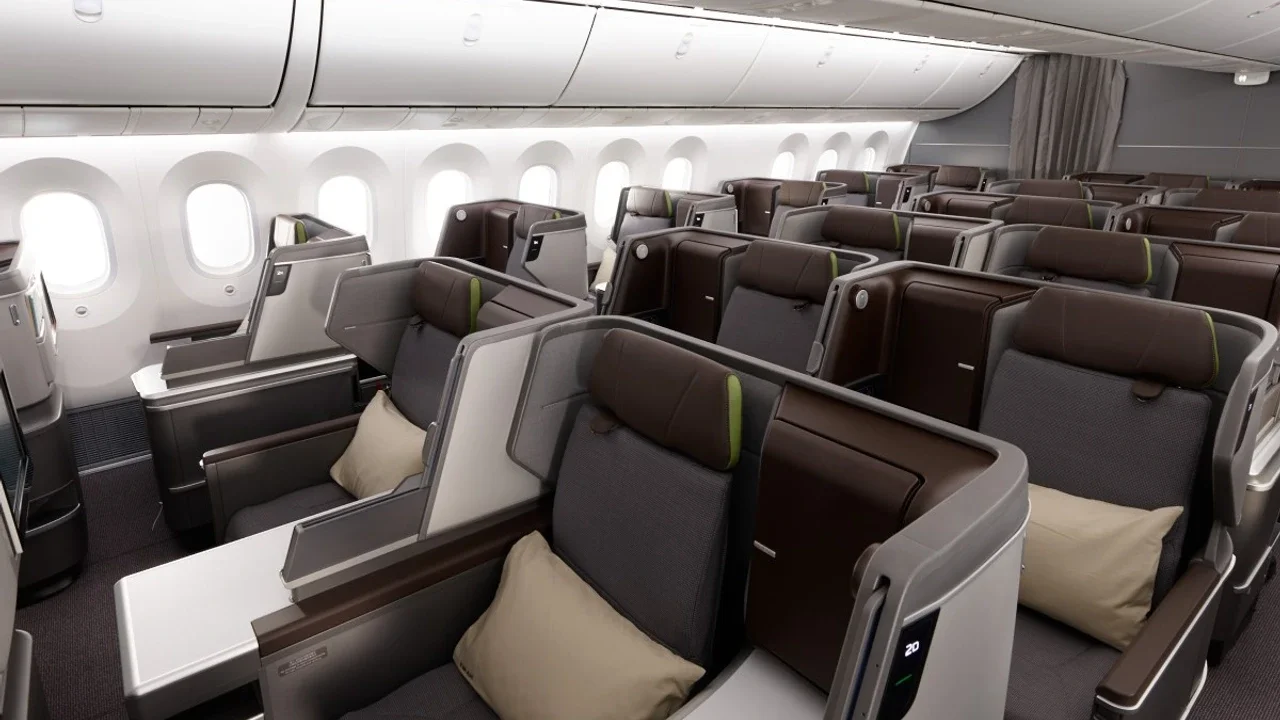
The food is the part most people don't expect. EVA's catering between Taipei and North America has always been strong, and the premium cabin service feels personal in a way that larger carriers have lost. I had a flight attendant on a TPE-LAX segment who remembered I'd asked for no garnish on the appetizer and adjusted my main course without being asked. That's either a very good memory or a very attentive crew. Either way, I noticed.
The fares are also where EVA earns serious consideration. Taipei to Los Angeles in Royal Laurel can come in under $2,800 round-trip when there's a sale, which for a true flat-bed transatlantic-length flight is hard to beat.
EVA routing trick
If you're originating in the US and want to add a Europe leg, EVA doesn't offer that — but their Royal Laurel to Taipei connects cleanly to their partner network onward into Southeast Asia. The LAX or SFO departure times are also notably civilized compared to most Asia-Pacific options.
2. Oman Air
Oman Air is the one I recommend most often to people who want a Gulf carrier experience without Gulf carrier prices. The business class on their 787-9 fleet is a direct-aisle-access fully flat product, the Muscat lounge is genuinely good (better food than most people expect from a regional hub), and the service style is quieter and less theatrical than Emirates. Some people want the theatre. But if you're flying to actually sleep, Oman Air's cabin tends to feel calmer.
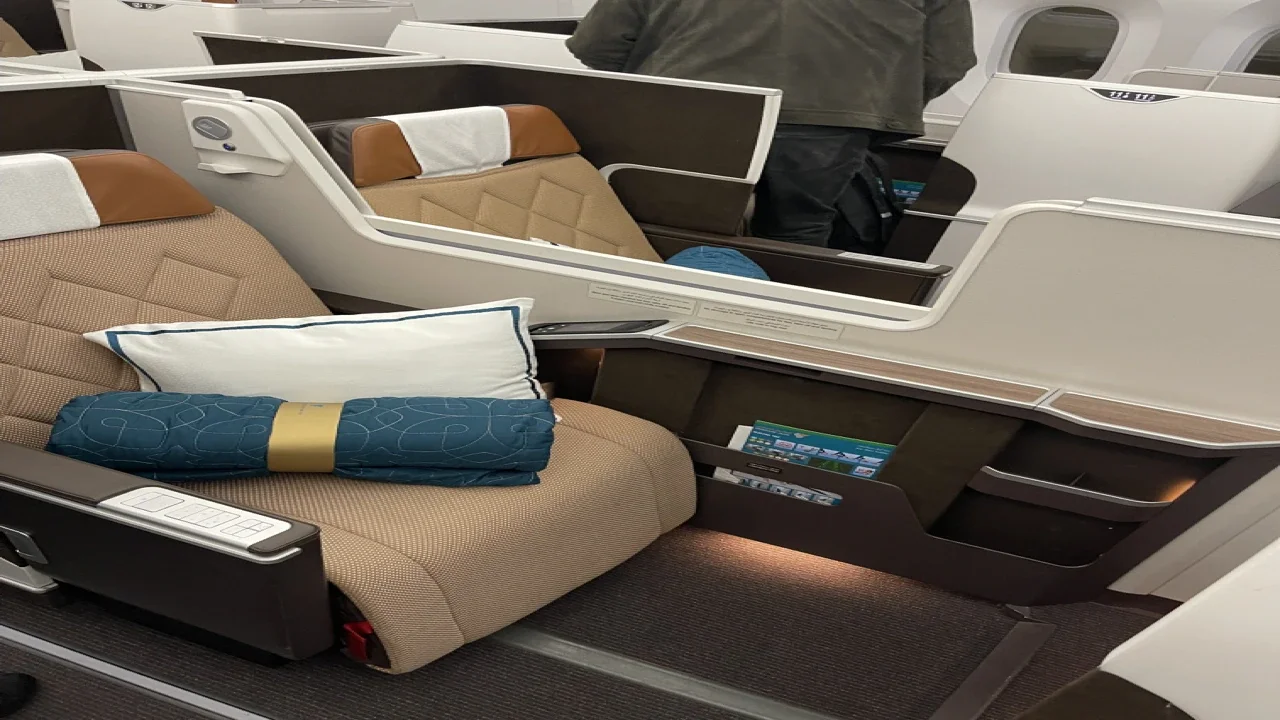
Muscat (MCT) as a hub is the catch. It's not a convenient connection point if you're coming from London or New York. But if you're routing to East Africa, South Asia, or Southeast Asia, an Oman Air connection is often both competitive in price and surprisingly pleasant to actually do. The airport is easy to move through, which matters more than people admit when you're doing a transit at 2am.
Fares from London to Colombo or Nairobi via Muscat in business class can sit in the $1,600–$2,100 range when they drop. That's economy money on some carriers for those routes.
3. Gulf Air
Gulf Air gets lumped in with "lesser Gulf carriers" in a way that's become outdated. Their Falcon Gold cabin on the A321neo for regional routes is a tight, well-run product, and on their longer routes to London Heathrow — which they've been flying since 1970, longer than most people realize — the 787 cabin has been steadily improving.
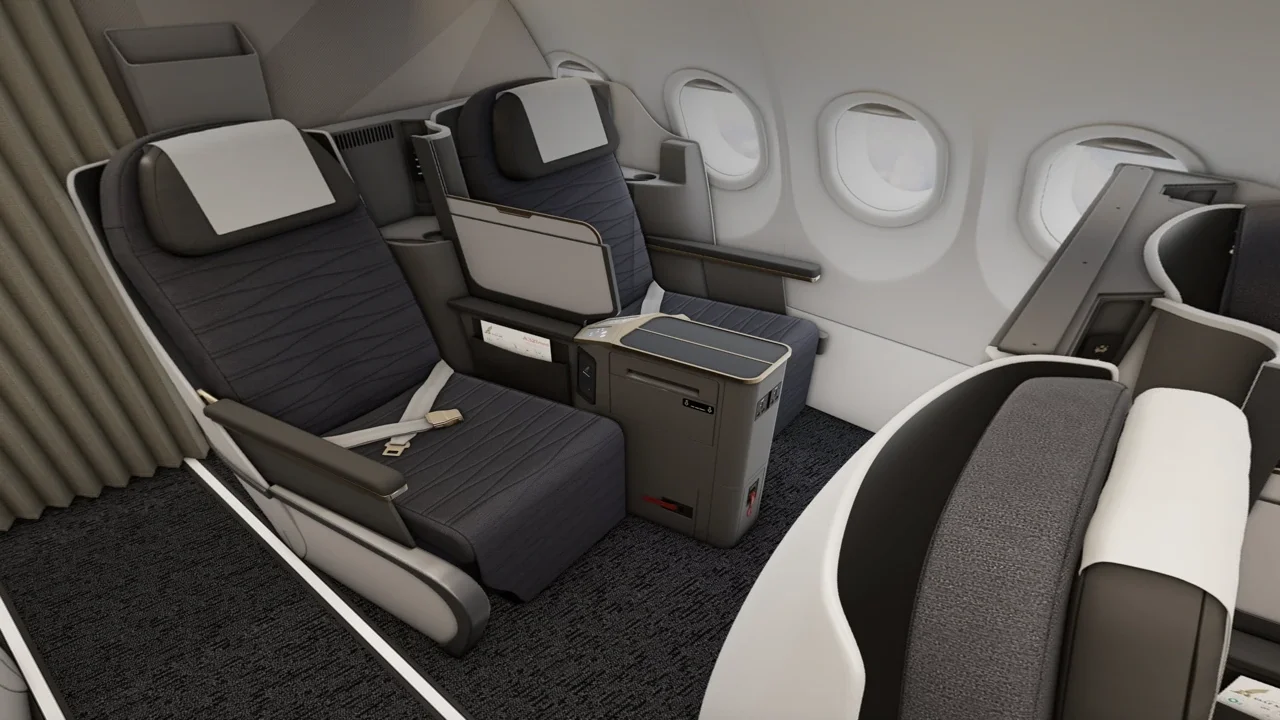
The honest caveat: Gulf Air isn't competing with Qatar Airways' Qsuite. It's a solid, comfortable, full-flat product that does the job well and prices noticeably below its Gulf neighbors. If you're flying to Bahrain, or connecting through Manama to destinations in the subcontinent, Gulf Air is worth pricing out before you automatically default to Emirates.
Gulf Air sometimes releases business class fares to London under £1,800 round-trip in shoulder season. Check March and October specifically.
4. TAP Air Portugal
TAP's business class product has a reputation problem it doesn't entirely deserve. Yes, the Lisbon lounge is mediocre. Yes, the catering is inconsistent. But the hard product on their A330-900neos — which they've been adding to the fleet since 2018 — is a proper lie-flat seat in a 1-2-1 configuration, with direct aisle access from every position. That's a better hard product than you'll find on plenty of legacy US carriers charging twice the price.
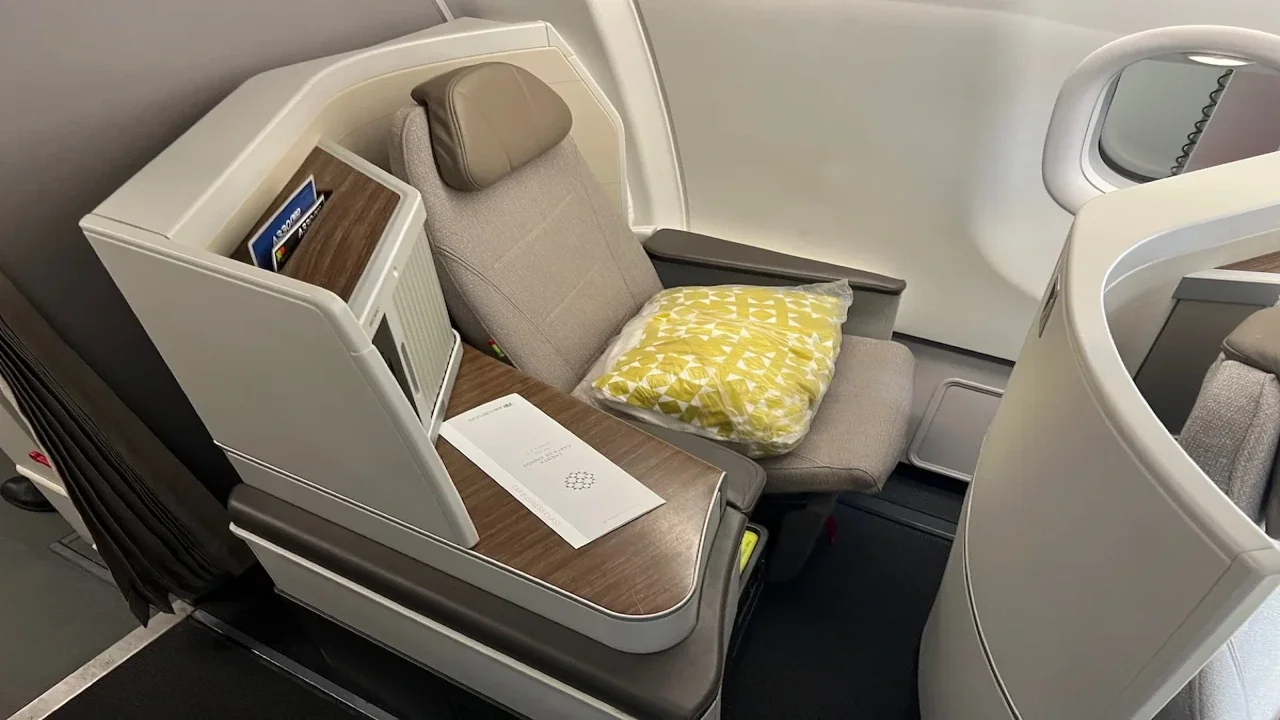
The real reason TAP makes this list is the pricing. TAP frequently prices transatlantic business class in the $1,400–$1,900 range from Lisbon, and because Lisbon is an easy connection from most European capitals, the effective cost for a European traveler going to Brazil or New York can be surprisingly competitive. American travelers routing through LIS on the way to Europe or Africa also find some genuinely strange fare anomalies on this airline.
I'd skip the Lisbon lounge food and eat in the terminal. But I'd happily take the seat.
5. Royal Brunei Airlines
This one surprises people. Royal Brunei's business class on their 787-8 fleet is a direct-aisle-access, fully flat product that's clean, well-maintained, and staffed by a crew that has very little to prove and seems to genuinely enjoy the work. The airline is small enough that you rarely feel like a number.
The routing via Brunei (BWN) is the limitation — it's not convenient from most origins. But London to Australia via Brunei exists, and when those fares drop into the $2,800–$3,400 range return in business, you're getting a solid flat-bed experience that most Australians completely overlook in favor of Qantas or Singapore.
6. SriLankan Airlines
SriLankan's business class product is genuinely underappreciated, particularly on the A330 routes to Europe. The seat is a fully flat herringbone configuration, the crew is consistently warm, and the catering — especially the Sri Lankan food options — is some of the most interesting regional cooking you'll find in a premium cabin. The kottu roti I had on a CMB-LHR sector a few years ago was better than most things I've eaten in airport restaurants.
The airline has had financial difficulties in recent years, which creates some uncertainty. But the product itself is solid, and the fares between London and Colombo can come in around $1,800–$2,400 round-trip, which is a strong value for a full flat-bed product on a 10-hour flight.
7. LATAM Airlines
LATAM's long-haul business class is probably the most consistently overlooked premium product in the South American market. Their flat-bed product on 787-9 routes to Europe and North America has direct aisle access from all seats, the Sky Interior makes the cabin feel noticeably less claustrophobic than older 767s, and the service quality on the Santiago and São Paulo departures tends to be strong.
The comparison point here is American Airlines on the same transatlantic routes, which often charges more for a worse hard product — particularly on older 767 equipment that still has the angled flat seats. LATAM's pricing from Miami or New York to Santiago can come in under $2,000 return in business, and from Europe to Brazil the deals can be even sharper.
8. Kenya Airways
The Pride of Africa gets talked about mostly in the context of its problems — the financial restructuring, the route cuts, the operational challenges. What doesn't get talked about is that their 787 business class product is a proper flat-bed, the Nairobi lounge at JKIA has improved considerably in the last few years, and the crew on the Nairobi-London route is routinely excellent.
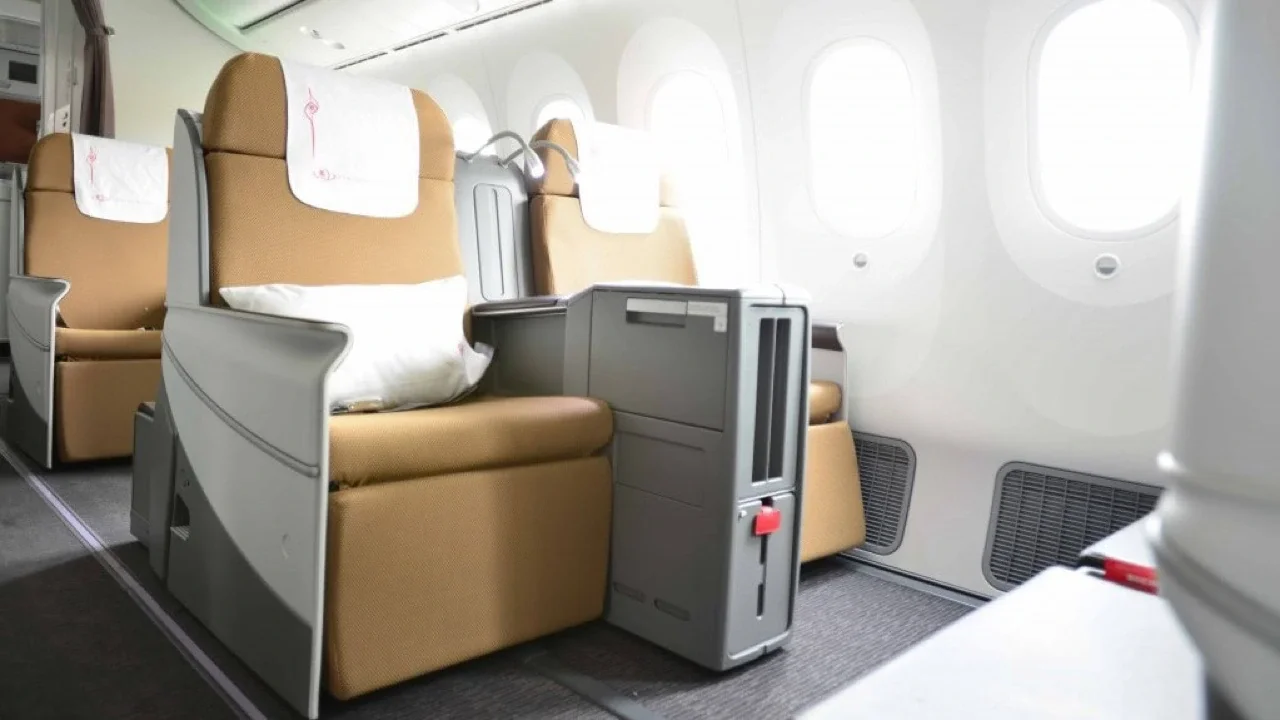
If you're flying to East Africa for any reason, Kenya Airways business class should be on your radar before you default to Emirates via Dubai. The direct London-Nairobi flight in business class can price around $2,200–$2,800 return, which competes well with the connection-heavy alternatives, and you arrive without the connection fatigue.
9. Condor Airlines
Condor is a German leisure carrier, which is enough to get it dismissed by most premium travel writers. That's a mistake. Condor's long-haul business class on their new A330-900neo fleet — rolled out starting in 2022 — is a proper lie-flat product with direct aisle access, a 1-2-1 configuration, and fares from Frankfurt or Munich that regularly undercut Lufthansa by $1,000 or more on comparable routes to the Caribbean, Mexico, and North America.
The lounge access situation isn't great — Condor doesn't have its own lounge and relies on third-party arrangements — and the IFE screen is smaller than you'd get on a mainline carrier. But the seat is good, the catering is decent, and for a leisure-oriented traveler who just wants to arrive flat and rested, Condor deserves a serious look.
Watch the lounge situation
Condor's lounge access for business class passengers at FRA and MUC is inconsistent and has changed multiple times. Verify before you fly — don't assume you'll have a place to sit for two hours before departure.
10. Azul Brazilian Airlines
Azul doesn't fly many long-haul routes, but their domestic business class product in Brazil is genuinely the best way to cover that country's vast distances in any comfort. More relevantly, their international 787 service to Lisbon and Fort Lauderdale runs a solid flat-bed cabin at prices that consistently undercut LATAM and GOL on the same routes.
What I like about Azul specifically is that they've invested in the cabin product without assuming it would sell itself. The IFE is good, the seat is comfortable, and the Brazilian catering is more interesting than most people expect. The Fort Lauderdale route in particular — which connects to a surprising number of North American destinations — can be a useful and affordable way to get from Brazil to the US in a flat bed.
How to actually find fares on these airlines

Why good fares on lesser-known carriers are hard to catch
Here's the problem with underrated business class airlines: their sale fares don't last long. Oman Air might drop London-Muscat-Colombo to $1,700 for 48 hours during a quiet booking period. EVA Air's Royal Laurel sales to the US are typically gone within a day or two of appearing. If you're checking Google Flights twice a week, you're going to miss most of them.
This is specifically the problem that BusinessClassSignal's monitoring system was built to solve. You set a target price for a route, and the system — which scans 800+ business class routes twice a day — alerts you when a fare drops below your threshold. It doesn't require you to check anything manually. When Oman Air drops a London-Muscat fare below what you said you'd pay, you get an email.
The carriers on this list are exactly the ones where that kind of monitoring pays off. The big three Gulf airlines have consistent pricing and frequent sales that get covered everywhere. The carriers above have irregular, short-lived drops that most travelers never see.
You can start monitoring these routes on a 14-day free trial if you want to see whether it catches anything useful before committing.
When do fares actually drop on these routes?
There's no universal answer, but a few patterns hold up across the carriers I've tracked over the years. TAP tends to price aggressively in late January and early September, when transatlantic demand softens after the holiday rush and before the autumn uptick. EVA Air's better fares often appear in February and October, which are genuinely quiet travel periods for the transpacific market. Kenya Airways drops fares periodically in the spring, ahead of the summer Africa travel season when they're trying to fill seats early.
The other trigger is new route launches or aircraft introductions. When Gulf Air started adding A321neo routes, the introductory fares were notably sharp. Condor's A330-900neo launch came with promotional pricing that lasted a few months. Watching for those windows is part of the game.
Set your target price about 15–20% below the current market rate for any of these routes. You're not trying to catch a once-a-decade anomaly — you're trying to catch the regular sale cycles that most people miss because they're not watching.
If you're also planning a trip that mixes premium and economy legs — say, business class to the main destination and economy for regional hops — it's worth knowing that FlightKitten does something similar for economy fares. They track 220+ airlines and alert you when economy prices drop below your threshold. It's about $4.99 a month and useful if you're building a mixed-cabin trip and don't want to monitor everything manually.
What "underrated" actually means in practice
I want to be clear about what I'm not saying. I'm not saying Oman Air is better than Qatar Airways. I'm not saying TAP's business class is more enjoyable than Singapore's. The very best premium cabins in the world — Singapore Suites, Qatar Qsuite, ANA The Suite — are genuinely exceptional, and if you can get into them at a reasonable price, you should.
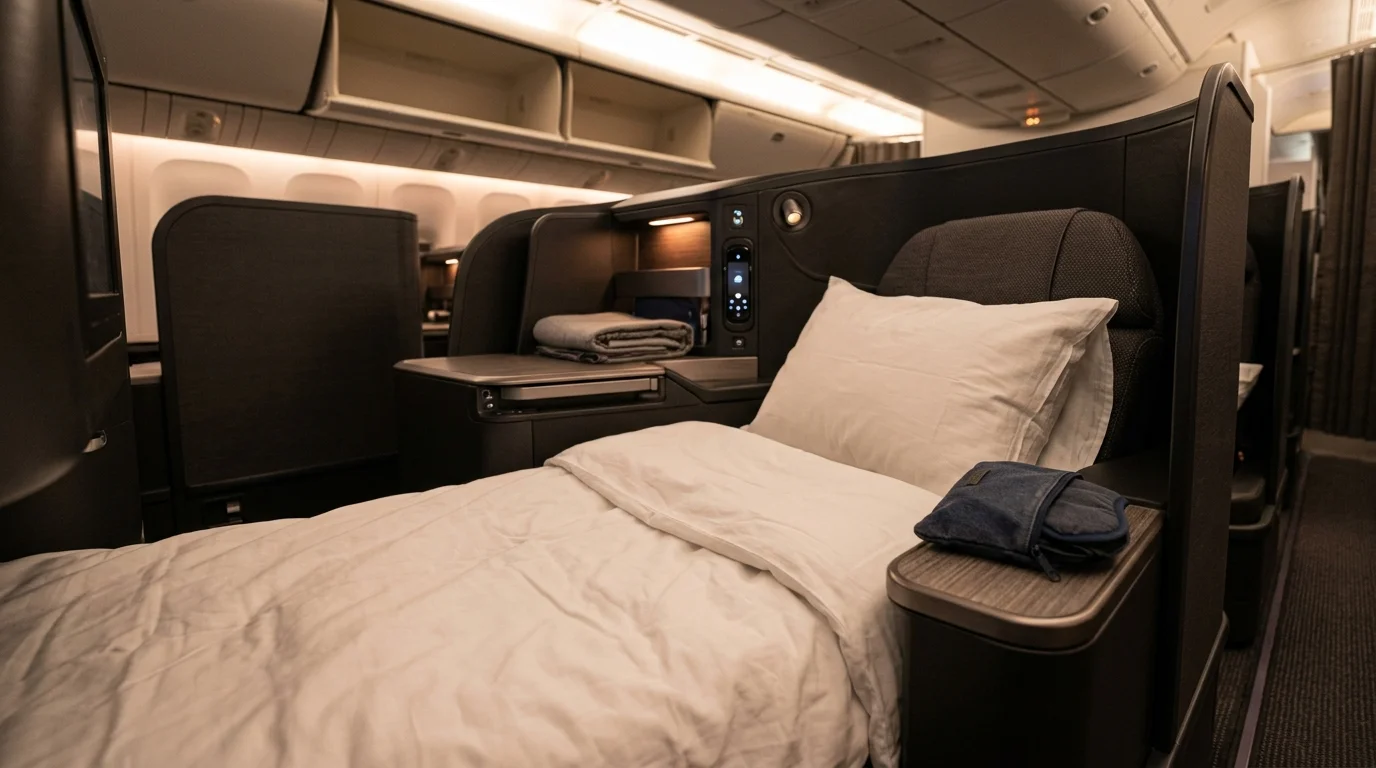
But most business class trips aren't about that. Most business class trips are about arriving at a meeting without a destroyed back, sleeping for six hours on a ten-hour flight, and eating something that isn't a sad sandwich. For those trips, the difference between a $2,100 Oman Air flat-bed and a $5,800 Emirates flat-bed is mostly marketing. The sleep quality is roughly equivalent. The back situation is roughly equivalent.
The $3,700 difference is not.
That's what makes the underrated business class airlines worth paying attention to. Not because they're secretly better, but because they're genuinely good enough, and the price gap is wide enough that "good enough" is an entirely rational choice.
You can browse all the routes we monitor to see which of these carriers we're currently tracking fares on. Several of them are in the system, and some of the alerts we've sent in the past few months have caught deals that were genuinely hard to find through standard search tools.
A few that almost made the list
Avianca's business class on their 787 fleet to Europe is worth a look if you're originating in Central or South America — the product is decent and the pricing is often aggressive. Air Mauritius has a small but reasonably well-run business class operation for the Indian Ocean routes. And LOT Polish Airlines' 787 business class to North America has surprised me more than once — it's not flashy, but it's fully flat, the Warsaw routing is faster than people expect, and the fares have been quietly competitive out of Central European cities.
Ethiopian Airlines also deserves a mention. Their business class to Africa is the most practical way to get to Addis Ababa and beyond, and the 787 product is solid. The lounge at Bole International has improved. It's not glamorous, but it works.
The common thread across all of these, and the ones on the main list, is that they're doing the fundamental job of business class — flat bed, reasonable food, attentive service — without the brand premium that inflates prices on the more famous carriers. If you're willing to look past the name on the tail, there's a lot of value sitting in these cabins that most travelers are leaving on the table.
BusinessClassSignal monitors 800+ business class routes twice daily — set a target price on any of these airlines and get alerted when fares drop. 14-day free trial, no credit card required.
Start Free Trial