Quick summary
SWISS Business Class is one of the better European carrier products in the air right now — genuinely good food, a real bed on long-haul, and that chocolate thing is not a gimmick. The experience does vary significantly depending on whether you're on the A330 or the 777-300ER, though, and the Zurich lounge situation is more complicated than the airline's marketing suggests. This review covers both aircraft, the ZRH Senator Lounge, and where the product earns its price — and where it falls a bit short.
I've flown SWISS business class seven times over the past four years, on routes ranging from JFK to ZRH and ZRH onward to various Asian cities. That's enough to have a real opinion — not just a one-time impression colored by a good meal or a delayed bag. The product has evolved in that time, and heading into 2026, it sits in an interesting spot: better than most European competitors on a good day, but inconsistent enough that the aircraft type you end up on genuinely matters.
So let's get into it properly.
The two aircraft you need to know about
SWISS operates long-haul primarily on two widebodies: the Airbus A330-300 and the Boeing 777-300ER. If you're flying transatlantic — JFK, EWR, ORD, LAX, YYZ — you'll almost certainly be on one of these. And the difference between them is not subtle.
The 777-300ER is the one you want. Full stop.
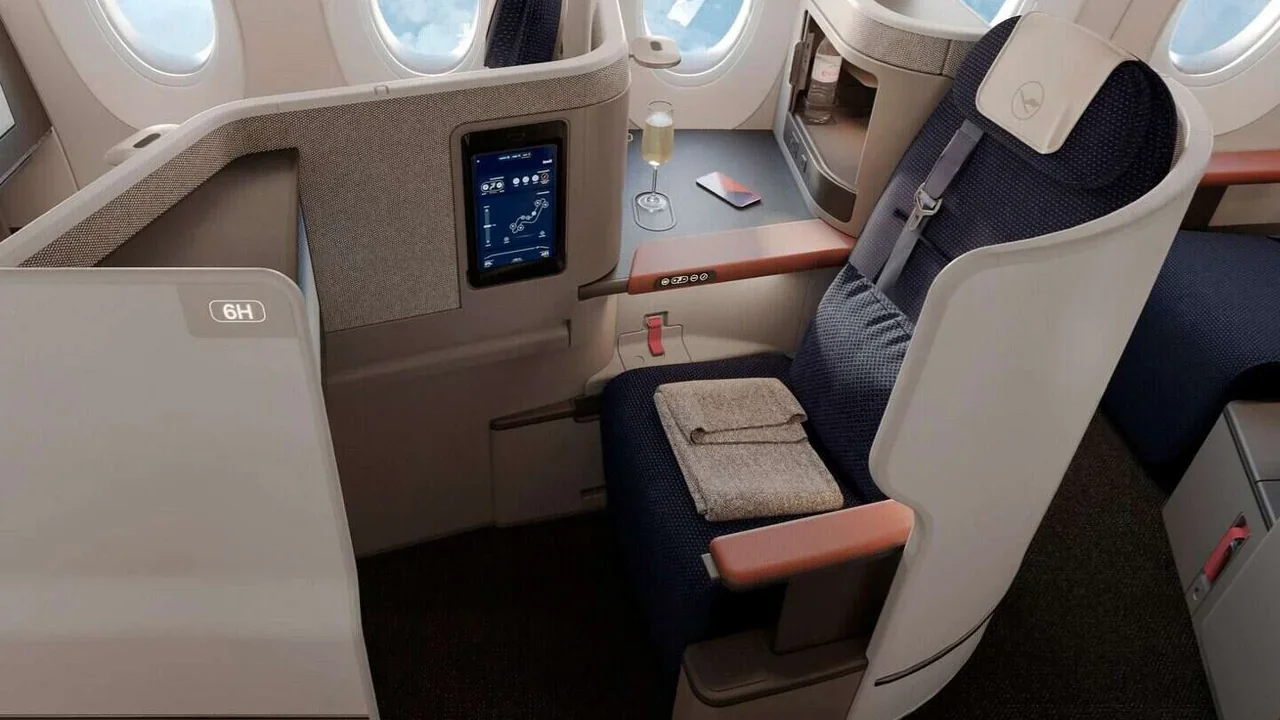
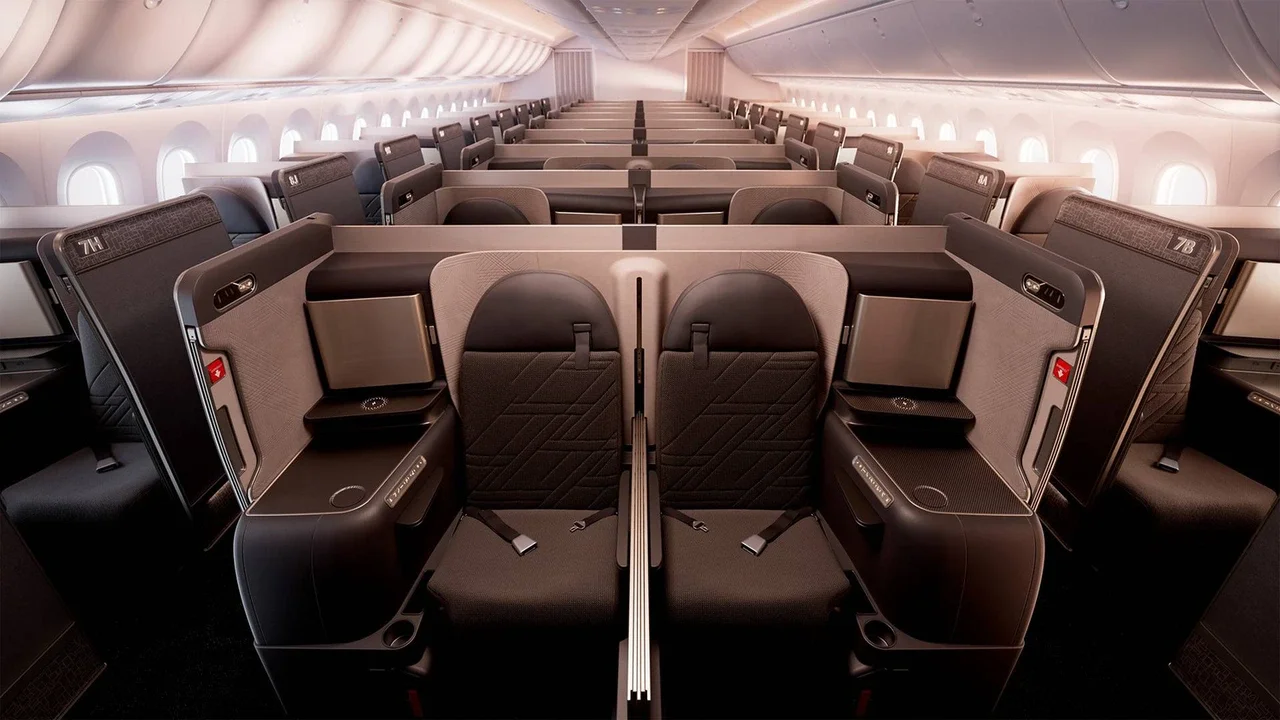
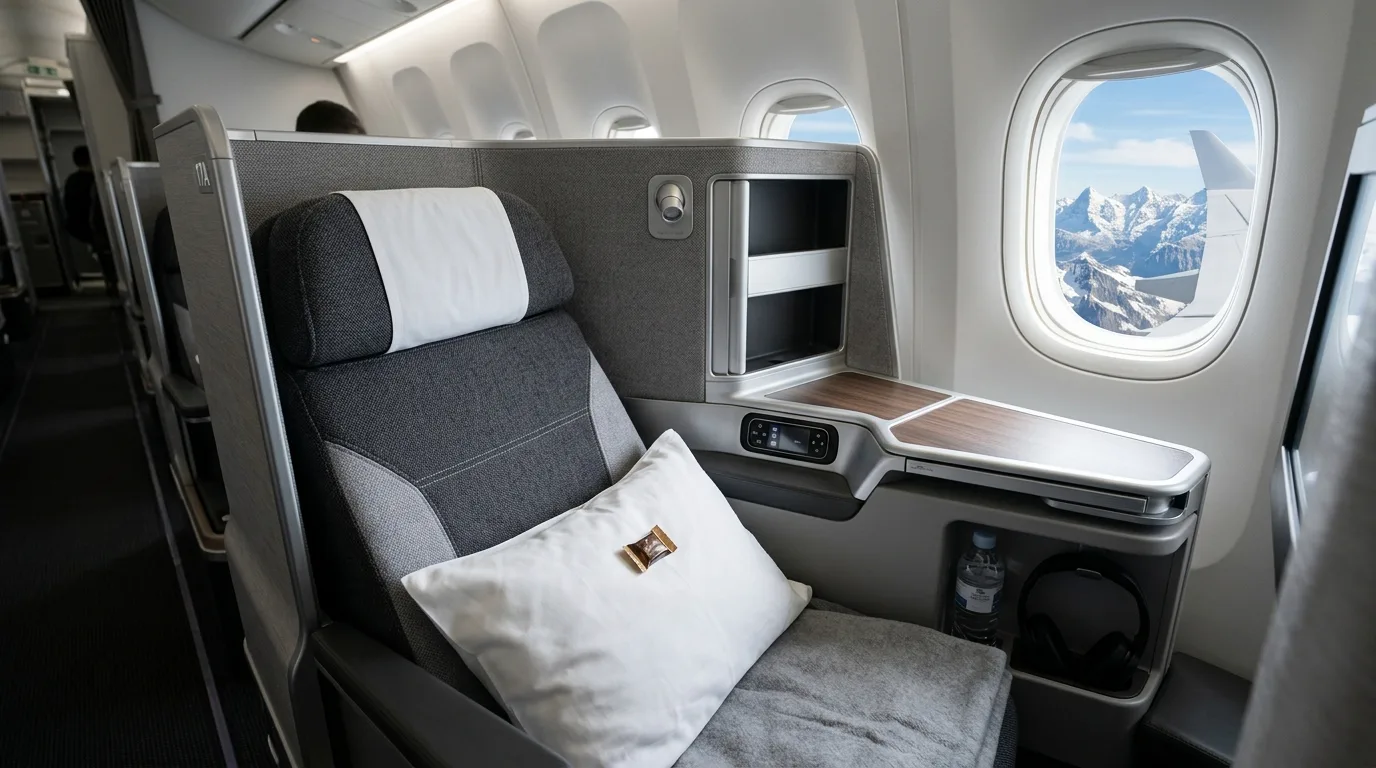
SWISS configured their 777s in a 1-2-1 layout in business class, which means every seat has direct aisle access. The seats themselves are the SWISS SWISS Business flatbed product in its best form — roughly 78 inches in full recline, a proper mattress pad that the crew will lay out for you before your first sleep cycle, and enough shoulder width that you won't spend the flight trying not to touch the person next to you. The IFE screens are 18 inches and the touch response is actually good. I've sat in seats F and K (the solo window seats on either side) and both give you a reasonable amount of privacy without feeling like you're in a coffin.
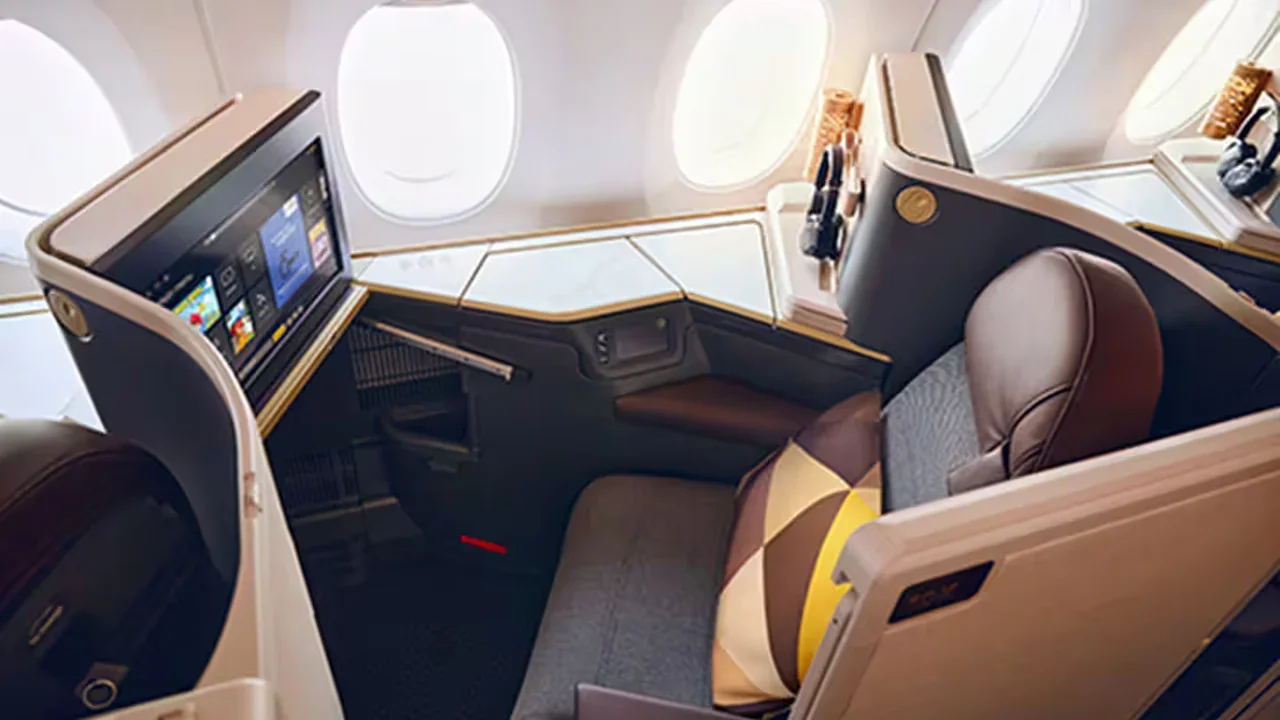
The A330 is a different story. SWISS uses a 2-2-2 configuration on the A330, which means middle seats, which means that if you're not traveling as a couple, you may well find yourself next to a stranger for eight hours with no real separation between you. The seats still recline to flat, and the food service is largely the same, but the physical experience is noticeably more cramped. The IFE screens are smaller — 15.4 inches — and the whole thing feels like a product that was designed a decade ago and hasn't been substantially refreshed since. Which, to be fair, it largely hasn't.
Check your aircraft before booking
SWISS doesn't always make it obvious which aircraft operates which flight. Use Seatguru or the seat map on the booking page and look at the configuration. If it's 2-2-2, you're on the A330. Request an upgrade or, if the price difference is small, consider shifting to a 777-operated flight.
On the JFK–ZRH route, SWISS operates both types depending on the day. The evening departure from JFK (LX 1 or LX 5 depending on the season) tends to be 777 more often than not, but this changes with schedule rotations. I've been burned by an aircraft swap more than once.
The Thursday and Sunday evening JFK departures have historically operated on the 777-300ER more consistently than midweek flights. Not guaranteed, but worth knowing when you're flexible on dates.
What the seat actually feels like overnight
On the 777, once the crew makes up your bed — and they do this without you having to ask, which I appreciate — you're sleeping on a proper flat surface with a duvet that's actually warm enough. SWISS uses bedding from Zimmerli of Switzerland, which sounds like marketing but does make a difference. The pillow is firmer than I'd like, personally, but the mattress topper compensates.
Noise is fine. The 777 cabin isn't whisper-quiet but it's no worse than any comparable aircraft. I've slept six hours on the JFK–ZRH leg without waking up, which is about the best endorsement I can give.
The A330 overnight experience is acceptable but not great. The 2-2-2 middle seats are a real problem for solo travelers. I was in seat D on one ZRH–SFO flight — a center-section aisle seat — and spent the night half-conscious of the person twelve inches to my right. The flat bed itself is fine, roughly the same dimensions as the 777, but the psychological experience of sleeping that close to a stranger makes it feel worse than the specs suggest.
How does SWISS business class compare to other European carriers?
Against Lufthansa and Austrian — SWISS's Star Alliance siblings — the 777 product is genuinely better. Lufthansa's long-haul business class is still running a lot of older configurations with angled seats on some aircraft, and even their newer seats don't have the same finish quality. Air France's La Première aside, I'd take SWISS over Air France business class on most days, largely because the service is more consistent and the food is better. British Airways Club World is, at this point, simply not in the same conversation — the reverse-herringbone seat on the 787 is fine but the service and catering quality has deteriorated enough that it's hard to recommend at full price.
The closest real competition is probably Finnair on their A350, which has a better seat but a more clinical atmosphere. SWISS has something Finnair doesn't, which is a crew that genuinely seems to care whether you're having a good flight. I've had flight attendants remember my drink order two hours into a flight without being prompted. That doesn't happen on every airline.
The food and drink situation (yes, including the chocolate)
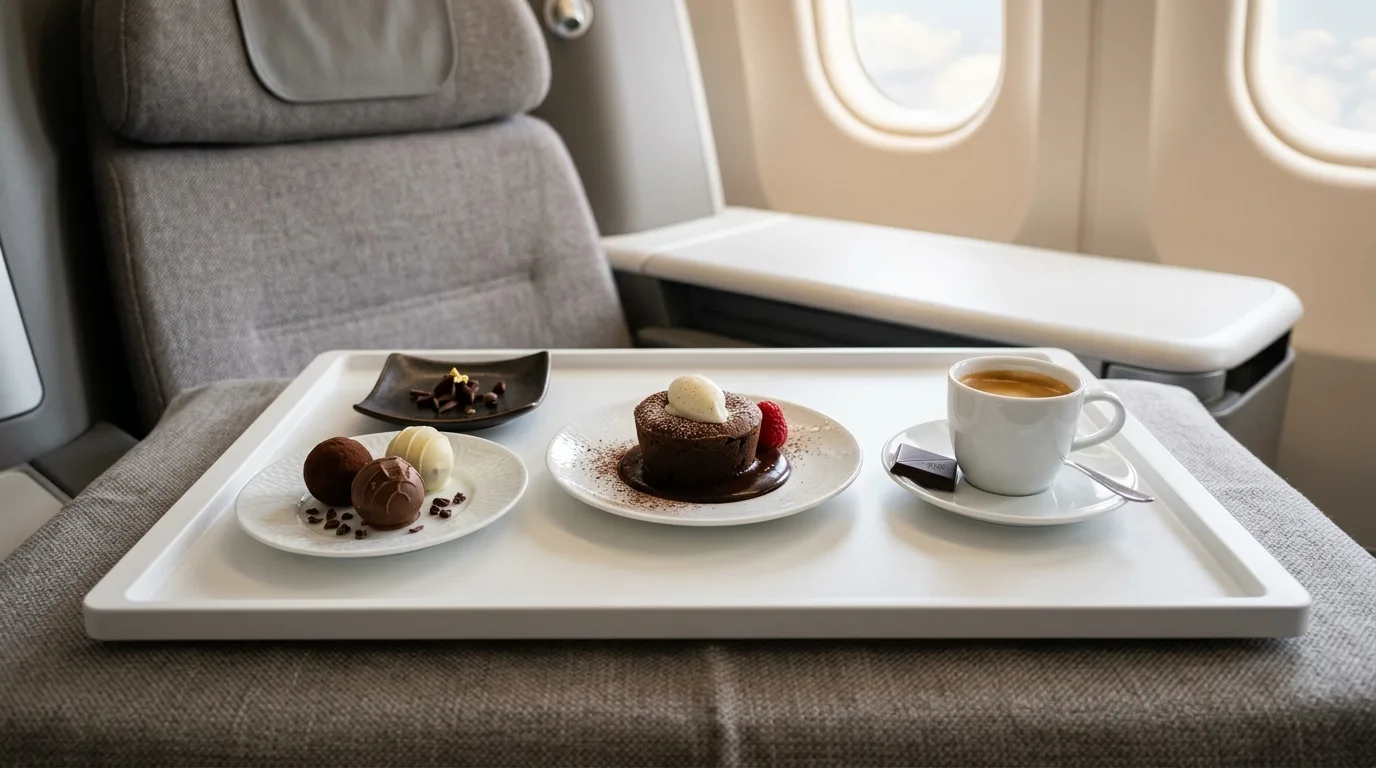
SWISS business class food is legitimately good. Not "good for airline food" — just good. The menus rotate seasonally, and the airline works with Swiss-based suppliers and chefs. On a recent ZRH–JFK departure, the starter was a cured trout with cucumber and crème fraîche that I'd have been happy ordering in a decent restaurant. The main courses are usually a choice of four: fish, meat, a pasta or risotto, and something lighter. The portions are honest without being excessive.
The wine list is solid. SWISS uses a Swiss-trained sommelier to curate the selections, and you'll find some genuinely interesting Swiss wines — Chasselas, Pinot Noir from Graubünden — alongside the expected French and Italian options. The Chasselas in particular is worth ordering if you haven't had it. It's a white wine that doesn't travel much outside Switzerland, and SWISS tends to carry a good example of it.
And yes, the chocolate. At the end of the meal service, or sometimes left on your seat during boarding, you get a Läderach or Lindt chocolate. Small thing. But SWISS has made it a consistent part of the experience, and it's become one of those small signals that the airline is paying attention to the details. I've seen grown adults genuinely pleased about it. I'm one of them.
Ask for the full Swiss cheese plate
The cheese course is listed as an option but the crew sometimes skips offering it if service is rushed. Ask specifically. It's worth it — they carry actual Swiss regional cheeses, and on some flights the selection has included an aged Appenzeller that was excellent.
The breakfast service on overnight flights is, like most airlines, the weakest meal. Scrambled eggs that have been sitting in a trolley are scrambled eggs that have been sitting in a trolley. The bircher muesli is a better choice if you're not starving.
When do SWISS business class fares drop?
SWISS business class pricing on the JFK–ZRH route typically ranges from around $2,800 to $4,200 round-trip, but I've seen it dip below $2,400 during specific windows. The airline tends to release discounted inventory in a few predictable patterns: roughly 10–14 days before departure when load factor is low, during Swiss national holiday periods when domestic demand shifts, and occasionally in January and February when transatlantic demand drops off after the holiday rush.
Award space is a separate conversation. SWISS is a Lufthansa Group carrier, and they're notoriously stingy with partner award availability. If you're trying to use United miles or Air Canada points, you'll find very little space, particularly on the 777-operated flights. Miles & More — Lufthansa's own program — has better access but the redemption rates have crept up. Flying Blue (Air France/KLM) occasionally has SWISS space and is worth checking.
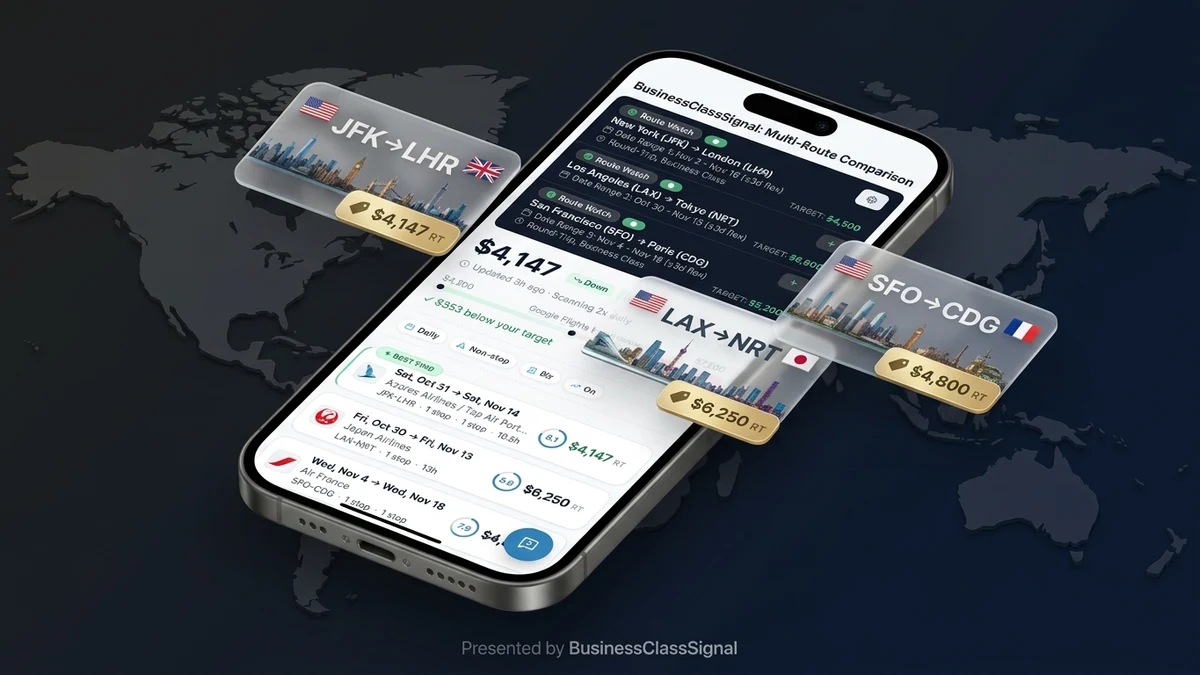
For cash fares, monitoring this route is genuinely worthwhile because the price swings are real and they don't last long. BusinessClassSignal scans the JFK–ZRH route (and the other SWISS transatlantic routes) twice daily and will alert you when the price drops below a threshold you set. The drops I've seen on this route tend to be gone within 48 hours, sometimes faster.
If you're also looking at economy for connecting legs or a companion who's not joining you in business, FlightKitten does the same kind of monitoring for economy fares across 220+ airlines — it's around $4.99 a month and worth it for mixed-cabin itineraries where you want alerts on both cabins independently.
The Zurich Senator Lounge: what it's actually like
Zurich Airport has a particular layout that shapes the lounge experience more than the lounge itself does. Once you clear security at ZRH, you're in a landside retail area, and the SWISS Senator Lounges (there are multiple, in different terminal areas) are airside. The one most SWISS business class passengers use is in the E concourse, accessible after passport control for Schengen departures, or in the non-Schengen area for intercontinental flights.
The non-Schengen lounge — the one you'll use for JFK, ORD, LAX, and other long-haul departures — is the better of the two. It's a large, well-lit space with a proper à la carte dining area, not just a buffet. The buffet section is fine but unremarkable: standard pastries, cold cuts, salads, the usual. The à la carte menu is where it gets interesting. You can order hot dishes — I've had a good rösti here, which is exactly the right thing to eat in Switzerland before a long flight — and the service at the dining tables is attentive.
The bar is decent. Swiss wines again, and a reasonable whisky selection. The coffee, though, is inconsistent. I've had good espresso here and I've had espresso that tasted like it was pulled from a machine that hadn't been cleaned recently. Luck of the draw.
Lounge access at ZRH for connecting passengers
If you're connecting through ZRH on a SWISS business class ticket and your connection is under 2 hours, the lounge access is still there but you may not have time to use it properly. The E gate lounge is closest to the intercontinental gates, so factor in the walk from wherever you land.
The shower suites are available and the booking system is first-come-first-served at the lounge reception desk. On busy mornings — the 8–10am window when multiple long-haul flights board — there's often a 20–30 minute wait. Get in early if you want one.
Compared to the Lufthansa First Class Terminal in Frankfurt, which is obviously in a different tier, the ZRH lounge is solid but not exceptional. It's a good lounge. It's not a destination in itself. The food quality and the calm atmosphere put it ahead of most European carrier lounges, including the Heathrow T5 Galleries First lounge, which I've found consistently disappointing for years.
The crew and service: where SWISS actually earns its reputation
This is the part that's hardest to quantify but matters most. SWISS cabin crew are, on balance, the best I've encountered on a European carrier. That's not a small claim, and I want to be specific about what I mean.
They're proactive without being intrusive. There's a specific skill to checking on a passenger who's watching a film without interrupting the film, and SWISS crew tend to have it. They remember details — drink preferences, dietary requests — in a way that suggests they've actually read the passenger information and briefed on it. And they're warm in a way that doesn't feel scripted. I've had genuinely good conversations with SWISS flight attendants on long sectors, the kind that make a 10-hour flight feel shorter.
There are off days. I've had a crew on a morning ZRH–ORD flight that was going through the motions and not much more. Service was technically correct but cold. It happens. But the average across my seven flights has been noticeably above the European carrier norm.
The pre-departure drink service is something SWISS does well. You're offered champagne (Ruinart Blanc de Blancs, which is a solid choice), water, or orange juice as soon as you're seated. On the 777, the crew will also ask whether you'd like the mattress topper put down before takeoff if you plan to sleep early. Small details, consistently executed.
Booking SWISS business class: what actually makes sense in 2026
The honest answer on booking strategy is that cash fares on SWISS, when they drop, are often better value than award redemptions through partner programs. The Miles & More program has raised its rates enough that the math on burning points for a SWISS transatlantic business seat has gotten harder to justify unless you have a lot of miles to burn and limited cash alternatives.
The routes where SWISS business class makes the most sense are the North American transatlantic routes — JFK, ORD, LAX, MIA, YYZ, YUL — and the long-haul Asia routes like ZRH–HKG and ZRH–SIN, which operate on the 777. The intra-European "business class" product, which is essentially economy seats with a blocked middle seat, is not worth the premium in most cases. Buy a full-fare economy or a cheap first-class rail ticket instead.
For monitoring purposes, the JFK–ZRH and ZRH–JFK routes are among the most-watched routes on BusinessClassSignal, and for good reason. The pricing volatility is real, and the drops are worth waiting for. The way the monitoring system works is straightforward — you set a target price, and you get an email when a fare on your route hits that threshold. You're not refreshing Google Flights every morning. The tool does it for you.
I set up a ZRH–JFK alert last September at $2,500 round-trip, which was about $400 below the going rate at the time. It fired eleven days later. I booked within two hours. The fare was gone by the next morning.
Set your alert lower than you think you need to
On the ZRH–JFK route specifically, I'd set your target price at 15–20% below the current market rate. Fares on this route do drop that far, particularly in January, February, and late October. You might wait a few weeks, but the drops are real.
One thing worth knowing: SWISS fares often have a connection option through ZRH from other European cities at a lower total price than the direct transatlantic segment alone. If you're already in Europe or willing to position, a ZRH–JFK ticket picked up in, say, MUC or VIE can sometimes be cheaper than the same ticket originating in the US. This positioning strategy works for SWISS more reliably than for most carriers because of how Lufthansa Group prices its inventory.
Is SWISS business class worth it right now?
On the 777-300ER, with a good crew, flying out of ZRH after spending an hour in the non-Schengen lounge? Yes. Straightforwardly yes. It's a product that delivers on most of what it promises — a real flat bed, genuinely good food, service that doesn't make you feel like a number. The chocolate is still there. The Chasselas is still worth ordering.
On the A330 with a center-section seat on a full flight, connecting through a busy lounge on a Tuesday morning? It's fine. You'll arrive rested enough. But you won't be raving about it.
The gap between those two experiences is the thing I'd want any first-time SWISS business class passenger to understand before they book. Check the aircraft. Set an alert for the 777-operated flights if you have flexibility. Don't pay full price when the market drops regularly enough to reward patience.
The airline itself, at its best, is genuinely one of the better ways to cross the Atlantic in a business class seat. That's not nothing.
Monitor SWISS business class fares on JFK–ZRH and 800+ other routes — 14-day free trial, no credit card required
Start Free Trial