Quick summary
Turkish Airlines business class in 2026 remains one of the best-value premium cabin options in the world, particularly on their 787 Dreamliner fleet. The Istanbul hub gives you access to an extraordinary lounge and surprisingly useful connections to Africa, the Middle East, and Central Asia. Fares from the US regularly drop to $2,000–$2,800 round-trip if you catch them at the right moment.
I've flown Turkish Airlines business class seven times now, on routes ranging from JFK to Istanbul to a connection down to Nairobi. The first time was about five years ago and I'll be honest — I was skeptical. The airline doesn't have the same brand cachet as Singapore or Qatar in frequent flyer circles. But after that first trip, it quietly became one of my go-to recommendations for transatlantic and intercontinental premium travel, especially when people are trying to get somewhere without paying $6,000 to do it.
This is an updated review covering what I've seen in 2025 and early 2026. Some things have improved. A couple have stayed stubbornly mediocre. I'll tell you about both.
The Istanbul hub: actually a competitive advantage
Most airline hubs are a necessary evil. You sit in a gate area eating a $19 sandwich because your connection is too short to go anywhere useful. Istanbul Airport is different, and the reason is the Turkish Airlines lounge — which, at roughly 54,000 square feet across two floors, is legitimately the largest airline lounge in the world by floor space.
I know that sounds like marketing copy. I was dubious too until I walked in and spent 40 minutes just finding where everything was.
There are multiple restaurant sections, a cinema room, a golf simulator, a library area that's actually quiet, dedicated sleeping rooms you can book at the desk, a hammam (a real one, with a sauna and steam room), a barber and hair salon, and about eight distinct seating zones ranging from open co-working tables to armchairs tucked behind bookshelves. The food spread runs from a full à la carte menu to a buffet with Turkish breakfast staples — simit, menemen, börek, proper olives — alongside a patisserie section that does made-to-order desserts.
The coffee, for what it's worth, is genuinely good. Turkish coffee done properly, plus espresso-based options that aren't just a Nespresso machine behind a counter. I'm mentioning this specifically because I've written before about how European airline lounges routinely fail on coffee despite having everything else. This one doesn't.
Sleeping rooms in the lounge
If you have a connection longer than three hours, go straight to the lounge desk and ask about a sleeping room. They're free for business class passengers, limited in number, and they go fast. I've made the mistake of eating first and arriving too late. Don't do that.
The hub location itself — Istanbul sitting between Europe, Asia, Africa, and the Middle East — means Turkish's network is genuinely useful in ways that other airlines can't match from their hubs. If you're trying to get to Tbilisi, Baku, Addis Ababa, Karachi, or Casablanca, Turkish often has the best one-stop routing with the shortest total travel time. That's not a coincidence. It's just geography working in your favor.
The 787 Dreamliner seat: what you're actually getting
Turkish operates a mixed fleet in business class, and the experience varies considerably depending on which aircraft you board. The 787-9 Dreamliner is the one you want. The A330 is fine. The older 777 variants are noticeably more dated and I'd check the aircraft type before booking if you care about the seat.
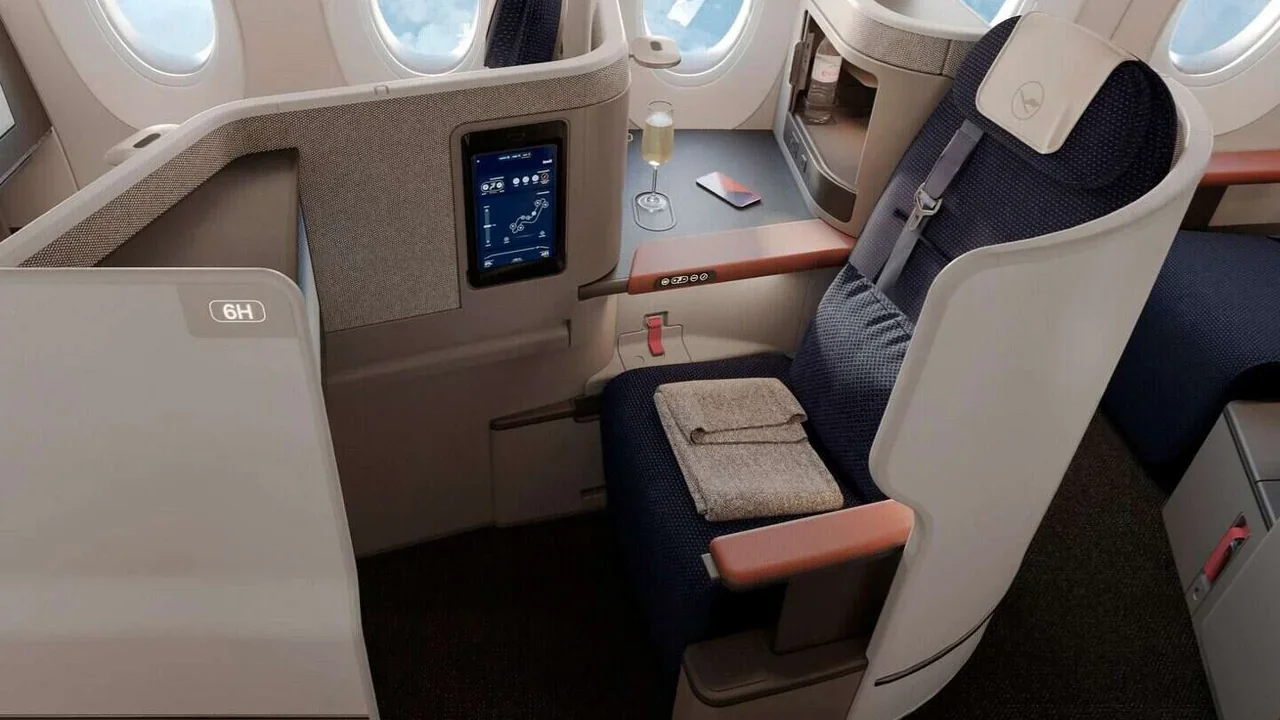
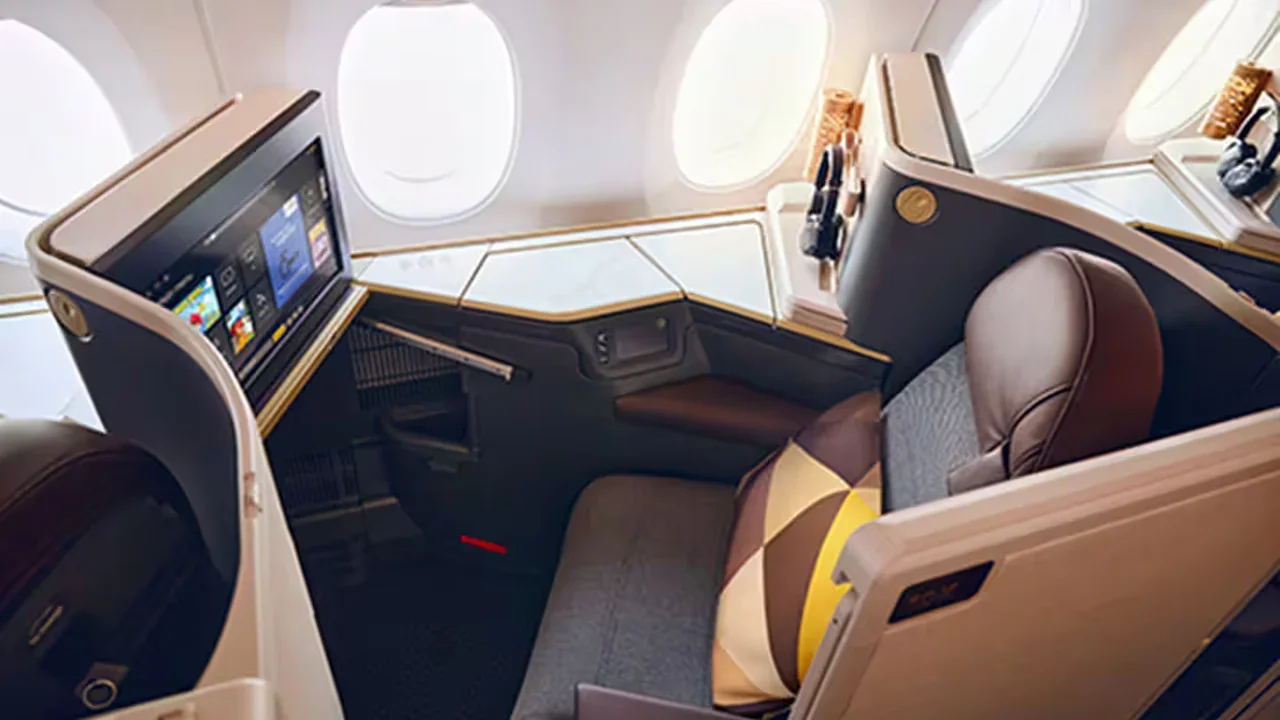
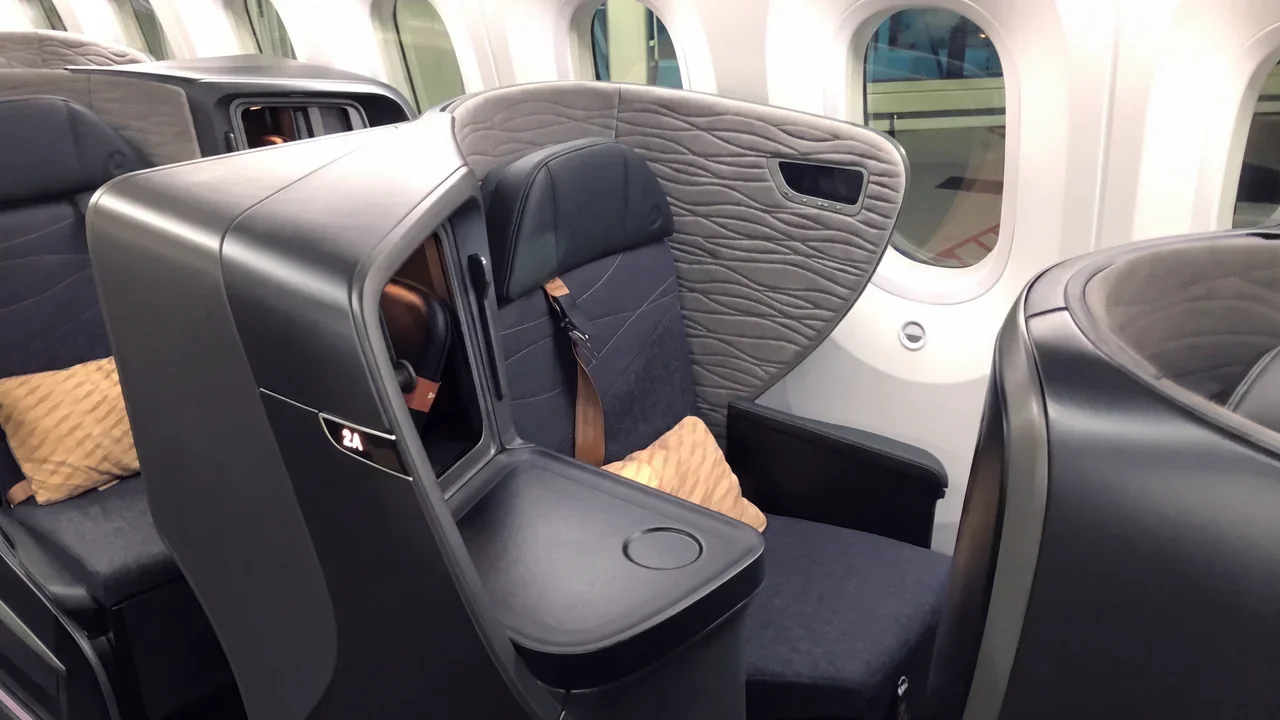
On the 787, business class runs in a 1-2-1 configuration, which means every seat has direct aisle access. No climbing over anyone at 2am. The seats are reverse herringbone — same basic concept you'll find on many long-haul premium cabins — and they convert to a fully flat bed at 198cm (about 6'6"), which is generous.
The seat itself has a decent amount of storage, a small shelf for a water bottle and phone, and a personal screen that's around 16 inches and responsive enough that you're not jabbing at it repeatedly like a broken ATM. The noise-canceling headphones they provide are acceptable. Not Bose, but not embarrassing either.
Where the seat loses points slightly is the side storage when the bed is fully flat — there's a narrow ledge that works for a phone but not much else, and the mattress pad they roll out is on the thin side. I've slept better on Qatar's Qsuites and on the Lufthansa business class seat on their newer 350s. But I've also slept fine on Turkish, especially on the overnight Istanbul to JFK run where you're tired enough that minor padding issues don't register.
One thing I appreciate: the window seats on the 787 (the A and K seats) give you a real sense of privacy. The shell is high enough that you're not making accidental eye contact with the person across the aisle at 35,000 feet. For solo travelers, those are the ones to grab.
On the 787, avoid the bulkhead row (usually row 1) unless you need the extra legroom. The tray tables fold out of the armrest there and the seat feels slightly narrower. Rows 3 and 4 tend to be the sweet spot — away from the galley, good shell height, less foot traffic.
The flying chef program: does it live up to the hype?
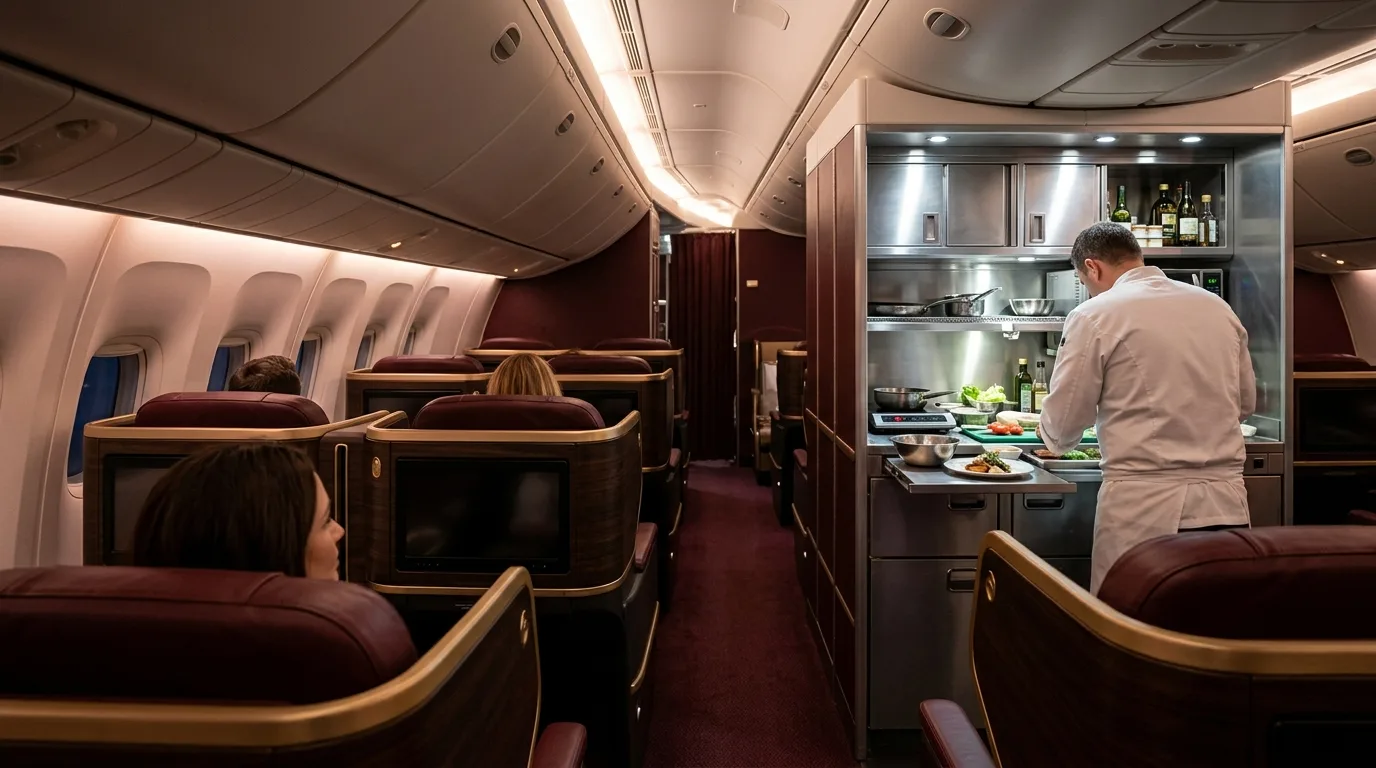
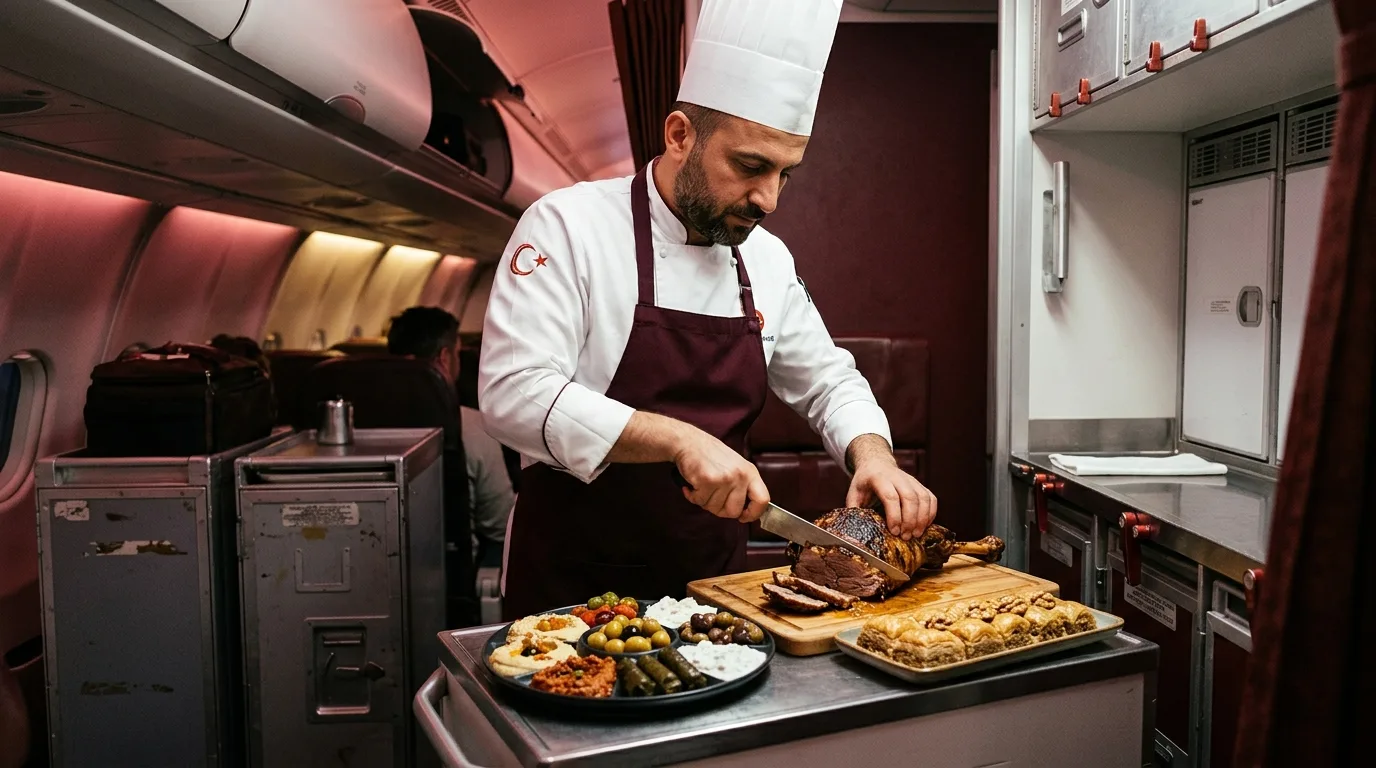
Turkish Airlines has been running its onboard chef program since 2009, and it's genuinely one of the things that separates the airline from most of its competitors. On flights over 1.5 hours in business class, there's a dedicated chef who prepares food to order in the galley rather than just reheating pre-plated meals.
I want to be accurate about what this actually means in practice, because it sometimes gets oversold. The chef isn't cooking from scratch at altitude — the ingredients are prepped on the ground and the onboard cooking is more about finishing and assembly than full preparation. But the difference compared to a standard airline meal service is real and you'll taste it.
On a JFK to IST flight last year, I had a lamb chop that arrived plated properly, with the temperature right and the sauce on the side, followed by a dessert that was finished with fresh cream at the seat. The bread came warm. The mezze starter — which is a constant on Turkish's business class menu and has been since the first time I flew them — was properly seasoned and not the sad, desiccated version you get when everything's been sitting in a cart for two hours.
The menu rotates by route and season. On flights to/from Turkey, you'll often see dishes like manti (Turkish dumplings), or slow-cooked lamb with bulgur. On some African routes, they incorporate local influences into the menu. It's not always consistent, and I've had one or two meals over the years that were just ordinary, but the batting average is high enough that I look forward to eating on Turkish in a way I don't on most carriers.
Meal timing trick
If you board hungry and want to eat right away, just tell the chef when they come through to introduce themselves. They'll often start your meal service ahead of the general cabin. Most passengers wait, which means you can be done with a proper meal before the seatbelt sign is even off during cruise.
The wine and drinks selection is solid. Turkish isn't serving alcohol — it's a dry airline, as a matter of policy — but the non-alcoholic beverage program is genuinely impressive. Fresh-squeezed juices, proper ayran, a good selection of Turkish teas, and mocktails that are made with care rather than just handed over in a can. If you're a wine-with-dinner person, this is the biggest practical tradeoff you're making when you fly Turkish. Worth knowing before you book.
How does Turkish Airlines business class food compare to competitors?
Honestly, it's in the top tier for food, full stop. Qatar Qsuites gets more attention overall, but Turkish's actual in-flight catering quality is comparable and sometimes better than what I've had on Qatar on certain routes. Emirates has the alcohol and the bar, which is a different experience. Lufthansa's food in business class is solid but more conservative. Air France has moments of genuine quality but also moments of "this is fine."
Turkish sits comfortably ahead of United, American, and Delta in terms of food quality on transatlantic routes, and I'd put it ahead of British Airways too — the BA business class catering has been inconsistent enough over the past few years that I wouldn't use it as a benchmark for anything.
Turkish airlines business class fares: when and where they drop
This is the part that actually matters to most people reading this. The product is good. The question is whether you're paying a fair price for it.
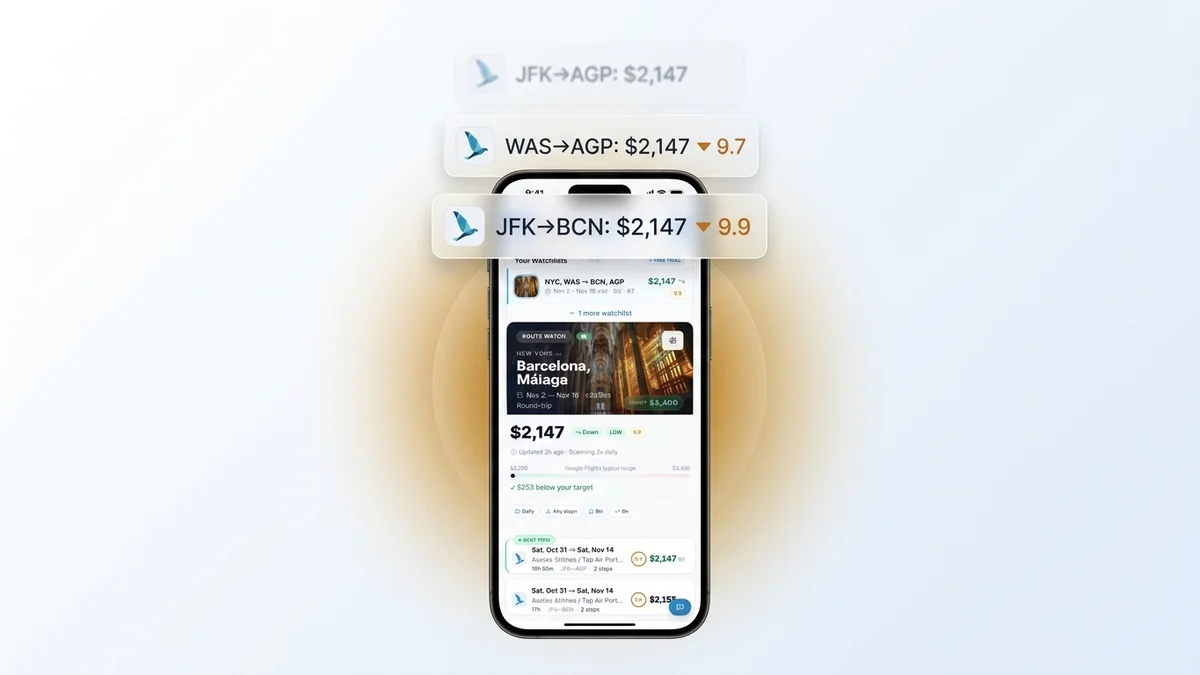
Retail fares on Turkish business class from the US to Europe run anywhere from $2,800 to $5,500 round-trip depending on how far out you're booking and which departure city you're using. But Turkish is one of the airlines that generates genuinely good sale fares, and they do it more often than the big US carriers.
The patterns I've noticed over several years of monitoring this route: Turkish tends to drop fares in late January and February for spring travel, again in late August and September for fall departures, and occasionally in the week before and after major US holidays when they're trying to fill seats. The fares don't last long — usually 24 to 72 hours — and they're often not flagged on mainstream deal sites because the airline is not as heavily covered as the US carriers.
Washington Dulles (IAD) and Chicago O'Hare (ORD) often see slightly lower fares than JFK, probably because Turkish is competing harder for those markets. If you're flexible on departure city and there's a major hub within driving distance, it's worth checking both.
For connections through Istanbul to Africa or Asia, the pricing structure is interesting. Turkish regularly prices the JFK–IST–Nairobi or JFK–IST–Mumbai routing at only marginally more than a straight JFK–IST ticket, which makes it one of the better ways to get to those destinations in business class without paying the premium that carriers like Kenya Airways or Air India charge on direct or more convenient routings.
If you're targeting a connection to Africa or South Asia, search the full routing rather than just the JFK–IST leg. Sometimes the longer itinerary is actually priced lower than the Istanbul stopover alone, because Turkish is competing in a different fare bucket for those end destinations.
When is the best time to book Turkish Airlines business class?
The honest answer is: it depends more on catching a sale than on booking a specific number of days in advance. Turkish doesn't follow the same "book 6 weeks out for the best price" logic that the US carriers roughly follow. Their sale fares can appear at 10 months out or at 3 weeks out — I've seen both.
What I've found most effective is setting a price alert for your specific route and letting the monitoring do the work rather than trying to time it manually. BusinessClassSignal scans over 800 business class routes twice daily — including JFK–IST, ORD–IST, and IAD–IST — and sends an alert when fares drop below whatever threshold you set. I built the tool partly because I was tired of manually checking Google Flights every few days hoping to catch a drop that might last 36 hours. You can see how the monitoring system works if you're curious about the mechanics, or just start monitoring this route and let it run in the background.
Browse all the routes we track if you're planning something beyond the Turkish Airlines itinerary — we cover most major long-haul business class corridors.
The ground experience: check-in, boarding, and what actually happens at IST
Turkish business class passengers get access to the dedicated check-in counters, which are genuinely faster at JFK Terminal 1 than the economy queues. Security is still security. No magic there.
At Istanbul Airport, the transfer experience for connecting passengers is one of the smoother ones I've used. The airport is enormous — budget 20 minutes to walk between some gates — but it's well-signposted, the transfers are clearly marked, and the lounge is located in the main departures area accessible from both the international arrivals and the domestic/regional departures side. I've done a 90-minute connection there twice and made both without stress, though I wouldn't go shorter than that if you have a choice.
On the outbound from IST, the boarding process is organized by zone and it actually works. Business class boards first, the gate staff enforce it, and you're seated and settled before the economy cabin starts filing through. Sounds basic. You'd be surprised how many carriers can't manage it.
IST transit time
Turkish recommends a minimum 75-minute connection at Istanbul Airport. I'd personally use 90 minutes as my floor, especially for connections to African or Middle Eastern destinations where the departure gates can be a long walk from the international arrivals hall. Missing a connection at IST isn't the end of the world — they're good at rebooking — but it's a wasted half-day.
What Turkish business class doesn't get right
I want to be fair here because this is a good product and I recommend it, but a few things consistently come up.
The Wi-Fi is mediocre. It works well enough for email and messaging, but don't plan to do anything bandwidth-intensive. It's also not cheap. On a long transatlantic flight, paying $15–$20 for speeds that make you nostalgic for a 2009 home connection is frustrating. This isn't unique to Turkish, but the issue is more pronounced on their longer routes.
The entertainment system on the 787 is fine but not exceptional. The screen is good, the content library is decent, but it doesn't have the depth that Emirates ICE has or the interface quality of Qatar's Oryx system. For a 10-hour flight, you'll find things to watch. For a 14-hour flight to somewhere in Southeast Asia via Istanbul, you might exhaust the genuinely interesting options by hour eight.
And the no-alcohol policy is a real consideration for some travelers. Turkish is upfront about it, and the mocktail and beverage program is legitimately impressive as a replacement — but if an evening glass of wine is part of how you decompress on a long flight, it's a tradeoff you'll notice.
The mattress topper, as I mentioned earlier, is thin. It's the one area where I feel the product slightly undersells itself. The seat is excellent; the bedding doesn't quite match it.
Is Turkish Airlines business class worth it in 2026?
For most travelers, yes — particularly on fares below $3,000 round-trip. You're getting a fully flat bed, direct aisle access, genuinely good food with the flying chef program, access to what is objectively one of the most impressive airport lounges in the world, and a network that connects to places other carriers make inconvenient.
The product isn't perfect. If you're comparing it to Qsuites specifically, Qatar has the better seat privacy and the alcohol option. If you're comparing it to Lufthansa First on certain routes, that's a different category altogether. But in the $2,000–$3,000 round-trip range, Turkish is hard to beat on the combination of product quality and fare availability.
Where it particularly shines is as a connecting hub for trips that aren't straightforward point-to-point. Getting to East Africa, the Caucasus, or South Asia in a business class flat seat, with a real meal and a lounge layover in Istanbul, for under $3,500 total — that's a combination that's genuinely difficult to replicate on other carriers at similar prices.
If you're watching a specific route, the thing that makes or breaks the value calculation is whether you catch a sale fare or pay full retail. That gap, between a $2,100 sale and a $4,800 walk-up fare, is enormous. The product is the same either way. The math is not.
Monitor Turkish Airlines business class fares — get alerted when prices drop on your route
Try Free for 14 Days