Quick summary
There's no formal dress code for business class on most airlines, but what you wear affects how you're treated, whether you get upgraded, and how comfortable you actually feel on a long-haul flight. Smart casual is the practical sweet spot — presentable enough to be taken seriously, relaxed enough to sleep in. This guide covers what that actually looks like, airline by airline, and what to skip entirely.
The honest answer about business class dress codes
Nobody is turning you away at the gate because you showed up in chinos instead of a suit. That's not how this works. Airlines don't publish dress codes for paying business class passengers the way they do for staff travel or upgrade standby lists. You could technically board a Singapore Airlines Suites flight in joggers and nobody would physically stop you.
But here's the thing — there's a gap between "allowed" and "optimal." And if you've spent real money on a business class ticket, or you're flying on points and have been waiting six months for this redemption, you probably want the full experience. That includes being treated like someone who belongs there.
Flight attendants notice what you're wearing. Not in a judgmental way, exactly, but it affects the dynamic. I've been in business class in a blazer and I've been in business class in a hoodie. The service was technically the same. The tone wasn't.
So this isn't about rules. It's about making good decisions.
What "smart casual" actually means at 35,000 feet
Smart casual is the phrase everyone uses and nobody ever defines. So let me be specific about what it means when you're flying business class on a long-haul route.
On the top end: a blazer, dark trousers or neat chinos, a collared shirt (doesn't need to be tucked), clean leather shoes or quality loafers. For women, that's a blouse or structured top with trousers or a midi dress, or a smart knit. You don't need to look like you're going to a job interview. You need to look like someone who has their life together.
On the relaxed end: a clean, fitted crew-neck sweater in a solid color, well-fitting dark jeans without any distressing, and clean trainers (not the beat-up kind you use for actual running). That's still smart casual. It works. I've worn exactly that on a dozen transatlantic flights and never felt out of place.
The key word throughout all of this is fitted. Oversized anything reads as sloppy in a way that a well-fitted casual piece doesn't. A slim crewneck in merino wool looks more put-together than a baggy Oxford shirt, even though technically the Oxford is "smarter."
Merino wool is the single best fabric for long-haul flying — it regulates temperature, doesn't wrinkle, and doesn't hold odor after 14 hours in a recycled-air cabin. A merino crewneck plus dark trousers is genuinely the ideal business class outfit.
What to wear in business class: the airline-specific picture

This matters more than people realize, because the vibe varies significantly by airline and route. What's appropriate on a Singapore Airlines flight from London to Singapore is a bit different from what you'd wear on a domestic American Airlines first class segment.
Which airlines have the most formal cabin culture?
Singapore Airlines, Cathay Pacific, and Emirates tend to attract passengers who dress up. Not formally, but the average traveler in those cabins is wearing something that looks intentional. On Singapore's A380 between London Heathrow and Singapore Changi, I've rarely seen anyone in the business class cabin wearing athletic gear. The culture is just different — partly the routes, partly the passenger mix, partly the airline's own brand positioning.
Japan Airlines and ANA are similar. The Japanese domestic business travel culture carries over, and even on international routes you'll find the average passenger is dressed neatly. It would feel genuinely out of place to board a JAL flight in a tracksuit.
Etihad and Qatar Airways sit in a similar bracket to Emirates. Long-haul, premium brand positioning, passengers who tend to dress accordingly. I'm not saying you need to wear a suit on Qatar's QSuite. But jeans-and-a-blazer is appropriate and anything below that starts to feel mismatched with the surroundings.
European carriers — Lufthansa, Swiss, Austrian — tend to attract a lot of business travelers on shorter European routes where people are genuinely going to meetings. Business attire is common. But on long-haul Lufthansa to the US or Asia, it's much more relaxed, and smart casual is completely standard.
American carriers (United, American, Delta) are the most relaxed. On a domestic first class segment, you'll see everything from suits to sweatpants. Nobody bats an eye. For long-haul transatlantic on these carriers, there's a bit more variation — you'll still see plenty of people in casual clothes, and the cabin culture doesn't push back on it.
British Airways note
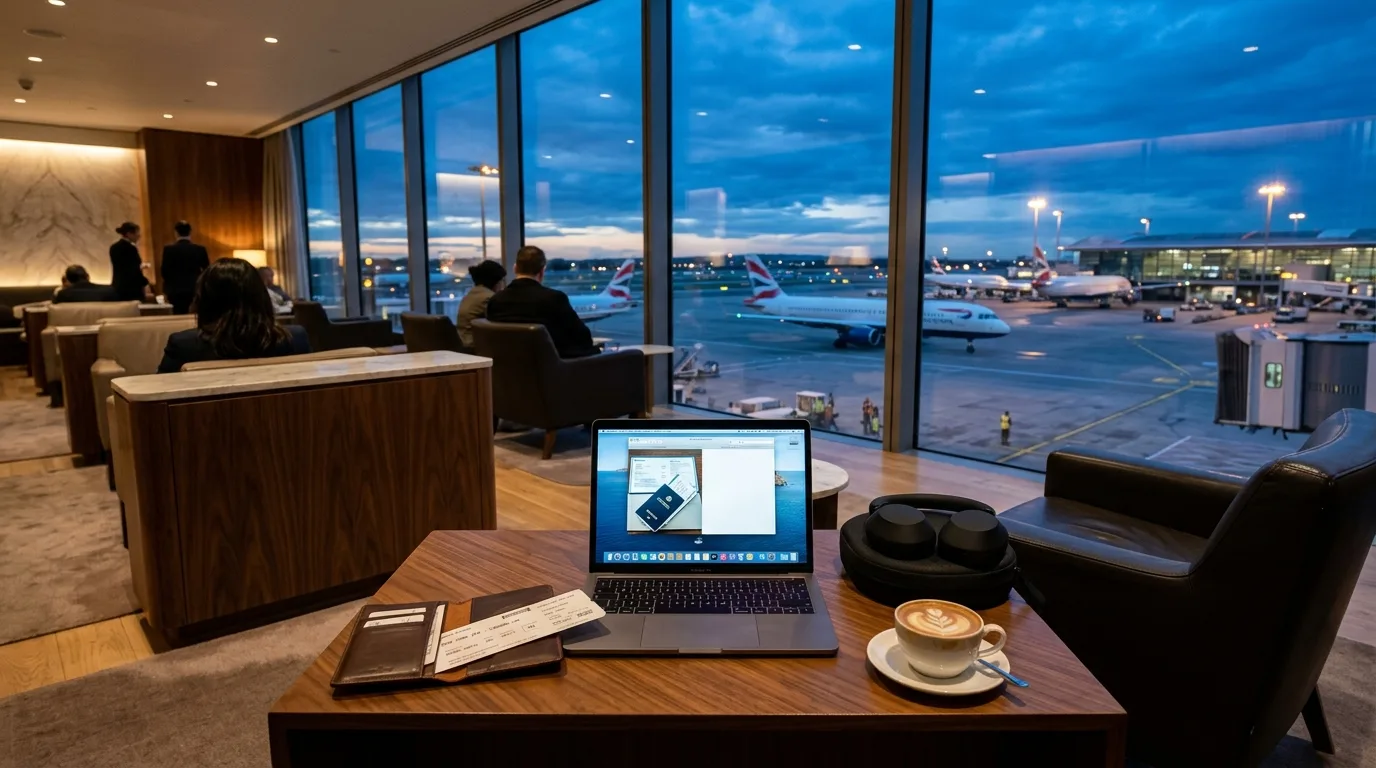
BA's Club World cabin has always felt a bit… varied. You'll get City bankers in suits next to people who clearly just came from a festival. The lounge culture at T5 is similarly mixed. Smart casual fits fine. The lounge coffee, for what it's worth, is mediocre at best — but that's a separate gripe.
Does dressing up affect your chances of an upgrade?
Yes, but probably less than the internet would have you believe. The upgrade decision is almost entirely algorithmic now — status, fare class, check-in time, whether you're traveling alone. What you're wearing plays a role only at the very margins, usually when a gate agent has discretion and is choosing between two similarly-qualified passengers.
That said, if you're flying on a discounted economy ticket and hoping for an operational upgrade, looking presentable doesn't hurt. Gate agents are human. They're not going to upgrade someone in dirty sweats when there's another passenger in a clean blazer standing right there. It's not the deciding factor, but it's a tiebreaker.
The more important reason to dress well is the experience itself. When you look put-together, you tend to carry yourself differently. You ask for things. You use the lounge properly. You feel like you belong in the cabin. That's worth something even if it never shows up on a checklist.
What to actually avoid wearing
Let me be direct here, because a lot of "what to avoid" advice online is vague and useless. So here's a concrete list of things I'd skip.
Athletic gear and gym clothes. Sweatpants, yoga pants, running tights, hoodies with logos — all of this reads as underdressed in a business class cabin, regardless of the airline. There's a difference between comfortable and sloppy, and athletic gear is usually sloppy. You can be comfortable in non-athletic clothes. That's what the pajama program is for (more on that in a moment).
Distressed denim. Regular dark jeans are fine. Jeans with rips, fading, or heavy distressing are not. This is one of the few cases where airlines have historically pushed back — some carriers have quietly refused upgrades to people in heavily distressed denim, and a few explicitly include it in their staff travel dress code as prohibited. Even for paying passengers, it just doesn't fit the environment.
Strong fragrance. This one isn't about looking the part, it's about being a decent human in a sealed metal tube. Heavy cologne or perfume in a pressurized cabin is genuinely unpleasant for the people sitting near you, and the crew notices. This gets you nothing good.
Bare feet in the aisle. I've seen it. It's not okay. Wear the socks they give you or bring your own, but don't walk to the galley or bathroom in bare feet. The floor is not clean.
Overly formal attire for long-haul. A full suit on a 14-hour flight is a different kind of mistake. You'll be uncomfortable, you'll look crumpled by hour six, and the suit will be worse for wear when you land. If you need to arrive looking sharp, pack the suit and change in the lounge or on the plane.
The pajama program — and what it changes
Several airlines now offer business class passengers onboard pajamas, and this changes the calculus on what you wear to the airport entirely.
Airlines that currently offer pajamas (or sleepwear kits) in business class include Singapore Airlines, Cathay Pacific, Qantas (on select long-haul routes), Qatar Airways, Emirates, Etihad, JAL, ANA, and Air France on certain long-haul routes. The quality varies. Singapore's are genuinely soft and well-cut. Some carriers offer glorified cotton scrubs.
If you're on one of these airlines, the smart play is to dress comfortably but presentably for boarding, then change into the pajamas once you're airborne and the seatbelt sign goes off. You get the best of both worlds — you look appropriate at the airport and in the lounge, and you're genuinely comfortable for the sleep portion of the flight.
Changing on the plane
Most business class cabins have a dedicated lavatory that's large enough to change in without performing gymnastics. On the A380 upper deck in particular, the lavatories are spacious. Change before the meal service starts if you want to eat in the pajamas — waiting until after means you're changing in the dark while other passengers are asleep.
If your airline doesn't offer pajamas, this is where a good travel outfit really matters. You need something you can board in, sit through a meal in, sleep in, and disembark from without looking like you slept on a park bench. That's a real constraint and most outfits fail it. The merino wool approach I mentioned earlier genuinely solves this — it doesn't crease badly, it doesn't look slept-in the way cotton does, and it keeps you warm enough in the cabin without overheating during boarding.
Shoes: the thing most people get wrong
Shoes are where I see the most obvious mistakes, in both directions.
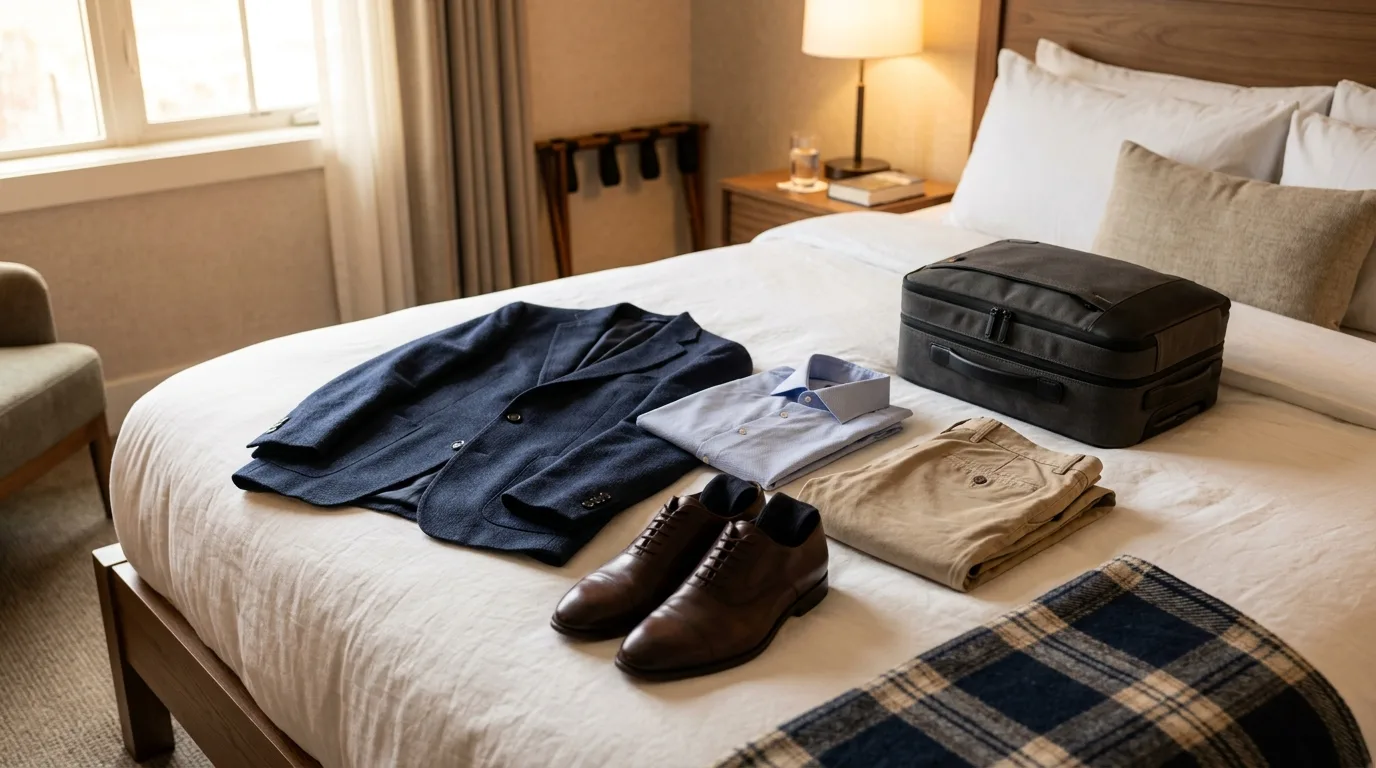
Heavy lace-up dress shoes on a long-haul flight are a bad idea. Your feet will swell at altitude (this is real — cabin pressure causes fluid retention in your lower extremities), and dress shoes don't give. By hour eight, you're in genuine discomfort. And you'll have to take them off for security anyway.
The other mistake is beat-up trainers or running shoes. They're comfortable but they look wrong in a business class cabin, especially a premium one.
The sweet spot is a quality slip-on — a leather loafer, a clean suede Chelsea boot, or a premium leather sneaker in a neutral color. Something that slips off easily at security, looks presentable in the lounge, and doesn't constrict swollen feet at hour twelve. I've been flying with the same pair of tan suede Chelsea boots for years on long-haul trips. They work for everything from lounge to cabin to arriving at a meeting.
Bring a pair of compression socks and put them on once you're seated. Not glamorous, but DVT is a real risk on long flights and your future self will appreciate it.
Packing and the arrival problem
One thing that doesn't get talked about enough: what you wear to arrive matters as much as what you wear to board. If you land in Singapore at 6am for a business meeting and you've been wearing the same outfit for 14 hours, you need a plan.
The options are: change in the airport before you exit arrivals (the Changi Terminal 3 bathrooms are spotless — genuinely one of the better airports to do this), or use the hotel gym shower if you have a day use room, or pack the meeting outfit in your carry-on and change on the plane toward the end of the flight.
If you're going straight to a hotel, don't stress it. But if you have a direct transfer to a client meeting, wearing a wrinkled blazer you slept in for 13 hours is not the move. Pack a separate arrival outfit in a packing cube in your carry-on. Takes five minutes to change and lands you looking like you just got out of a cab, not a metal tube.
On London routes specifically, I've found arriving at T5 with a fresh shirt in the bag is the difference between feeling functional and feeling destroyed. The T5 arrivals hall has enough space to change without feeling like you're doing something weird.
What the lounge changes about your outfit choices
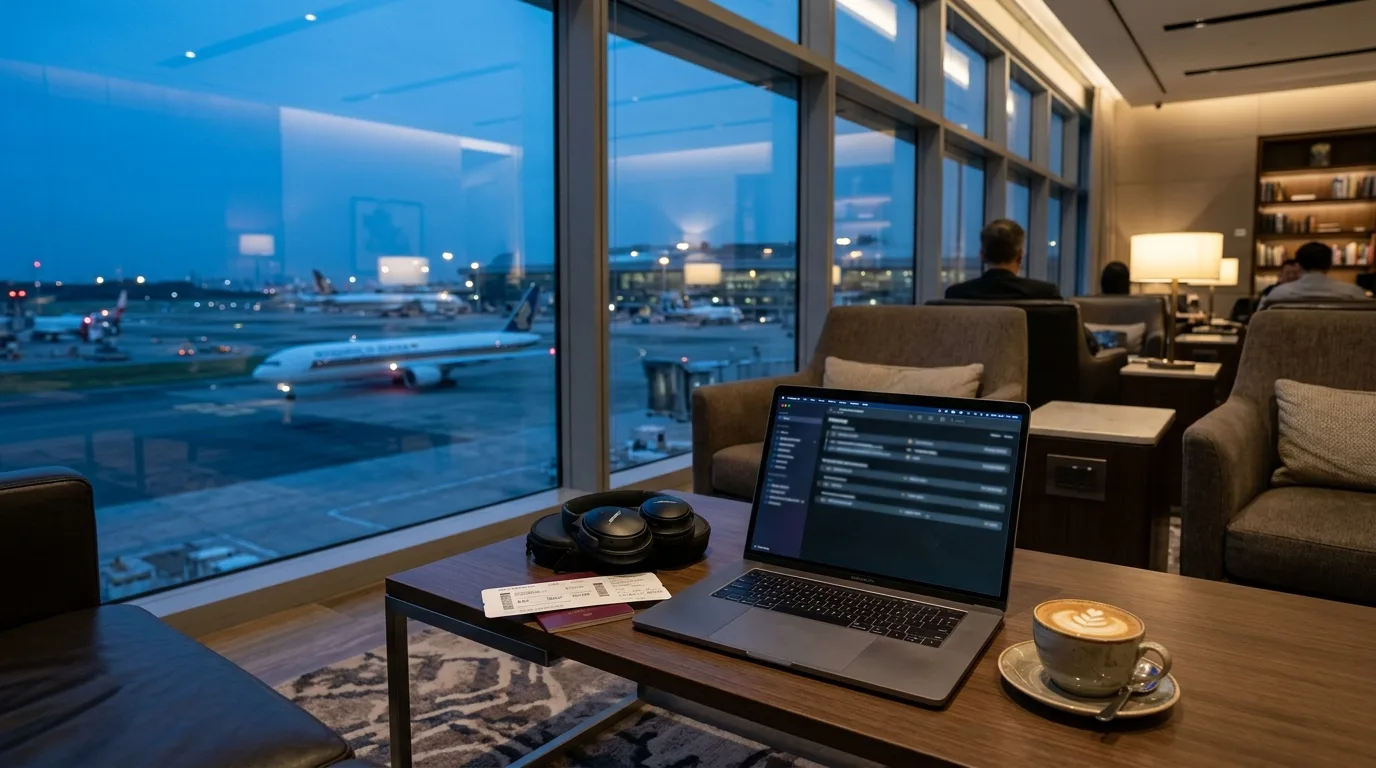
If you have lounge access — and on most business class tickets you will — factor in the lounge when deciding what to wear. Some lounges are genuinely nice restaurants with table service. The Singapore Changi SilverKris lounge, the Qantas First lounge in Sydney, the Lufthansa Senator lounge in Frankfurt — these are proper environments where being dressed well makes a difference to the experience.
Others are cafeteria-style holding pens with sad sandwiches. The BA T5 lounge, as I've mentioned, is not a place that demands formality.
But if you're connecting through a top-tier lounge and planning to eat a proper meal there, it's worth being dressed for it. You'll enjoy the meal more. You'll get better service. And you won't feel slightly awkward sitting next to someone in a suit while you're in a tracksuit.
If you're planning a mixed-cabin itinerary — say, business class for the long-haul segment and a cheaper connection — the dress code logic still applies to the premium legs. For the economy portions, you can be more relaxed. And if you're hunting for deals on those economy legs, FlightKitten is worth bookmarking — it monitors fares across 220+ airlines and alerts you when economy prices drop below your target. Different tool, same idea as what we do for business class, and it runs about $4.99/month.
The practical packing list for a business class trip
Since we've covered a lot of ground, here's what I'd actually pack and wear based on twelve years of doing this:
Boarding outfit: Merino crewneck or collared shirt, well-fitted dark chinos or dress trousers, Chelsea boots or quality loafers, no fragrance, compression socks in your bag to put on once seated.
If pajamas are offered: Change after takeoff, keep your socks on, keep slippers or the provided socks for any aisle walking.
If no pajamas: The merino outfit should carry you through. Add a light layer (a thin cardigan or zip-up in a neutral color) for the cold part of the flight.
Arrival outfit in carry-on: Fresh shirt or blouse, same or different trousers depending on how long the flight was, a packable blazer if you need to look sharp on arrival. Something that doesn't crease in a packing cube.
That's it. You don't need a separate "plane outfit" and "arrival outfit" and "lounge outfit." Two sets of clothes handles everything. The boarding outfit does the lounge and the flight; the arrival outfit does the meeting or the hotel check-in.
On packable blazers
The Uniqlo packable blazer is the single most-mentioned item in my inbox from readers. It's not wrong — it's cheap, it packs well, and it adds a layer of polish when you need it. For something that holds its shape better, the Ministry of Supply Apollo blazer is worth the price. I've had mine for four years.
One last thing about what to wear in business class
All of this advice assumes you're flying business class regularly, or at least intentionally. But a lot of people reading this are flying business class for the first time, or flying it on a rare fare drop, and they're wondering whether they'll fit in.
You will. Smart casual is the norm across most carriers, not the exception. You're not going to be out of place in dark jeans and a good sweater on any airline in the world. The passengers around you are mostly just people who travel a lot. Some of them dress well, some of them don't. The crew is professional regardless.
The point isn't to perform wealth. It's to be comfortable, presentable, and ready for wherever you're going when you land. That's a practical problem with a practical solution, and most of it comes down to fabric choices and fit.
If you're looking at business class fares right now and wondering whether a particular route is worth the price — or waiting for a deal on a route you've been watching — that's exactly what BusinessClassSignal's monitoring system is built for. It scans 800+ routes twice a day and flags when prices drop below your target. You set a threshold, it does the watching. There's a free 14-day trial if you want to start monitoring a route without committing.
The full route list is worth browsing if you're flexible on destination — sometimes the deal isn't on the route you planned, it's on the one next to it.
Set a fare alert on your route — BusinessClassSignal monitors 800+ business class routes and tells you when prices drop
Start Free Trial