Quick summary
Air France and KLM are both SkyTeam members flying similar long-haul routes, but they're meaningfully different products. Air France's A350 business class is more polished and the CDG lounge experience is stronger; KLM's World Business Class is more utilitarian but quietly reliable, and AMS is a faster, less stressful hub. Which one you should book depends on your route, your priorities, and frankly, the fare on the day.
Same alliance, different airlines
People treat Air France and KLM as interchangeable. They're both under the Air France-KLM group umbrella, they both fly SkyTeam, and they often price routes within a few hundred dollars of each other on the same day. So the assumption is: pick whichever one is cheaper, they're basically the same thing.
They're not.
I've flown both carriers multiple times across long-haul routes — Paris Charles de Gaulle to JFK, Amsterdam Schiphol to LAX, and a handful of connecting itineraries that had me sitting in both business class cabins within a week of each other. The differences are real and they matter depending on what you care about.
This isn't a "one is better than the other" verdict. It's more useful than that. I'll break down exactly where each airline pulls ahead, where they disappoint, and how to think about the Air France vs KLM business class decision before you book.
The seats: where the gap is most visible
Both airlines now operate the Airbus A350 on major long-haul routes, which is the aircraft worth caring about. If you're on an older 777 or a 787 in a mixed fleet situation, some of this changes — but the A350 is increasingly the flagship product on both sides.
What does Air France business class actually look like on the A350?
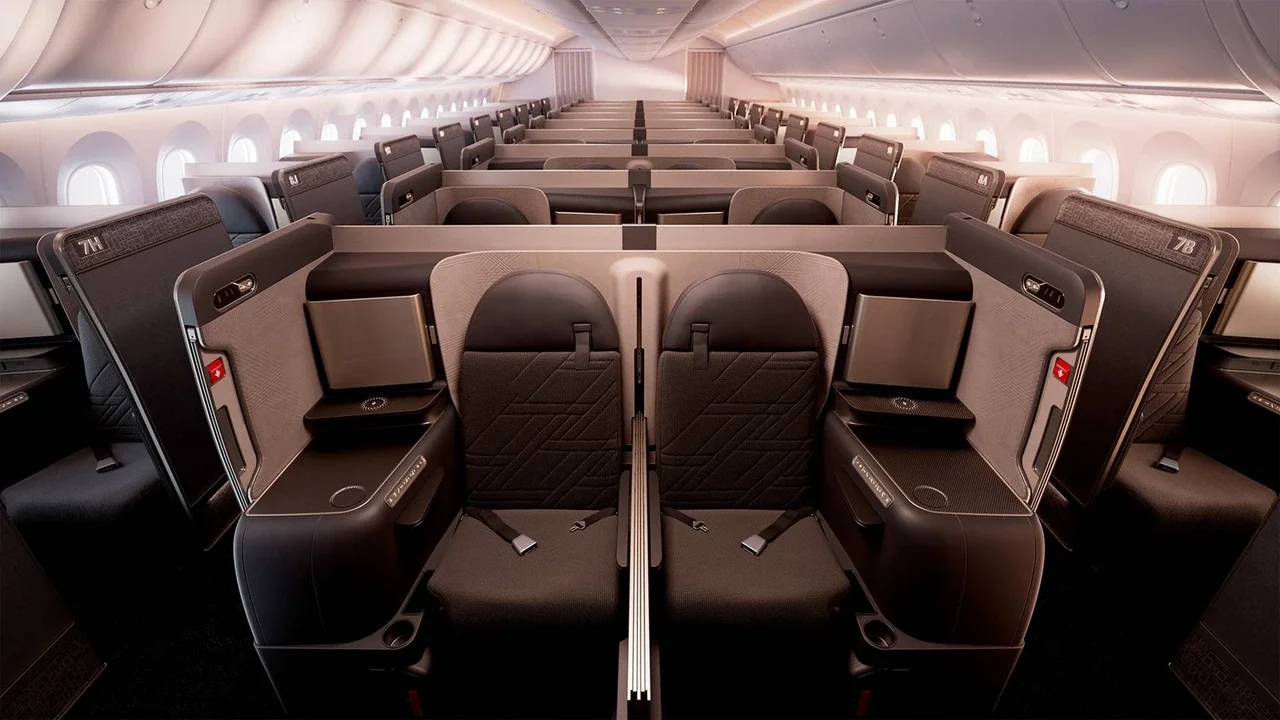
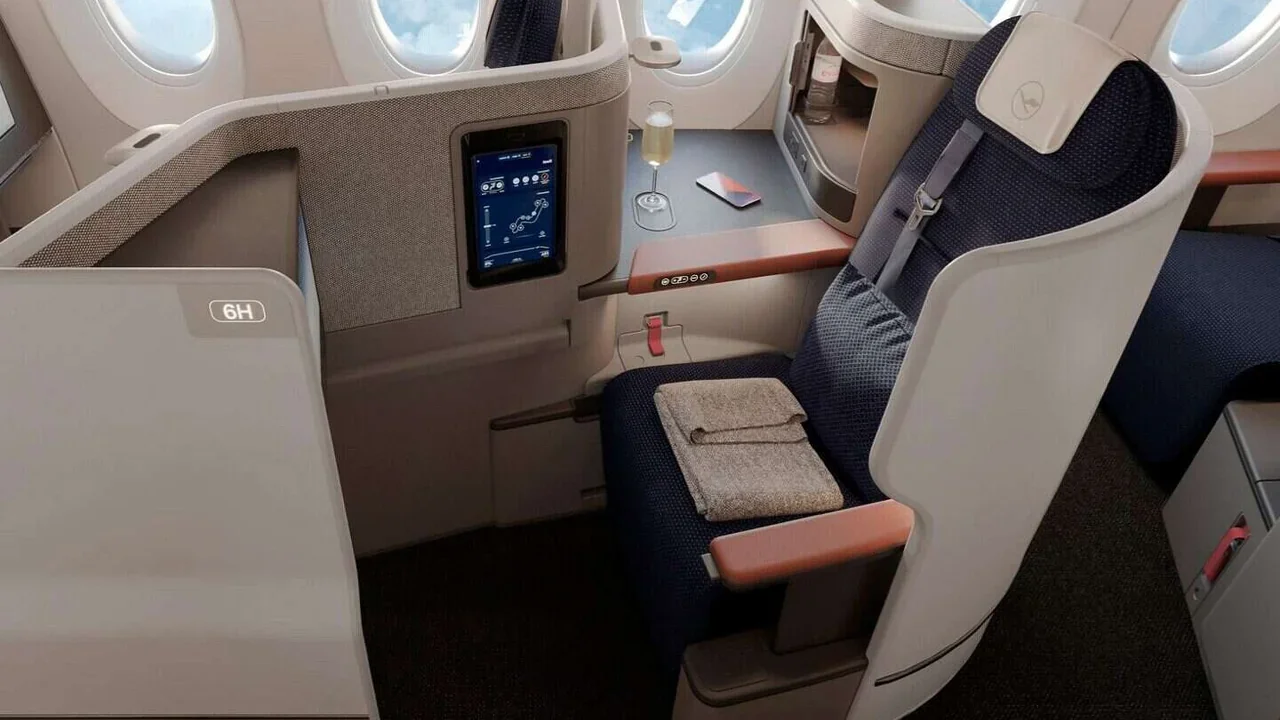
Air France's A350 business class uses what they call the "Nouvelle Business" seat. It's a fully flat bed in a 1-2-1 configuration, which means every single seat has direct aisle access. That's the baseline expectation for a premium longhaul product in 2024, and Air France delivers it.
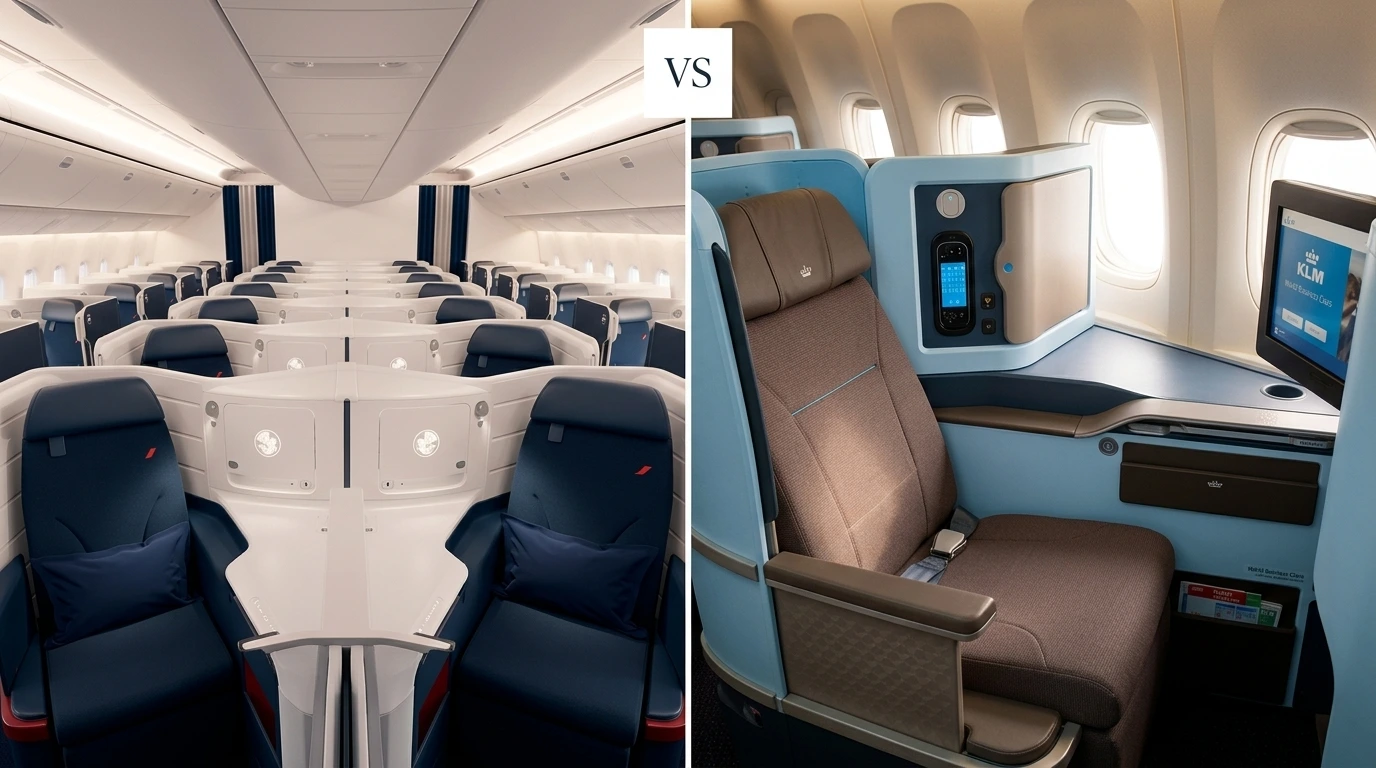
The seat itself is wide — around 22 inches — and the bed length runs to about 79 inches when fully reclined. I'm 6'1" and I slept well. The privacy shell is substantial enough that you're not staring at your neighbor throughout a transatlantic crossing, though the center pairs can feel a bit exposed if you're traveling solo and end up next to someone who wants to chat at 35,000 feet.
What I like about the Air France product is the finish. The materials feel considered. There's a proper side table, the IFE screen is large (17 inches) and responsive, and the storage cubby next to the seat is genuinely useful for keeping your phone and a book within reach during flight. Small things, but they add up over nine hours.
One thing worth knowing: not all Air France A350s are configured identically. Some have 30 business class seats, others have 48. The smaller configuration tends to appear on shorter long-haul routes. Always check Seatguru or the Air France seat map before booking — the Air France route breakdown on our site flags which aircraft typically fly which routes.
Row 1 vs row 4 on the Air France A350
On the larger A350 configuration, rows 1–3 are ahead of the door and slightly quieter. Row 4 is directly behind the galley partition. I've sat there and the noise from crew prep before landing is noticeable. Not a dealbreaker, but worth avoiding if you're a light sleeper.
How does KLM's World Business Class seat compare?
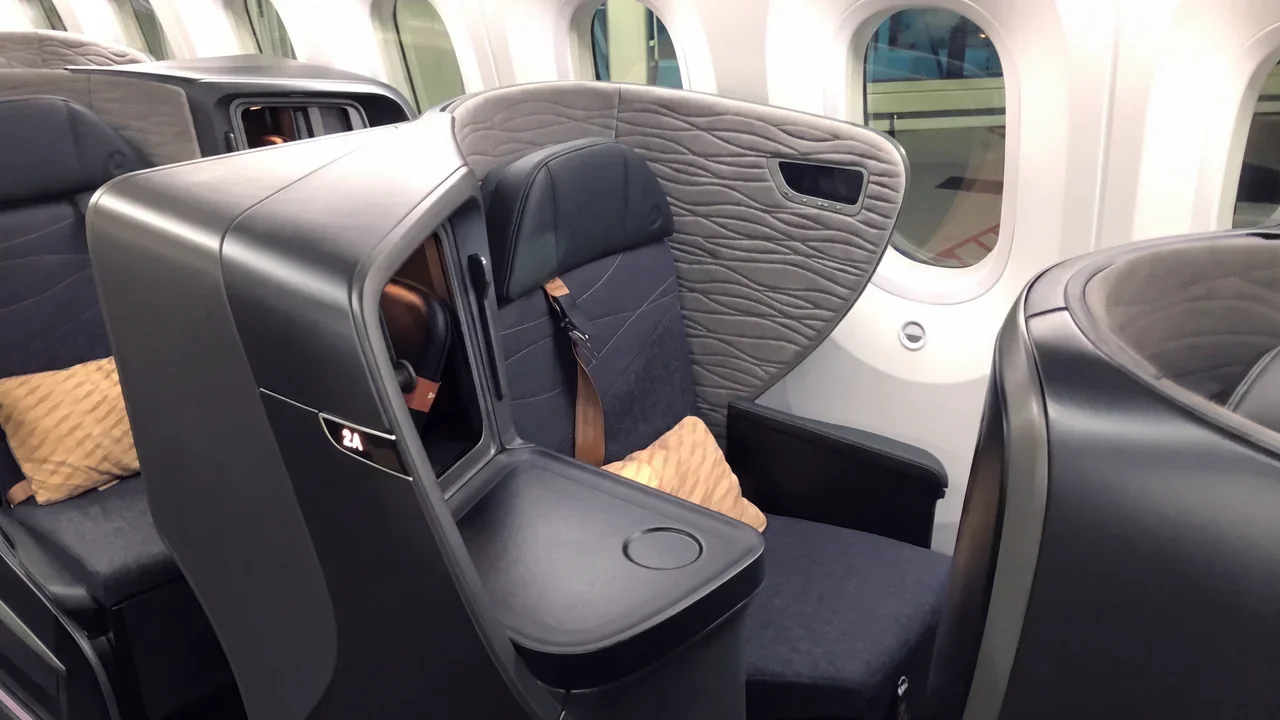
KLM's A350 business class — they call it World Business Class, which is a name that's been around long enough to feel a bit dated — is also a 1-2-1 fully flat configuration. So far, so similar.
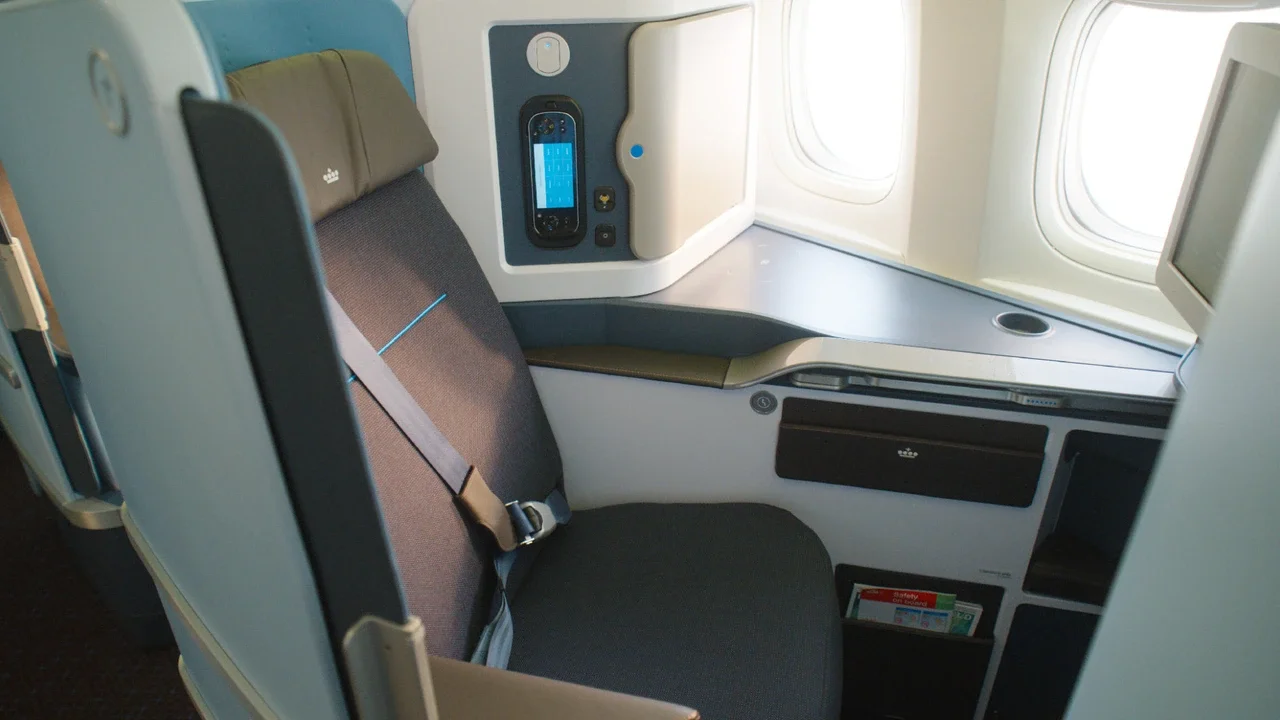
But the seat design is different. KLM uses a herringbone-style layout where the seats angle toward the windows rather than pointing straight forward. Some people love this; I find it slightly disorienting on night flights because you're not aligned with the direction of travel. The bed is slightly narrower than Air France's offering — roughly 20 inches in the sleeping position — and the privacy between center seats is less pronounced.
The IFE system on KLM's A350 is fine. The screen is a 16-inch touchscreen and the content library is decent for European carriers, though it won't compete with something like Qatar's Oryx system. The interface feels a generation behind.
What KLM does well with the seat is the storage. There's a proper shelf for your laptop, the side storage is accessible even when the seat is in bed mode, and the overall layout feels practical rather than designed-for-a-photoshoot. It's a working business class product.
Dining: one airline that takes it seriously, one that doesn't
This is where I'll be direct: Air France is meaningfully better at food than KLM. It's not close.
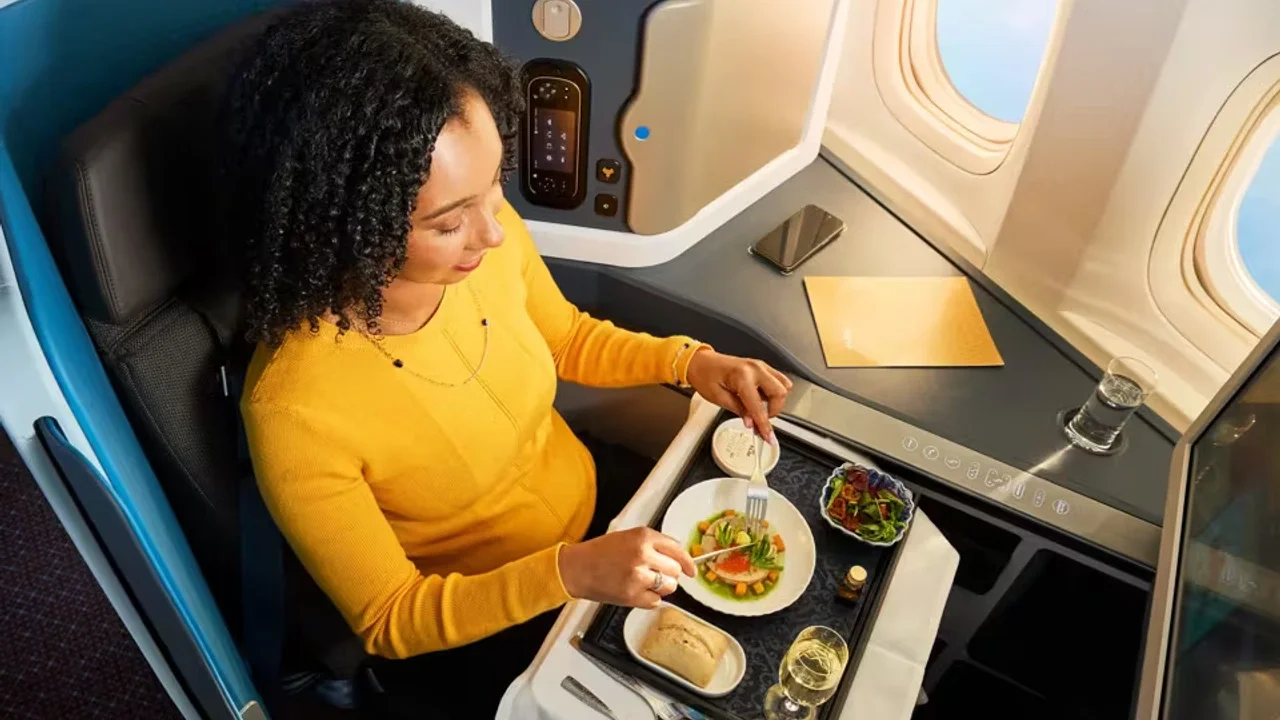
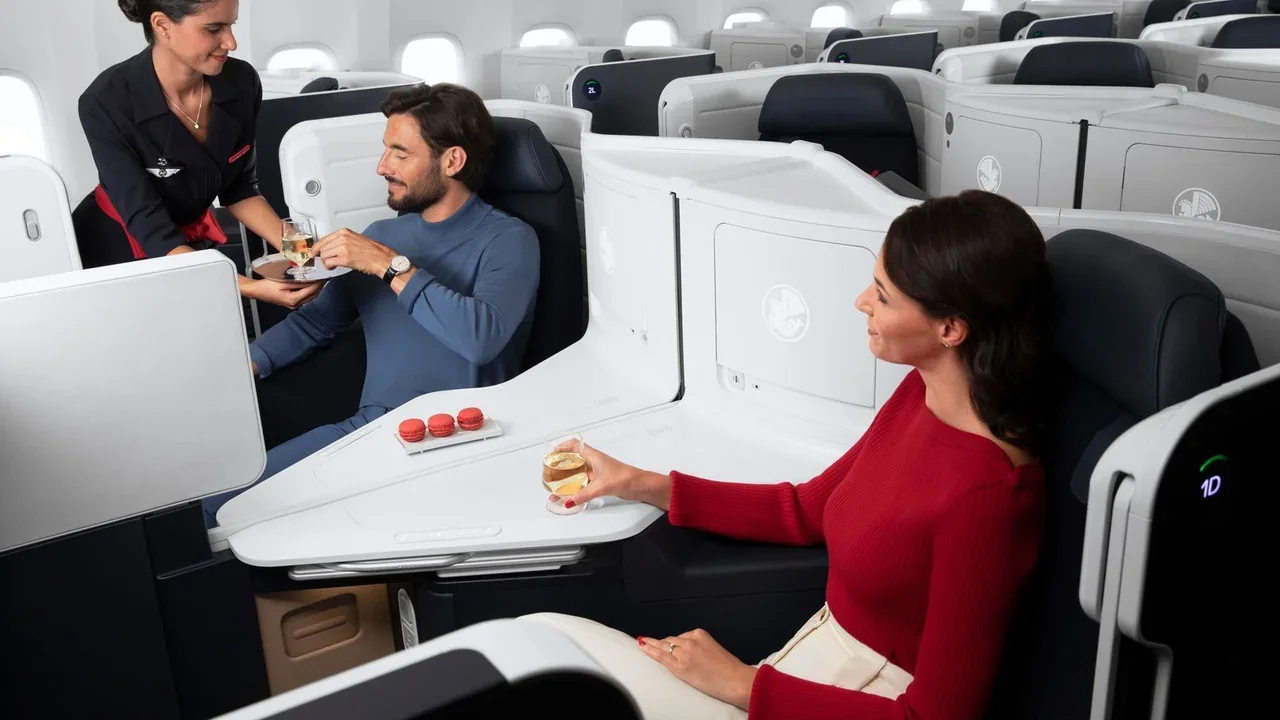
Air France has invested heavily in the in-flight dining program over the last several years. The carrier partners with French chefs — the program has featured names like Michel Roth and Anne-Sophie Pic — and the menu structure reflects it. On a JFK-CDG flight I took last year, the starter was a proper seared scallop with a cauliflower mousseline. The cheese course came with a written card describing each selection. The bread was warm. These are not things that happen by accident.
The wine list is also where Air France earns its premium positioning. They work with a sommelier team to curate the selection, and on a recent transatlantic crossing I had a Chablis Premier Cru that I'd have been happy to order in a decent Paris restaurant. I've had worse wine on the ground at airport restaurants charging three times what the ticket cost.
KLM's business class dining is... serviceable. The food isn't bad. On a recent AMS-LAX flight, the main course was a reasonable beef tenderloin and the Dutch cheese plate at the end was a nice touch. But the overall execution feels less considered. Portions are smaller, the presentation is more cafeteria than restaurant, and the wine list, while adequate, doesn't have the depth of Air France's offering. I've never had a KLM meal I specifically remembered.
On Air France, pre-order your meal using the "My Meal" option in Manage My Booking at least 24 hours before departure. The pre-order options are often better than the standard service, and you guarantee your first choice rather than risking the second option being gone by the time the cart reaches row 8.
Air France vs KLM business class: the lounge situation at CDG and AMS
The lounge experience is genuinely split, and your preference here might come down to whether you'd rather have a nicer room or a calmer one.

Air France's lounges at CDG are in Terminal 2E and they're substantial. The main business class lounge — the "Salon Business" — has been renovated in recent years and it shows. There's proper table service in the dining area, a hot food selection that changes by time of day, and the overall aesthetic is very deliberately French: warm lighting, good chairs, a wine bar that opens before noon without anyone judging you.
The La Première lounge (first class only) is exceptional, but that's not relevant to most business class travelers. What I can tell you is that the Salon Business is legitimately one of the better carrier-operated lounges in Europe. The food is restaurant-quality at lunch — I've had duck confit with a glass of Bordeaux before a transatlantic flight and been entirely content.
The downside of CDG is CDG itself. Terminal 2 is a sprawling, sometimes baffling complex, and the connections between satellites can eat 20 minutes if you don't know where you're going. The lounge is comfortable but getting to your gate from it is sometimes a small adventure. And if you're on a tight connection, CDG will stress you out in a way that Schiphol simply won't.
AMS (Amsterdam Schiphol) — KLM Crown Lounges
KLM operates Crown Lounges at Schiphol, and the main one near Lounge 52 is the flagship. It's a decent lounge. The Dutch-inspired décor is pleasant, there's a reasonable hot food selection, and the Heineken on tap is a nice detail if you're into that sort of thing.
But the food doesn't reach the level of CDG. The hot options tend toward buffet-style Dutch comfort food — stamppot-style dishes, bitterballen — which is fine, but it's not the same as Air France putting a dedicated chef in the kitchen. The coffee, however, is genuinely good. Better than Air France's lounge coffee, actually, which I've consistently found mediocre.
Where AMS wins decisively is the airport itself. Schiphol is one of the most functional major hubs in the world. It's a single terminal, everything is walkable, the gates are clearly marked, and a 50-minute connection is genuinely achievable without breaking a sweat. For business travelers who just want to move efficiently, AMS is the better hub.
CDG Terminal 2 connections
If you're connecting at CDG and your inbound flight arrives at Terminal 2F and your outbound is from 2G, budget at least 25 minutes. The shuttle between satellites runs on a schedule and if you miss one, you're waiting. I've missed a connection at CDG that I wouldn't have missed at Schiphol on the same timing.
Service style and crew
This is the most subjective part of any airline comparison, and I'll acknowledge that a single bad crew can color your perception of a carrier unfairly. That said, patterns emerge over many flights.
Air France crew have a reputation — sometimes unfairly — for being aloof. In my experience, they're professional but not performatively warm. The service is attentive without being overly familiar, and I've found that if you engage in French, or even make a decent attempt at it, the whole dynamic shifts. The crew on a CDG-JFK flight I took two years ago was quietly excellent — anticipating drink refills, checking in between courses without hovering. That's the Air France service at its best.
At its worst, Air France can feel like the crew is doing you a favor by serving you. I've had a couple of transatlantic flights where getting a second glass of wine required what felt like a formal request. It's inconsistent in a way that KLM isn't.
KLM crew are, on balance, more consistently pleasant. The Dutch directness translates well to service — they're friendly without being syrupy, and the service delivery is reliable. I've rarely had exceptional KLM service, but I've rarely had poor service either. It sits in a comfortable middle ground.
Pricing and when deals actually appear
Both carriers drop business class fares in ways that don't follow a neat weekly pattern, which is part of why fare monitoring matters on these routes. That said, a few patterns are worth knowing.
KLM tends to be slightly more aggressive with fare sales on the US-Amsterdam route, particularly on routes like JFK-AMS and SFO-AMS. I've seen round-trip KLM business class fares out of JFK drop to the $2,400–$2,800 range during promotional windows, which is genuinely good value for a fully flat transatlantic product.
Air France drops prices too, but they're somewhat less predictable about it. The Paris routes — JFK-CDG, LAX-CDG, ORD-CDG — do see flash sales, but they tend to be shorter windows. If you're watching manually, you'll miss them. This is exactly the use case that BusinessClassSignal was built for: the system scans 800+ business class routes twice daily and alerts you when fares on your specific route drop below whatever threshold you've set. You can start monitoring this route and let the alerts do the work instead of refreshing Google Flights every morning.
The fare difference between these two carriers on any given week can swing by $500–1,000 in either direction. There are periods where Air France is the clear better value and periods where KLM is. Locking yourself into a brand preference without watching the prices means you'll overpay eventually.
Browse all monitored routes to see current fare trends across both carriers.Which one should you actually book?
Here's how I'd frame it.
Book Air France if: the dining and lounge experience matter to you, you're not connecting and CDG is your final destination, and you're willing to pay a modest premium for a more polished product. The A350 business class is genuinely one of the better European carrier products available right now. The food alone is worth something.
Book KLM if: you value operational reliability, you're connecting through the hub and want the efficiency of Schiphol, you're on a budget-constrained business class search and KLM is running a lower fare, or you're flying a route where the KLM product is on the A350 rather than an older widebody.
And honestly? If you're price-driven and flexible, you should be monitoring both. I've booked KLM when the Air France fare was $600 more. I've booked Air France when the prices were within $100 because the dining difference alone justified it. Context matters.
One thing I'd add: if you're booking through points and miles, the SkyTeam positioning means both airlines are accessible via Flying Blue, which is the shared frequent flyer program. Flying Blue is genuinely one of the better transatlantic award programs when it runs monthly promos — I've seen JFK-CDG one-way business class awards drop to 37,500 miles during promo periods (down from 50,000 one-way), which is excellent value. The Flying Blue promo award guide covers how to time those bookings.
Flying Blue promo awards drop on the first of the month
Flying Blue releases monthly promo awards on the first of each month, typically for travel 2-3 months out. Both Air France and KLM flights are included. Set a calendar reminder and check immediately — the best routes sell out within hours.
The honest verdict on Air France vs KLM business class
Air France is the better product, in my opinion. The seat is slightly more comfortable, the food is noticeably better, and the CDG lounge is a more enjoyable place to spend two hours before a transatlantic flight. If product quality is your primary filter, Air France wins.
But KLM is more reliable in the ways that matter when things go sideways — the hub is easier to navigate, the crew service is more consistent, and the airline's operational punctuality is among the better numbers in Europe. I've had Air France delay experiences at CDG that were genuinely miserable. I've rarely had the same problem at Schiphol.
The Air France vs KLM business class question doesn't have a single right answer, which I know is an unsatisfying thing to say. But the honest version is: they're both solid transatlantic options, they're not identical, and the best choice shifts depending on price, route, and what you're optimizing for on a given trip.
What I'd tell a friend: watch both. Book the one that makes sense when you need to fly.
The monitoring system works by tracking both carriers simultaneously on your route, so you're not having to choose which airline to watch. You set your target price, and you get an alert when either carrier drops below it.Monitor Air France and KLM fares on your route — alerts when prices drop below your target
Try Free for 14 Days